
Purpose
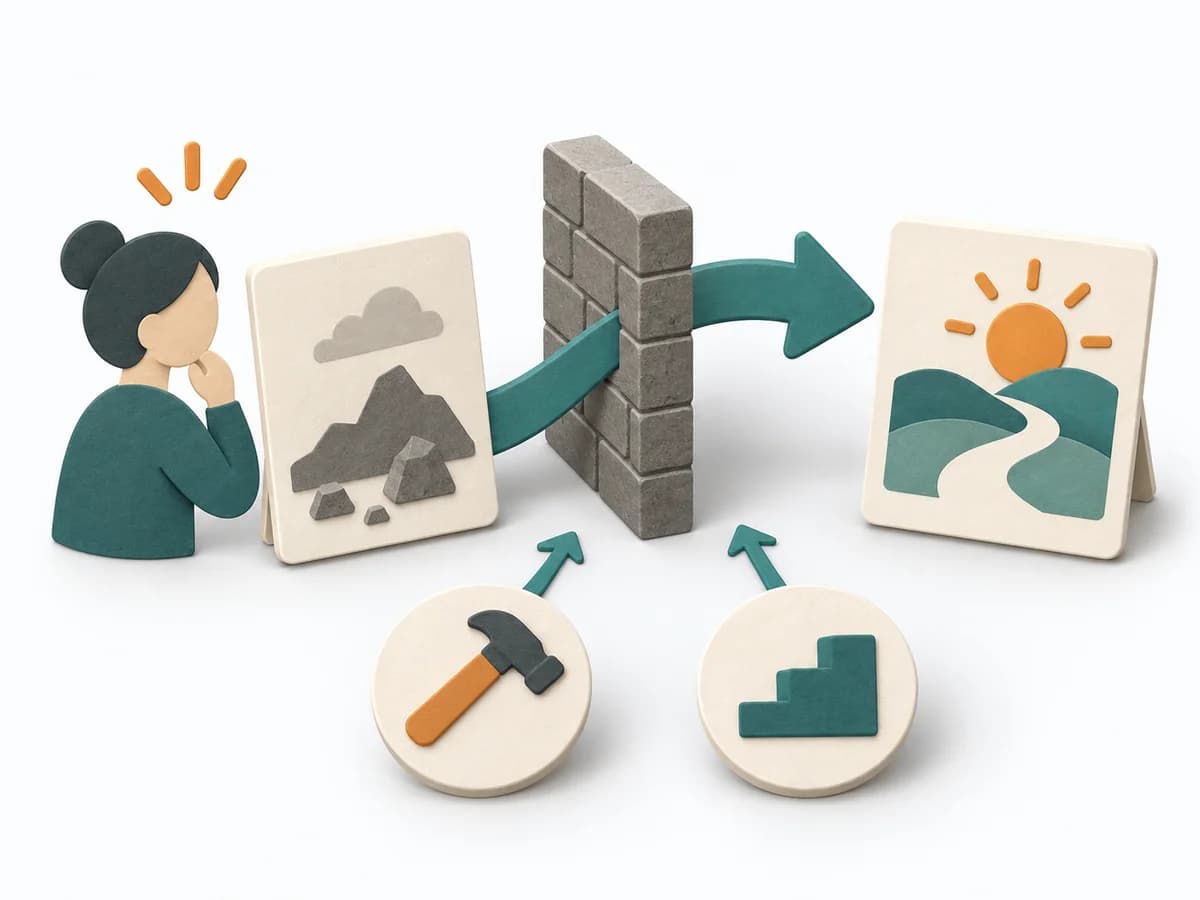
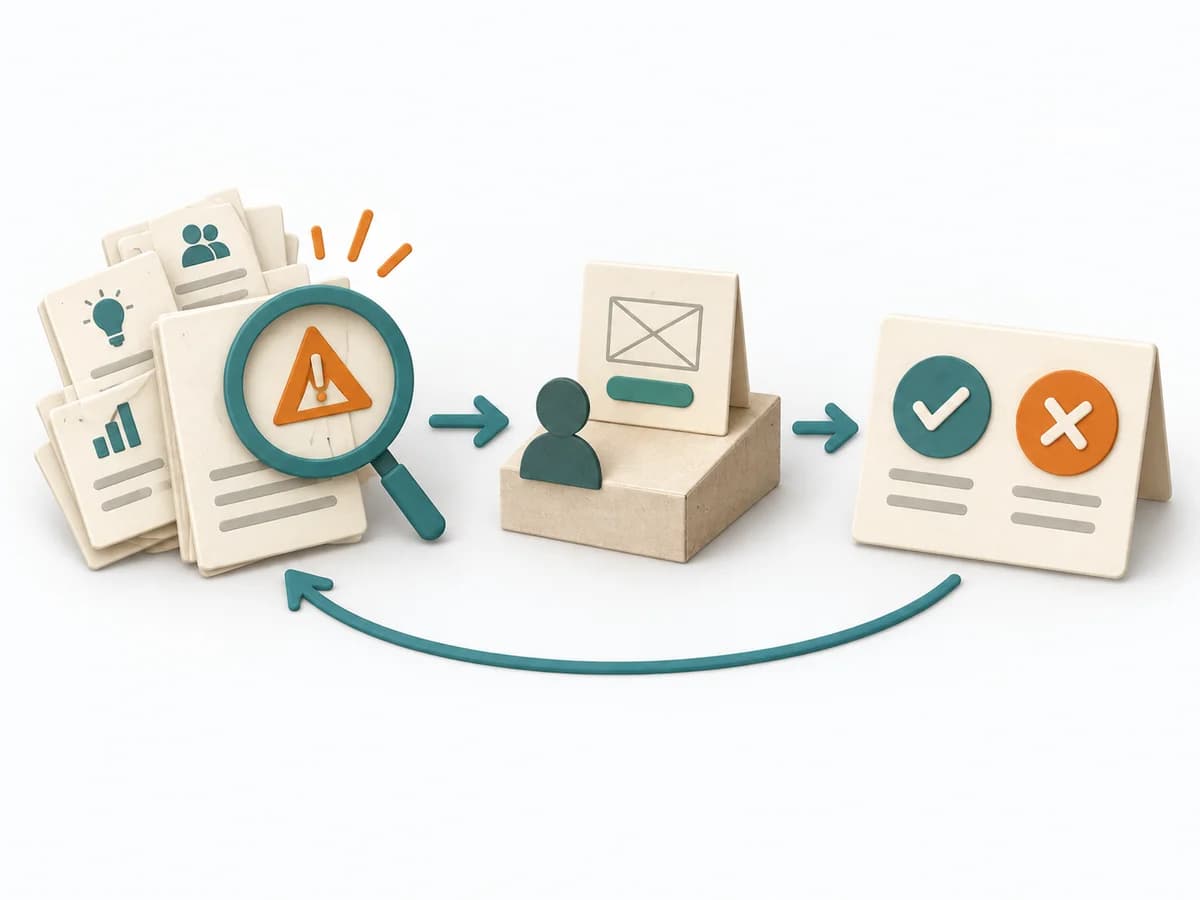
When discovery keeps swinging between goals, ideas, and learning loops, it creates clear steering logic. It connects the desired outcome, opportunities, and experiments into a legible structure.
Product Discovery Mapping tool
Guides continuous discovery from an outcome through customer needs to tested solution paths.
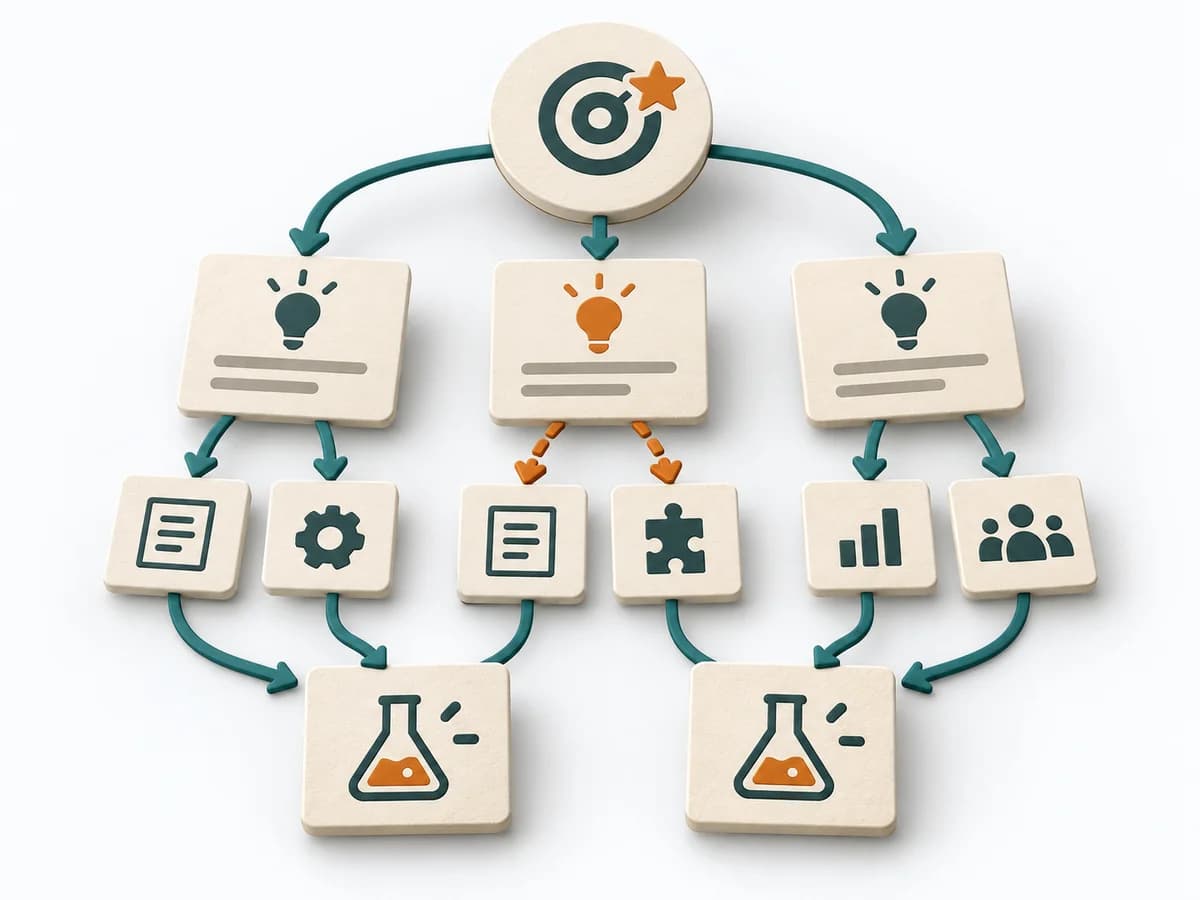
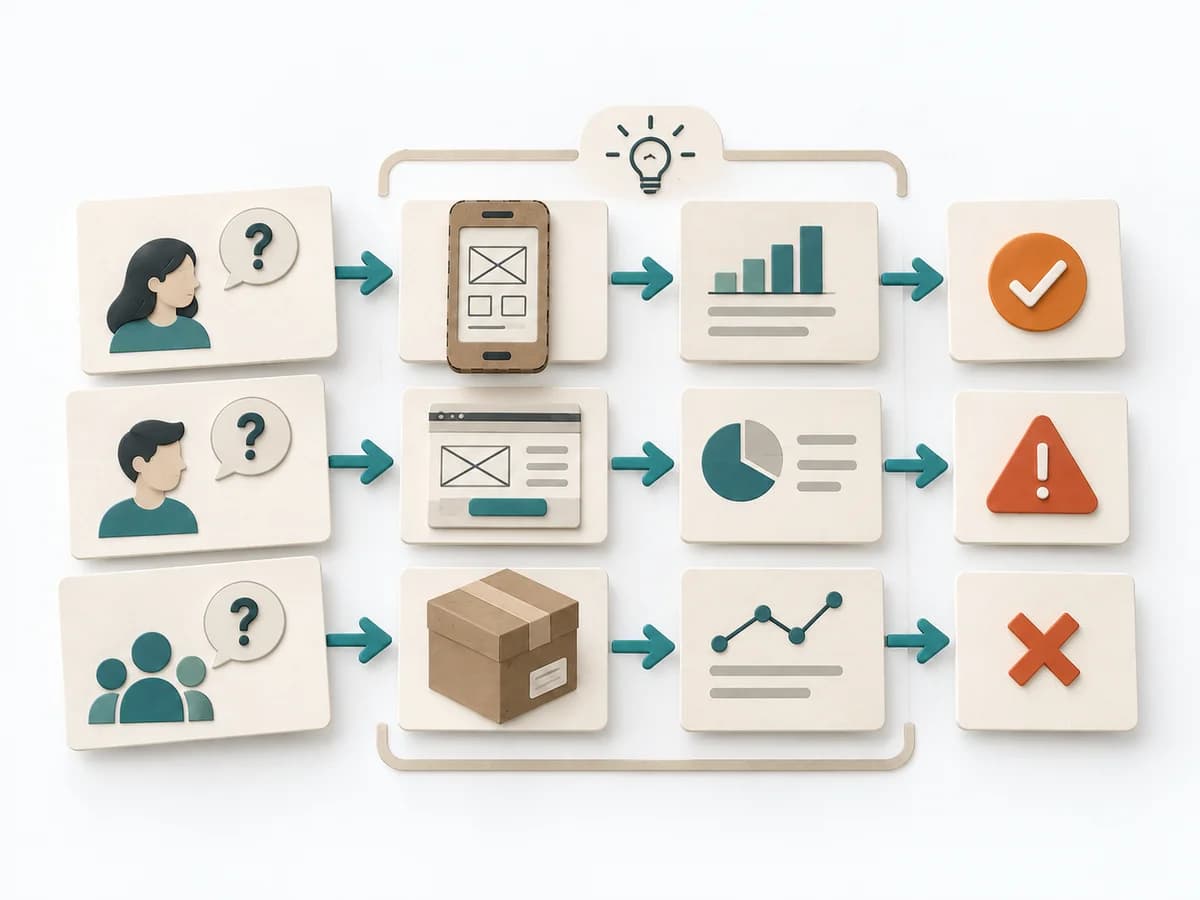
The Opportunity Solution Tree visualizes possible paths to a desired result: outcome, customer opportunities, solutions and tests of their assumptions. The map evolves with new evidence.
Which evidence-grounded paths can achieve the desired outcome through customer needs and tested solutions?
Opportunity Solution Trees express an ongoing learning path; each solution remains an option until evidence informs a decision.
Outcome
A desired outcome bounds discovery and connects customer value with business value.
Opportunities
Opportunities are needs, pain points or desires that could support the outcome if addressed.
Focus
The team chooses a relevant opportunity within its discovery focus.
Solutions
Solutions are developed under the selected target opportunity.
Learn
Tests help evaluate which solution options support the opportunity and outcome.
Update the tree after interviews, observations and experiments. Keep discarded paths traceable as learning history.
Use it for continuous product discovery when a team needs to connect outcomes, customer needs and solution learning.

A measurable result within discovery influence.

Structured needs with sources and open interpretations.

Alternative solutions, risky assumptions, experiments and follow-up decisions.
Fictional teaching example
The tree levels are outcome, customer opportunities, solution options and tests of critical assumptions. The tree shows hypotheses and learning paths, not a project plan.
Which team-controllable result should improve?
Fictional outcome: increase completed loans as a share of all reservation requests in the pilot area from 20% to 35% over eight weeks. All figures are invented.
Which needs, pain points or desires from concrete customer situations could influence the outcome?
Fictional research hypothesis: uncertainty about availability complicates planning. No customer evidence yet.
Which opportunity will guide the next discovery cycle, and why?
Fictional choice: clarity about reservation status because it precedes the planned loan.
What different approaches could address this opportunity?
Fictional: firm reservation confirmation · callback · self-service status.
Which risky assumption will each test examine, and what decision follows?
Fictional: a prototype test checks whether people understand the status; real user sessions are still needed.
All entries are fictional. Opportunities should come from discovery; team knowledge alone is not customer evidence.
Define a team outcome, target user and available customer learning. Teresa Torres recommends three to four story-based interviews as input for a first opportunity tree.
When discovery keeps swinging between goals, ideas, and learning loops, it creates clear steering logic. It connects the desired outcome, opportunities, and experiments into a legible structure.
It holds outcome, opportunities, solution paths, and tests together in a tree logic and shows where learning is currently stuck. Every branch makes visible which assumption determines the next sensible step and which idea still lacks evidence.
The tree logic holds up because it makes outcomes, opportunities, solution approaches, and experiments visible as one connected decision structure. Good use keeps opportunities tightly tied to observed user problems and protects the tree from idea-driven branching without evidence. This clarifies which solution is just one candidate among several and which assumption the next learning step really depends on.
Start with a clearly formulated outcome and only opportunities that come from solid evidence. Things sharpen when several solutions dock onto the same opportunity and a comparison becomes possible. Close with a focused subtree, the main uncertainties, and an explicit order for the next tests.
The method guide walks execution through 5 phases, timing, 5 pitfalls, and clear stop criteria.
Open method guideYour perspective
Your feedback helps shape the next improvements to methodatlas.
Plan the initial setup and ongoing rhythm for outcomes, opportunities, solutions and tests.
To be confirmed
To be confirmed
Structure continuous discovery Time: Ongoing practice; no total timebox
Complete this worksheet on paper or in your own document during the work.
Which team-controllable result should improve?
...
Which needs, pain points or desires from concrete customer situations could influence the outcome?
...
Which opportunity will guide the next discovery cycle, and why?
...
What different approaches could address this opportunity?
...
Which risky assumption will each test examine, and what decision follows?
...
Blank worksheet: choose one outcome, connect opportunities to evidence, select a target opportunity, then record solution hypotheses and tests.
Source: Teresa Torres, Product Talk
Expected artifact: Outcome as the root of the tree
Outcome · target user · signal
Entry:
...
Expected artifact: Customer opportunities with evidence
Need or obstacle · source · open question
Entry:
...
Expected artifact: Selected target opportunity with rationale
Opportunity · evidence · rationale
Entry:
...
Expected artifact: Solution options with assumptions
Option · opportunity addressed · key assumption
Entry:
...
Expected artifact: Updated tree with tests and decisions
Assumption · test · evidence · decision
Entry:
...
...
Method guide: https://methodatlas.meierhoff-systems.de/en/methods/opportunity-solution-tree/run-sheet
Fitting alternatives with decision guidance, followed by other related methods.
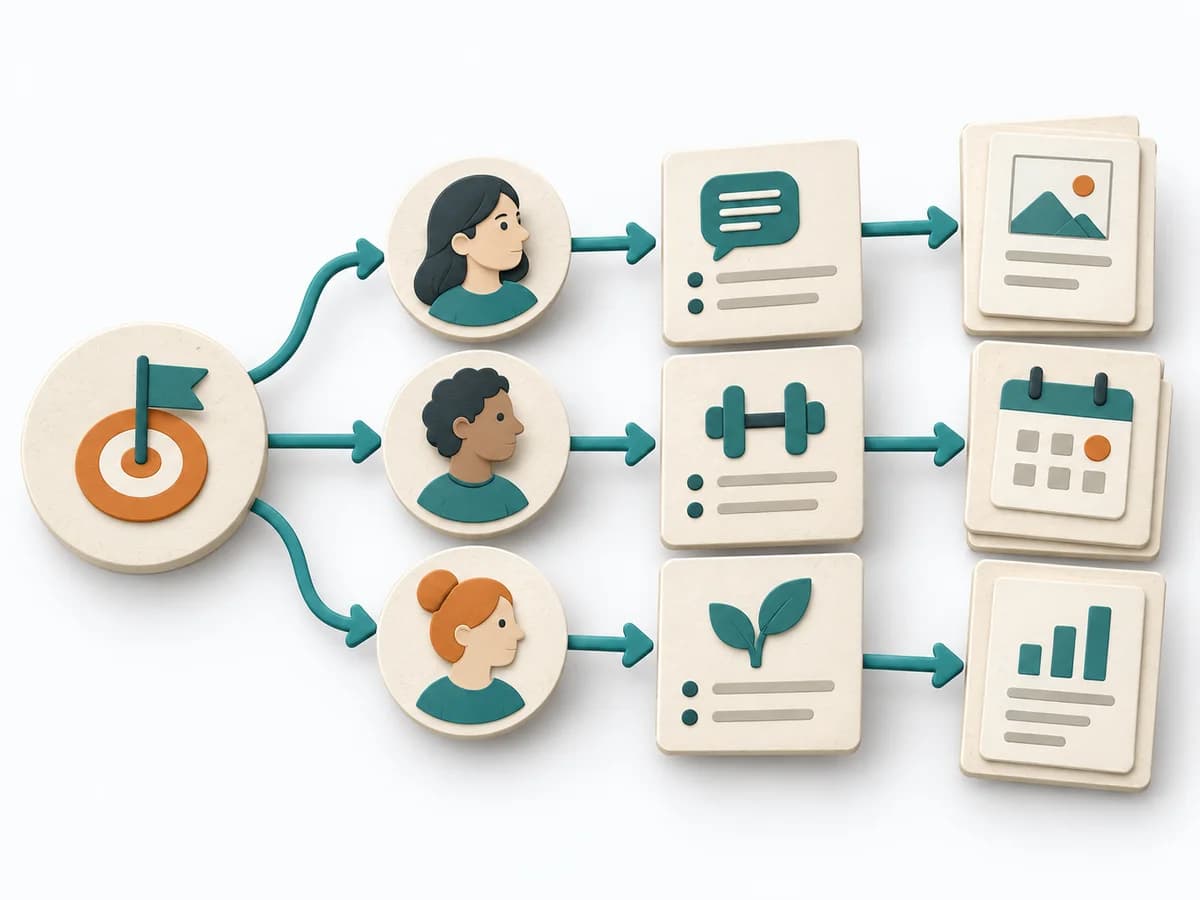
Instead of Opportunity Solution Tree, when you want to use Impact Mapping to structure a goal-to-impact chain with stakeholders, outcomes, and actions.
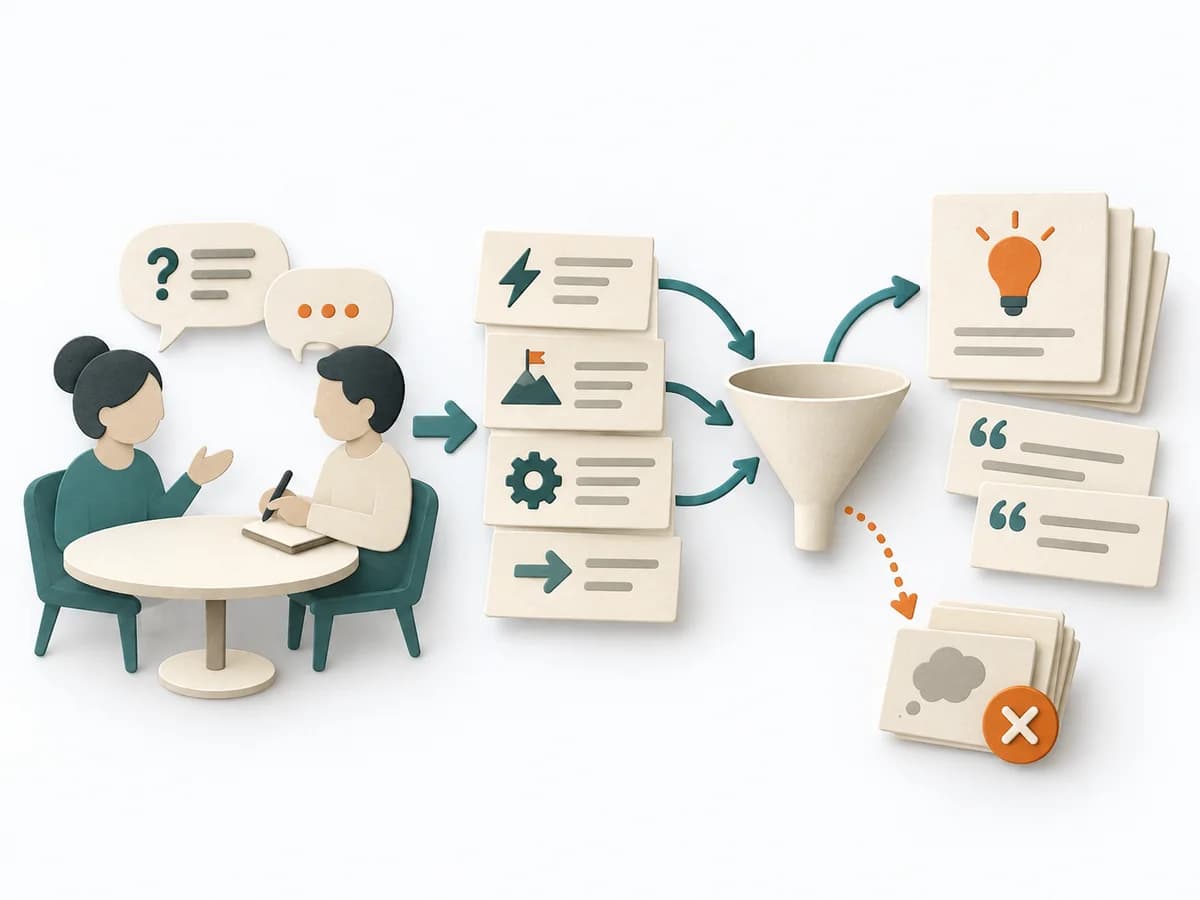
Clarifies customer problems, solution ideas, and evidence by framing an opportunity hypothesis, recruiting participants, and turning insights into opportunities.
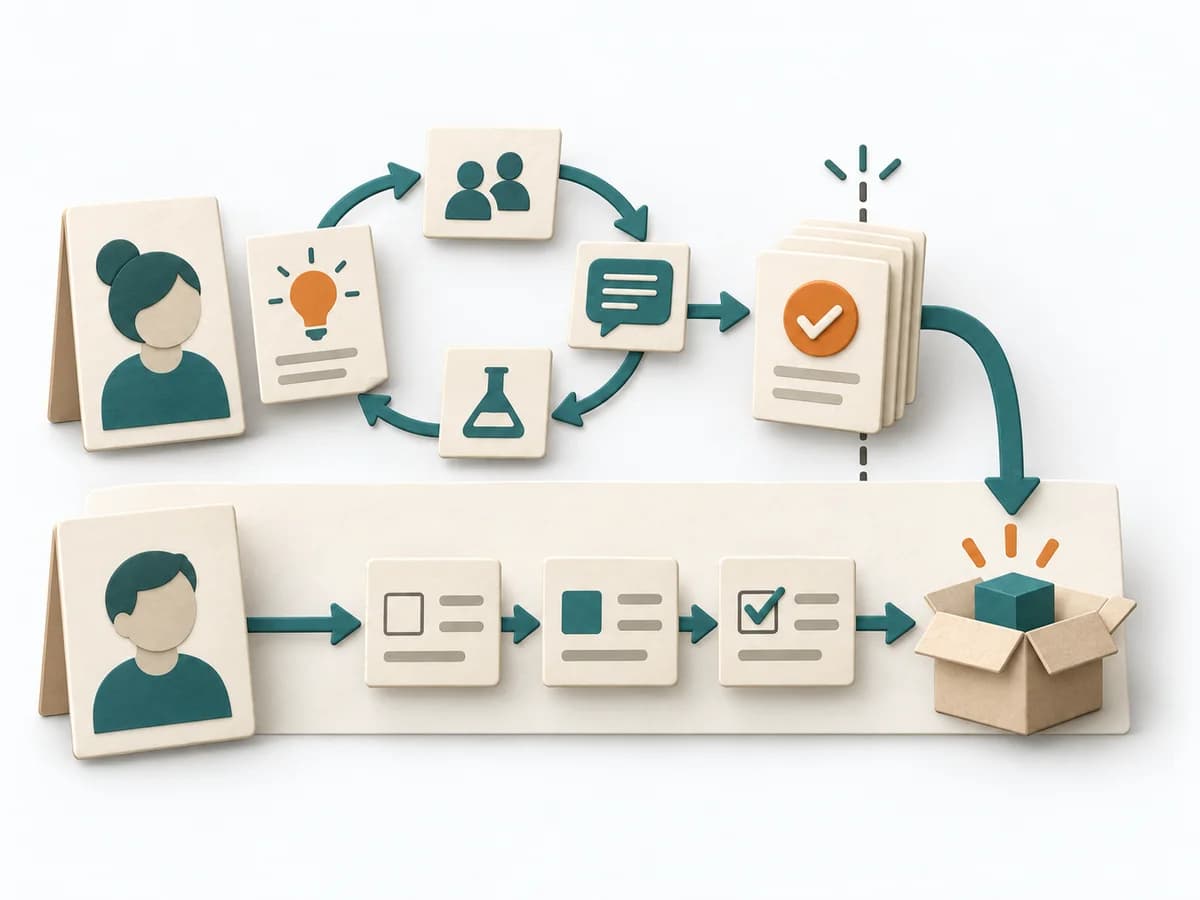
Separates discovery and delivery so that validated stories only move into implementation after learning loops.
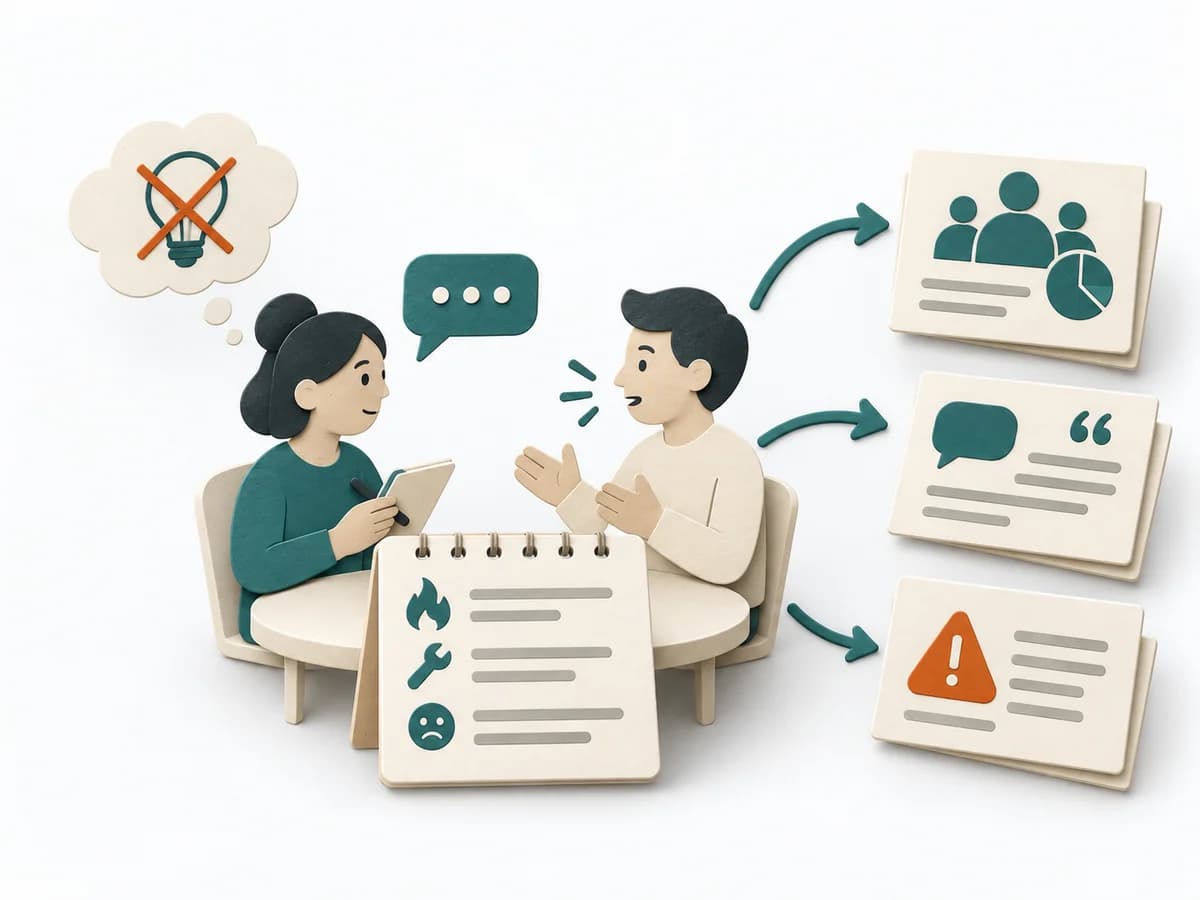
Clarifies customer problems, solution ideas, and evidence by framing problem hypotheses, recruiting the target group, and assessing problem risk.
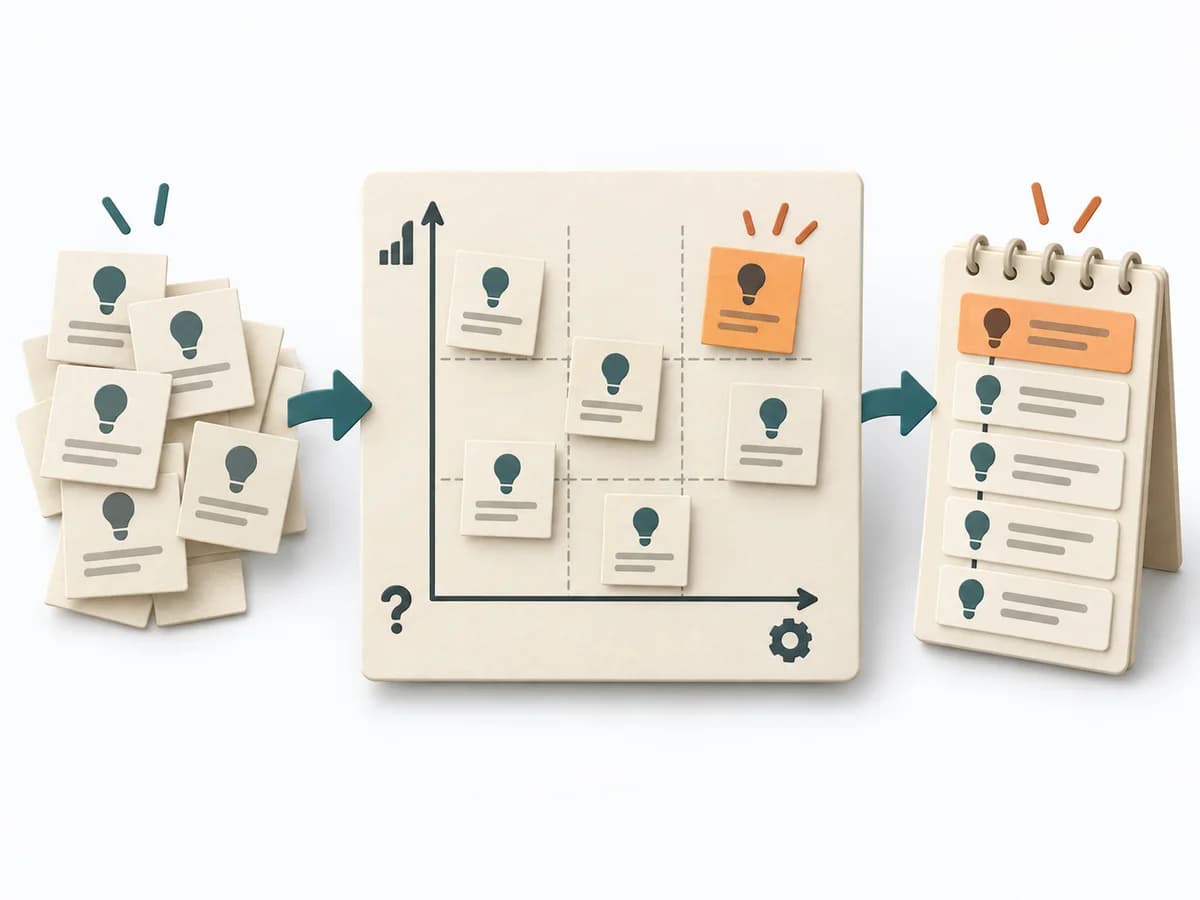
Moves customer problem, solution idea, and evidence toward a concrete result through "take over the hypothesis list", "define the risk scale", and "select the top hypotheses for the next tests".
Moves customer problem, solution idea, and evidence toward a concrete result through "list assumptions", "map assumptions to dimensions", and "derive the test plan".
