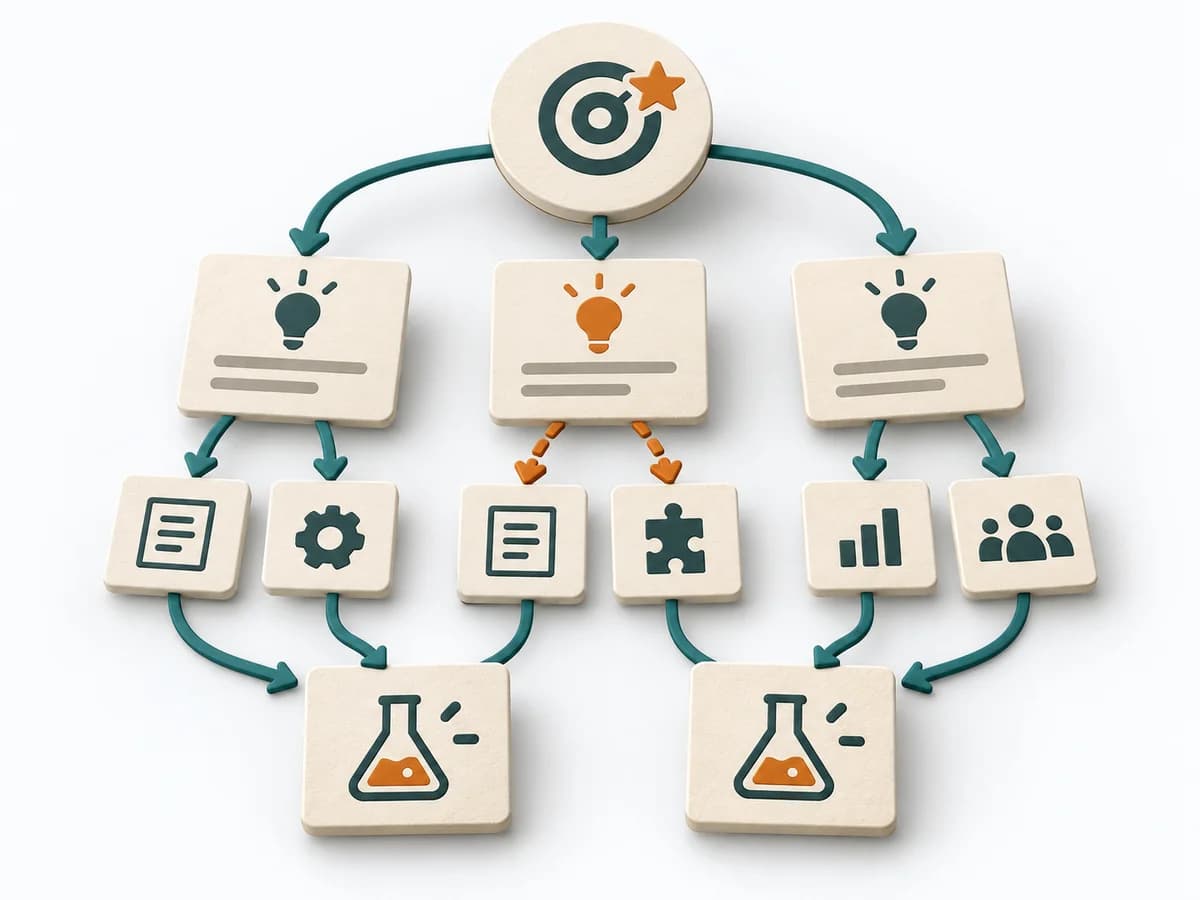
Purpose
When uncertainty and delivery run in parallel, it separates learning work from implementation while keeping both connected. It prevents unvalidated ideas from falling directly into the delivery stream.
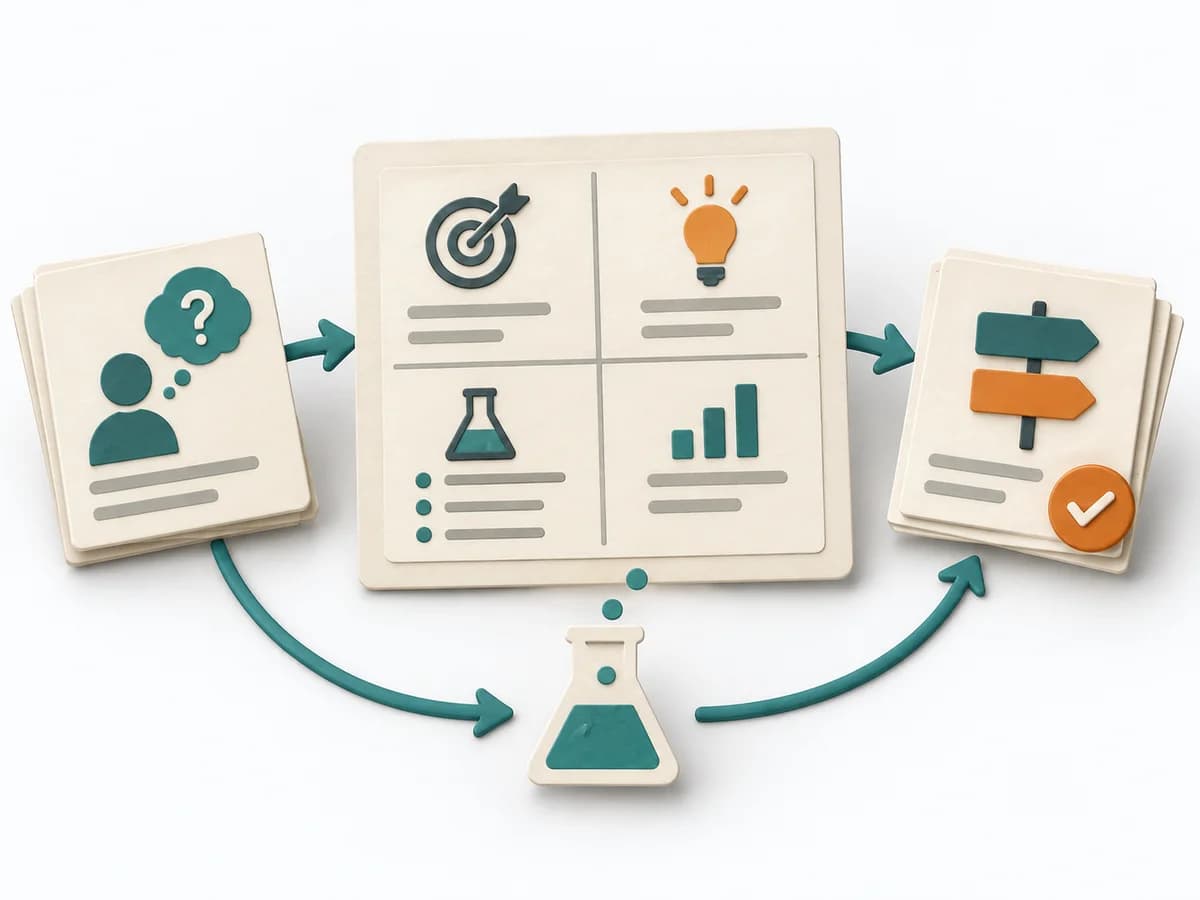
Product Discovery Process model
Connects continuous discovery and delivery so validated product opportunities become deliverable solutions.
Discovery tests value, usability, feasibility, and business viability with Product, Design, and Engineering. Delivery builds robust solutions; both tracks are parallel activities of one team, not separate departments.
Which solution is valuable, usable, feasible, and viable enough for delivery?
Dual Track Agile uses parallel discovery risk work and delivery with shared outcome accountability. Assessments remain justified and context-bound.
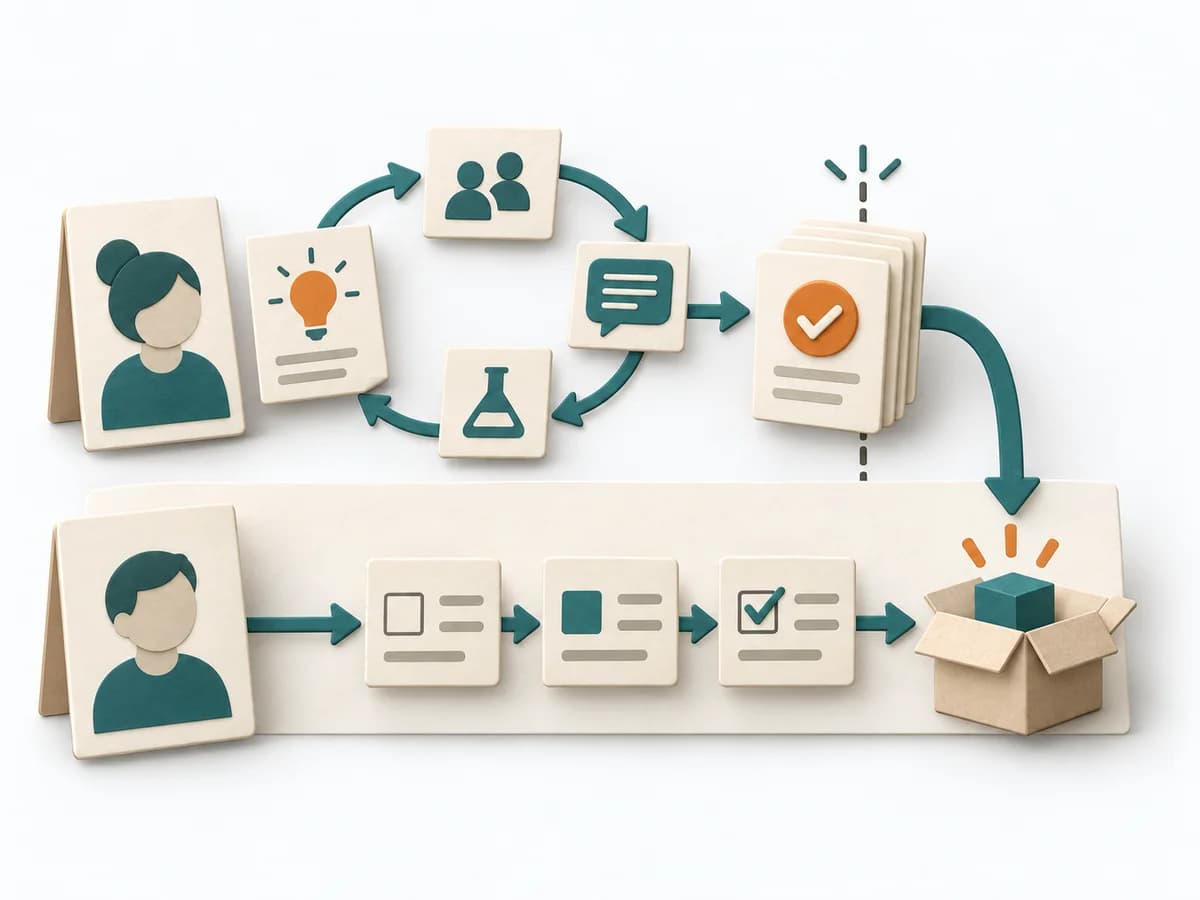
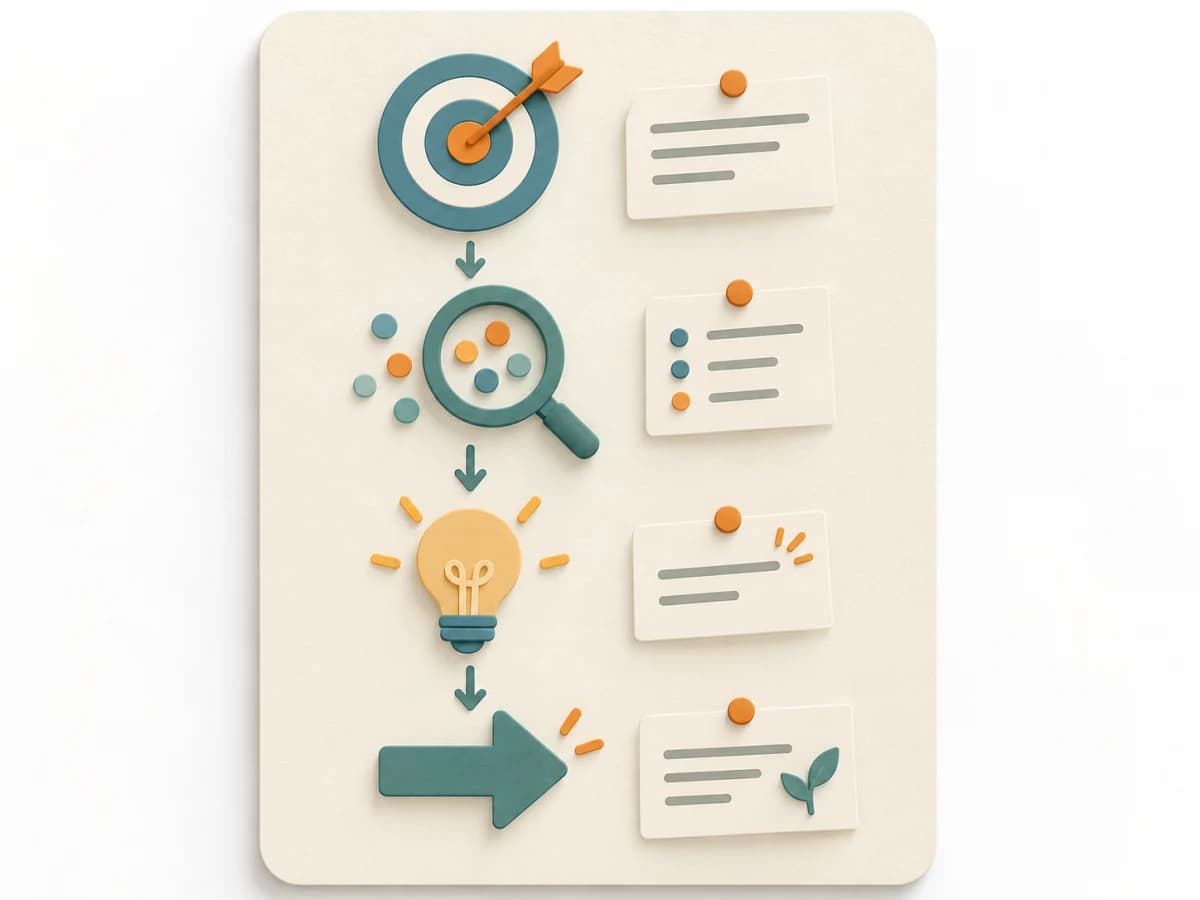
Opportunity
Focus outcome and opportunity with customer and business evidence.
Test risks
Test value, usability, feasibility, and viability with prototypes.
Delivery slice
Deliver the validated solution as a thin robust slice.
Outcome
Measure use and impact and derive the next discovery question.
Update after new evidence or a material context change and retain the previous version.
For product teams with a continuous outcome mission and real decision authority.
discovery-to-delivery flow with traceable sources, assumptions, and domain decisions.
Owners, dates, and next review for discovery-to-delivery flow.
Fictional worked example
parallel discovery risk work and delivery with shared outcome accountability as a precise working structure with a fictional example.
Outcome/opportunity information to record
Entscheidung schneller wiederfinden.
Four risks information to record
Value, Usability, Feasibility, Viability getestet.
Delivery slice information to record
Facettensuche als End-to-End-Slice.
Outcome learning information to record
Time-on-Task steuert nächste Discovery.
The example demonstrates the domain logic of Dual Track Agile; worksheets remain blank.
Start with the core question: Which solution is valuable, usable, feasible, and viable enough for delivery?
When uncertainty and delivery run in parallel, it separates learning work from implementation while keeping both connected. It prevents unvalidated ideas from falling directly into the delivery stream.
It keeps discovery and delivery in separate but coupled modes of work and shifts validation ahead of implementation. This keeps learning possible without blocking the flow of delivery.
Dual-Track Agile holds up because learning work and delivery work are deliberately distinguished without losing their connection. Good application protects discovery from immediate delivery pressure while also ensuring that insights transition into implementation in time. The model becomes strong when both tracks are held together by clear handoff criteria, a shared understanding of goals, and joint priority, instead of falling apart into two separate worlds.
Introduce the model through real tensions between uncertainty and delivery pressure, and deliberately anchor the interface between the two work streams. It becomes especially revealing once validated insights first transition cleanly into actionable stories. Close with a few clear handoff rules, visible responsibilities, and a shared cadence for alignment.
The method guide walks execution through 4 phases, timing, 4 pitfalls, and clear stop criteria.
Open method guideYour perspective
Your feedback helps shape the next improvements to methodatlas.
Plan Dual Track Agile around its domain steps and the concrete decision question.
To be confirmed
To be confirmed
Establish and review the practice Time: Continuous
Complete this worksheet on paper or in your own document during the work.
Outcome/opportunity information to record
...
Four risks information to record
...
Delivery slice information to record
...
Outcome learning information to record
...
Enter only real input, sources, and decisions.
Expected artifact: opportunity brief
opportunity brief · source · uncertainty · next decision
Entry:
...
Expected artifact: risk evidence
risk evidence · source · uncertainty · next decision
Entry:
...
Expected artifact: production slice
production slice · source · uncertainty · next decision
Entry:
...
Expected artifact: outcome learning
outcome learning · source · uncertainty · next decision
Entry:
...
...
Method guide: https://methodatlas.meierhoff-systems.de/en/methods/dual-track-agile/run-sheet
Fitting alternatives with decision guidance, followed by other related methods.
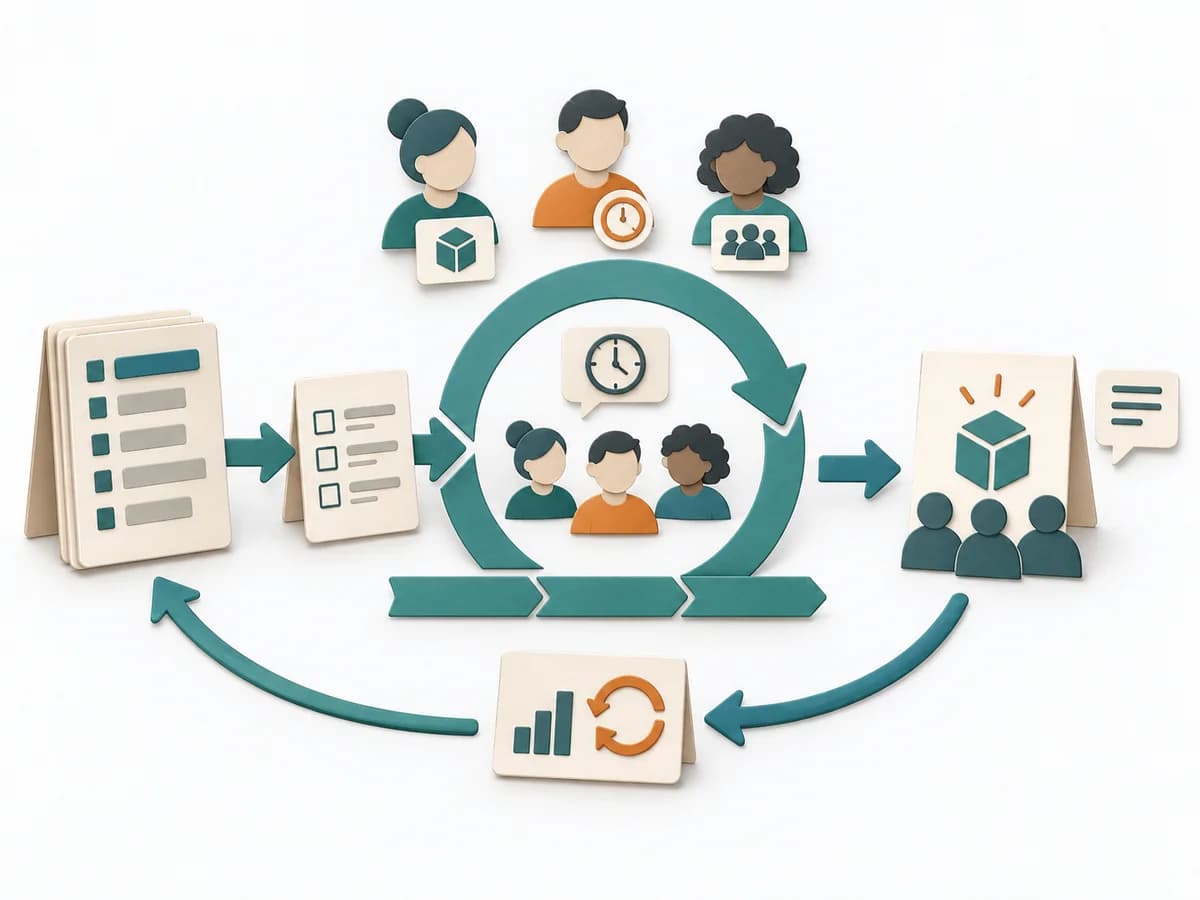
Instead of Dual-Track Agile, choose Scrum when you want to run a stable delivery organization with sprint rhythm, roles, and planning.
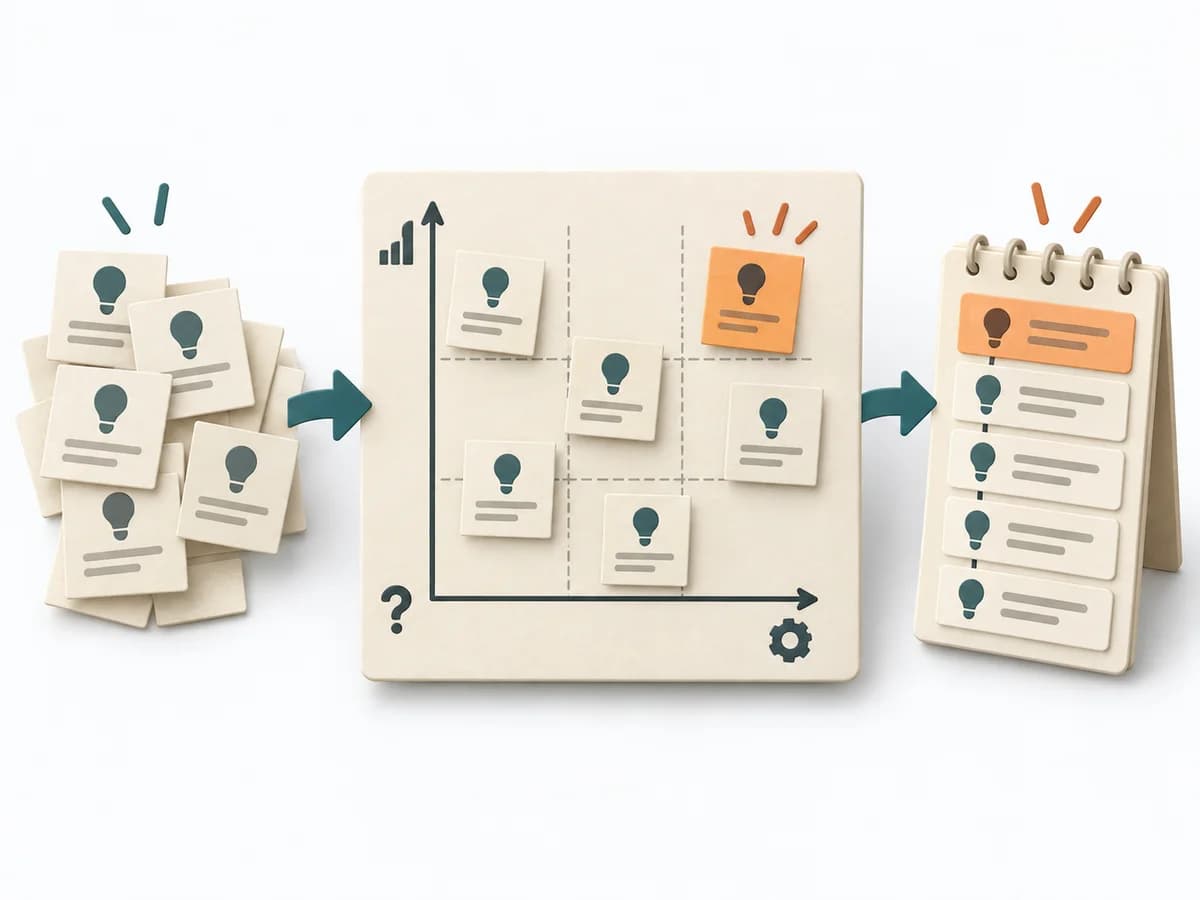
Moves customer problem, solution idea, and evidence toward a concrete result through "take over the hypothesis list", "define the risk scale", and "select the top hypotheses for the next tests".
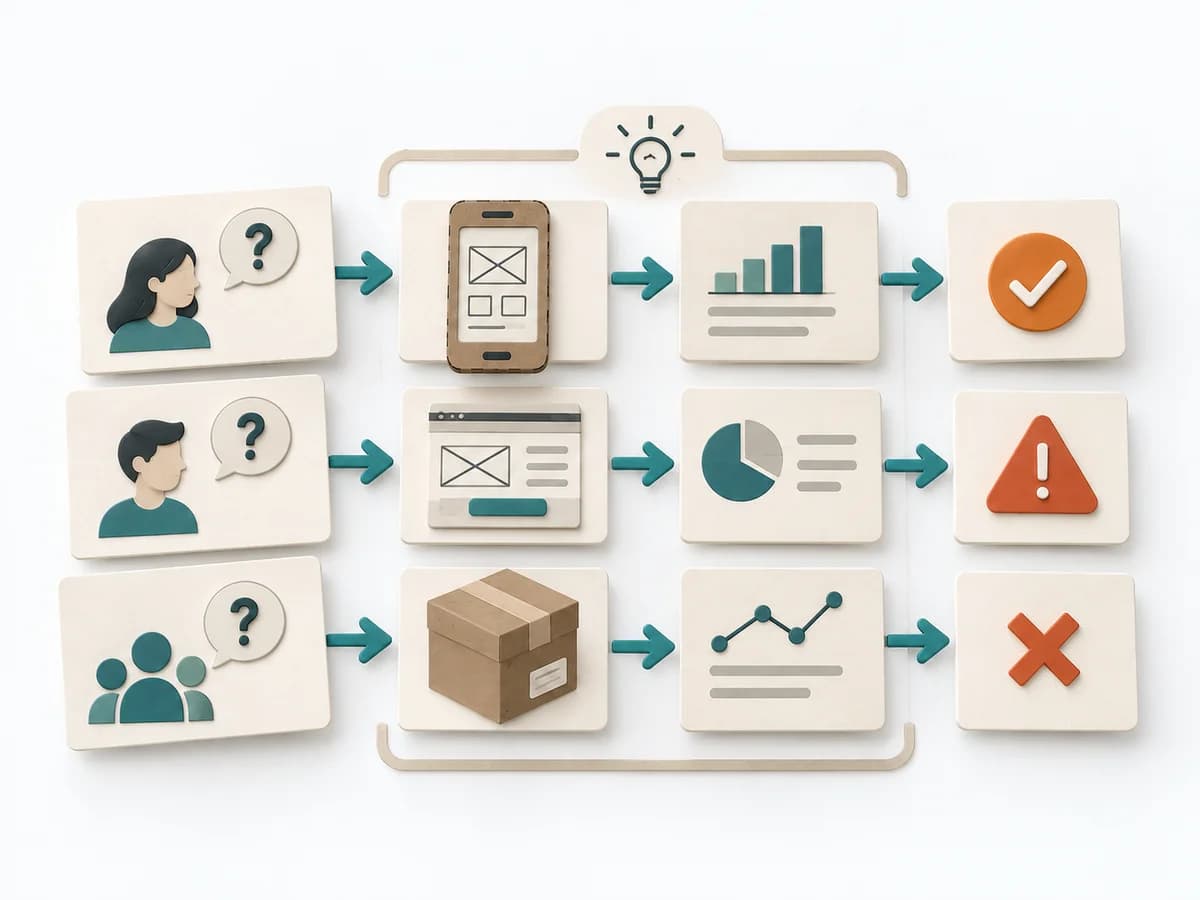
Moves customer problem, solution idea, and evidence toward a concrete result through "list assumptions", "map assumptions to dimensions", and "derive the test plan".
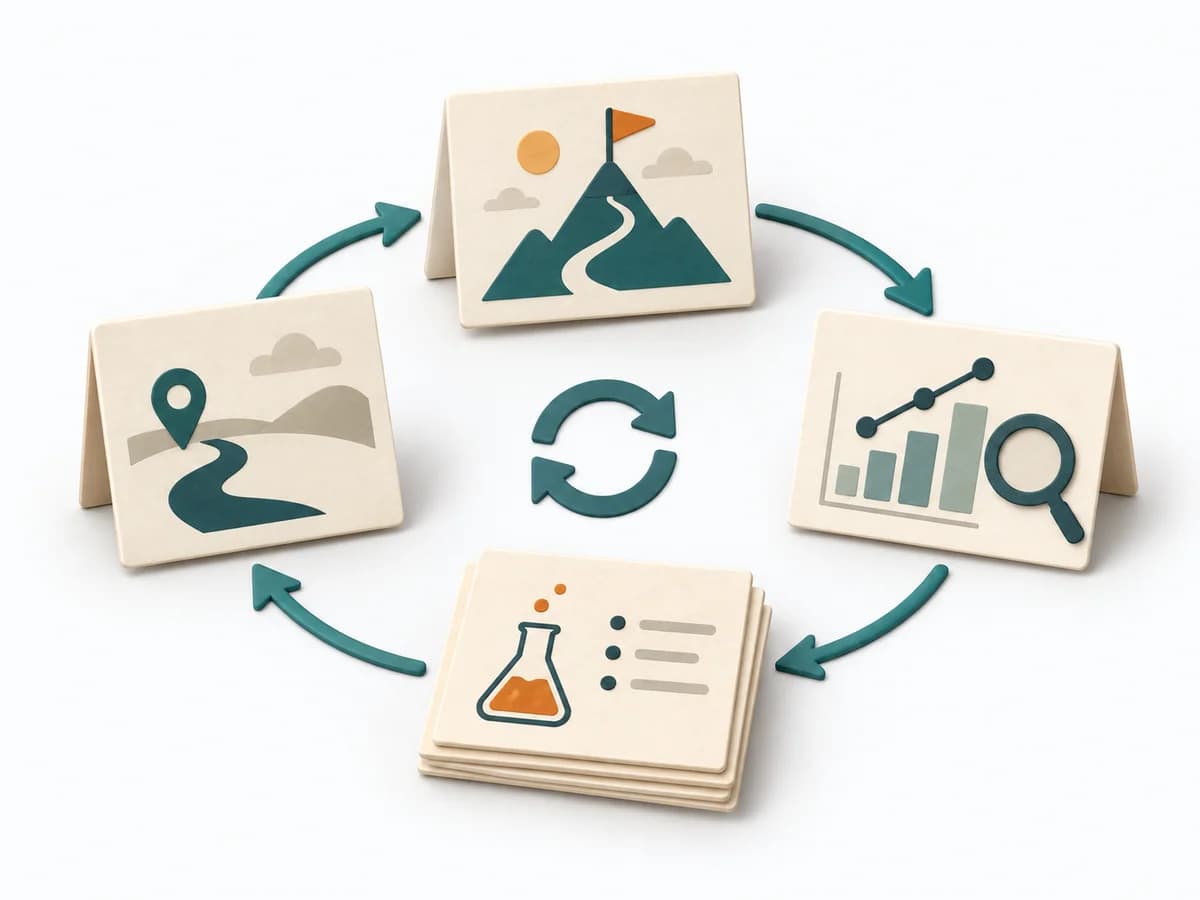
Uses a recurring learning loop to connect direction, current condition, target condition, and the next smallest experiment.
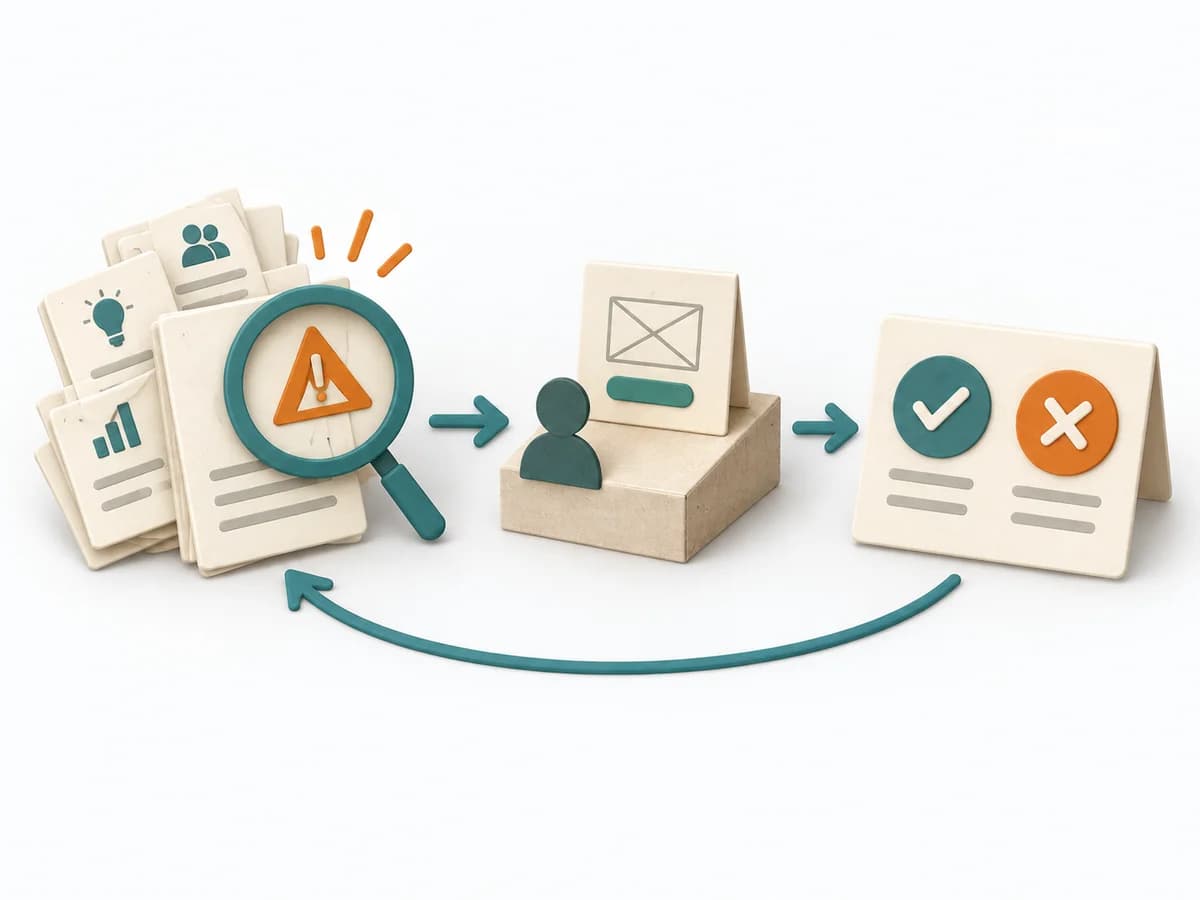
Moves customer problem, solution idea, and evidence toward a concrete result through "collect assumptions explicitly", "rate uncertainty and leverage for each assumption", and "decide to pivot, persevere, or stop".
Separates hypothesis, observation, insight, and next action into four fields after a test.