Purpose
When the picture of the problem still needs to become solid, it asks about real situations and consequences. It separates genuine suffering from mere interest in a solution.
Product Discovery Research method
Shows which real problem matters enough to a target group that they already act on it.
A Problem Interview investigates whether a suspected difficulty actually occurs in a target group’s life and examines consequences, alternatives and effort already spent.
Which real problem matters enough to this target group that they already act on it?
Context
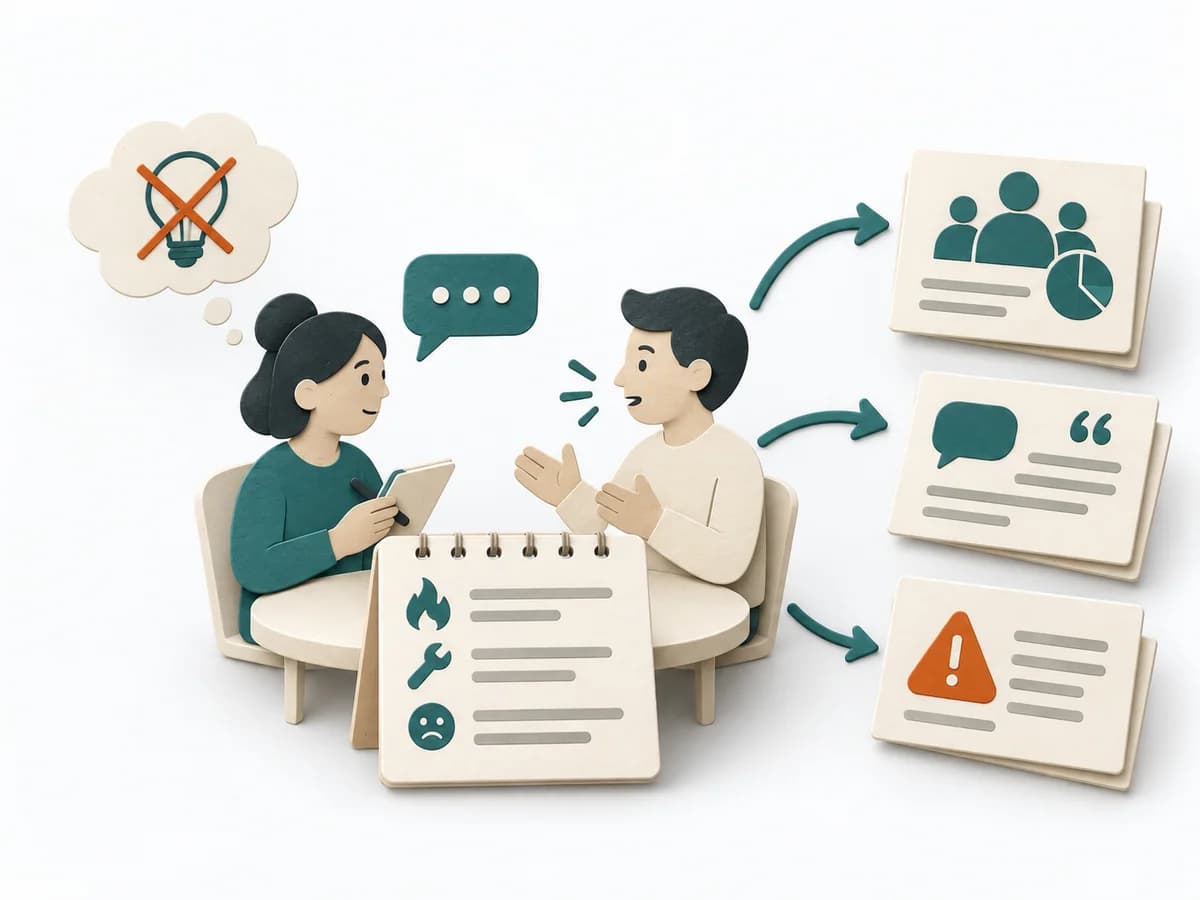
Clarify purpose and consent; explore role, workflow and last relevant occasion.
Incident
Reconstruct a specific incident with trigger, obstacle, frequency context and consequences.
Alternatives
Explore workarounds, existing solutions and effort actually invested.
Synthesis
Relate evidence, counterevidence and open assumptions separately to the hypothesis.
Compare evidence and counterevidence by segment; recruit next around unresolved contradictions.
Before choosing a solution, when problem, segment or urgency remain uncertain.
Problem profile with concrete incidents, consequences, alternatives and counterevidence.
The review interprets the relevance of the problem qualitatively and identifies suitable cases for further interviews. Its conclusions apply to the experiences examined.
Fictional example
A Problem Interview investigates whether a suspected difficulty actually occurs in a target group’s life and examines consequences, alternatives and effort already spent.
What problem is suspected for whom? Which finding would contradict it?
Fictional: part-time instructors lose time reconciling changing course rooms. Counterevidence would be an already reliable, effortless process.
Document the latest incident, sequence, consequences and basis for estimates.
P07 received a room change by email on Monday, noticed it only on arrival and recalls starting ten minutes late. The preceding week went smoothly.
What is currently done, paid for, worked around or deliberately tolerated?
P07 checks email before leaving; no tool purchased. This change arrived after departure. Timely change information matters more than another calendar view.
What supports or weakens the hypothesis? Which alternative explanation and gap remain?
The incident supports a notification problem, not yet a recurring reconciliation problem. Next case: an instructor with frequent changes; also examine change timing and channel.
All example details are fictional and illustrate the application.
Write the problem hypothesis internally; recruit people with relevant experience.
When the picture of the problem still needs to become solid, it asks about real situations and consequences. It separates genuine suffering from mere interest in a solution.
It explores triggers, workarounds, and impacts and turns them into a readable problem profile. The interview guide deliberately holds back the solution so the real friction, frequency, and urgency of the problem remain recognizable.
Problem Interviews work because, before any solution, they check whether a relevant problem is actually experienced, understood, and felt to be serious enough. Good use does not look for confirmation of its own hypothesis but for frequency, context, and consequence of the problem. This reveals whether a pain point is truly worth prioritizing or only looks big in the team's imagination.
Formulate open questions about situations, triggers, and past workarounds so the conversation does not turn to wishlist features. The conversation becomes valuable as soon as concrete stories reveal more than opinions about hypothetical solutions. In the end, recurring problems, strong quotes, and open validation questions should be cleanly separated.
The method guide walks execution through 4 phases, timing, 4 pitfalls, and clear stop criteria.
Open method guideYour perspective
Your feedback helps shape the next improvements to methodatlas.
Write the problem hypothesis internally; recruit people with relevant experience.
To be confirmed
To be confirmed
Complete cycle Time: 30–45 minutes conversation plus 15 minutes analysis.
Complete this worksheet on paper or in your own document during the work.
What problem is suspected for whom? Which finding would contradict it?
...
Document the latest incident, sequence, consequences and basis for estimates.
...
What is currently done, paid for, worked around or deliberately tolerated?
...
What supports or weakens the hypothesis? Which alternative explanation and gap remain?
...
Answer the prompts with your own information. Explicitly mark unknowns and assumptions.
Ash Maurya: Interview zu Running Lean
Expected artifact: Context profile
Is the person speaking from experience?
Entry:
...
Expected artifact: Problem incident
Is there a contrasting case without the problem?
Entry:
...
Expected artifact: Alternatives profile
Are effort and switching barriers concrete?
Entry:
...
Expected artifact: Problem profile
Could counterevidence change our direction?
Entry:
...
...
Method guide: https://methodatlas.meierhoff-systems.de/en/methods/problem-interview/run-sheet
Fitting alternatives with decision guidance, followed by other related methods.
Instead of Problem Interview, choose Opportunity Interview when you want to explore needs and opportunities before searching for solutions.
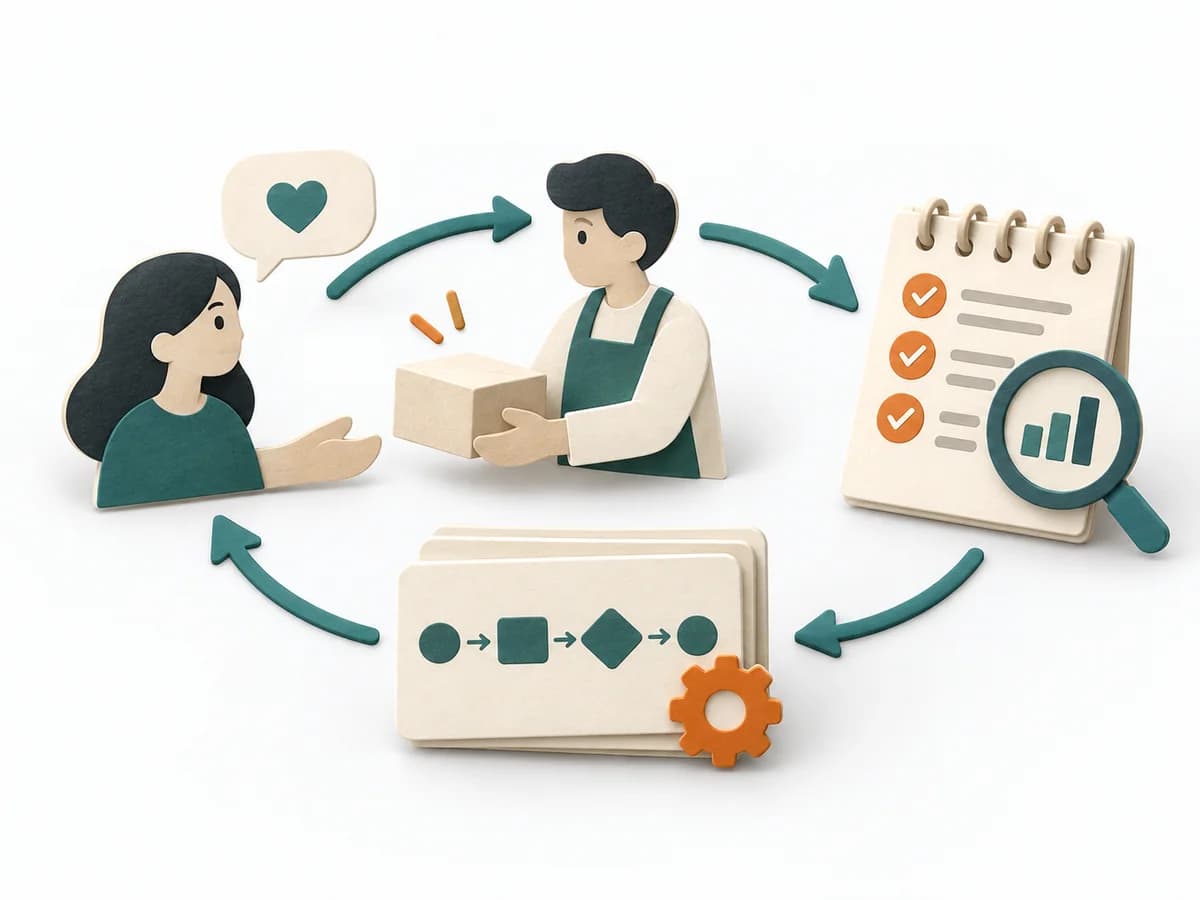
Personally guides early users through the service and shows which steps should later be automated.

Moves customer problem, solution idea, and evidence toward a concrete result through "collect outcomes from discovery", "define an importance scale", and "calculate and sort the score".
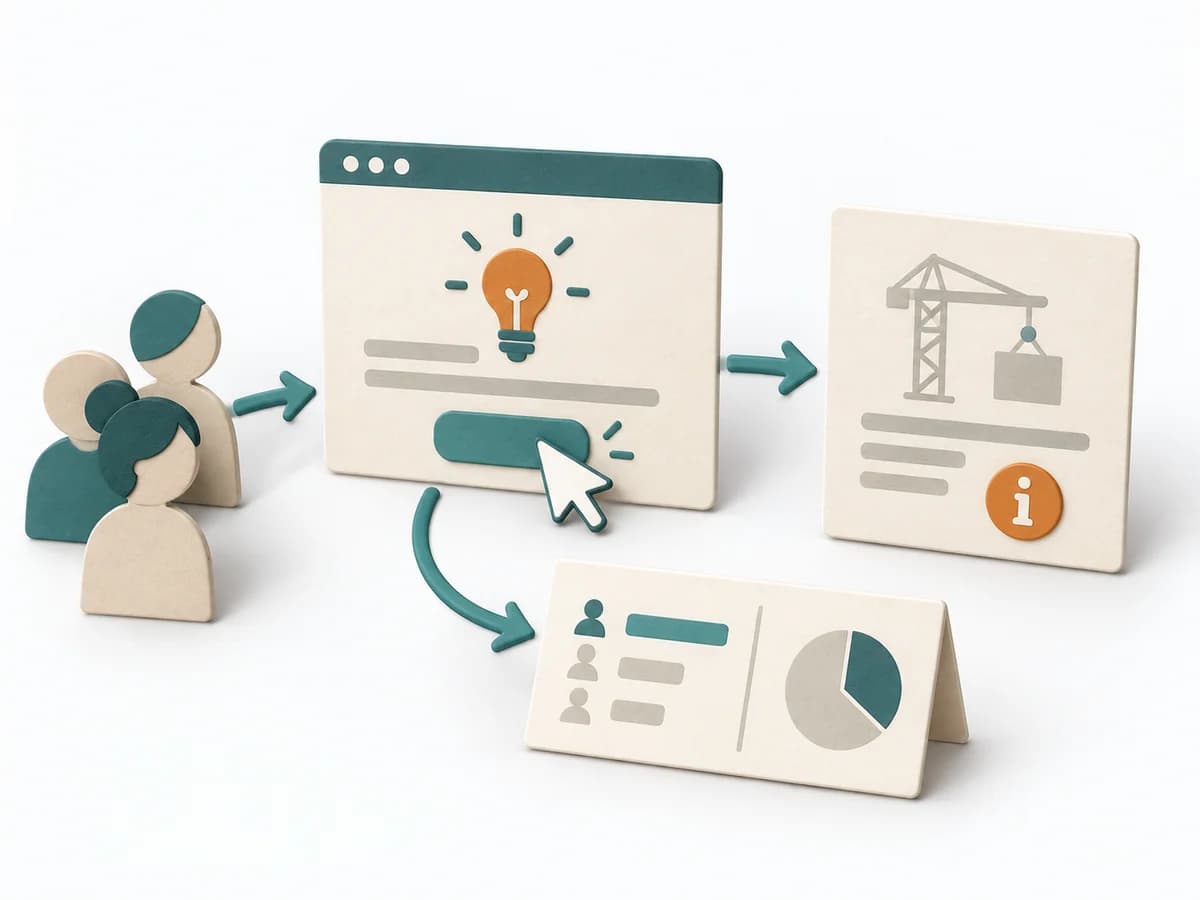
Measures real interest in an idea that has not been built yet, through clicks, sign-ups, or other interest signals.
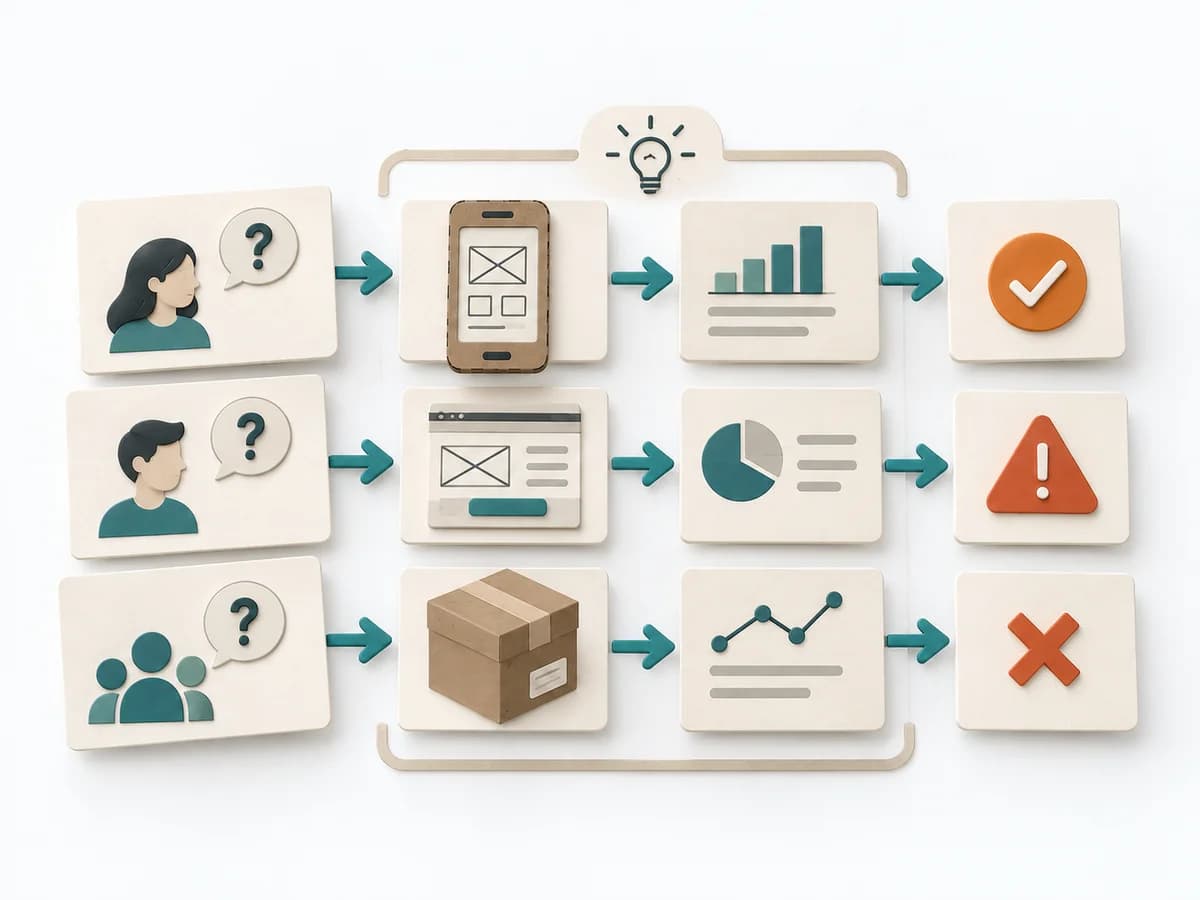
Moves customer problem, solution idea, and evidence toward a concrete result through "list assumptions", "map assumptions to dimensions", and "derive the test plan".
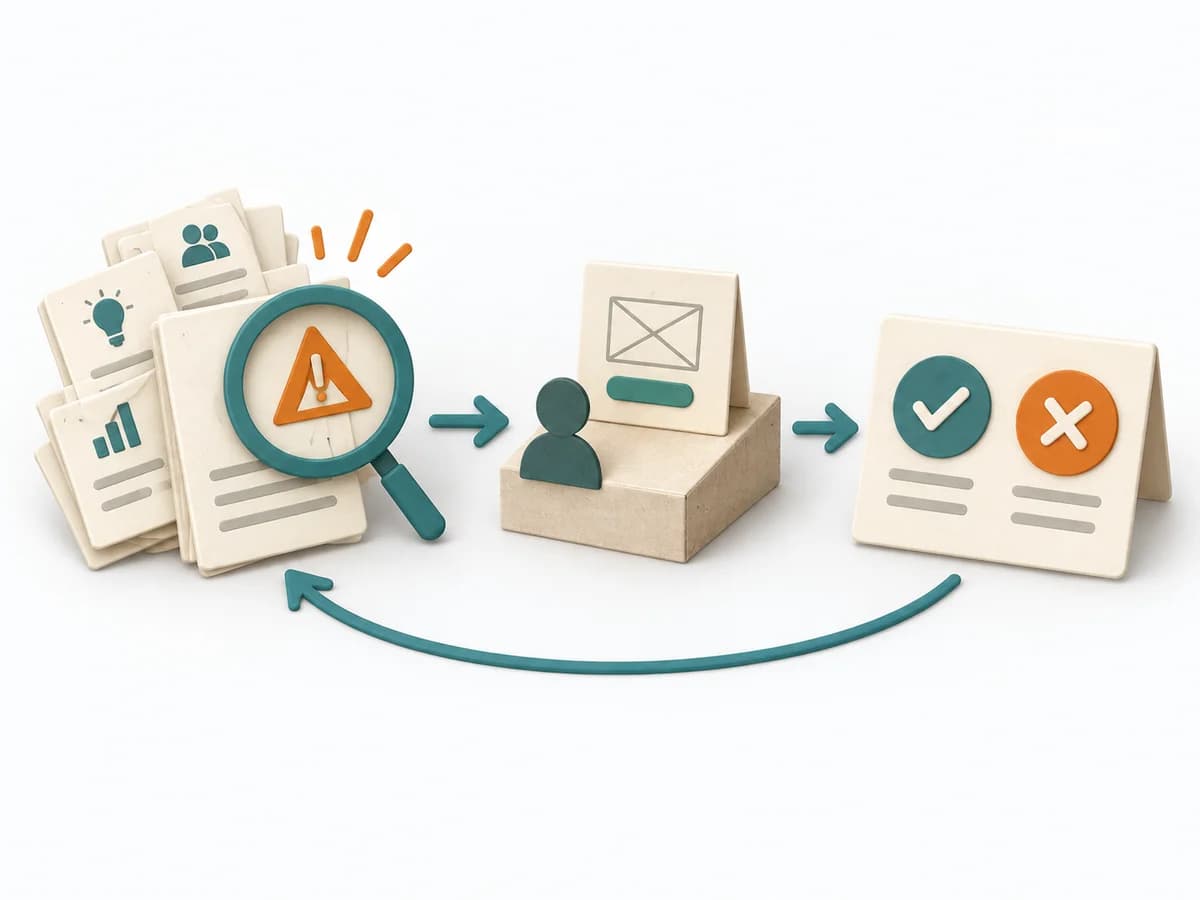
Moves customer problem, solution idea, and evidence toward a concrete result through "collect assumptions explicitly", "rate uncertainty and leverage for each assumption", and "decide to pivot, persevere, or stop".