Purpose
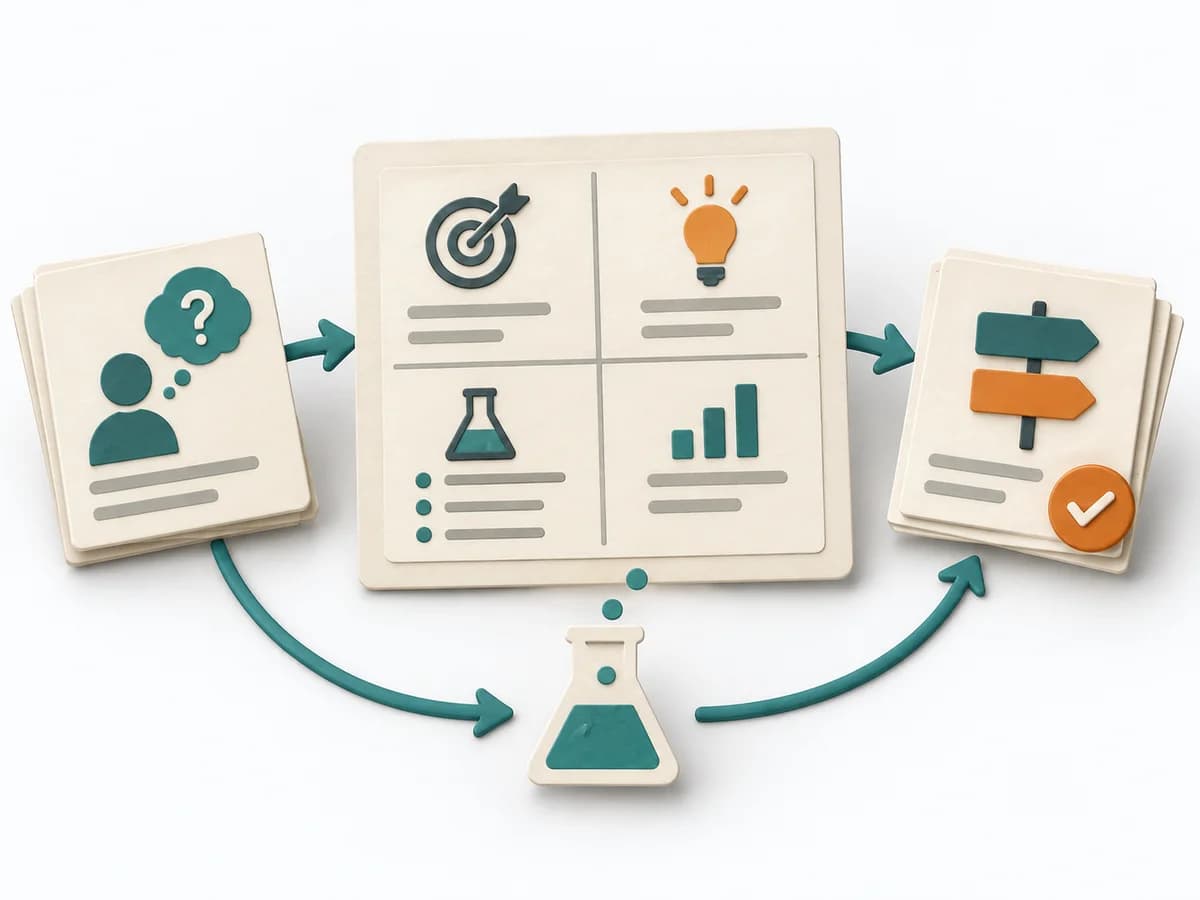
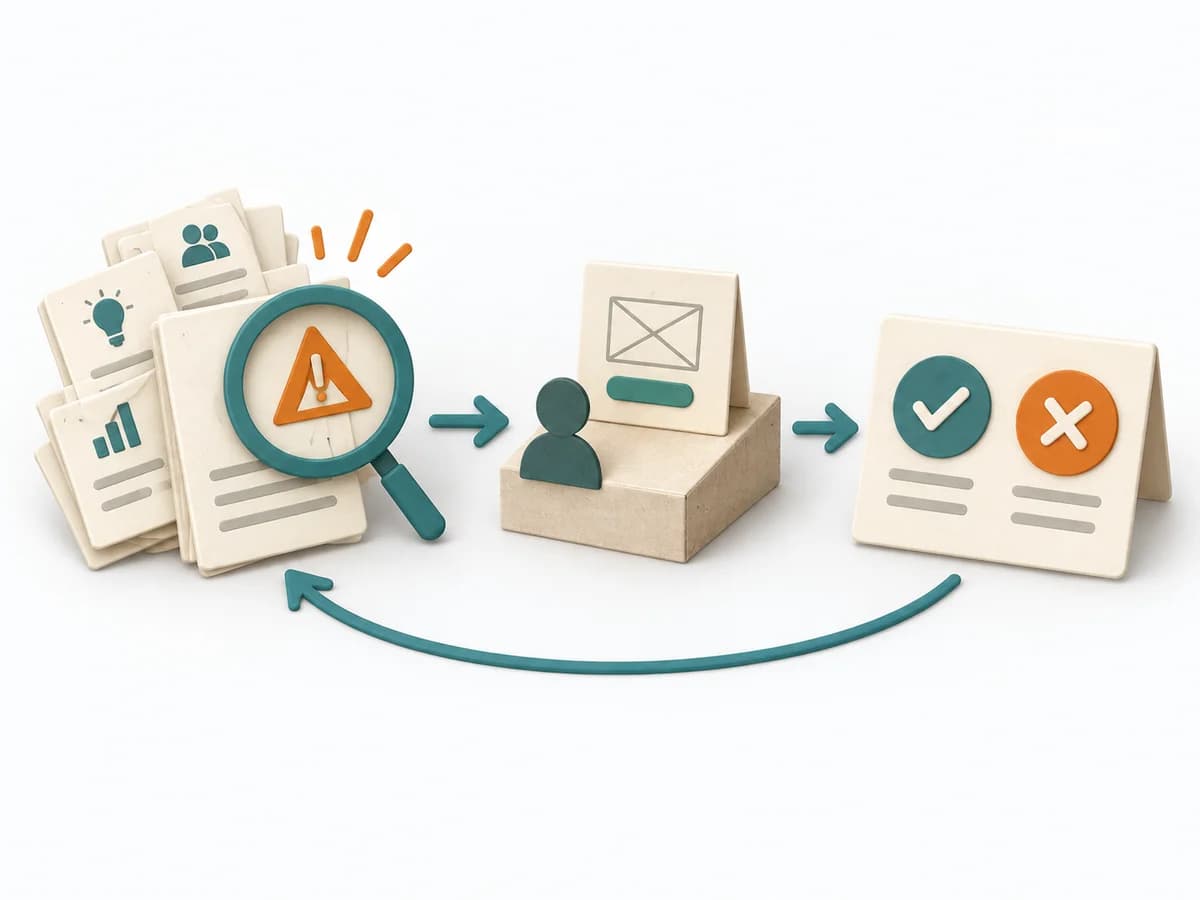
When many hypotheses compete for attention, it brings order to their learning sequence and importance. It separates problem, assumption, solution, and evidence. The result is captured as a prioritization canvas and a hypothesis backlog.
Product Discovery Canvas
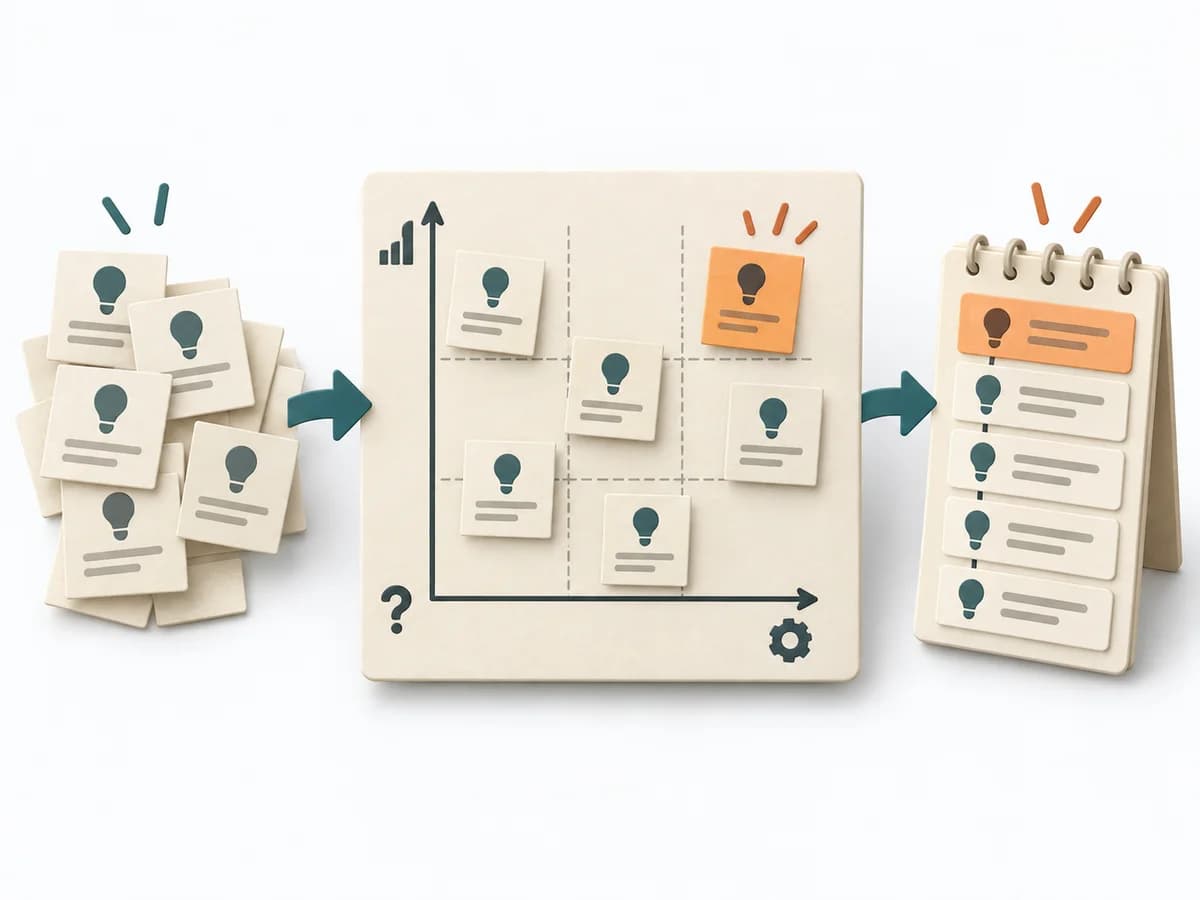
Orders discrete hypotheses by impact, evidence, and test effort into a justified testing backlog.
The canvas separates importance, certainty, and effort. A high-impact, weak-evidence hypothesis remains urgent even when testing is inconvenient. Effort breaks ties within comparable risk classes.
Which hypothesis will reduce the most decision risk next for a reasonable testing effort?
Impact and evidence determine decision risk; test effort optimises only within comparable risk classes.
Clarify
Create discrete claims with segment, behaviour or outcome, and context.
Assess
Justify decision impact, evidence strength, and dependencies for each hypothesis.
Order
Address high-impact, weak-evidence items first and use effort only to sequence comparable risks.
Plan
Set test, metric, threshold, and decision for the highest priorities.
After each test, update evidence, priority, and dependencies; archive completed hypotheses with their result.
Useful when several concrete hypotheses already exist. Break broad questions into assumptions first.
Discrete hypotheses with impact, evidence strength, dependencies, and ranking rationale.
Top hypotheses with test, threshold, owner, window, and reprioritisation date.
Fictional worked example
Decision impact and evidence determine risk; effort supports sequencing.
| Hypothesis | Hypothesis | Impact if wrong | Evidence strength | Test effort and dependency | Rank and next test |
|---|---|---|---|---|---|
| H3 pricingWillingness to pay | Project leads pay €39 per month for audit-ready exports. | High: the pricing claim carries the revenue model. | Weak: stated interest, no purchase behaviour. | Medium; needs a concrete offer, no technical dependency. | Rank 1; 10 pricing conversations with purchase option, pass ≥4 commitments; owner Product. |
Effort does not replace risk. High impact and weak evidence dominate priority.
Start with the core question: Which hypothesis will reduce the most decision risk next for a reasonable testing effort?
When many hypotheses compete for attention, it brings order to their learning sequence and importance. It separates problem, assumption, solution, and evidence. The result is captured as a prioritization canvas and a hypothesis backlog.
It places hypotheses on a shared prioritization surface by impact, uncertainty, and dependency. This turns a collection of assumptions into a clear learning path with a traceable order.
The Hypothesis Prioritization Canvas, often used in discovery coaching at Strategyzer and in Lean UX settings, helps teams build a pipeline of tests. It combines ratings because high risk alone often leads directly to expensive experiments. Only the combination with low evidence and low cost identifies the best next hypothesis.
Define the scales before the session, otherwise the rating slides into gut feeling. Discuss diverging assessments instead of averaging them away.
The method guide walks execution through 4 phases, timing, 4 pitfalls, and clear stop criteria.
Open method guideYour perspective
Your feedback helps shape the next improvements to methodatlas.
Plan Hypothesis Prioritization Canvas with real scope, suitable roles, and a clear decision objective.
To be confirmed
To be confirmed
Plan the full workshop Time: 45–60 minutes
Complete this worksheet on paper or in your own document during the work.
| Hypothesis | Testable claim | level + rationale | source + strength | effort · dependency | rank · test · owner |
|---|---|---|---|---|---|
| H3 pricing |
Justify every rating with a source or decision consequence.
Strategyzer: Formulating Strong Hypotheses
Expected artifact: Comparable hypotheses
Claim · segment · context · evidence
Entry:
...
Expected artifact: Justified risk assessment
Impact · evidence · dependency · rationale
Entry:
...
Expected artifact: Prioritised backlog
Rank · rationale · owner · test window
Entry:
...
Expected artifact: Testing backlog
Hypothesis · test · threshold · owner · date
Entry:
...
...
Method guide: https://methodatlas.meierhoff-systems.de/en/methods/hypothesis-prioritization-canvas/run-sheet
Fitting alternatives with decision guidance, followed by other related methods.
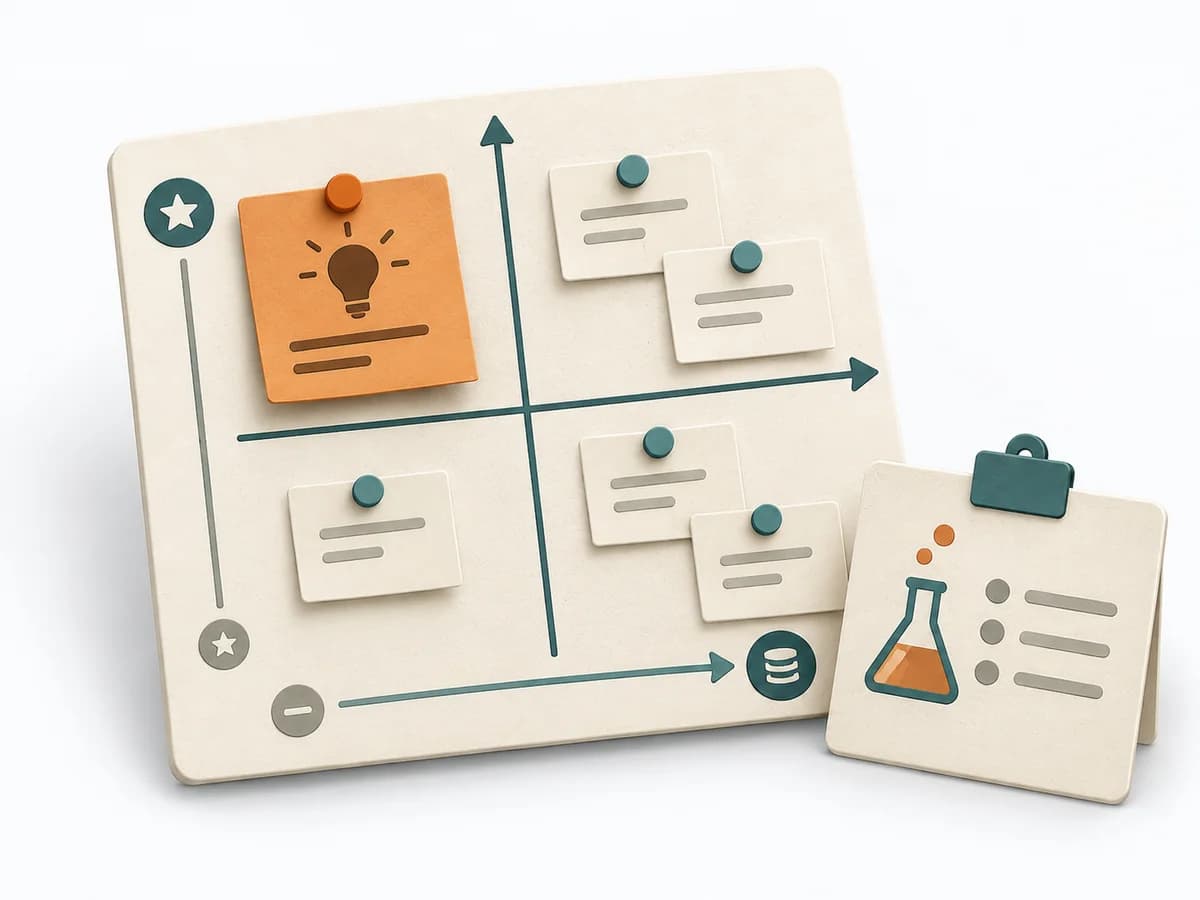
Instead of Hypothesis Prioritization Canvas, choose Assumption Mapping when you want to order assumptions by uncertainty and risk and then test them in a targeted way.
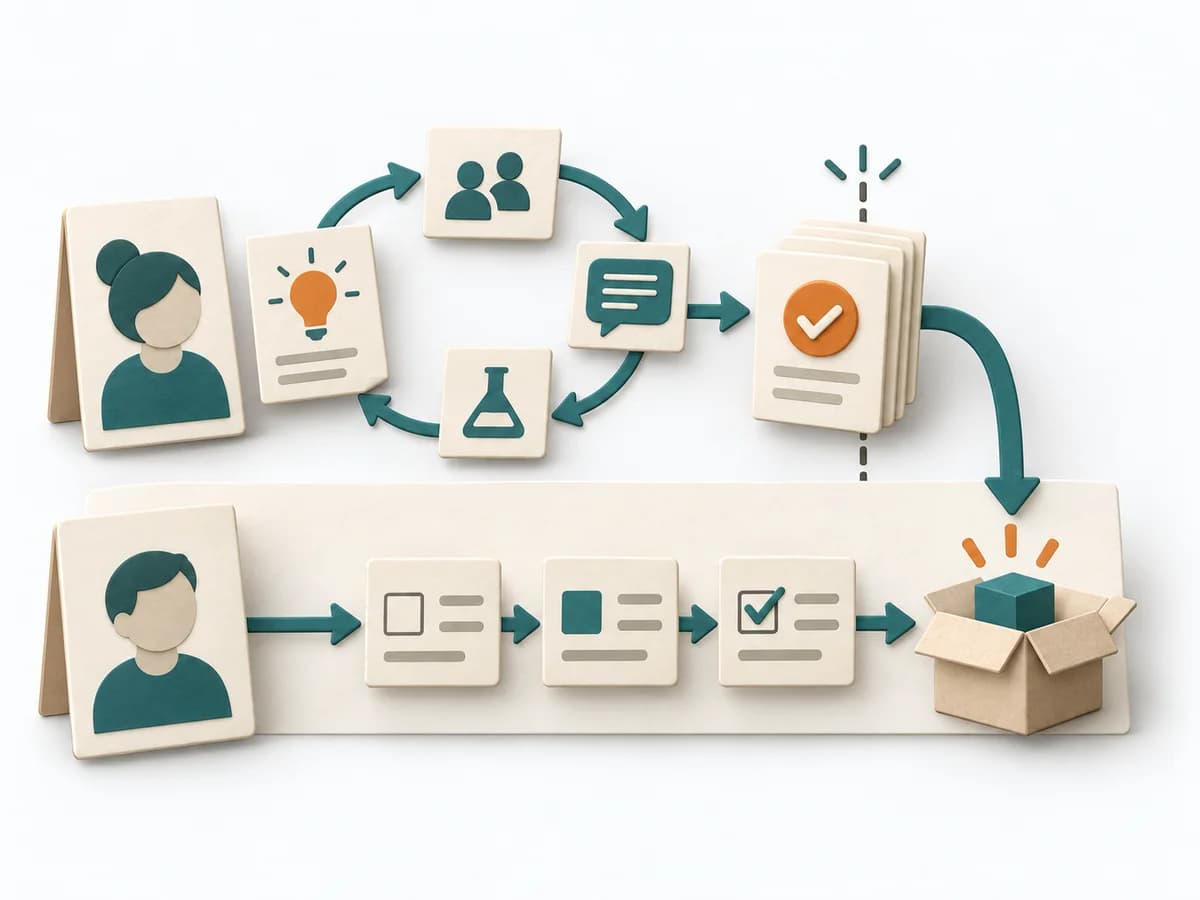
Separates discovery and delivery so that validated stories only move into implementation after learning loops.
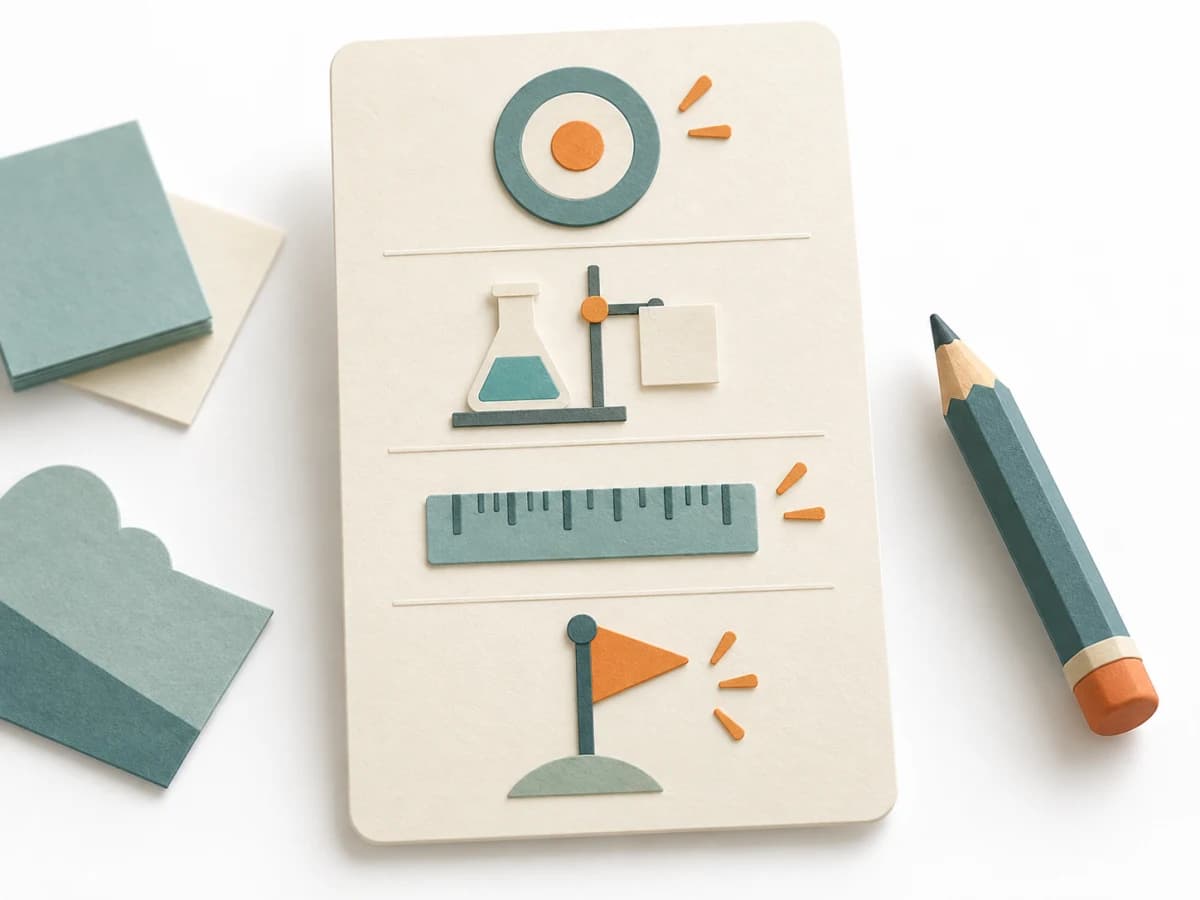
Condenses hypothesis, test, metric, and success threshold onto one card before execution.
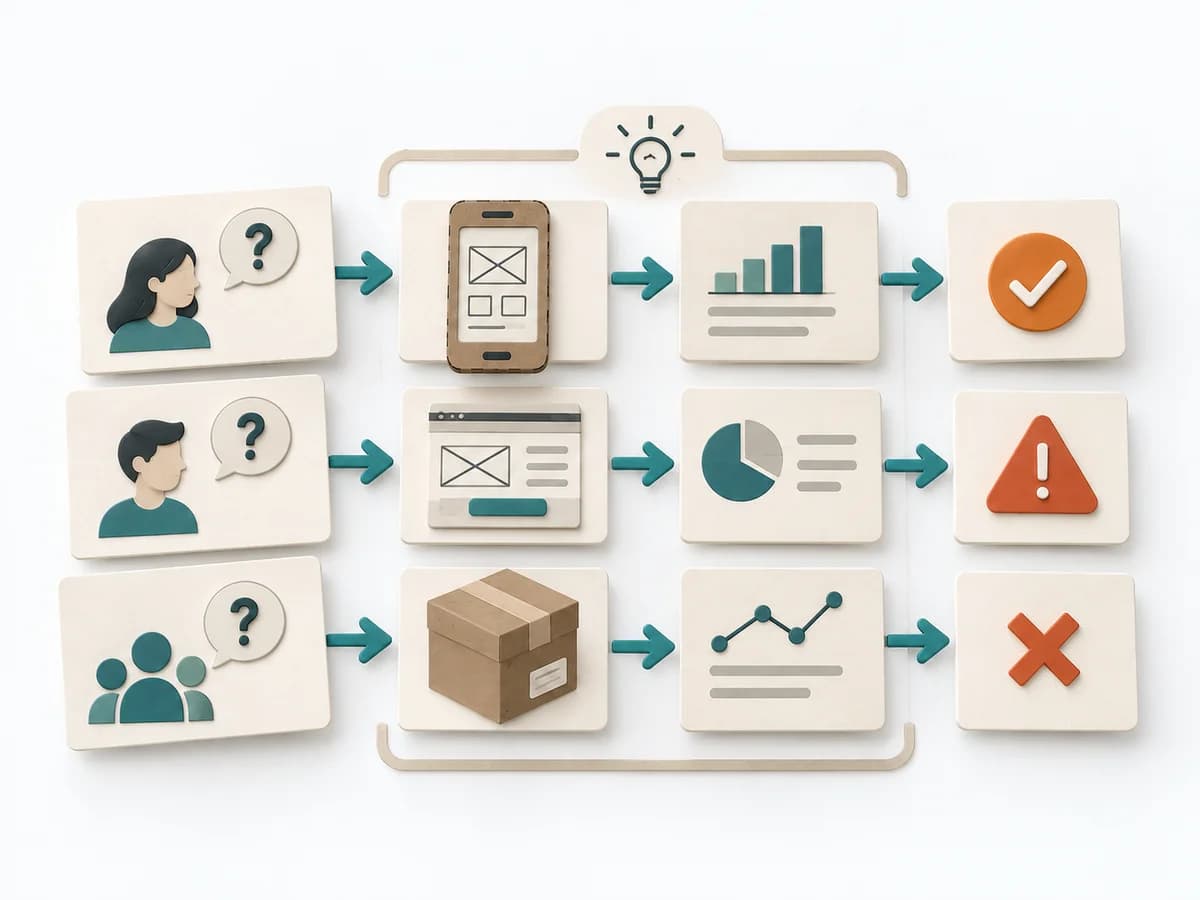
Moves customer problem, solution idea, and evidence toward a concrete result through "list assumptions", "map assumptions to dimensions", and "derive the test plan".
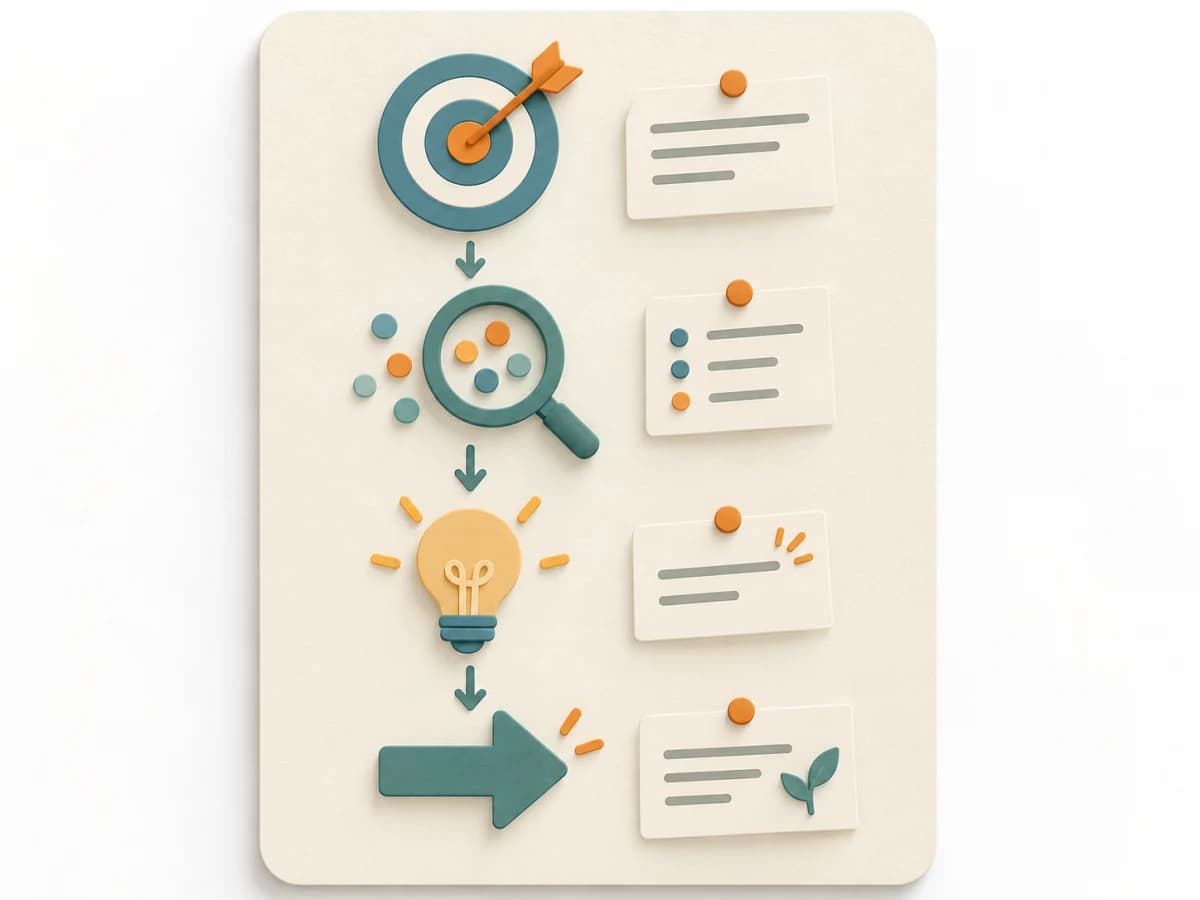
Separates hypothesis, observation, insight, and next action into four fields after a test.
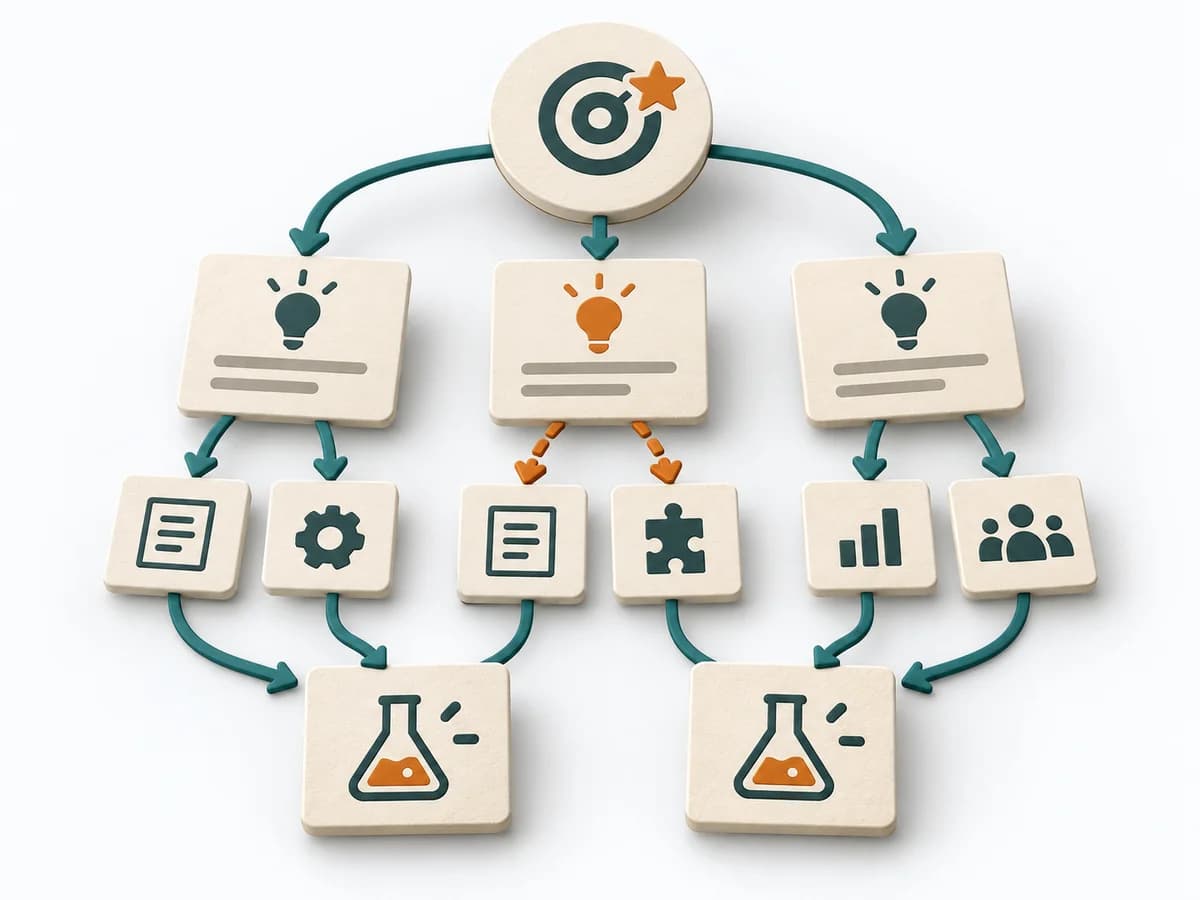
Links outcomes, opportunities, solution paths, and experiments into a tree that makes discovery work steerable.