methodatlas
Playbook

Improve Service Experience

Move from visible pain points to frontstage, backstage, and ownership improvements.

Steps4 methods
Time1-3 days
FormatWorkshop
Outcome

A prioritized improvement picture with journey, blueprint, process gaps, and opportunities.

At the end you have

Journey MapService BlueprintProcess MapOpportunity Tree

Decision point

You can decide which touchpoints, backstage issues, and ownership gaps to improve first.

Next step

Own top actions, plan as test or implementation, and measure impact on service signals.

Ideal for

  • Service design
  • Customer support journeys
  • Cross-team processes with customer impact

Not good for

  • Pure technical refactoring
  • Products without visible touchpoints
Preparation

What should be clear before you start

Roles

  • Service or product owner
  • Frontstage and backstage roles
  • Operations, support, or delivery representatives

Inputs

  • Pain points and customer feedback
  • existing process information
  • known systems, roles, and handoffs

Setup

  • Choose journey scope
  • Separate customer and internal perspectives
  • Involve action owners for decision clarity
Flow

Method path

4 methods
  1. 1UX ResearchJourney Map

    Customer Journey Mapping

    How does this group experience the chosen scenario across its phases, and where would learning or improvement help?

    Why this step?

    The Journey Map makes experiences, expectations, and pain points visible from the customer perspective.

    The critical touchpoints are then connected with internal processes and systems.

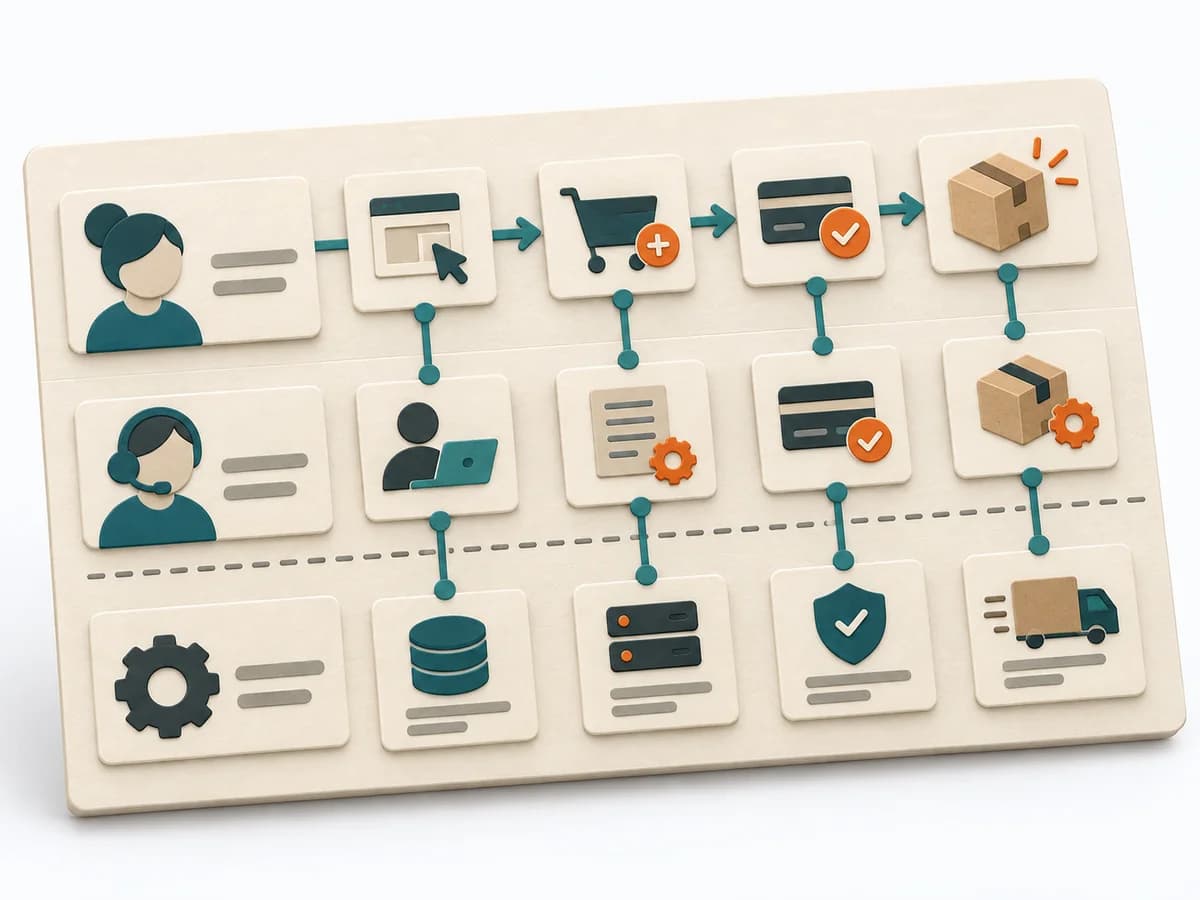
    Paper illustration of a journey map with four connected phases, several experience lanes and a point marked for closer investigation.
  2. 2UX DesignService Blueprint

    Service Blueprinting

    Where do customer actions depend on backstage work, systems, or handoffs?

    Why this step?

    The Service Blueprint shows which backstage activities, systems, and roles enable or disrupt customer experience.

    The backstage view is then deepened into concrete operational flows and handoffs.

    A paper-based illustration representing Service Blueprint with its core stages and visible working result.
  3. 3OperationsProcess Map

    Process Mapping

    What happens from trigger to outcome, where do decisions and handoffs occur, and what evidence supports change?

    Why this step?

    Process Mapping makes handoffs, waiting times, and responsibilities in the flow understandable.

    Opportunities are then derived from process gaps into solutions and ideas.

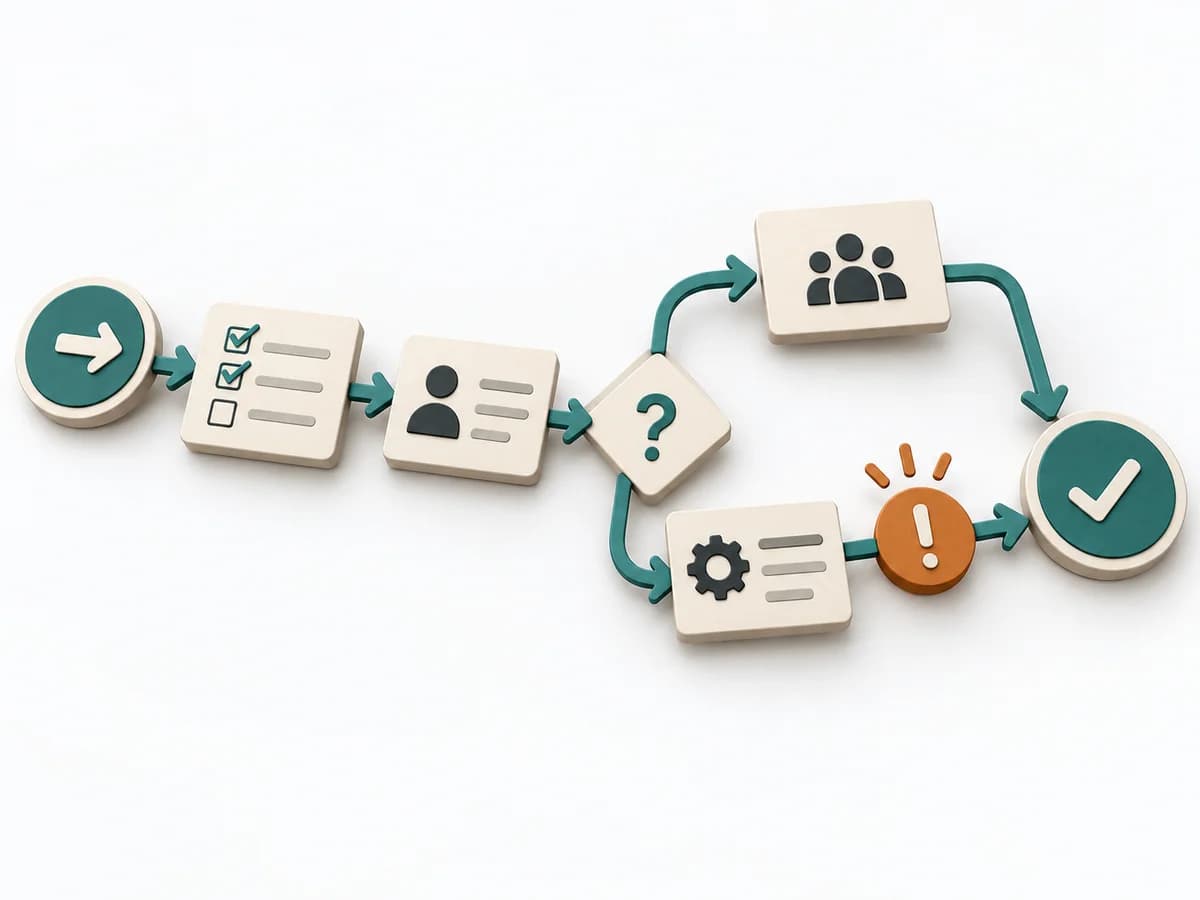
    Process Mapping method illustration showing its working structure
  4. 4Product DiscoveryOpportunity Tree

    Opportunity Solution Tree

    Which evidence-grounded paths can achieve the desired outcome through customer needs and tested solutions?

    Why this step?

    The Opportunity Solution Tree connects improvement areas with solutions and measurable experiments.

    Prioritized opportunities move into implementation, experiment planning, or service roadmap.

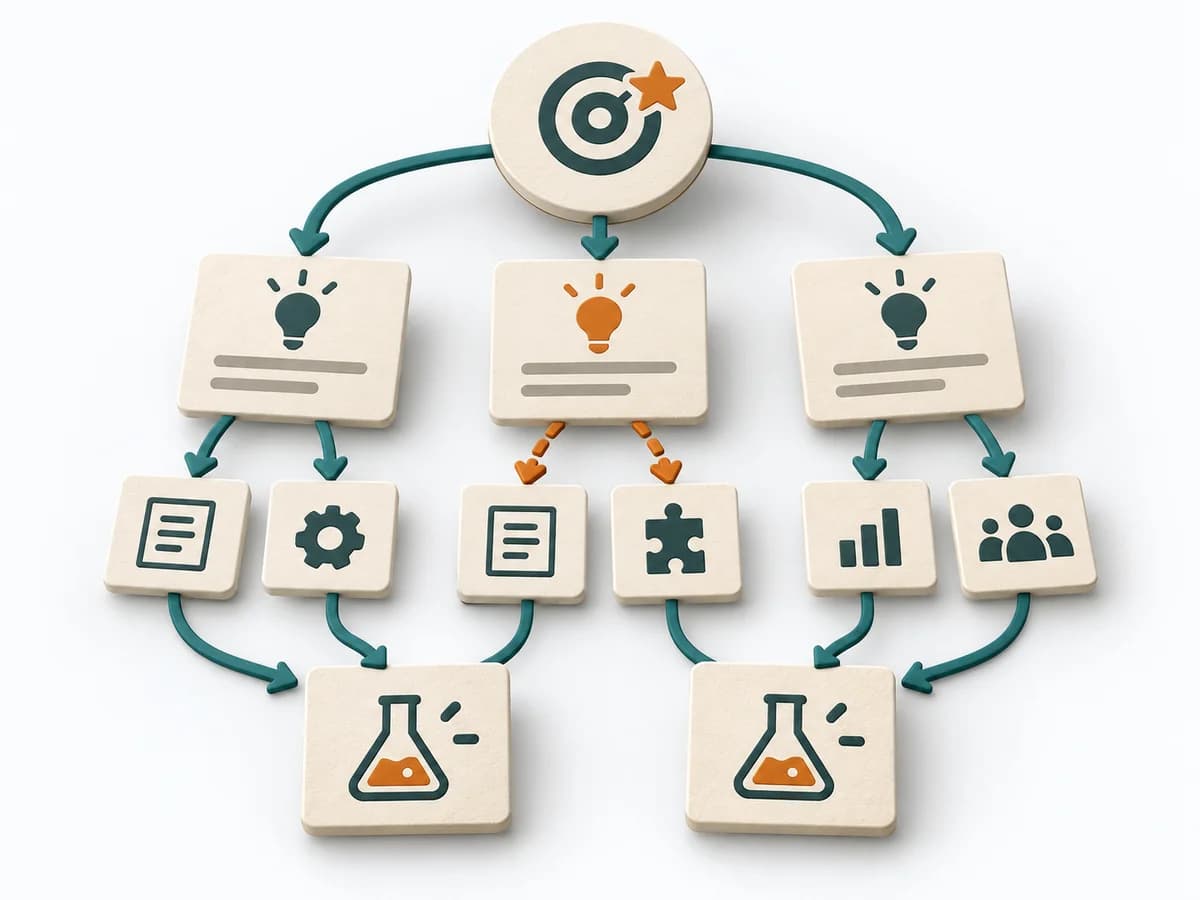
    Paper illustration of a branching tree with an outcome at its root, customer opportunities, solution options and small experiment cards.
Completion criteria
Templates

Artifacts for this playbook

Artifacts stay collapsed until you actually need them.

MarkdownShow template

Opportunity Solution Tree: Worksheet

Plan the initial setup and ongoing rhythm for outcomes, opportunities, solutions and tests.

# Opportunity Solution Tree: Worksheet

## Question
To be confirmed

## Desired outcome
To be confirmed

## Scope
Structure continuous discovery
Time: Ongoing practice; no total timebox

Complete this worksheet on paper or in your own document during the work.

## Preparation for this scope

### Method setup
- **Materials:** Outcome definition, sourced research notes, opportunity clusters, a shared tree and space for solution hypotheses and experiment cards.
- **Roles:** A product trio or cross-functional team with product, design/research and engineering; discovery ownership keeps the tree and evidence current.
- **Advance information:** Gather the outcome, target user and current product or customer evidence. Separate customer statements from interpretation.
- **Overall time needed:** Not a one-off workshop. Allow about 1–2 hours to frame the first tree; interviews, tests and updates continue across discovery cycles.
- **Setup:** Place the outcome above opportunities, solutions under the selected opportunity and experiments against solution assumptions. Deepen one target opportunity at a time.

### Prepare for the work steps

#### Outcome: Define a team-controllable outcome
- Product strategy and target user
- Available metric or observable behavior indicator

#### Opportunities: Structure customer opportunities
- Story-based customer interviews or observations
- Outcome and existing opportunity notes

#### Focus: Choose a target opportunity
- Outcome
- Opportunity map and related customer notes

#### Solutions: Explore multiple solution paths
- Target opportunity and outcome signal
- Product, design and technical perspectives

#### Learn: Test assumptions and update the tree
- Solution options and explicit assumptions
- Access to suitable users or data


## Opportunity Solution Tree

### Outcome
Which team-controllable result should improve?

...

### Customer opportunities
Which needs, pain points or desires from concrete customer situations could influence the outcome?

...

### Target opportunity
Which opportunity will guide the next discovery cycle, and why?

...

### Solution options
What different approaches could address this opportunity?

...

### Assumptions and tests
Which risky assumption will each test examine, and what decision follows?

...

Blank worksheet: choose one outcome, connect opportunities to evidence, select a target opportunity, then record solution hypotheses and tests.

[Source: Teresa Torres, Product Talk](https://www.producttalk.org/opportunity-solution-trees/)


## Outcome: Define a team-controllable outcome
Expected artifact: Outcome as the root of the tree

Outcome · target user · signal

Entry:

...

- [ ] Can the team influence the outcome through product decisions?

## Opportunities: Structure customer opportunities
Expected artifact: Customer opportunities with evidence

Need or obstacle · source · open question

Entry:

...

- [ ] Is each opportunity grounded in customer learning?
- [ ] Does it still hide a solution?

## Focus: Choose a target opportunity
Expected artifact: Selected target opportunity with rationale

Opportunity · evidence · rationale

Entry:

...

- [ ] Is the opportunity relevant and understood well enough to explore ideas?

## Solutions: Explore multiple solution paths
Expected artifact: Solution options with assumptions

Option · opportunity addressed · key assumption

Entry:

...

- [ ] Are there different ways to address the opportunity?

## Learn: Test assumptions and update the tree
Expected artifact: Updated tree with tests and decisions

Assumption · test · evidence · decision

Entry:

...

- [ ] Does the test examine an important solution assumption?
- [ ] Is the next decision stated before the test?

## Open questions and next steps

...

Method guide: https://methodatlas.meierhoff-systems.de/en/methods/opportunity-solution-tree/run-sheet