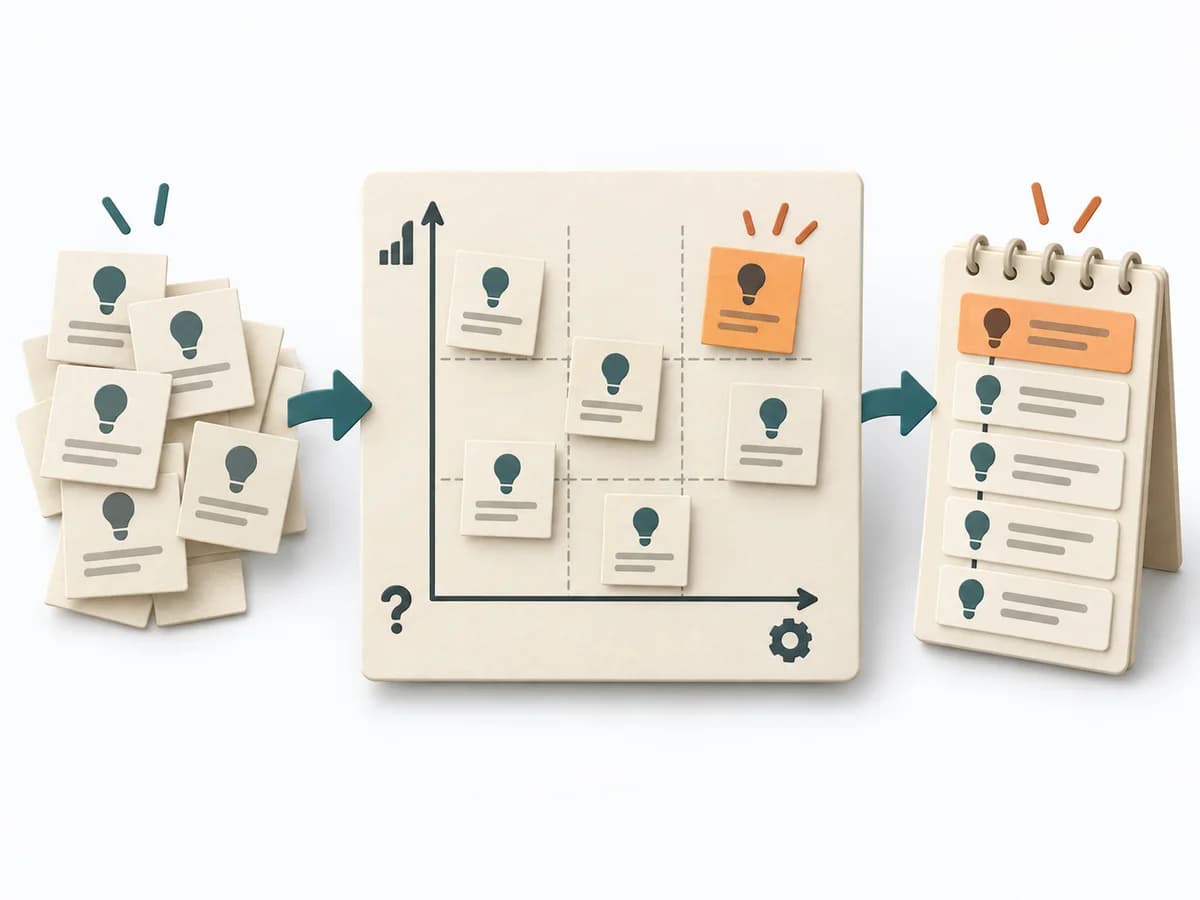
Purpose
When several minimal variants compete to answer the same question, it makes comparing and choosing between them cleaner. It separates problem, assumption, solution, and evidence. The result is captured as a Test Matrix and a Test Plan.
Product Discovery Research method
Matches critical assumptions to a test whose evidence strength, cost, duration, and realism fit the next decision.
The matrix prevents MVP from automatically meaning a small product. A fake door can test demand, concierge can observe value in a workflow, Wizard of Oz can test use of a manually delivered service, and a functional prototype can test feasibility. A test only answers the assumption it was designed for.
Which smallest test provides enough evidence for each critical assumption to support the next investment decision?
Test type follows the assumption. Fake door, concierge, Wizard of Oz, prototype, and spike create different evidence and cannot support the same claim.
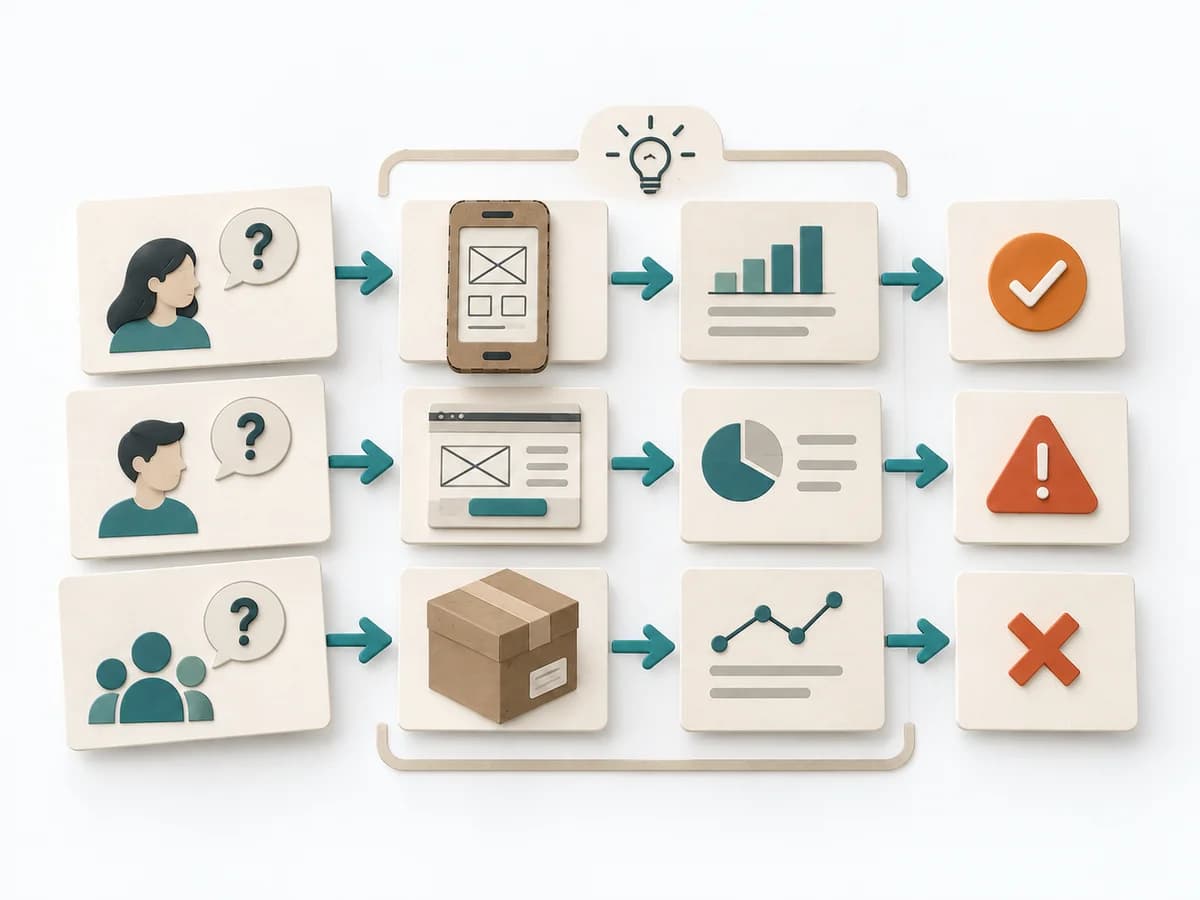
Assumptions
Expose critical desirability, viability, feasibility, and adaptability assumptions.
Match
Choose a test type with suitable evidence strength and realism for each top assumption.
Protocol
Document population, procedure, metric, threshold, and guardrails before launch.
Sequence
Set the next test and the condition for moving to stronger evidence.
Start with cheaper, weaker evidence and move deliberately toward behaviourally stronger tests when results justify it.
Useful when critical assumptions and an investment decision are known. Use interviews or field observation first for open problem discovery.
Critical assumptions with suitable test type, evidence strength, effort, and explicit limit.
Pre-set rules, guardrails, owners, and transition to the next stronger test.
Fictional worked example
Connect assumptions to test type, evidence strength, effort, and a pre-set decision.
| Assumption | Critical assumption | Suitable test type | Observation and evidence | Effort and guardrail | Threshold and next test |
|---|---|---|---|---|---|
| Review useDesirability before automation | Project leads use audit-ready exports in monthly reviews. | Concierge: manually prepared export for 12 suitable teams. | Observed review use; stronger than stated intent, no self-service evidence yet. | 5 working days; no sensitive production data; stop on compliance objection. | Pass ≥8 in review and ≥6 using a chart; then clickable prototype, else revisit segment/job. |
An MVP test validates only the assumption its measure actually addresses.
Start with the core question: Which smallest test provides enough evidence for each critical assumption to support the next investment decision?
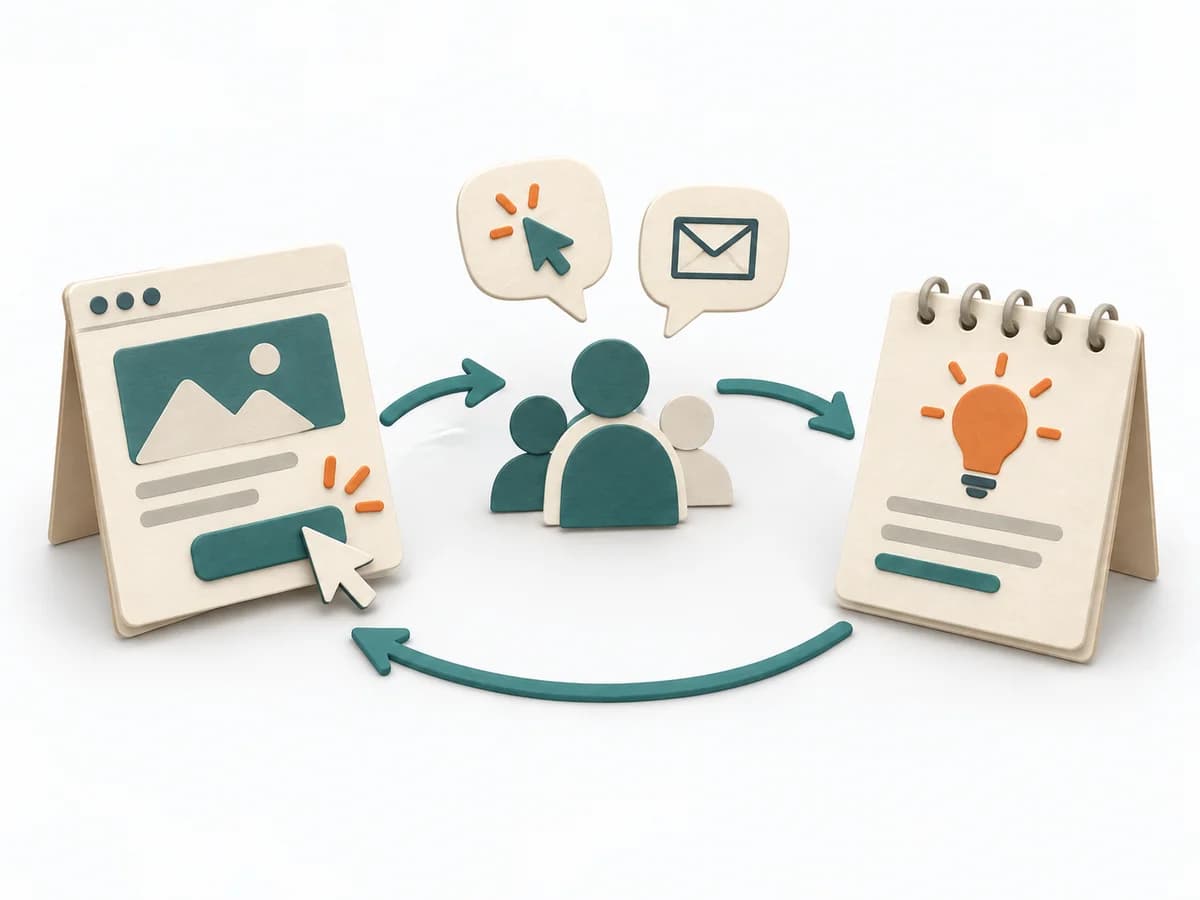
Implements the matrix's cheapest test stage as the first real demand test.

Uses a fake door as an early, evidence-rich test stage for desirability.
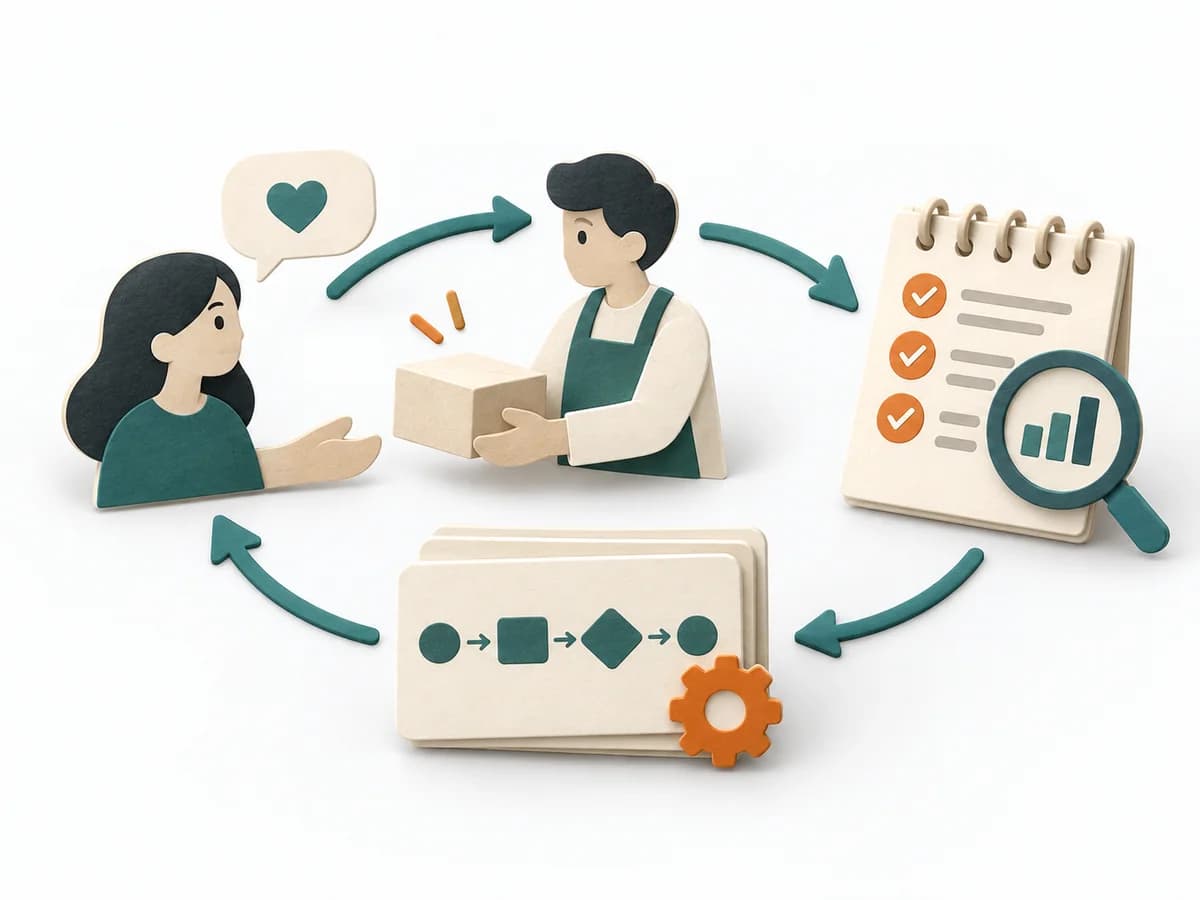
Implements a more elaborate, realistic test stage for validated assumptions.
When several minimal variants compete to answer the same question, it makes comparing and choosing between them cleaner. It separates problem, assumption, solution, and evidence. The result is captured as a Test Matrix and a Test Plan.
It places possible MVP forms alongside the hypotheses they are meant to test and the matching measurement logic. The comparison shows which test form delivers enough evidence and which variant would be too large or too weak.
The MVP Test Matrix is based on work by Strategyzer and David Bland. It maps assumptions across three dimensions, often desirability, feasibility, and viability, and shows which test design fits each assumption best. That prevents teams from reflexively using the same format for every risk.
Bring concrete examples of common test formats. Ask the team to explain why a format fits, not only which one they choose.
The method guide walks execution through 4 phases, timing, 4 pitfalls, and clear stop criteria.
Open method guideYour perspective
Your feedback helps shape the next improvements to methodatlas.
Plan MVP Test Matrix with real scope, suitable roles, and a clear decision objective.
To be confirmed
To be confirmed
Plan the full workshop Time: 45–60 minutes for selection and protocol
Complete this worksheet on paper or in your own document during the work.
| Assumption | assumption · dimension | fake door/concierge/wizard/prototype/spike | behaviour · strength · limit | duration · cost · guardrail | pass · fail · next |
|---|---|---|---|---|---|
| Review use |
Choose test type after assumption and decision; record the evidence limit.
Strategyzer: Select the Next Best Test
Expected artifact: Assumption portfolio
Dimension · assumption · evidence gap · decision
Entry:
...
Expected artifact: Test matrix
Assumption · test type · evidence strength · effort · limit
Entry:
...
Expected artifact: Test protocol
Population · procedure · metric · threshold · guardrail · decision
Entry:
...
Expected artifact: Sequenced test plan
Now · threshold · next · owner · review
Entry:
...
...
Method guide: https://methodatlas.meierhoff-systems.de/en/methods/mvp-test-matrix/run-sheet
Fitting alternatives with decision guidance, followed by other related methods.

Instead of MVP Test Matrix, choose Experiment Canvas when you want to clearly prepare an experiment with goal, hypothesis, measurement, and risk.
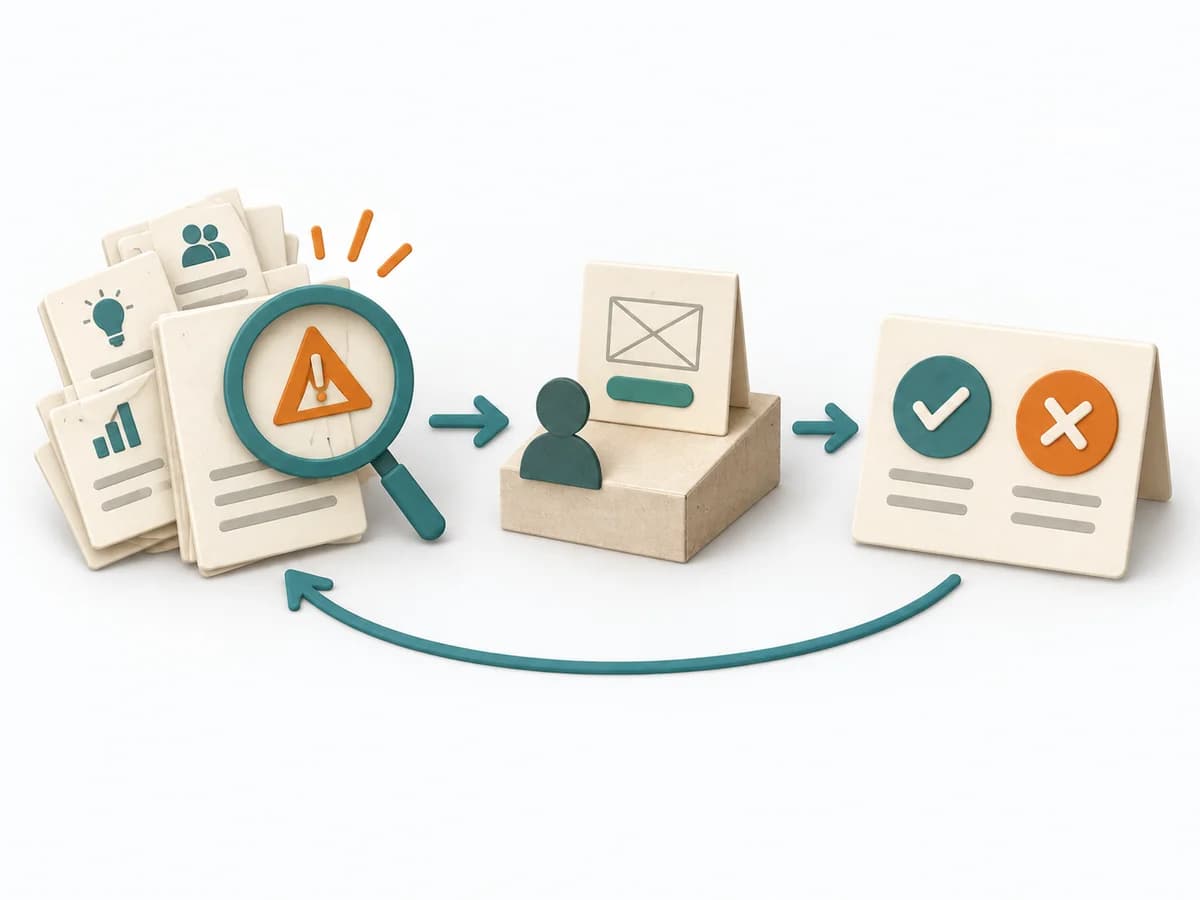
Moves customer problem, solution idea, and evidence toward a concrete result through "collect assumptions explicitly", "rate uncertainty and leverage for each assumption", and "decide to pivot, persevere, or stop".

Separates hypothesis, observation, insight, and next action into four fields after a test.
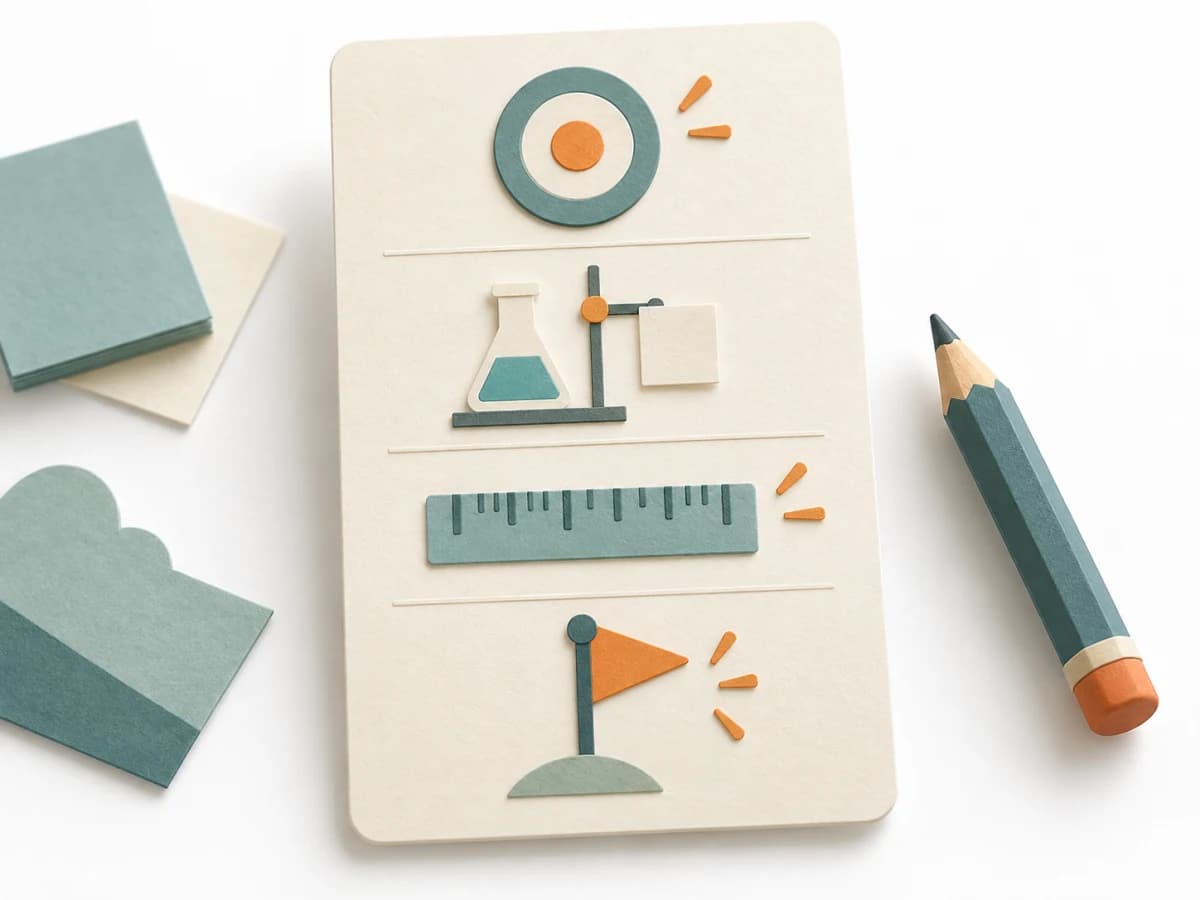
Condenses hypothesis, test, metric, and success threshold onto one card before execution.
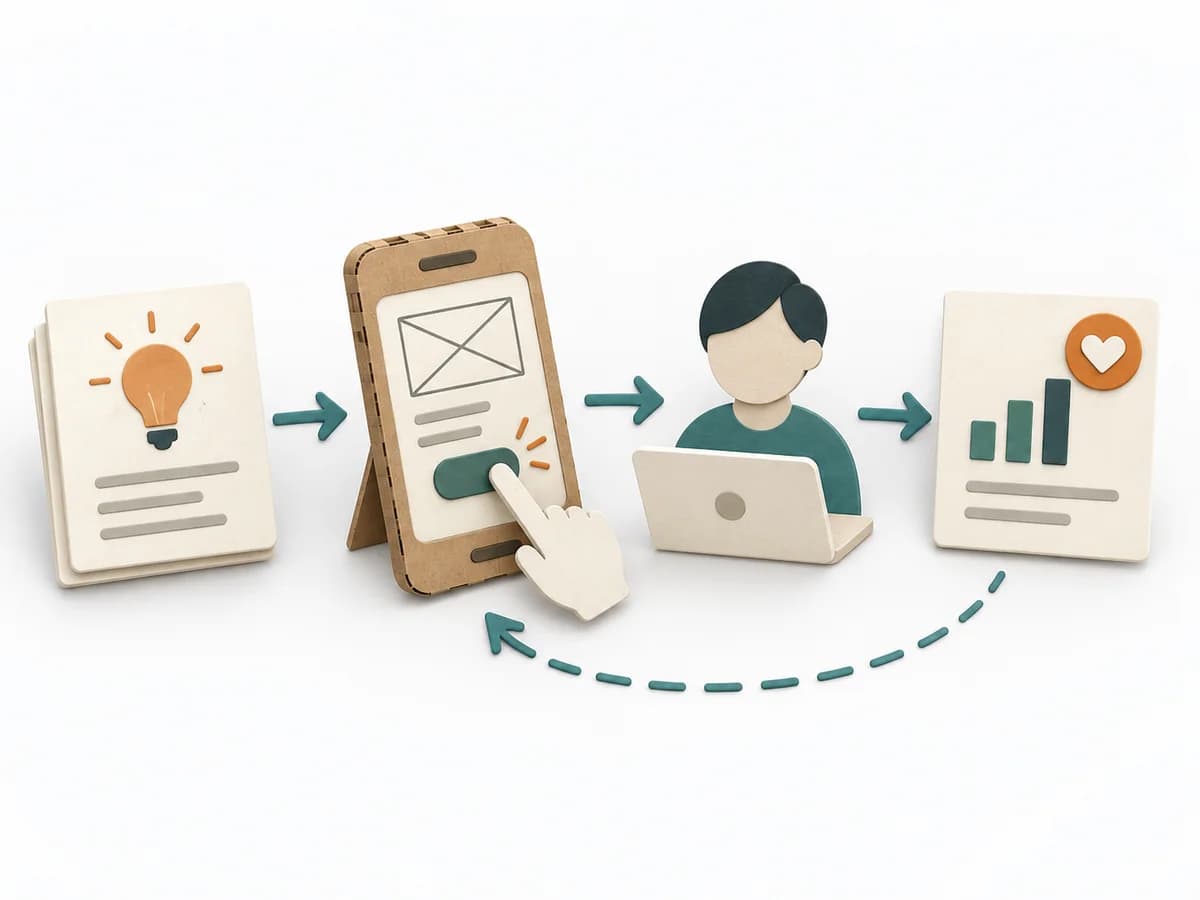
Tests a market claim with the smallest fitting precursor and makes real interest measurable.
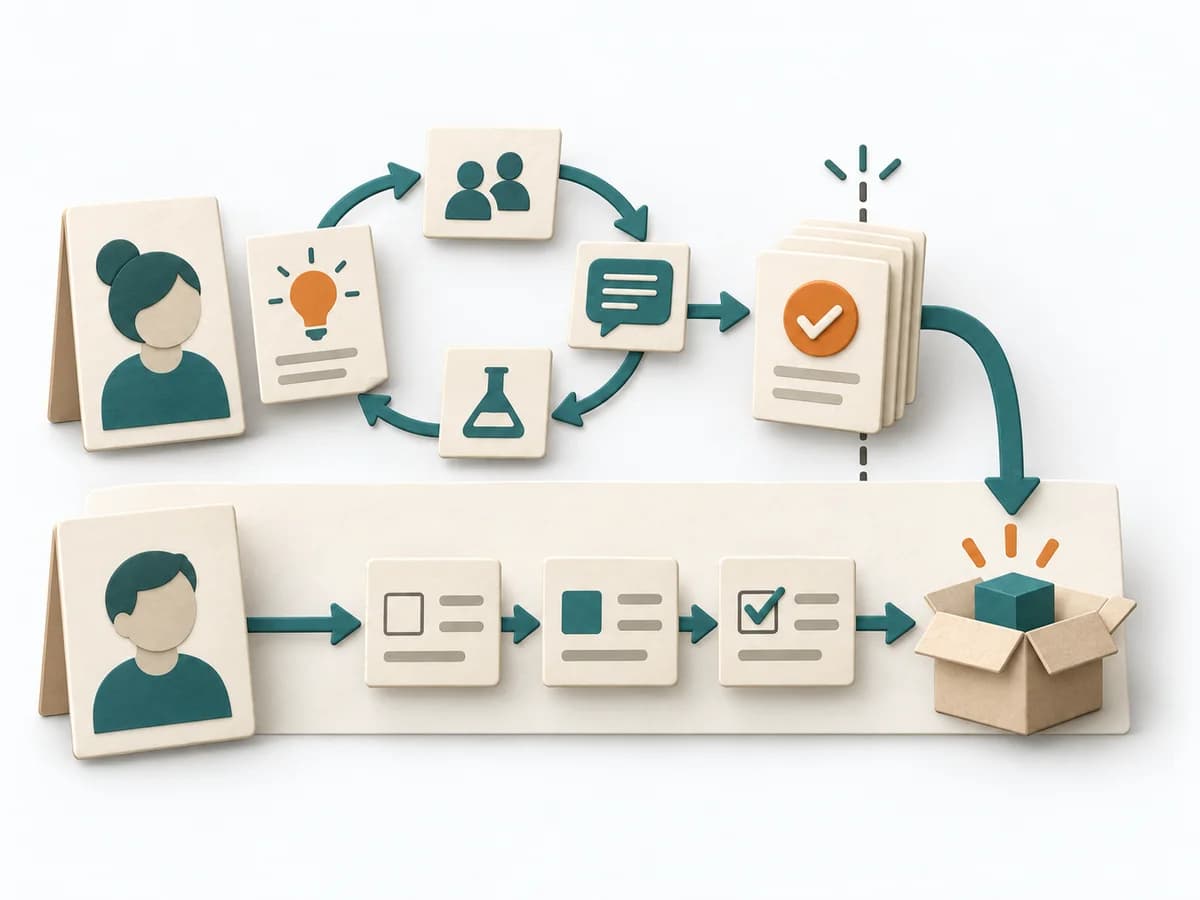
Separates discovery and delivery so that validated stories only move into implementation after learning loops.