Experiment Canvas: Worksheet
Question
To be confirmed
Desired outcome
To be confirmed
Scope
Full learning cycle
Time: 30–45 minutes to design; execution is separate
Complete this worksheet on paper or in your own document during the work.
Preparation for this scope
Method setup
- Materials: Canvas, hypothesis source, baseline, audience access, event definitions, privacy review, and decision log.
- Roles: Experiment owner · Product · Research/Analytics · risk or compliance expert
- Advance information: Prepare the hypothesis, investment decision, available population, baseline, and relevant guardrails.
- Overall time needed: 30–45 minutes to design; execution is separate
- Setup: Record hypothesis, test, primary metric, and threshold in the Experiment Canvas; verify data capture and stop boundary before launch. The Test Card offers the same four core fields for simple tests. Maintain one authoritative plan.
Prepare for the work steps
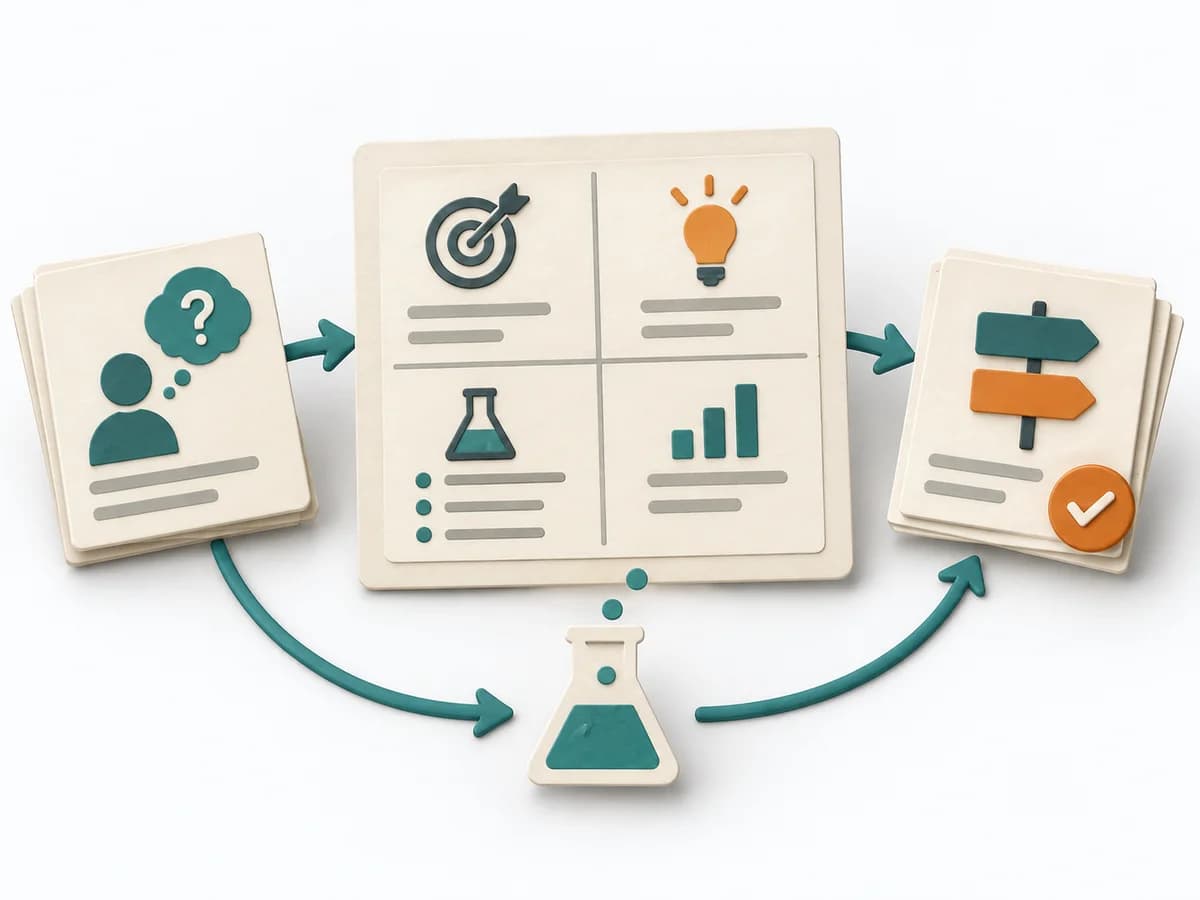
Hypothesis: Write a discrete assumption
- Product or business model
- Known uncertainties
- Upcoming investment decision
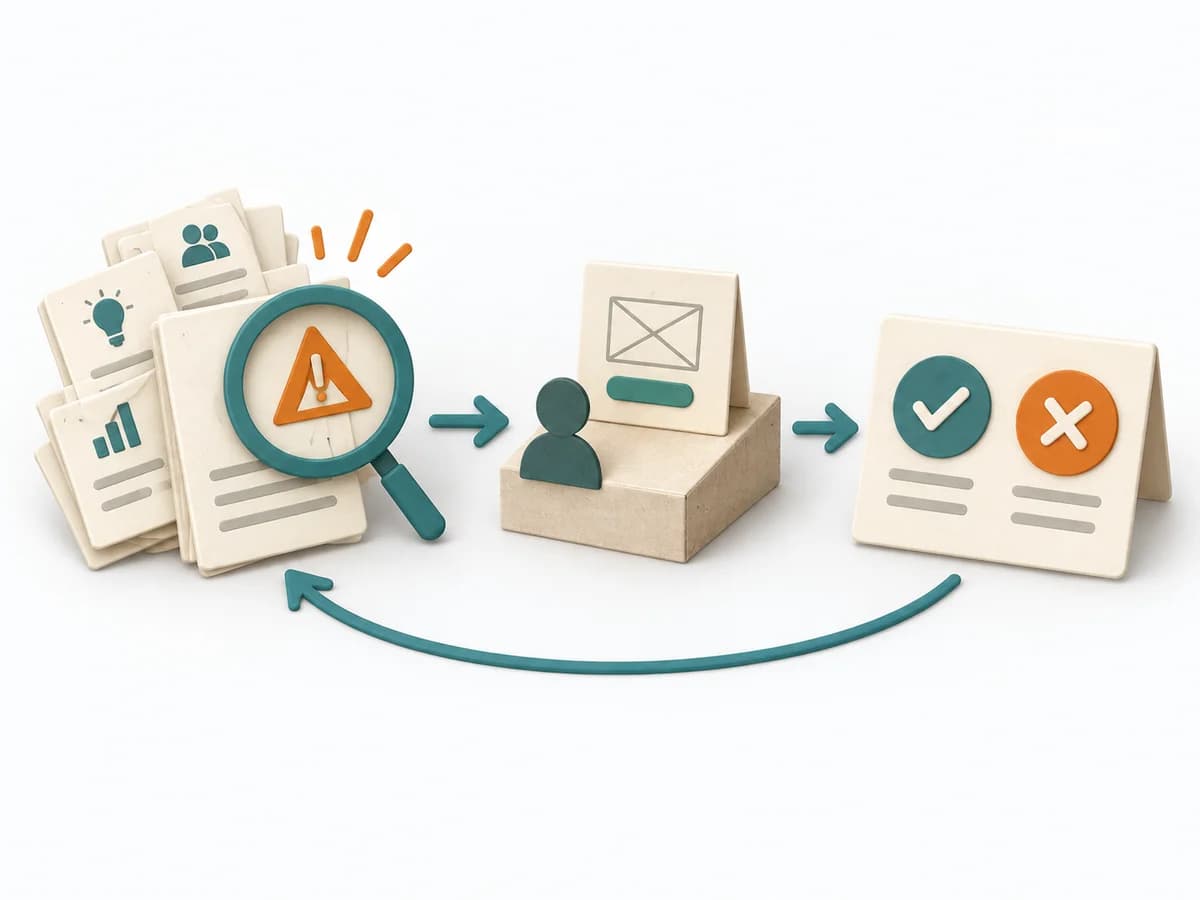
Design: Design the smallest useful test
- Testable hypothesis
- Available audience and channels
- Time, cost, and compliance constraints
Measure: Set metric and threshold before testing
- Test design
- Baseline or reference value
- Decision need
Learn: Run, analyse, and decide
- Approved design
- Measurement data
- Pre-set threshold
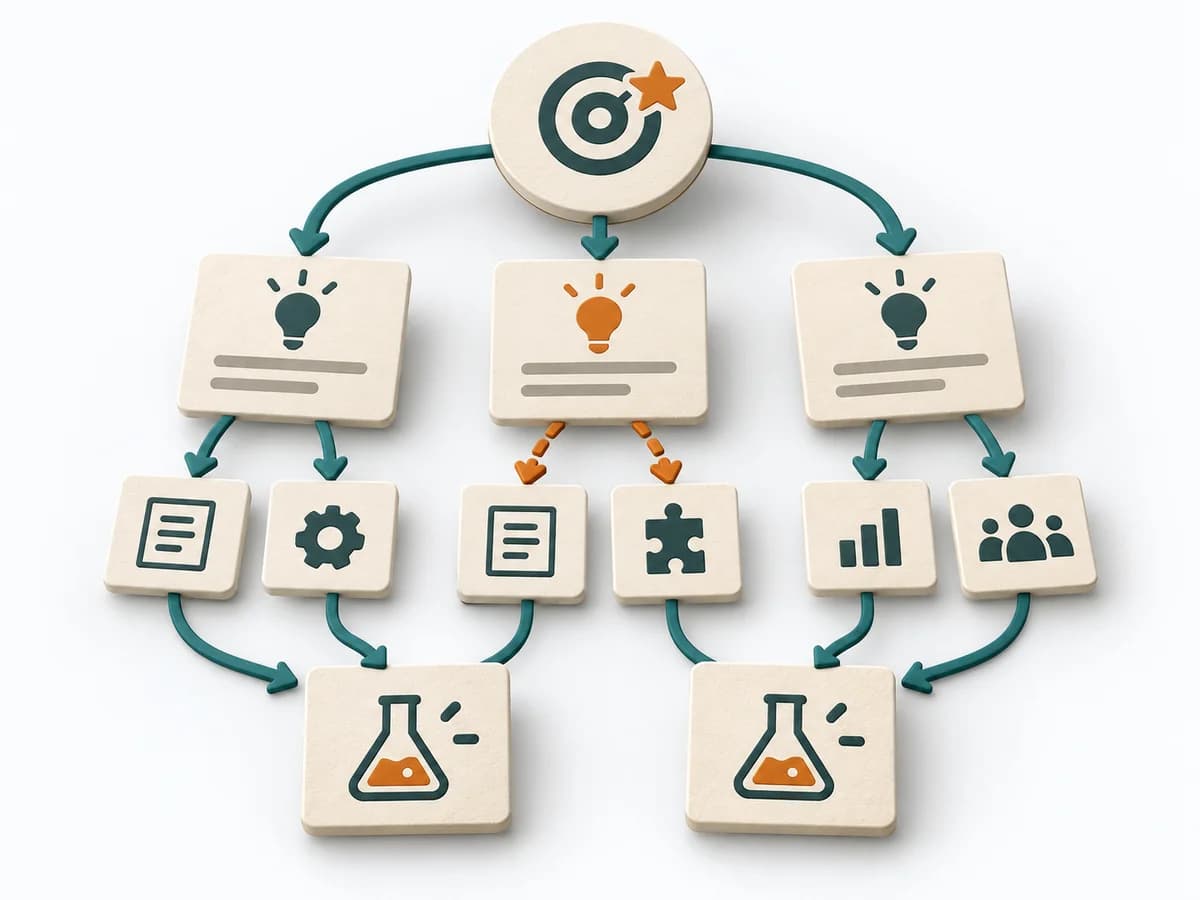
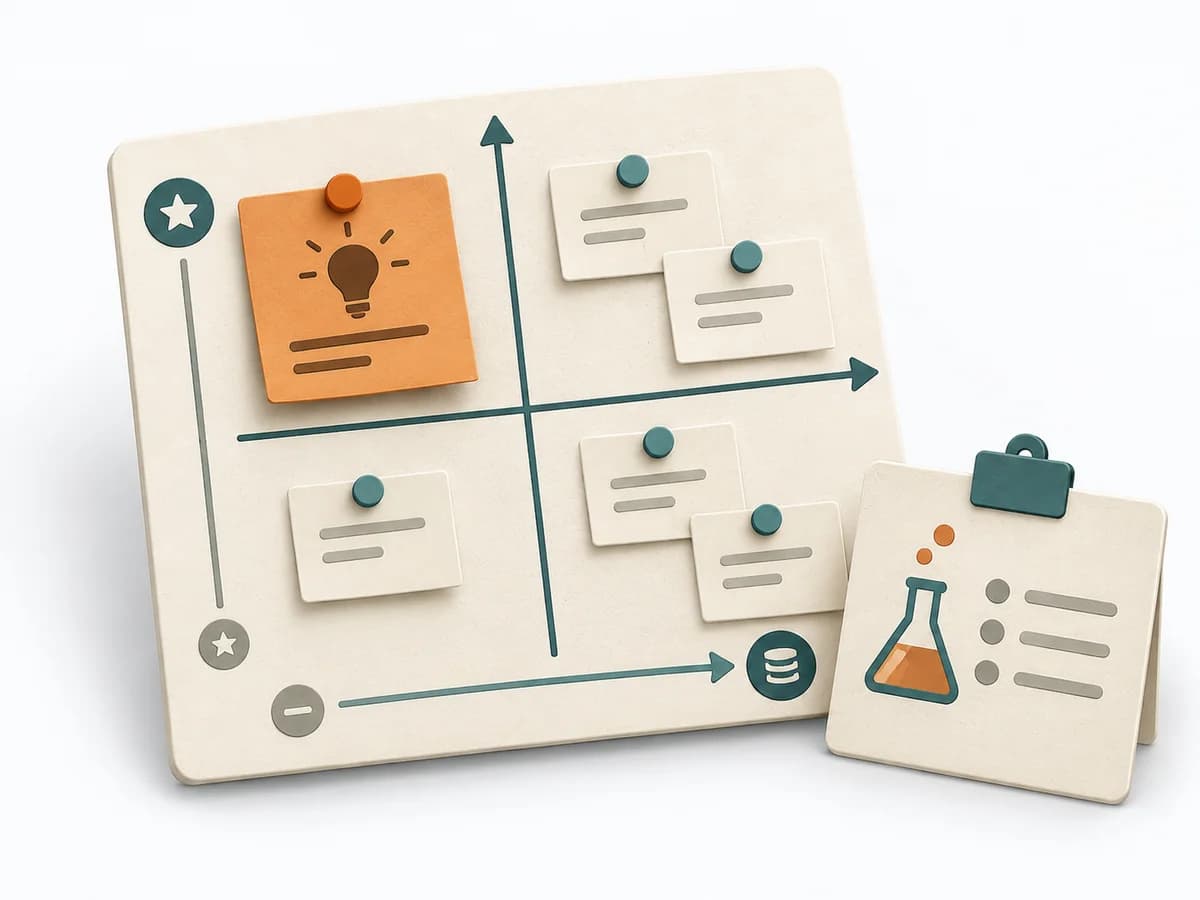
Experiment Canvas
Hypothesis
What must be true?
...
Decision
Which investment depends on this?
...
Test design
Who sees what, for how long?
...
Primary metric
Numerator, denominator, segment, window
...
Threshold
Which boundary applies before launch?
...
Guardrail
When to pause or stop?
...
Evidence
Which raw data and quality checks?
...
Learning and next step
What did the rule yield and what follows?
...
Strategyzer: Validate Your Ideas with the Test Card
Hypothesis: Write a discrete assumption
Expected artifact: Testable hypothesis
Audience · behaviour · context · expected outcome
Entry:
...
Design: Design the smallest useful test
Expected artifact: Test design
Population · intervention · duration · data capture · ethics
Entry:
...
Measure: Set metric and threshold before testing
Expected artifact: Measurement rule
Metric · formula · threshold · minimum data · guardrail
Entry:
...
Learn: Run, analyse, and decide
Expected artifact: Learning card
Data · deviations · result · decision · new assumption
Entry:
...
Open questions and next steps
...
Method guide: https://methodatlas.meierhoff-systems.de/en/methods/experiment-canvas/run-sheet