methodatlas

Innovation Process model

Lean Startup

Reduces product uncertainty through Build-Measure-Learn, minimum viable products, and innovation accounting.

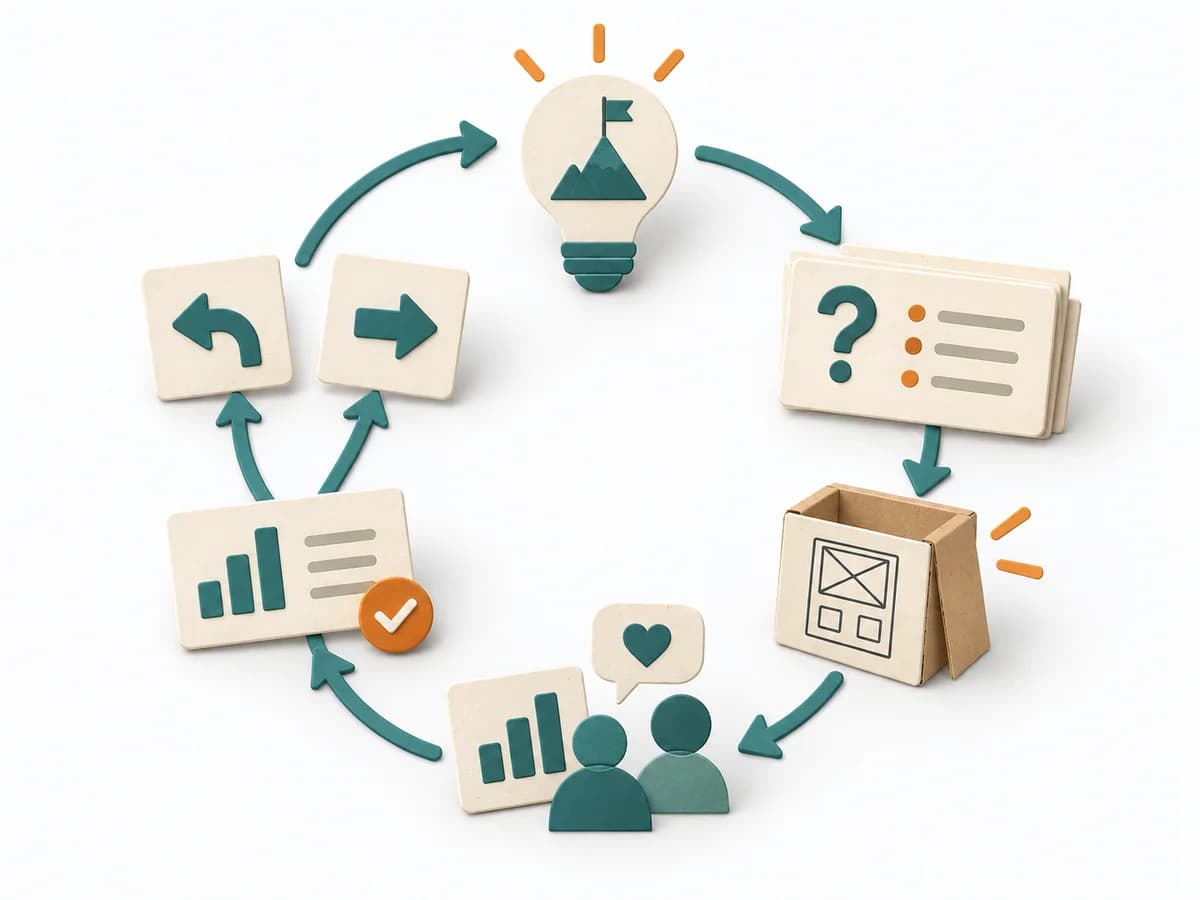
Lean Startup states leap-of-faith assumptions, builds the smallest learning-capable MVP, measures behaviour against a baseline, and decides persevere, pivot, or stop.

Core question
What smallest experiment creates decision-ready learning about the riskiest assumption?
Participants
2-8
Time
Wochen bis Monate je Lernzyklus

Lean Startup uses Build-Measure-Learn loop with MVP, actionable metrics, and pivot/persevere decision. Assessments remain justified and context-bound.

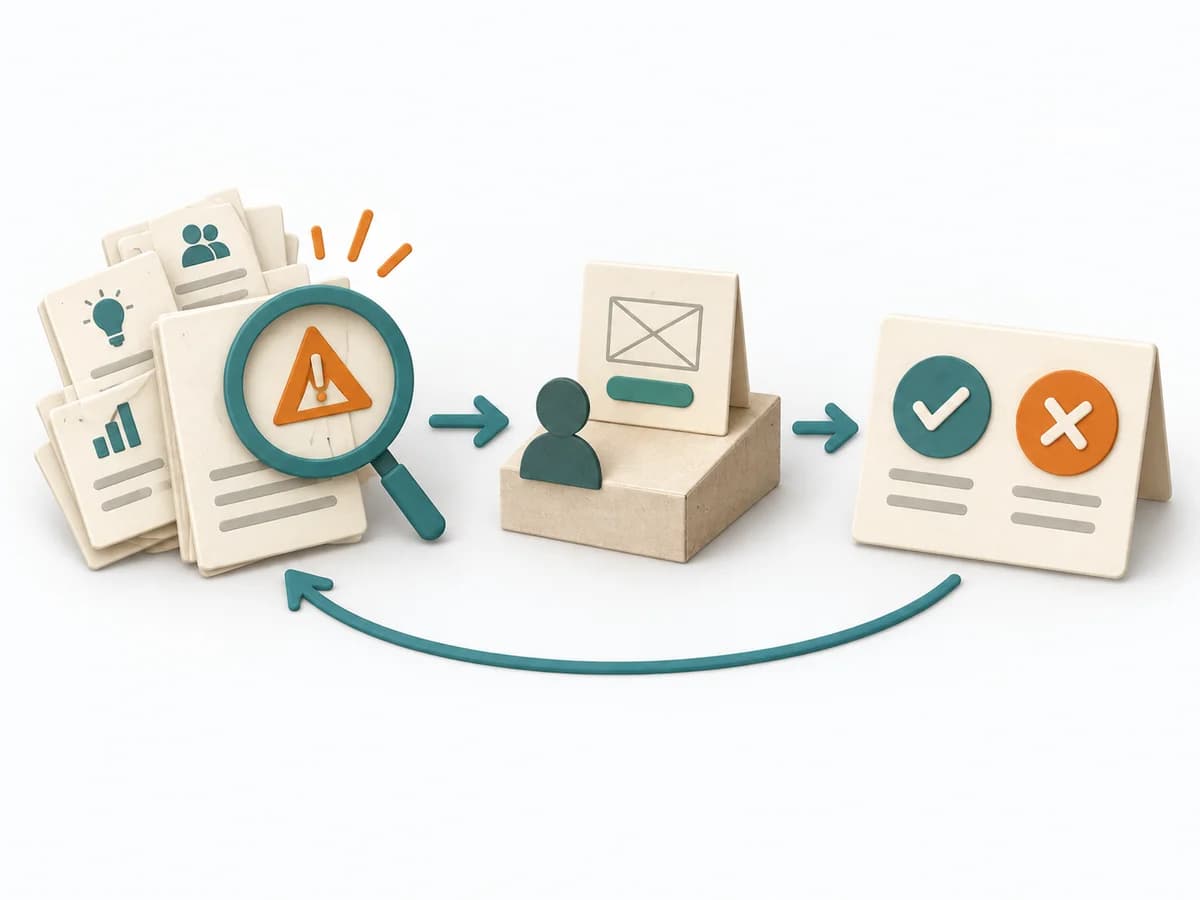
Paper illustration of Lean Startup with its method-specific working model.
  1. Hypothesis

    Hypothesis

    Name the value or growth hypothesis and riskiest assumption.

  2. Minimum viable product

    Minimum viable product

    Build the smallest offer that elicits real behaviour.

  3. Measure

    Measure

    Analyse baseline, cohort, and actionable metric.

  4. Decide

    Decide

    Decide persevere, pivot, or stop with rationale.

Update after new evidence or a material context change and retain the previous version.

A good fit when

For new offers with high value or growth uncertainty.

Ideal for

  • Early-stage startups
  • New business areas
  • Innovation in large organizations
  • Validating uncertain hypotheses

Not good for

  • Reine Optimierung etablierter Produkte
  • Stark regulierte Compliance-Lieferungen
  • Klar definierte Engineering-Aufgaben

Outputs

  • validated learning loop

    validated learning loop with traceable sources, assumptions, and domain decisions.

  • Decision and review trail

    Owners, dates, and next review for validated learning loop.

validated learning loop

Fictional worked example

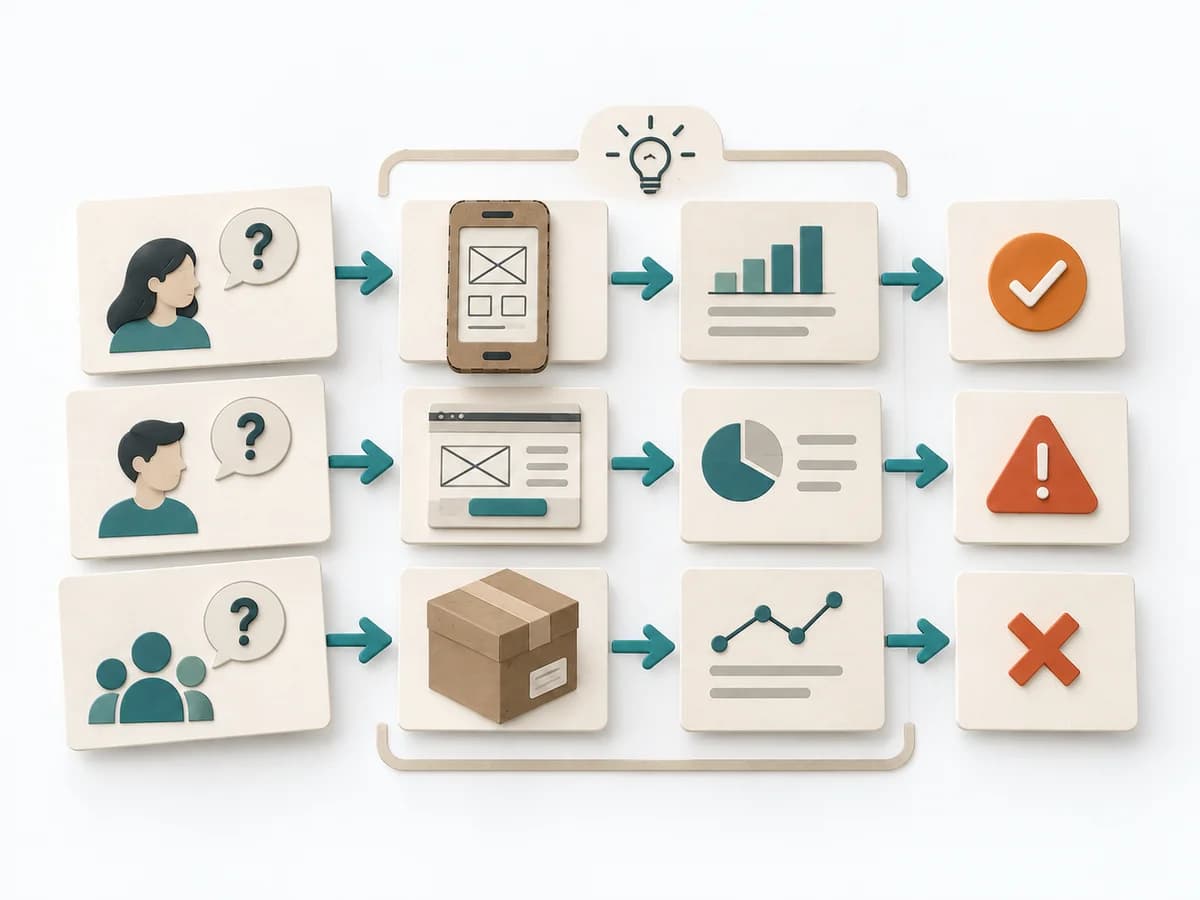
Build-Measure-Learn loop with MVP, actionable metrics, and pivot/persevere decision as a precise working structure with a fictional example.

Hypothesis

Hypothesis information to record

Teams zahlen 180 €/Monat für Auditexport.

MVP

MVP information to record

Concierge MVP mit fünf Teams.

Metric/threshold

Metric/threshold information to record

≥3/5 LOIs nach zwei Reviews; Ergebnis 1/5.

Pivot/persevere

Pivot/persevere information to record

Segmentproblem pivotieren.

The example demonstrates the domain logic of Lean Startup; worksheets remain blank.

The Lean Startup

First step

Start with the core question: What smallest experiment creates decision-ready learning about the riskiest assumption?

Open the method guide

Deep dive

Purpose

For uncertain business assumptions, the method forces the idea into contact with real market reactions early. It separates wishful picture, assumption, and observable behavior, so that learning becomes faster than planning. This translates uncertainty into measurable insight.

How it works

The approach revolves around hypotheses whose risk is deliberately tested early instead of being elaborated mentally. Small experiments deliver feedback about behavior, willingness to pay, or usage and thereby sharpen the picture before a lot of effort flows into a large solution. What matters is the learning loop between assumption, measurement, and adaptation.

In detail

Lean Startup works because it puts assumptions in contact with the market and makes learning the actual unit of progress. The method is more than a buzzword only when hypotheses, measurement logic, and decision criteria are visible before the experiment. Especially important are high-risk core assumptions, honest evaluation, and the tangible consequence drawn from what was learned, so that small tests are really allowed to change direction in the business model.

Facilitation

A recurring learning rhythm in which hypotheses, experiments, and decisions are looked at together is suitable for anchoring the practice. A sensitive signal is present when activity is mistaken for insight or when measurements do not support a real decision. Close every cycle with a clear learn, a conclusion, and the next risky assumption to be tested.

The method guide walks execution through 4 phases, timing, 4 pitfalls, and clear stop criteria.

Open method guide

Your perspective

Does this method help with your work?

Your feedback helps shape the next improvements to methodatlas.

Sources and topics

Topics
Artifact templates
Lean Startup: WorksheetPlan Lean Startup around its domain steps and the concrete decision question.
markdown

lean-startup-working-template.md

Plan Lean Startup around its domain steps and the concrete decision question.

Lean Startup: Worksheet

Question

To be confirmed

Desired outcome

To be confirmed

Scope

Full initiative Time: 1–4 weeks per loop

Complete this worksheet on paper or in your own document during the work.

Preparation for this scope

Method setup

  • Materials: Vision and assumptions, target customer segment, innovation accounting metrics, shared workspace, source links, and decision log.
  • Roles: Founder/Product · Research · Engineering · Analytics
  • Advance information: Collect Vision and assumptions, target customer segment, innovation accounting metrics in advance and mark open assumptions.
  • Overall time needed: 1–4 weeks per loop
  • Setup: Prepare Build-Measure-Learn loop with MVP, actionable metrics, and pivot/persevere decision visibly and calibrate assessment terms before starting.

Prepare for the work steps

Hypothesis: Hypothesis

  • Vision and assumptions
  • target customer segment
  • innovation accounting metrics

Minimum viable product: Minimum viable product

  • leap-of-faith assumption
  • target customer segment
  • innovation accounting metrics

Measure: Measure

  • MVP
  • target customer segment
  • innovation accounting metrics

Decide: Decide

  • innovation accounting
  • target customer segment
  • innovation accounting metrics

validated learning loop

Hypothesis

Hypothesis information to record

...

MVP

MVP information to record

...

Metric/threshold

Metric/threshold information to record

...

Pivot/persevere

Pivot/persevere information to record

...

Enter only real input, sources, and decisions.

The Lean Startup

Hypothesis: Hypothesis

Expected artifact: leap-of-faith assumption

leap-of-faith assumption · source · uncertainty · next decision

Entry:

...

  • Is the assumption observable?

Minimum viable product: Minimum viable product

Expected artifact: MVP

MVP · source · uncertainty · next decision

Entry:

...

  • Does the MVP test the assumption directly?

Measure: Measure

Expected artifact: innovation accounting

innovation accounting · source · uncertainty · next decision

Entry:

...

  • Was the threshold preset?

Decide: Decide

Expected artifact: learning decision

learning decision · source · uncertainty · next decision

Entry:

...

  • Does the decision follow behaviour?

Open questions and next steps

...

Method guide: https://methodatlas.meierhoff-systems.de/en/methods/lean-startup/run-sheet
Alternatives and neighbors

Fitting alternatives with decision guidance, followed by other related methods.

All methods
Constraints and origin
MediumWorkshop + asyncWochen bis Monate je Lernzyklus

Profile

Method form
Process model
Participants
2-8
Time
Wochen bis Monate je Lernzyklus
Maturity
Canonical
Origin
Eric Ries
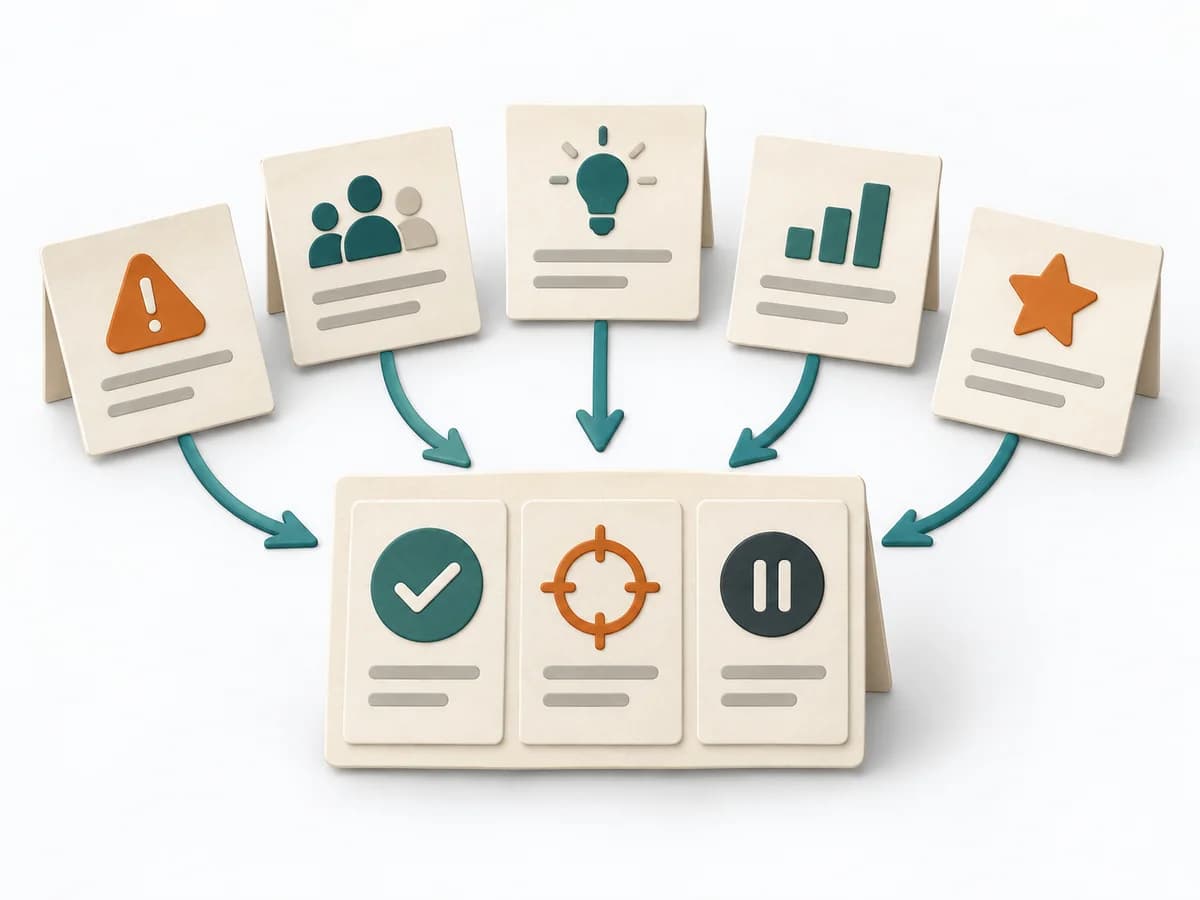
Paper illustration of Riskiest Assumption Test with a method-specific labelled workspace.
Next up: Riskiest Assumption Test