Purpose
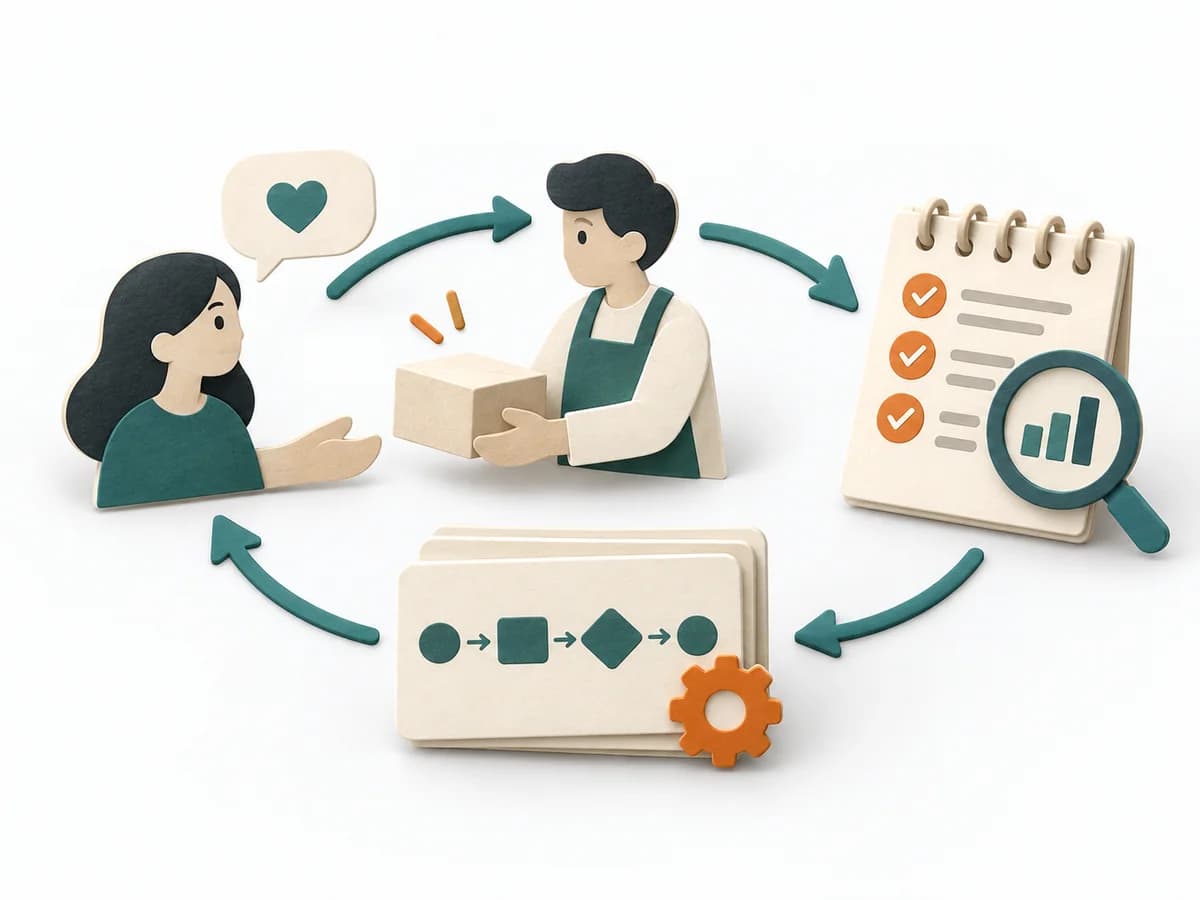
When demand is still unclear, it measures interest in a feature before it is built. It separates real behavior from polite agreement and deliberately keeps build effort small.
Product Discovery Research method
A Fake Door Test shows how many relevant people actually try to access a specific offer.
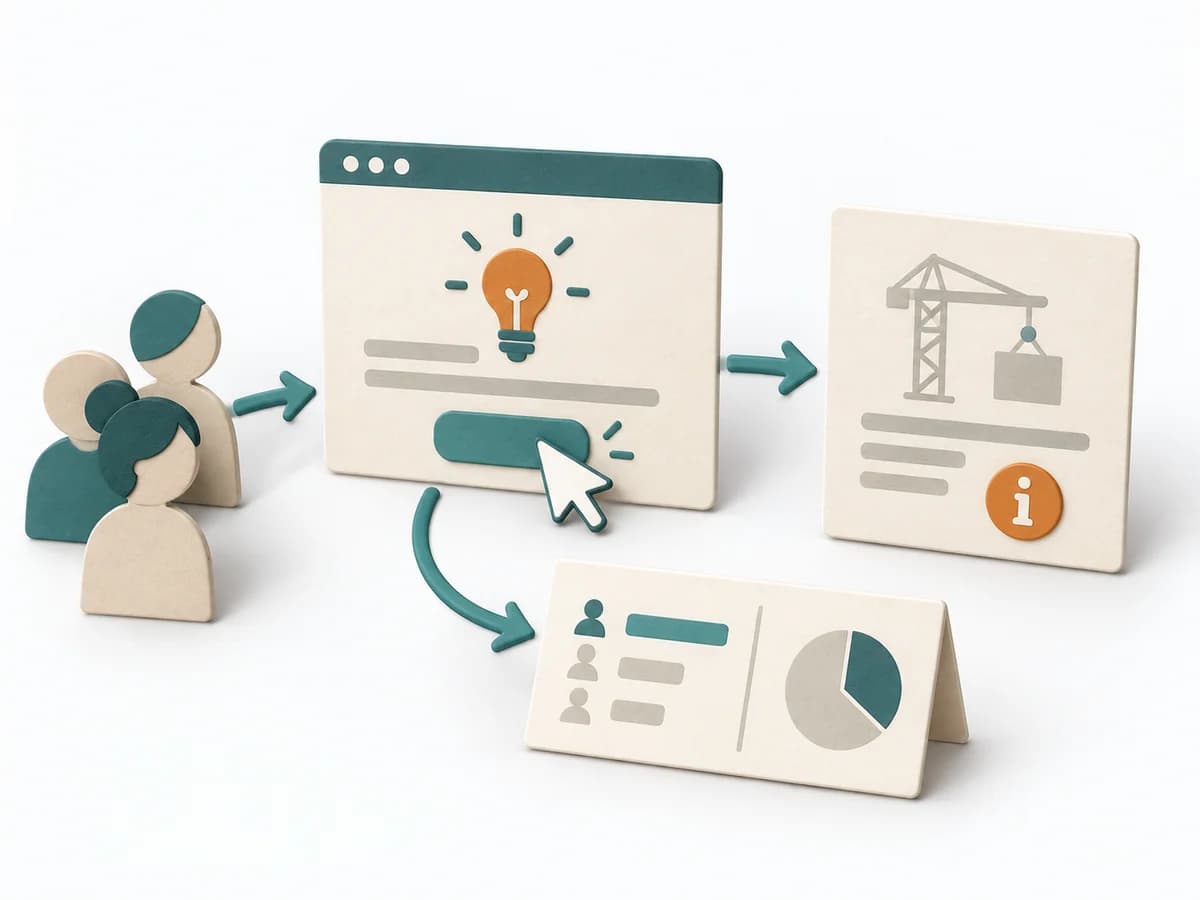
A Fake Door Test presents an entry point to an unavailable offer and measures who actually uses it. Non-availability is explained transparently immediately afterwards. The signal concerns interest in the offer and its presentation.
How many relevant people actually try to access this specific offer?
Hypothesis
Define segment, value proposition, unique exposure, click event and decision rule upfront.
Entry point
Build and self-test a realistic entry point with appropriate disclosure.
Run
Run within limits, count unique exposures and monitor complaints.
Evaluation
Click rate = unique clickers ÷ qualified exposed people; assess the rule and uncertainty.
Evaluate after the defined window; seek stronger demand evidence with a deliverable offer.
For an early demand assumption with a clear audience and manageable disappointment.
Experiment record with exposures, click rate, disclosure and bounded interpretation.
Voluntary contacts are analysed separately; the click remains an indication of interest and establishes neither successful use nor willingness to pay.
Fictional example
A Fake Door Test presents an entry point to an unavailable offer and measures who actually uses it. Non-availability is explained transparently immediately afterwards. The signal concerns interest in the offer and its presentation.
Define audience, offer, signal, denominator, duration and justified threshold.
Fictional: signed-in instructors see a room-change overview offer. Upfront rule for a further pilot: at least 10% unique clickers among 200 qualified exposed people in two weeks; a local learning threshold, not an industry benchmark.
What does the person see before and after clicking? How are non-availability and optional follow-up explained?
Entry: View room changes together. After clicking: This overview is being explored and is not currently available. Optional separate signup for a prototype test, otherwise return to courses. No payment and no automatic waiting list.
Record unique qualified exposures, clickers, exclusions and separate follow-up signals.
Fictionally cleaned: 200 exposed people, 24 clickers = 12%. Eight voluntarily sign up for testing: 8/200 = 4% of all exposed people. Internal test accounts excluded; no purchase data.
Compare upfront rule, uncertainty, complaints and the next stronger evidence.
12% exceeds the local 10% threshold. The team plans a deliverable pilot, not a full product. Sample, signed-in channel and wording limit the finding; long-term value remains open.
All example details are fictional and illustrate the application.
Define audience, offer, qualified exposure and evaluation rule in advance.
When demand is still unclear, it measures interest in a feature before it is built. It separates real behavior from polite agreement and deliberately keeps build effort small.
It offers a visible entry point and evaluates whether people choose or continue it at all. The not-yet-existing capability is either made transparent or handled cleanly, so interest can be measured without damaging trust.
A Fake Door Test works because it measures actual interest in an option before the underlying feature is built. Good application makes sure the promise is credible and the context real enough to make behavior meaningful. The test becomes valuable when clicks, sign-ups, or other reactions are interpreted cleanly and not mistaken for real proof of value.
Place the door where users would reasonably expect the offered option, and phrase the promise precisely. Things become tangible once the reaction is high but the downstream context raises doubts about the quality of the signal. Close with an honest assessment of the interest and a decision on whether to go deeper, discard, or reformulate.
The method guide walks execution through 4 phases, timing, 4 pitfalls, and clear stop criteria.
Open method guideYour perspective
Your feedback helps shape the next improvements to methodatlas.
Short plan for hypothesis, test design, success criteria, and decision.
We believe that ...
Who are we testing for?
What exactly will participants or users do?
We count the test as positive if ...
What can the test not prove?
If positive: ... If negative: ...
...
Define audience, offer, qualified exposure and evaluation rule in advance.
To be confirmed
To be confirmed
Complete cycle Time: 45–60 minutes planning; implementation and bounded run time separately.
Complete this worksheet on paper or in your own document during the work.
Define audience, offer, signal, denominator, duration and justified threshold.
...
What does the person see before and after clicking? How are non-availability and optional follow-up explained?
...
Record unique qualified exposures, clickers, exclusions and separate follow-up signals.
...
Compare upfront rule, uncertainty, complaints and the next stronger evidence.
...
Answer the prompts with your own information. Explicitly mark unknowns and assumptions.
Alberto Savoia: Pretotyping Workshop
Expected artifact: Measurement hypothesis
Are denominator and decision rule defined upfront?
Entry:
...
Expected artifact: Tested entry point
Does every click reach clear disclosure?
Entry:
...
Expected artifact: Clean event counts
Are exposure and click counted in the same segment?
Entry:
...
Expected artifact: Demand indication
Is the finding limited to this offer and channel?
Entry:
...
...
Method guide: https://methodatlas.meierhoff-systems.de/en/methods/fake-door-test/run-sheet
Fitting alternatives with decision guidance, followed by other related methods.
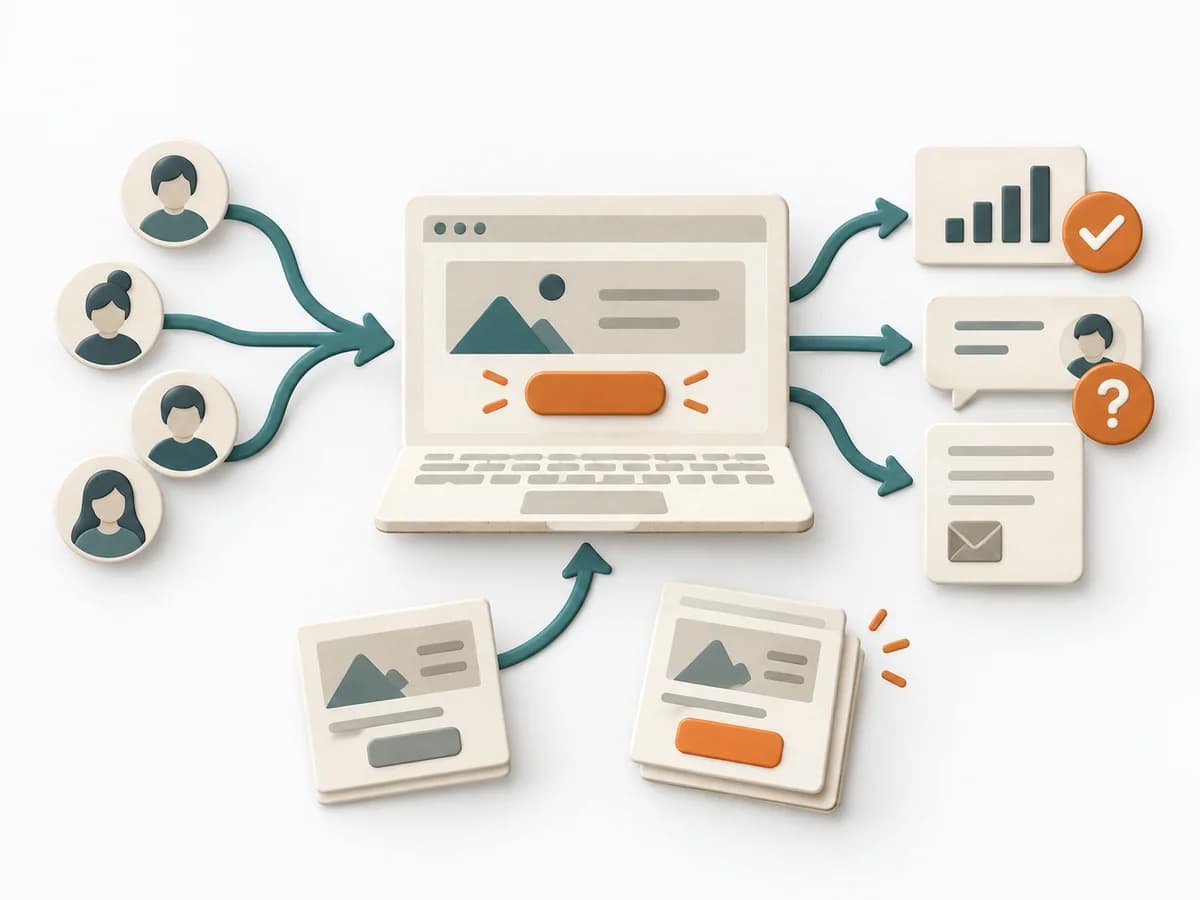
Instead of Fake Door Test, choose Landing Page Test when you want to measure interest in an offer through a concrete offer page.
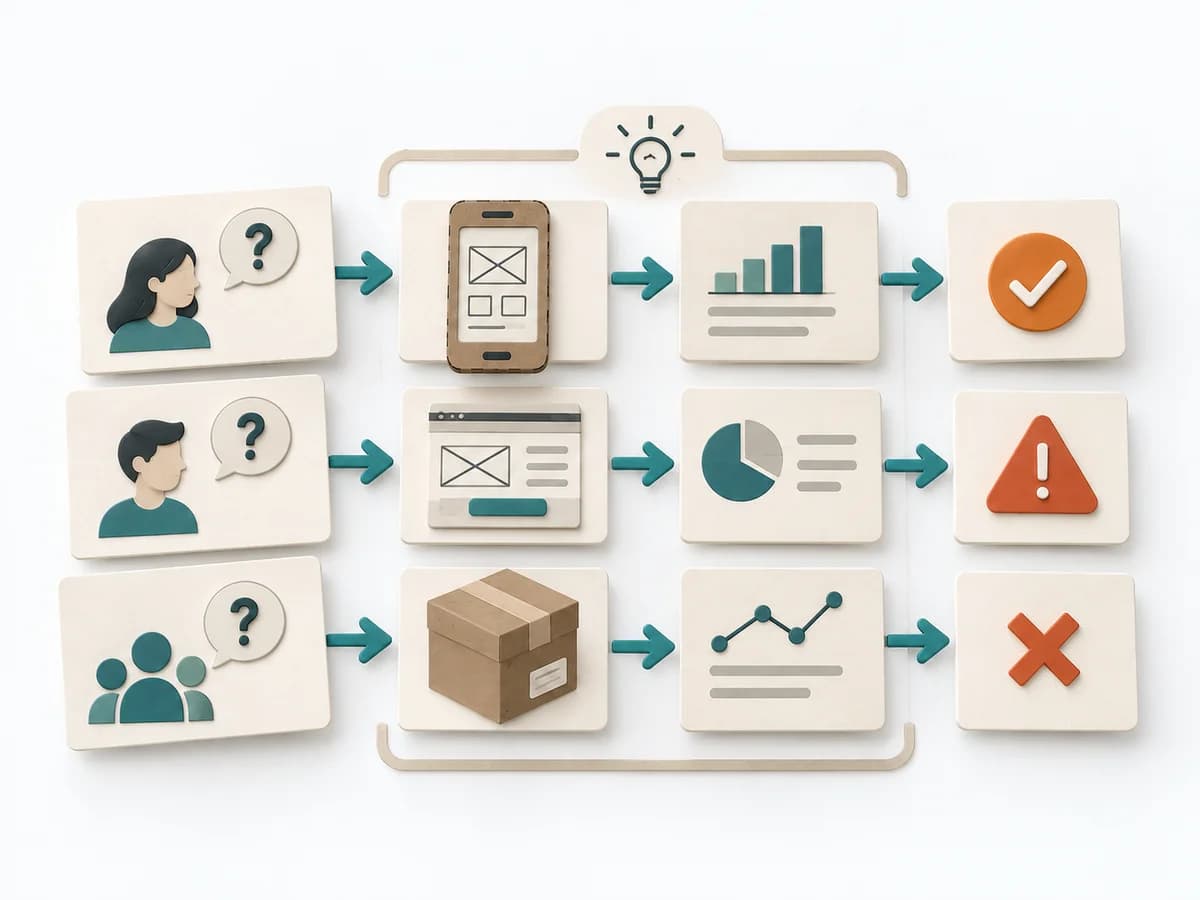
Moves customer problem, solution idea, and evidence toward a concrete result through "list assumptions", "map assumptions to dimensions", and "derive the test plan".
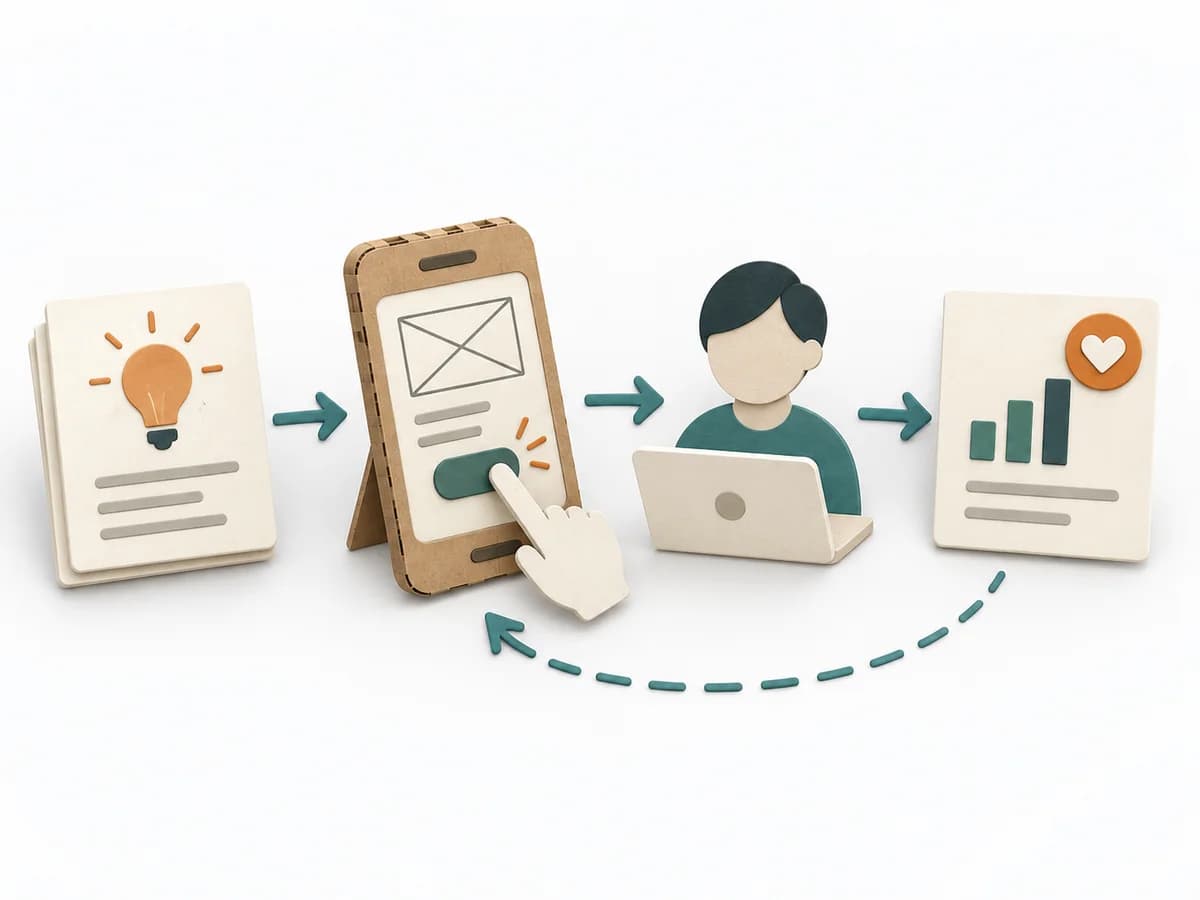
Tests a market claim with the smallest fitting precursor and makes real interest measurable.
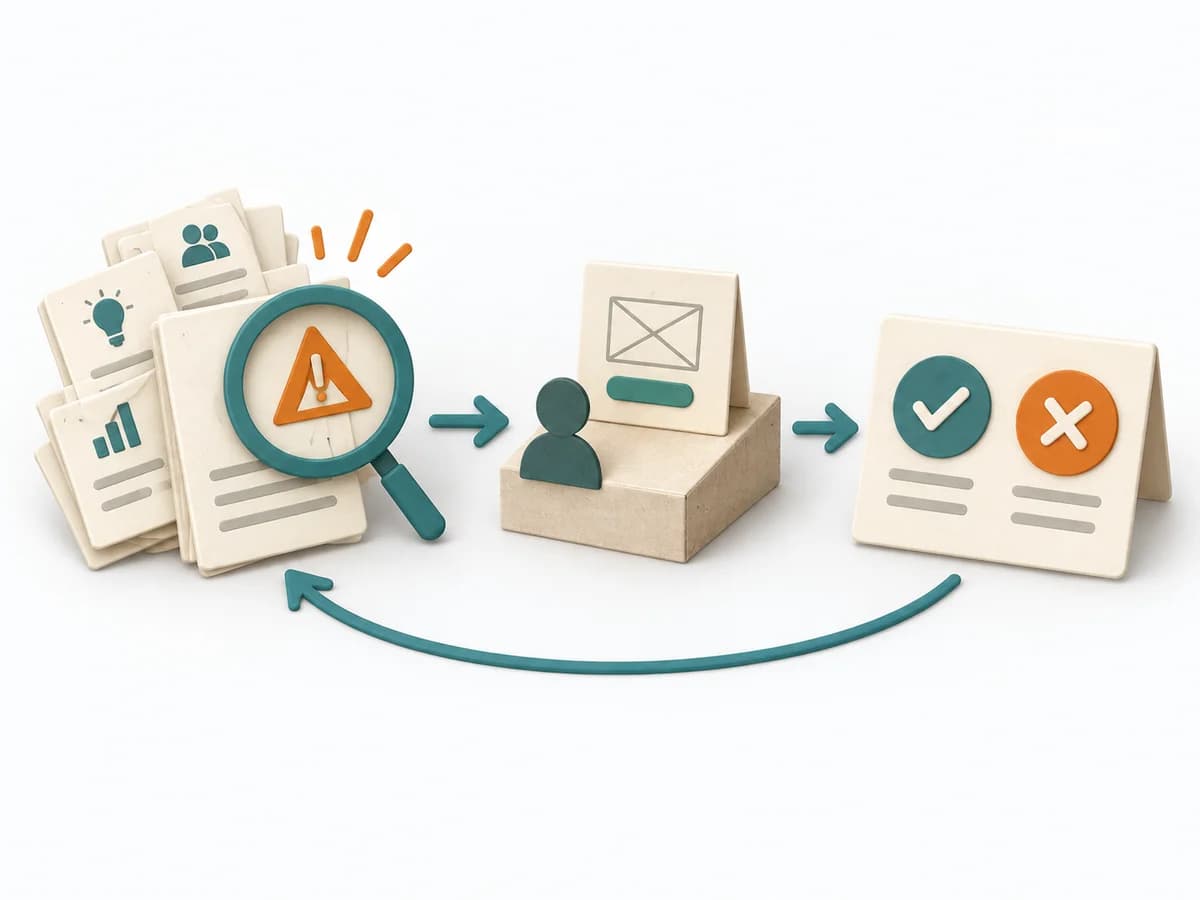
Moves customer problem, solution idea, and evidence toward a concrete result through "collect assumptions explicitly", "rate uncertainty and leverage for each assumption", and "decide to pivot, persevere, or stop".
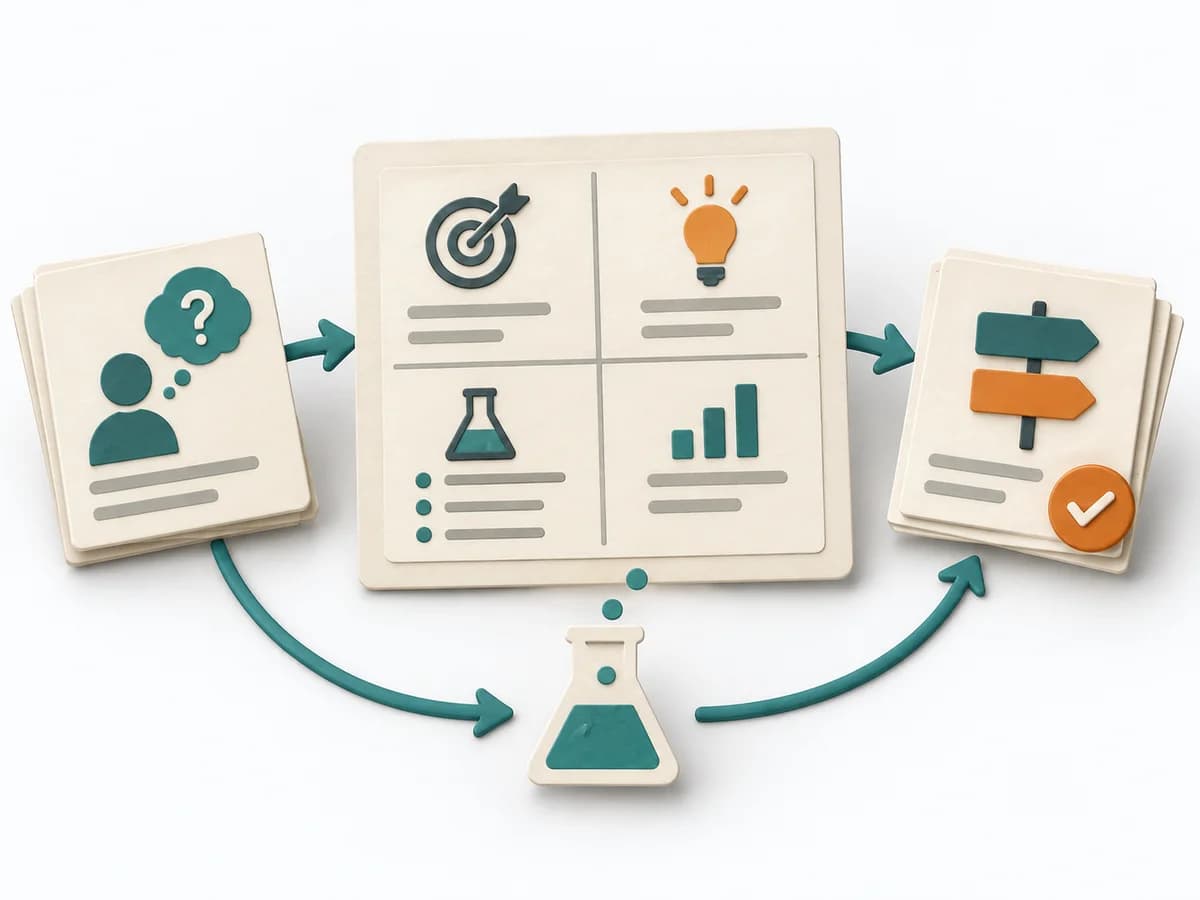
Moves customer problem, solution idea, and evidence toward a concrete result through "clarify the learning goal and the assumption to test", "formulate the hypothesis as an if-then statement", and "define the decision rule after the test".

Separates hypothesis, observation, insight, and next action into four fields after a test.