
Purpose
The Learning Card connects traceable test results to a reasoned next action while keeping the limits of the insight visible.
Product Discovery Canvas
Condenses the result of a completed test into the tested hypothesis, observable facts, a bounded insight, and a concrete action.
The Learning Card documents what a team actually learned from a test. It carries over the hypothesis and success threshold from a Test Card or Experiment Canvas, separates observation from interpretation, and turns the evidence into a next step.
What did we actually observe from this test, what may we learn from it, and what action follows?
A previously planned test is evaluated. Observed facts, inferred insight, and action remain separate.

Hypothesis
Reference the original hypothesis, test definition, and predefined success threshold without changing them.
Observation
Record measurements, behavioral observations, and relevant test deviations without explanation or judgment.
Insight
Interpret the observations and state how strongly they support the hypothesis, including limits and uncertainty.
Action
Derive a concrete decision, follow-up test, or model change with clear ownership from the insight.
Create a versioned Learning Card for every completed test and examine new hypotheses in a new test.
Useful for jointly evaluating a completed test with traceable data. Without a predefined hypothesis or usable observations, the strength of the conclusion remains limited.
Versioned evaluation with hypothesis, observation, insight, and action.
Justified follow-up step with limits, ownership, and a reference to the underlying evidence.
Fictional worked example
Four fields lead from the original test standard through observation and insight to an owned action.
Which predefined hypothesis and threshold were tested?
At least 30% of exposed active project managers click the CSV export offer.
Which facts, measurements, and deviations were observed?
58 of 181 accounts clicked the export offer, or 32%; support complaints were 1.1%.
What does the observation mean, and what uncertainty remains?
The threshold was met in this segment; whether the export will be used repeatedly remains open.
Which concrete decision or follow-up action follows?
The Product Owner builds a clickable prototype by November 15 and plans a separate usability test.
Start with the unchanged hypothesis, test definition, and success threshold from the related Test Card or Experiment Canvas.

Turns a new open hypothesis from the insight into a separate follow-up test.
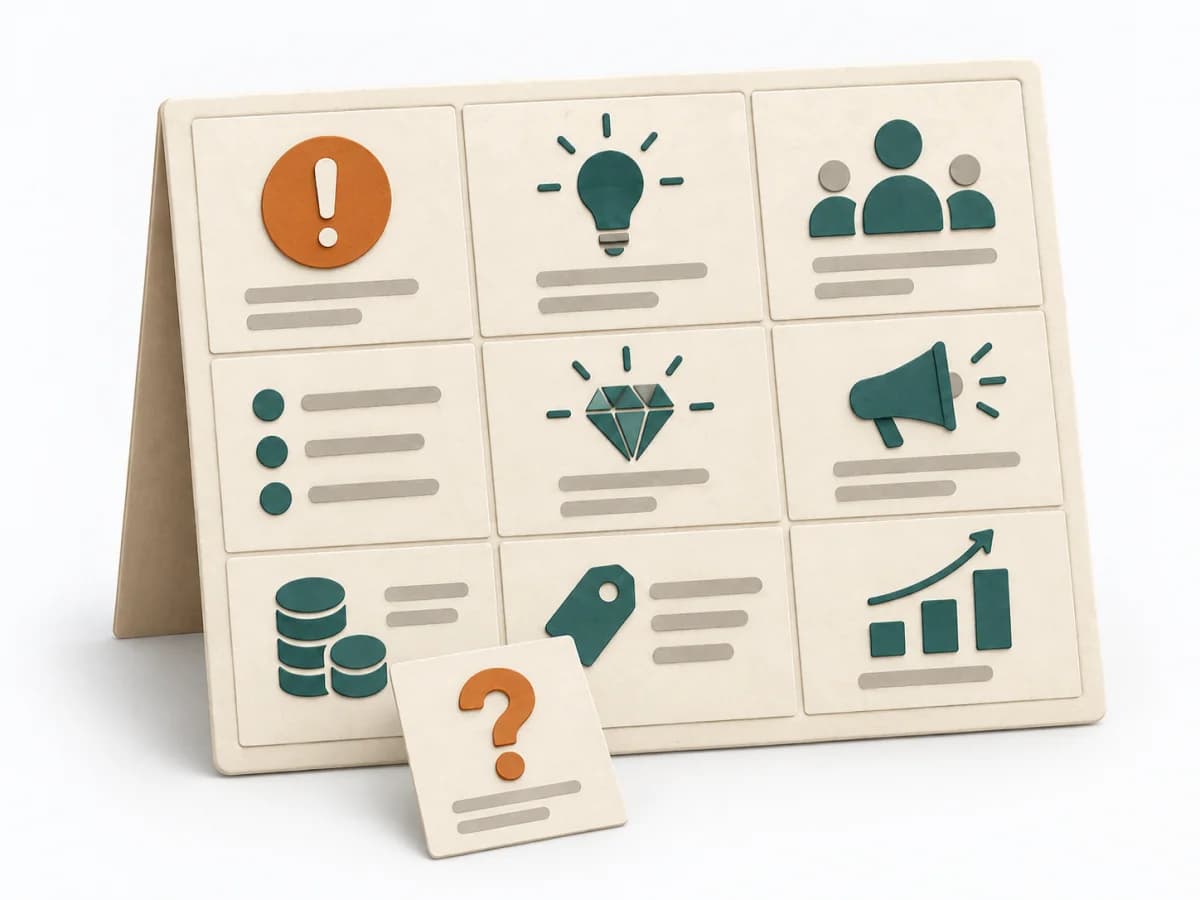
Updates affected business-model assumptions with the bounded insight from the test.

Ranks remaining uncertainties by importance and evidence for the next learning steps.
The Learning Card connects traceable test results to a reasoned next action while keeping the limits of the insight visible.
Retrieve the tested hypothesis, preserve the observations, derive a bounded insight, and agree on the next step.
Four fields lead from the tested hypothesis through raw data and observations to interpretation and action. Compare the results with the pre-set threshold and document deviations. A small sample or biased test may justify another experiment; the card itself does not establish general market demand.
Separate observed behaviour from its interpretation. Link the Test Card or Experiment Canvas as the test plan and use existing raw data. State uncertainty and assign an owner and a date to the resulting action.
The method guide walks execution through 4 phases, timing, 4 pitfalls, and clear stop criteria.
Open method guideYour perspective
Your feedback helps shape the next improvements to methodatlas.
Plan a compact evaluation of a completed test with accessible evidence and roles able to decide.
To be confirmed
To be confirmed
Complete Learning Card Time: 25–40 minutes
Complete this worksheet on paper or in your own document during the work.
Which predefined hypothesis and threshold were tested?
...
Which facts, measurements, and deviations were observed?
...
What does the observation mean, and what uncertainty remains?
...
Which concrete decision or follow-up action follows?
...
Expected artifact: Referenced test basis
Hypothesis · test · threshold · version · deviations
Entry:
...
Expected artifact: Observation record
Measurement · scope · source · deviation · data gap
Entry:
...
Expected artifact: Bounded insight
Interpretation · support level · uncertainty · limit
Entry:
...
Expected artifact: Justified follow-up action
Decision · change · owner · date · new validation need
Entry:
...
...
Method guide: https://methodatlas.meierhoff-systems.de/en/methods/learning-card/run-sheet
Fitting alternatives with decision guidance, followed by other related methods.
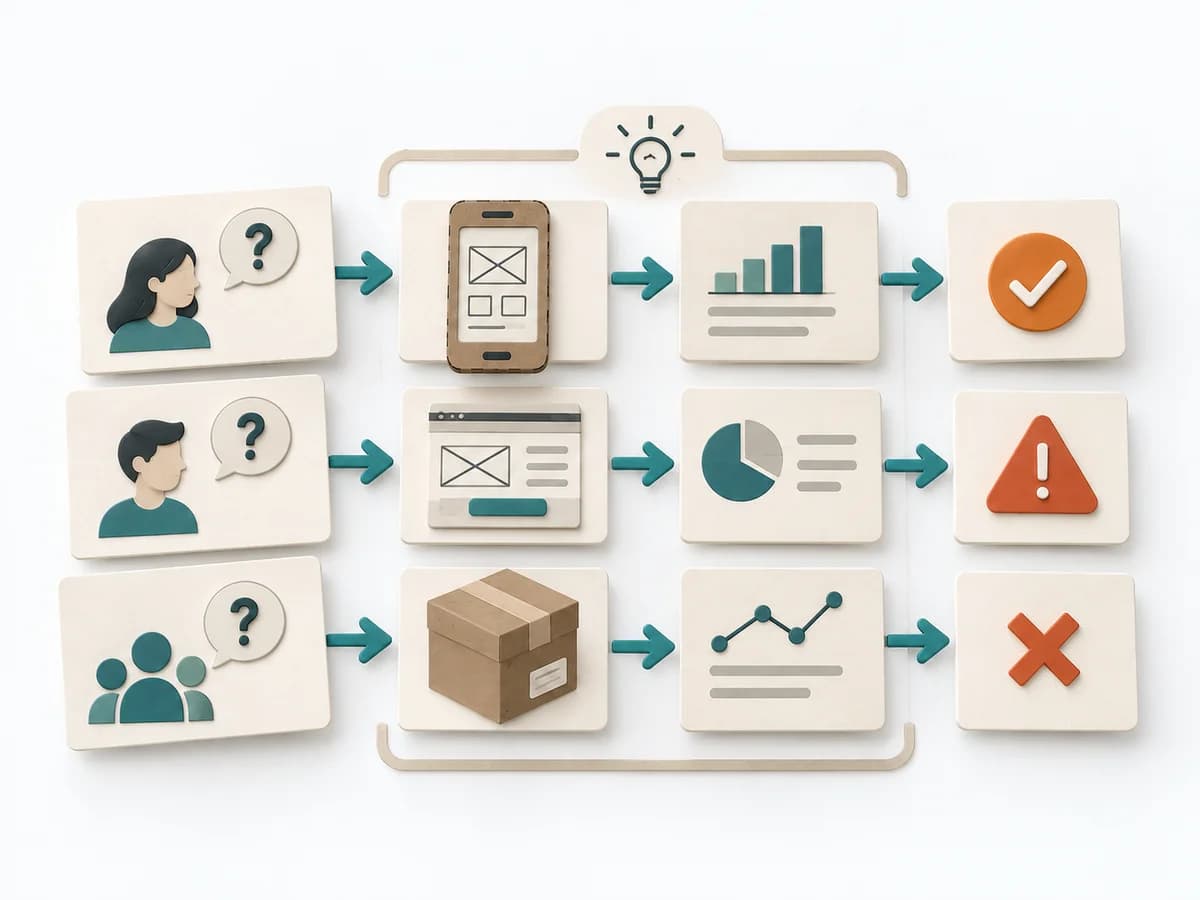
Moves customer problem, solution idea, and evidence toward a concrete result through "list assumptions", "map assumptions to dimensions", and "derive the test plan".
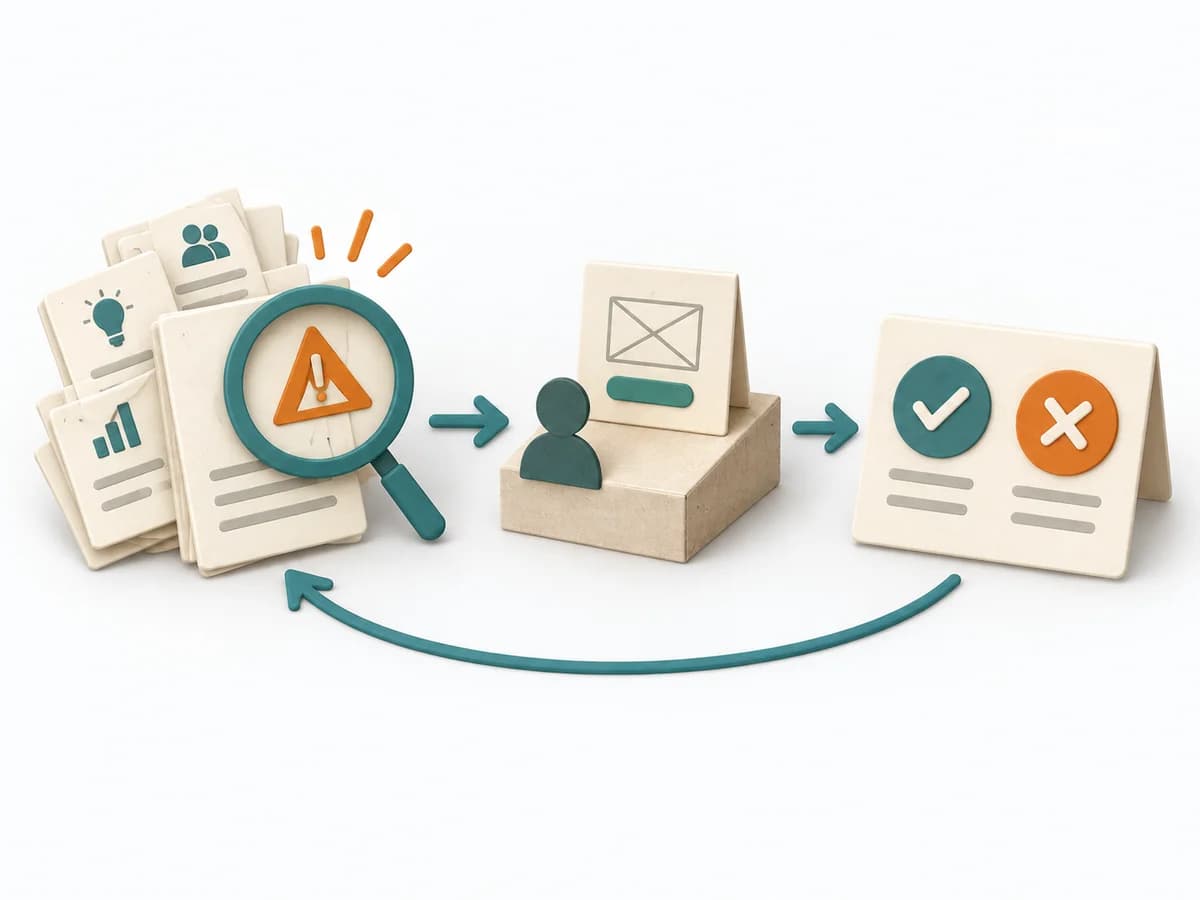
Moves customer problem, solution idea, and evidence toward a concrete result through "collect assumptions explicitly", "rate uncertainty and leverage for each assumption", and "decide to pivot, persevere, or stop".
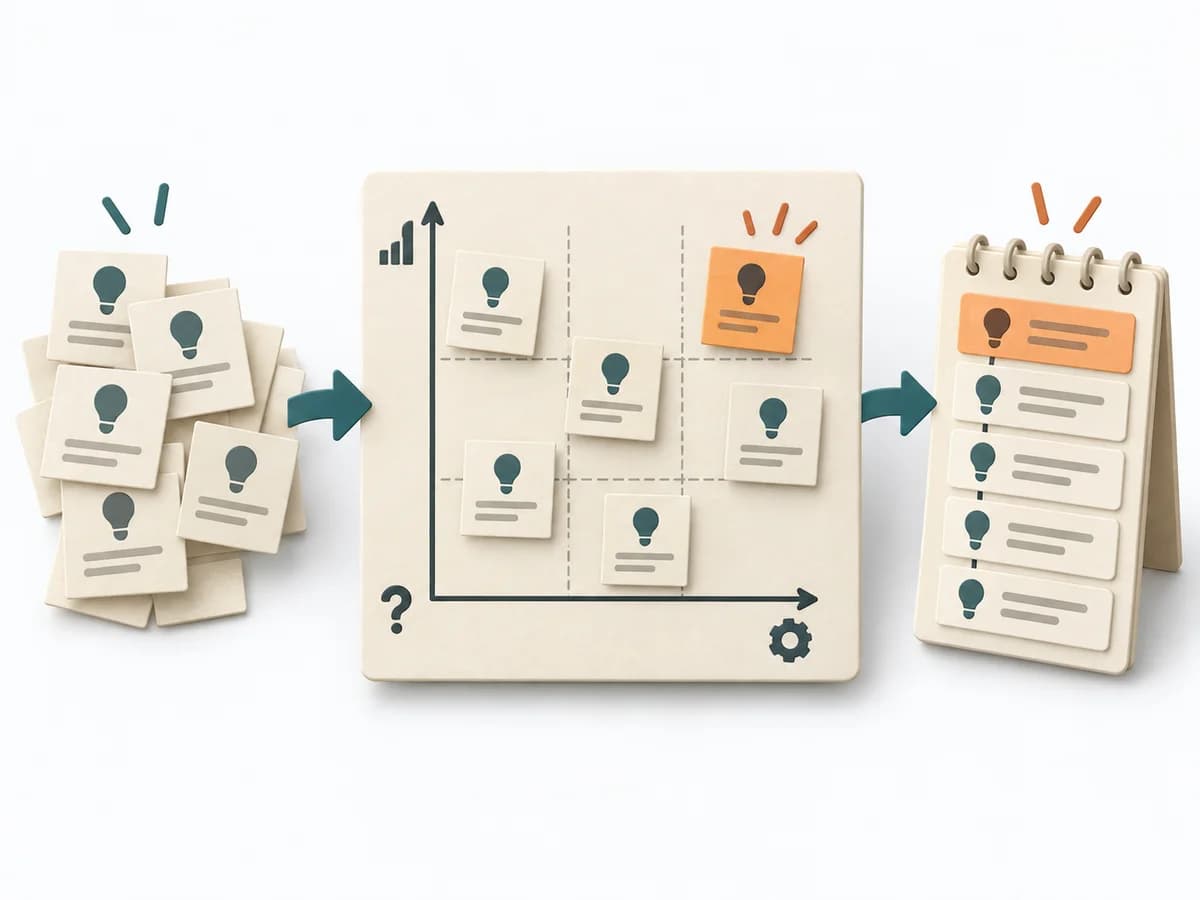
Moves customer problem, solution idea, and evidence toward a concrete result through "take over the hypothesis list", "define the risk scale", and "select the top hypotheses for the next tests".
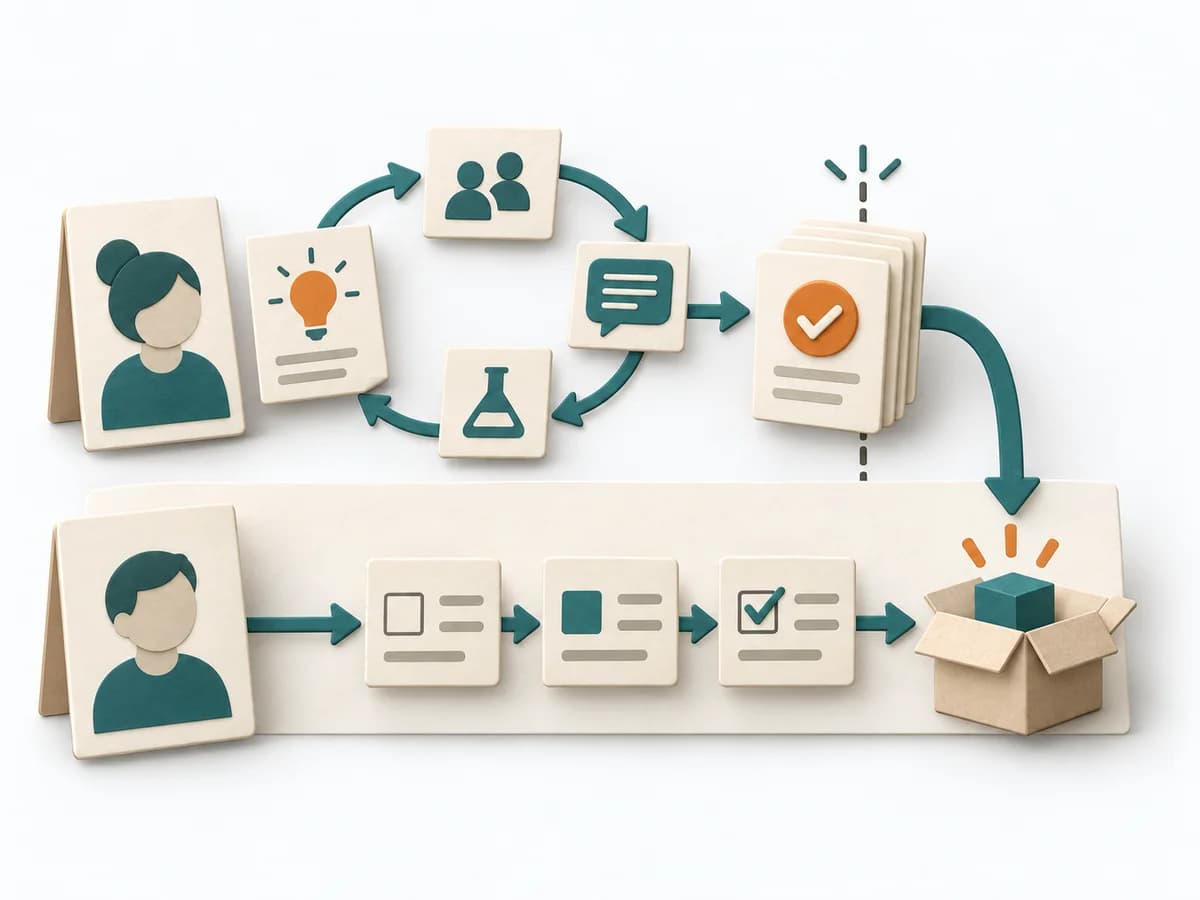
Separates discovery and delivery so that validated stories only move into implementation after learning loops.
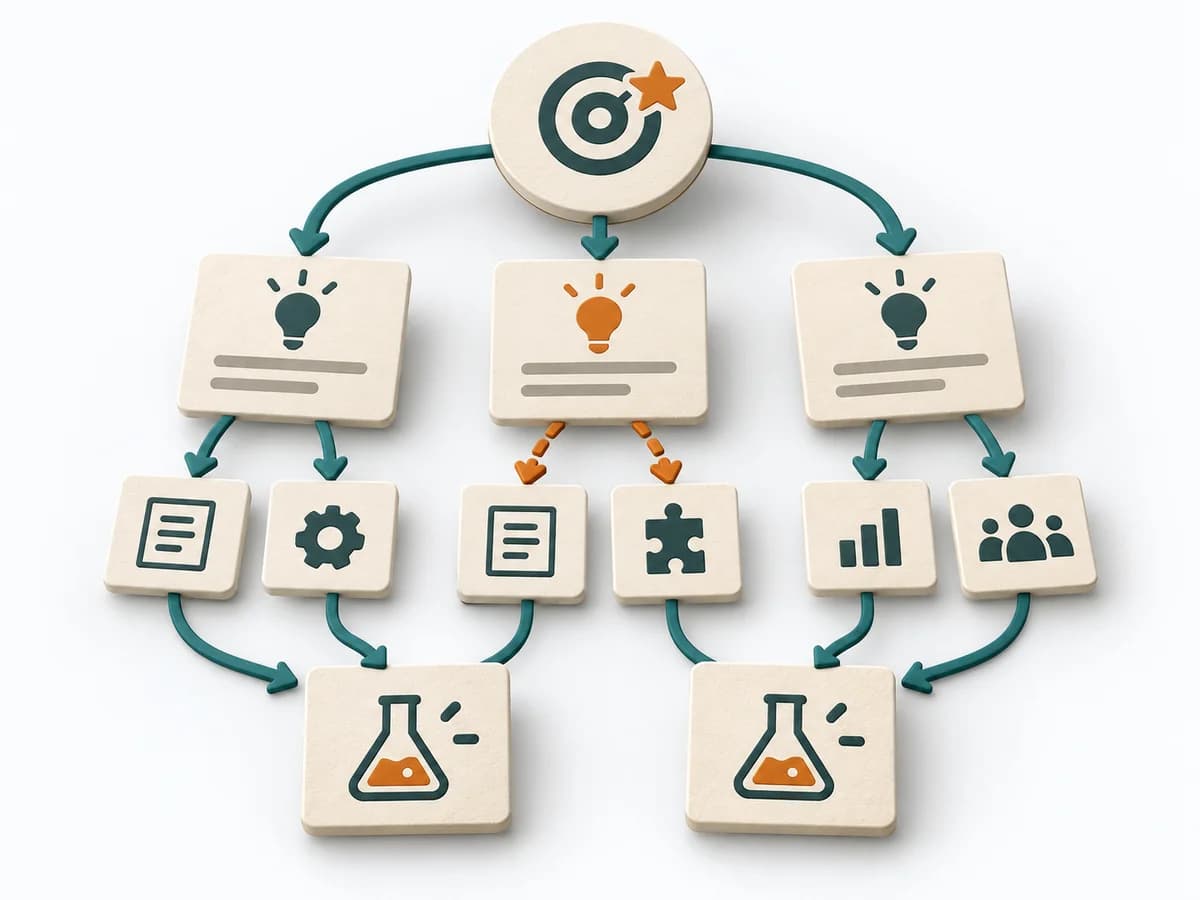
Links outcomes, opportunities, solution paths, and experiments into a tree that makes discovery work steerable.
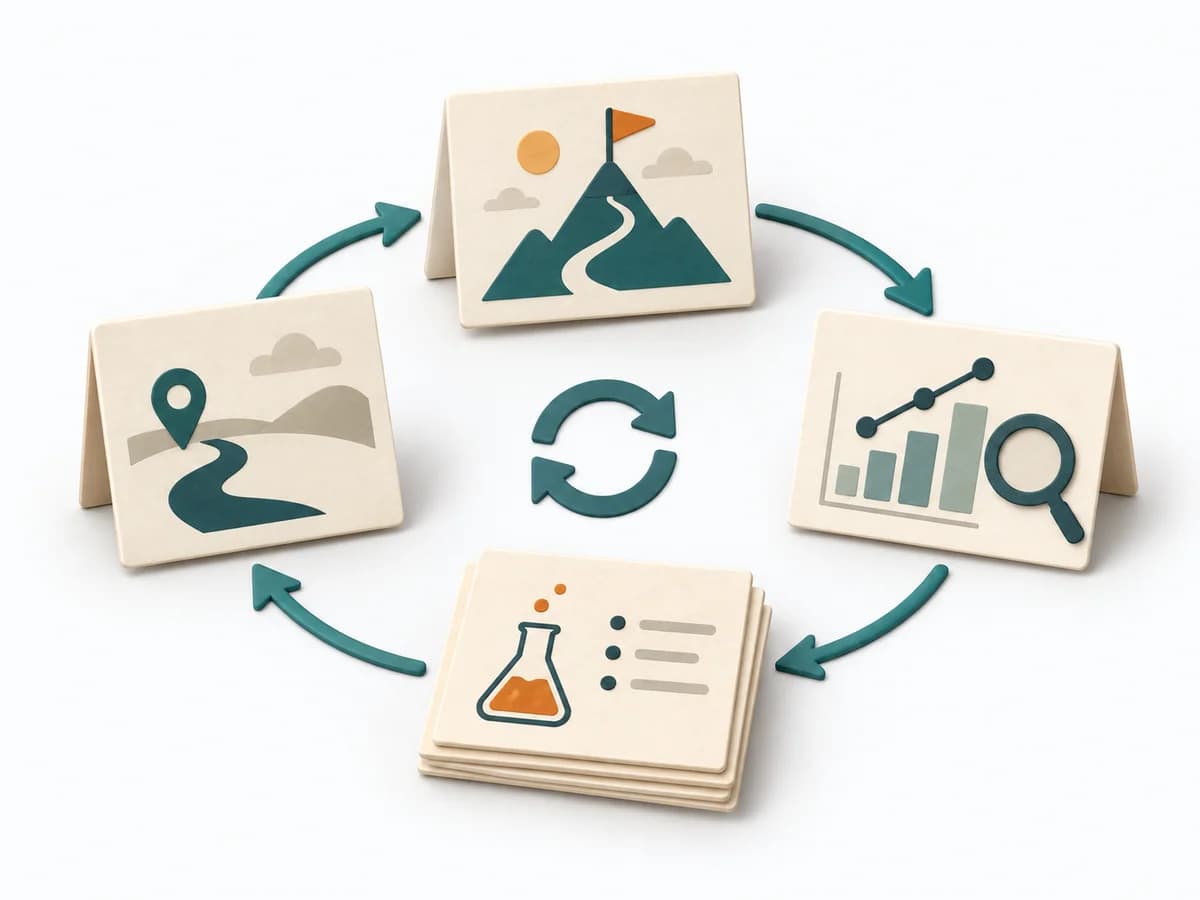
Uses a recurring learning loop to connect direction, current condition, target condition, and the next smallest experiment.