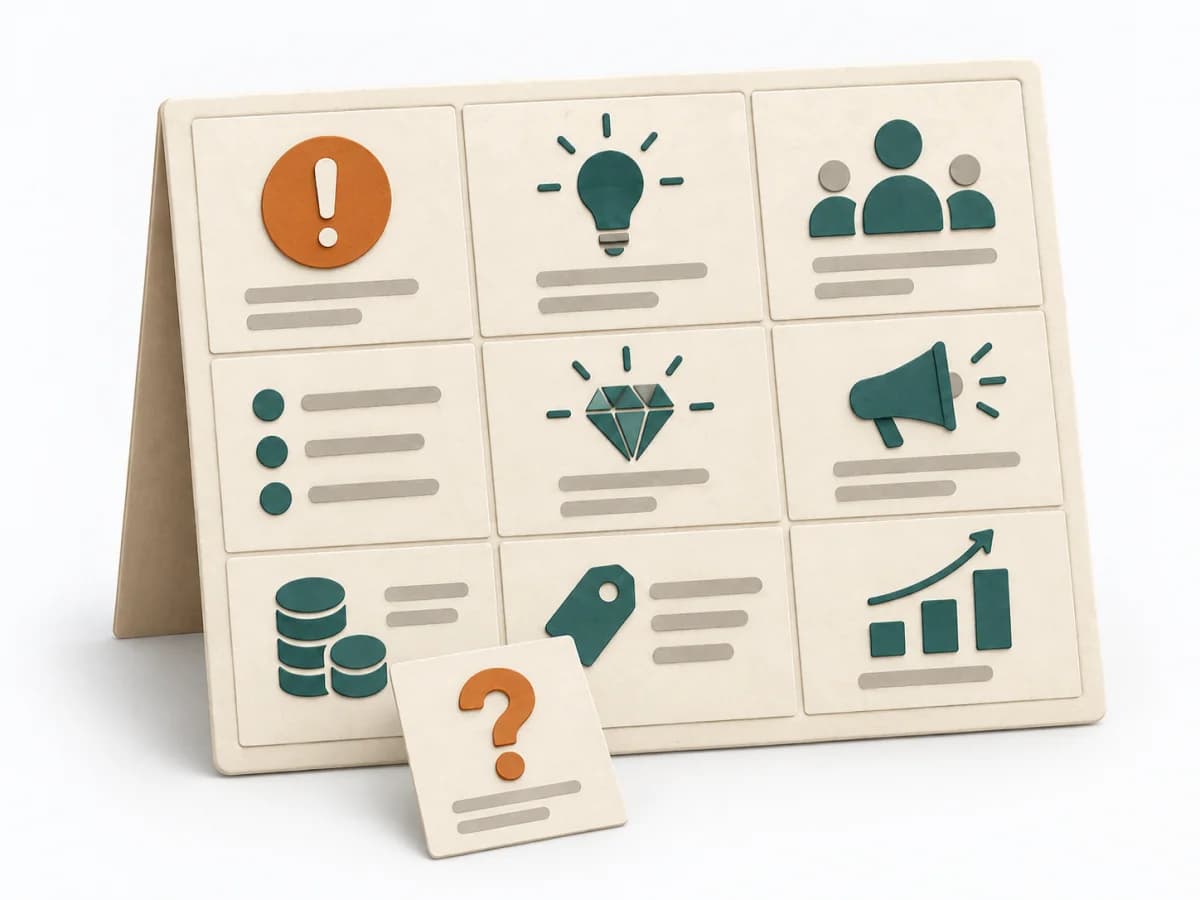
Purpose
The Test Card turns a critical assumption into a testable claim and specifies in advance which result counts as success.
Product Discovery Canvas
Condenses one critical assumption into a testable plan with a clear metric and a success threshold set in advance.
The Test Card is a compact planning artefact for one test. It connects hypothesis, test, metric, and success threshold before execution. This lets the team later determine whether the evidence sufficiently supports the assumption or calls for another learning step.
How will we test this critical assumption with a clear test, a suitable metric, and a success threshold set in advance?
Complete and freeze the four fields before execution. Record observations and conclusions in the Learning Card.

Hypothesis
Define one specific, falsifiable claim that matters to the next decision.
Test
Design a responsible procedure that produces evidence specifically for the hypothesis.
Metric
Specify which observation or calculation counts as evidence and how it will be captured.
Success threshold
Define a quantitative or clearly observable boundary at which the result is considered sufficient.
Create a new version for each new hypothesis or materially changed test setup. Evaluate results in a Learning Card after execution.
Useful when a prioritized assumption should be checked with a contained test. Use an Experiment Canvas for broader planning with guardrails, data basis, and decision logic.
A versioned plan with hypothesis, test, metric, and a success threshold set in advance.
Fictional worked example
Four fields connect one critical assumption to a test, metric, and success threshold before execution.
What must be true for the idea?
Project leads activate a weekly risk report when setup takes no more than two minutes.
How will we test the hypothesis?
40 active project leads see a clickable setup dialogue for seven days.
Which observation counts as evidence?
Share of exposed project leads who complete the setup.
Which boundary applies before launch?
At least 12 completions from 40 valid exposures; stop after one privacy complaint.
Start with a prioritized assumption whose support or rejection affects a concrete product or business decision.
The Test Card turns a critical assumption into a testable claim and specifies in advance which result counts as success.
State one hypothesis, select an appropriate test, define the measurement, and set a success threshold before starting.
Four fields connect the assumption to an observable test. Specify the audience, measurement window, numerator, and denominator to make the metric precise. Keep the threshold unchanged during execution. An Experiment Canvas can hold the same information with additional constraints for more complex setups.
Work on one hypothesis per card and review whether it can be measured. Card preparation and test execution have separate time budgets. Reference an existing Experiment Canvas when it already contains the four planning fields.
The method guide walks execution through 4 phases, timing, 4 pitfalls, and clear stop criteria.
Open method guideYour perspective
Your feedback helps shape the next improvements to methodatlas.
Plan one decision-relevant test in a compact session. Execution and evaluation receive separate dates and artefacts.
To be confirmed
To be confirmed
Complete Test Card Time: 20 to 35 minutes
Complete this worksheet on paper or in your own document during the work.
What must be true for the idea?
...
How will we test the hypothesis?
...
Which observation counts as evidence?
...
Which boundary applies before launch?
...
Strategyzer: Validate Your Ideas with the Test Card
Expected artifact: Testable hypothesis
Audience · expected behaviour · context
Entry:
...
Expected artifact: Executable test
Participants · intervention · procedure · duration · safeguards
Entry:
...
Expected artifact: Unambiguous metric
Signal · data source · calculation · window
Entry:
...
Expected artifact: Pre-set success threshold
Boundary · minimum data · pause and stop limits
Entry:
...
...
Method guide: https://methodatlas.meierhoff-systems.de/en/methods/test-card/run-sheet
Fitting alternatives with decision guidance, followed by other related methods.
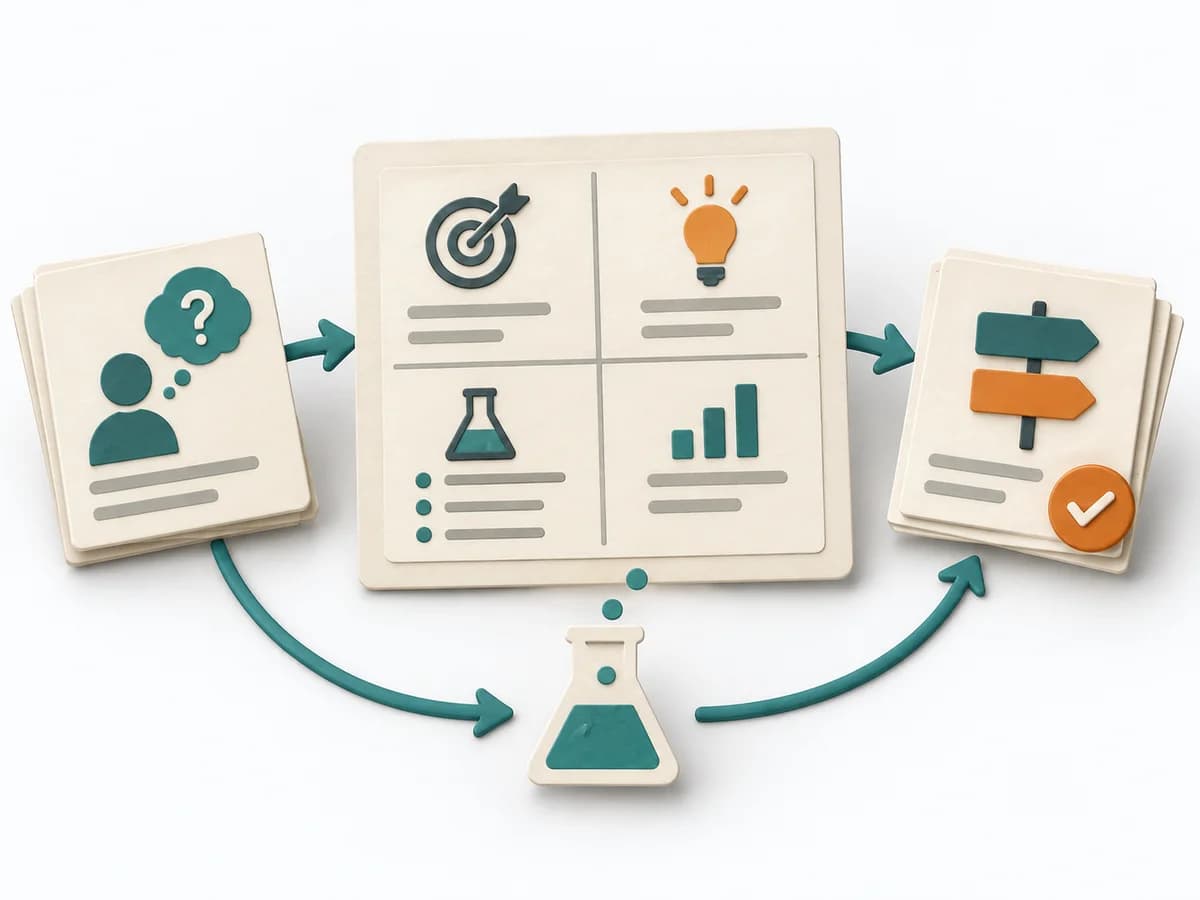
Choose Experiment Canvas for additional decision, risk, data capture, and evaluation fields. Maintain the four test planning fields there once.
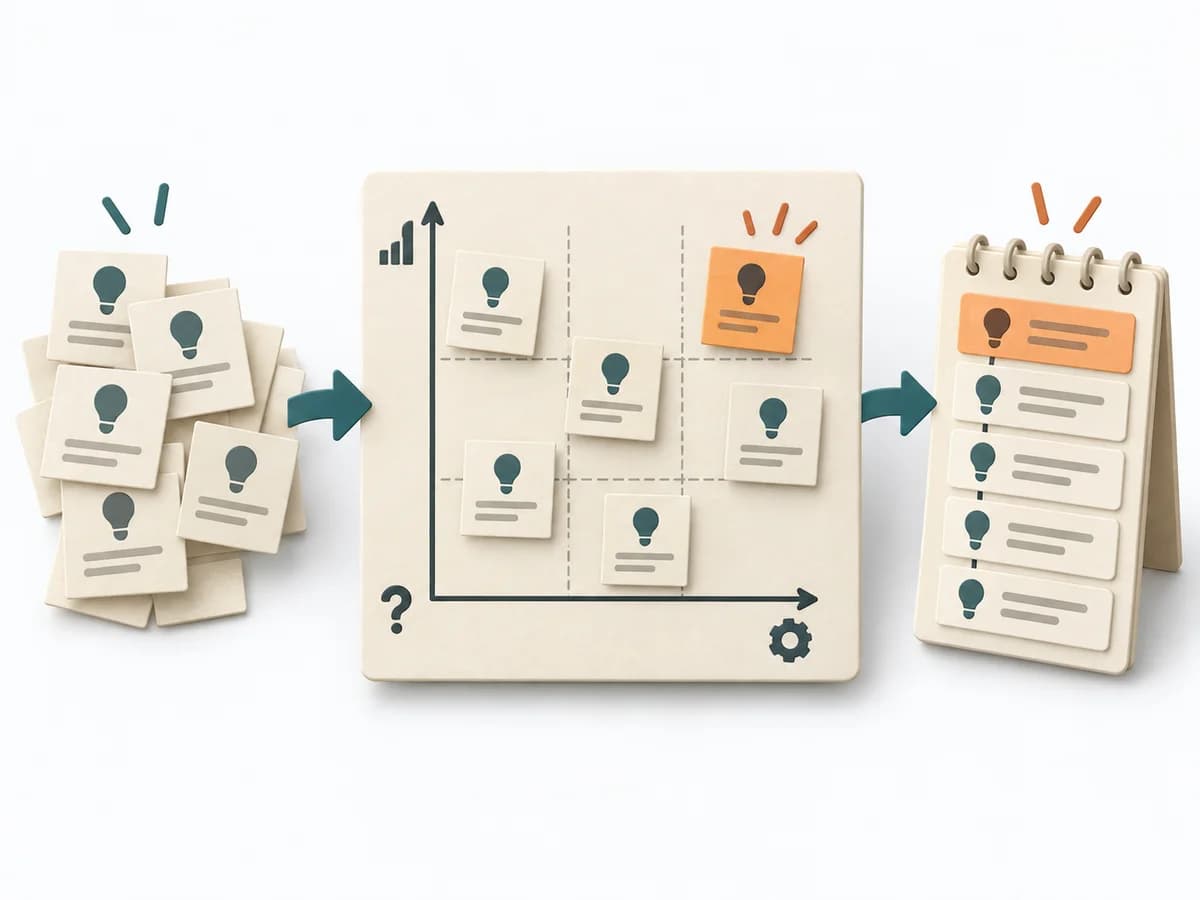
Moves customer problem, solution idea, and evidence toward a concrete result through "take over the hypothesis list", "define the risk scale", and "select the top hypotheses for the next tests".
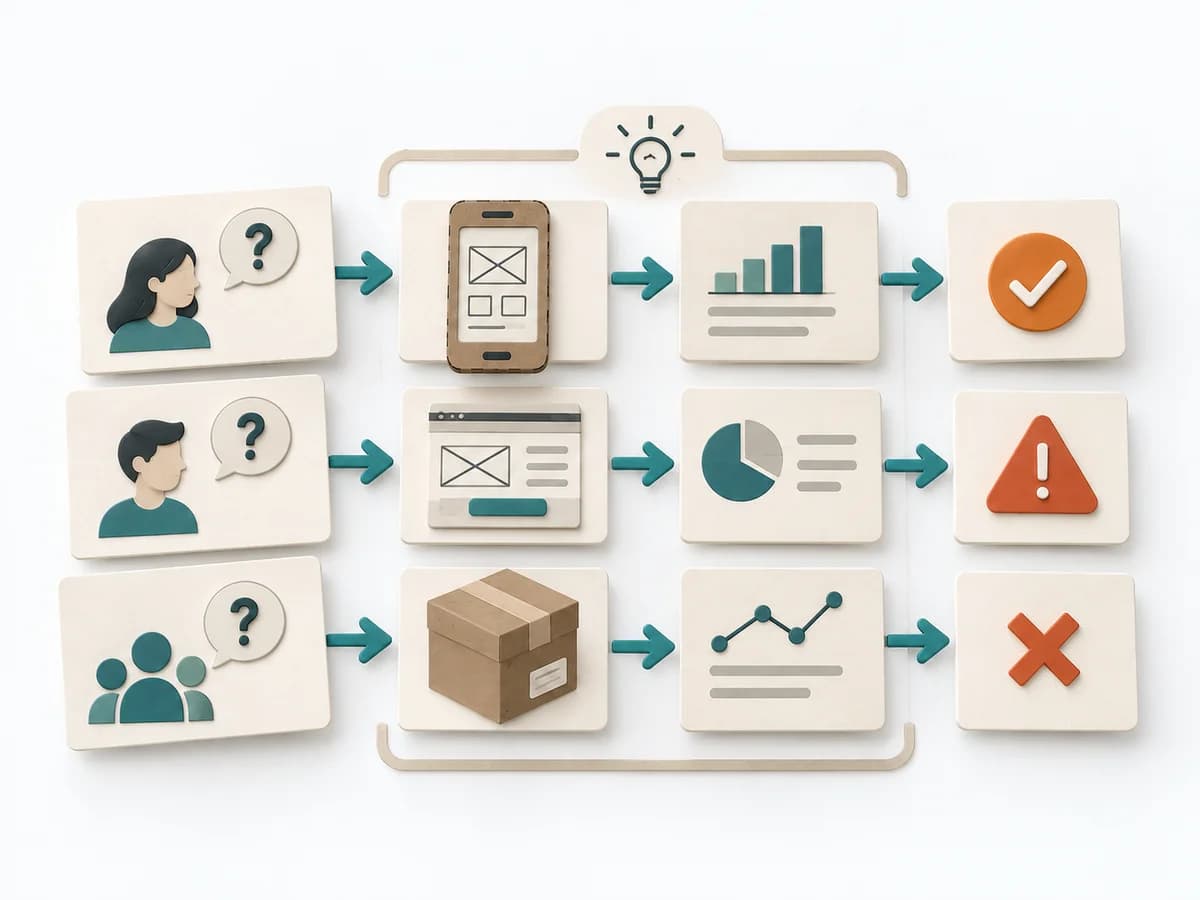
Moves customer problem, solution idea, and evidence toward a concrete result through "list assumptions", "map assumptions to dimensions", and "derive the test plan".
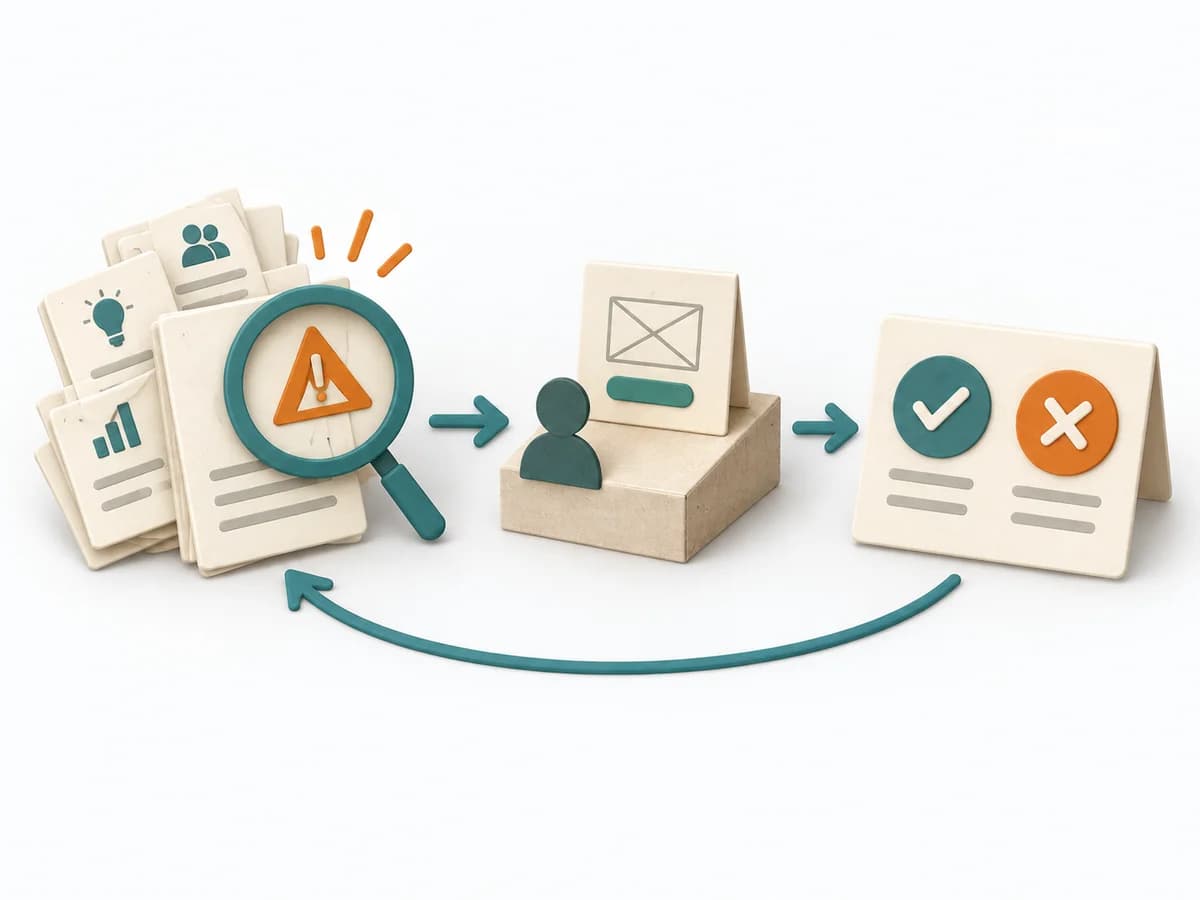
Moves customer problem, solution idea, and evidence toward a concrete result through "collect assumptions explicitly", "rate uncertainty and leverage for each assumption", and "decide to pivot, persevere, or stop".
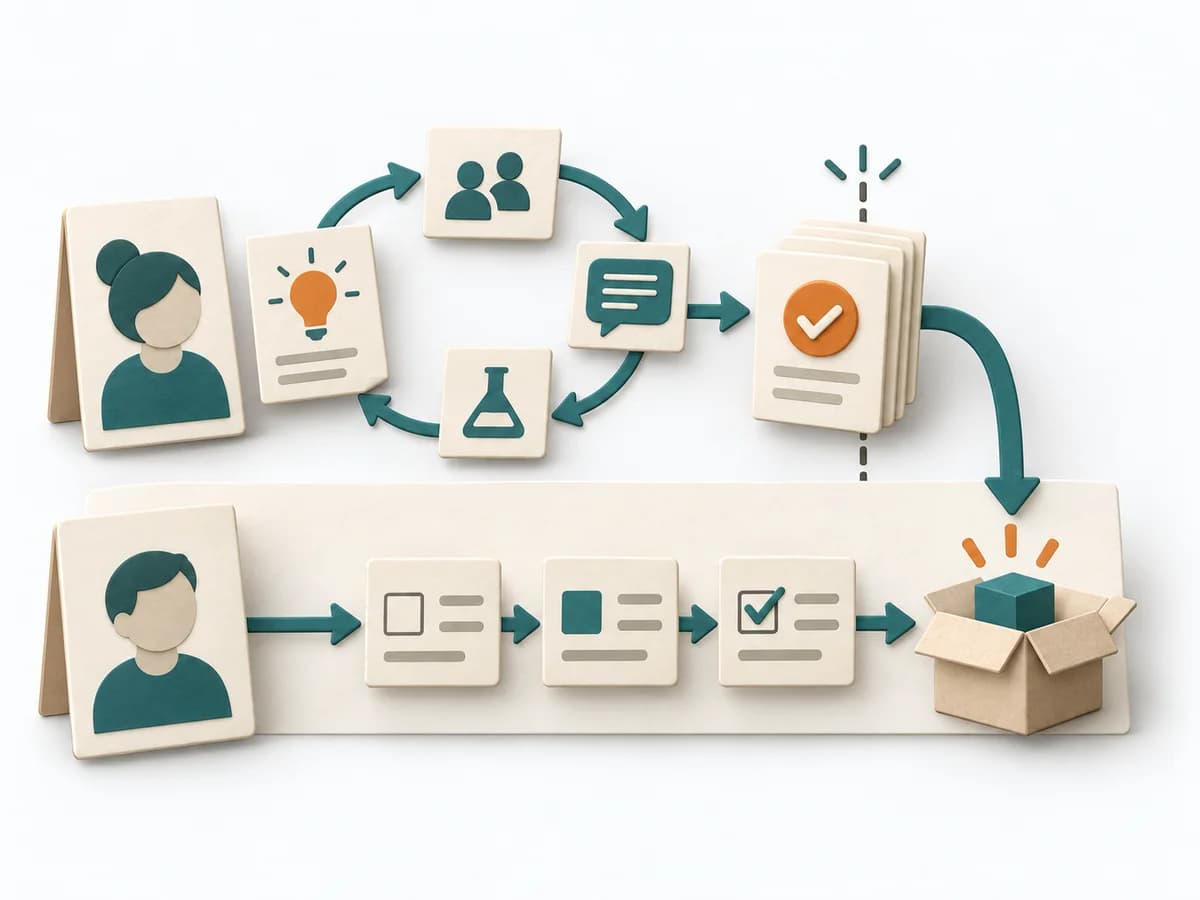
Separates discovery and delivery so that validated stories only move into implementation after learning loops.
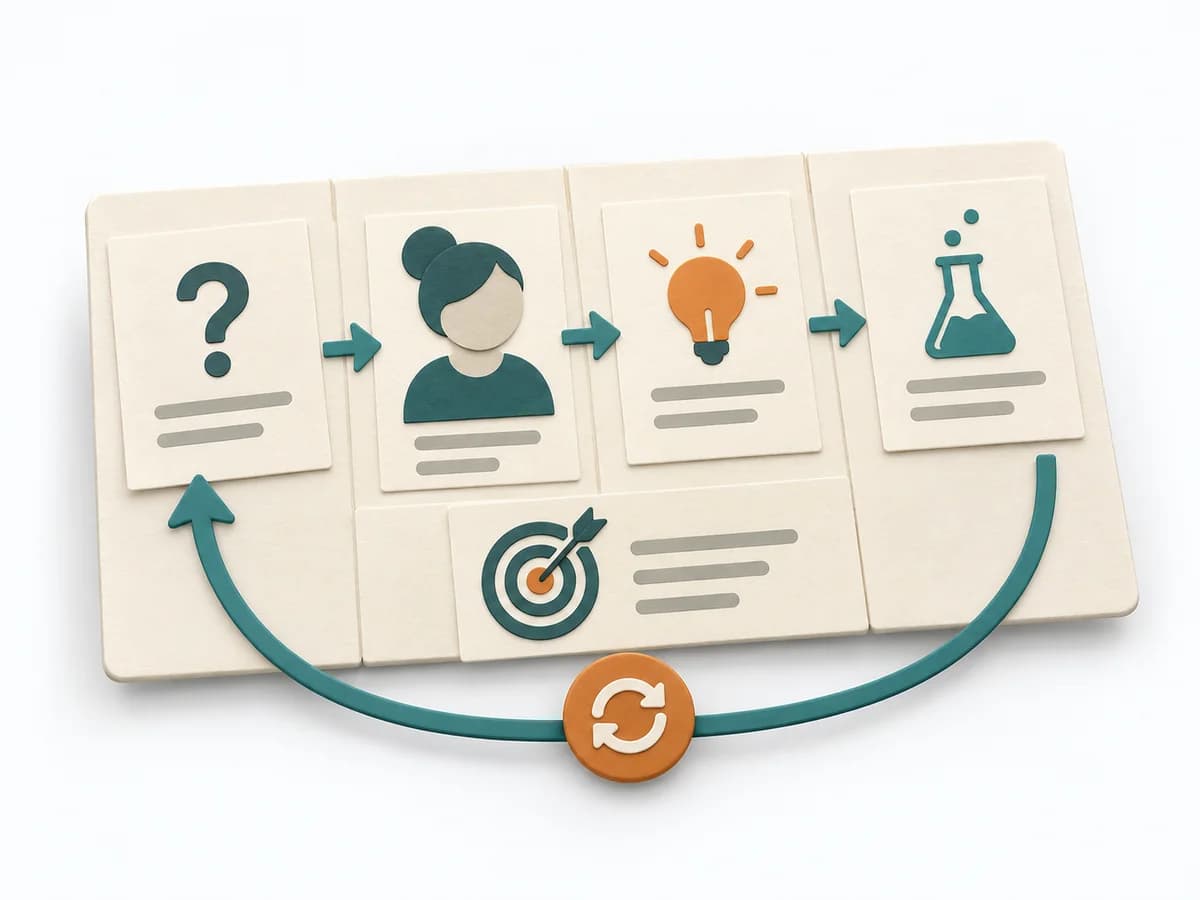
Aligns business problem, users, outcomes, solution ideas, hypotheses, and experiments on one lightweight canvas.