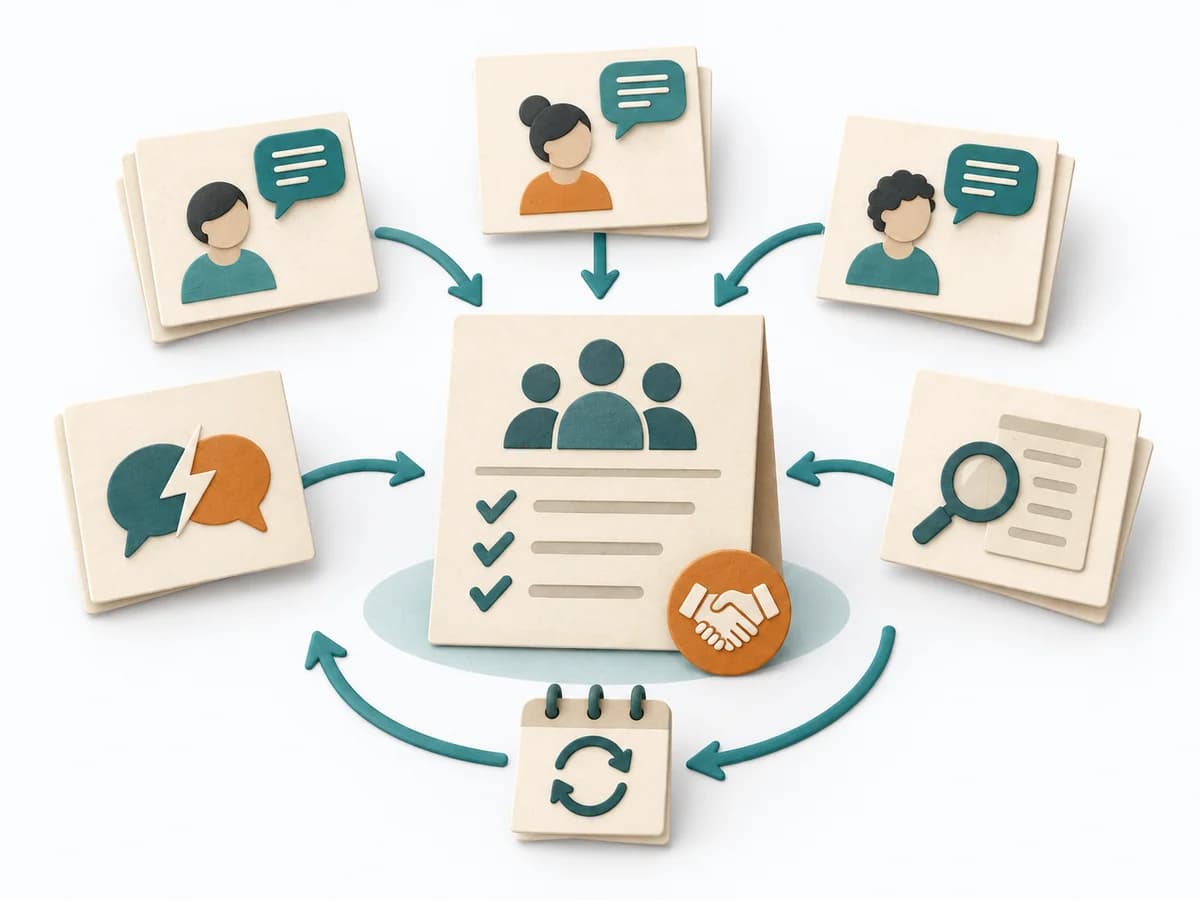
Purpose
When improvement options need to be sorted more finely than just start and stop, it brings observations into clear kinds of action. This makes visible what should be done more, less, newly, or continued.
Agile Facilitation method
Shows which practices should be preserved, increased, reduced, stopped, or tried anew.
The Starfish Retrospective distinguishes five changes to practices: Keep Doing, Less Of, More Of, Stop Doing and Start Doing. Preserving, adjusting intensity, ending and trying something new remain distinct decisions.
Which practices should we preserve, increase, reduce, stop or start trying?
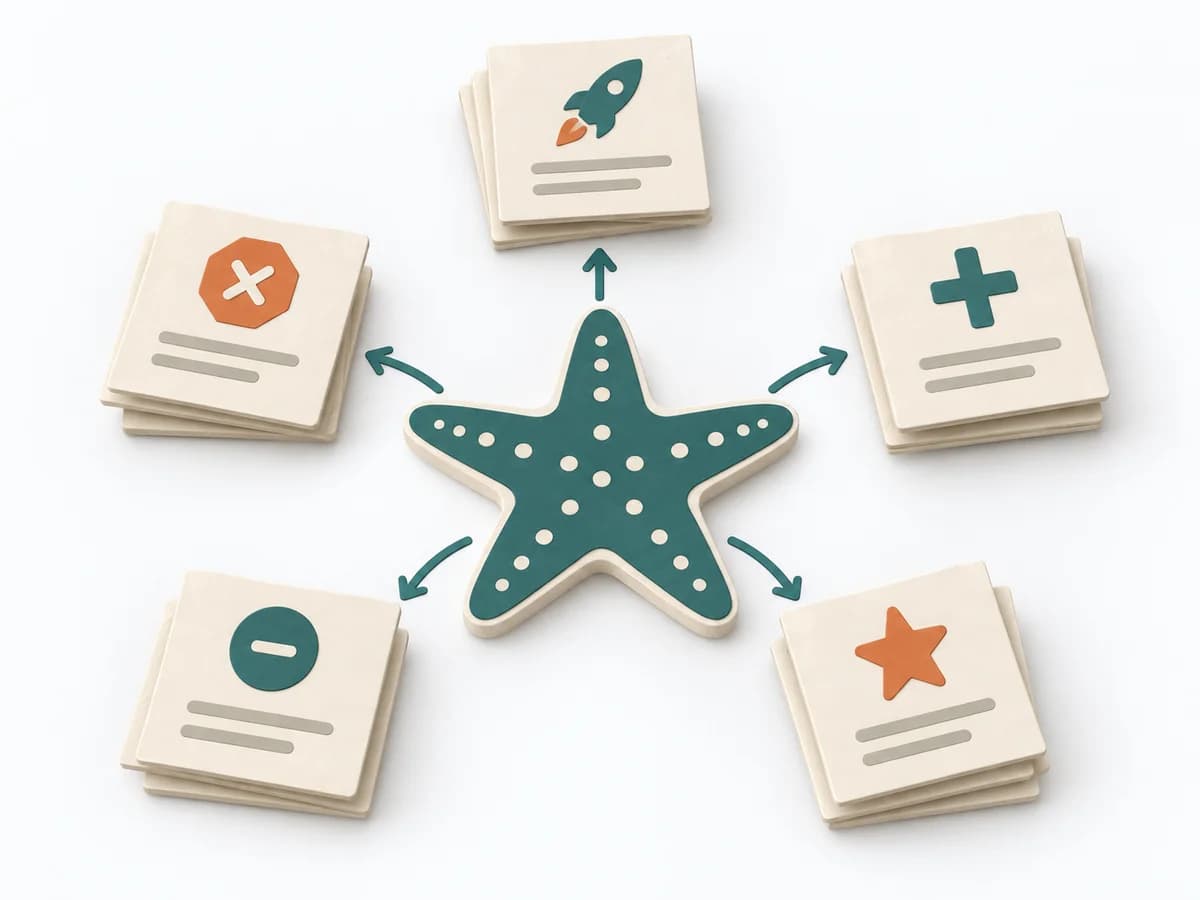
Five directions
Set the period and explain Keep, Less, More, Stop and Start using a practice.
Practice list
Independently record concrete practices and place them in the desired change category.
Disagreements
Clarify related cards and explicitly discuss conflicting change requests.
Adjustment
Select a feasible practice change with specific extent and expected effect.
Test a selected change in the next work period; at review decide its intensity or continuation using observed effects.
For teams wanting nuanced changes to working practices rather than merely collecting positives and negatives.
Five differentiated practice lists and an agreed experiment with baseline, intended intensity, owner and review.
The practice experiment records an owner, duration, later review signal, and explicit protection for Keep practices.
Fictional example
The Starfish Retrospective distinguishes five changes to practices: Keep Doing, Less Of, More Of, Stop Doing and Start Doing. Preserving, adjusting intensity, ending and trying something new remain distinct decisions.
Which practice should remain as it is, and why?
Fictional: keep the Friday demo with real usage cases; it clarifies misunderstandings.
Which existing practice should become less frequent or smaller?
Limit status meetings to 15 rather than 30 minutes.
Which helpful existing practice should become more frequent or intensive?
Increase pairing on unfamiliar modules from once to twice weekly.
Which practice should stop and which necessary function must still be covered?
Stop the duplicate email status report; the current board remains the information source.
Which currently absent practice do we want to try?
Start a weekly 20-minute review of support patterns.
Which single change is tested for how long, by whom and using which effect?
Two weeks of shorter status meetings, owner Lea; observe duration and subsequent clarifications. Then decide whether to continue.
All example details are fictional and illustrate the application.
Define period, team boundary and previous experiments; explain the five categories and request concrete practices.
When improvement options need to be sorted more finely than just start and stop, it brings observations into clear kinds of action. This makes visible what should be done more, less, newly, or continued.
It distributes feedback across five response patterns and produces concrete change options from it. The additional gradation between More, Less, and Keep prevents sensible routines from appearing only as continue or end.
Starfish works because it distinguishes behavior more finely than a pure continue-or-stop logic. Good application uses the middle ground between more of this, less of this, keep, start, and stop to make nuances in everyday team life visible. This gradation in particular helps avoid overreactions and dose change so it stays realistically connectable in the next cycle.
Introduce the five areas briefly using real behavioral examples, so entries don't feel arbitrary. The work is most productive where a point wavers between two fields and thereby demands a finer decision. Close with a few deliberately graded changes rather than a long list of measures.
The method guide walks execution through 4 phases, timing, 4 pitfalls, and clear stop criteria.
Open method guideYour perspective
Your feedback helps shape the next improvements to methodatlas.
Define period, team boundary and previous experiments; explain the five categories and request concrete practices.
To be confirmed
To be confirmed
Complete retrospective Time: 45–75 minutes; later experiment review
Complete this worksheet on paper or in your own document during the work.
Which practice should remain as it is, and why?
...
Which existing practice should become less frequent or smaller?
...
Which helpful existing practice should become more frequent or intensive?
...
Which practice should stop and which necessary function must still be covered?
...
Which currently absent practice do we want to try?
...
Which single change is tested for how long, by whom and using which effect?
...
Answer the prompts with your own information. Explicitly mark unknowns and assumptions.
Patrick Kua: The Retrospective Starfish
Expected artifact: Shared category logic
Are keeping and increasing clearly distinguished?
Entry:
...
Expected artifact: Five practice lists
Does each card name a practice and desired change?
Entry:
...
Expected artifact: Reasoned practice changes
Is context understood for conflicting cards?
Entry:
...
Expected artifact: Practice experiment with review
Are baseline and new intensity described measurably?
Entry:
...
...
Method guide: https://methodatlas.meierhoff-systems.de/en/methods/starfish-retrospective/run-sheet
Fitting alternatives with decision guidance, followed by other related methods.
Instead of Starfish Retrospective, when you want to organize team work, backlog, or retrospectives in a lightweight work format.
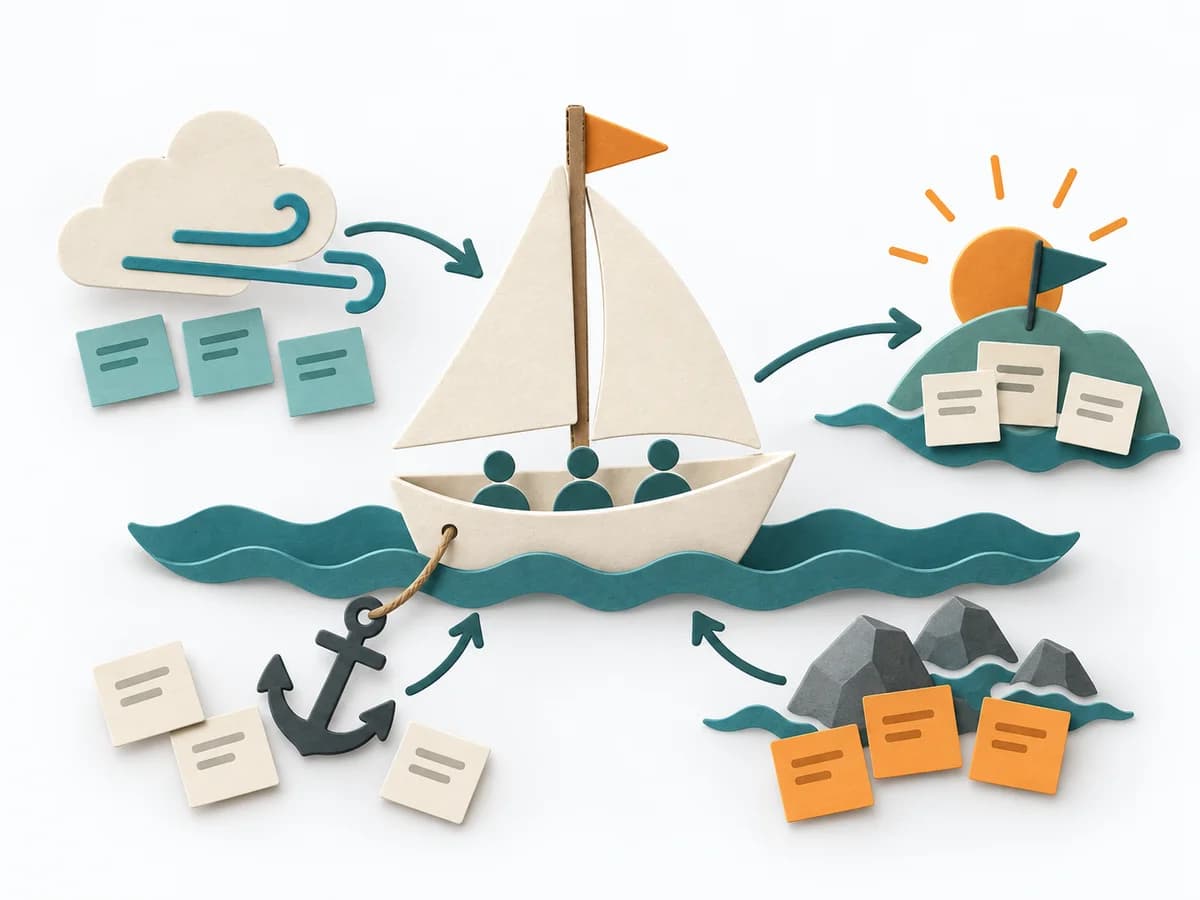
Makes a team's winds, anchors, risks, and target picture visible and turns the review into prioritized improvements.
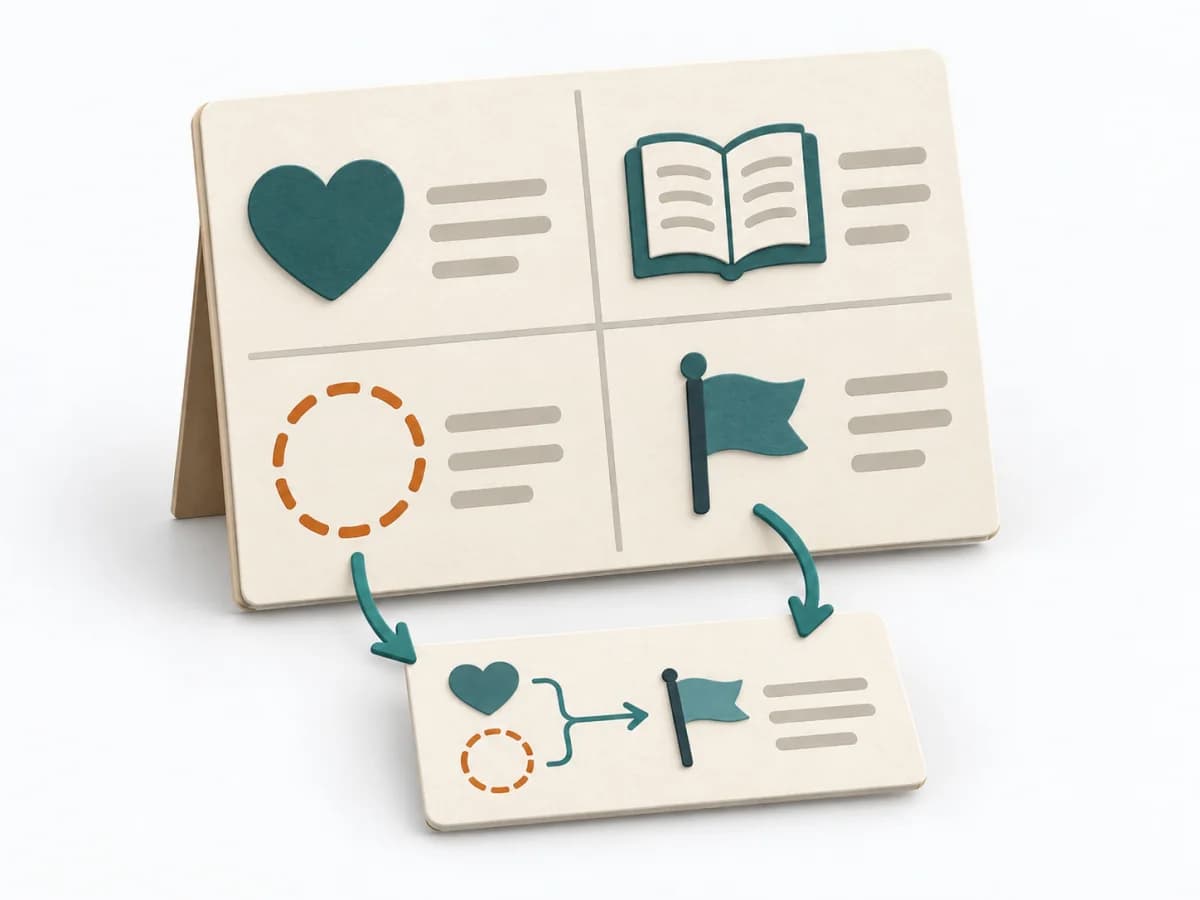
Sorts review, learning points, and friction into Liked, Learned, Lacked, and Longed For for concrete improvements.
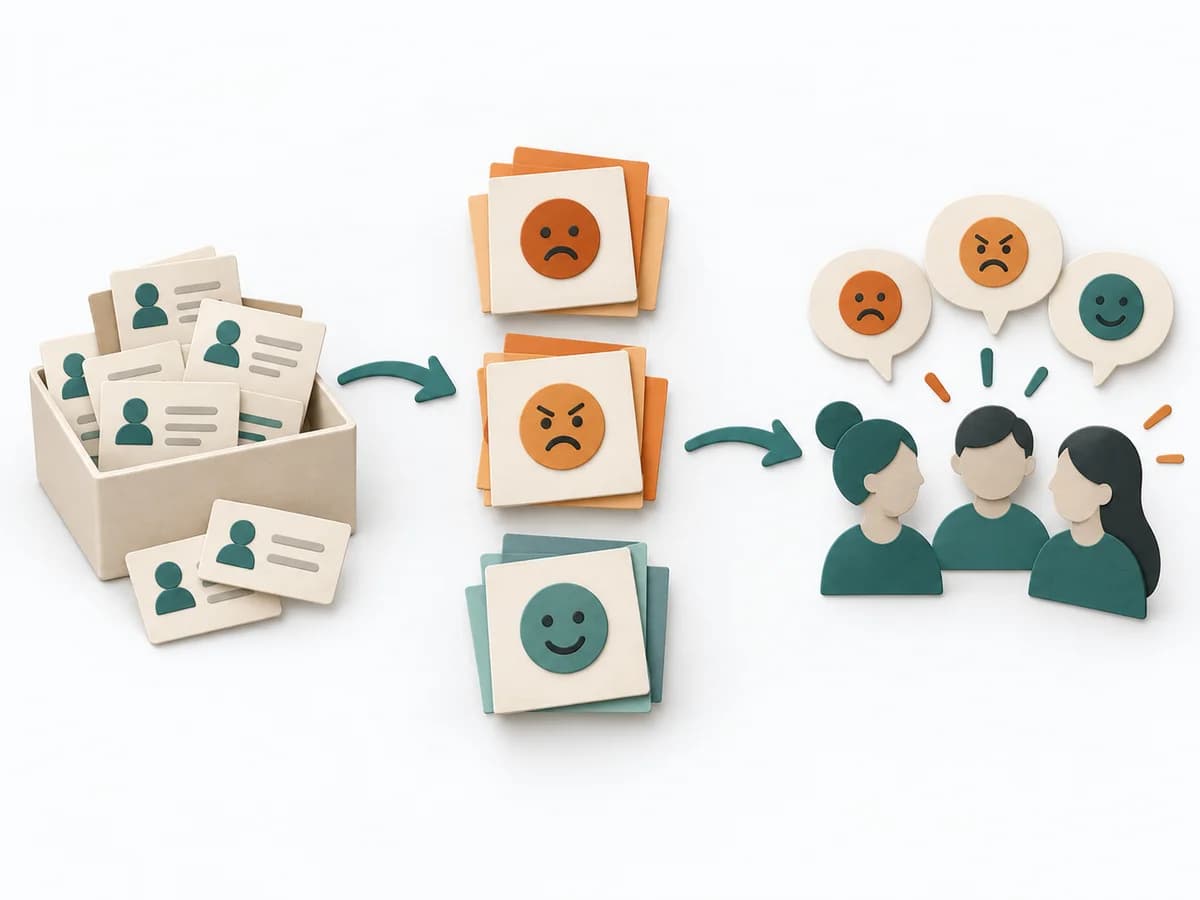
Collects emotional signals from the team, clusters them into themes, and makes real conversation topics visible.

Makes patterns from a sprint visible and derives concrete improvements for the next work cycle.
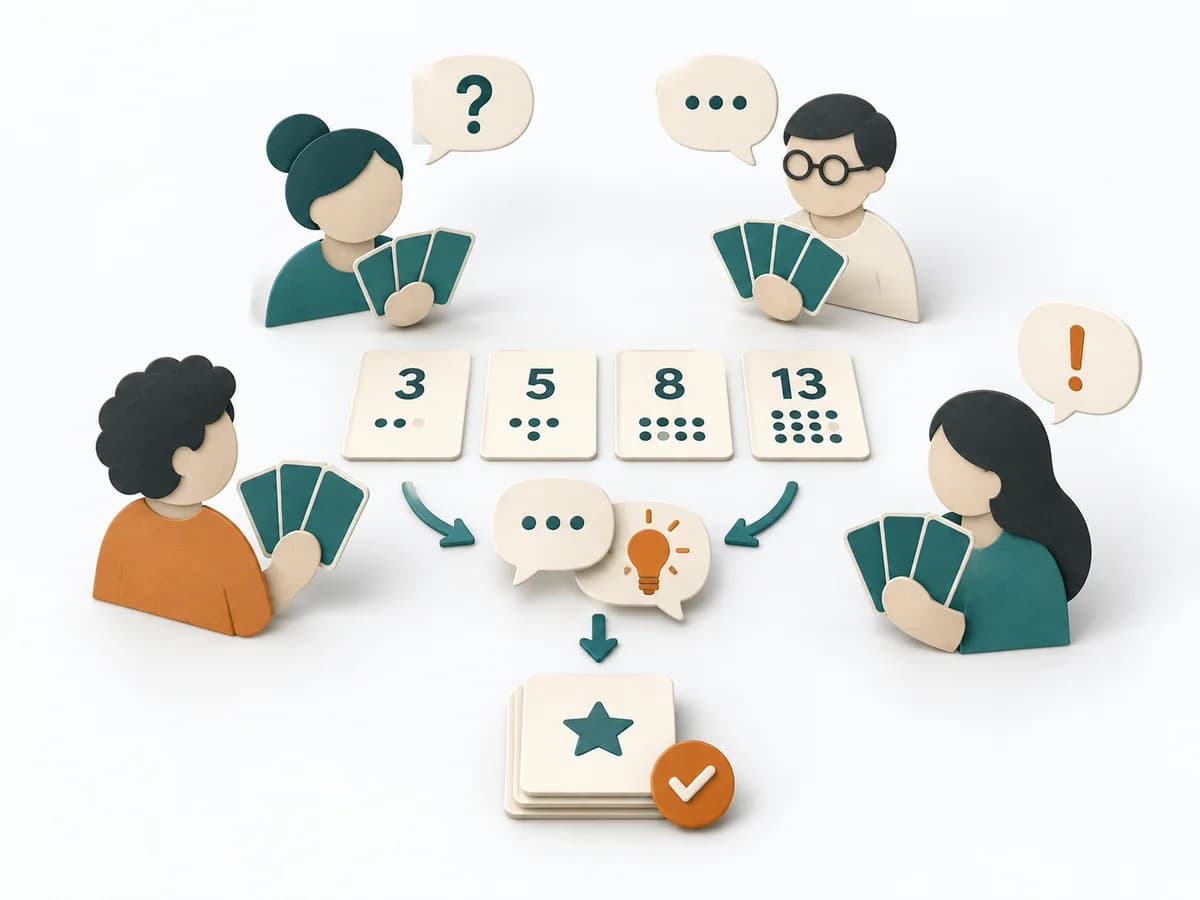
Compares stories relatively, surfaces knowledge gaps, and produces a shared estimate with traceable assumptions.