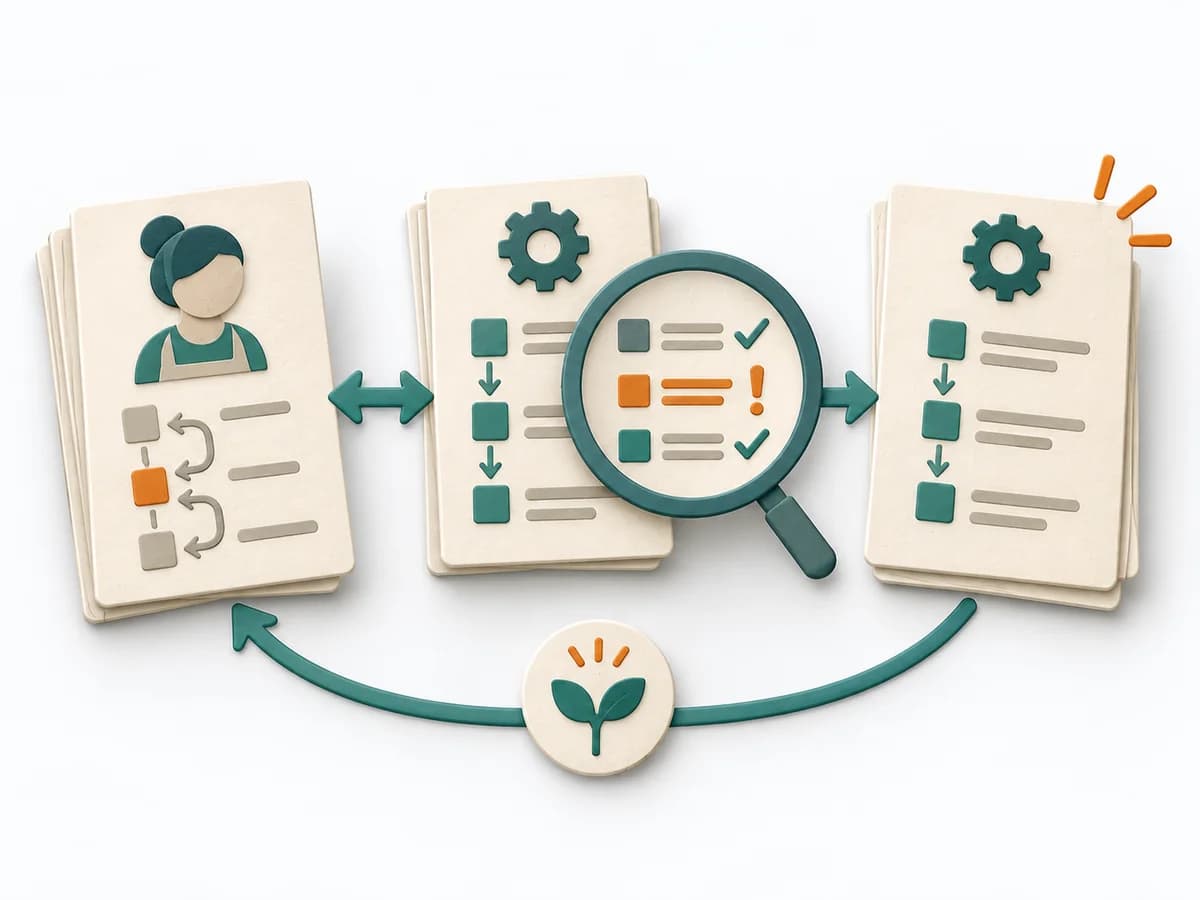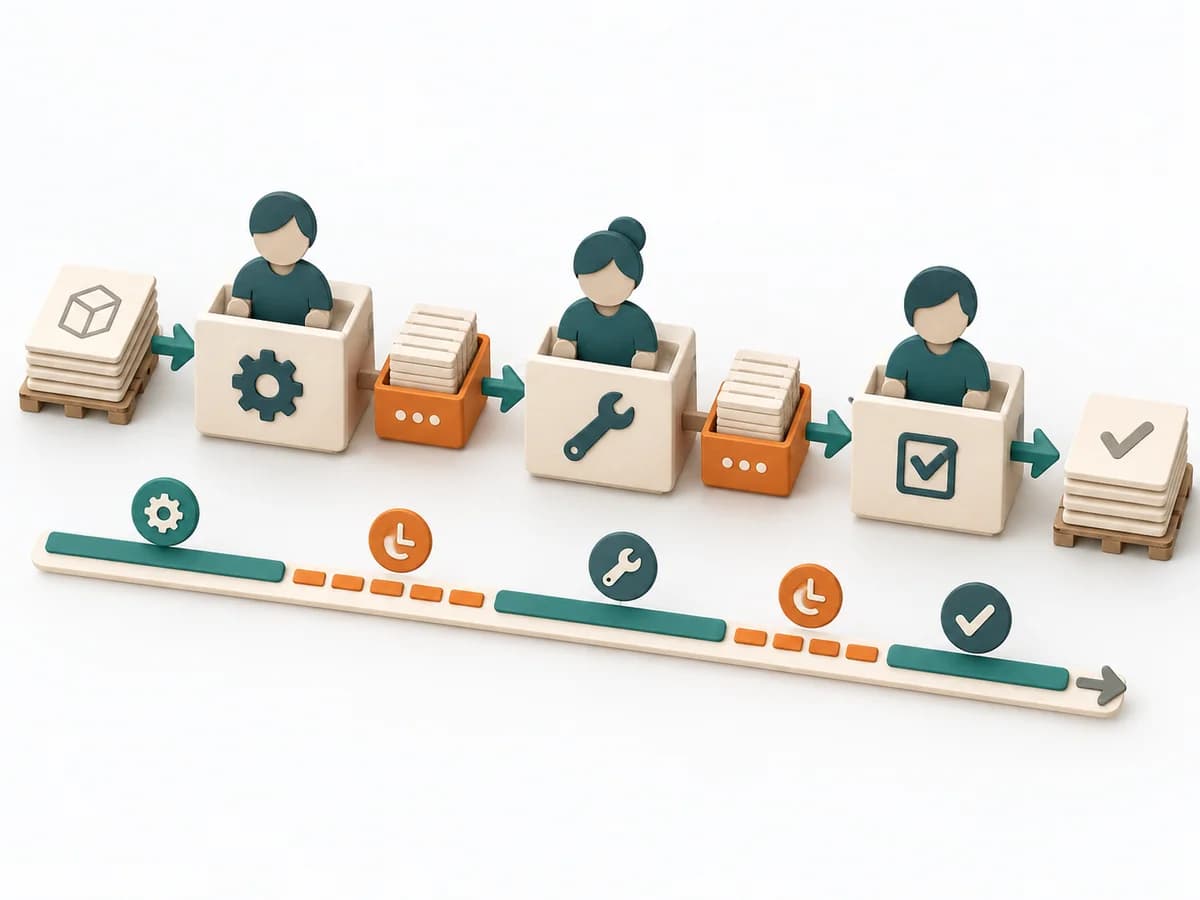
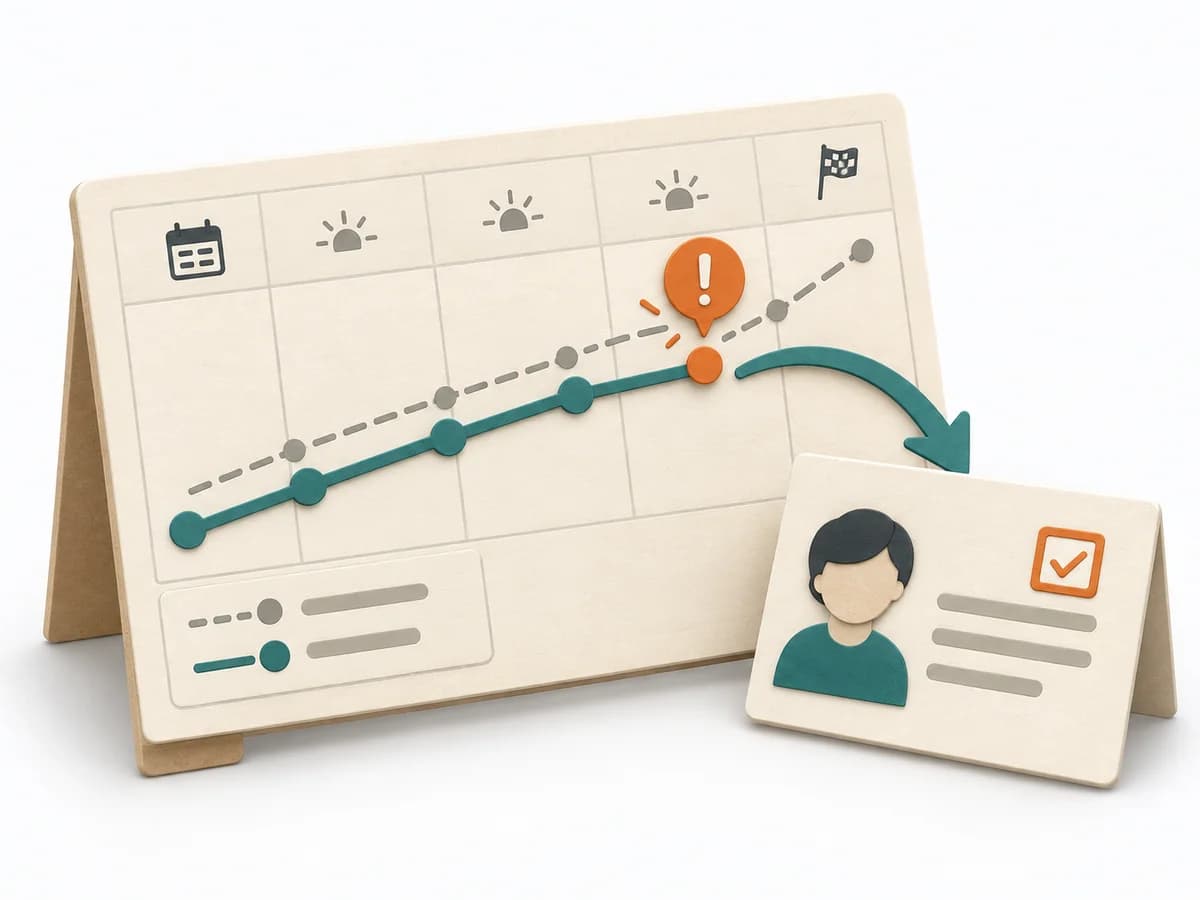
Purpose
For a tightly scoped process segment with noticeable waste, the method bundles shared energy for change. It suits situations that call for fast learning loops and visible adjustments.
Operations Operating practice
Combines observation, waste analysis, and experiments into a focused improvement process with an updated standard.
Ein klarer Ausschnitt des Arbeitsflusses wird intensiv betrachtet, sodass Probleme nicht abstrakt bleiben. Kleine Experimente zeigen direkt, welche Änderung Reibung reduziert und welche nur kosmetisch wirkt. Der Gewinn liegt in der kurzen Distanz zwischen Beobachtung, Anpassung und neuem Standard.
Which measurable process improvement can the frontline team implement, test, and standardise at the gemba within days?
Evidence building, analysis, and effectiveness review form a multi-stage initiative.
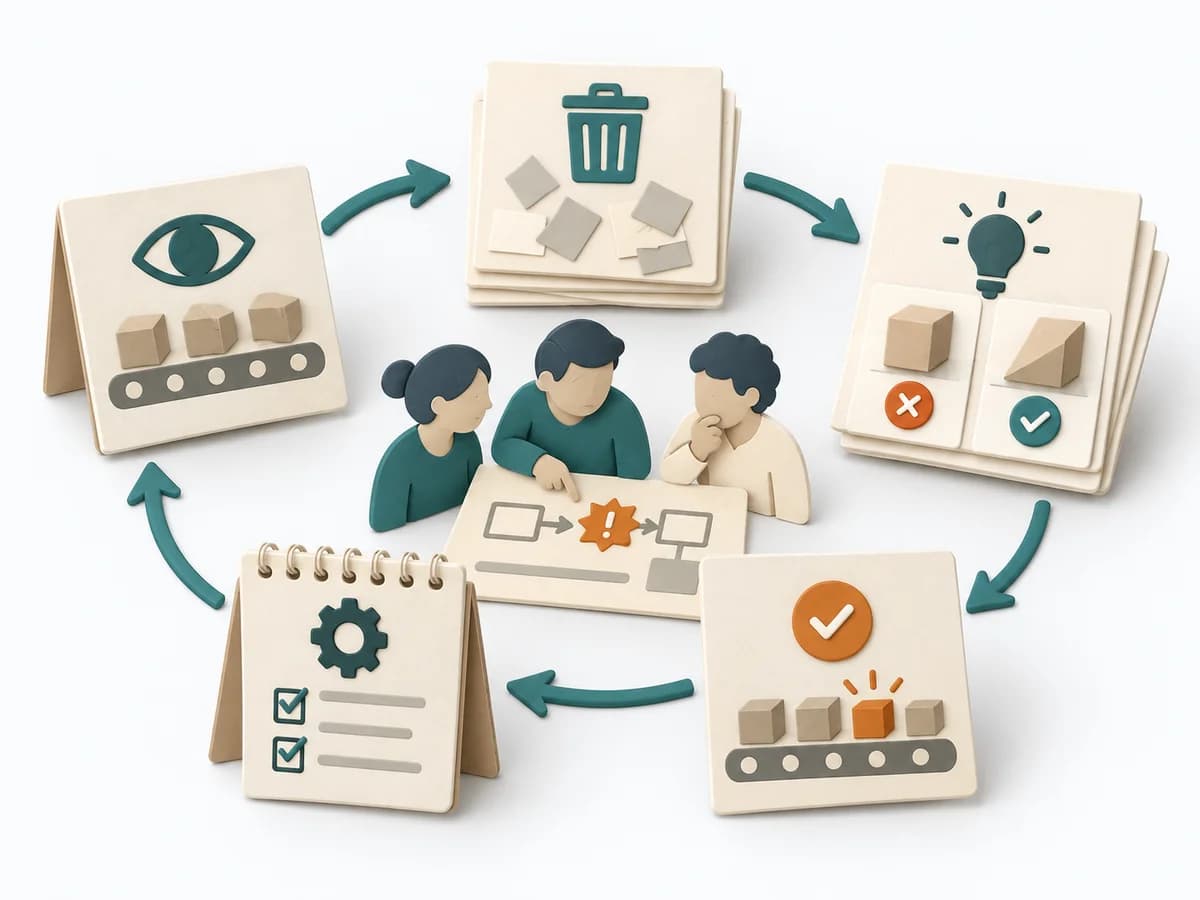
Prepare
Clarify scope, baseline, target, team, materials, and decision authority before the event.
Gemba
Observe current work at the place; make steps, waiting, motion, inventory, and problems visible.
Target
Examine waste and causes; design target condition, hypotheses, and daily experiments.
Implement
Build changes immediately, test safely in real work, measure, and adjust daily.
Standardise
Capture best confirmed flow as standard work; train, assign owner, and set follow-up.
Add new evidence at review and version decisions with the prior state.
Bei einem eng umrissenen Prozessabschnitt mit spürbarer Verschwendung bündelt die Methode gemeinsame Veränderungsenergie. Sie eignet sich, wenn schnelle Lernschleifen und sichtbare Anpassungen gefragt sind.
Kaizen event report with current state, target condition, implemented tests, measured result, new standard, and follow-up.
Fictional example
Fictional values show the actual method fields.
Clarify scope, baseline, target, team, materials, and decision authority before the event.
Scope Saturday handoff; p80 18→12 minutes; Ops sponsor; Warehouse, Support, Booking; no safety trade-offs.
Observe current work at the place; make steps, waiting, motion, inventory, and problems visible.
32 handoffs: seven-minute search, two return walks, 11 units waiting before handoff.
Examine waste and causes; design target condition, hypotheses, and daily experiments.
Sort units by slot; one-way flow; target search <2 minutes and WIP max 8.
Build changes immediately, test safely in real work, measure, and adjust daily.
Rack labels and slot cart built; 24 real handoffs: search 1.6 minutes, no wrong unit.
Capture best confirmed flow as standard work; train, assign owner, and set follow-up.
Slot cart, scan sequence, WIP8 documented; shift training; Lea owns; 30/60-day review.
All values are fictional.
Secure stability, sponsor, scope, baseline, target, and team before the event; clarify safety and operating boundaries.
For a tightly scoped process segment with noticeable waste, the method bundles shared energy for change. It suits situations that call for fast learning loops and visible adjustments.
A clear slice of the workflow is examined intensively so problems do not stay abstract. Small experiments show directly which change reduces friction and which is only cosmetic. The gain lies in the short distance between observation, adjustment, and new standard.
A Kaizen Event bundles analysis, decision, and implementation into a short intensive period. Participants observe the process, measure the current state, find waste, and test improvements directly on site. The key is the transition from workshop insight to real change in the work standard. That creates visible progress instead of just a list of actions.
Prepare scope, data, process access, and decision authority. Keep the team close to the gemba and translate observations into experiments quickly. Make sure new standards, owners, and follow-ups are recorded, otherwise the improvement will fade.
The method guide walks execution through 5 phases, timing, 5 pitfalls, and clear stop criteria.
Open method guideYour perspective
Your feedback helps shape the next improvements to methodatlas.
Set subject, evidence, roles, flow, and review.
To be confirmed
To be confirmed
Whole initiative Time: Typically five days plus 30/60-day follow-up; one to two weeks of preparation.
Complete this worksheet on paper or in your own document during the work.
Clarify scope, baseline, target, team, materials, and decision authority before the event.
...
Observe current work at the place; make steps, waiting, motion, inventory, and problems visible.
...
Examine waste and causes; design target condition, hypotheses, and daily experiments.
...
Build changes immediately, test safely in real work, measure, and adjust daily.
...
Capture best confirmed flow as standard work; train, assign owner, and set follow-up.
...
The blank worksheet contains prompts only.
Reference · original teaching example
Expected artifact: Event charter
Clarify scope, baseline, target, team, materials, and decision authority before the event.
Entry:
...
Expected artifact: Current state
Observe current work at the place; make steps, waiting, motion, inventory, and problems visible.
Entry:
...
Expected artifact: Target condition
Examine waste and causes; design target condition, hypotheses, and daily experiments.
Entry:
...
Expected artifact: Tested flow
Build changes immediately, test safely in real work, measure, and adjust daily.
Entry:
...
Expected artifact: New standard
Capture best confirmed flow as standard work; train, assign owner, and set follow-up.
Entry:
...
...
Method guide: https://methodatlas.meierhoff-systems.de/en/methods/kaizen-event/run-sheet
Fitting alternatives with decision guidance, followed by other related methods.
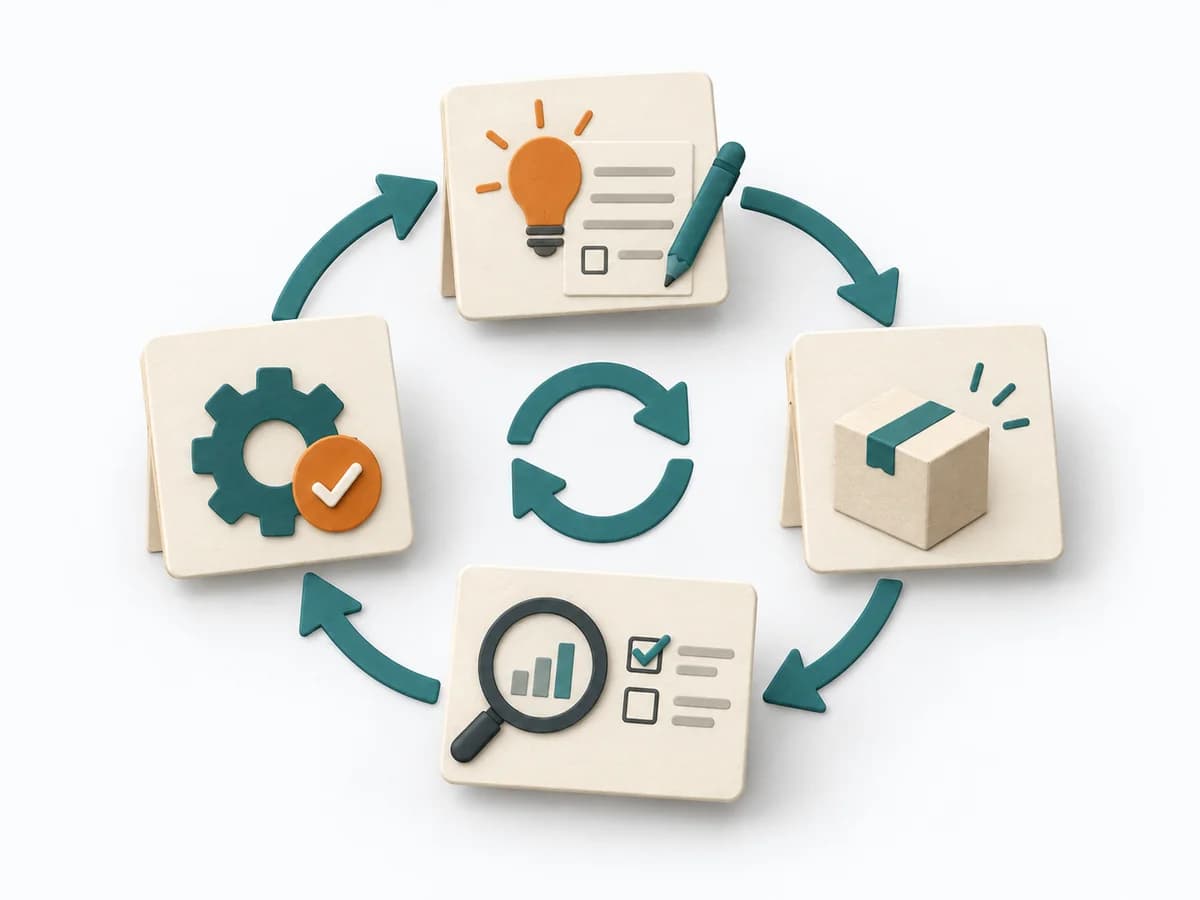
Instead of Kaizen Event, choose PDCA Cycle when you want to drive improvements forward in small, repeatable learning loops.
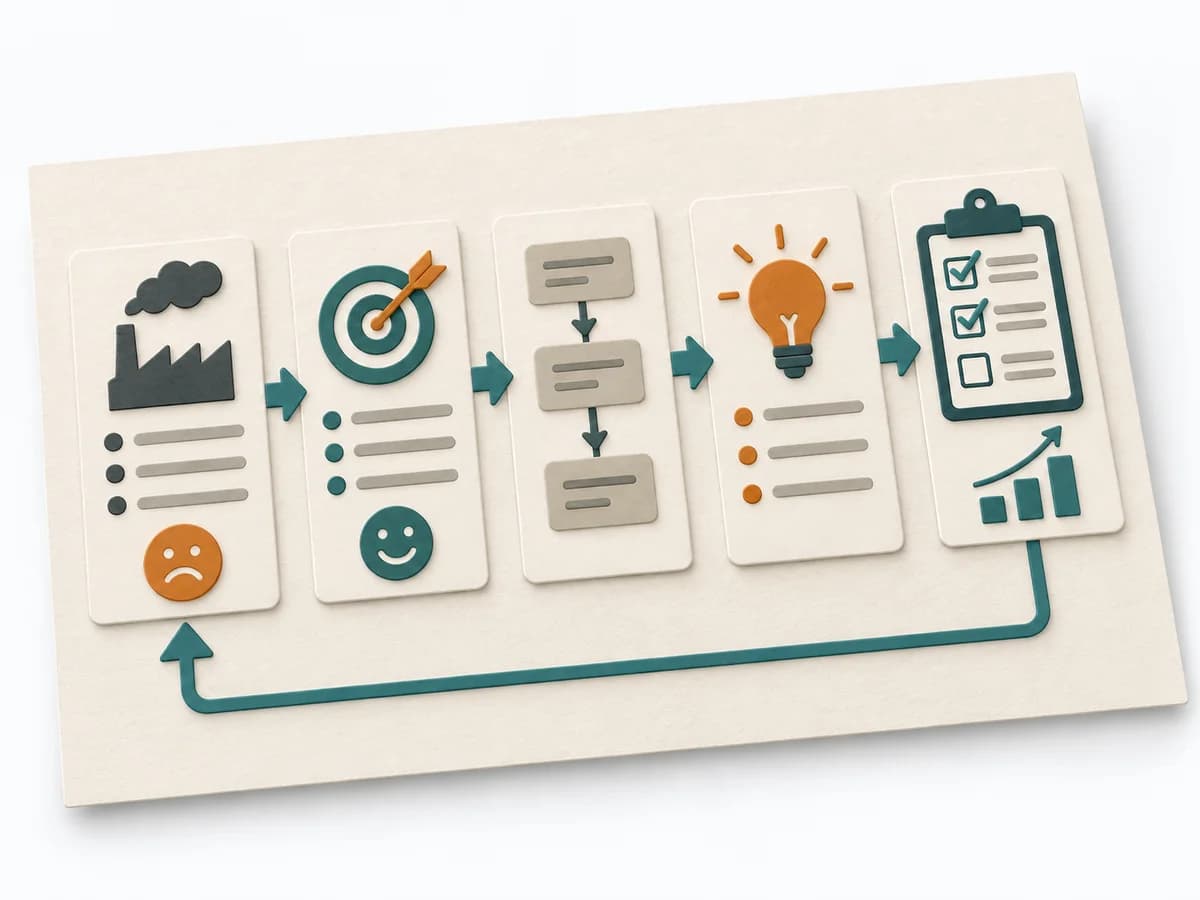
Instead of Kaizen Event, choose A3 Problem Solving when root cause analysis and an action plan matter more than a multi-day improvement workshop.
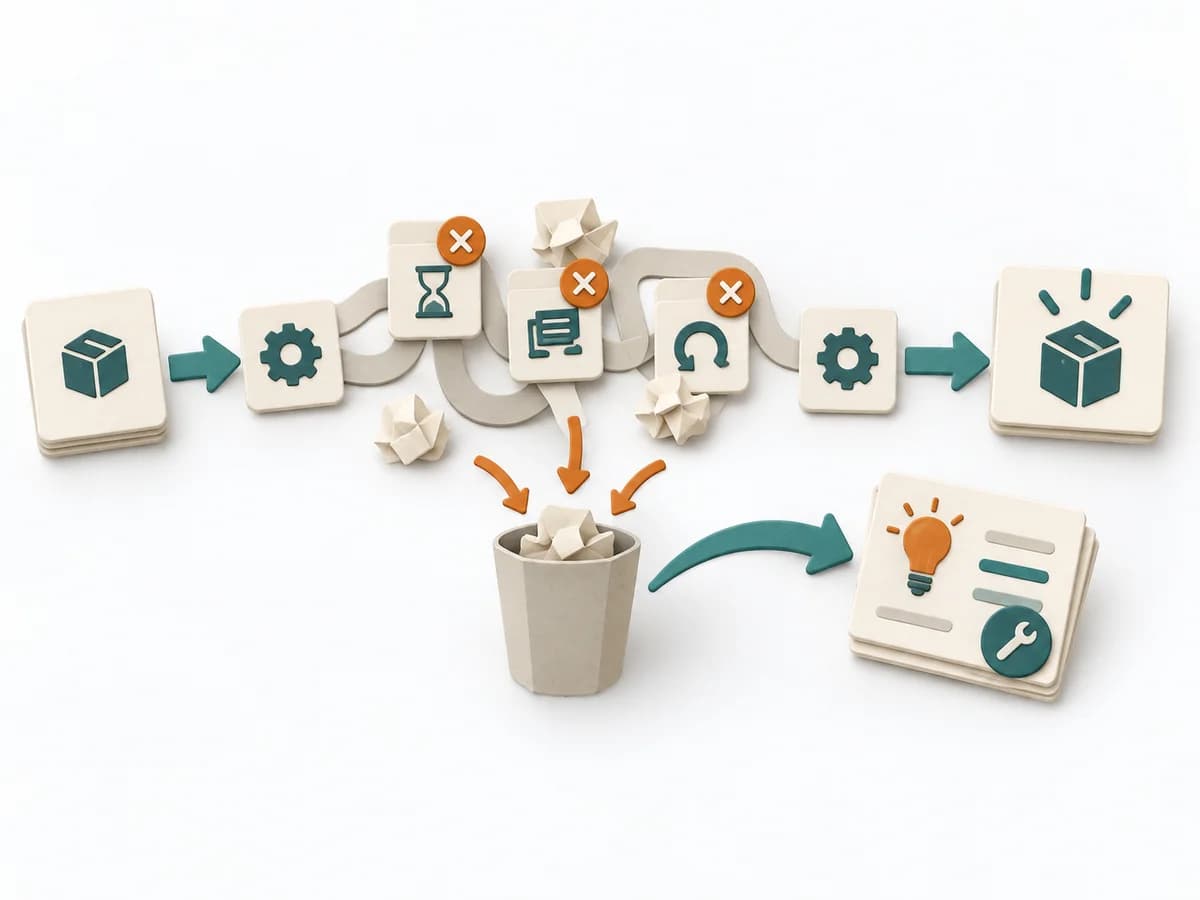
Identifies waste along a process, prioritizes impact, and derives improvements.
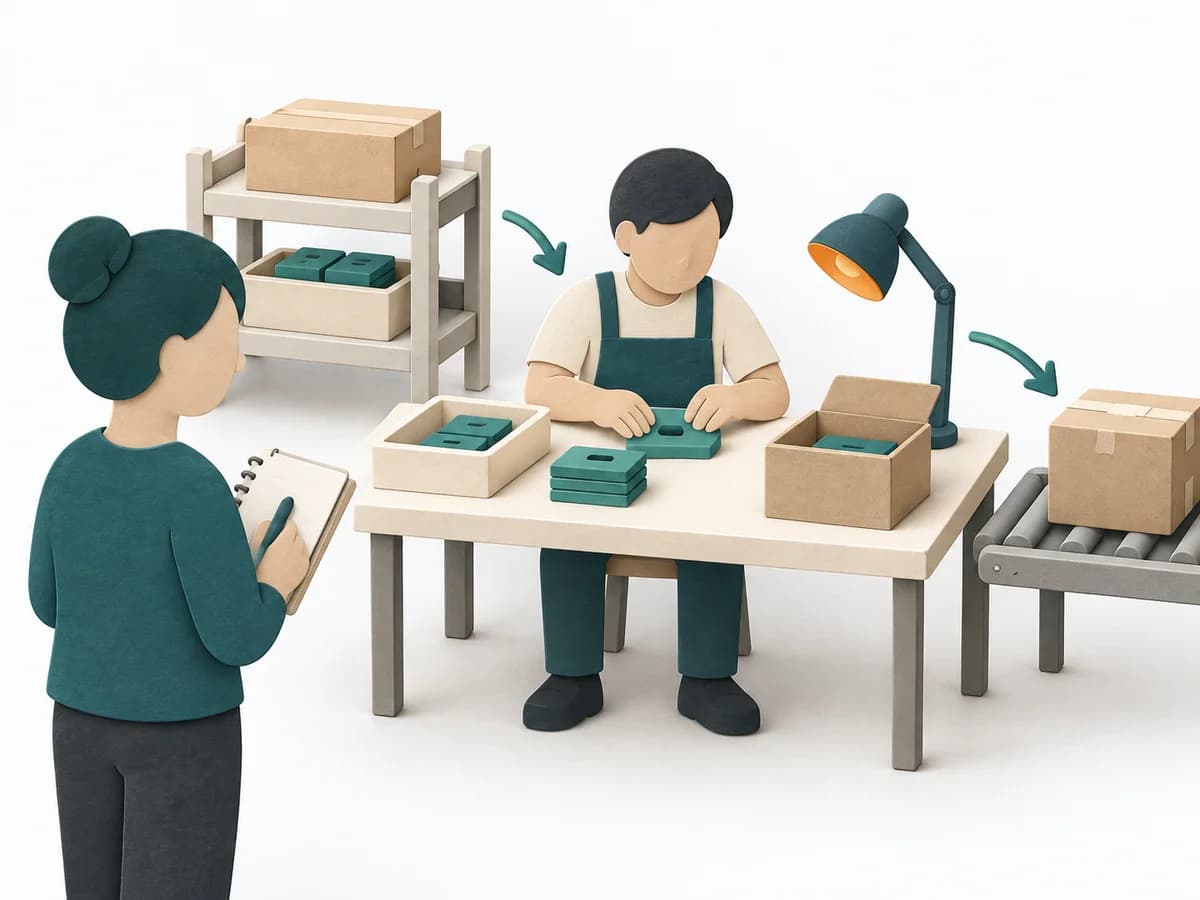
Goes to the place where work happens, observes the process without disrupting it, and gathers solid clues about friction.
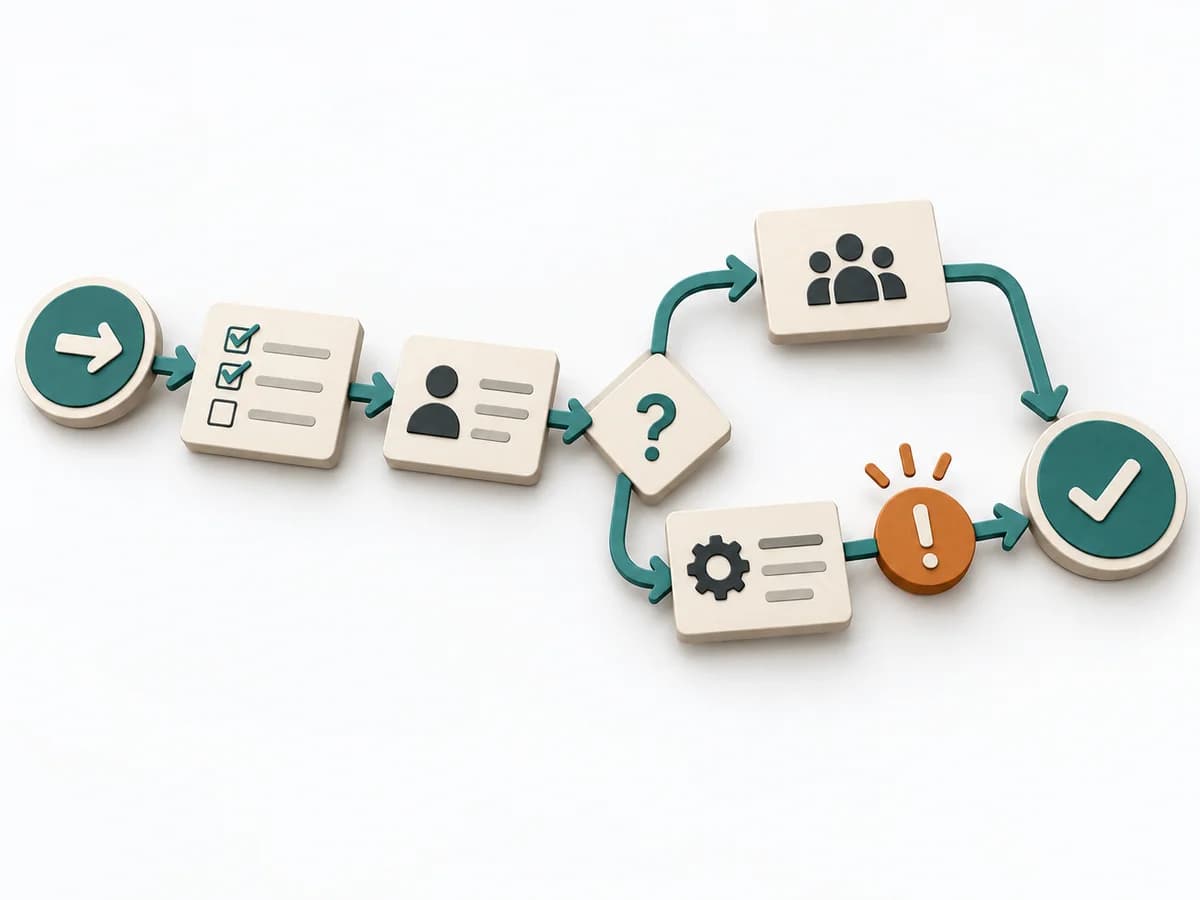
Visualizes workflows with roles and handoffs so problems, media breaks, and improvement opportunities become visible.
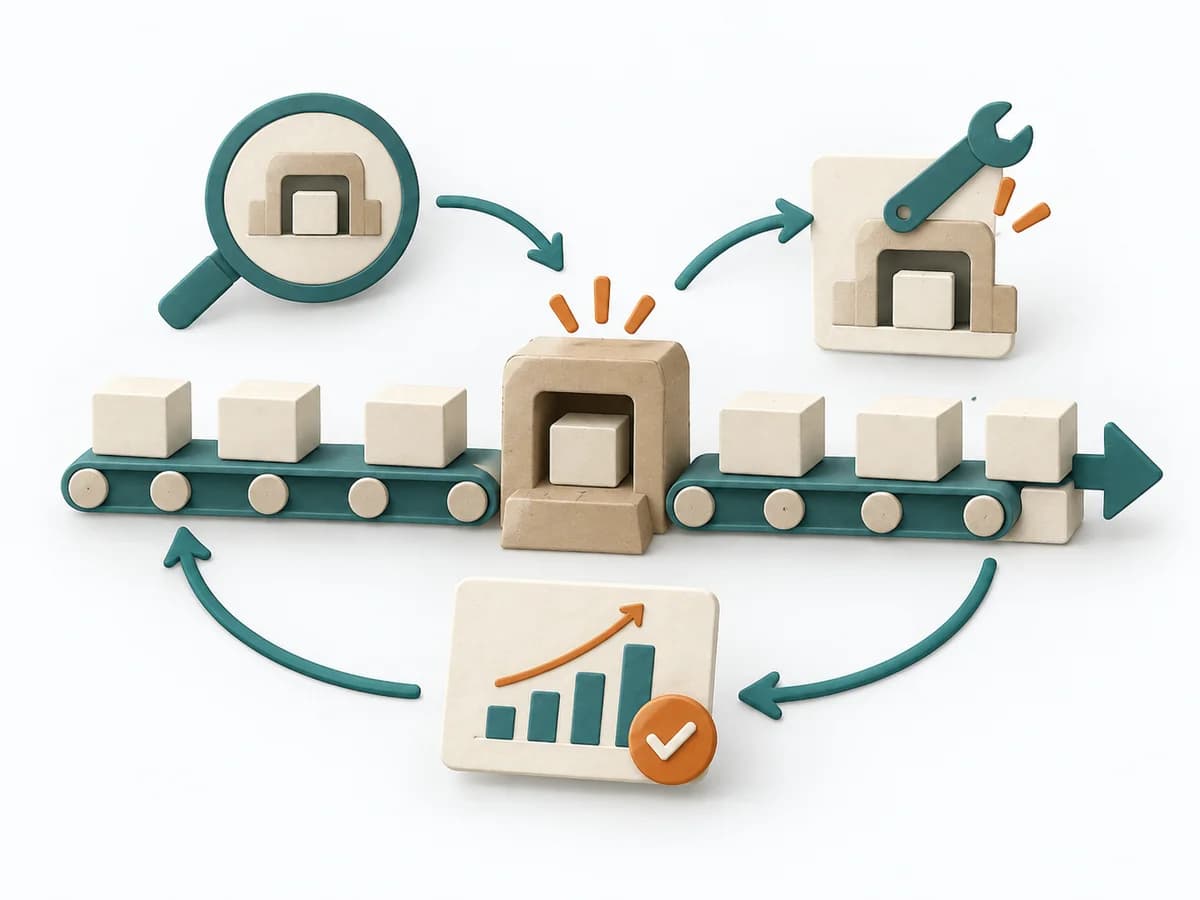
Finds a system's bottleneck, aligns work around it, and cyclically checks whether flow improves.