Purpose
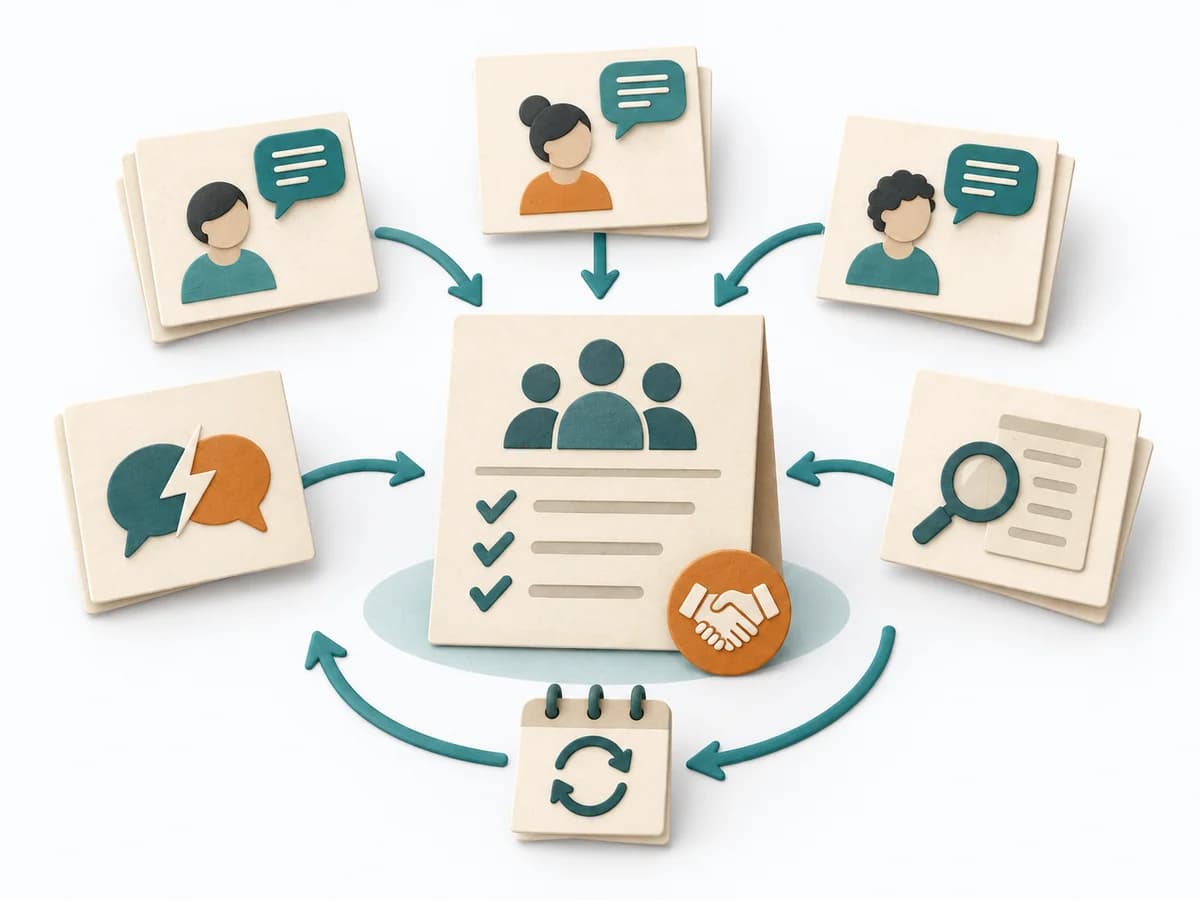
When a team's or workshop's mood needs to become readable, it structures emotional signals with little setup. It makes strain, relief, and sources of energy tangible.
Agile Facilitation method
Shows which experiences caused anger, sadness, or joy and which working condition should change.
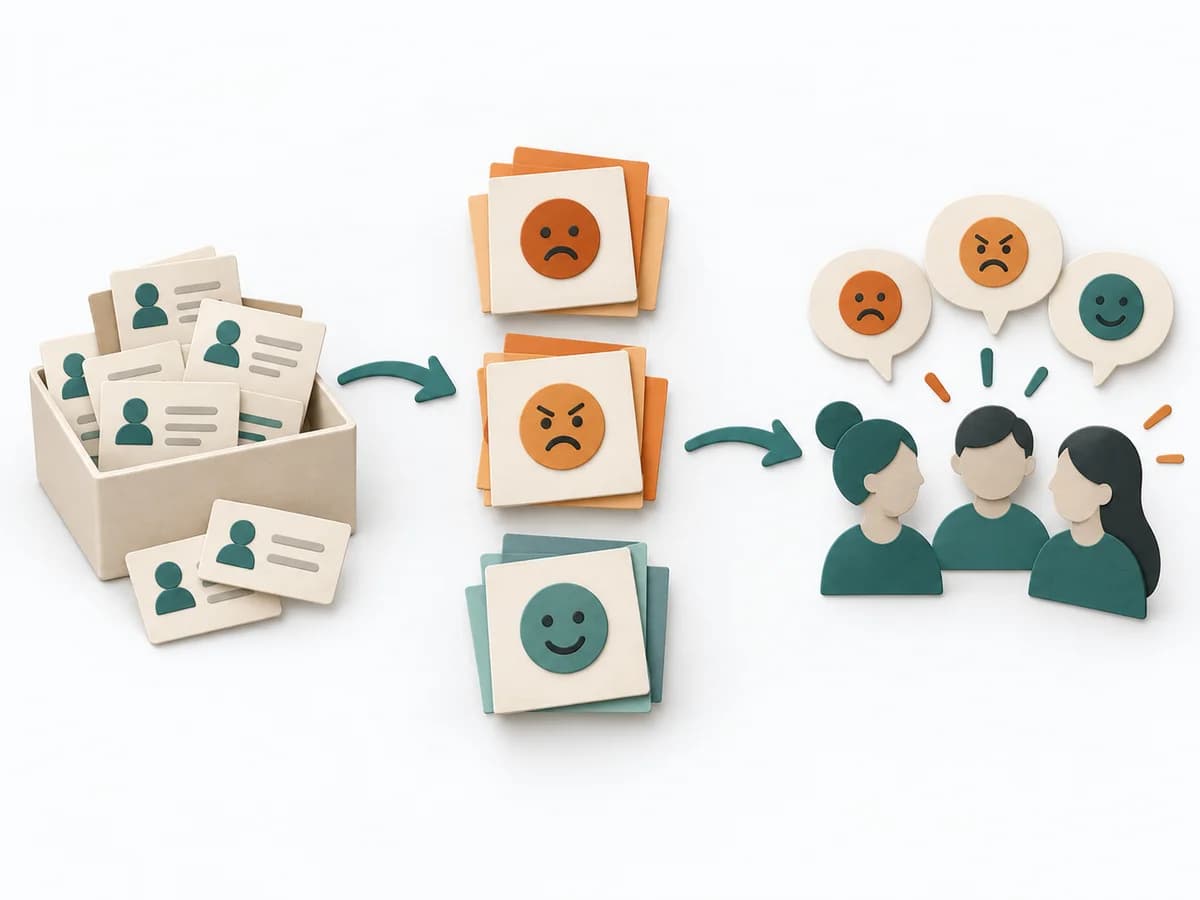
Mad Sad Glad collects experiences from an agreed period under anger, sadness and happiness. Participants choose the emotional category themselves; different reactions to the same event can coexist.
Which experiences made us mad, sad or glad, and which working condition do we want to change?
Period and safety
Bound the shared period and explain that emotional categorisation is voluntary and personal.
Collect Mad, Sad and Glad
Silently write concrete experiences on cards and personally assign Mad, Sad or Glad.
Understand experiences
Clarify cards and group related themes with consent; retain differing feelings.
Trial an improvement
Choose one influenceable theme and agree a small change with expected effect.
Trial one or two selected changes during the next work period; evaluate effects at the agreed later review.
For team retrospectives that need to discuss emotional experiences and the working conditions behind them.
Three collections of personal experiences, clarified themes and a verifiable team experiment with owner and review date.
The agreement describes the team experiment, its owner, duration, and later review signal. It also records useful Glad practices the team wants to preserve.
Fictional example
Mad Sad Glad collects experiences from an agreed period under anger, sadness and happiness. Participants choose the emotional category themselves; different reactions to the same event can coexist.
Which specific experience made me angry, and why?
Fictional: three last-minute Friday changes made my tested work uncertain again.
Which experience disappointed or saddened me?
Our shared learning session was cancelled for the second time; I miss the exchange.
What made me glad and what should we preserve about it?
A colleague immediately helped isolate a difficult bug; pairing reduced the burden.
Which connection is understood and within the team’s influence?
Changes become visible too late. The team can introduce a brief daily scope check.
What changes, who supports it and how will effects be reviewed later?
For two weeks, scope check at 11:00, owner Lea. At the next retro we review the number and effects of unannounced changes.
All example details are fictional and illustrate the application.
Define period and team boundary, agree confidentiality and keep personal contributions voluntary.
When a team's or workshop's mood needs to become readable, it structures emotional signals with little setup. It makes strain, relief, and sources of energy tangible.
It sorts feedback by emotional coloring and shows where frustration, pain, or positive resonance lie. The categories don't make mood an end in itself but open access to causes, needs, and next conversations.
Mad Sad Glad works because it takes emotional reactions seriously, surfacing cues that are often lost in purely factual reviews. Good use doesn't confuse feelings with findings but translates them into situations, patterns, and concrete needs. This opens access to team dynamics and work quality without the conversation getting stuck in mere venting.
Set a clear time frame for the review and introduce the three emotions as a way into concrete situations. The format becomes rich as soon as recurring conditions rather than single events become visible behind joy, anger, or disappointment. At the end, a few topics should be turned into improvement decisions or experiments.
The method guide walks execution through 4 phases, timing, 4 pitfalls, and clear stop criteria.
Open method guideYour perspective
Your feedback helps shape the next improvements to methodatlas.
Define period and team boundary, agree confidentiality and keep personal contributions voluntary.
To be confirmed
To be confirmed
Complete retrospective Time: 45–75 minutes retrospective; later review
Complete this worksheet on paper or in your own document during the work.
Which specific experience made me angry, and why?
...
Which experience disappointed or saddened me?
...
What made me glad and what should we preserve about it?
...
Which connection is understood and within the team’s influence?
...
What changes, who supports it and how will effects be reviewed later?
...
Answer the prompts with your own information. Explicitly mark unknowns and assumptions.
Expected artifact: Shared retrospective frame
Can participants pass without explaining themselves?
Entry:
...
Expected artifact: Personal experience cards
Are concrete experiences recorded rather than judgements about people?
Entry:
...
Expected artifact: Clarified change themes
Are different perspectives on one event preserved?
Entry:
...
Expected artifact: Team experiment with review
Does the change have an observable effect and review date?
Entry:
...
...
Method guide: https://methodatlas.meierhoff-systems.de/en/methods/mad-sad-glad/run-sheet
Fitting alternatives with decision guidance, followed by other related methods.
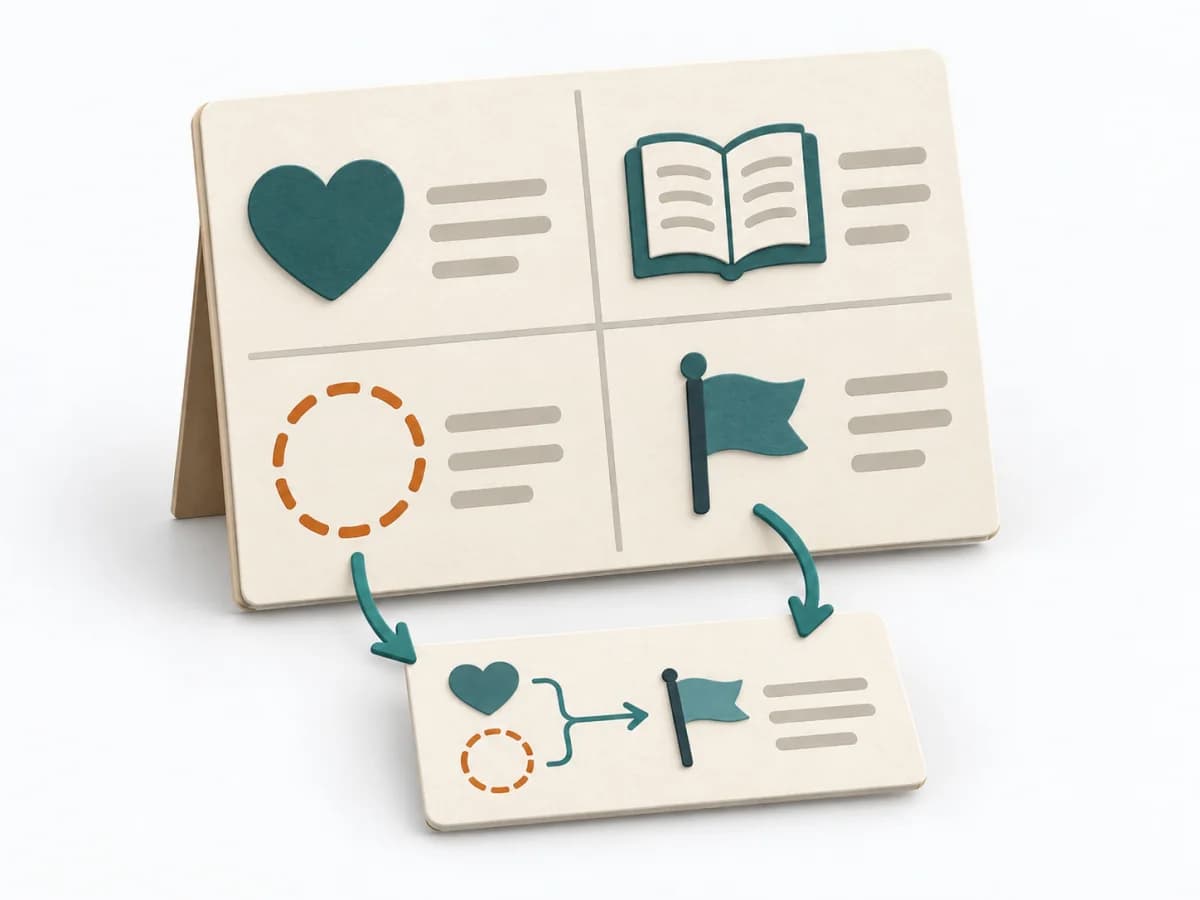
Instead of Mad Sad Glad, when you want to hold retrospectives together tightly with remembering, learning, and improving.
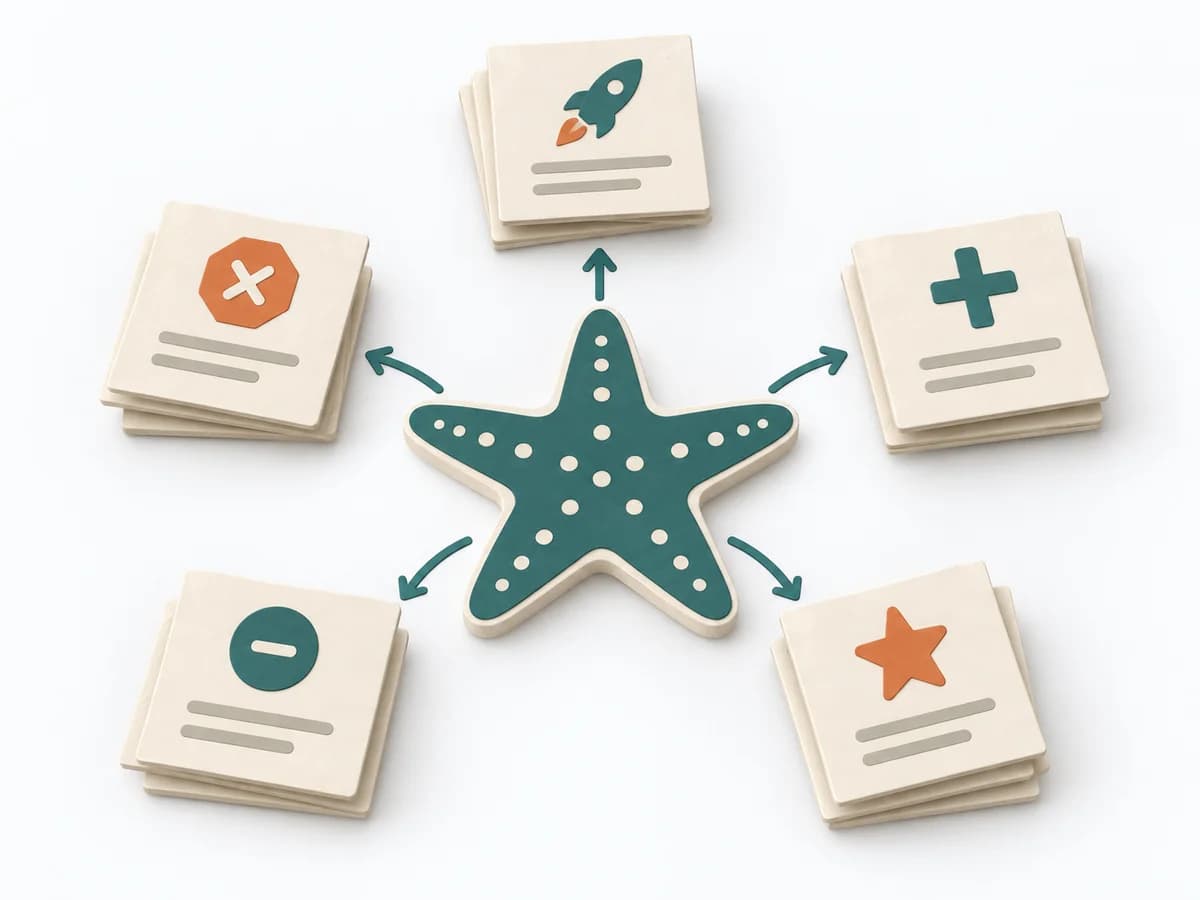
Sorts practices into Start, Stop, More, Less, and Keep, so routine changes get chosen more deliberately.
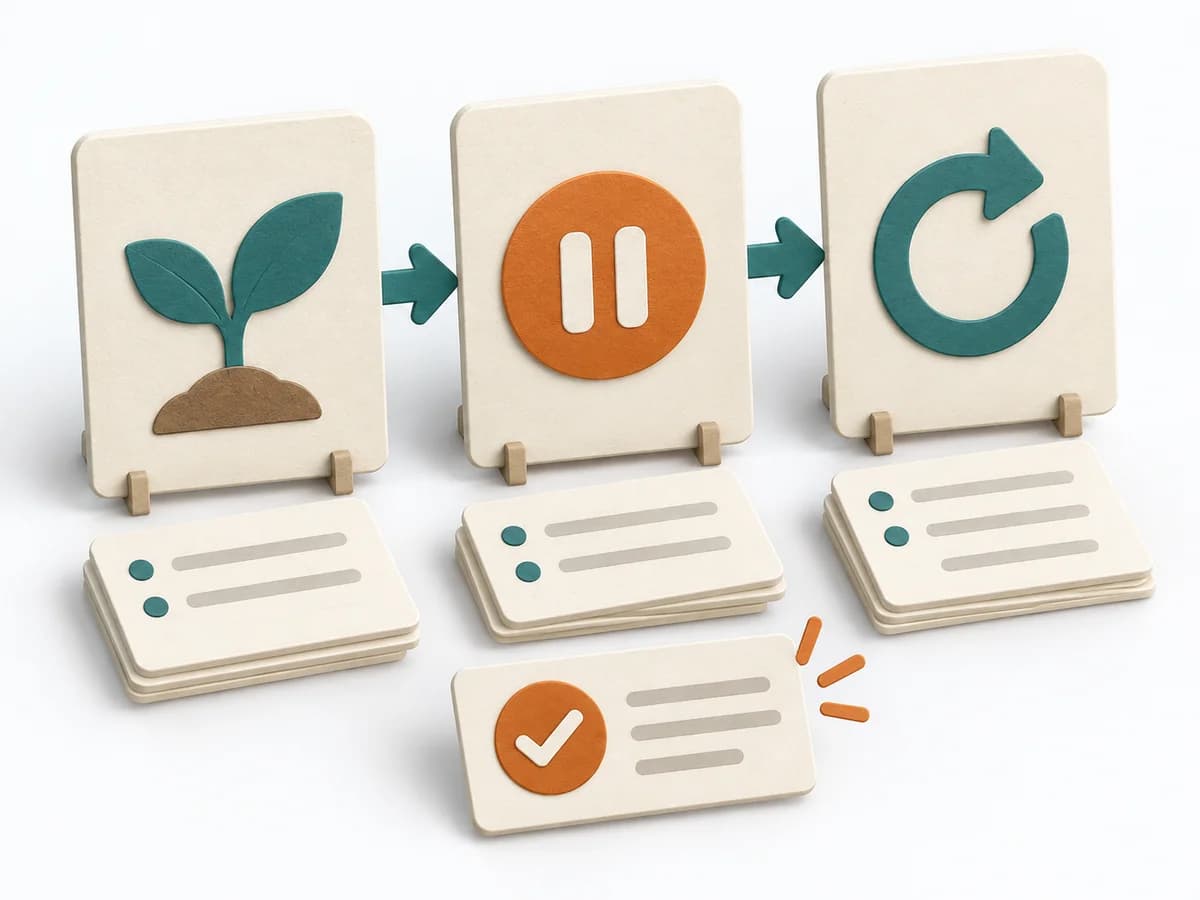
Sorts team feedback into start, stop, and continue so the retrospective produces clear next steps.
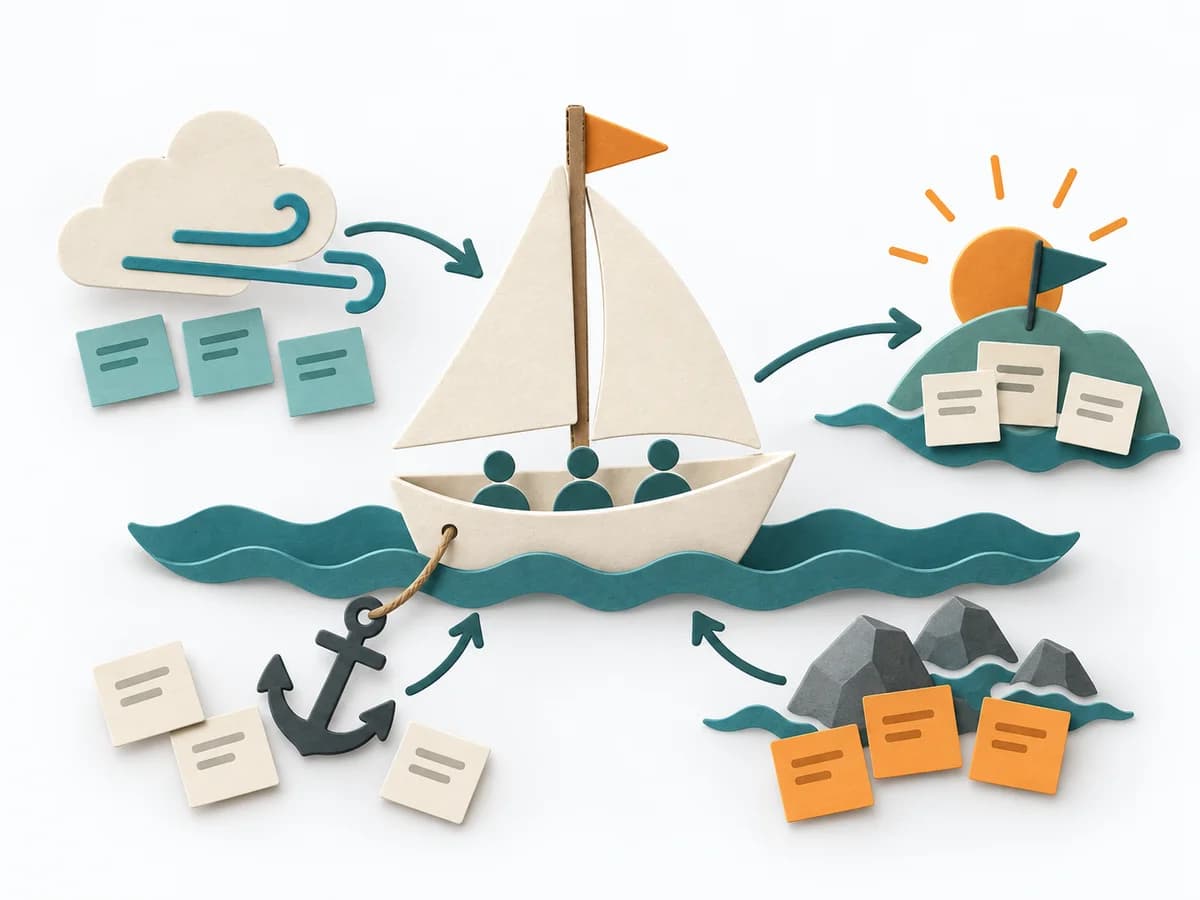
Makes a team's winds, anchors, risks, and target picture visible and turns the review into prioritized improvements.
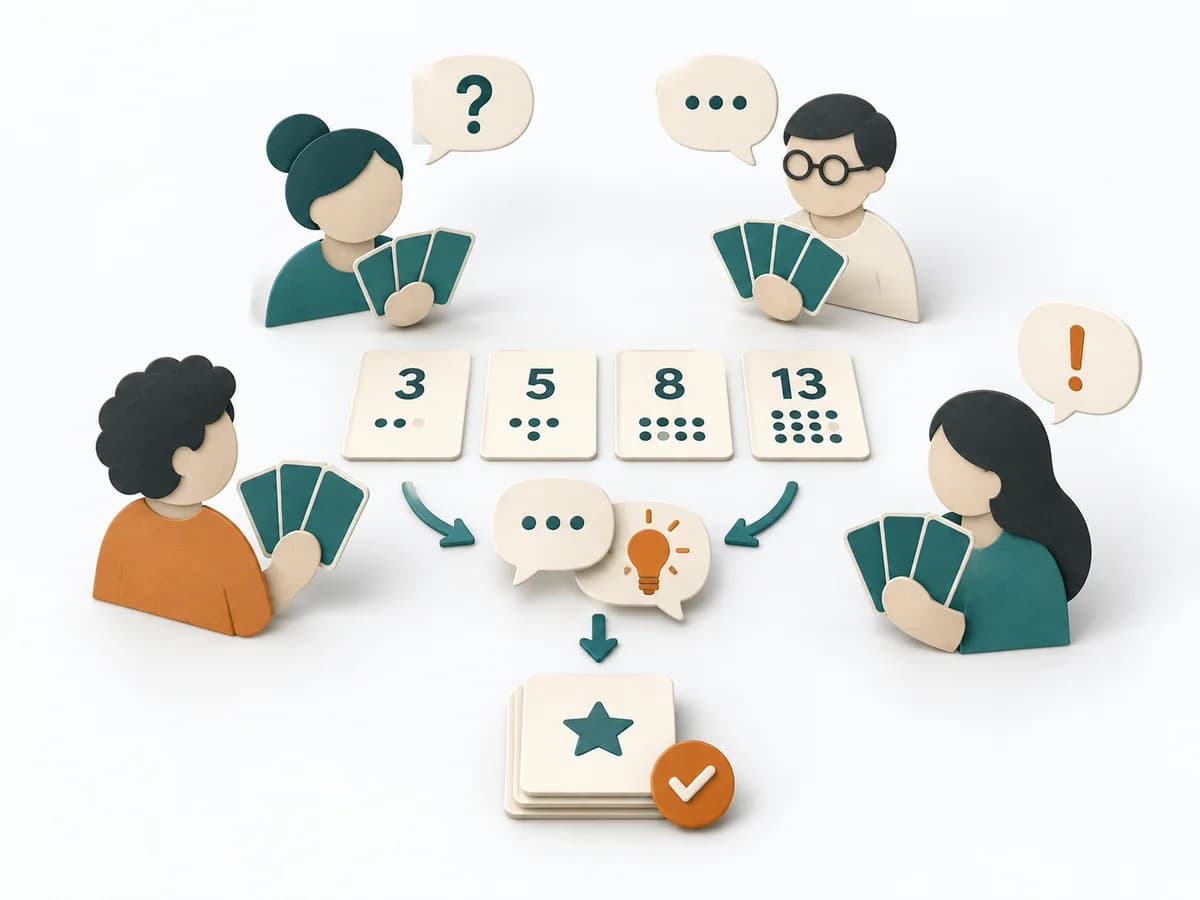
Compares stories relatively, surfaces knowledge gaps, and produces a shared estimate with traceable assumptions.
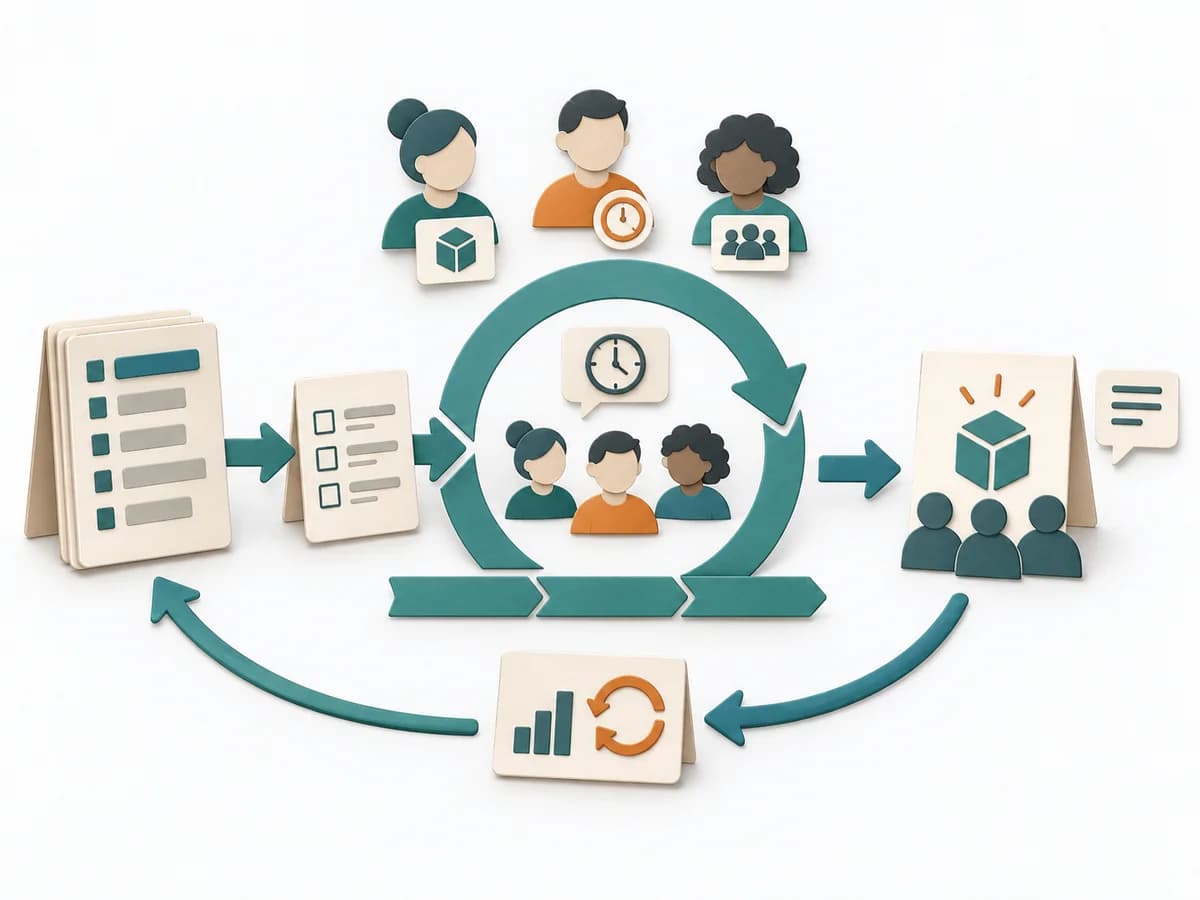
Product Backlog, Sprint Goal, Increment, and retrospective loops create a repeatable cadence for complex product work.
