
Purpose
When collaboration needs more than implicit expectations, it lays out shared ground rules openly. It creates reliability for conduct, availability, and decision paths.
Agile Operating practice
Helps a team agree on observable rules for behaviour, communication, and escalation.
Working Agreements make implicit ways of working visible. The team gathers individual needs, writes observable rules, and decides how to adapt them later.
Which observable agreements help this team collaborate reliably and respectfully?
The initial session becomes an ongoing practice through use and review.
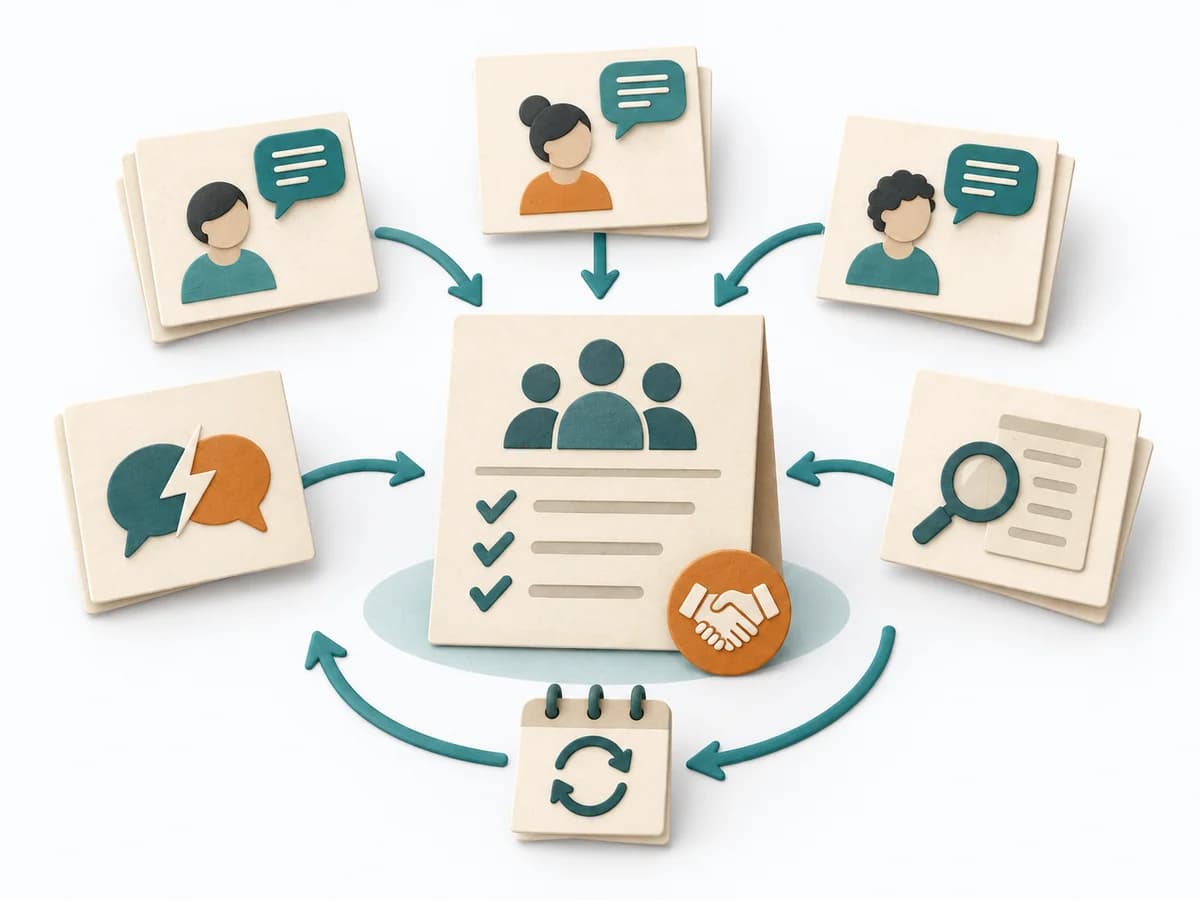
Context
Make current collaboration, occasion, and observed friction visible.
Perspectives
Record individual hours, communication, and feedback preferences separately.
Rules
Turn needs into clear “we” rules with trigger and expected behavior.
Escalation
Agree channels, response rules, decision ownership, and escalation path.
Maintenance
Set review date, change path, and response when an agreement cannot be kept.
Observe rules in use, keep, change, or remove them at review, and renegotiate early after team changes.
Use them for team formation, onboarding, reorganization, or recurring misunderstandings.
Living working-agreement document with observable rules, communication channels, escalation path, exceptions, owner, and review rhythm.
Fictional example
Fictional agreements for a distributed product team.
When are we available, when do we protect focus, and which exceptions apply?
Core overlap 10:00–15:00; no internal meetings 09:00–11:00 except incidents.
Which channel serves which purpose and what response is expected?
Board for work status; chat for coordination within one working day; phone only for production incidents.
How do we give feedback and where are decisions recorded?
Critical feedback directly first; decisions with context in the decision log.
When and to whom do we escalate?
Mark a blocker after four working hours; escalate to Team Lead and Product after one working day.
When and through what process do rules change?
Review in six weeks and additionally after onboarding or reorganisation.
The examples are starting points for joint negotiation.
Collect current friction points and give every participant room for individual preferences.
When collaboration needs more than implicit expectations, it lays out shared ground rules openly. It creates reliability for conduct, availability, and decision paths.
It collects desired behavior and turns it into explicit agreements with a recognizable scope. This reduces room for interpretation and lets the team adjust behavior more easily later.
Working Agreements work because they translate implicit expectations into verifiable team agreements, reducing everyday friction. They only become effective when the wording is concrete enough to give orientation in tricky situations while still being jointly owned. Pure feel-good statements help little; robust agreements, by contrast, create a reference point for recalibration when collaboration falters.
Start with typical everyday work situations, such as handovers, reviews, or response times, so the rules stay grounded. The round becomes meaningful only once a general wish turns into a sentence against which behavior can actually be checked later. Close with clearly prioritized agreements, a visible place in daily team life, and a fixed occasion for review.
The method guide walks execution through 5 phases, timing, 5 pitfalls, and clear stop criteria.
Open method guideYour perspective
Your feedback helps shape the next improvements to methodatlas.
Plan the initial agreement, use, and review with clear ownership.
To be confirmed
To be confirmed
Complete run Time: 10 minutes of preparation and about 60 minutes for the first agreement; then ongoing use and regular reviews.
Complete this worksheet on paper or in your own document during the work.
When are we available, when do we protect focus, and which exceptions apply?
...
Which channel serves which purpose and what response is expected?
...
How do we give feedback and where are decisions recorded?
...
When and to whom do we escalate?
...
When and through what process do rules change?
...
Collect personal preferences, then agree on a few observable rules for a trial period.
Atlassian Working Agreements · original teaching example
Expected artifact: Bounded friction situations
Bounded friction situations
Entry:
...
Expected artifact: Visible work preferences
Visible work preferences
Entry:
...
Expected artifact: Observable team rules
Observable team rules
Entry:
...
Expected artifact: Communication and escalation path
Communication and escalation path
Entry:
...
Expected artifact: Reviewable agreement
Reviewable agreement
Entry:
...
...
Method guide: https://methodatlas.meierhoff-systems.de/en/methods/working-agreements/run-sheet
Fitting alternatives with decision guidance, followed by other related methods.

Instead of Working Agreements, choose Team Charter when you want to deliberately agree on collaboration, a shared target picture, and ground rules.
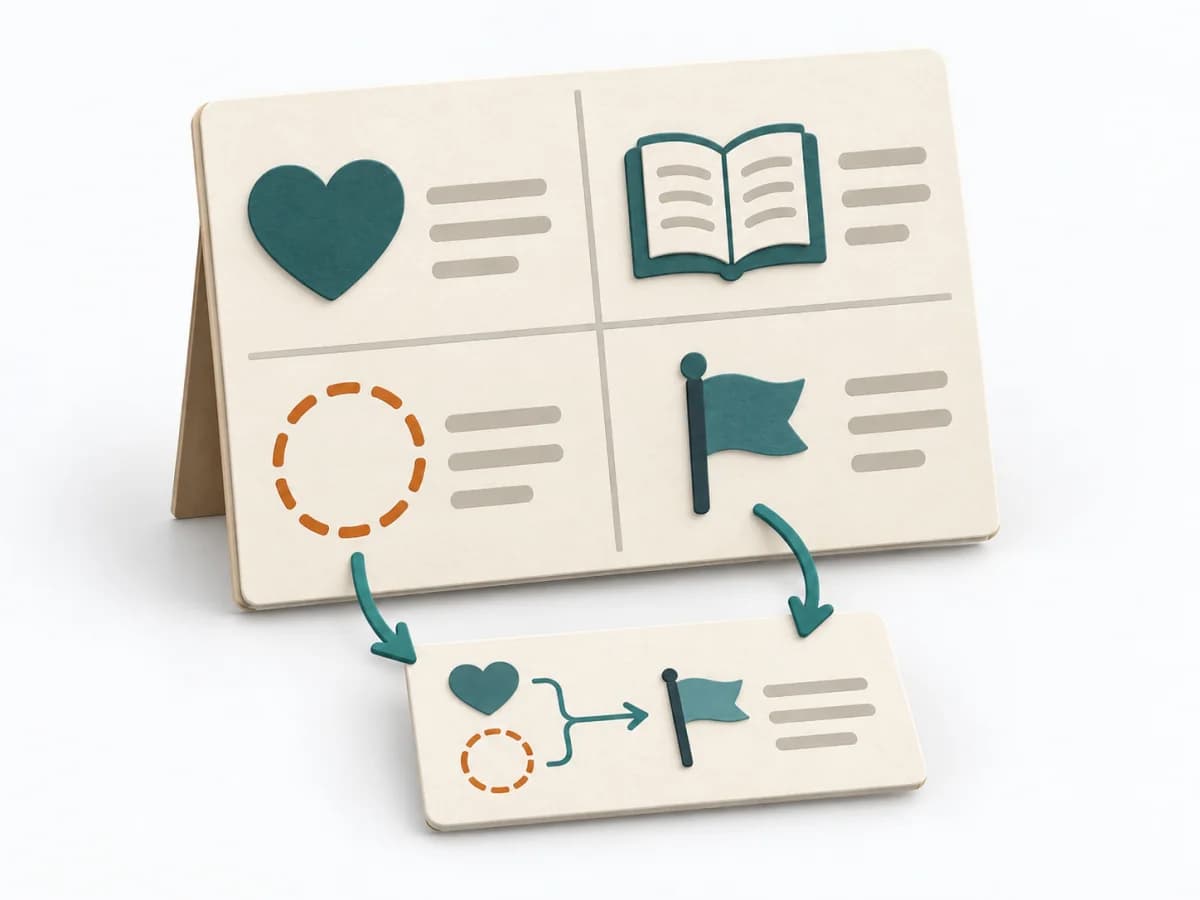
Sorts review, learning points, and friction into Liked, Learned, Lacked, and Longed For for concrete improvements.
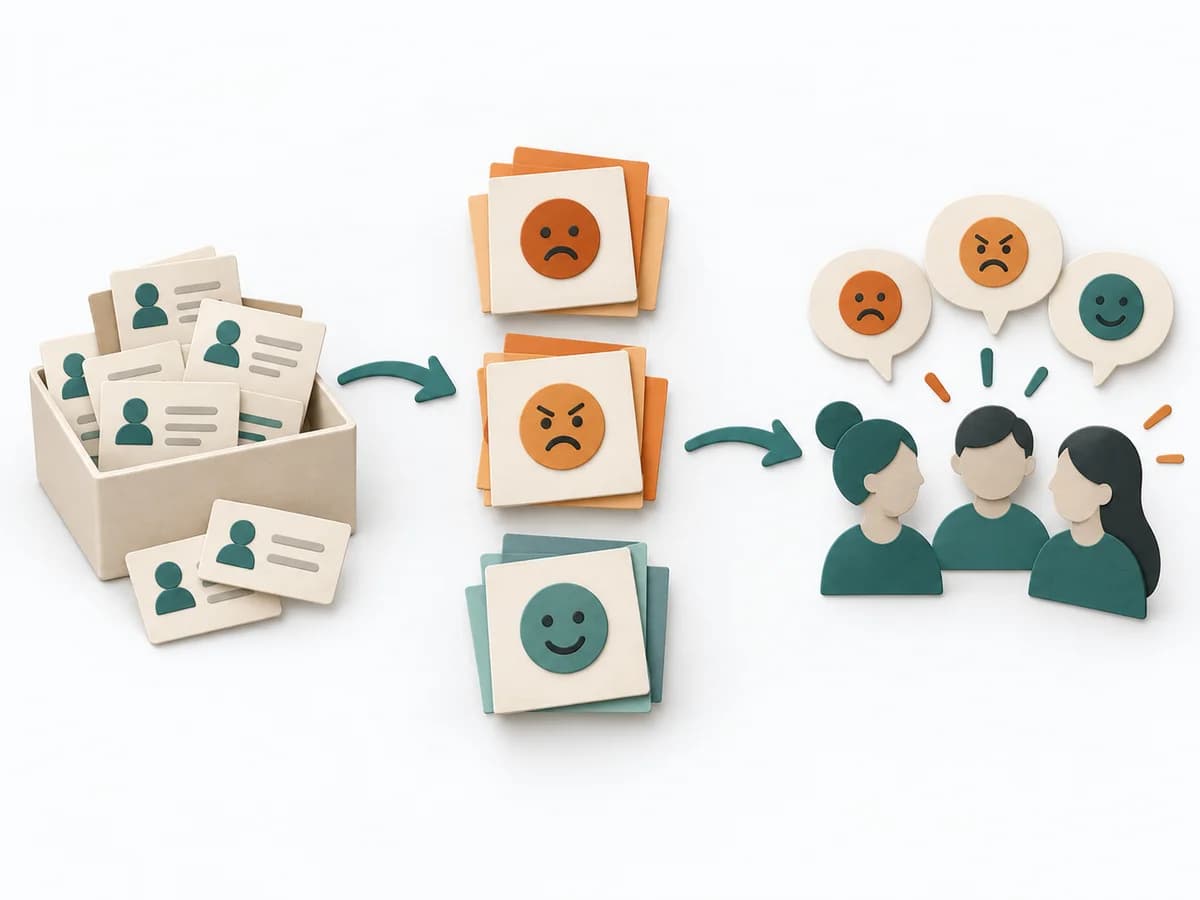
Collects emotional signals from the team, clusters them into themes, and makes real conversation topics visible.
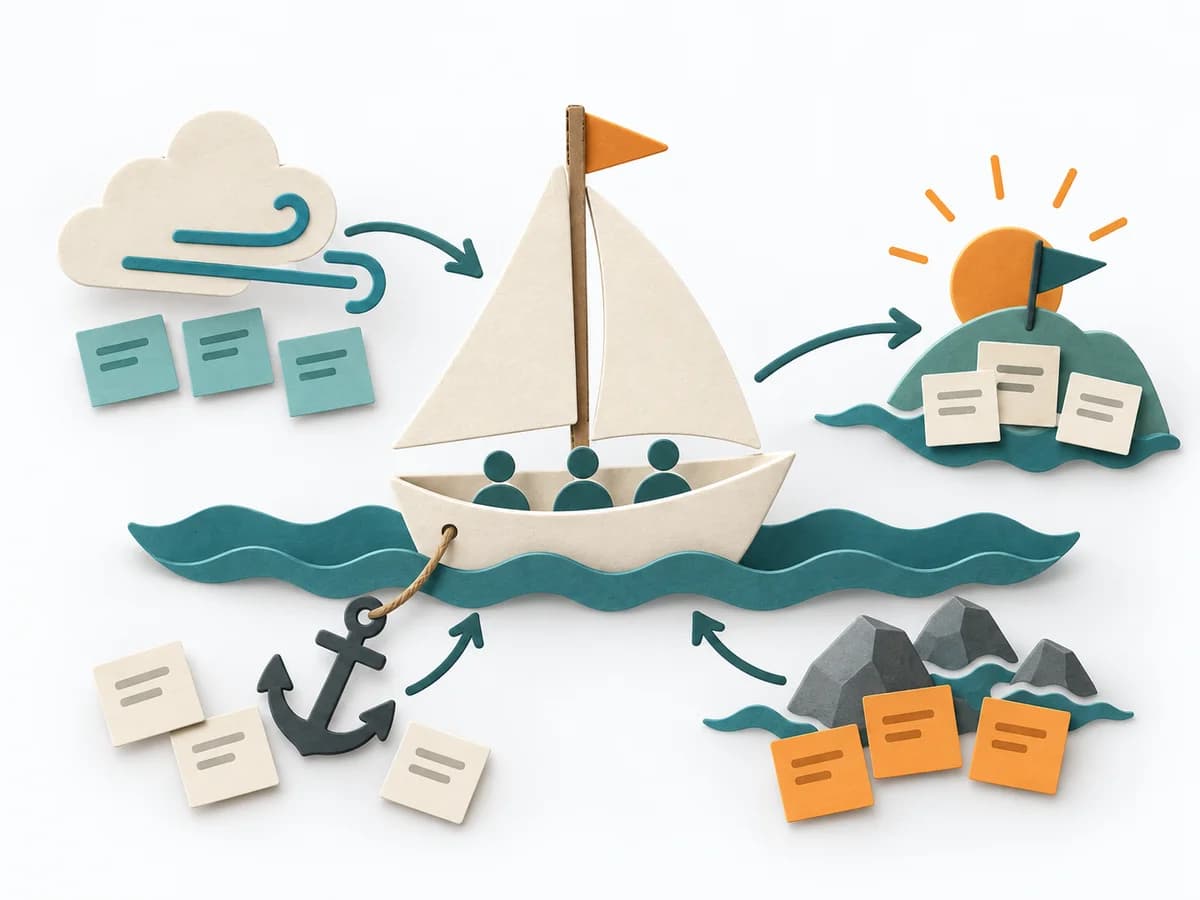
Makes a team's winds, anchors, risks, and target picture visible and turns the review into prioritized improvements.
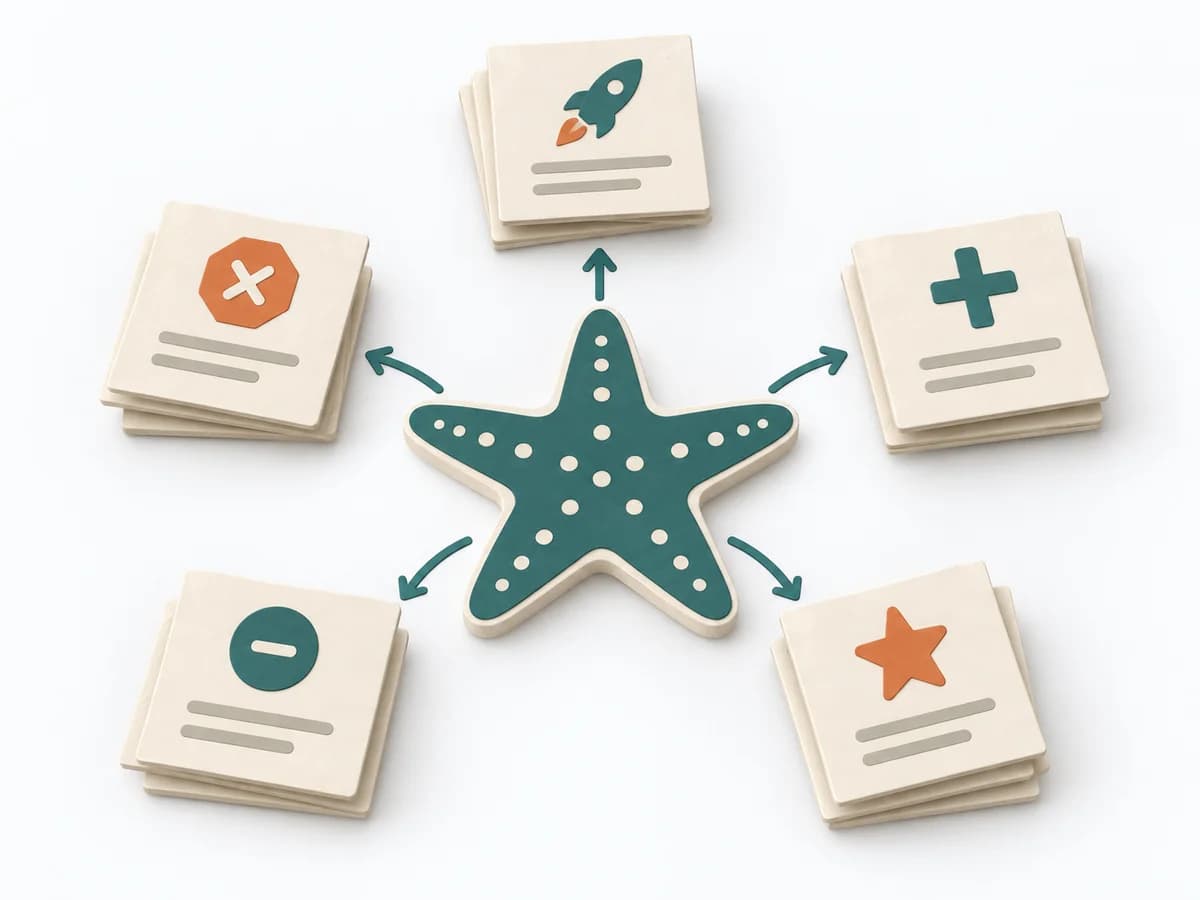
Sorts practices into Start, Stop, More, Less, and Keep, so routine changes get chosen more deliberately.
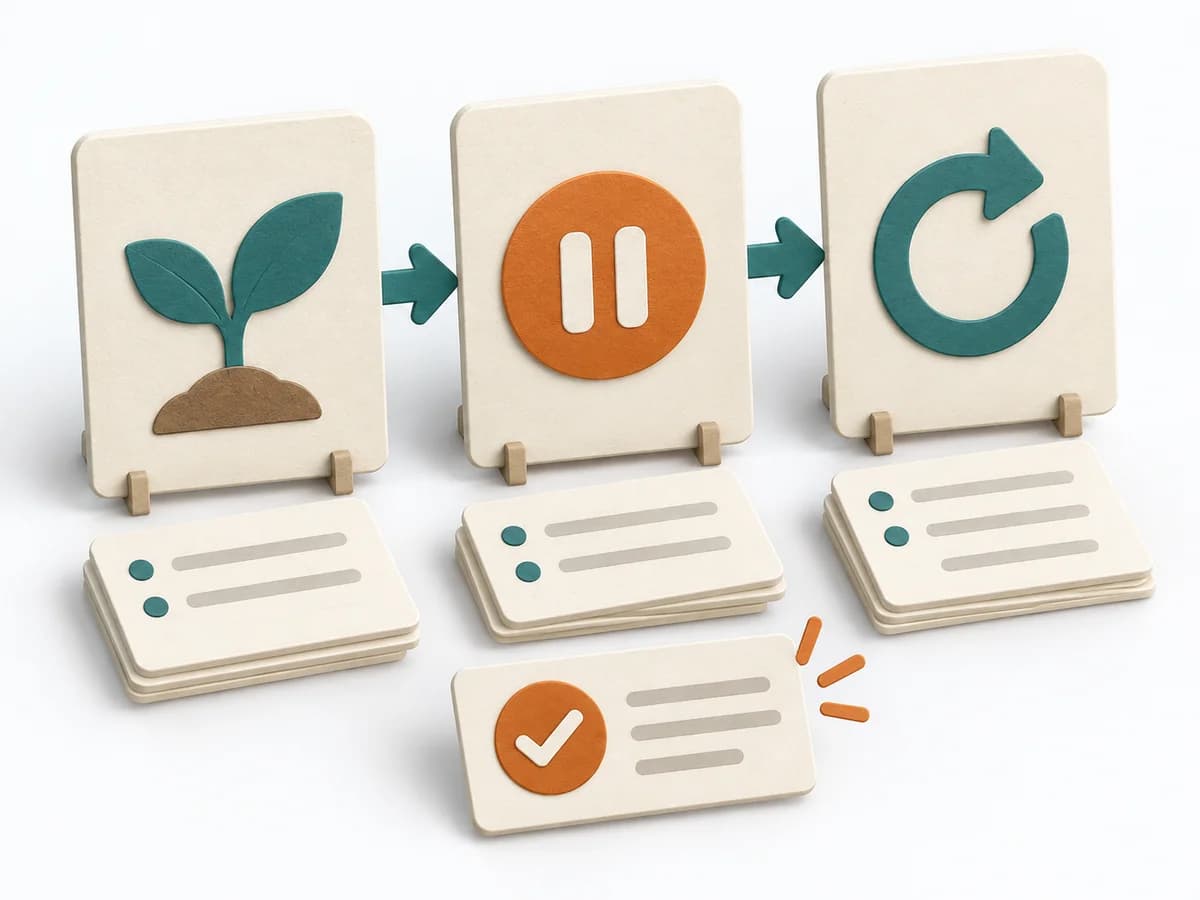
Sorts team feedback into start, stop, and continue so the retrospective produces clear next steps.