Plan my session
Plan a concrete work block with agenda, roles, preparation, and a copyable result artifact.
Session: Starfish Retrospective
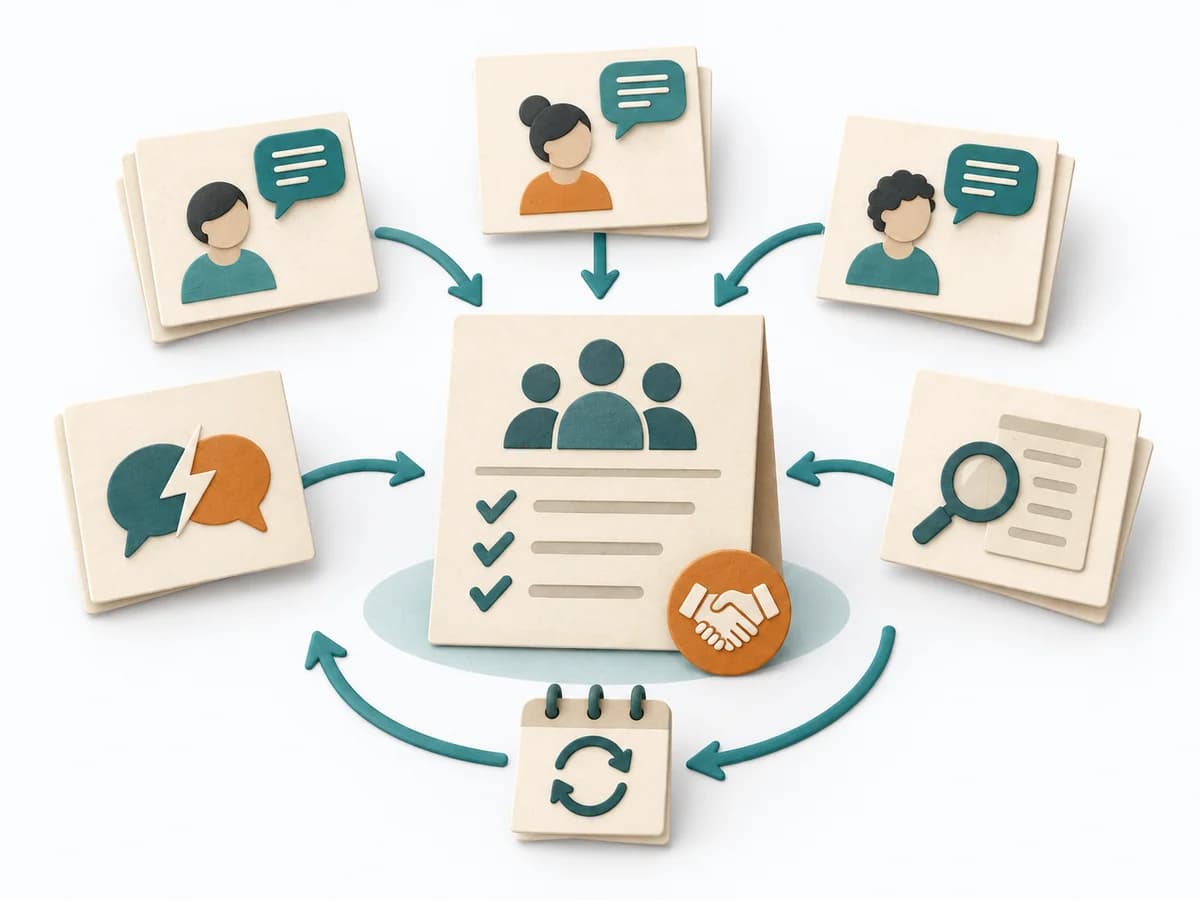
The plan translates the method into a concrete facilitated work block. Your inputs flow directly into the session brief and work artifact.
Method session with 4-12. The plan uses the existing method logic and the runsheet.
RunsheetUse the session for shared understanding. Contributions are collected visibly, assumptions are aligned, and open differences remain traceable in the artifact.
The session works directly toward Starfish Board. After the session, the artifact should be shareable, reviewable, or reusable.
- 1
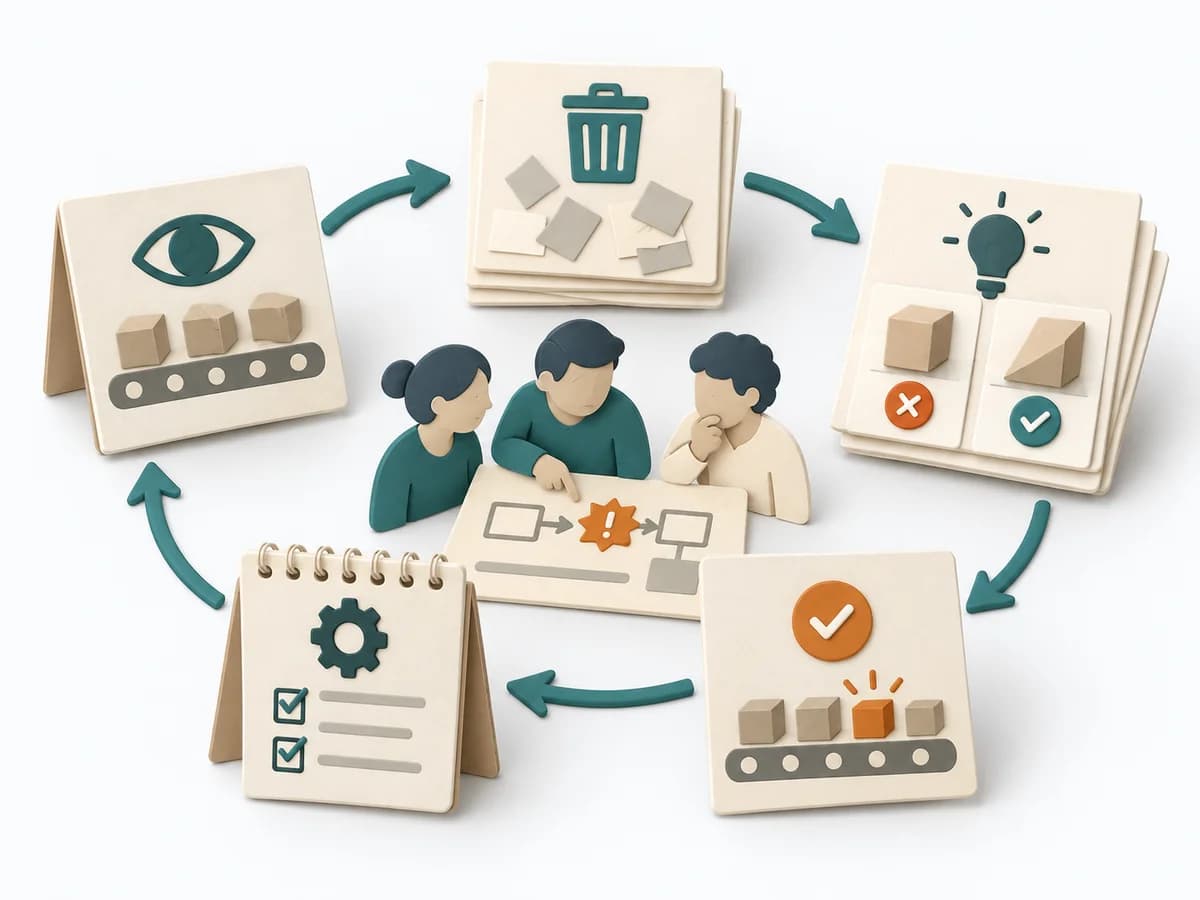
Phase 1: Explain format
5 minClearly distinguish five categories. Less Of is not Stop Doing; More Of is not Start Doing. Put examples on wall. Hint: Most common confusion: Less Of vs Stop. Less Of = reduce existing practice, still present; Stop = remove completely. Examples help.
FacilitatorStarfish Board - 2
Phase 2: Silent work
15-20 minStickies into all five rays. Concrete practices, no wishful thinking. Hint: At least 1 sticky per ray per person. Someone leaving a ray empty did not understand it or intentionally skipped it; facilitator asks.
FacilitatorPractice Changes - 3
Phase 3: Present and cluster
15-20 minPresent round-robin, cluster. When conflict between rays appears (for example sticky in Less Of and More Of), discuss and classify. Hint: Conflicts are valuable: they show different perception. Do not resolve prematurely, discuss openly.
FacilitatorExperiments - 4
Phase 4: Prioritize
10-15 minDot-voting (3 dots per person). Top cluster per ray. Reflect: what does distribution say about team picture? Hint: Distribution itself is signal: many Start Doing means innovation pressure, many Stop Doing means overload.
FacilitatorStarfish Board - 5
Phase 5: Experiments
15-30 minFormulate one concrete experiment per top cluster: what to do, who owns it, by when, how success is recognized. Hint: For Less Of/More Of: give a measure (for example "Daily to 12 min instead of 20"). For Start/Stop: clear behavior change.
OwnerPractice Changes - 6
Publish artifact
10 minCheck the artifact for completeness, define location, set version or status, and name review recipients.
OwnerStarfish Board
Session Brief
For invitations, boards, tickets, PR descriptions, or workshop notes.
session-brief.md
Session Brief: Starfish Retrospective
Goal
Artifact: Starfish Board
Working Question
Which practices does the team keep exactly as they are, reduce, strengthen, start anew, and stop completely?
Context
Time period clear; status of previous actions; note on differentiated format (more than binary Start/Stop); team maturity relevant (good for more mature teams that value nuance).
Setup
- Format: Method session
- Duration: 45-90 min
- Mode: Workshop
- Participants: One facilitator; 4-12 team members; scribe.
- Owner: One facilitator
- Participation mode: Team round, shared work and alignment
- Outcome logic: Finish artifact
Participation Logic
Use the session for shared understanding. Contributions are collected visibly, assumptions are aligned, and open differences remain traceable in the artifact.
Outcome Logic
The session works directly toward Starfish Board. After the session, the artifact should be shareable, reviewable, or reusable.
Input
Whiteboard or Miro with Starfish diagram (five rays: Keep Doing, Less Of, More Of, Start Doing, Stop Doing); stickies; timer; action tracker.
Preparation
Five rays visibly labeled. Pre-read with period highlights. Rule: silent work, at least 1 sticky per ray.
Agenda
-
Phase 1: Explain format (5 min) Owner: Facilitator Action: Clearly distinguish five categories. Less Of is not Stop Doing; More Of is not Start Doing. Put examples on wall. Hint: Most common confusion: Less Of vs Stop. Less Of = reduce existing practice, still present; Stop = remove completely. Examples help. Output: Starfish Board
-
Phase 2: Silent work (15-20 min) Owner: Facilitator Action: Stickies into all five rays. Concrete practices, no wishful thinking. Hint: At least 1 sticky per ray per person. Someone leaving a ray empty did not understand it or intentionally skipped it; facilitator asks. Output: Practice Changes
-
Phase 3: Present and cluster (15-20 min) Owner: Facilitator Action: Present round-robin, cluster. When conflict between rays appears (for example sticky in Less Of and More Of), discuss and classify. Hint: Conflicts are valuable: they show different perception. Do not resolve prematurely, discuss openly. Output: Experiments
-
Phase 4: Prioritize (10-15 min) Owner: Facilitator Action: Dot-voting (3 dots per person). Top cluster per ray. Reflect: what does distribution say about team picture? Hint: Distribution itself is signal: many Start Doing means innovation pressure, many Stop Doing means overload. Output: Starfish Board
-
Phase 5: Experiments (15-30 min) Owner: Owner Action: Formulate one concrete experiment per top cluster: what to do, who owns it, by when, how success is recognized. Hint: For Less Of/More Of: give a measure (for example "Daily to 12 min instead of 20"). For Start/Stop: clear behavior change. Output: Practice Changes
-
Publish artifact (10 min) Owner: Owner Action: Check the artifact for completeness, define location, set version or status, and name review recipients. Output: Starfish Board
Closeout
- Update result artifact: Starfish Board
- Define location, version, and review recipients.
- Define owner, next step, and review date.
Work artifact
Pre-filled starting point based on the matching template.
work-artifact.md
Starfish Board: Starfish Retrospective
Working Question
Which practices does the team keep exactly as they are, reduce, strengthen, start anew, and stop completely?
Context
Time period clear; status of previous actions; note on differentiated format (more than binary Start/Stop); team maturity relevant (good for more mature teams that value nuance).
Participants
- Owner: One facilitator
- Participants: One facilitator; 4-12 team members; scribe.
Input
Whiteboard or Miro with Starfish diagram (five rays: Keep Doing, Less Of, More Of, Start Doing, Stop Doing); stickies; timer; action tracker.
Template
Starfish Retrospective Working Template
Goal
Turn team reflection into concrete practice changes and experiments.
Context
Which time frame or event should the team review?
Input
- Time frame:
- Team or group:
- Notes, signals, or examples:
Working area
- Keep doing:
- More of:
- Less of:
- Stop doing:
- Start doing:
- Experiment ideas:
Output artifacts
- Starfish board:
- Practice changes:
- Experiments:
Open questions
- ...
Decision / next step
Owner, date, and success signal.
Completion Check
- Starfish Board is complete enough for review:
- Location:
- Version / status:
- Review by:
- Next step:
Next Step
- Review result
- Mark open questions
- Schedule review or decision
Starfish Retrospective Working Template
View templateCompact working template for the Starfish retrospective with keep, more, less, stop, and start prompts.canvas
starfish-retrospective-working-template.md
Compact working template for the Starfish retrospective with keep, more, less, stop, and start prompts.
Starfish Retrospective Working Template
Goal
Turn team reflection into concrete practice changes and experiments.
Context
Which time frame or event should the team review?
Input
- Time frame:
- Team or group:
- Notes, signals, or examples:
Working area
- Keep doing:
- More of:
- Less of:
- Stop doing:
- Start doing:
- Experiment ideas:
Output artifacts
- Starfish board:
- Practice changes:
- Experiments:
Open questions
- ...
Decision / next step
Owner, date, and success signal.
- Working question, owner, and target artifact are visible.
- The result fits Starfish Board.
- One entry per retro in series. Track measures for Less Of/More Of across follow-up retros to see whether they actually shifted.
- Open questions are noted as follow-ups.
- The next review or decision point is scheduled.