Purpose
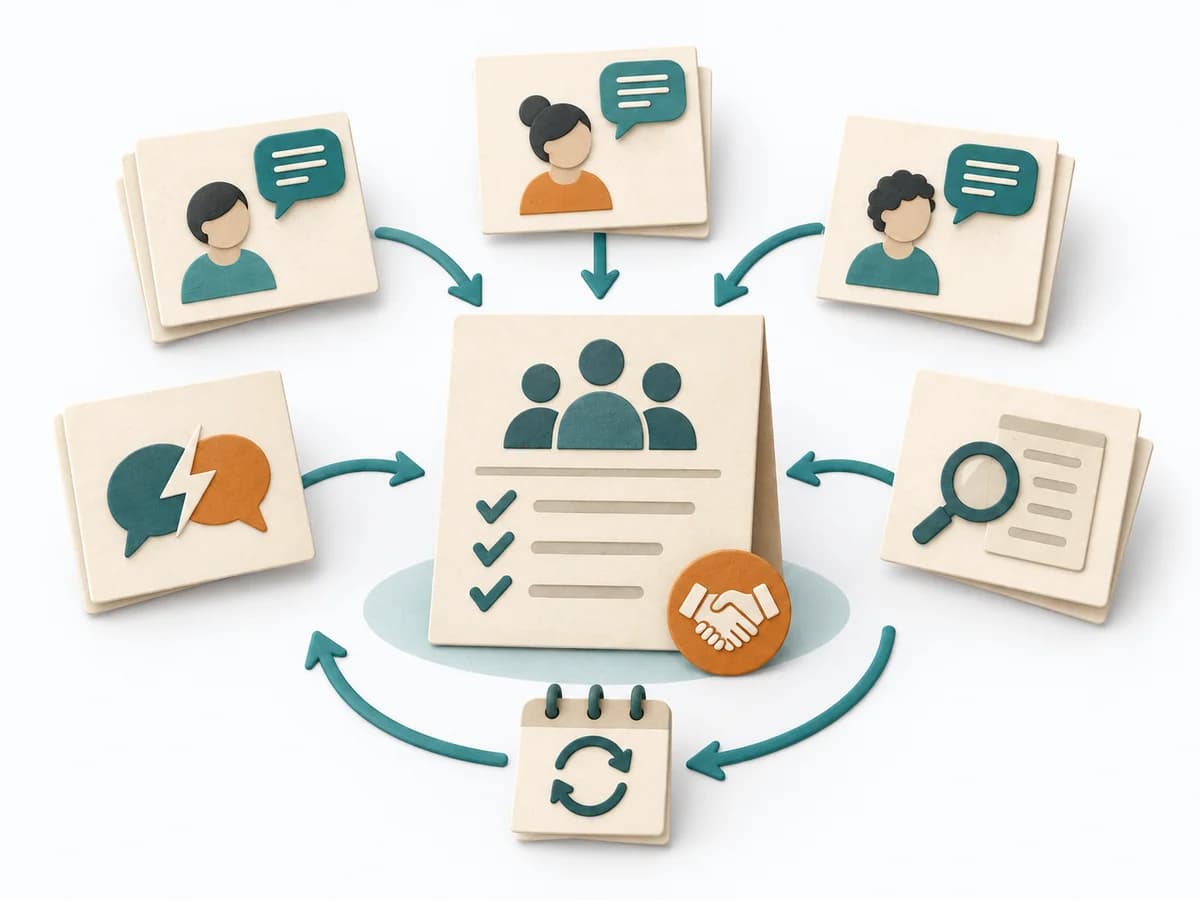
When a team wants to deliberately adjust its working behavior, it makes habits visible and assessable. It focuses on concrete changes instead of diffuse mood.
Agile Facilitation method
Structures team practices through three action-oriented perspectives and supports a few concrete improvements.
Start, Stop, and Continue organise observations about new behaviour, practices to end or change, and helpful work the team wants to protect. The frame structures a review, while patterns and a few reviewable actions guide the next check.
What should the team start, stop, or deliberately continue doing?
Three prompts structure discussion. The retrospective needs agreed and tracked actions to create change.
Frame
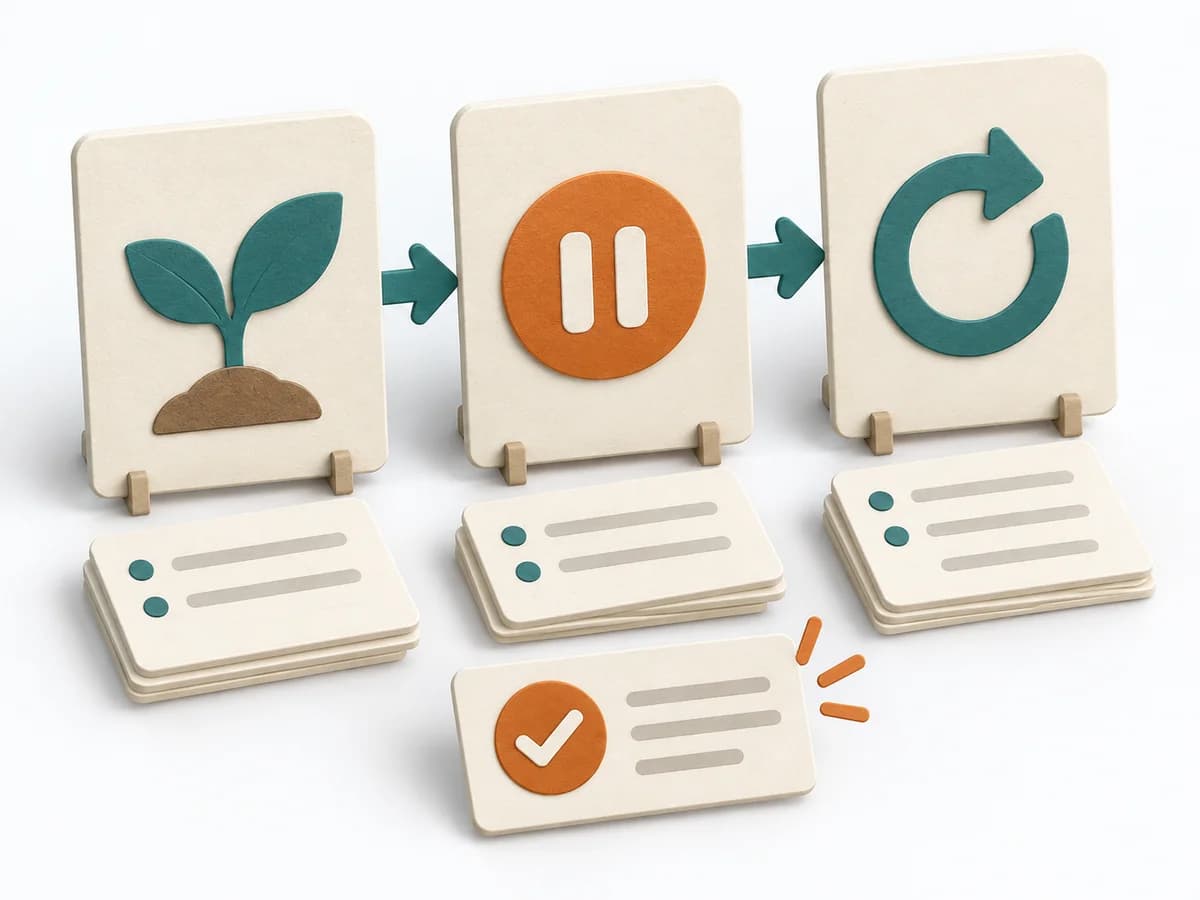
Agree the review period, area of work, and conversation rules.
Collect
Ask team members to record concrete Start, Stop, and Continue observations quietly.
Clarify
Invite authors to explain ambiguous entries. Group similar observations.
Choose
Select themes by impact, ability to change, and team capacity.
Commit
Make chosen actions concrete. Assign owners and dates and schedule an effectiveness check.
Open the next review with the status of earlier actions. Change formats when the same items recur or deeper causes need examination.
Use the method for a bounded review of team practices, a sprint, a delivery, or a project milestone.
Concrete Start, Stop, and Continue observations for the agreed period.
A few actions with owners, dates, and a later check.
Fictional teaching example
Fictional observations from a four-week team pilot, separate from the blank worksheet.
| Area of work | Start | Stop | Continue |
|---|---|---|---|
| Team practiceWhich concrete practice from the period should begin, stop, or deliberately continue? | Attach a short test note to each handoff. | Send review requests without context across several chat channels. | Involve Support with Engineering before substantial changes. |
Fictional contributions refer to four weeks. Selected points become small actions with an owner, date, and check at the next review.
Set the period, area of teamwork, and review goal. Frame contributions as observable behavior or work conditions.
When a team wants to deliberately adjust its working behavior, it makes habits visible and assessable. It focuses on concrete changes instead of diffuse mood.
It sorts observations into three directions of action and condenses them into a few clear adjustments. The simple structure lowers the entry hurdle and directs the review straight at behavior that should be started, ended, or stabilized.
The method works because it formulates change with a low threshold, making behavior negotiable faster than abstract process criticism. Used well, every statement stays concrete enough that observable action follows from it. Its benefit increases when the team doesn't just collect wishes but checks reasons, prioritizes friction points, and deliberately builds on existing strengths.
Prepare a clearly bounded work context so entries don't jump between topics. The conversation gains sharpness as soon as several points point to the same cause. Close with a small selection of binding changes, a deliberate reinforcement of good practice, and a check date for the effect.
The method guide walks execution through 5 phases, timing, 5 pitfalls, and clear stop criteria.
Open method guideYour perspective
Your feedback helps shape the next improvements to methodatlas.
Plan a bounded team review with silent contributions, three prompts, and a few tracked actions.
To be confirmed
To be confirmed
Reflect on and adapt team practices Time: 30–60 minutes; actions are implemented and checked afterward
Complete this worksheet on paper or in your own document during the work.
| Area of work | Start: What should we begin? | Stop: What should we end or change? | Continue: What should we keep doing? |
|---|---|---|---|
| Team practice |
Blank worksheet: record period and work area, then add observable behavior or work conditions in each column. Do not carry over example text or actions.
Atlassian: Start, Stop, Continue retrospective
Expected artifact: Shared retrospective frame
Without a period, feedback becomes vague or mixed.
Entry:
...
Expected artifact: Unfiltered contributions
An early comment can anchor later contributions.
Entry:
...
Expected artifact: Clarified themes
Three columns alone do not explain why a pattern occurs.
Entry:
...
Expected artifact: Prioritized improvements
A popular issue may be outside the team's authority.
Entry:
...
Expected artifact: Action list and review date
Without checking effects, the retrospective ends without follow-through.
Entry:
...
...
Method guide: https://methodatlas.meierhoff-systems.de/en/methods/start-stop-continue/run-sheet
Fitting alternatives with decision guidance, followed by other related methods.
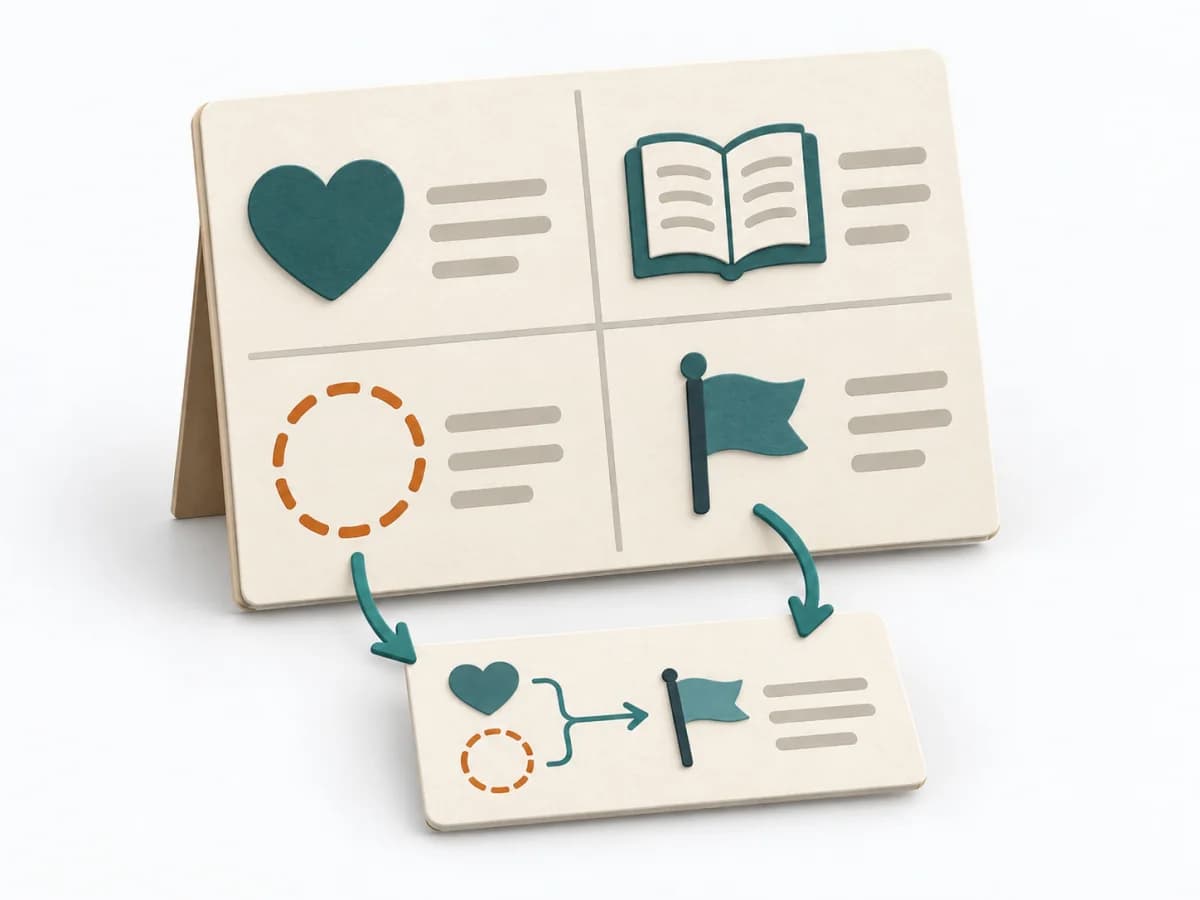
Instead of Start Stop Continue, when you want to hold retrospectives together tightly with remembering, learning, and improving.
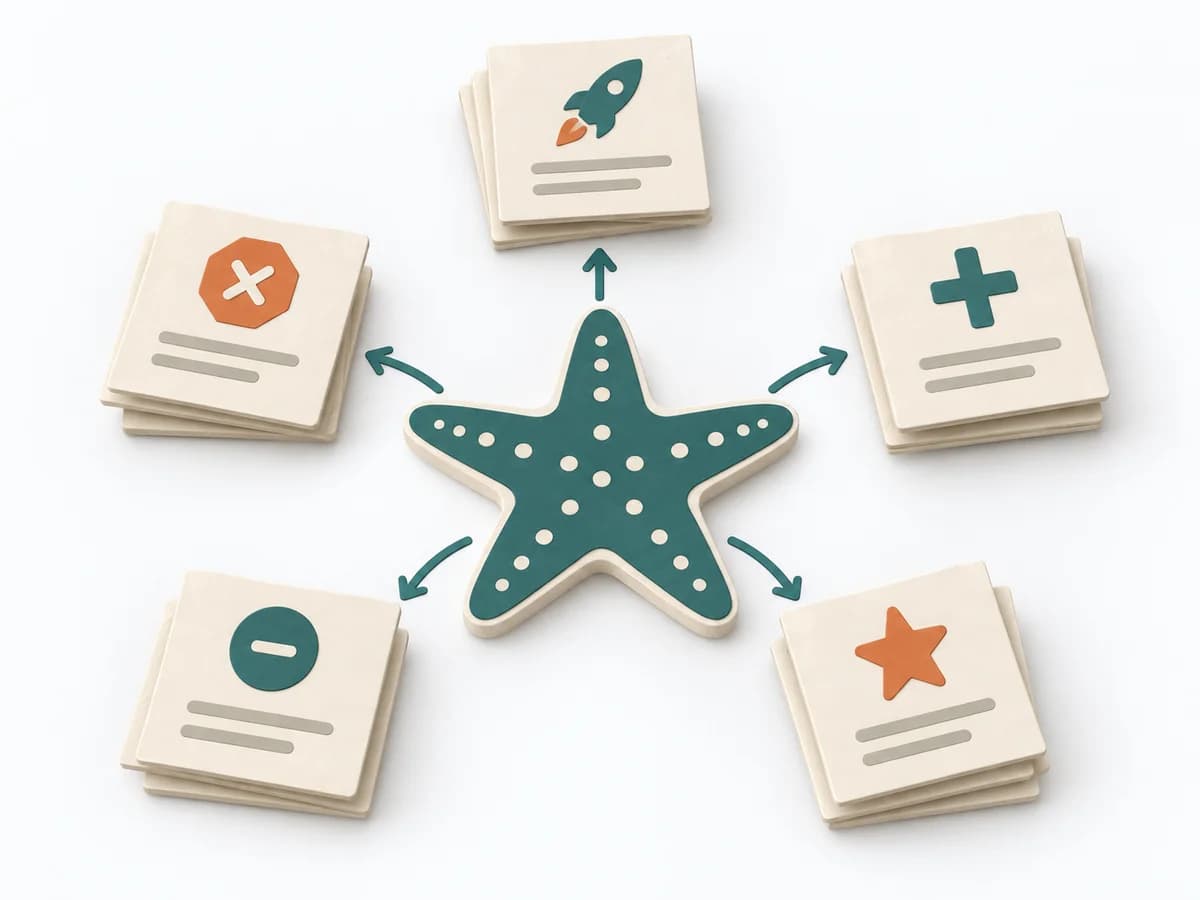
Sorts practices into Start, Stop, More, Less, and Keep, so routine changes get chosen more deliberately.
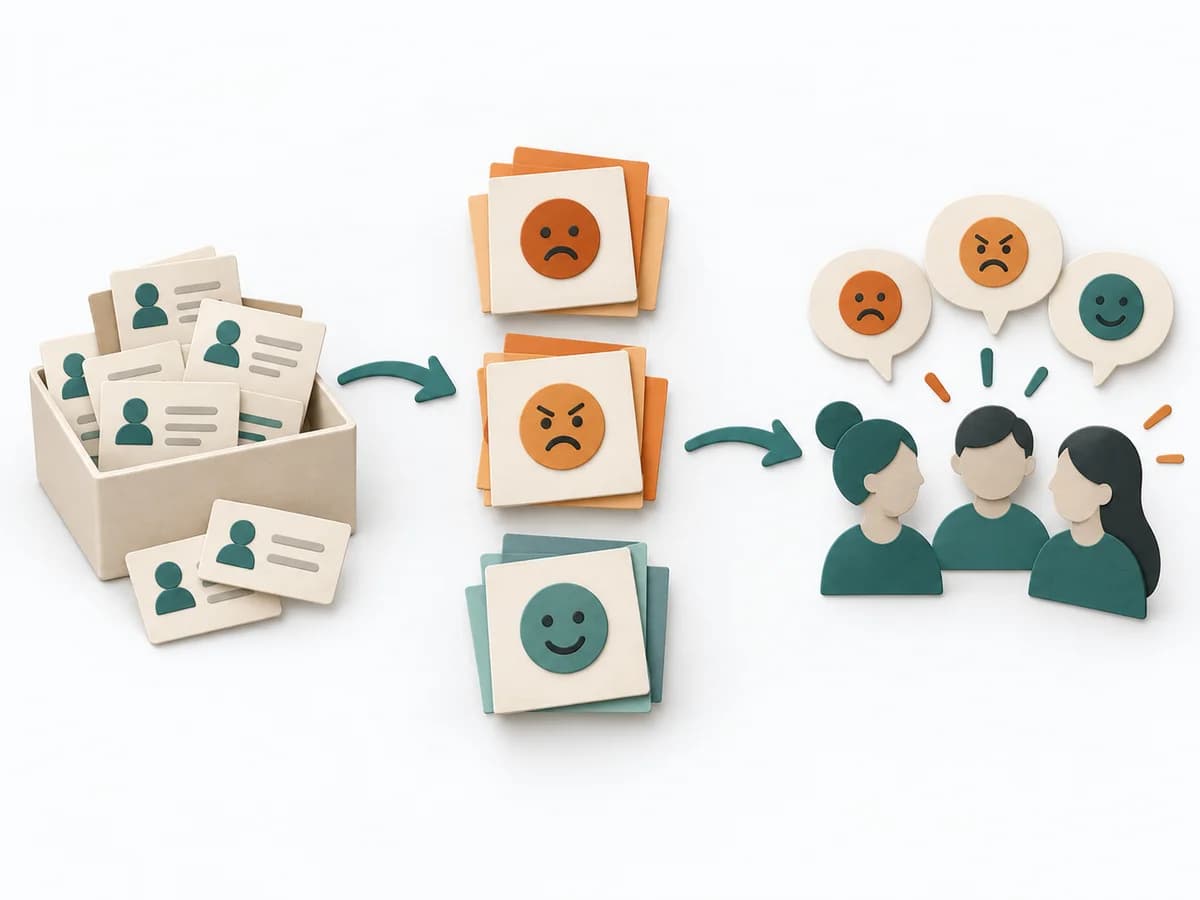
Collects emotional signals from the team, clusters them into themes, and makes real conversation topics visible.
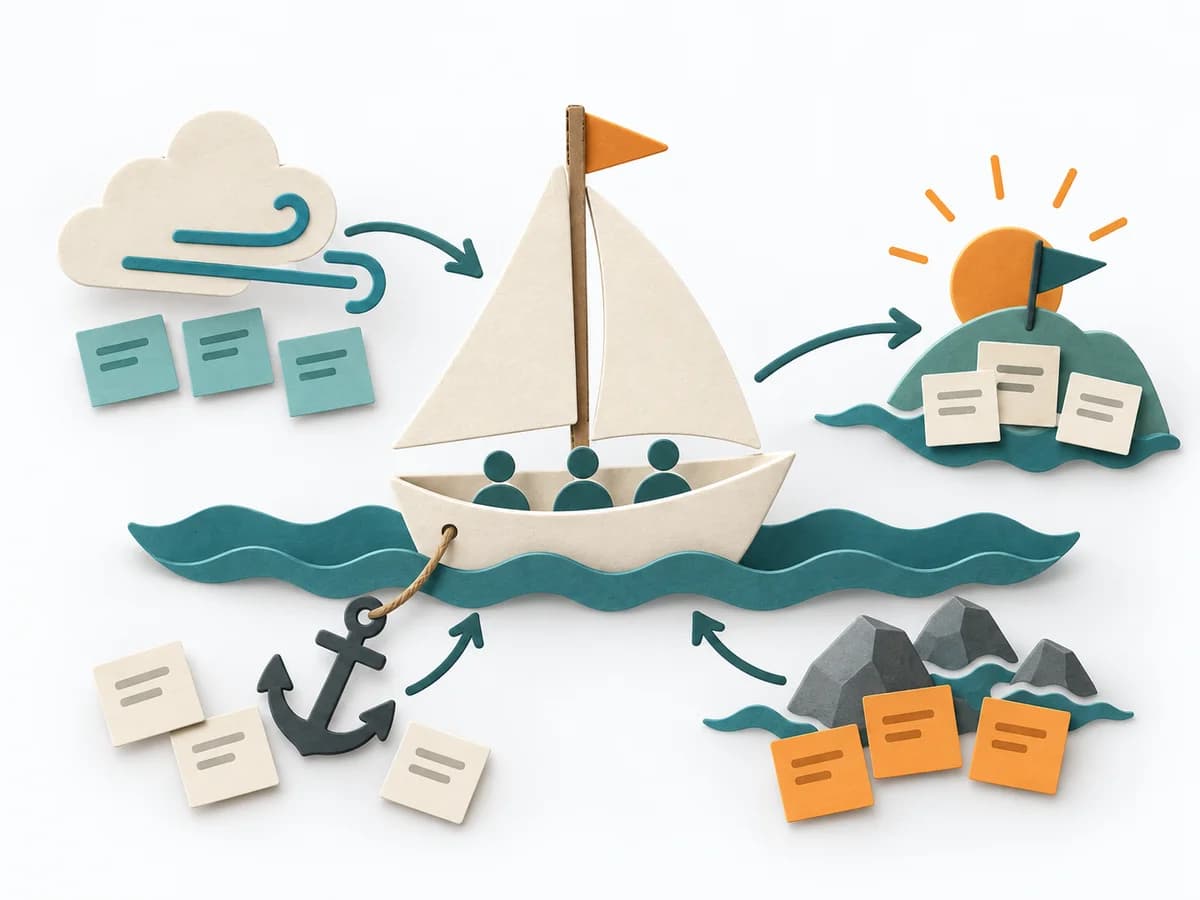
Makes a team's winds, anchors, risks, and target picture visible and turns the review into prioritized improvements.

Makes patterns from a sprint visible and derives concrete improvements for the next work cycle.
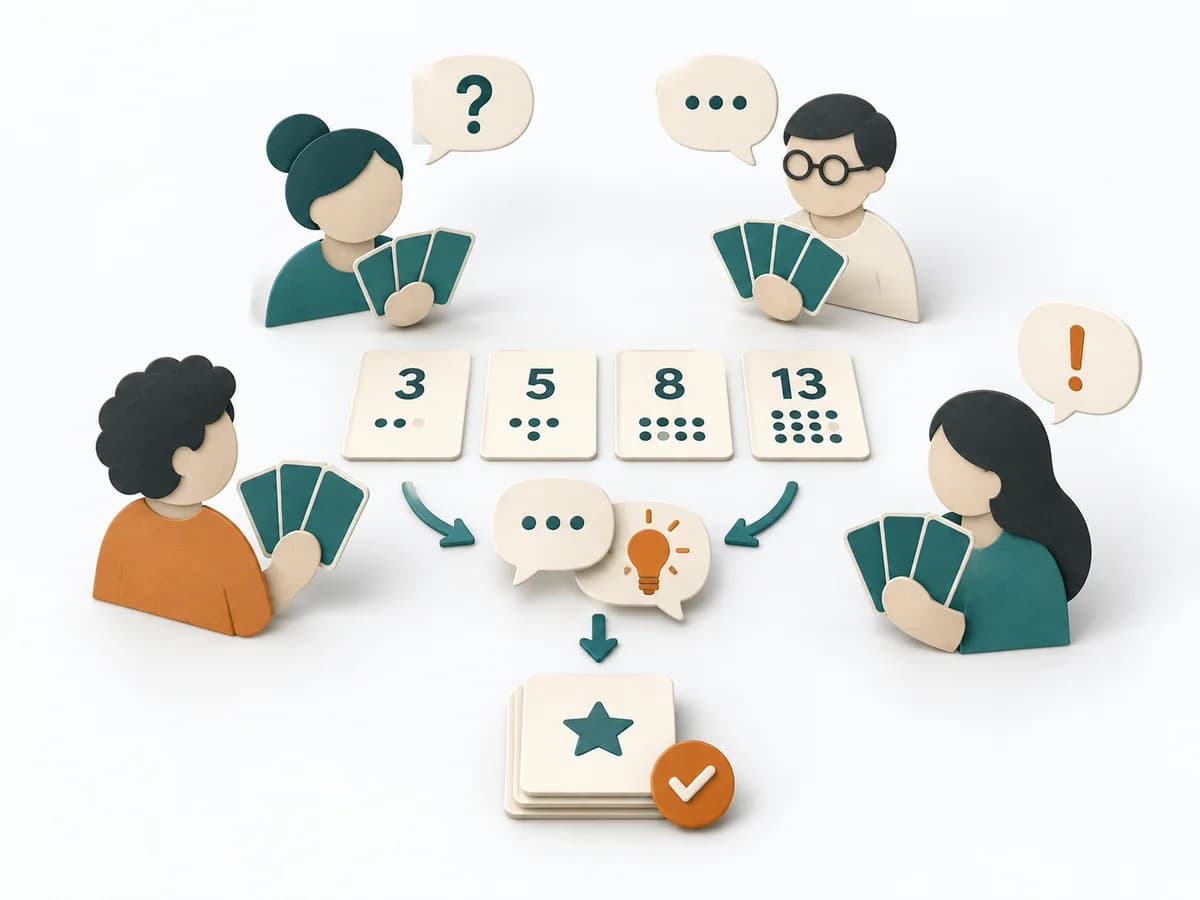
Compares stories relatively, surfaces knowledge gaps, and produces a shared estimate with traceable assumptions.