Purpose
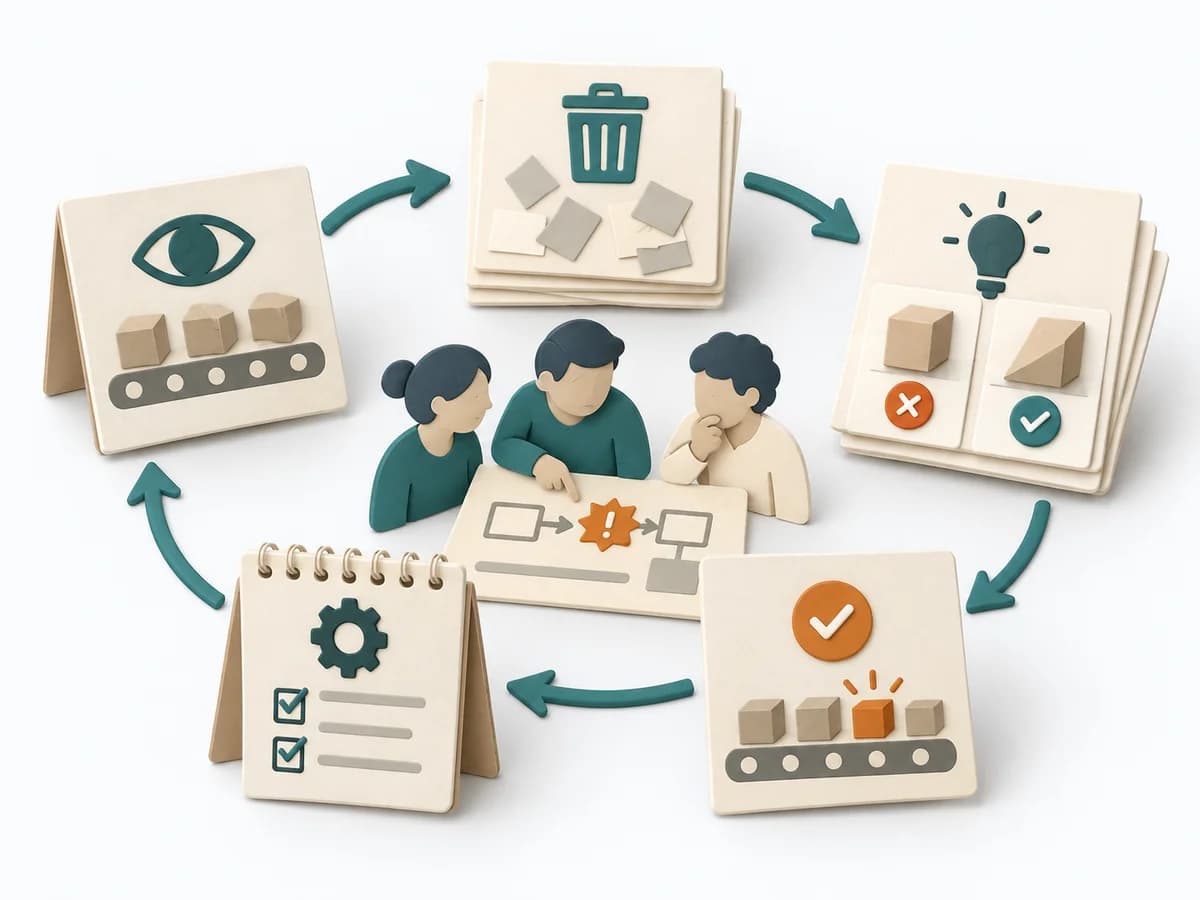
When the same task is done differently depending on the person, the method exposes the reliable core. It creates comparability without unnecessarily choking off needed latitude.
Operations Analysis method
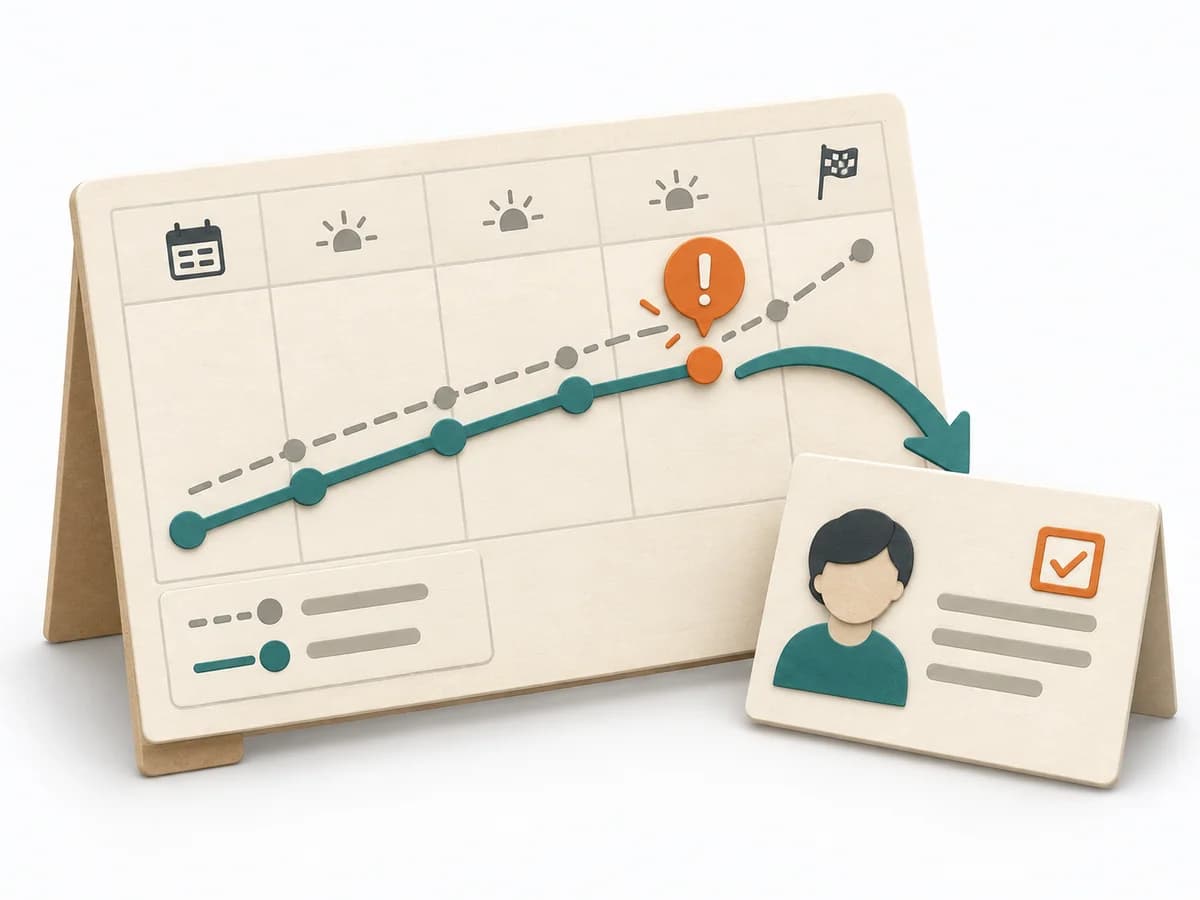
Compares actual work with the standard and makes deviations visible for targeted process improvement.
Actual work is compared with the intended standard so stable steps and variable elements become distinguishable. Deviations become signals of missing clarity or poor conditions. The improved standard supports connected training and quality work.
Which safe, quality-capable sequence meets customer takt with the minimum required standard WIP?
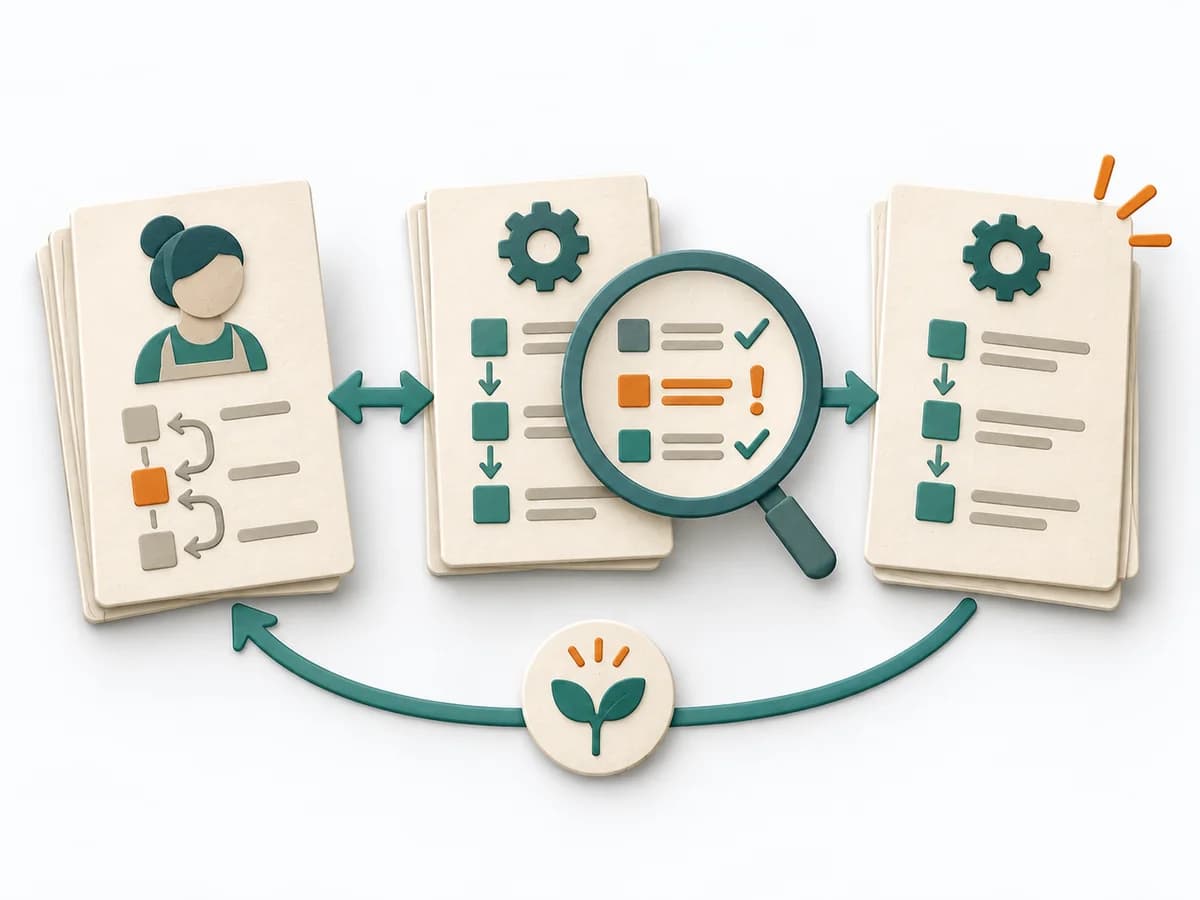
The steps form one complete method run.
Takt
Divide net available time by customer demand and set validity boundary.
Elements
Break actual work into safe observable elements and measure several cycles.
Sequence
Combine manual, walking, and machine time in a sensible order against takt.
WIP
Determine minimum standard inventory and material positions needed for stable flow.
Confirm
Pilot standard with operators, measure deviations, display it, and establish review.
Add new evidence at review and version decisions with the prior state.
Wenn dieselbe Aufgabe je nach Person anders erledigt wird, legt die Methode den verlässlichen Kern frei. Sie schafft Vergleichbarkeit, ohne nötigen Handlungsspielraum unnötig zu ersticken.
Standardized work with takt time, work sequence, manual/machine/walk time, standard WIP, layout, and review.
Fictional example
Takt: 420 net minutes / 60 units = 7.0 minutes. Manual 5.3 + walking 0.8 = 6.1 minutes; 0.6 machine minutes run in parallel.
| Sequence | Manual | Walk | Machine | Quality/Safety | Standard WIP |
|---|---|---|---|---|---|
| Scan reservationAdd evidence and rationale. | 0.6 min | 0 | 0 | ID and slot match | 1 unit in inspection |
| Fetch unitAdd evidence and rationale. | 1.8 min | 0.6 min | 0 | Lift aid above 20 kg | 8 presorted units |
| Inspect and hand offAdd evidence and rationale. | 2.9 min | 0.2 min | 0.6 min scan | Visual and function check | no extra buffer |
All values are fictional.
Choose a repeatable process and product/service family; capture demand, available time, and actual work at gemba.
When the same task is done differently depending on the person, the method exposes the reliable core. It creates comparability without unnecessarily choking off needed latitude.
Actual behavior is compared against the intended standard so stable steps and variable portions fall apart from each other. This makes deviations readable not as misconduct but as a signal of missing clarity or poor conditions. The improved standard makes training and quality easier to connect to.
Standard Work Analysis makes visible how work is actually performed and where standard, reality, and the desired outcome diverge. The method looks at sequence, time, materials, roles, and quality criteria. Deviations are not treated automatically as errors, but as signs of unsuitable standards, training, or process conditions. That leads to improved standards and clearer learning points.
Observe work respectfully and without a controlling tone. Document the current flow, the desired standard, and the reasons for deviations side by side. Involve the people doing the work in the adjustments so the new standard stays realistic and accepted.
The method guide walks execution through 5 phases, timing, 5 pitfalls, and clear stop criteria.
Open method guideYour perspective
Your feedback helps shape the next improvements to methodatlas.
Set subject, evidence, roles, flow, and review.
To be confirmed
To be confirmed
Complete run Time: 90–180 minutes per repeatable work cycle plus a pilot across several cycles.
Complete this worksheet on paper or in your own document during the work.
| Sequence | Manual | Walk | Machine | Quality/Safety | Standard WIP |
|---|---|---|---|---|---|
| Scan reservation | |||||
| Fetch unit | |||||
| Inspect and hand off |
The blank worksheet contains prompts only.
Reference · original teaching example
Expected artifact: Takt time
Divide net available time by customer demand and set validity boundary.
Entry:
...
Expected artifact: Element times
Break actual work into safe observable elements and measure several cycles.
Entry:
...
Expected artifact: Work sequence
Combine manual, walking, and machine time in a sensible order against takt.
Entry:
...
Expected artifact: Standard WIP
Determine minimum standard inventory and material positions needed for stable flow.
Entry:
...
Expected artifact: Confirmed standard
Pilot standard with operators, measure deviations, display it, and establish review.
Entry:
...
...
Method guide: https://methodatlas.meierhoff-systems.de/en/methods/standard-work-analysis/run-sheet
Fitting alternatives with decision guidance, followed by other related methods.
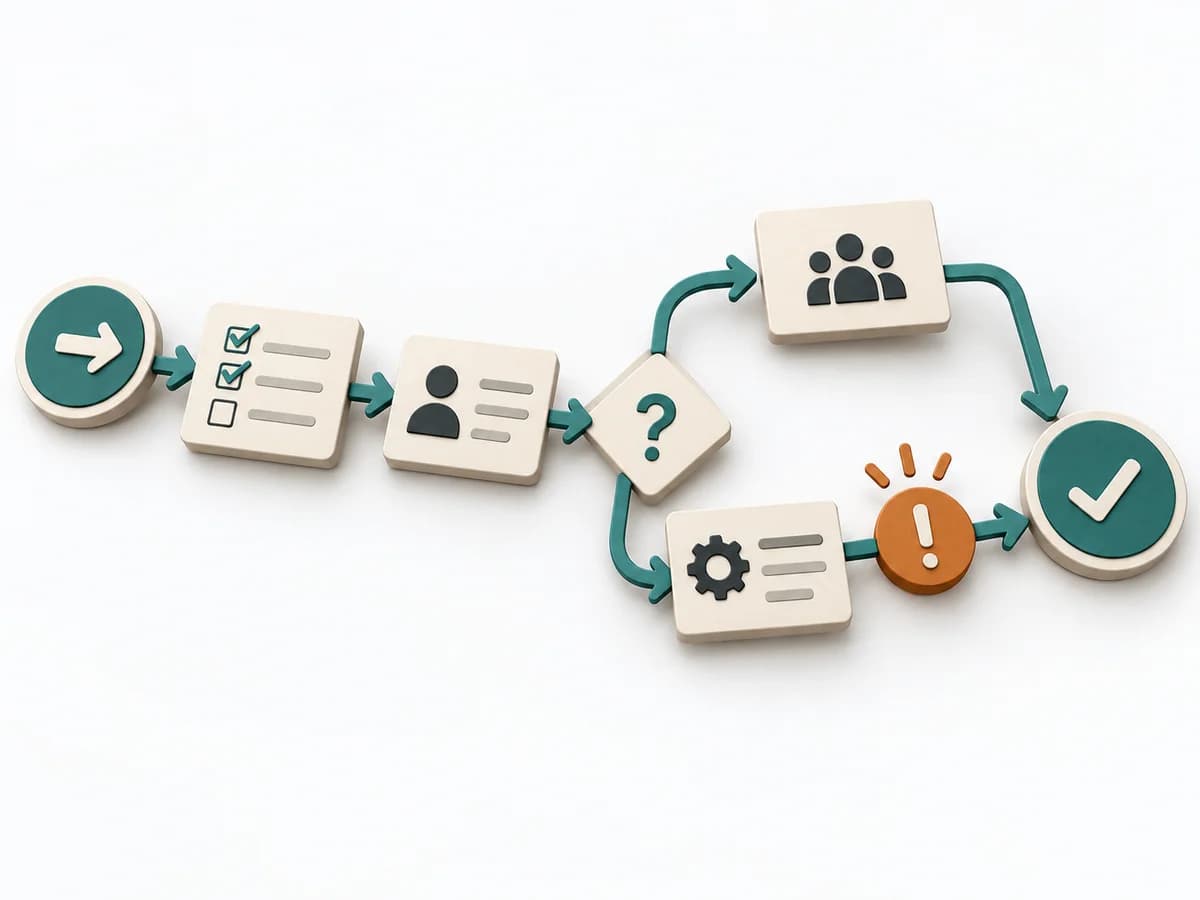
Instead of Standard Work Analysis, choose Process Mapping when you want to document a workflow step by step and make handoffs visible.
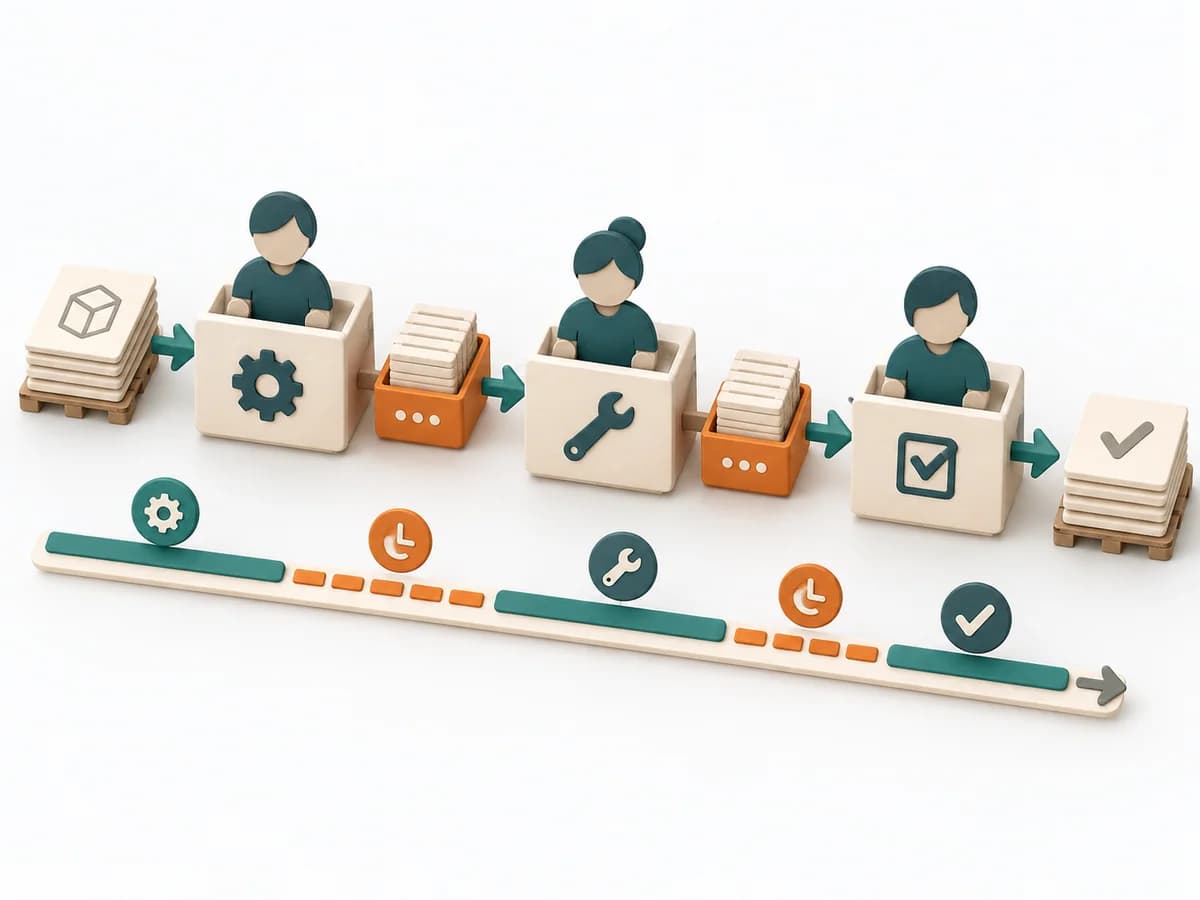
Instead of Standard Work Analysis, choose Value Stream Mapping when the entire value flow with wait times, handoffs, and bottlenecks should become visible.
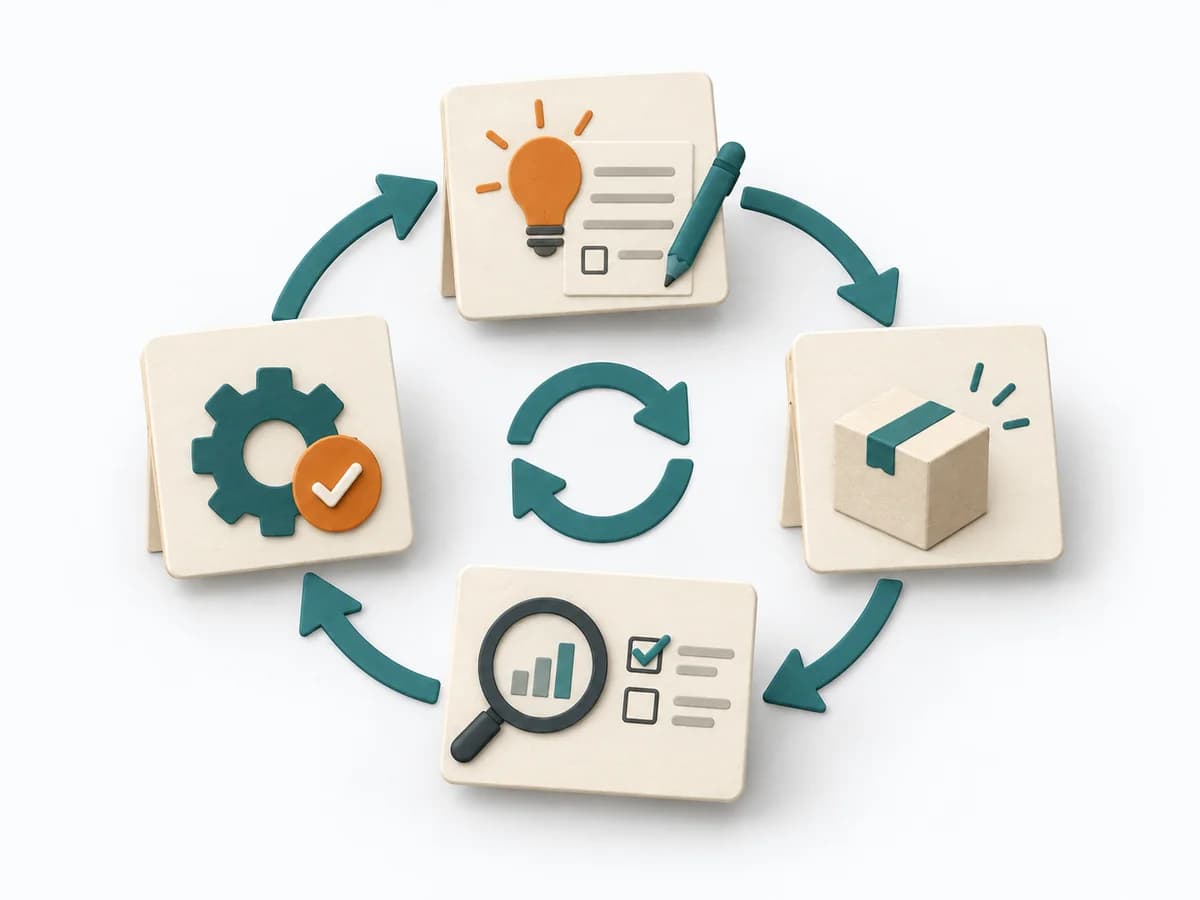
Runs changes as a repeatable cycle of Plan, Do, Check, and Act until a standard becomes solid.
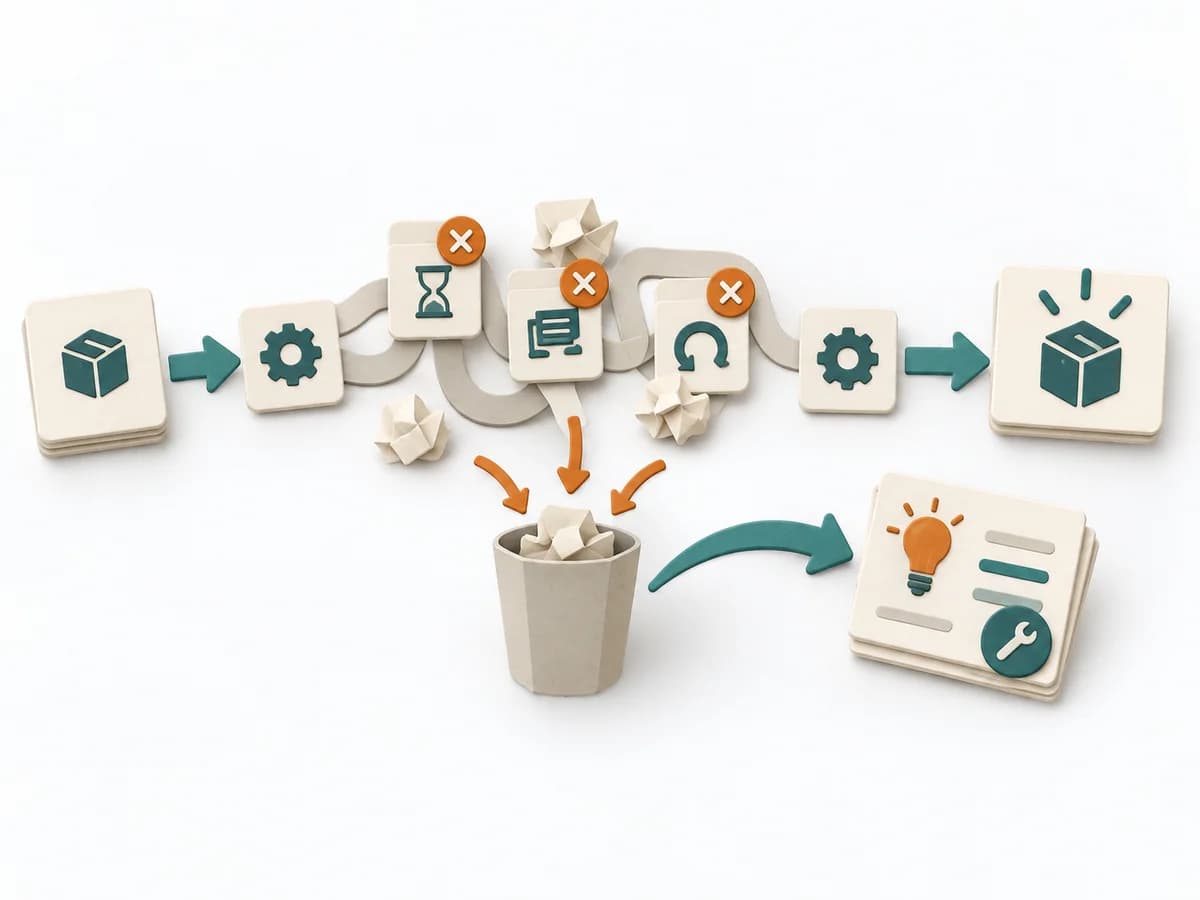
Identifies waste along a process, prioritizes impact, and derives improvements.

Condenses problem, analysis, countermeasures, and follow-up onto one sheet and forces joint analysis.

Separates events, evidence, confirmed causes, and fitting actions so analysis does not turn into blame-finding.