Purpose
For a complex deviation with several people involved, the method bundles problem, analysis, and decision onto one page. It creates a shared working space where causes, countermeasures, and follow-up fit together.
Operations Operating practice
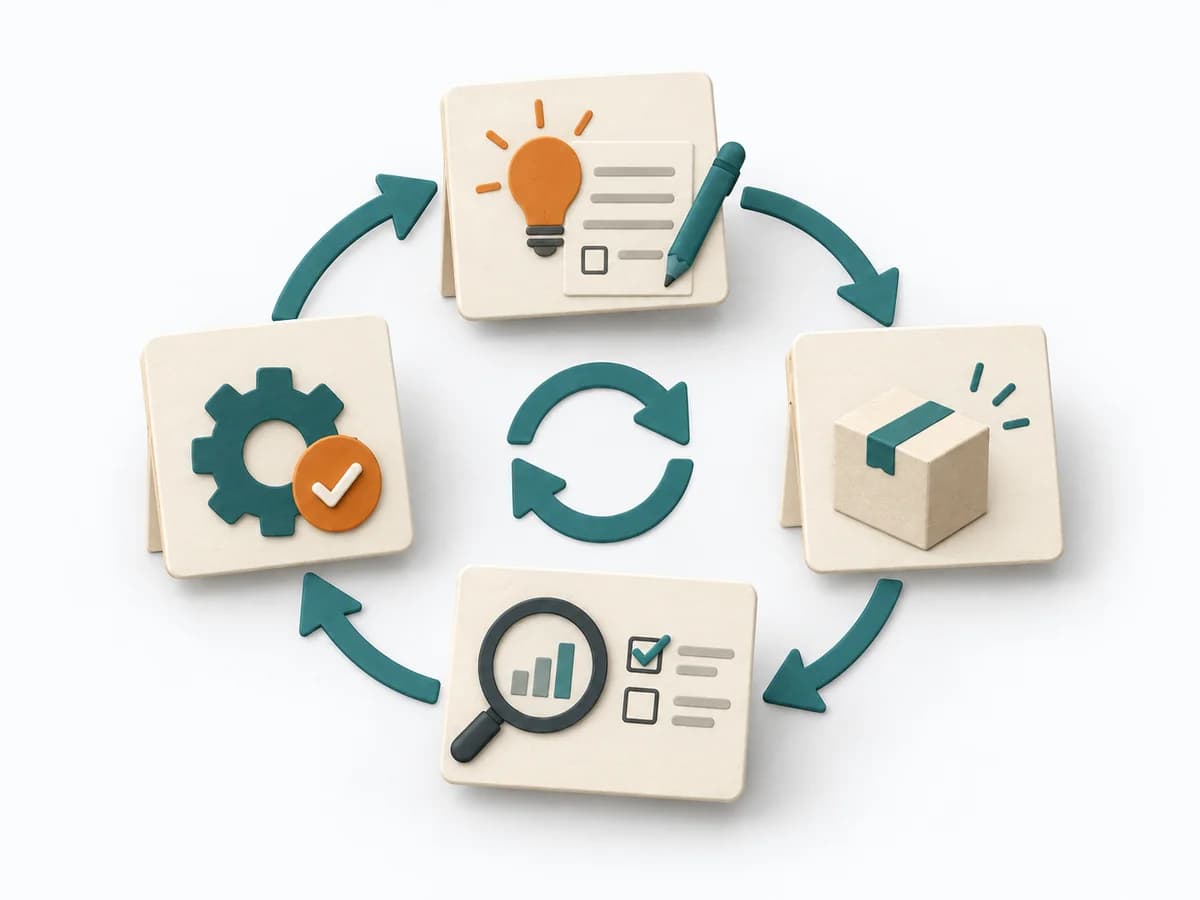
A3 Problem Solving moves from evidence-based problem understanding through cause hypotheses to testable countermeasures.
A3 Problem Solving moves from evidence-based problem understanding through cause hypotheses to testable countermeasures. The method connects the problem picture, causal reasoning, and the next decision point.
Which gap between current and target condition is evidenced, and which countermeasure will we test first?
Phases may be revisited; their order supports the work but does not replace domain judgment.

Problem
Define scope, affected outcome, current gap, and desired measurable result.
Current state
Observe work at the gemba and separate facts from assumptions.
Countermeasure
Choose a changeable cause; define countermeasure and expected signal.
Impact
Assign owner and review date; compare results and revise the hypothesis.
Review the result and open assumptions at the next suitable checkpoint. Record changes, ownership, and new evidence.
Use when: One bounded, recurring problem with access to observations and process owners.

The working picture describes scope, the affected outcome, the current gap, and the desired measurable result.

The countermeasure addresses a cause within the team’s influence and identifies the expected signal of its effect.
The action plan names owners and a review date. At review, it records the comparison of results and any revisions to the hypothesis.
Fictional worked example
Guide a team from evidence-based problem understanding through cause hypotheses to testable countermeasures.
State the observed gap with measure and scope.
Fictional: 18% of tickets exceed 2 days; April, Team A.
Map the actual process and mark reliable facts.
Below 8% by end of June, same ticket definition and data source.
Link an evidenced cause to the countermeasure’s expected effect.
Uncategorized tickets wait longer for assignment; timestamp sample shows association, not proof.
Record trial, owners, review date, and standard change.
Test required intake classification in Team A for two weeks; inspect >2-day share weekly.
Fictional support process: 18% of tickets exceed the two-day target. Timestamps show long waits when category data is missing. Hypothesis: required intake classification reduces unclear handoffs. Countermeasure is tested for two weeks in one team and checked with the same definition.
Start with a bounded question, clarify access and participants, and collect available evidence. Guide a team from evidence-based problem understanding through cause hypotheses to testable countermeasures.
For a complex deviation with several people involved, the method bundles problem, analysis, and decision onto one page. It creates a shared working space where causes, countermeasures, and follow-up fit together.
The argument follows a compact logic from the current state through causes to the measure. Every assumption becomes visible so selection and prioritization stay traceable. This produces a decision picture that doesn't stop at symptoms and makes implementation connectable.
A3 Problem Solving forces a problem onto a concise, checkable argument surface. The approach is strong when current state, cause, measure, and follow-up hang together logically. The value lies not in the form but in the thinking process: assumptions become visible, decisions become connectable, and learning after implementation becomes possible.
Prepare the current state, target state, and the most relevant data so the page can really serve as a shared thinking space. The format becomes solid when cause, measure, and evidence hang together logically and nothing lands on the sheet just out of habit. Close with an actionable experiment, responsibilities, and a clear date for the review.
The method guide walks execution through 4 phases, timing, 4 pitfalls, and clear stop criteria.
Open method guideYour perspective
Your feedback helps shape the next improvements to methodatlas.
Prepare A3 Problem-Solving with a clear question, roles, and sources.
To be confirmed
To be confirmed
Plan the full method Time: Set according to scope and available evidence
Complete this worksheet on paper or in your own document during the work.
State the observed gap with measure and scope.
...
Map the actual process and mark reliable facts.
...
Link an evidenced cause to the countermeasure’s expected effect.
...
Record trial, owners, review date, and standard change.
...
Blank worksheet: start with a bounded question. Enter observed facts only, mark assumptions, and record open questions and sources.
A3 Problem-Solving · Lean Enterprise Institute
Expected artifact: Measurable problem and target definition
Measurable problem and target definition
Entry:
...
Expected artifact: Evidence-based current condition at the gemba
Evidence-based current condition at the gemba
Entry:
...
Expected artifact: Tested cause hypothesis and countermeasure
Tested cause hypothesis and countermeasure
Entry:
...
Expected artifact: Outcome review and updated standard
Outcome review and updated standard
Entry:
...
...
Method guide: https://methodatlas.meierhoff-systems.de/en/methods/a3-problem-solving/run-sheet
Fitting alternatives with decision guidance, followed by other related methods.

Instead of A3 Problem Solving, when you want to quickly open up several possible causes and bring the team to an initial cause chain.
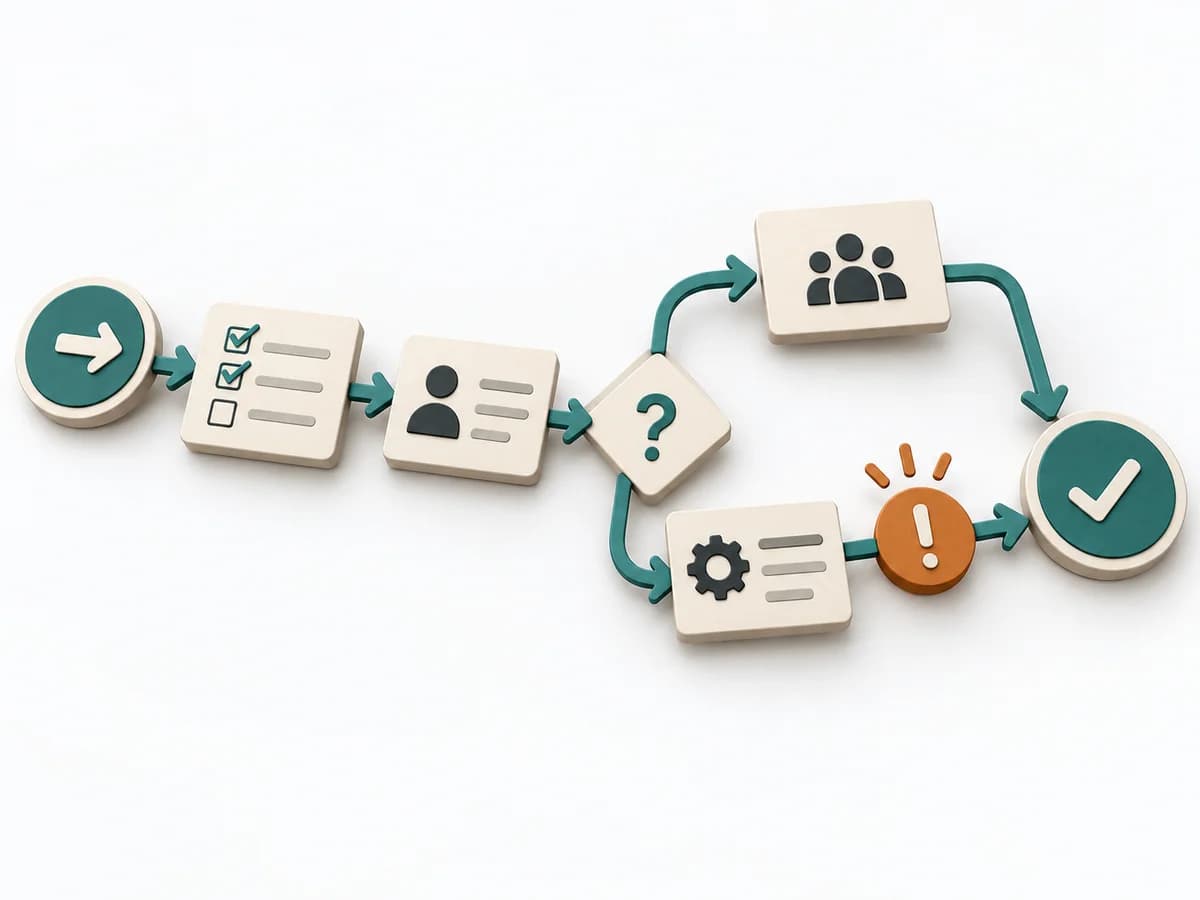
Visualizes workflows with roles and handoffs so problems, media breaks, and improvement opportunities become visible.

Sorts possible causes into categories and creates a shared picture for investigation and next tests.
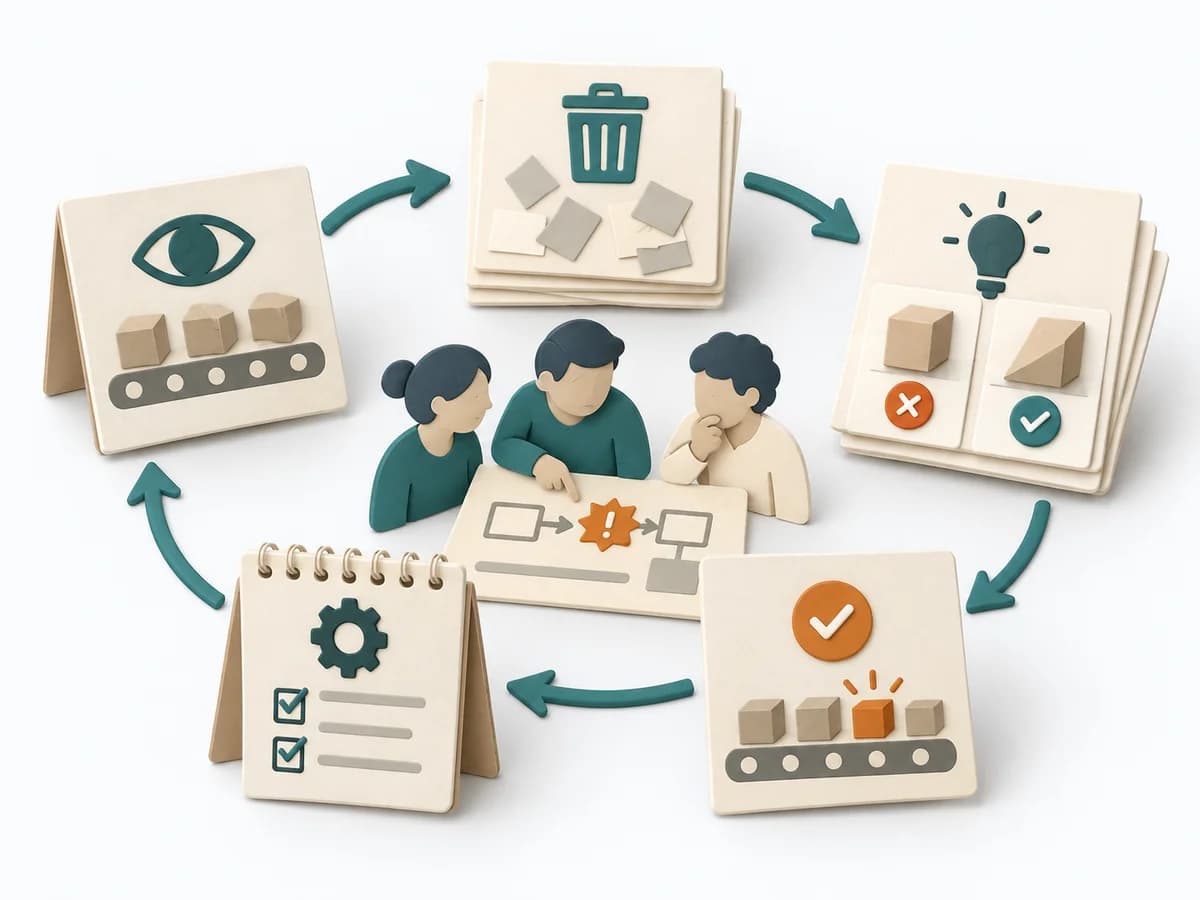
Bundles observation, waste analysis, and experiments into a compact improvement process with a new standard.
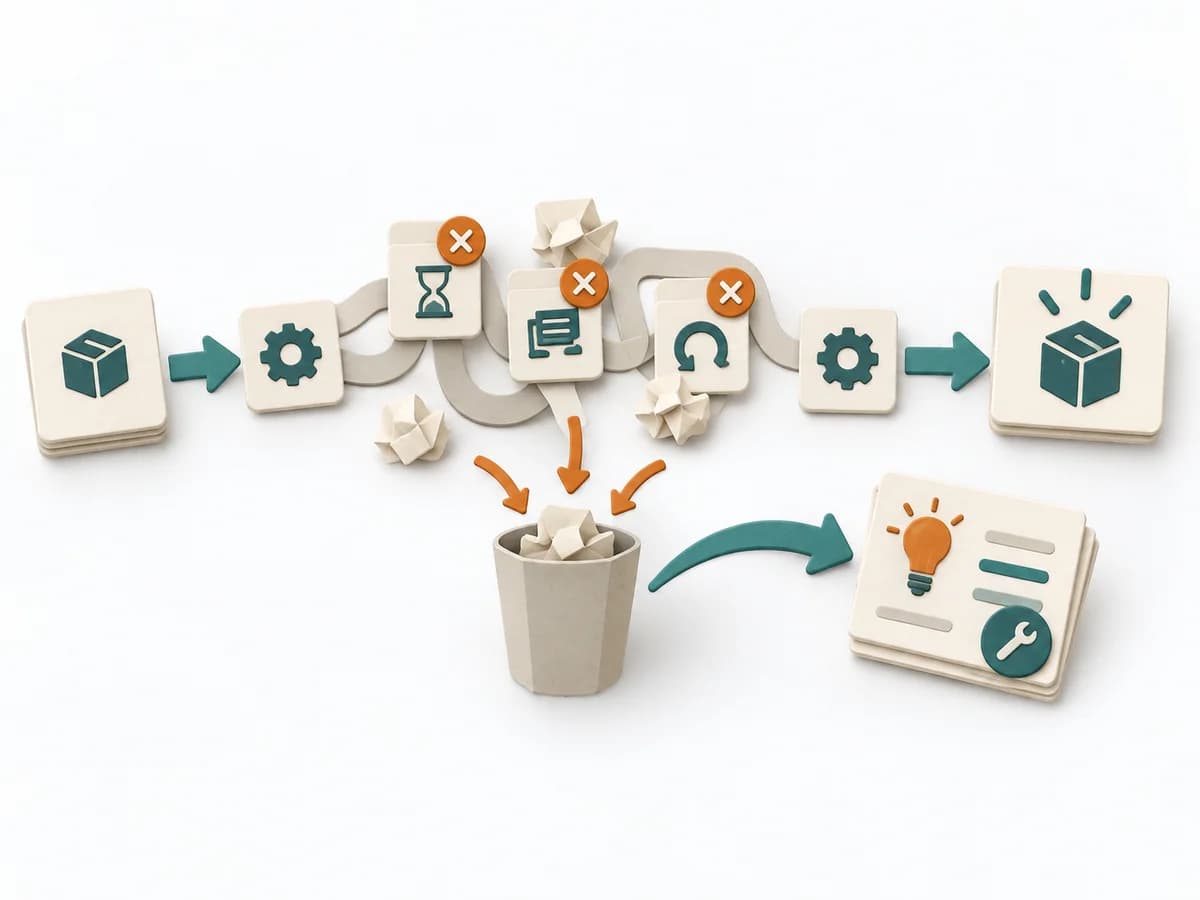
Identifies waste along a process, prioritizes impact, and derives improvements.

Clarifies workflows, data, causes, and improvements by framing the situation, analyzing the problem with is/is not, and planning risks and actions.