Purpose
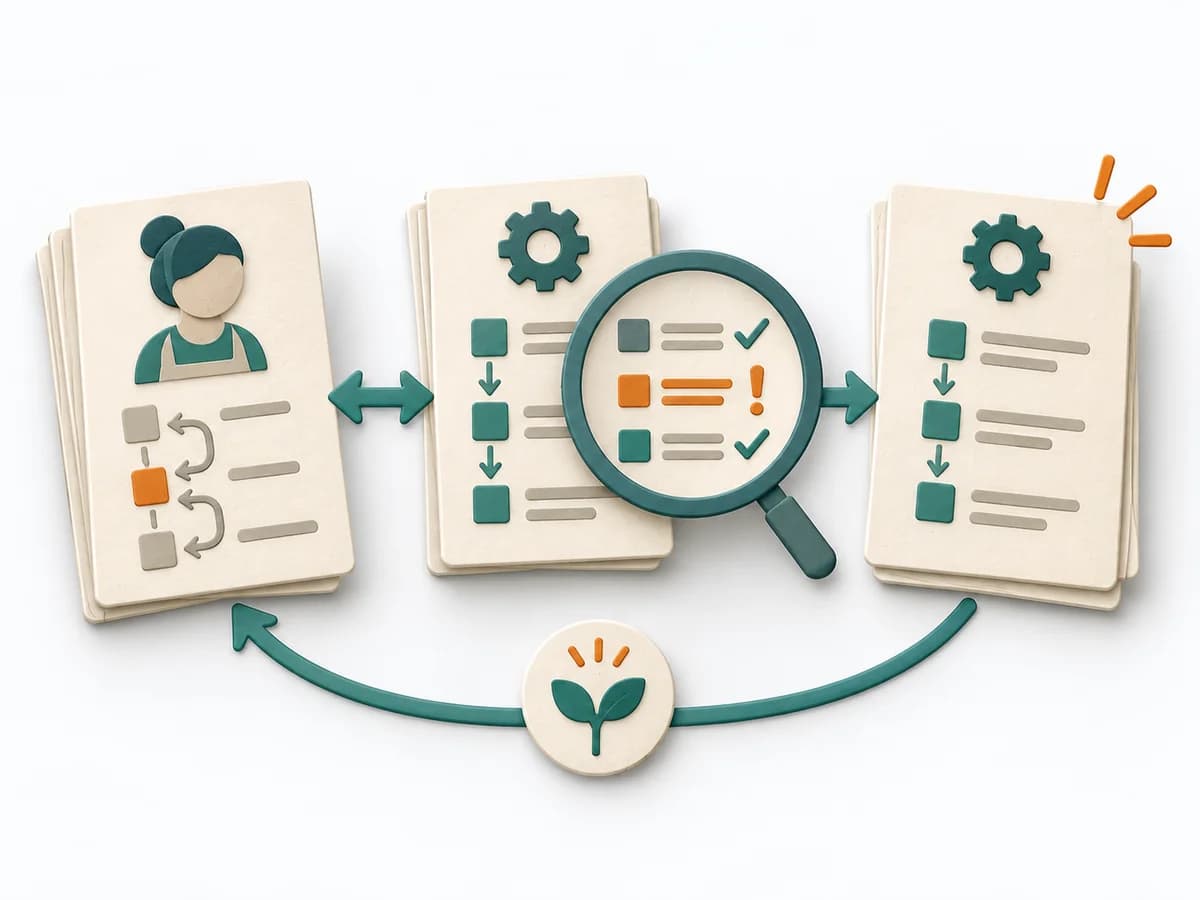
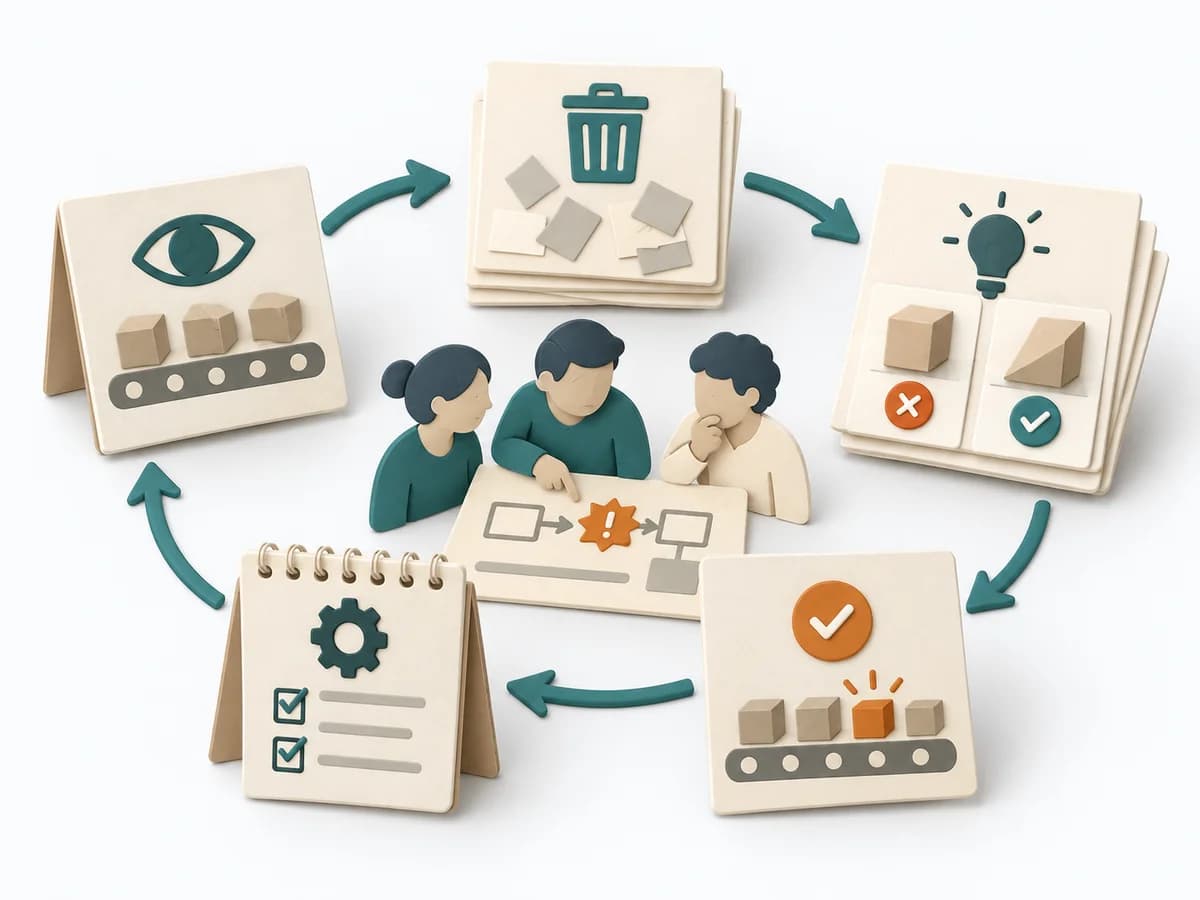
For an improvement that still has to prove itself in everyday work, the method runs it through small learning loops. It connects planning, checking, and standardization into a repeatable learning mode.
Operations Process model
Introduces changes through a repeatable Plan, Do, Check, Act cycle to develop a workable standard.
Eine Änderung wird bewusst klein gehalten, damit Wirkung und Nebenwirkung klar lesbar bleiben. Anschließend entscheidet die Beobachtung, ob die Anpassung übernommen oder weiter verändert wird. Der Zyklus macht Lernen zu einem regulären Betriebsmuster und nicht zu einer Ausnahmeaktion.
Which small change will we test, what do we predict, what occurred, and how will learning enter the next cycle?
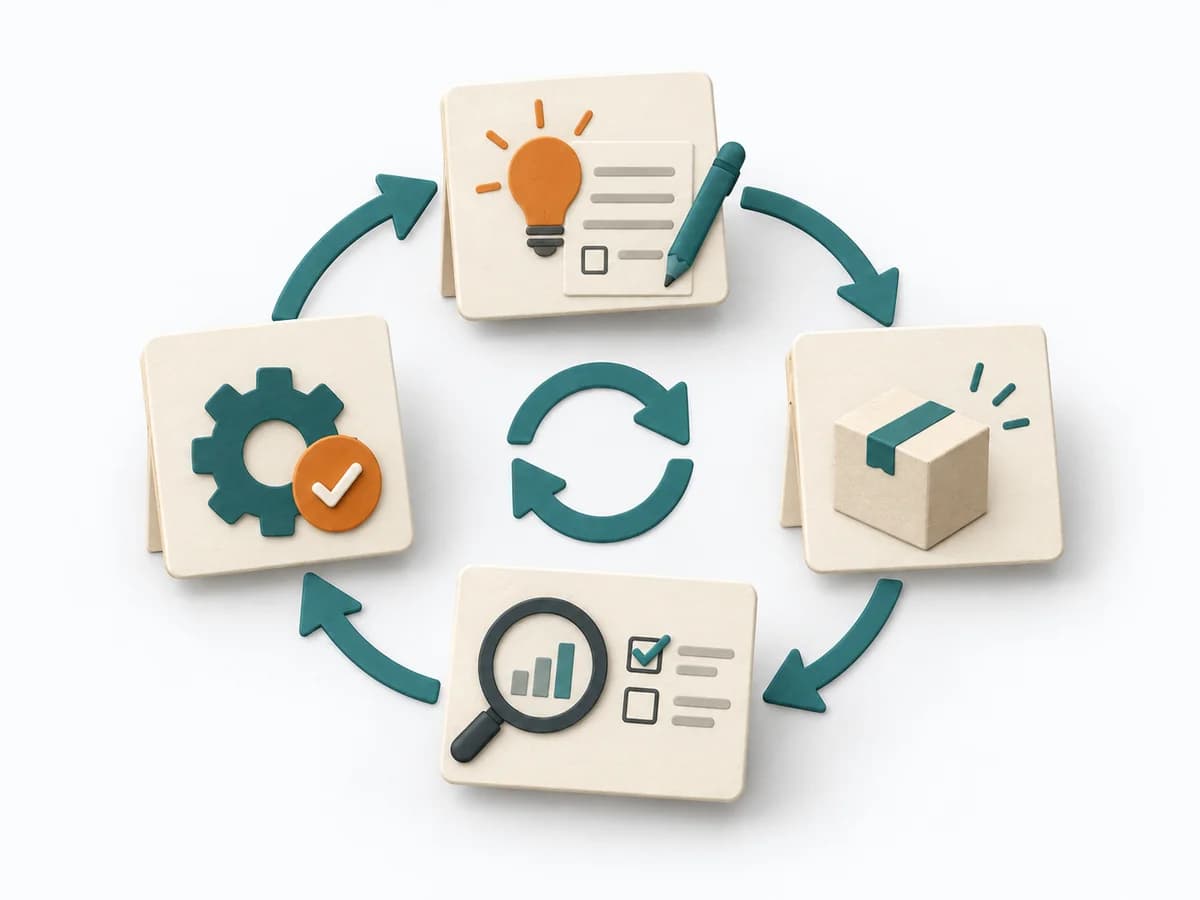
The steps form one complete method run.
Plan
Define problem, aim, theory, prediction, measures, test scope, and guardrails.
Do
Run the change in the bounded area; record observations, deviations, and unexpected effects.
Check
Compare result with prediction and baseline; assess variation, side effects, and learning.
Act
Standardise, adapt, or abandon the learning; set owners, review, and next cycle.
Add new evidence at review and version decisions with the prior state.
Bei einer Verbesserung, die erst im Alltag beweisen muss, was sie kann, führt die Methode in kleinen Lernschleifen vor. Sie verbindet Planung, Prüfung und Standardisierung zu einem wiederholbaren Lernmodus.
PDCA cycle record with plan, prediction, test execution, expected-versus-observed review, and Act decision.
Fictional example
Fictional values show the actual method fields.
Define problem, aim, theory, prediction, measures, test scope, and guardrails.
If slots fall to eight/hour, p80 wait drops below 15 minutes on two Saturdays; stop above 10% rejection.
Run the change in the bounded area; record observations, deviations, and unexpected effects.
Cap on 9 and 16 Nov; Support counts rejections, Warehouse measures wait; outage on day two marked.
Compare result with prediction and baseline; assess variation, side effects, and learning.
p80 is 12 vs 18 minutes; rejection 7%; warehouse calls unchanged. Prediction met, residual issue open.
Standardise, adapt, or abandon the learning; set owners, review, and next cycle.
Provisionally standardise slot cap; Lea owns; review in four weeks. Next cycle tests inventory sync.
All values are fictional.
Set one concrete improvement opportunity and a small reversible test boundary; capture baseline and guardrails.
For an improvement that still has to prove itself in everyday work, the method runs it through small learning loops. It connects planning, checking, and standardization into a repeatable learning mode.
A change is deliberately kept small so that effect and side effect stay clearly readable. Observation then decides whether the adjustment is adopted or changed further. The cycle turns learning into a regular operating pattern rather than an exceptional action.
PDCA turns problem solving into a learning cycle instead of a one-time action. In Plan, the problem is understood and a hypothesis is formed; in Do, the change is tested in a limited way. Check compares result and expectation, and Act decides on adjustment, standardization, or the next cycle. That keeps improvement empirical and easy to continue.
Define measurable expectations and a small safe scope before the test. Keep learning points visible and make sure Act is not skipped. Good moderation keeps the cycle closed instead of turning it into a simple task list.
The method guide walks execution through 4 phases, timing, 4 pitfalls, and clear stop criteria.
Open method guideYour perspective
Your feedback helps shape the next improvements to methodatlas.
Set subject, evidence, roles, flow, and review.
To be confirmed
To be confirmed
Complete run Time: 30–90 minutes for planning and review; Do runs as a bounded test over the required operating period.
Complete this worksheet on paper or in your own document during the work.
Define problem, aim, theory, prediction, measures, test scope, and guardrails.
...
Run the change in the bounded area; record observations, deviations, and unexpected effects.
...
Compare result with prediction and baseline; assess variation, side effects, and learning.
...
Standardise, adapt, or abandon the learning; set owners, review, and next cycle.
...
The blank worksheet contains prompts only.
Reference · original teaching example
Expected artifact: Test plan
Define problem, aim, theory, prediction, measures, test scope, and guardrails.
Entry:
...
Expected artifact: Executed test
Run the change in the bounded area; record observations, deviations, and unexpected effects.
Entry:
...
Expected artifact: Expected-versus-observed finding
Compare result with prediction and baseline; assess variation, side effects, and learning.
Entry:
...
Expected artifact: Act decision
Standardise, adapt, or abandon the learning; set owners, review, and next cycle.
Entry:
...
...
Method guide: https://methodatlas.meierhoff-systems.de/en/methods/pdca-cycle/run-sheet
Fitting alternatives with decision guidance, followed by other related methods.
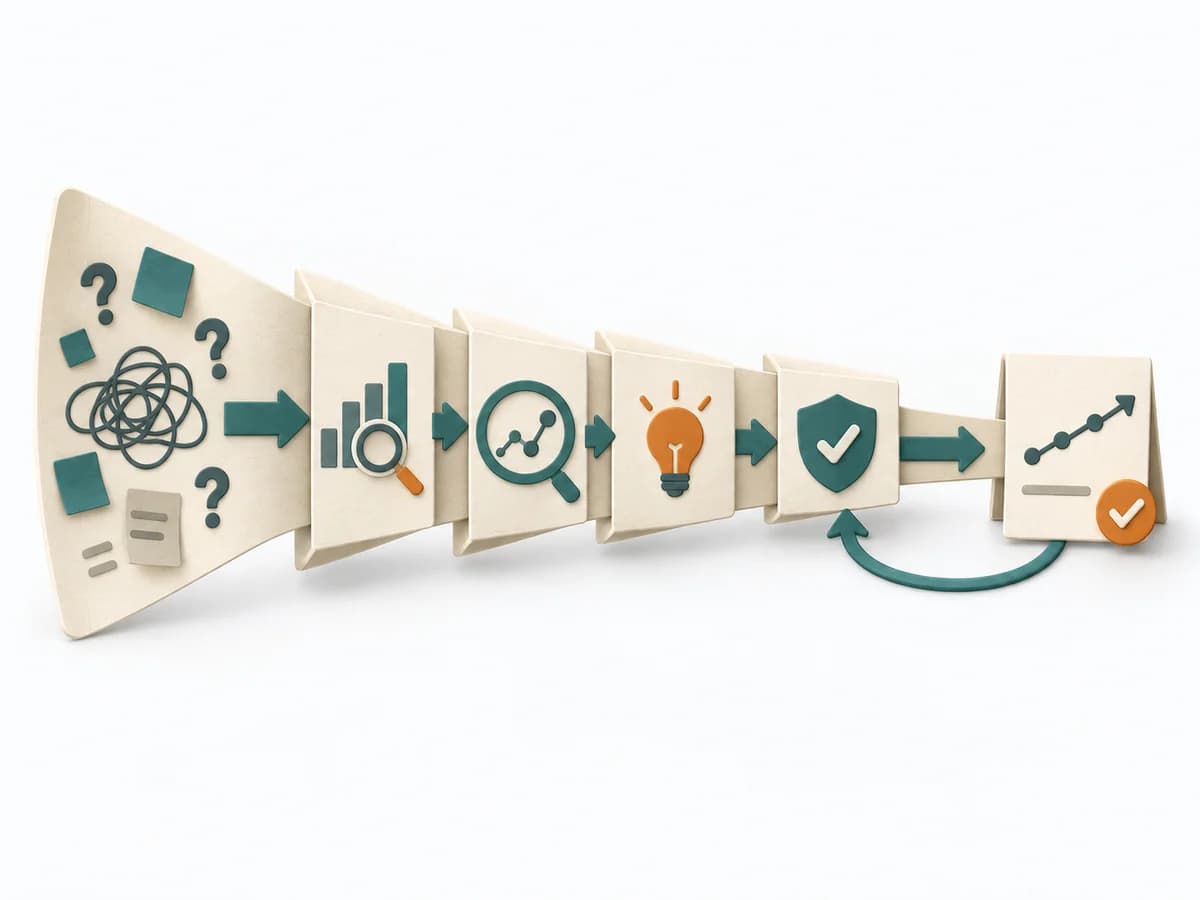
Instead of PDCA Cycle, choose DMAIC when you want to steer improvement in a measurable, data-based, and fixed analysis sequence.
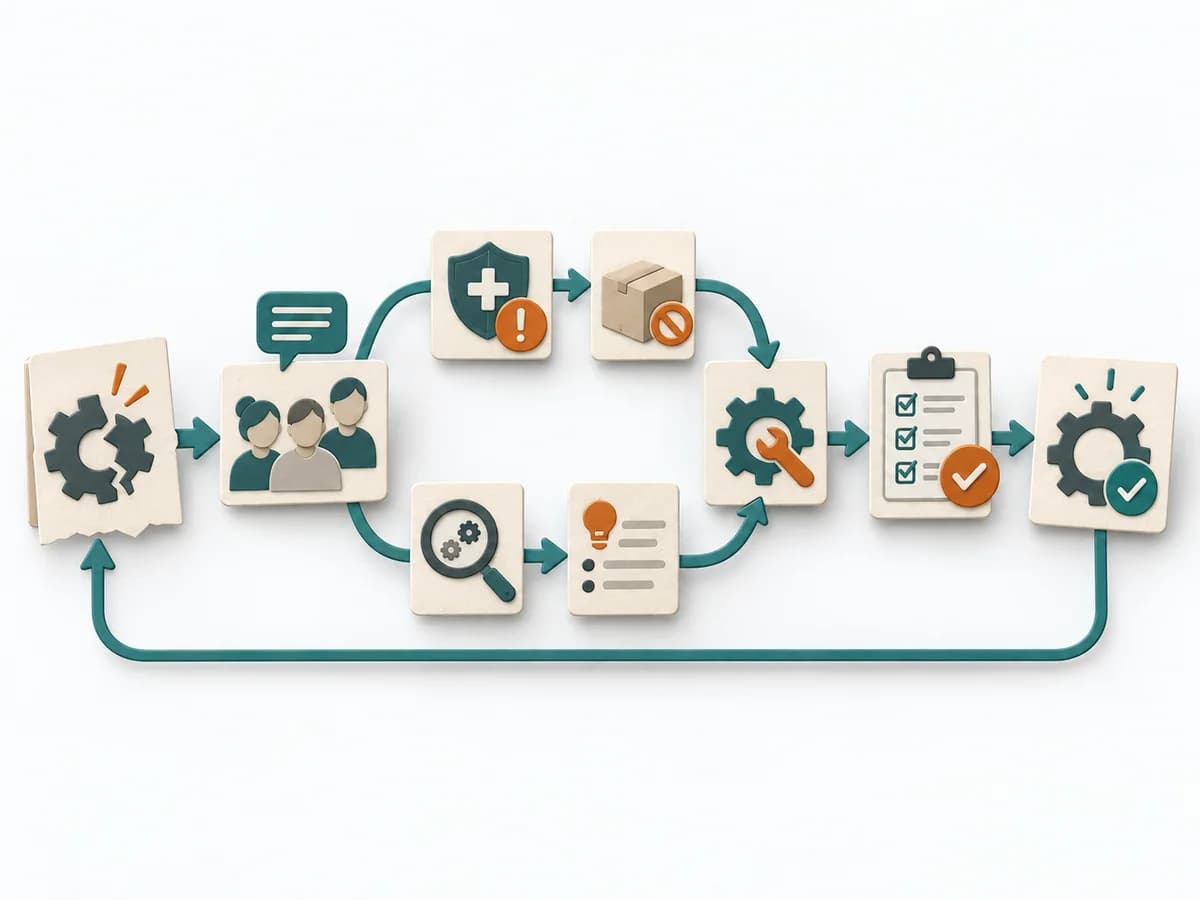
Instead of PDCA Cycle, choose 8D Problem Solving when you want to work through a problem in a disciplined way with clear roles, actions, and verification.

Asks its way step by step to a controllable cause and stops only once an effective countermeasure is within reach.

Goes to the place where work happens, observes the process without disrupting it, and gathers solid clues about friction.
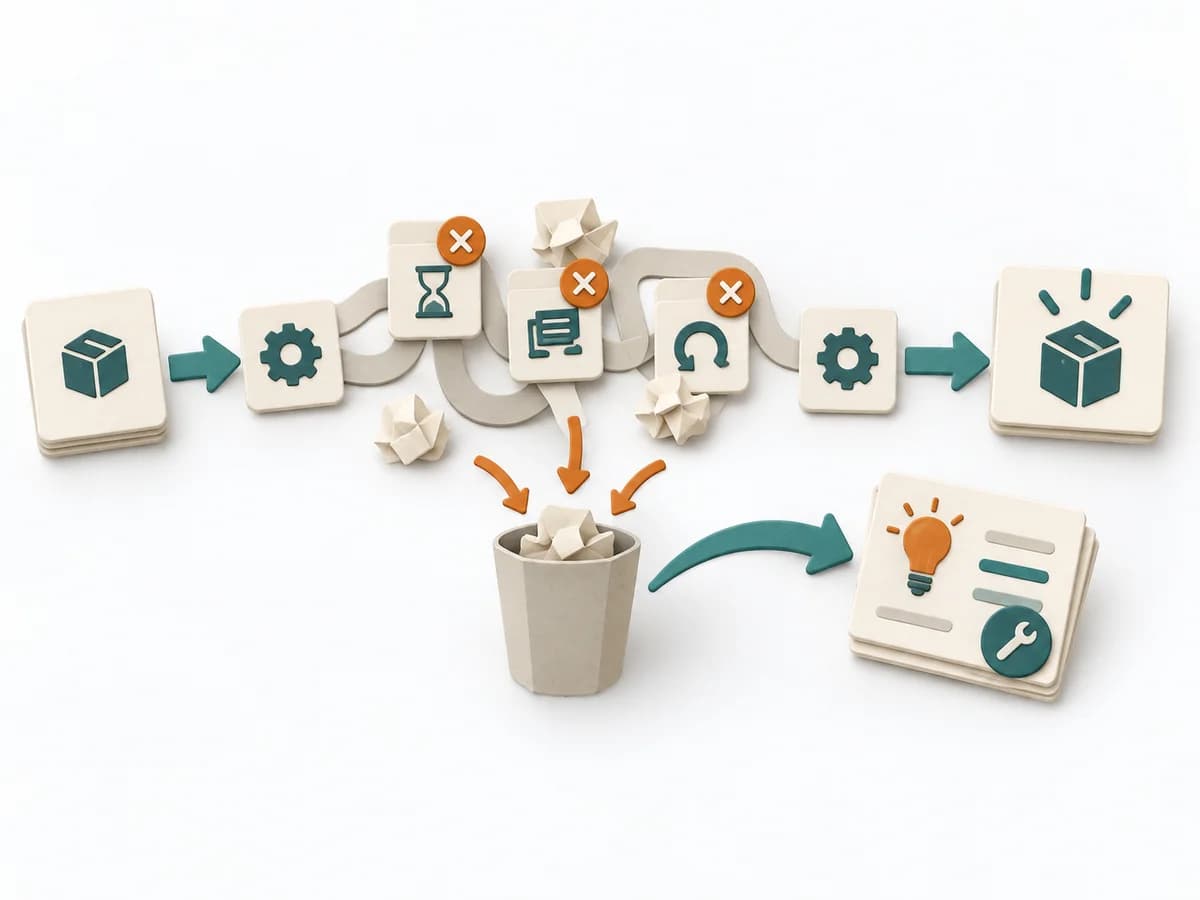
Identifies waste along a process, prioritizes impact, and derives improvements.
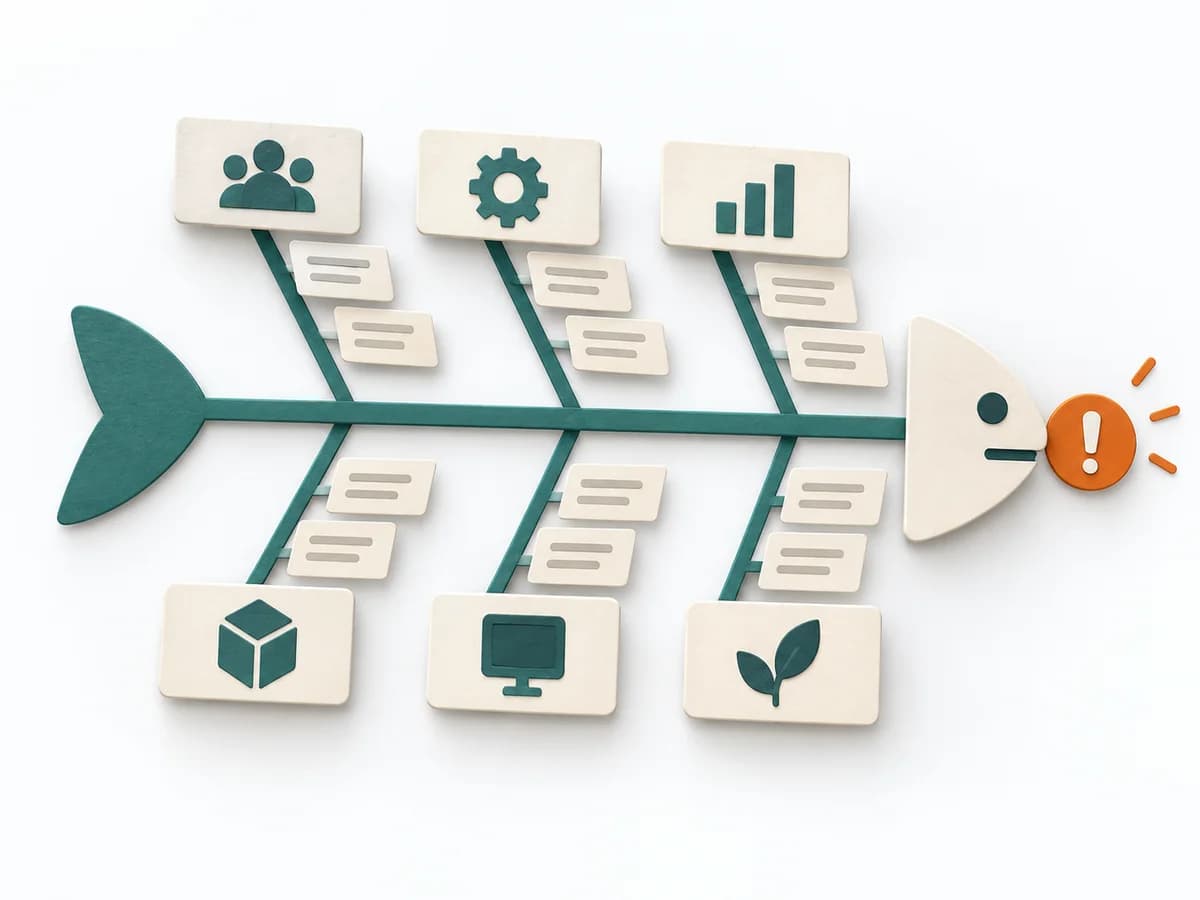
Sorts possible causes into categories and creates a shared picture for investigation and next tests.