Gemba Walk: Worksheet
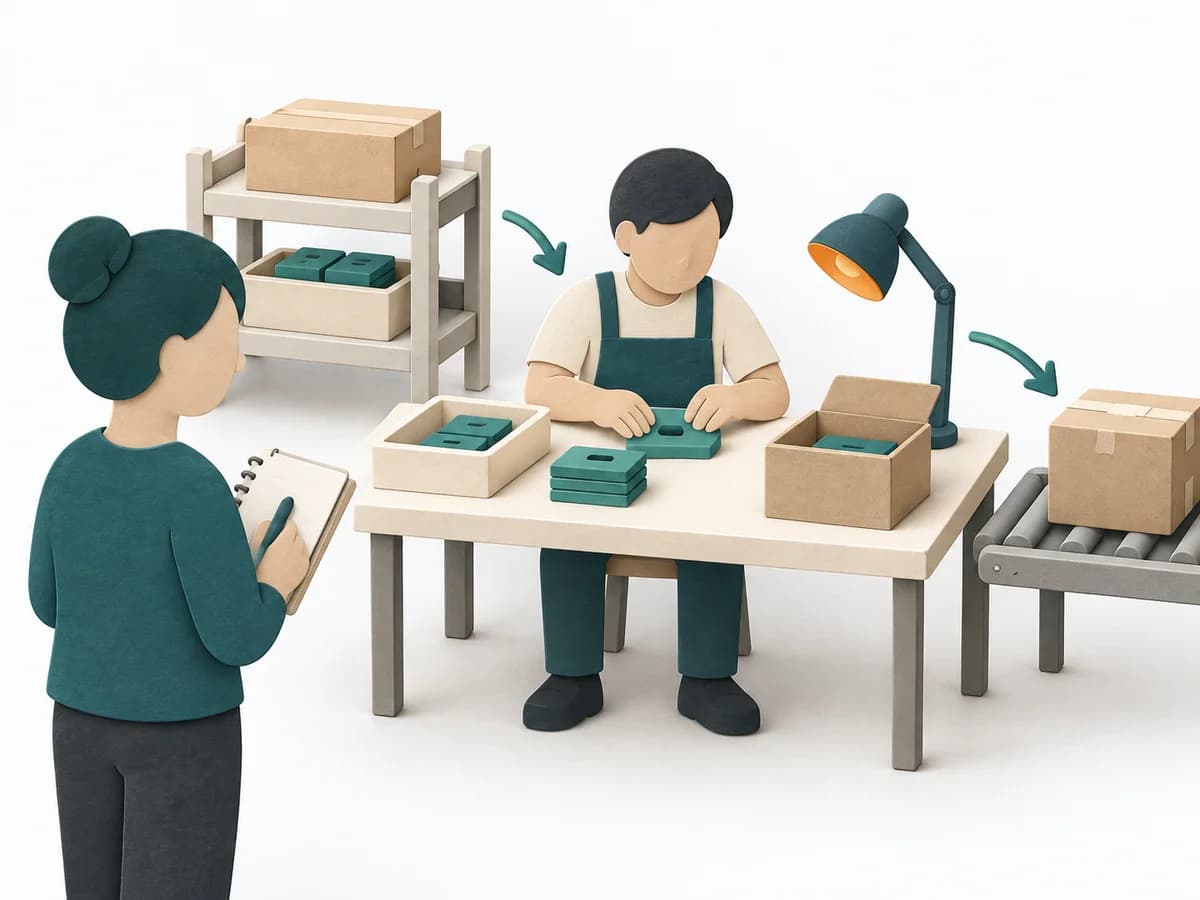
Prepare Gemba Walk with a clear question, roles, and sources.
# Gemba Walk: Worksheet

## Question
To be confirmed

## Desired outcome
To be confirmed

## Scope
Plan the full method
Time: Set according to scope and available evidence

Complete this worksheet on paper or in your own document during the work.

## Preparation for this scope

### Method setup
- **Materials:** Shared workspace, accessible sources, and a decision log.
- **Roles:** Host · observing leader · frontline staff
- **Advance information:** Clarify the question, timeframe, data access, roles, and known uncertainties in advance.
- **Overall time needed:** 30–60 minutes for one bounded walk; repetition may be needed to verify observations.
- **Setup:** Create a shared version. Label facts, assumptions, and decisions separately.

### Prepare for the work steps

#### Purpose: Clarify purpose and process boundary
- Learning purpose, host, and area

#### Observe: Observe work directly
- Real work item and process steps

#### Ask: Ask respectfully
- Open questions for people doing the work

#### Follow-up: Reflect and agree next step
- Validated observations and support needs


## Purpose, process observation, and agreed question

### Purpose
Record why the walk is happening and which process is in scope.

...

### Observation
Record observed steps, waits, and tools.

...

### Perspective
Capture perspectives with consent and context.

...

### Follow-up
Agree what the team will investigate or what obstacle to remove.

...

Blank worksheet: start with a bounded question. Enter observed facts only, mark assumptions, and record open questions and sources.

[How to Go to the Gemba · Lean Enterprise Institute](https://www.lean.org/the-lean-post/articles/how-to-go-to-the-gemba-go-see-ask-why-show-respect/)


## Purpose: Clarify purpose and process boundary
Expected artifact: Agreed observation purpose and process boundary

Agreed observation purpose and process boundary

Entry:

...

- [ ] Do people know why the work is being observed?

## Observe: Observe work directly
Expected artifact: Evidence-led process observations

Evidence-led process observations

Entry:

...

- [ ] Is the note observation rather than judgment?

## Ask: Ask respectfully
Expected artifact: Attributed frontline perspectives

Attributed frontline perspectives

Entry:

...

- [ ] Are the people doing the work speaking for themselves?

## Follow-up: Reflect and agree next step
Expected artifact: Validated learning and support question

Validated learning and support question

Entry:

...

- [ ] Is the observation kept separate from individual performance evaluation?

## Open questions and next steps

...

Method guide: https://methodatlas.meierhoff-systems.de/en/methods/gemba-walk/run-sheet
Waste Analysis: Worksheet
Set subject, evidence, roles, flow, and review.
# Waste Analysis: Worksheet

## Question
To be confirmed

## Desired outcome
To be confirmed

## Scope
Complete run
Time: 60–120 minutes for a bounded value stream; add gemba observation.

Complete this worksheet on paper or in your own document during the work.

## Preparation for this scope

### Method setup
- **Materials:** Customer value, observed process, time/motion/inventory data, Muda-Mura-Muri matrix, and action log
- **Roles:** Frontline team · process/value-stream owner · customer perspective · facilitator · action owners
- **Advance information:** Set one concrete value stream, customer, and desired outcome; observe actual work at gemba.
- **Overall time needed:** 60–120 minutes for a bounded value stream; add gemba observation.
- **Setup:** Prepare a workspace with Value · Observe · Classify · Prioritise · Test; separate example from live data.

### Prepare for the work steps

#### Value: Value criterion
- Set one concrete value stream, customer, and desired outcome; observe actual work at gemba.
- Customer value, observed process, time/motion/inventory data, Muda-Mura-Muri matrix, and action log

#### Observe: Observed flow
- Value criterion

#### Classify: Waste register
- Observed flow

#### Prioritise: Priority
- Waste register

#### Test: Improvement test
- Priority


## Waste Analysis · working structure

| Activity | Evidence | Muda | Mura | Muri | Cause | Test |
| --- | --- | --- | --- | --- | --- | --- |
| Unit search |   |   |   |   |   |   |
| Safety check |   |   |   |   |   |   |

- **Unit search:** Add evidence and rationale.
- **Safety check:** Add evidence and rationale.

The blank worksheet contains prompts only.

[Reference · original teaching example](https://www.lean.org/lexicon-terms/muda-mura-muri/)


## Value: Value criterion
Expected artifact: Value criterion

Define customer, outcome, and conditions under which an activity creates value.

Entry:

...

- [ ] Is value defined by the recipient rather than internal utilisation?

## Observe: Observed flow
Expected artifact: Observed flow

Capture steps, times, paths, inventory, interruptions, and strain in actual flow.

Entry:

...

- [ ] Were data gathered directly over several cases?

## Classify: Waste register
Expected artifact: Waste register

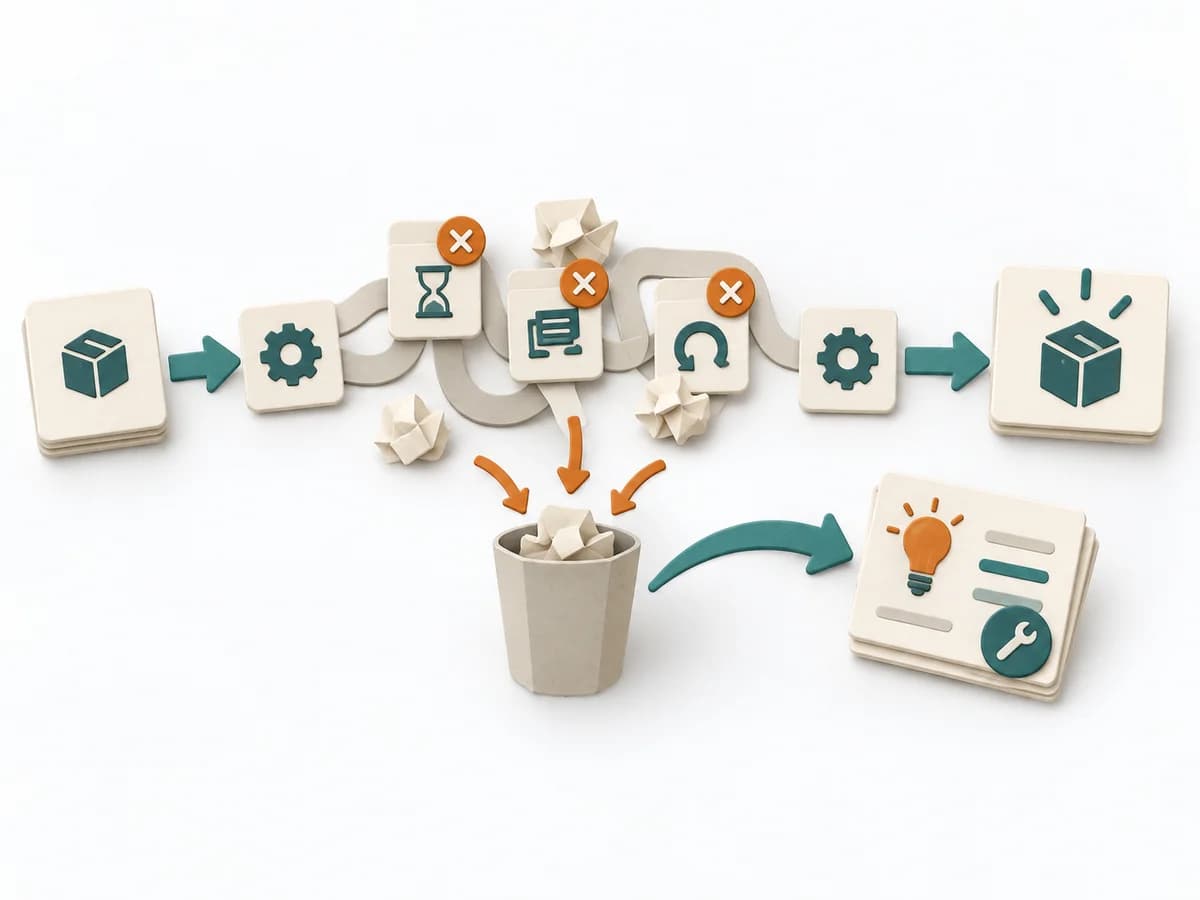
Classify non-value work as Muda type 1 or 2, unevenness as Mura, and overburden as Muri.

Entry:

...

- [ ] Is every classification evidenced by concrete behaviour and effect?

## Prioritise: Priority
Expected artifact: Priority

Assess risk, frequency, time, and relationships; choose system cause rather than visible symptom.

Entry:

...

- [ ] Does priority address customer effect and system cause?

## Test: Improvement test
Expected artifact: Improvement test

Run a small countermeasure with prediction, owner, guardrails, and review.

Entry:

...

- [ ] Does the test reduce waste without new Mura or Muri?

## Open questions and next steps

...

Method guide: https://methodatlas.meierhoff-systems.de/en/methods/waste-analysis/run-sheet
DMAIC: Worksheet
Set subject, evidence, roles, flow, and review.
# DMAIC: Worksheet

## Question
To be confirmed

## Desired outcome
To be confirmed

## Scope
Whole initiative
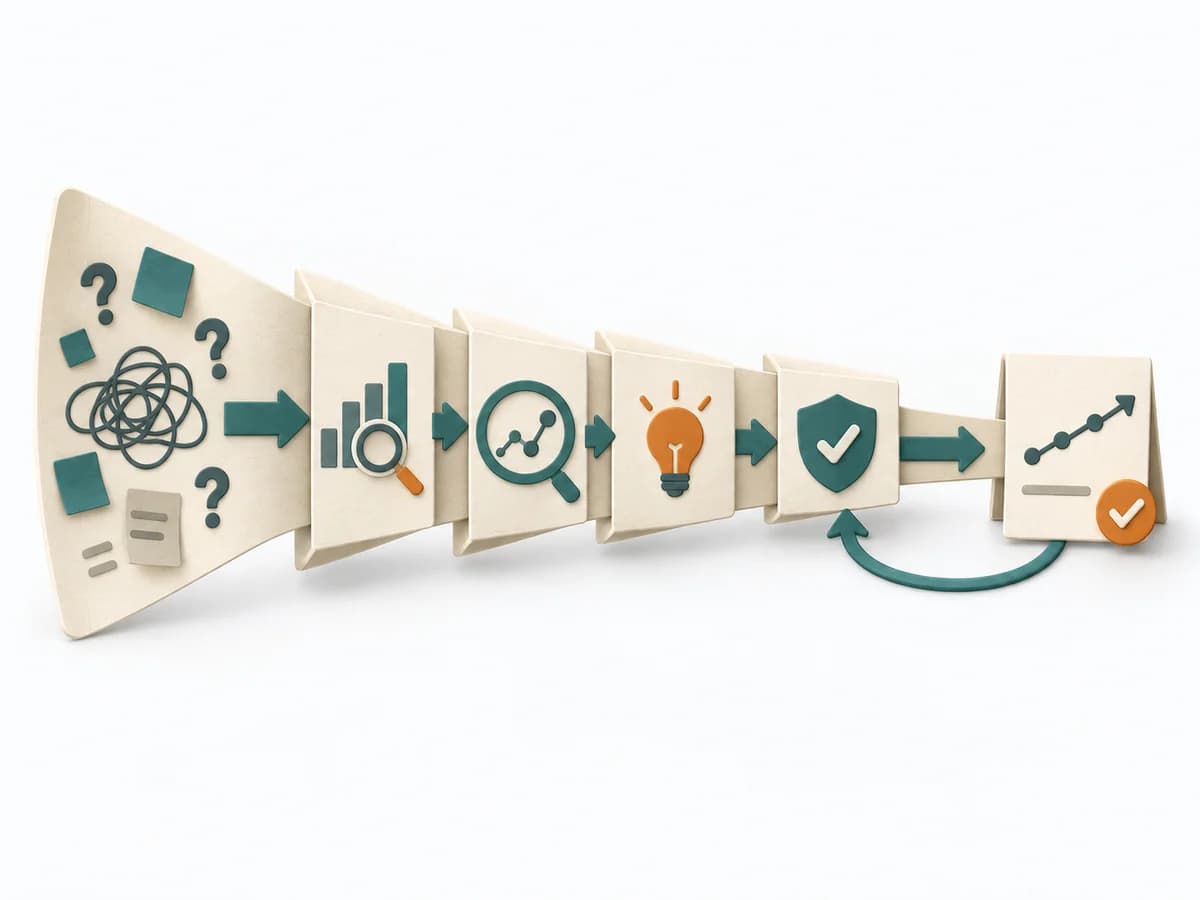
Time: Four to twelve weeks for a typical improvement project; each phase ends with an evidence gate.

Complete this worksheet on paper or in your own document during the work.

## Preparation for this scope

### Method setup
- **Materials:** Project charter, voice of customer, process map, measurement system and baseline, cause evidence, pilot, and control plan
- **Roles:** Process owner/sponsor · DMAIC lead · process participants · data/measurement-system expert · control owner
- **Advance information:** Select an existing process with a measurable performance gap, customer requirement, sponsor, and clear boundary.
- **Overall time needed:** Four to twelve weeks for a typical improvement project; each phase ends with an evidence gate.
- **Setup:** Prepare a workspace with Define · Measure · Analyze · Improve · Control; separate example from live data.

### Prepare for the work steps

#### Define: Project charter
- Select an existing process with a measurable performance gap, customer requirement, sponsor, and clear boundary.
- Project charter, voice of customer, process map, measurement system and baseline, cause evidence, pilot, and control plan

#### Measure: Valid baseline
- Project charter

#### Analyze: Confirmed drivers
- Valid baseline

#### Improve: Verified improvement
- Confirmed drivers

#### Control: Control plan
- Verified improvement


## DMAIC · working structure

### Project charter
Set problem, customer requirement, CTQ, goal, scope, business case, team, and sponsor in a charter.

...

### Valid baseline
Map current process, operationalise measures, validate the measurement system, and collect a stratified baseline.

...

### Confirmed drivers
Derive potential X drivers from process and data; confirm causes through analysis, comparison, or experiment.

...

### Verified improvement
Design solutions against confirmed Xs, assess risk, pilot, and verify against baseline.

...

### Control plan
Set process standard, monitoring, reaction plan, owner, and handover; verify stability after implementation.

...

The blank worksheet contains prompts only.

[Reference · original teaching example](https://asq.org/quality-resources/dmaic)


## Define: Project charter
Expected artifact: Project charter

Set problem, customer requirement, CTQ, goal, scope, business case, team, and sponsor in a charter.

Entry:

...

- [ ] Is the gap measurable, with process, customer, goal, and out-of-scope explicit?

## Measure: Valid baseline
Expected artifact: Valid baseline

Map current process, operationalise measures, validate the measurement system, and collect a stratified baseline.

Entry:

...

- [ ] Are definition, measurement system, sample, and baseline trustworthy?

## Analyze: Confirmed drivers
Expected artifact: Confirmed drivers

Derive potential X drivers from process and data; confirm causes through analysis, comparison, or experiment.

Entry:

...

- [ ] Is every priority driver evidenced and distinguished from the symptom?

## Improve: Verified improvement
Expected artifact: Verified improvement

Design solutions against confirmed Xs, assess risk, pilot, and verify against baseline.

Entry:

...

- [ ] Does the pilot target confirmed drivers and improve outcomes within guardrails?

## Control: Control plan
Expected artifact: Control plan

Set process standard, monitoring, reaction plan, owner, and handover; verify stability after implementation.

Entry:

...

- [ ] Does the plan specify measure, limit, frequency, owner, and reaction?

## Open questions and next steps

...

Method guide: https://methodatlas.meierhoff-systems.de/en/methods/dmaic/run-sheet
Failure Mode and Effects Analysis: Worksheet
Define scope, functions and agreed rating rules; prepare existing controls and failure data.
# Failure Mode and Effects Analysis: Worksheet

## Question
To be confirmed

## Desired outcome
To be confirmed

## Scope
Complete cycle
Time: Multiple work sessions; verify actions after implementation

Complete this worksheet on paper or in your own document during the work.

## Preparation for this scope

### Method setup
- **Materials:** FMEA table, function flow, failure data and anchored S/O/D rating scales.
- **Roles:** Cross-functional team covering design, operations, quality and affected users.
- **Advance information:** Define scope, functions and agreed rating rules; prepare existing controls and failure data.
- **Overall time needed:** Multiple work sessions; verify actions after implementation
- **Setup:** Create one row per failure chain; display rating legend and current controls, keeping planned actions separate.

### Prepare for the work steps

#### Functions: Functions
- Functions
- Requirements

#### Controls: Causes and controls
- Failure chains
- Existing controls

#### Rating: S, O, D and RPN
- Controls
- Rating rules

#### Actions: Actions
- Prioritised risks
- Resources

#### Effectiveness: Effectiveness
- Implemented actions
- Evidence


## Failure Mode and Effects Analysis· worksheet

| Failure chain | Function | Failure mode | Effect | Cause | Current controls | S | O | D | RPN | Action / owner | Evidence / residual rating |
| --- | --- | --- | --- | --- | --- | --- | --- | --- | --- | --- | --- |
| 1 |   |   |   |   |   |   |   |   |   |   |   |

- **1:** Enter function, failure chain, current controls and justified ratings; distinguish actions and evidence.

Define your own rating anchors first. S = severity, O = occurrence, D = poor detectability; RPN = S × O × D. Examine high severity separately; no universal RPN acceptance threshold. Reassess only after effectiveness evidence.

[ASQ: FMEA](https://asq.org/quality-resources/fmea)


## Functions: Functions
Expected artifact: Failure chains

Are failure mode and effect distinct?

Entry:

...

- [ ] Are failure mode and effect distinct?

## Controls: Causes and controls
Expected artifact: Control picture

Do controls exist and work today?

Entry:

...

- [ ] Do controls exist and work today?

## Rating: S, O, D and RPN
Expected artifact: Reasoned priority

Does high D mean poor detection?

Entry:

...

- [ ] Does high D mean poor detection?

## Actions: Actions
Expected artifact: Action plan

Does the action change a specific risk driver?

Entry:

...

- [ ] Does the action change a specific risk driver?

## Effectiveness: Effectiveness
Expected artifact: Verified residual state

Is reassessment based on evidence?

Entry:

...

- [ ] Is reassessment based on evidence?

## Open questions and next steps

...

Method guide: https://methodatlas.meierhoff-systems.de/en/methods/fmea/run-sheet
Standard Work Analysis: Worksheet
Set subject, evidence, roles, flow, and review.
# Standard Work Analysis: Worksheet

## Question
To be confirmed

## Desired outcome
To be confirmed

## Scope
Complete run
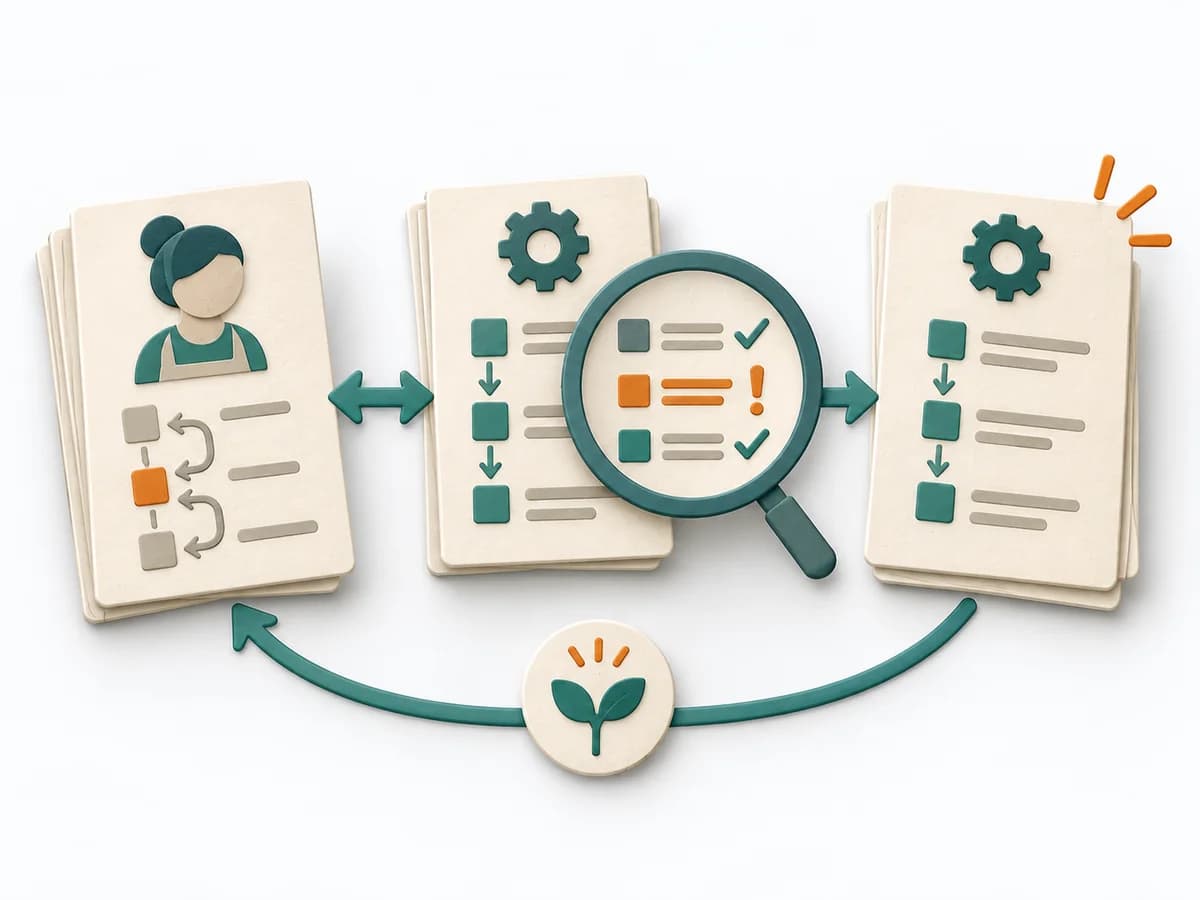
Time: 90–180 minutes per repeatable work cycle plus a pilot across several cycles.

Complete this worksheet on paper or in your own document during the work.

## Preparation for this scope

### Method setup
- **Materials:** Customer demand and available time, observed element times, layout, standardized-work combination table, WIP and quality data
- **Roles:** Frontline operators · team lead · industrial/process engineering · safety/quality · standard owner
- **Advance information:** Choose a repeatable process and product/service family; capture demand, available time, and actual work at gemba.
- **Overall time needed:** 90–180 minutes per repeatable work cycle plus a pilot across several cycles.
- **Setup:** Prepare a workspace with Takt · Elements · Sequence · WIP · Confirm; separate example from live data.

### Prepare for the work steps

#### Takt: Takt time
- Choose a repeatable process and product/service family; capture demand, available time, and actual work at gemba.
- Customer demand and available time, observed element times, layout, standardized-work combination table, WIP and quality data

#### Elements: Element times
- Takt time

#### Sequence: Work sequence
- Element times

#### WIP: Standard WIP
- Work sequence

#### Confirm: Confirmed standard
- Standard WIP


## Standard Work Analysis · working structure

| Sequence | Manual | Walk | Machine | Quality/Safety | Standard WIP |
| --- | --- | --- | --- | --- | --- |
| Scan reservation |   |   |   |   |   |
| Fetch unit |   |   |   |   |   |
| Inspect and hand off |   |   |   |   |   |

- **Scan reservation:** Add evidence and rationale.
- **Fetch unit:** Add evidence and rationale.
- **Inspect and hand off:** Add evidence and rationale.

The blank worksheet contains prompts only.

[Reference · original teaching example](https://www.lean.org/lexicon-terms/standardized-work/)


## Takt: Takt time
Expected artifact: Takt time

Divide net available time by customer demand and set validity boundary.

Entry:

...

- [ ] Are time base, demand, and exclusions traceable?

## Elements: Element times
Expected artifact: Element times

Break actual work into safe observable elements and measure several cycles.

Entry:

...

- [ ] Do times show normal variation rather than best case or estimate?

## Sequence: Work sequence
Expected artifact: Work sequence

Combine manual, walking, and machine time in a sensible order against takt.

Entry:

...

- [ ] Does sequence fit takt while retaining safety and quality steps?

## WIP: Standard WIP
Expected artifact: Standard WIP

Determine minimum standard inventory and material positions needed for stable flow.

Entry:

...

- [ ] Is every WIP item justified for smooth operation?

## Confirm: Confirmed standard
Expected artifact: Confirmed standard

Pilot standard with operators, measure deviations, display it, and establish review.

Entry:

...

- [ ] Can several people reproduce takt, quality, and safety?

## Open questions and next steps

...

Method guide: https://methodatlas.meierhoff-systems.de/en/methods/standard-work-analysis/run-sheet