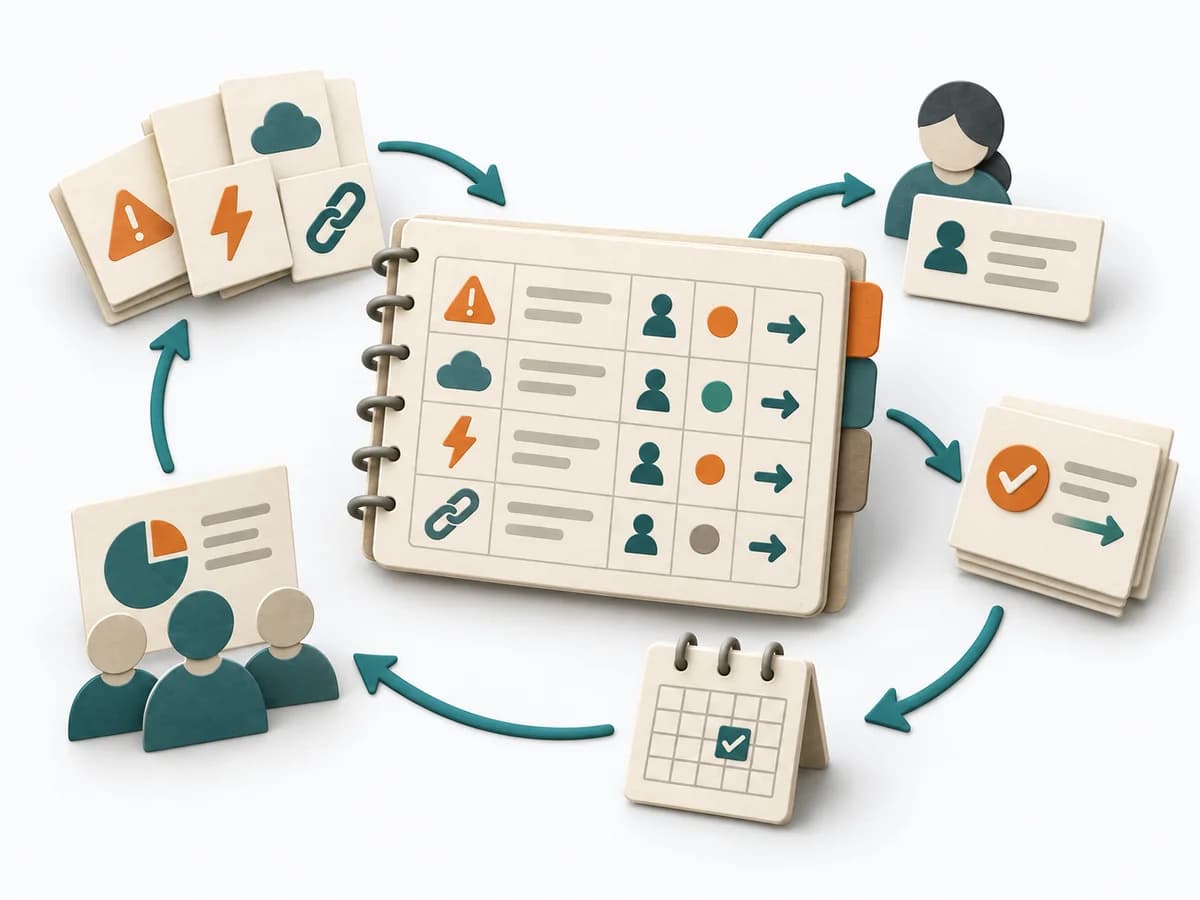
Purpose
When a problem keeps recurring and the cause stays unclear, the method exposes the underlying mechanism. It separates symptom, guess, and robust explanation from one another.
Operations Analysis method
Separates events, evidence, confirmed causes, and appropriate actions so analysis supports learning rather than blame.
Observations, measurements, and patterns over time become hypotheses that are tested against evidence. The search narrows from many possibilities to causes with the strongest explanatory value. Subsequent actions address the underlying mechanism rather than the visible symptom.
Which evidenced system causes must change so this or a similar event does not recur?
Evidence building, analysis, and effectiveness review form a multi-stage initiative.

Problem
Describe the undesired outcome with deviation, impact, time, and boundary; keep containment separate.
Evidence
Reconstruct chronology from logs, measures, documents, and accounts; mark conflicts and gaps.
Causal chain
Connect direct and contributing factors; name mechanism and countercheck for each link.
Root causes
Test candidates for recurrence prevention, feasibility, and absence of harmful side effects.
Actions
Target controls at root causes; set owner, date, effect signal, and review.
Add new evidence at review and version decisions with the prior state.
Wenn ein Problem wiederkehrt und die Ursache unklar bleibt, legt die Methode das zugrunde liegende Wirkgefüge frei. Sie trennt Symptom, Vermutung und belastbare Erklärung voneinander.
Traceable RCA report with timeline, direct and contributing causes, justified root causes, and effectiveness-checked actions.
Fictional example
Fictional values show the actual method fields.
Describe the undesired outcome with deviation, impact, time, and boundary; keep containment separate.
On 14 May from 09:12–09:47, 38% of checkouts failed; 214 customers affected; scope EU production.
Reconstruct chronology from logs, measures, documents, and accounts; mark conflicts and gaps.
09:08 batch starts; 09:12 pool 95%; 09:18 restart; 09:31 batch paused; 09:47 stable.
Connect direct and contributing factors; name mechanism and countercheck for each link.
Batch and checkout shared a pool; batch held 72 connections; checkout exceeded timeout. Staging reproduction confirms it.
Test candidates for recurrence prevention, feasibility, and absence of harmful side effects.
RC1 no pool separation; RC2 monitoring excluded batch connections. Restart is a response, not a root cause.
Target controls at root causes; set owner, date, effect signal, and review.
Separate pools by 21 May; alert total use at 70%; load test shows checkout failures below 1%; review 28 May.
All values are fictional.
Define problem, impact, period, and system boundary; preserve evidence and record immediate containment separately.
When a problem keeps recurring and the cause stays unclear, the method exposes the underlying mechanism. It separates symptom, guess, and robust explanation from one another.
Hypotheses are formed from observations, measurements, and patterns over time and tested against evidence. This narrows the search from many possibilities down to the causes with the strongest explanatory value. The resulting actions target not the visible symptom but the mechanism behind it.
Root Cause Analysis separates visible symptoms from the conditions that enable or trigger a problem. The method combines events, data, process steps, and human factors into a traceable causal logic. Many possible explanations are narrowed down to plausible causes before measures are defined. That creates a shift from quick repair to durable improvement.
Prepare the problem statement, data, timeline, and people involved in the process. Moderate in a fact-focused way and keep observation, interpretation, and hypothesis visibly separate. Do not stop at the first plausible cause and assign actions only to confirmed causes.
The method guide walks execution through 5 phases, timing, 5 pitfalls, and clear stop criteria.
Open method guideYour perspective
Your feedback helps shape the next improvements to methodatlas.
Set subject, evidence, roles, flow, and review.
To be confirmed
To be confirmed
Whole initiative Time: One to five working days depending on evidence access and impact; 90–180 minutes for joint analysis.
Complete this worksheet on paper or in your own document during the work.
Describe the undesired outcome with deviation, impact, time, and boundary; keep containment separate.
...
Reconstruct chronology from logs, measures, documents, and accounts; mark conflicts and gaps.
...
Connect direct and contributing factors; name mechanism and countercheck for each link.
...
Test candidates for recurrence prevention, feasibility, and absence of harmful side effects.
...
Target controls at root causes; set owner, date, effect signal, and review.
...
The blank worksheet contains prompts only.
Reference · original teaching example
Expected artifact: Testable problem statement
Describe the undesired outcome with deviation, impact, time, and boundary; keep containment separate.
Entry:
...
Expected artifact: Evidence-backed timeline
Reconstruct chronology from logs, measures, documents, and accounts; mark conflicts and gaps.
Entry:
...
Expected artifact: Tested causal chain
Connect direct and contributing factors; name mechanism and countercheck for each link.
Entry:
...
Expected artifact: Justified root causes
Test candidates for recurrence prevention, feasibility, and absence of harmful side effects.
Entry:
...
Expected artifact: Effectiveness plan
Target controls at root causes; set owner, date, effect signal, and review.
Entry:
...
...
Method guide: https://methodatlas.meierhoff-systems.de/en/methods/root-cause-analysis/run-sheet
Fitting alternatives with decision guidance, followed by other related methods.

Instead of Root Cause Analysis, choose A3 Problem Solving when you want to run analysis, countermeasures, and follow-up on one compact sheet.

Instead of Root Cause Analysis, choose Kepner-Tregoe when you want to handle problems and decisions with a strict separation of facts, causes, and options.
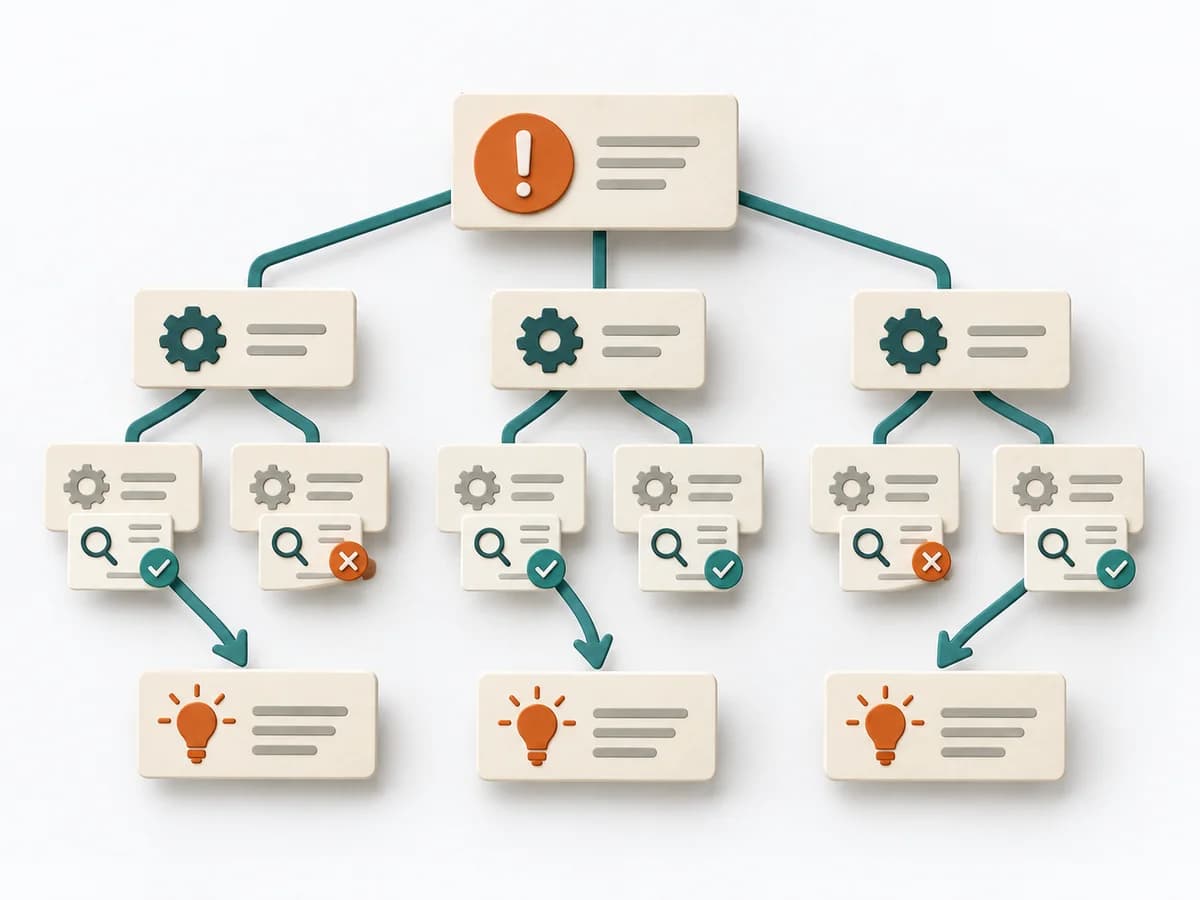
Clarifies workflows, data, causes, and improvements by framing the problem precisely, branching possible causes, and defining countermeasures.
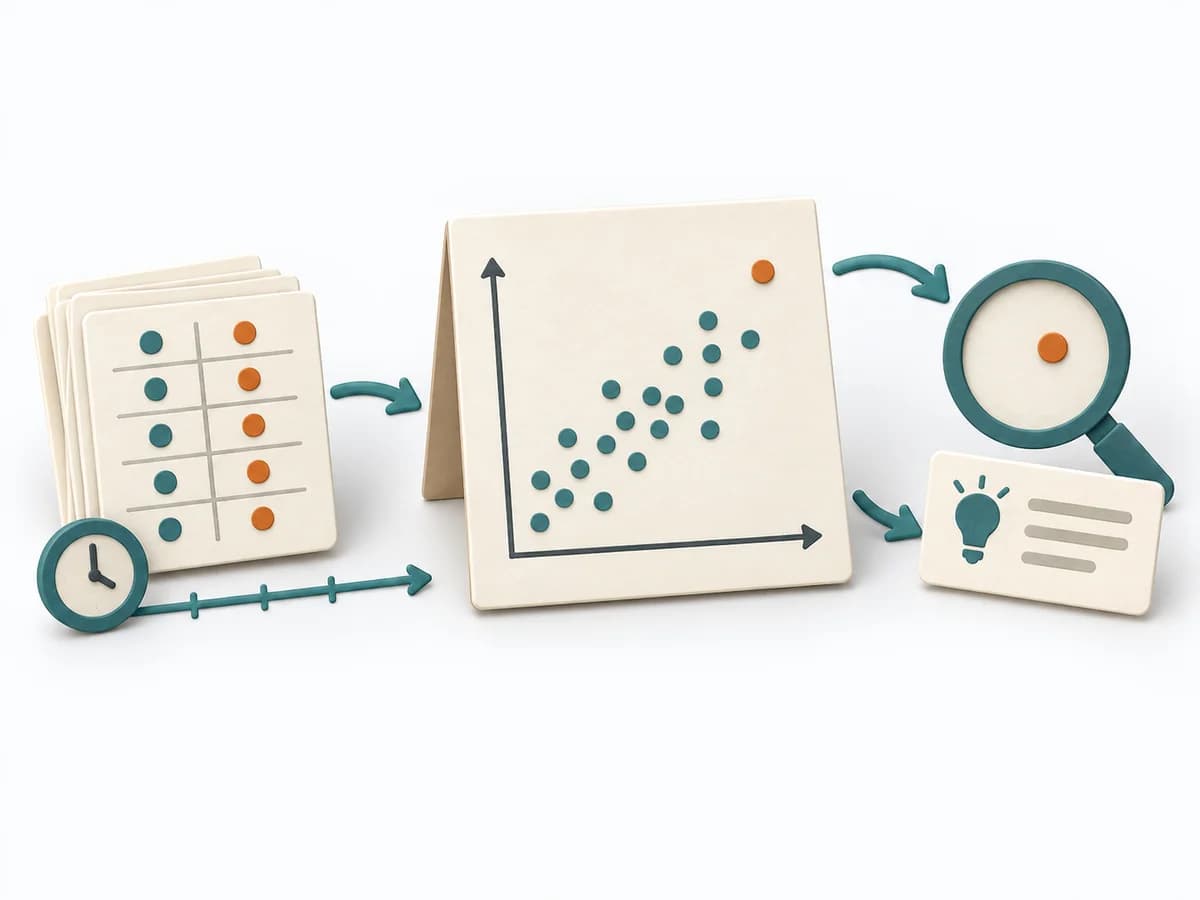
Paired data points reveal whether two variables move together and where a suspected relationship needs deeper proof.

A recurring incident pattern links related cases across time so systemic causes become visible beyond one event.
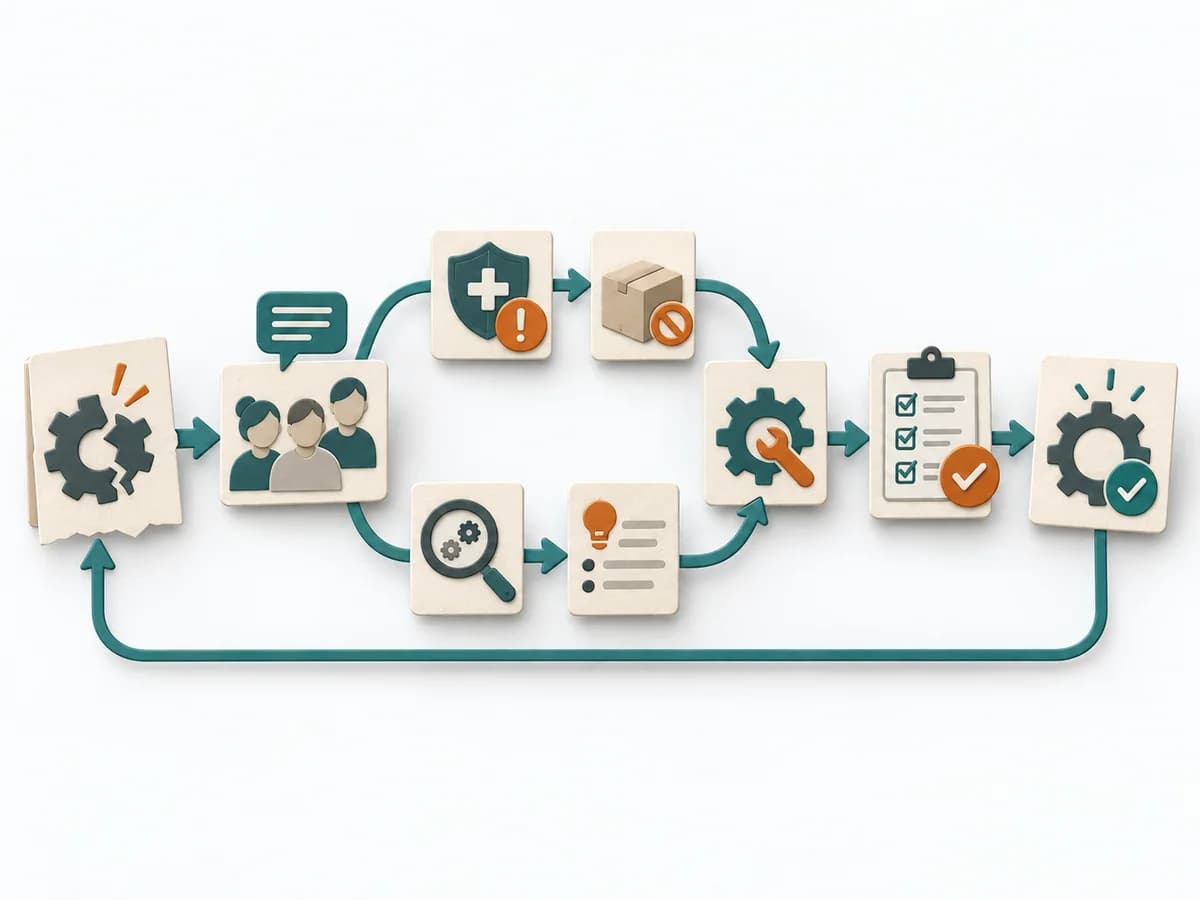
Coordinates team, immediate actions, root cause analysis, and prevention across eight steps to a verified solution.