Gemba Walk: Worksheet
Question
To be confirmed
Desired outcome
To be confirmed
Scope
Plan the full method
Time: Set according to scope and available evidence
Complete this worksheet on paper or in your own document during the work.
Preparation for this scope
Method setup
- Materials: Shared workspace, accessible sources, and a decision log.
- Roles: Host · observing leader · frontline staff
- Advance information: Clarify the question, timeframe, data access, roles, and known uncertainties in advance.
- Overall time needed: 30–60 minutes for one bounded walk; repetition may be needed to verify observations.
- Setup: Create a shared version. Label facts, assumptions, and decisions separately.
Prepare for the work steps
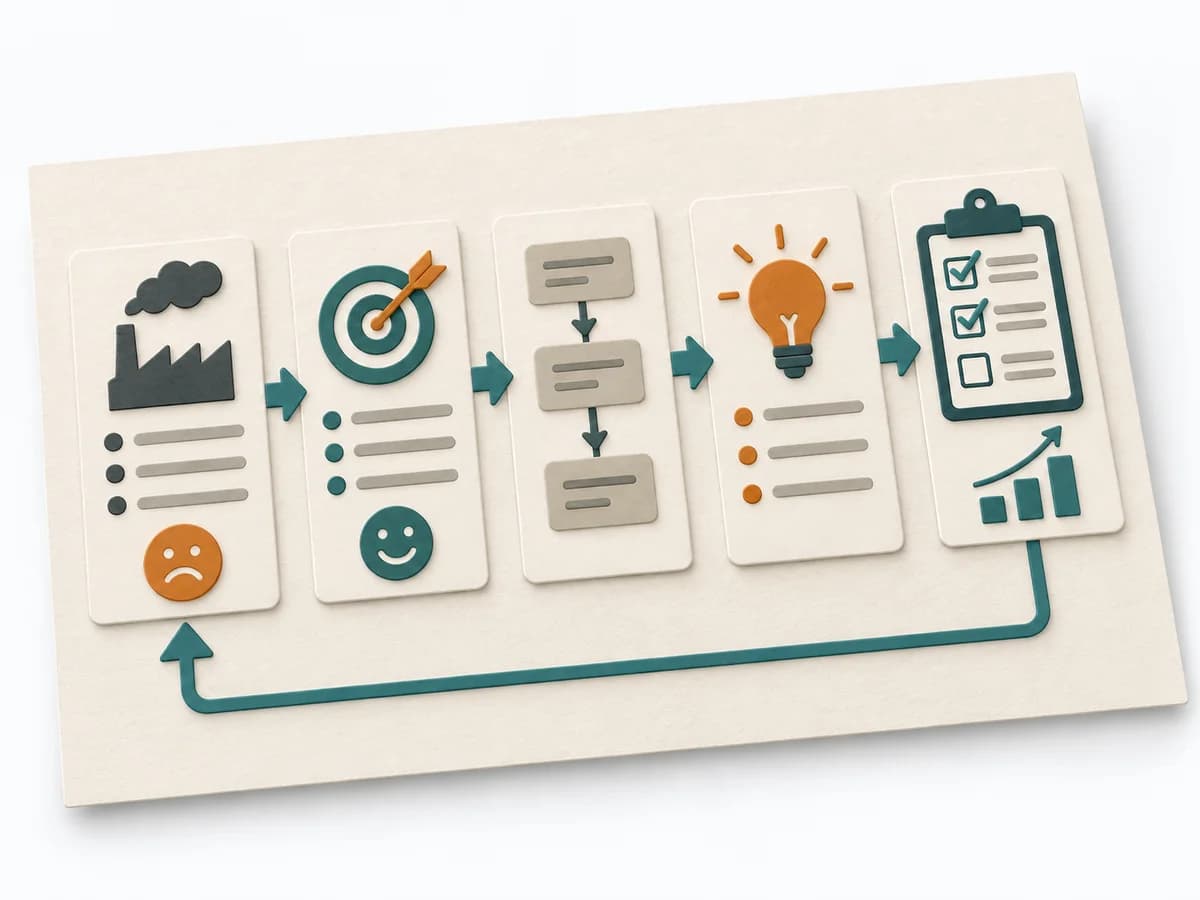
Purpose: Clarify purpose and process boundary
- Learning purpose, host, and area
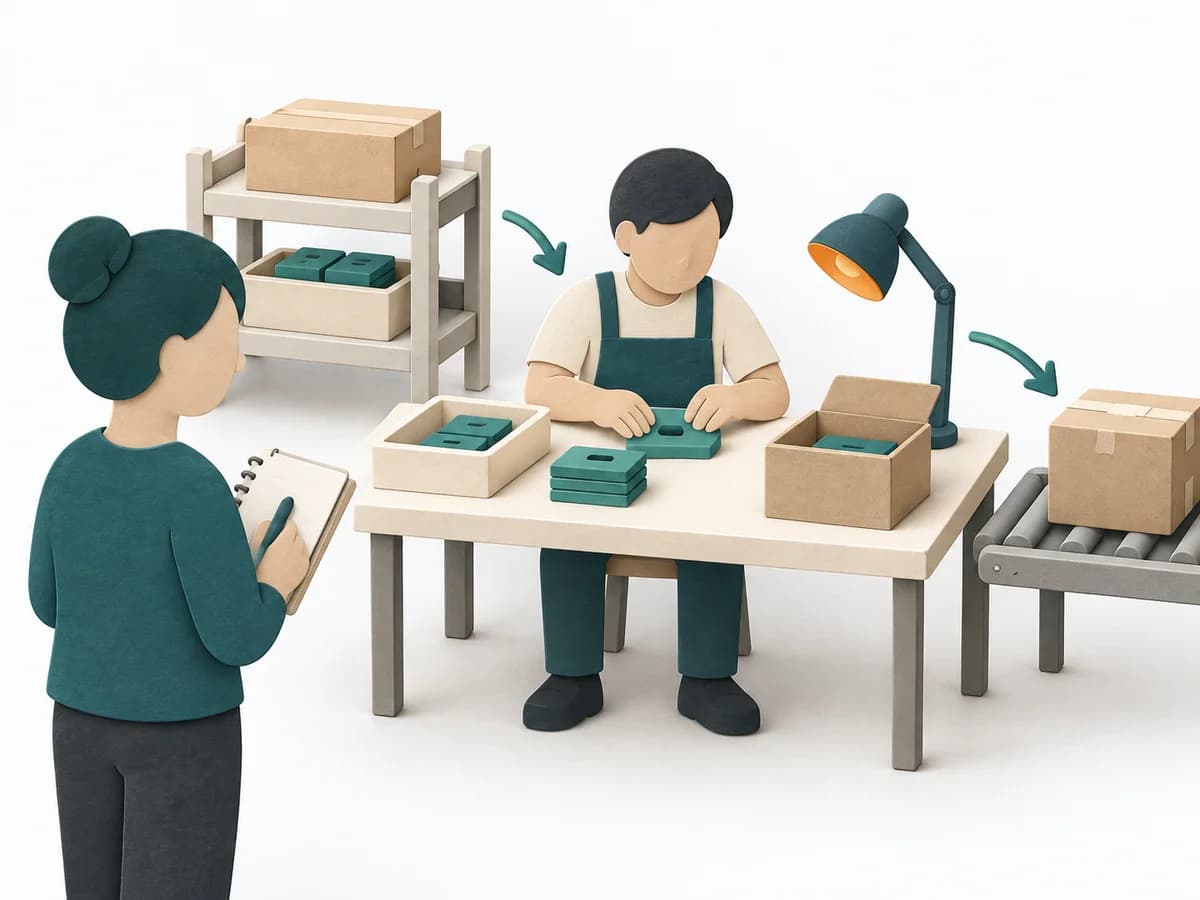
Observe: Observe work directly
- Real work item and process steps
Ask: Ask respectfully
- Open questions for people doing the work
Follow-up: Reflect and agree next step
- Validated observations and support needs
Purpose, process observation, and agreed question
Purpose
Record why the walk is happening and which process is in scope.
...
Observation
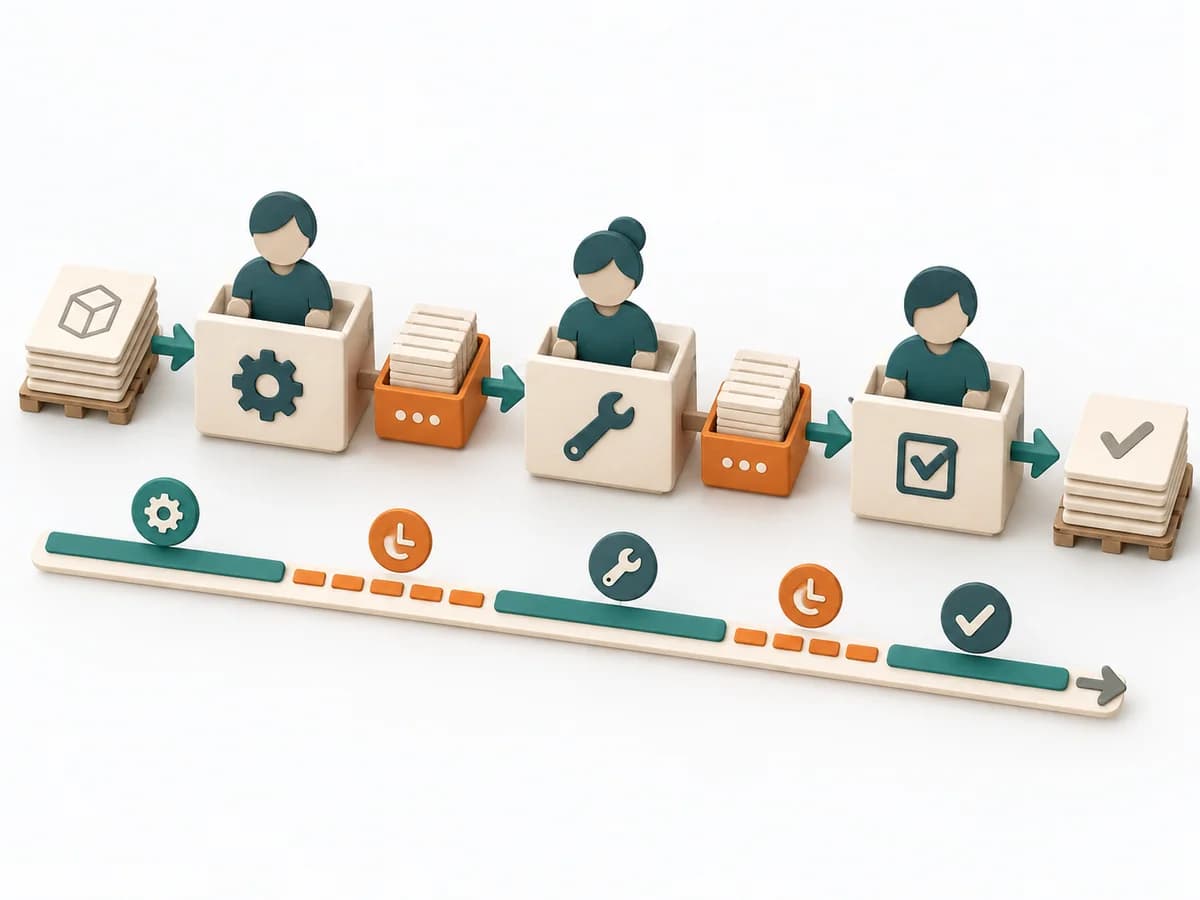
Record observed steps, waits, and tools.
...
Perspective
Capture perspectives with consent and context.
...
Follow-up
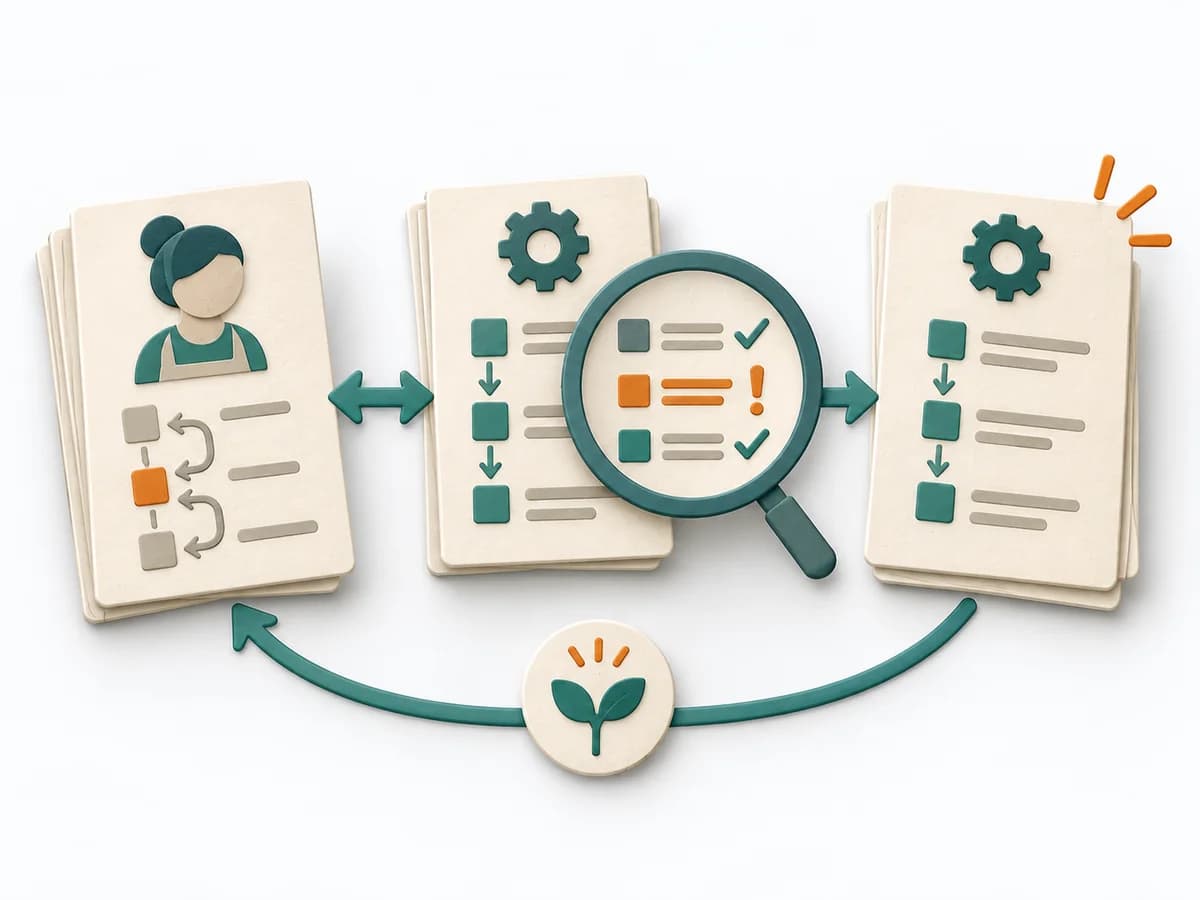
Agree what the team will investigate or what obstacle to remove.
...
Blank worksheet: start with a bounded question. Enter observed facts only, mark assumptions, and record open questions and sources.
How to Go to the Gemba · Lean Enterprise Institute
Purpose: Clarify purpose and process boundary
Expected artifact: Agreed observation purpose and process boundary
Agreed observation purpose and process boundary
Entry:
...
Observe: Observe work directly
Expected artifact: Evidence-led process observations
Evidence-led process observations
Entry:
...
Ask: Ask respectfully
Expected artifact: Attributed frontline perspectives
Attributed frontline perspectives
Entry:
...
Follow-up: Reflect and agree next step
Expected artifact: Validated learning and support question
Validated learning and support question
Entry:
...
Open questions and next steps
...
Method guide: https://methodatlas.meierhoff-systems.de/en/methods/gemba-walk/run-sheet