Purpose
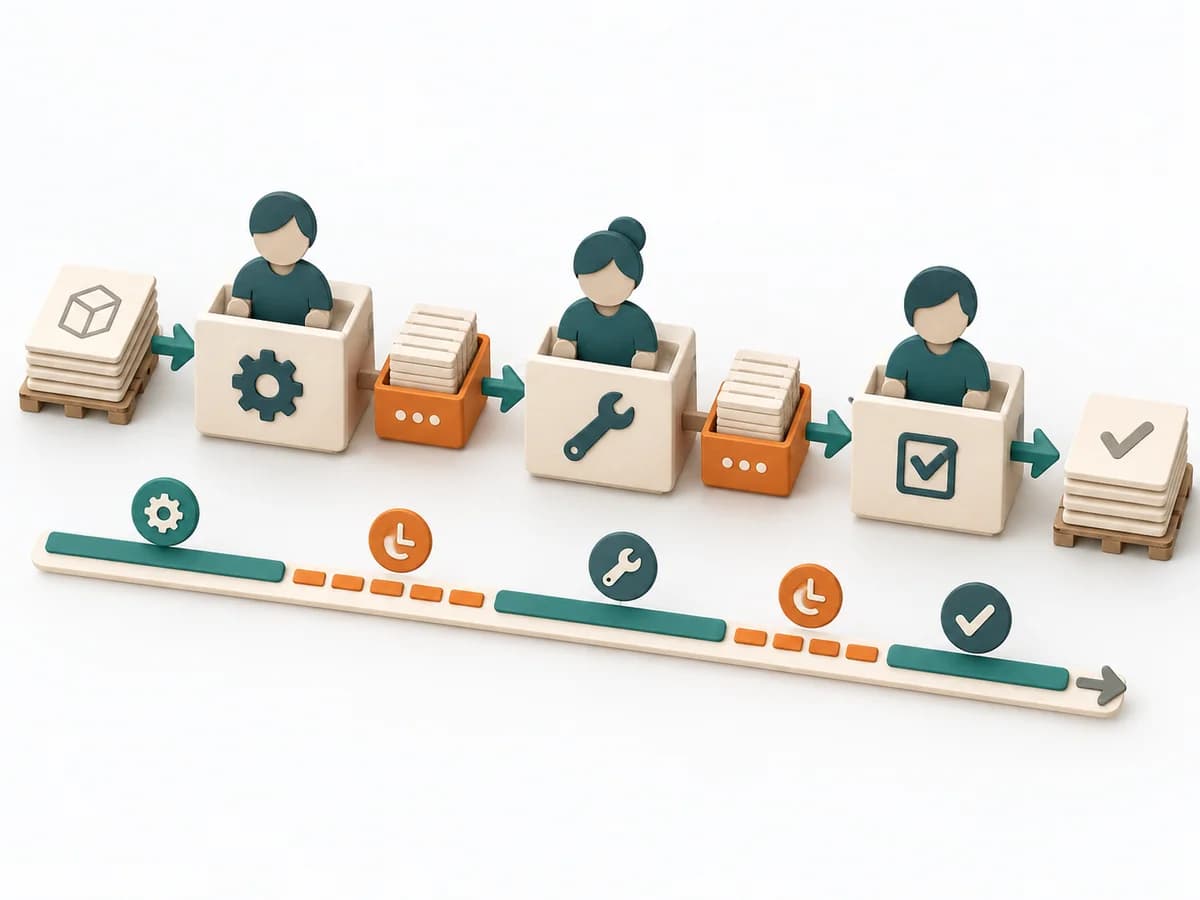
For a process that keeps people busy but creates little value, the method exposes waste. It directs attention to unnecessary movement, waiting times, rework, and overdelivery.
Operations Analysis method
Identifies waste along a process, prioritises impact, and derives improvements.
The flow is read along its value creation so wasteful activities can be distinguished from the actual contribution. Friction and detours become structural signals rather than individual blame. The analysis provides a basis for reducing effort while protecting quality.
Which work creates customer value, which waste is immediately avoidable, which is currently necessary, and which unevenness or overburden produces it?
The steps form one complete method run.
Value
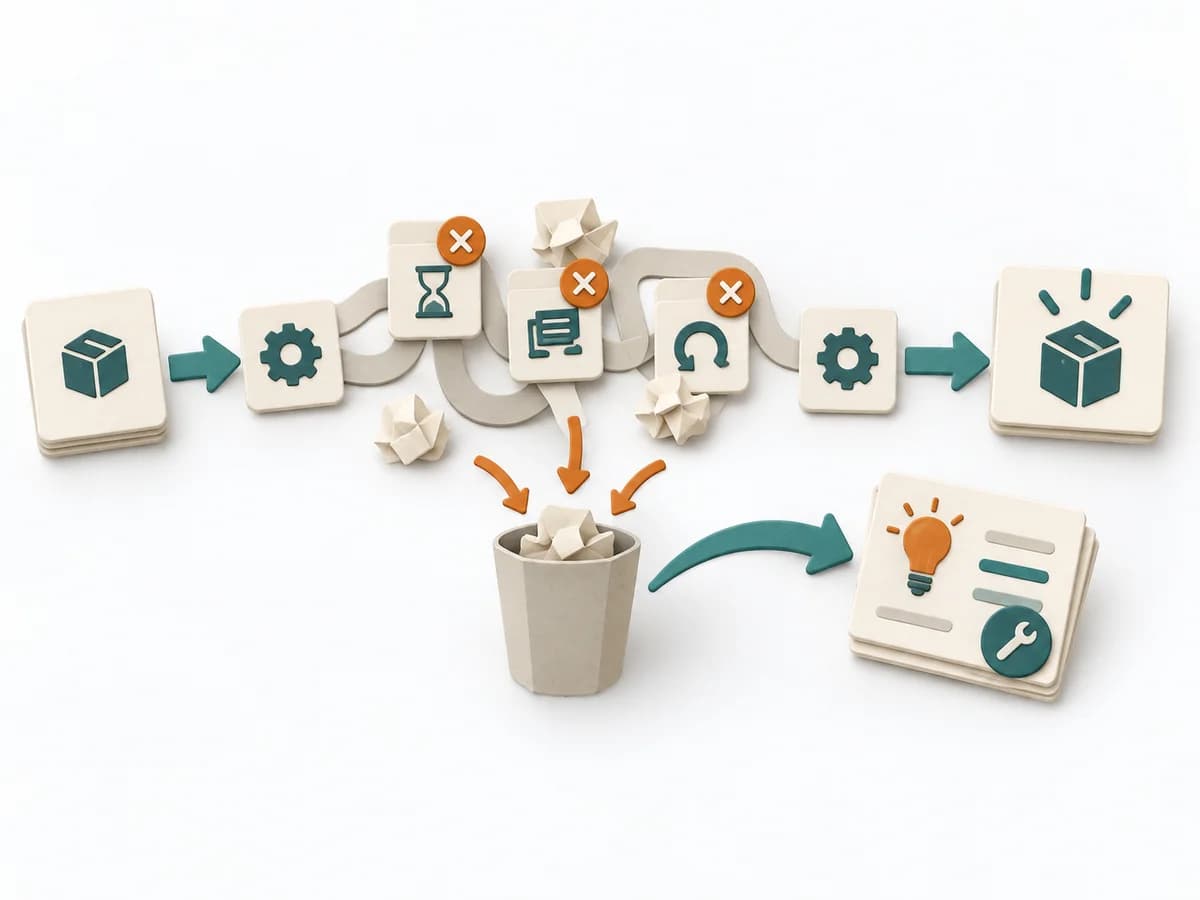
Define customer, outcome, and conditions under which an activity creates value.
Observe
Capture steps, times, paths, inventory, interruptions, and strain in actual flow.
Classify
Classify non-value work as Muda type 1 or 2, unevenness as Mura, and overburden as Muri.
Prioritise
Assess risk, frequency, time, and relationships; choose system cause rather than visible symptom.
Test
Run a small countermeasure with prediction, owner, guardrails, and review.
Add new evidence at review and version decisions with the prior state.
Bei einem Prozess, der viel beschäftigt, aber wenig Wert schafft, legt die Methode Verschwendung offen. Sie richtet den Blick auf unnötige Wege, Wartezeiten, Nacharbeit und Übererfüllung.
Waste register with value relation, Muda type 1/2, Mura, Muri, evidence, cause, and prioritised experiment.
Fictional example
Fictional values show the actual method fields.
| Activity | Evidence | Muda | Mura | Muri | Cause | Test |
|---|---|---|---|---|---|---|
| Unit searchAdd evidence and rationale. | avg 7 min; 94m walk | Type 2 | worse with slot clustering | lifting under time pressure | no presorting | pilot slot cart |
| Safety checkAdd evidence and rationale. | 1.8 min; legally required | Type 1 | stable | none | mandatory control | retain |
All values are fictional.
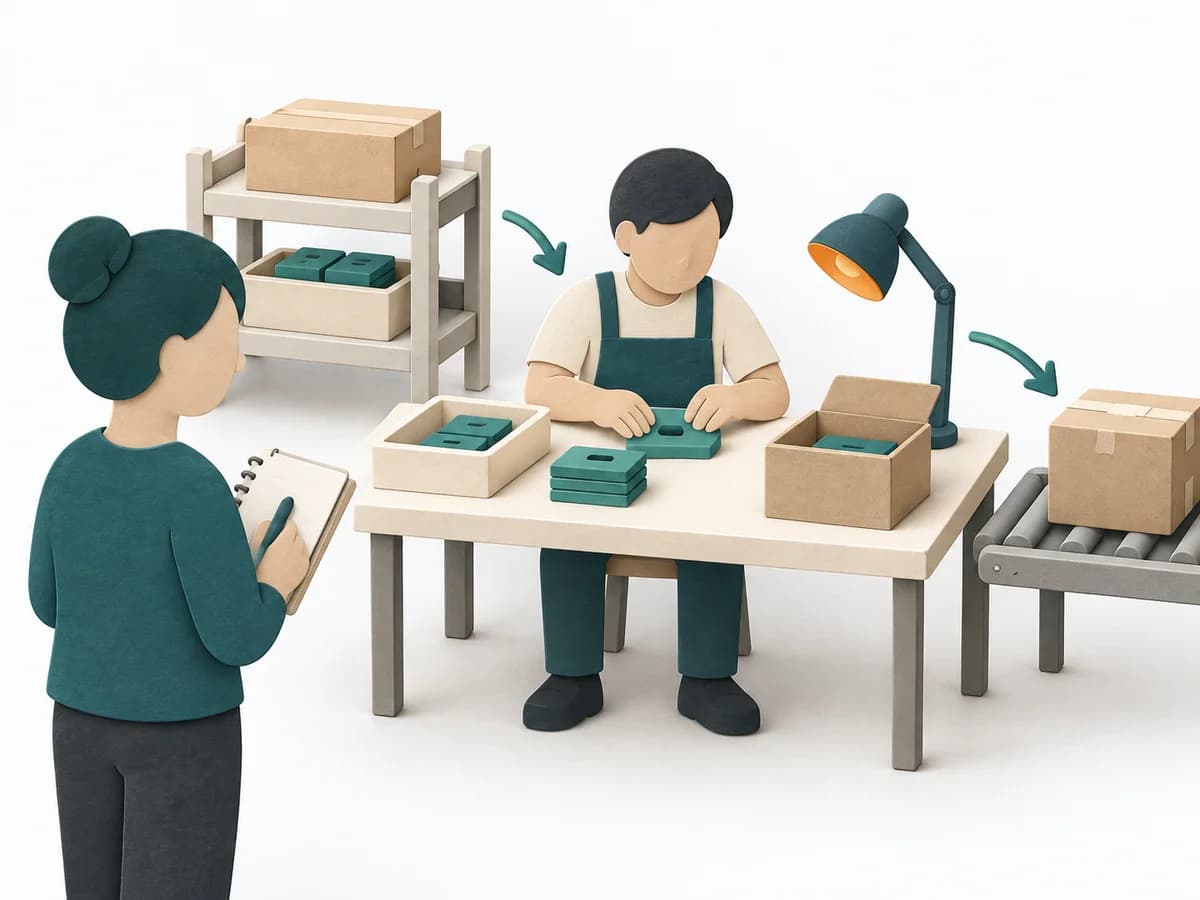
Set one concrete value stream, customer, and desired outcome; observe actual work at gemba.
For a process that keeps people busy but creates little value, the method exposes waste. It directs attention to unnecessary movement, waiting times, rework, and overdelivery.
The workflow is read along its value creation, so useless activities are clearly separated from the actual contribution. This makes friction and detours appear as a structural problem rather than individual failure. The analysis provides the basis for noticeably reducing effort without losing quality.
Waste Analysis uses the Lean idea that not every activity creates value for the customer. The method looks at process steps through categories such as transport, inventory, motion, waiting, overproduction, overprocessing, defects, and unused talent. That makes costs, delays, and quality problems tangible. The patterns lead to concrete improvement ideas for flow and quality.
Work close to the real process and use observable examples instead of abstract accusations. Treat the waste categories as a search aid, not as dogma. Finish by prioritizing a few improvements with high impact and a clear owner.
The method guide walks execution through 5 phases, timing, 5 pitfalls, and clear stop criteria.
Open method guideYour perspective
Your feedback helps shape the next improvements to methodatlas.
Set subject, evidence, roles, flow, and review.
To be confirmed
To be confirmed
Complete run Time: 60–120 minutes for a bounded value stream; add gemba observation.
Complete this worksheet on paper or in your own document during the work.
| Activity | Evidence | Muda | Mura | Muri | Cause | Test |
|---|---|---|---|---|---|---|
| Unit search | ||||||
| Safety check |
The blank worksheet contains prompts only.
Reference · original teaching example
Expected artifact: Value criterion
Define customer, outcome, and conditions under which an activity creates value.
Entry:
...
Expected artifact: Observed flow
Capture steps, times, paths, inventory, interruptions, and strain in actual flow.
Entry:
...
Expected artifact: Waste register
Classify non-value work as Muda type 1 or 2, unevenness as Mura, and overburden as Muri.
Entry:
...
Expected artifact: Priority
Assess risk, frequency, time, and relationships; choose system cause rather than visible symptom.
Entry:
...
Expected artifact: Improvement test
Run a small countermeasure with prediction, owner, guardrails, and review.
Entry:
...
...
Method guide: https://methodatlas.meierhoff-systems.de/en/methods/waste-analysis/run-sheet
Fitting alternatives with decision guidance, followed by other related methods.

Instead of Waste Analysis, choose Process Mapping when you want to document a workflow step by step and make handoffs visible.
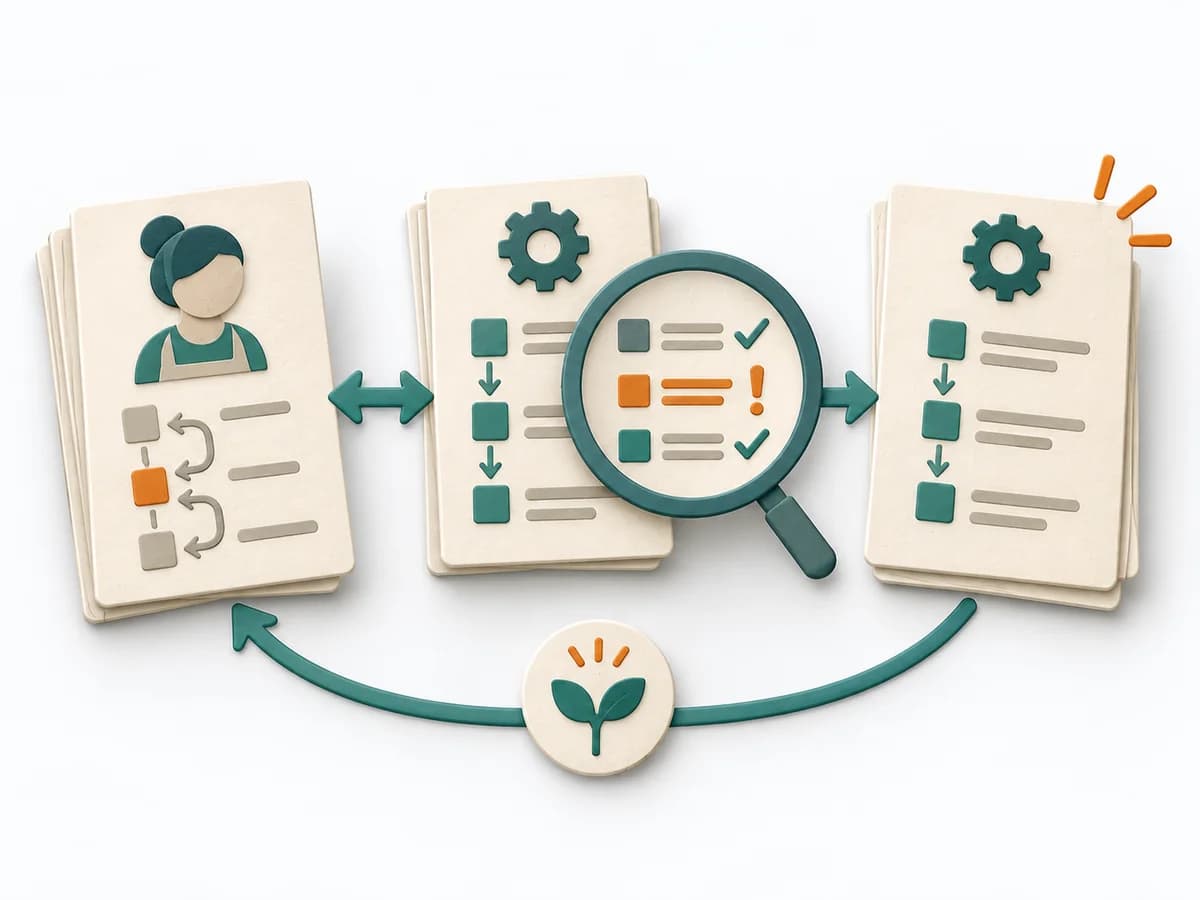
Instead of Waste Analysis, choose Standard Work Analysis when you want to precisely standardize and stabilize a proven way of working.
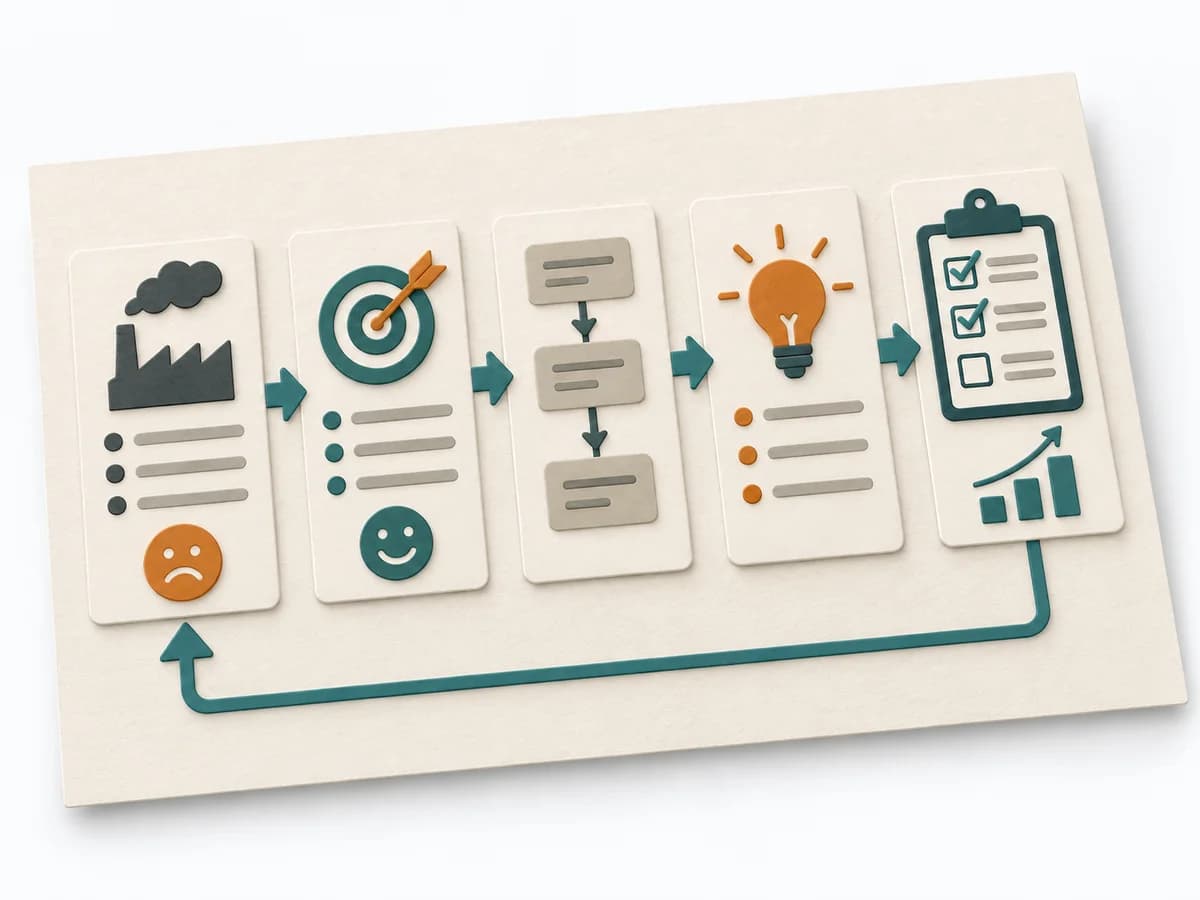
Condenses problem, analysis, countermeasures, and follow-up onto one sheet and forces joint analysis.

Runs changes as a repeatable cycle of Plan, Do, Check, and Act until a standard becomes solid.

Makes status, exceptions, and signals recognizable at a glance so teams can react faster.

Asks its way step by step to a controllable cause and stops only once an effective countermeasure is within reach.