Design Thinking: Worksheet
Question
To be confirmed
Desired outcome
To be confirmed
Scope
Whole initiative
Time: Multiple dates, to be scheduled
Complete this worksheet on paper or in your own document during the work.
Preparation for this scope
Method setup
- Materials: Workshop room with wall space or Miro board with phase lanes; stickies in five colors; pens; prototyping materials (paper, cardboard, click tools like Figma); test setup; recruiting list for user tests.
- Roles: One facilitator for overall flow; one to two researchers for interviews and synthesis; two to four designers and engineers; one sponsor with decision mandate (at least at phase transitions); test users for phase 5.
- Advance information: Problem space as one paragraph, not as a solution idea; target group and access to it; known constraints (budget, compliance, technology); prior solution attempts and why they failed.
- Overall time needed: Iterative work over days to several weeks, sized to learning needs, access, and the initiative
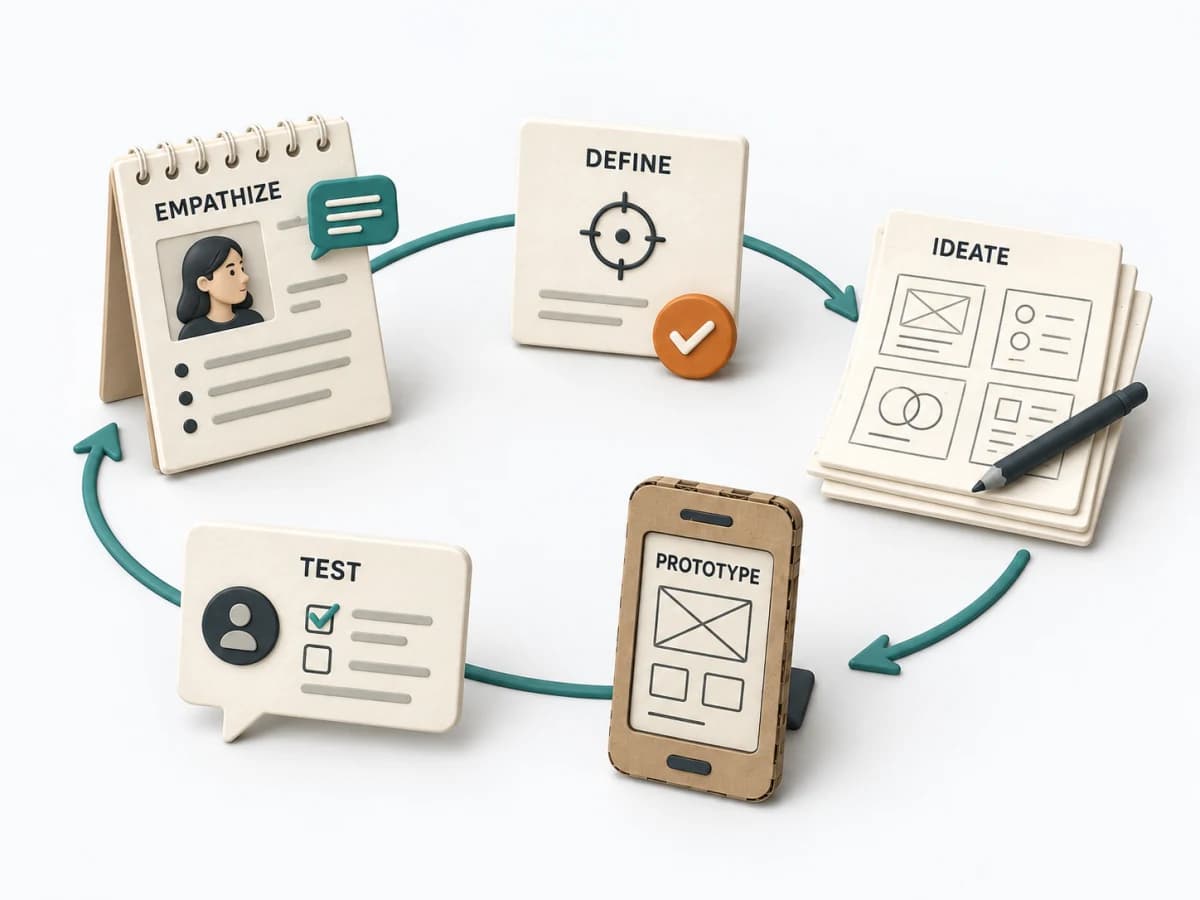
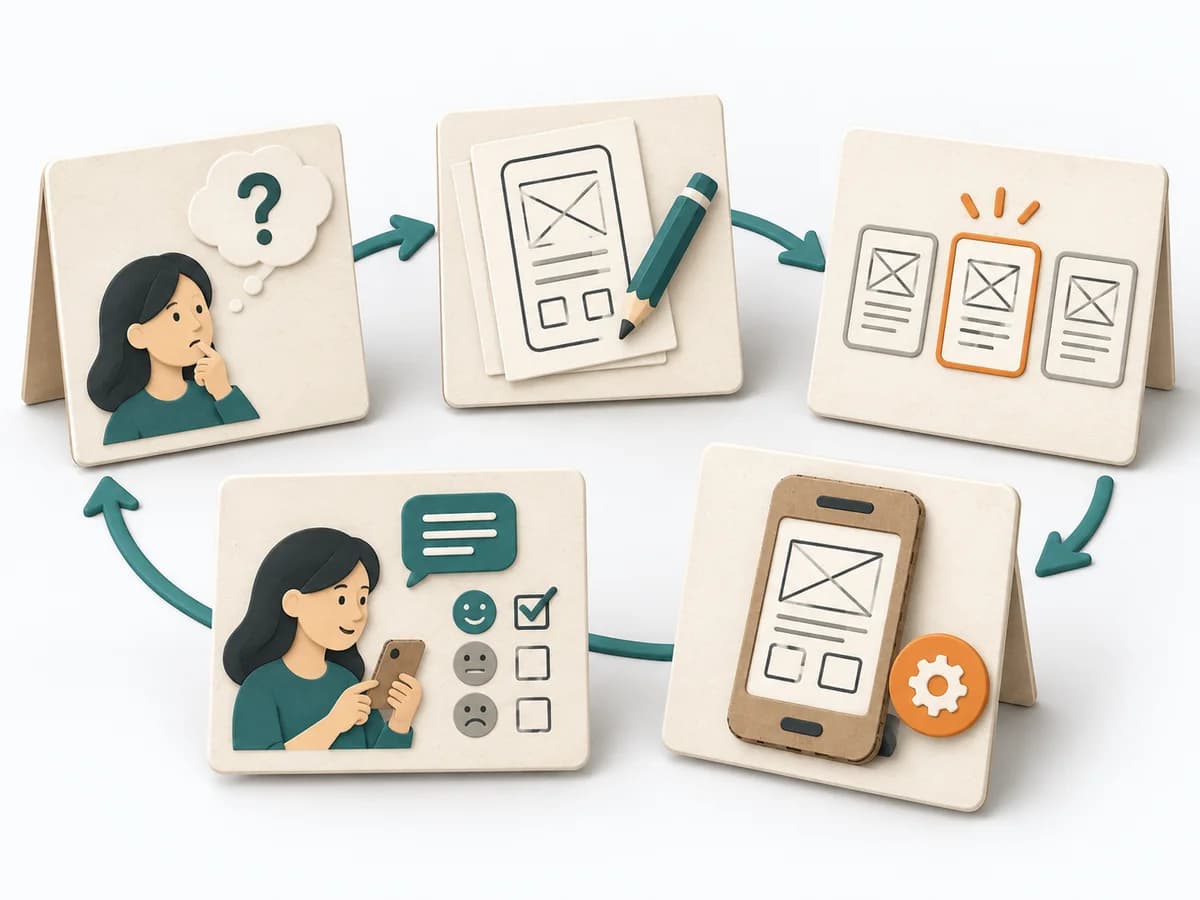
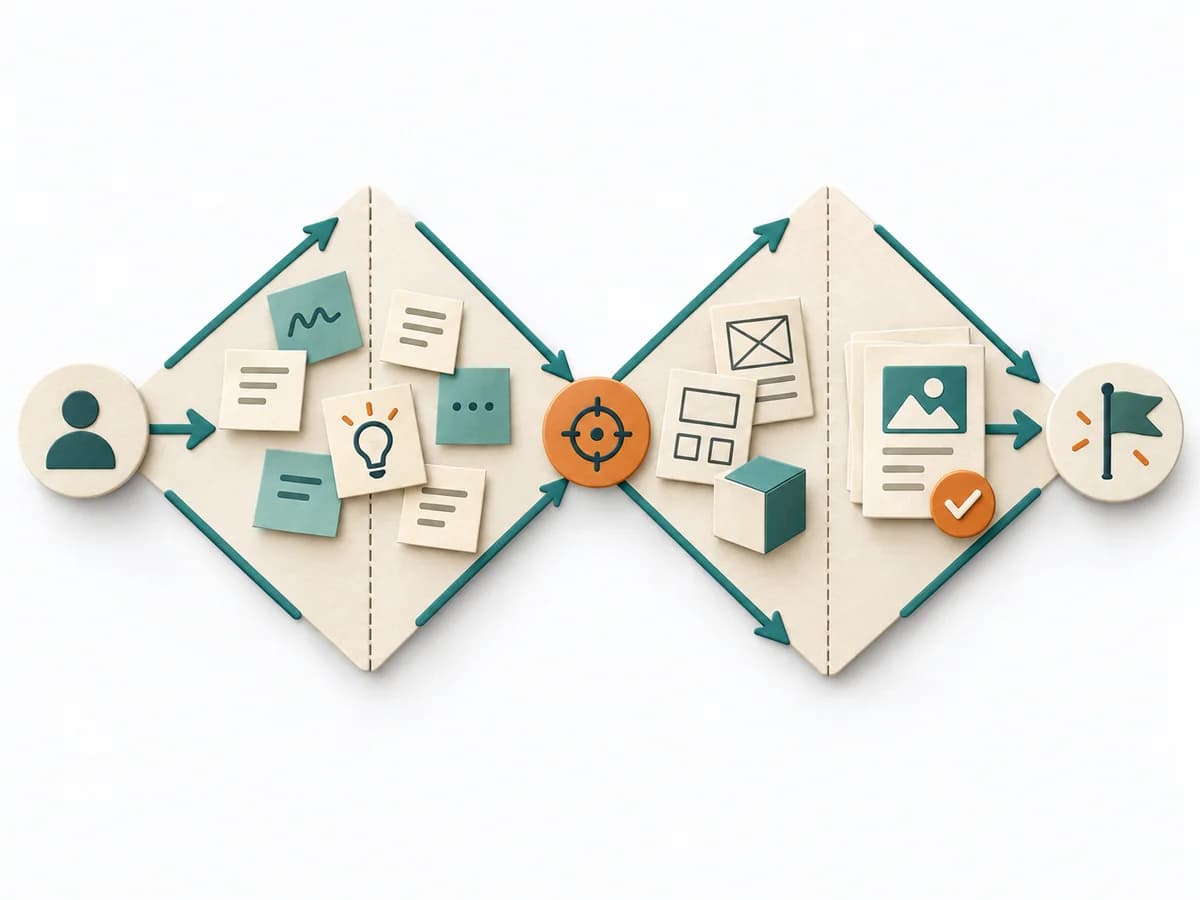
- Setup: Phase lanes on the wall: Empathize, Define, Ideate, Prototype, Test. Fix sponsor reviews between every phase. Start recruiting for phase 5 in phase 1, not later.
Prepare for the work steps
Empathize: Understand
- A focused usage situation
- Access to relevant users and consent for conversations
Define: Frame the problem
- Research notes with evidence
- Recurring patterns and unresolved contradictions
Ideate: Develop ideas
- A focused problem statement
- An open How Might We question and relevant constraints
Prototype: Build a prototype
- A selected concept
- A clear test question and an observable usage situation
Test: Test and learn
- A prototype and test question
- Relevant test participants and an observation guide
Empathize: Understand
Expected artifact: Research notes
Observation · context · evidence · open question
Entry:
...
Define: Frame the problem
Expected artifact: Problem Statement
User · need · supporting insight · evidence
Entry:
...
Ideate: Develop ideas
Expected artifact: Concept selection
Idea · value assumption · open question · selection rationale
Entry:
...
Prototype: Build a prototype
Expected artifact: Prototype
Draft or link · test question · deliberately omitted parts
Entry:
...
Test: Test and learn
Expected artifact: Test Learnings
Observation · evidence · remaining uncertainty · decision · next action
Entry:
...
Open questions and next steps
...
Method guide: https://methodatlas.meierhoff-systems.de/en/methods/design-thinking/run-sheet