

In a tightly timed design process with many participants, the method pools several lines of thinking in a short time. It brings parallel design energy without letting the discussion tip into endless coordination. This quickly produces solid directions for architecture or space.

Innovation Workshop method
Design Charrette
A design charrette develops and critiques design options in short multidisciplinary rounds.
A charrette combines a compact brief, parallel designs, structured critique, and revision. Criteria and decision authority are clarified before rounds.
Which integrated design option best satisfies the agreed criteria?
- Participants
- 10-50
- Time
- Halber Tag bis mehrere Tage
Design Charrette uses parallel sketches, criteria-based critique, and iterative synthesis in timeboxes. Assessments remain justified and context-bound.

Brief
Brief
Confirm problem, users, boundaries, and criteria.
Design
Design
Develop several rough options in parallel.
Critique
Critique
Review options silently against criteria.
Synthesize
Synthesize
Combine strengths, resolve conflicts, and plan an open test.
Update after new evidence or a material context change and retain the previous version.
A good fit when
For complex design problems requiring spatial or visual thinking and multiple disciplines.
Ideal for
- Urban planning and architecture
- Service design workshops
- Strategy work with many stakeholders
Not good for
- Sehr kleine Teams
- Themen ohne klare Teilfragen
Outputs

charrette design package
charrette design package with traceable sources, assumptions, and domain decisions.

Decision and review trail
Owners, dates, and next review for charrette design package.
charrette design package
Fictional worked example
parallel sketches, criteria-based critique, and iterative synthesis in timeboxes as a precise working structure with a fictional example.
Brief
Service hand-off: case summary
Service-centre hand-off.
Criteria
Measure: under two minutes
<2 min; audit trail; no duplicate entry.
Option/Critique
Option B: timeline with audit trail
B audits but duplicates entry.
Synthesis
Synthesis AB: timeline plus case data
B timeline + A case data; prototype test.
- Brief
- Problem · users · boundary
- Criteria
- Metric · threshold · trade-off
- Option/Critique
- Sketch · observation · effect
- Synthesis
- Elements adopted · risk · test
First step
Start with the core question: Which integrated design option best satisfies the agreed criteria?
Deep dive
The method distributes design work across several hands and keeps exchange deliberately fast, so ideas don't linger too long in one place. Parallel work and repeated convergence create a shared design pressure that favors clear decisions. This is especially useful when several stakeholders need to see a direction at the same time.
A design charrette works because several people work in parallel on the same design problem and merge their directions in fast loops. The picture gains noticeably more substance when intermediate results become visible early and the group openly discusses differences in logic, priority, and feasibility. Good application protects productive parallelism and uses critique to sharpen, so that a lot of design energy turns into a viable direction.
Prepare the design frame, the relevant constraints, and a shared understanding of quality so that the parallel work stays comparable. Quality is often decided at the first convergence; there, critique should attach concretely to decisions rather than to taste. Close with a traceable direction or with clear elements that can be combined into a next design.
The method guide walks execution through 4 phases, timing, 4 pitfalls, and clear stop criteria.
Open method guideYour perspective
Does this method help with your work?
Your feedback helps shape the next improvements to methodatlas.
Sources and topics
Design Charrette: WorksheetPlan Design Charrette around its domain steps and the concrete decision question.markdown
design-charrette-working-template.md
Plan Design Charrette around its domain steps and the concrete decision question.
Design Charrette: Worksheet
Question
To be confirmed
Desired outcome
To be confirmed
Scope
Full workshop Time: 3 hours to 2 days
Complete this worksheet on paper or in your own document during the work.
Preparation for this scope
Method setup
- Materials: Design brief, user and domain requirements, evaluation criteria, shared workspace, source links, and decision log.
- Roles: Sponsor · facilitator · multidisciplinary designers · affected users
- Advance information: Collect Design brief, user and domain requirements, evaluation criteria in advance and mark open assumptions.
- Overall time needed: 3 hours to 2 days
- Setup: Prepare parallel sketches, criteria-based critique, and iterative synthesis in timeboxes visibly and calibrate assessment terms before starting.
Prepare for the work steps
Brief: Brief
- Design brief
- user and domain requirements
- evaluation criteria
Design: Design
- working brief
- user and domain requirements
- evaluation criteria
Critique: Critique
- design options
- user and domain requirements
- evaluation criteria
Synthesize: Synthesize
- critique record
- user and domain requirements
- evaluation criteria
charrette design package
Brief
...
Criteria
...
Option/Critique
...
Synthesis
...
Working policies
Brief ...
Criteria ...
Option/Critique ...
Synthesis ...
National Charrette Institute: NCI Charrette System
Brief: Brief
Expected artifact: working brief
working brief · source · uncertainty · next decision
Entry:
...
- Are conflicting criteria explicit?
Design: Design
Expected artifact: design options
design options · source · uncertainty · next decision
Entry:
...
- Are options comparable and sufficiently distinct?
Critique: Critique
Expected artifact: critique record
critique record · source · uncertainty · next decision
Entry:
...
- Does feedback link observation and effect?
Synthesize: Synthesize
Expected artifact: design package
design package · source · uncertainty · next decision
Entry:
...
- Are decision and open risks documented?
Open questions and next steps
...
Method guide: https://methodatlas.meierhoff-systems.de/en/methods/design-charrette/run-sheet
Alternatives and neighbors
Fitting alternatives with decision guidance, followed by other related methods.

Instead of Design Charrette, choose Design Sprint when you want to get from problem understanding to a tested solution in just a few days.

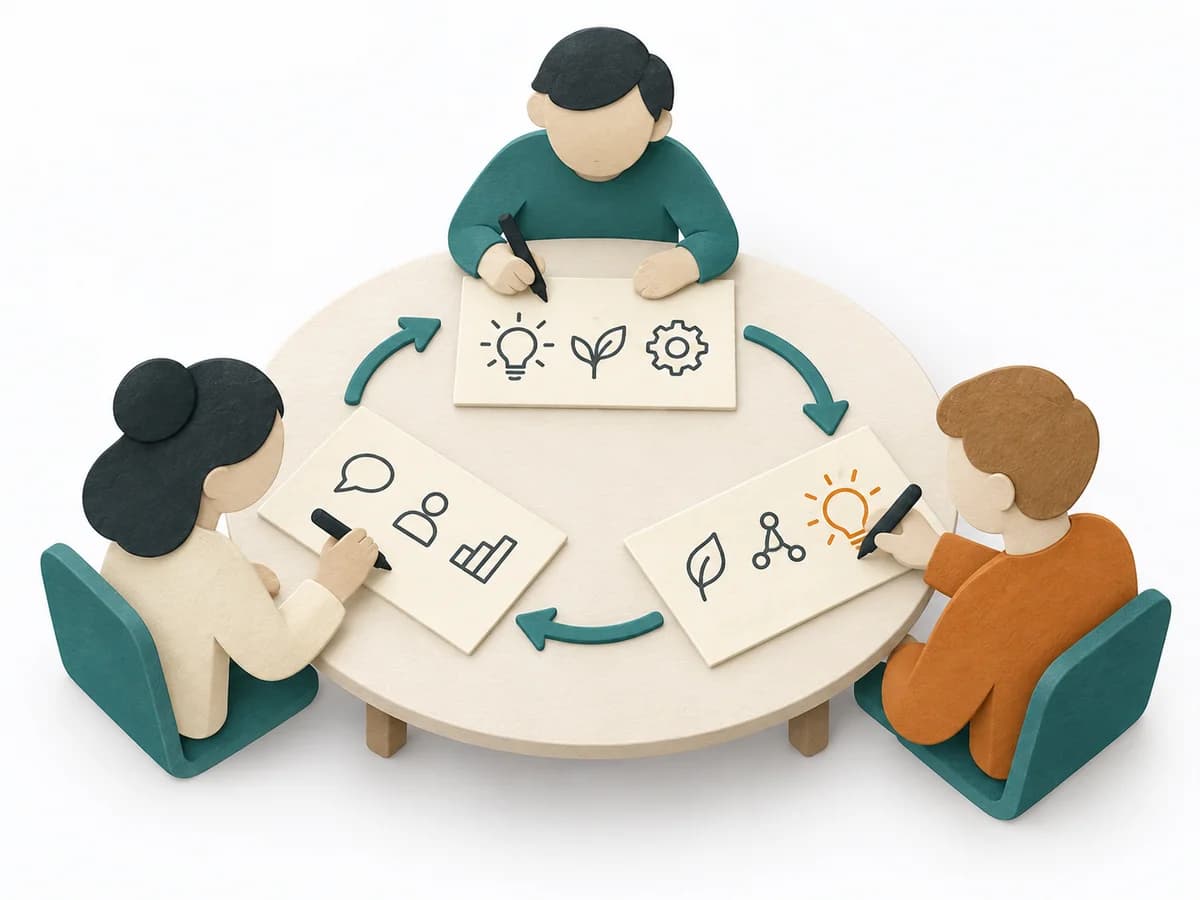
Opens the idea space, bundles contributions into theme clusters, and condenses them into a shortlist for the next step.

Gathers ideas silently and iteratively, builds on them together, and produces prioritized concepts instead of loud individual impulses.

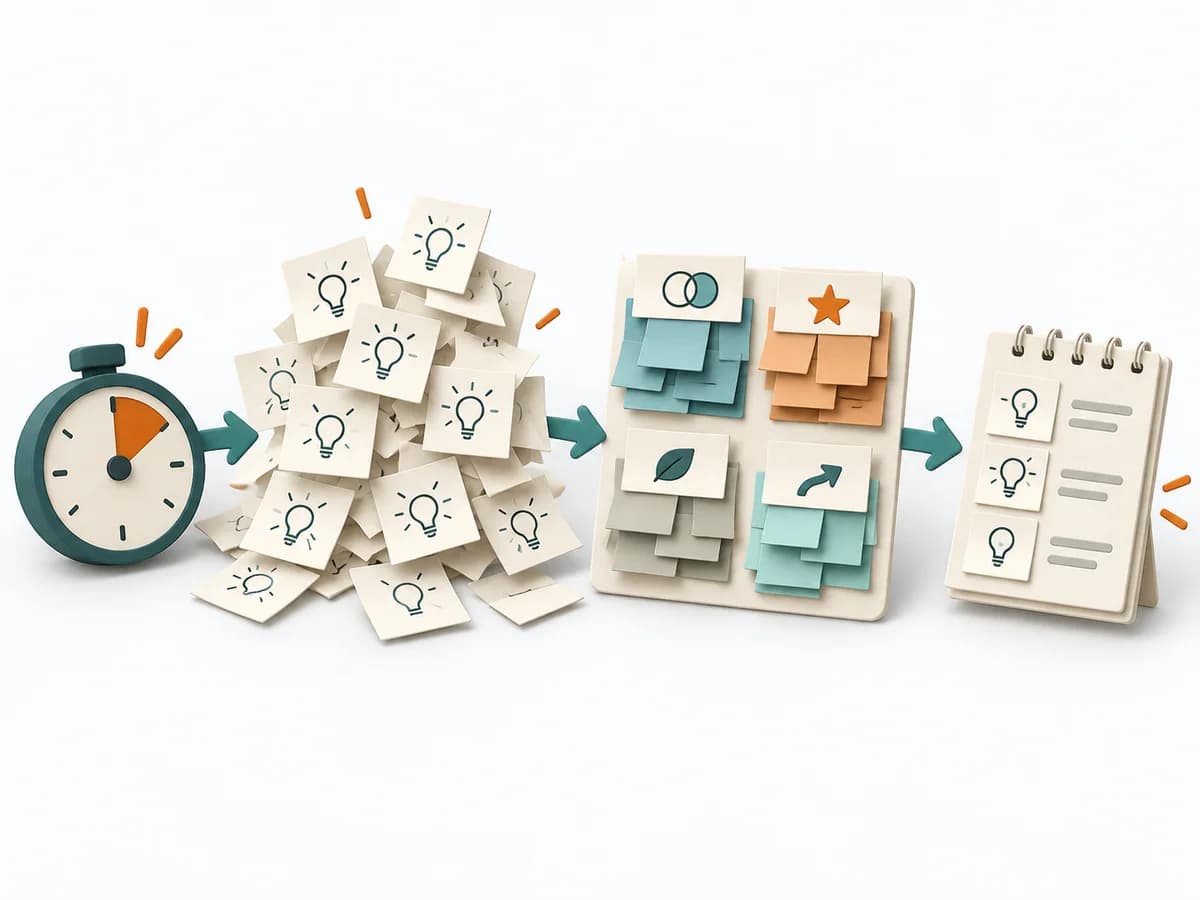
A strict timebox pushes quick idea volume first, then clusters and selects options after the burst is complete.

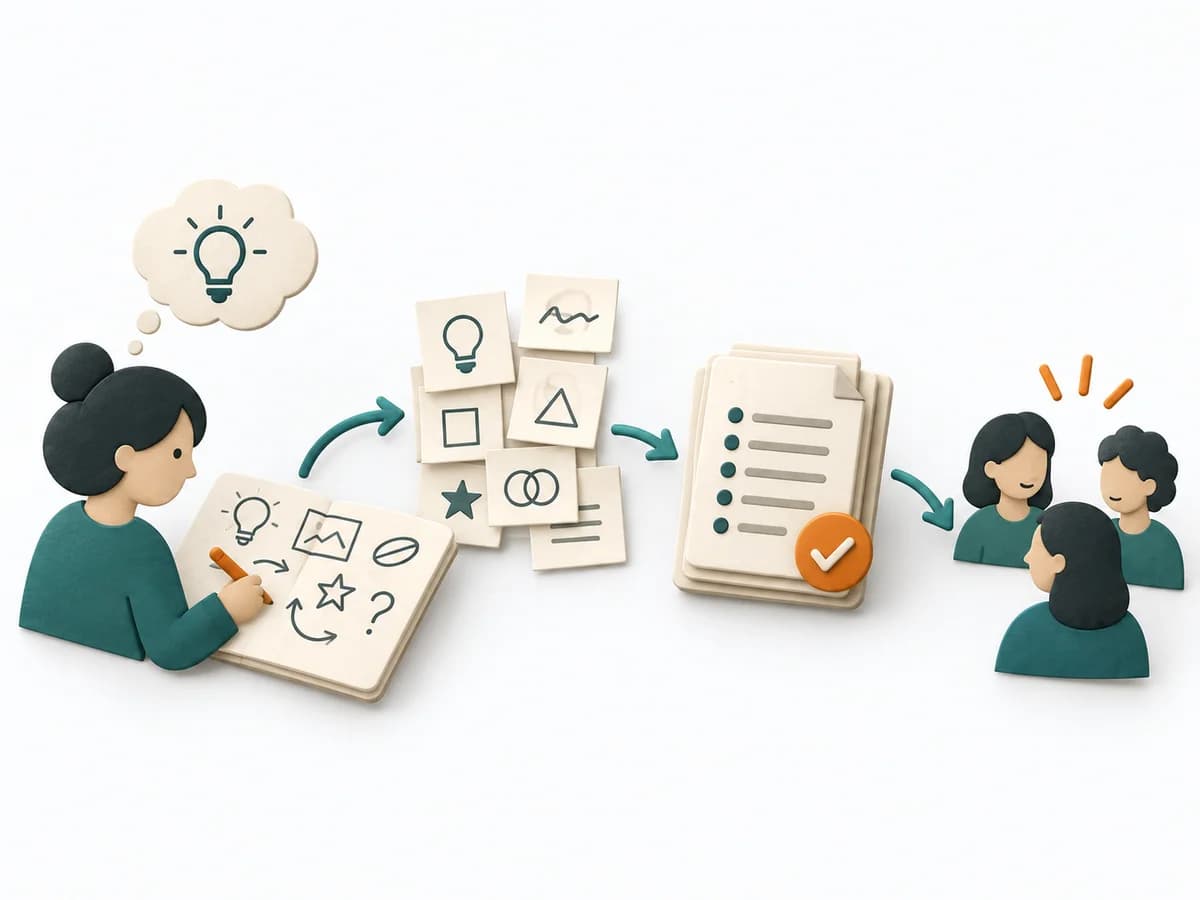
A single person uses a chosen prompt technique to create, sort, and sharpen ideas before group discussion starts.

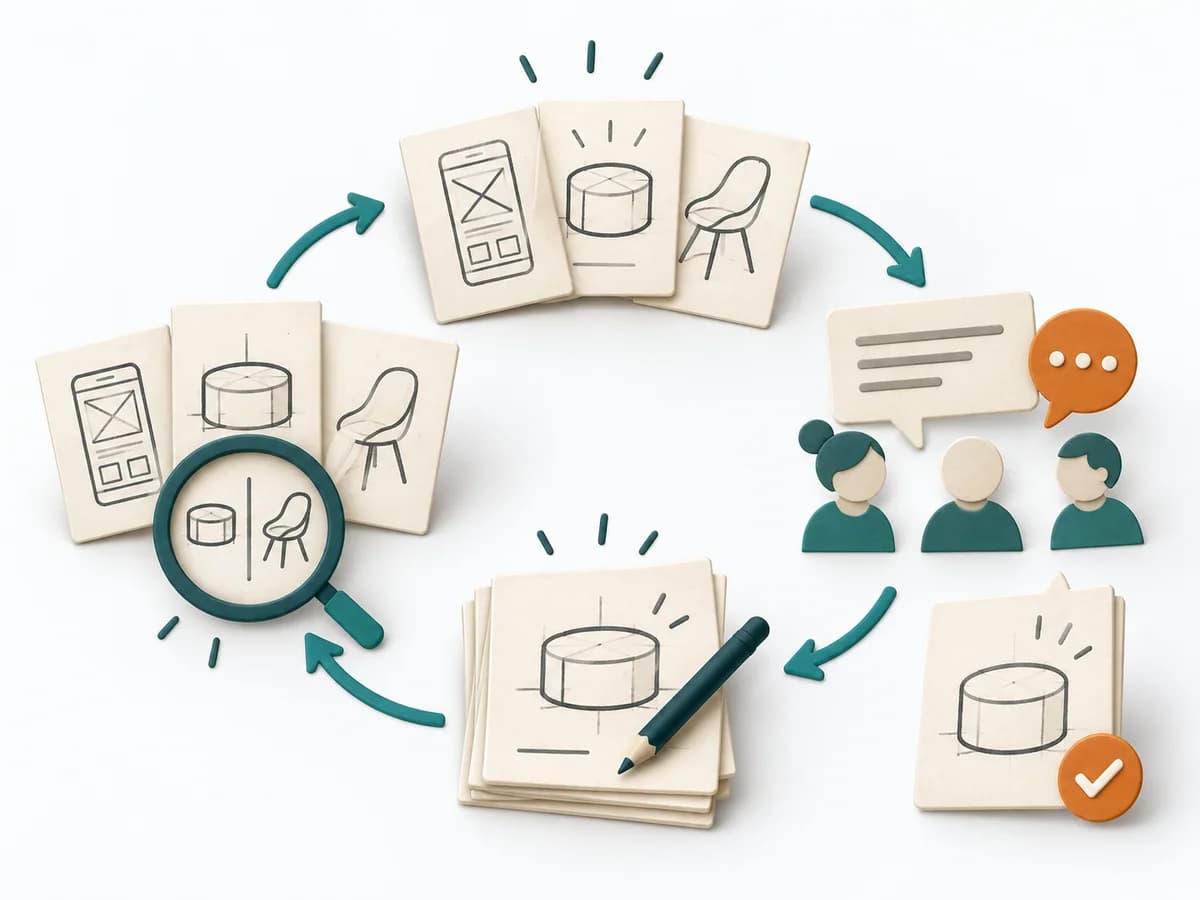
Brings sketches, critique, and iteration together so solid design decisions grow out of early drafts.
Constraints and origin
Profile
- Method form
- Workshop method
- Participants
- 10-50
- Time
- Halber Tag bis mehrere Tage
- Maturity
- Established
- Origin
- Architecture and Design Community