Design Sprint: Worksheet
Question
To be confirmed
Desired outcome
To be confirmed
Scope
Run the method
Time: See catalog planning range; no universal duration.
Complete this worksheet on paper or in your own document during the work.
Preparation for this scope
Method setup
- Materials: Shared visual workspace, source evidence, and an agreed decision question.
- Roles: Decider, facilitator, cross-functional sprint team, target users for testing.
- Advance information: Collect existing data, examples, constraints and relevant stakeholder perspectives.
- Overall time needed: Five consecutive days with a dedicated team; recruit and prepare beforehand.
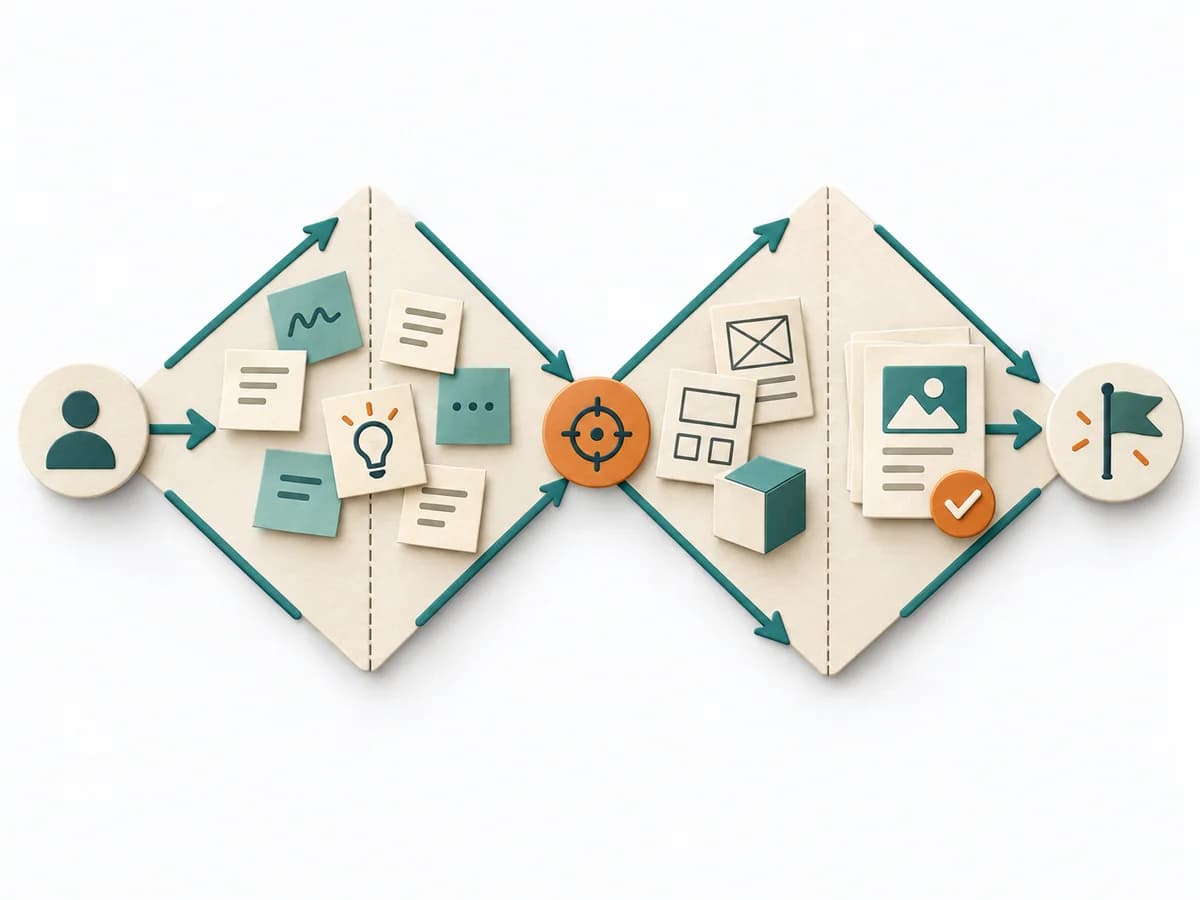
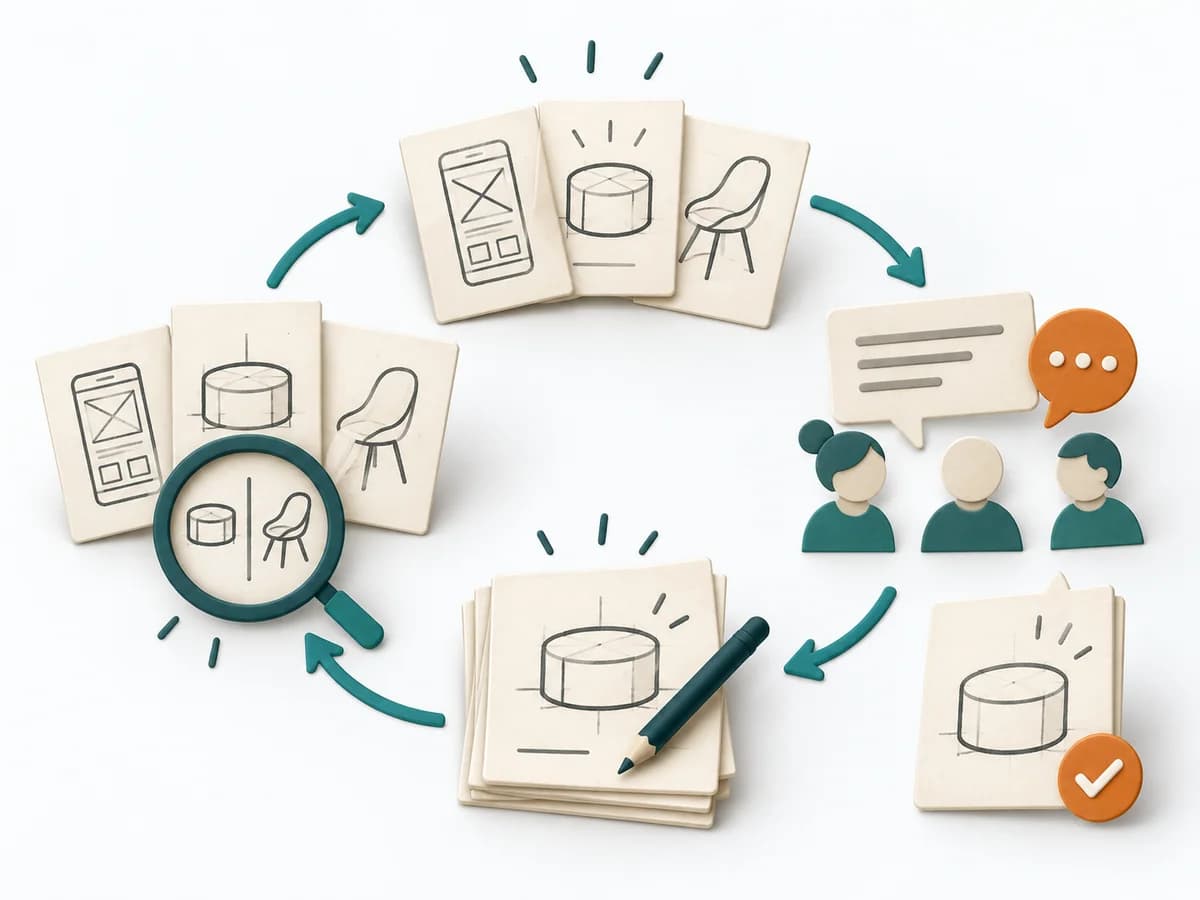
- Setup: Choose a consequential question, long-term goal, target users and sprint team. Generate solution sketches individually after shared understanding; do not converge too soon. Critique sketches, select one direction and storyboard a testable experience. Build only enough fidelity to make the critical interaction credible to participants. Observe target customers completing tasks; record evidence and decide what to learn or test next.
Prepare for the work steps
Challenge: Choose challenge and goal
- Decision question, user access and decider
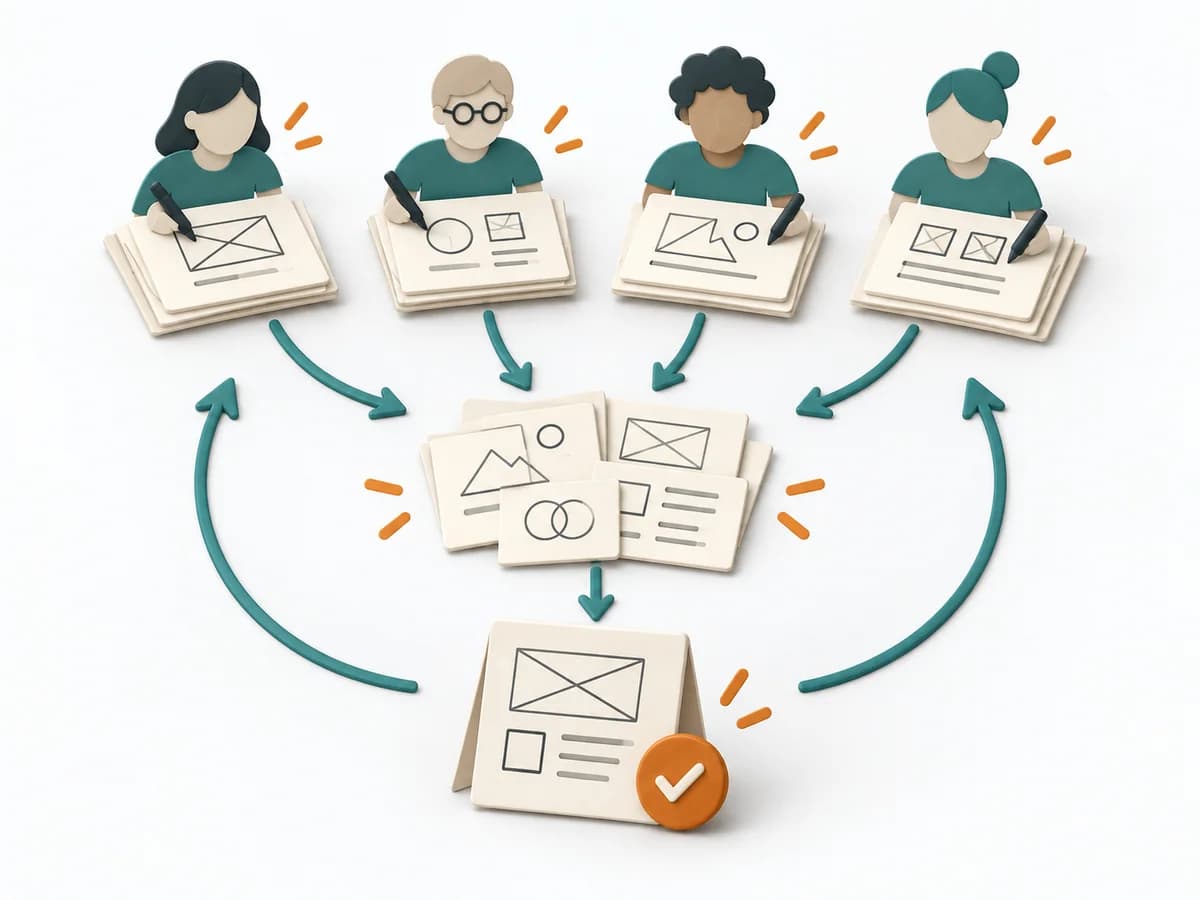
Sketch: Sketch solutions independently
- Expert knowledge, journey and problem evidence
Decide: Decide and storyboard
- Sketches, agreed criteria and decider
Test: Prototype and learn
- Storyboard, suitable prototype and invited users
Design Sprint record
Understand and map
Bound the long-term goal, user and challenge.
...
Sketch
Sketch solution approaches independently.
...
Decide
Choose a direction and test story transparently.
...
Prototype
Build a credible test prototype, not a production solution.
...
Test
Observe target users and separate findings from interpretation.
...
This blank document contains only section prompts.
5-Day UX Design Sprint · Google Design
Challenge: Choose challenge and goal
Expected artifact: Sprint brief
Sprint brief
Entry:
...
Sketch: Sketch solutions independently
Expected artifact: Independent solution sketches
Independent solution sketches
Entry:
...
Decide: Decide and storyboard
Expected artifact: Decision rationale and storyboard
Decision rationale and storyboard
Entry:
...
Test: Prototype and learn
Expected artifact: Observation notes and next decision
Observation notes and next decision
Entry:
...
Open questions and next steps
...
Method guide: https://methodatlas.meierhoff-systems.de/en/methods/design-sprint/run-sheet