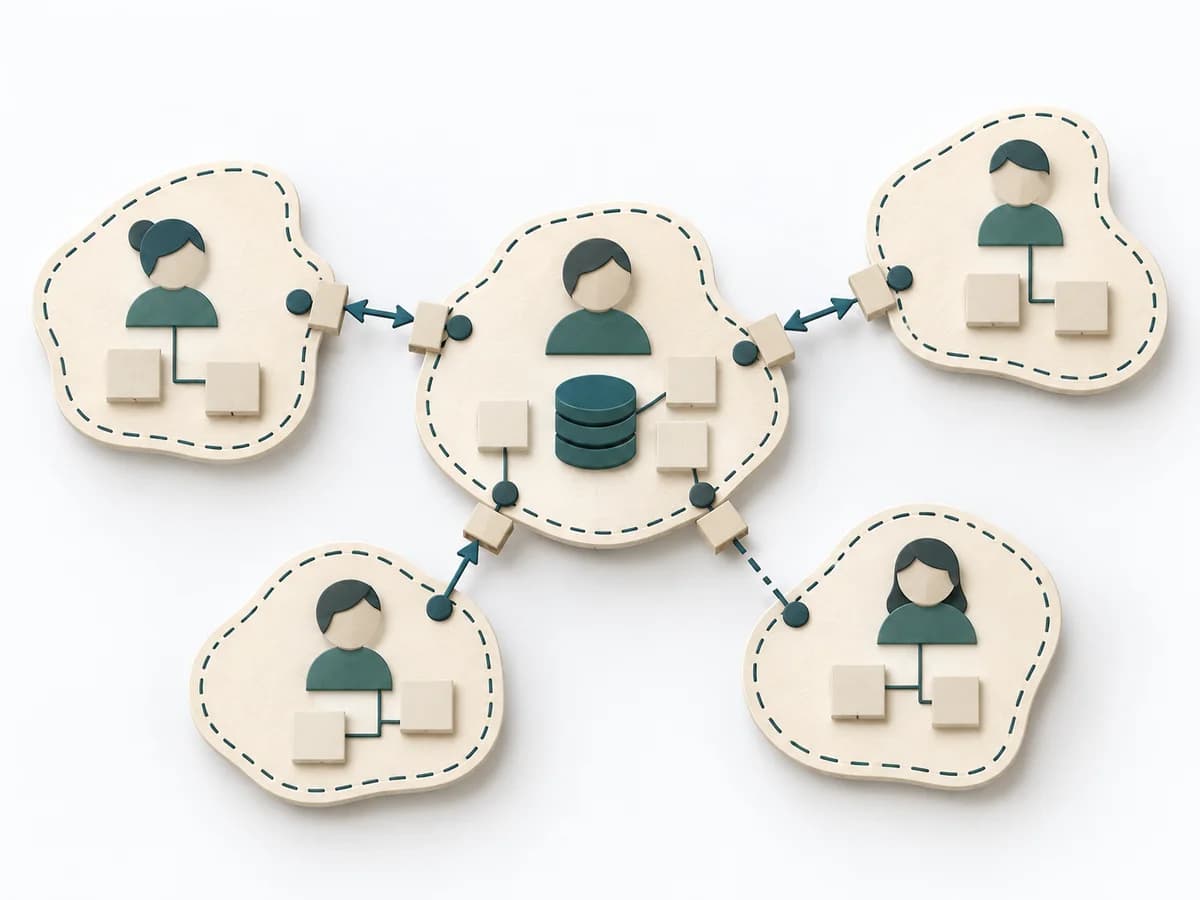
Purpose
Concept Mapping arranges terms and relationships in a network that makes subject-matter connections tangible. It fits when a topic needs to be understood structurally rather than linearly.
Knowledge Modeling Mapping tool
Concept mapping makes knowledge visible as testable propositions built from concepts and named relationships.
A Concept Map answers a focus question with hierarchically arranged concepts. Labelled links form readable propositions, while cross-links reveal relationships between knowledge domains.
Which concepts and propositions answer our focus question?
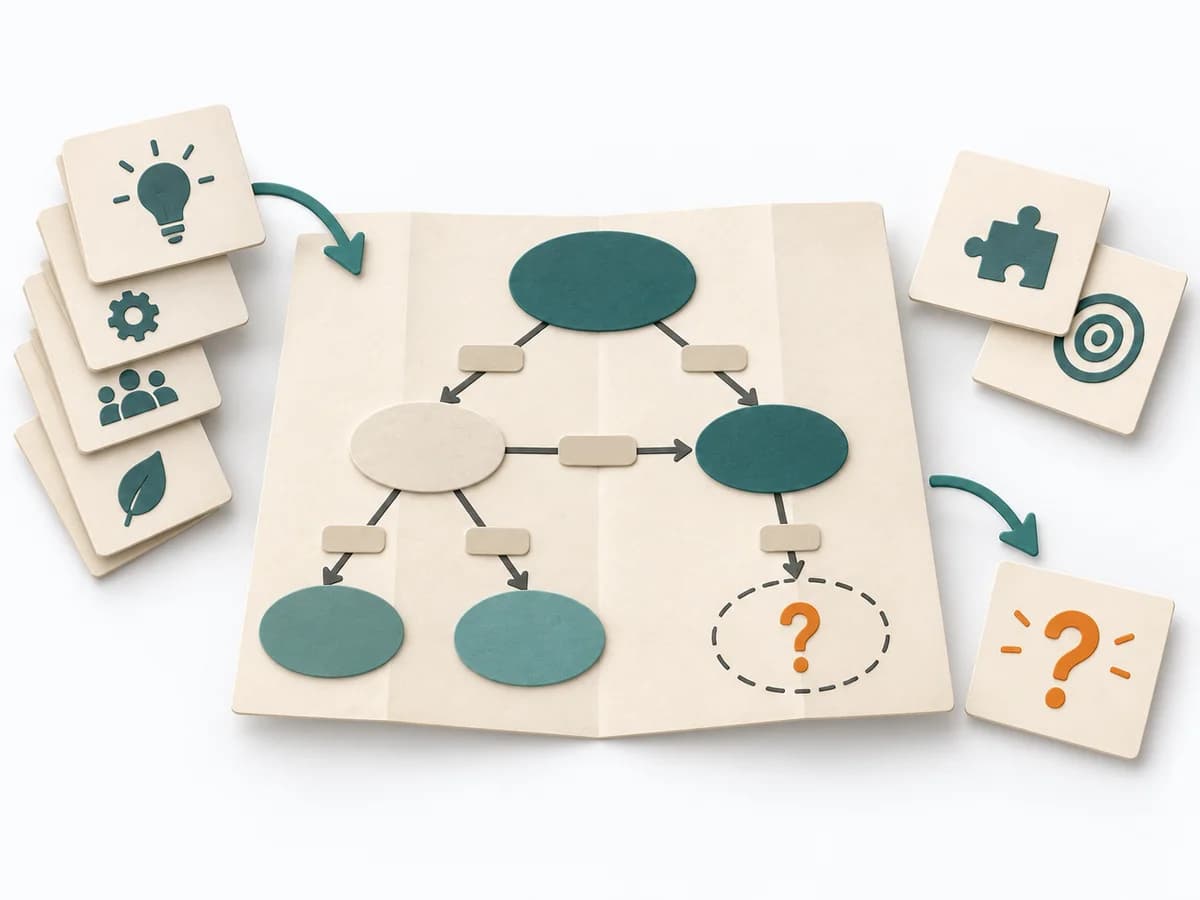
Focus
Set the question that the map must answer.
Concepts
Collect relevant concepts as short labels and order them by generality.
Hierarchy
Place broad concepts above more specific concepts.
Propositions
Connect concepts with linking phrases to create readable, testable claims.
Cross-links
Add defensible relationships between branches and revise the map.
Place new learning in the hierarchy, test propositions and restructure the map repeatedly.
For shared vocabulary, knowledge synthesis and exposing gaps in understanding within a bounded domain.
Hierarchical concepts connected by labelled propositions and meaningful cross-links.
Marked unclear terms, contested relationships and open sub-questions.
Fictional example
The worksheet separates focus, concepts, propositions, cross-links and revision.
What open question should the map answer, in what context?
How is a reliable course-booking confirmation produced?
Which 15 to 25 terms are central, and which are more general or specific?
Booking request, participation rules, capacity, reservation, confirmation.
Which concepts connect through what linking phrase to form a meaningful statement?
Booking request is checked against participation rules.
Which relationship across branches adds explanatory meaning?
Corporate seat limit constrains capacity.
Which propositions are uncertain, redundant or open? Which source or person can resolve them?
Expiry of unpaid reservations is open; Operations resolves by Friday.
The document describes the parts; build the map spatially with directed, labelled edges.
Write a focus question that defines the purpose and boundary of the map.
Concept Mapping arranges terms and relationships in a network that makes subject-matter connections tangible. It fits when a topic needs to be understood structurally rather than linearly.
First, central concepts are collected and sorted hierarchically or thematically. The team then connects them with labeled relationships until a readable network of meaning emerges. In the end, the concept structure and open gaps stand out more clearly.
Concept Mapping earns its value because relationships between terms are made explicit, so gaps in understanding surface faster. The method becomes substantial when connecting statements are phrased precisely and central concepts are checked not just as nodes but as part of a network of meaning. Good use pays attention to hierarchy, counterexamples, and linguistic consistency, so the picture organizes thinking instead of just laying keywords side by side.
Before starting, collect only the few core terms that truly carry the question at hand, and add peripheral topics only later. The tricky point lies with unclear connecting statements; these need sharpening until every edge makes a defensible claim. Close with a brief pass over the strongest relationships and keep open term definitions recorded separately.
The method guide walks execution through 5 phases, timing, 5 pitfalls, and clear stop criteria.
Open method guideYour perspective
Your feedback helps shape the next improvements to methodatlas.
Write a focus question that defines the purpose and boundary of the map.
To be confirmed
To be confirmed
Complete workflow Time: 60–120 minutes
Complete this worksheet on paper or in your own document during the work.
What open question should the map answer, in what context?
...
Which 15 to 25 terms are central, and which are more general or specific?
...
Which concepts connect through what linking phrase to form a meaningful statement?
...
Which relationship across branches adds explanatory meaning?
...
Which propositions are uncertain, redundant or open? Which source or person can resolve them?
...
Leave examples blank. Record every proposition as concept, linking phrase, concept.
Novak & Cañas: Theory Underlying Concept Maps
Expected artifact: Focus question
Question, context and purpose
Entry:
...
Expected artifact: Ordered concept list
Short, unambiguous labels
Entry:
...
Expected artifact: Concept hierarchy
Levels and clusters
Entry:
...
Expected artifact: Labelled propositions
Concept, linking phrase, concept
Entry:
...
Expected artifact: Revised Concept Map
Cross-links, open questions and version
Entry:
...
...
Method guide: https://methodatlas.meierhoff-systems.de/en/methods/concept-mapping/run-sheet
Fitting alternatives with decision guidance, followed by other related methods.
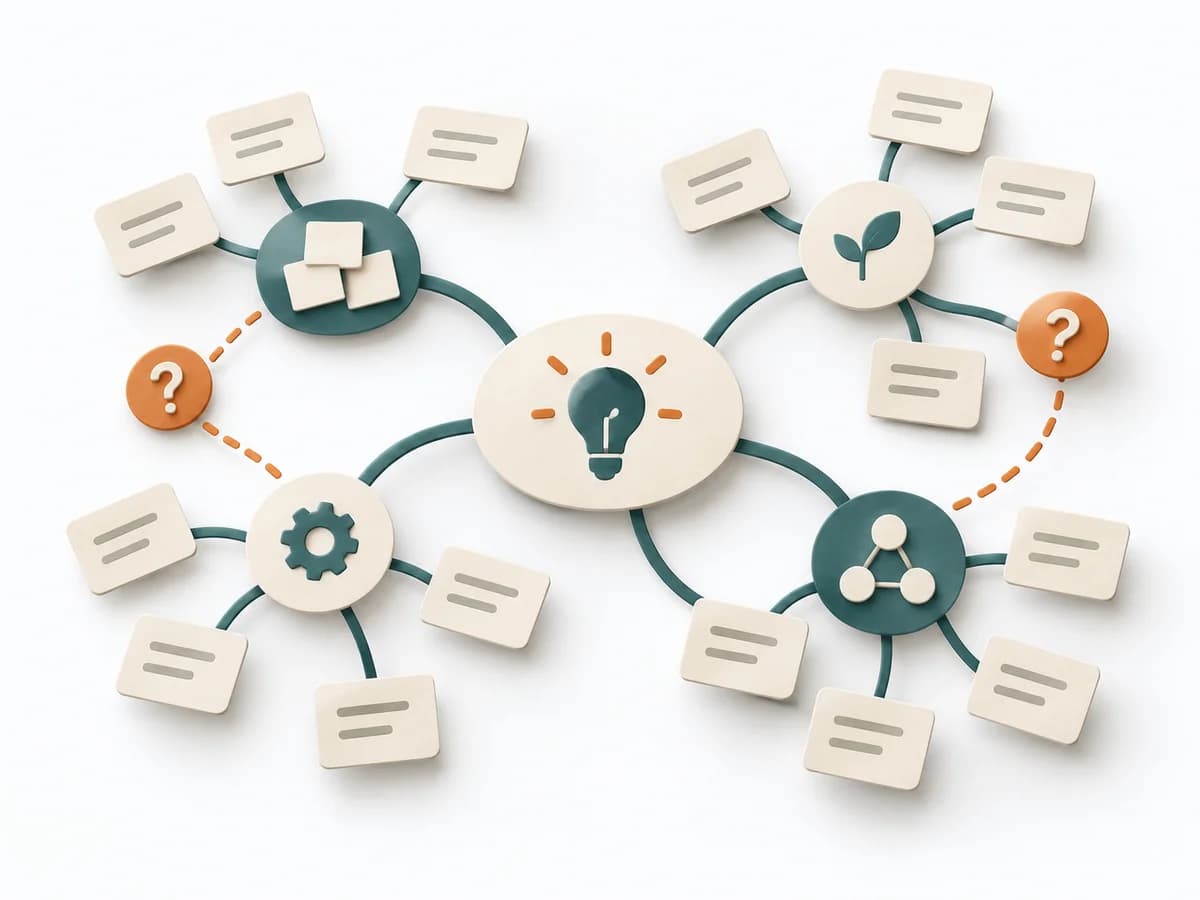
Instead of Concept Mapping, when you want to quickly collect ideas through free association and don't need a formal relationship logic.
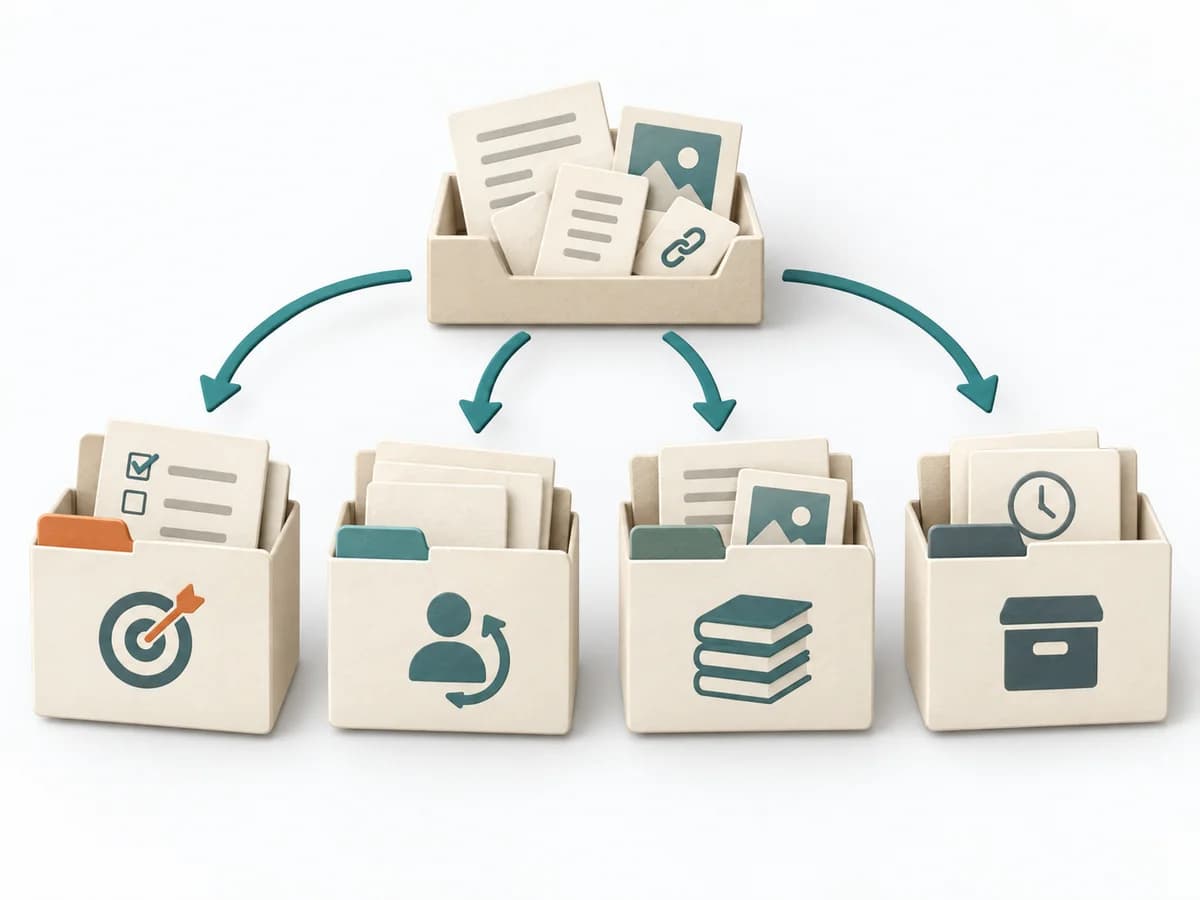
Sorts knowledge into Projects, Areas, Resources, and Archive so personal knowledge work stays easier to steer.

Forces complex content into simple language and immediately reveals which knowledge gaps still need closing.
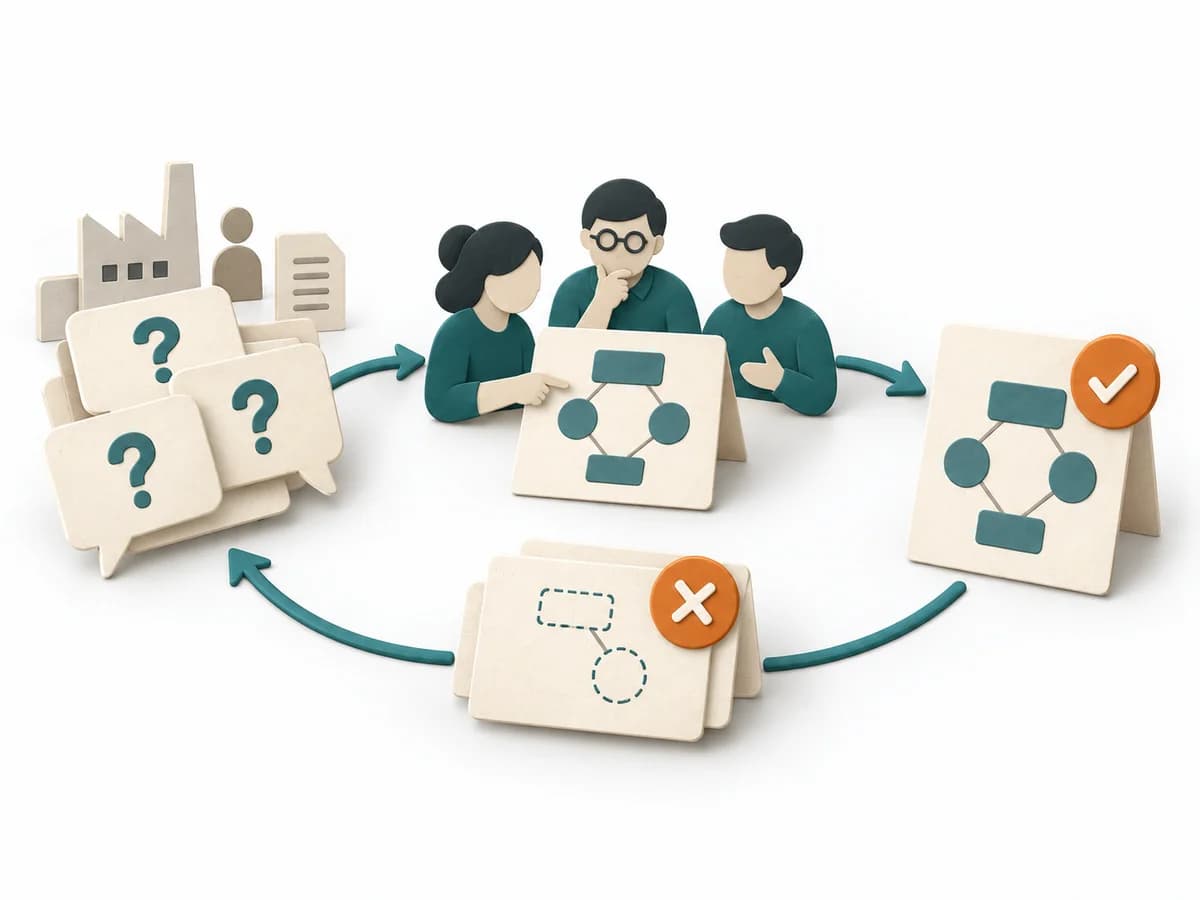
Concrete domain questions define what an ontology or knowledge model must be able to answer and test.
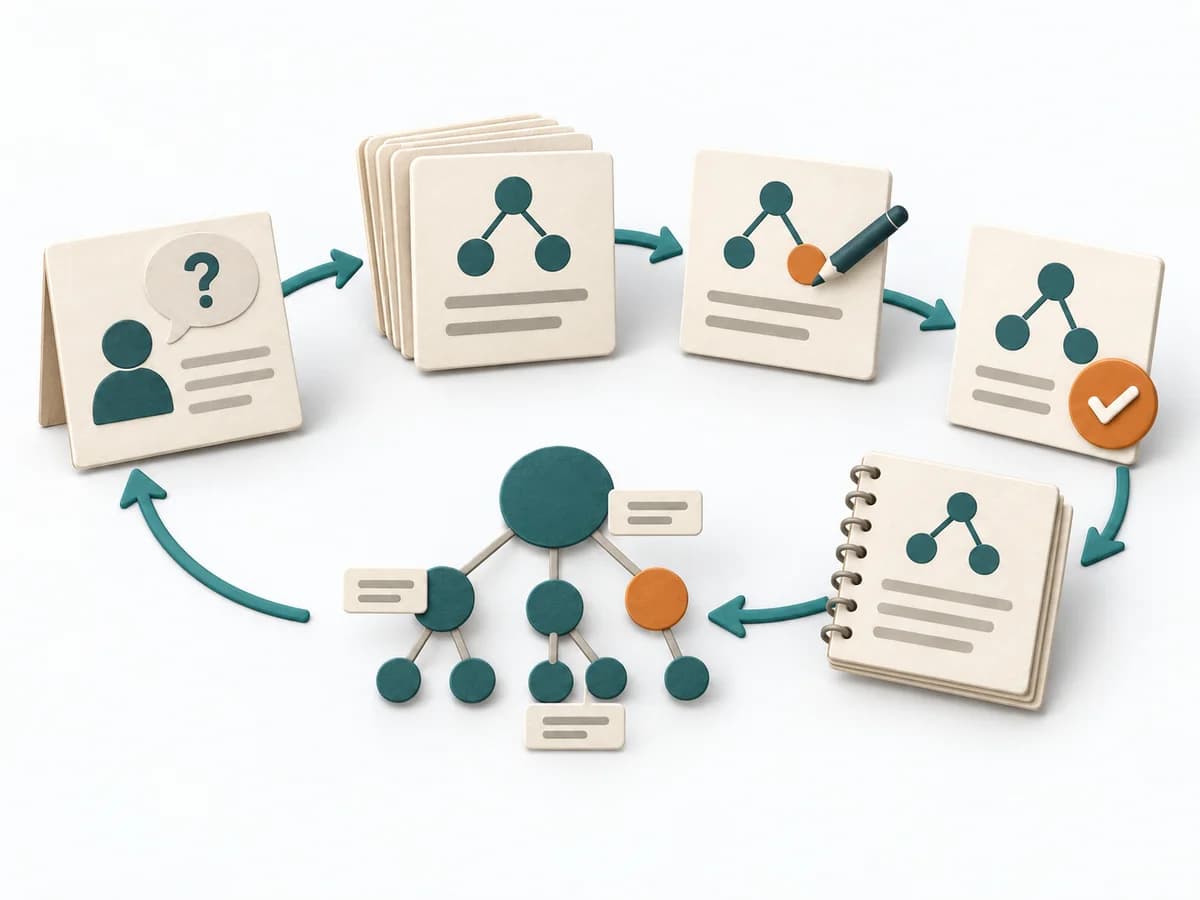
Reusable modeling patterns solve recurring ontology structures without redesigning the same semantic shape each time.
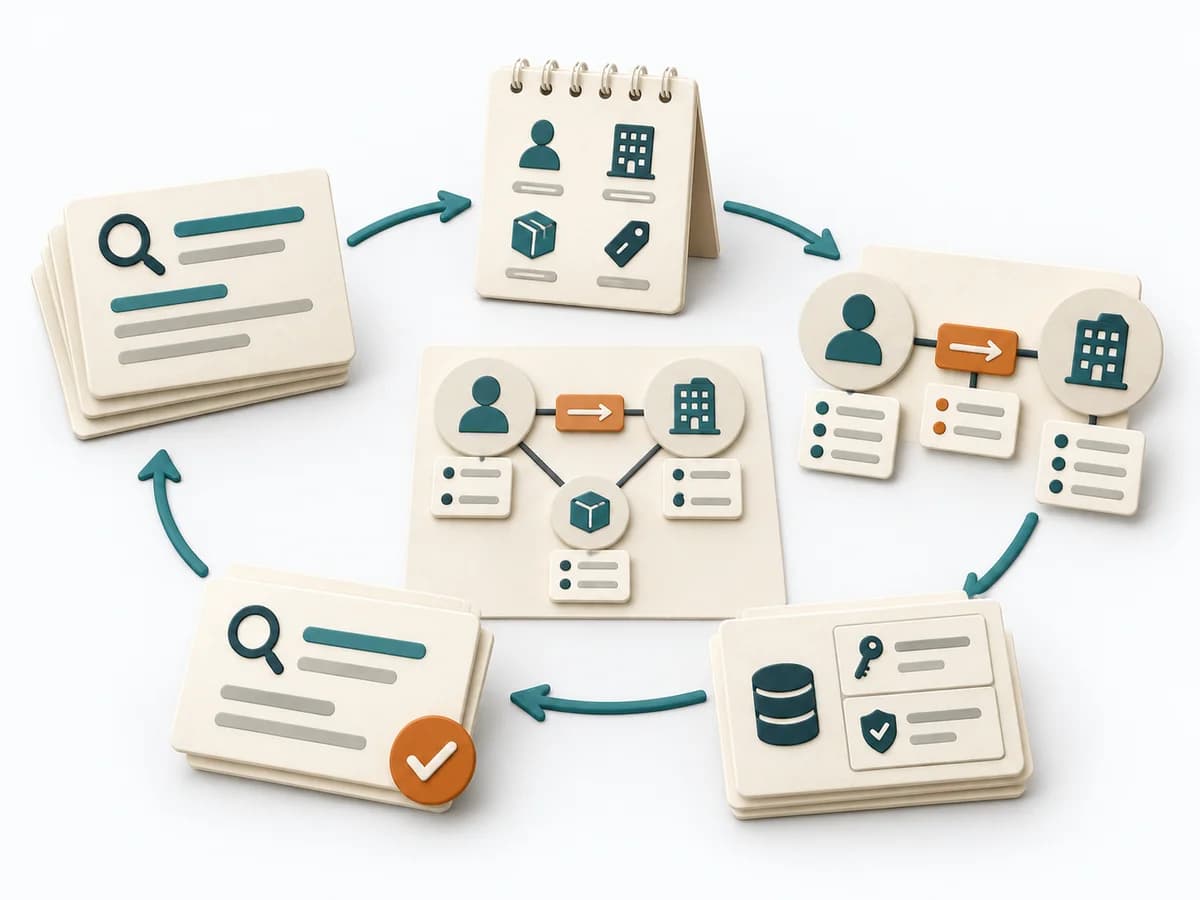
Query patterns drive node labels, relationships, and constraints so property graphs match real retrieval needs.
