Purpose
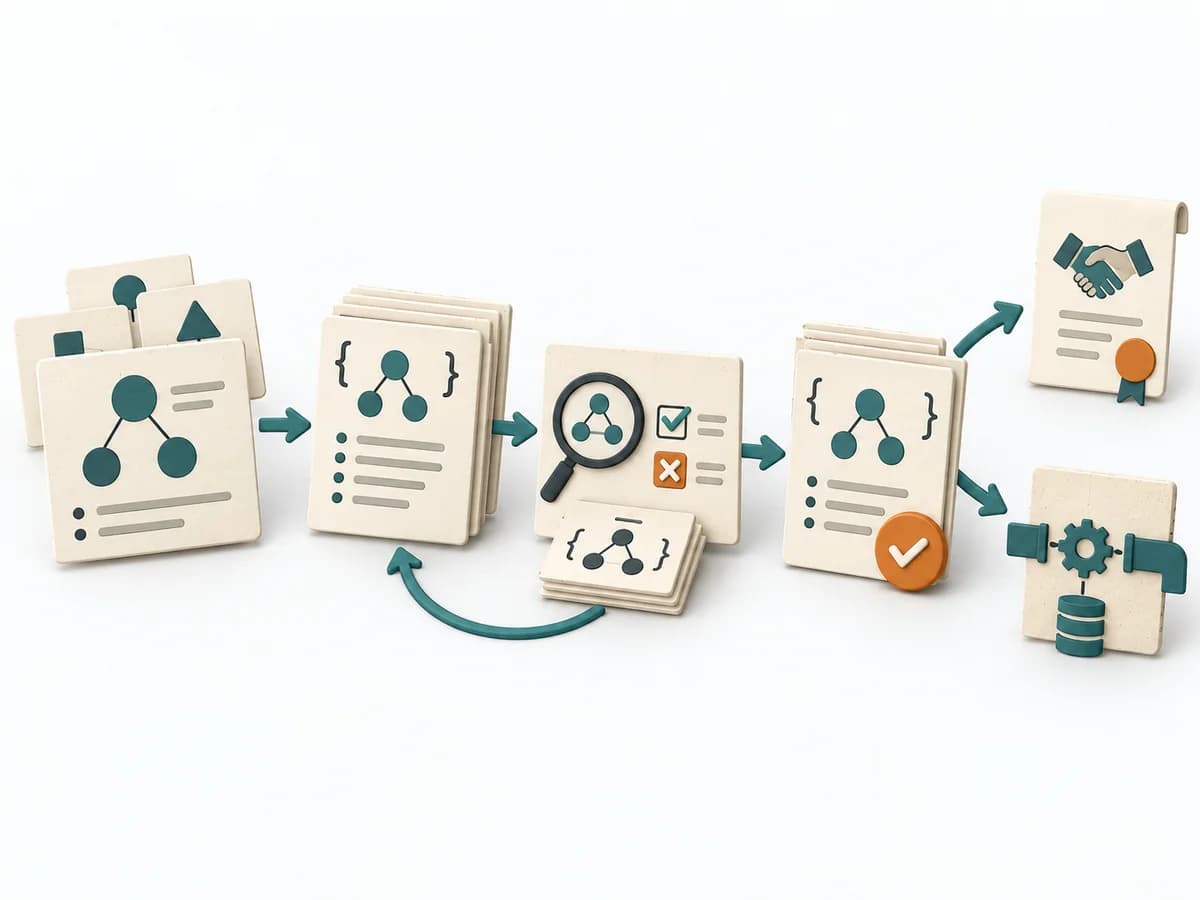
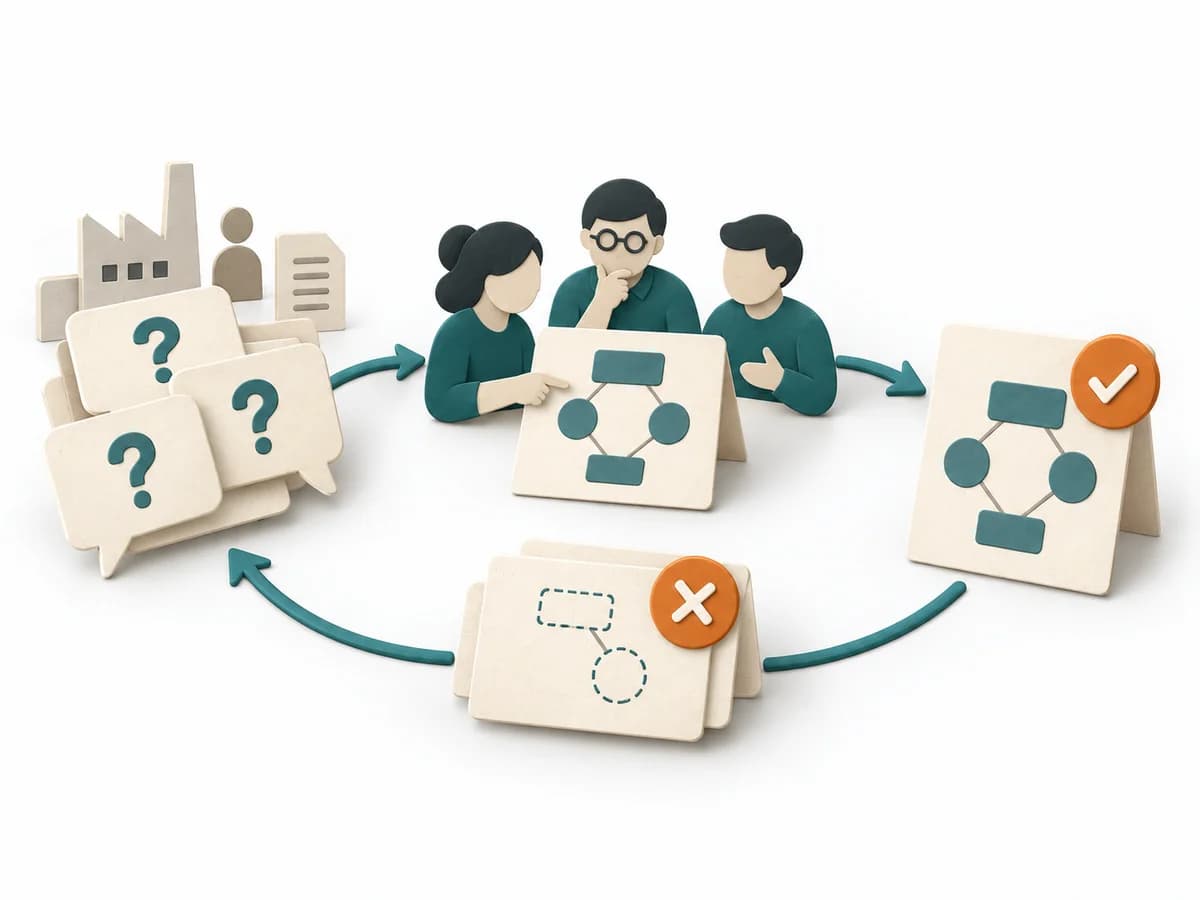
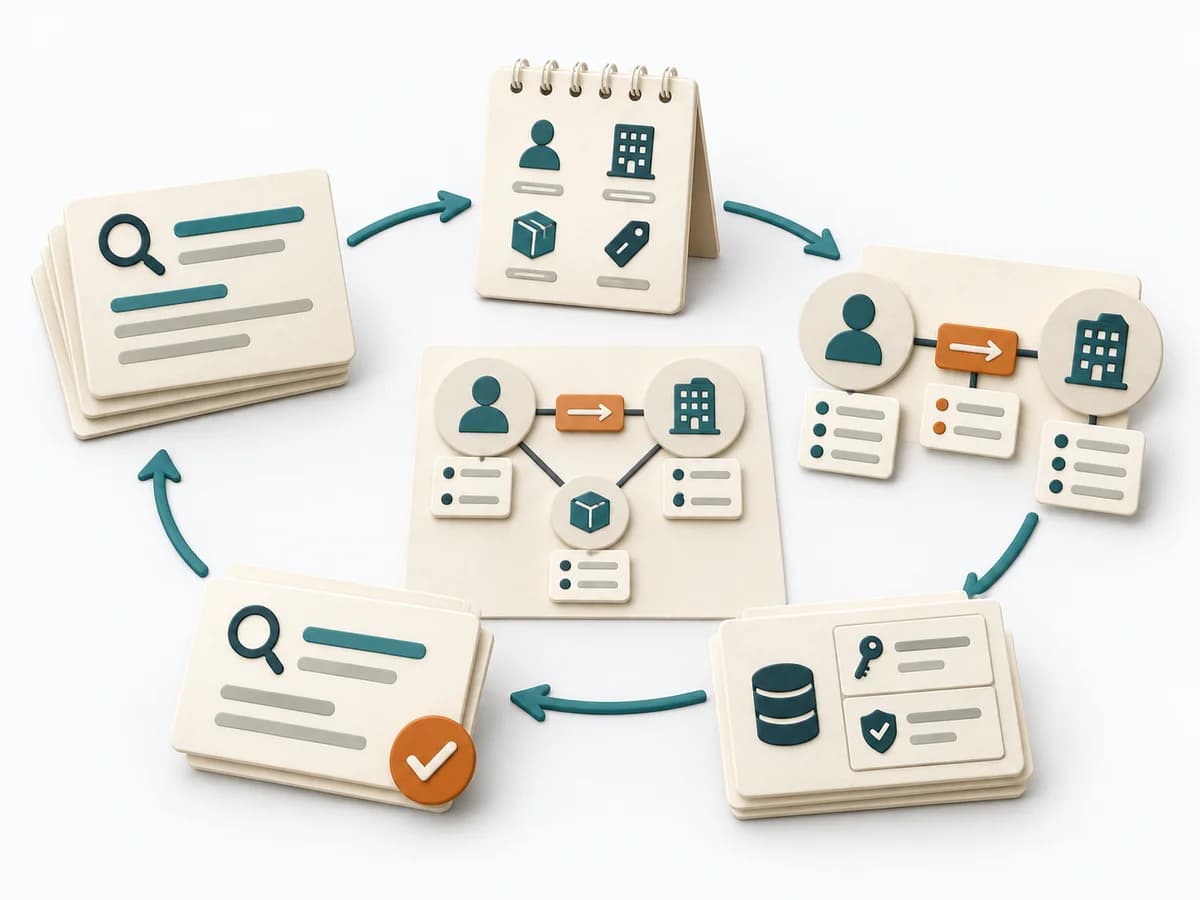
Ontology Design Patterns provide reusable building blocks for recurring modeling problems. The method brings structure to the search for clean concepts, relationships, and roles.
Knowledge Modeling Analysis method
Applies small reusable modelling solutions to bounded ontology problems.
Content ODPs solve recurring modelling problems with intent, competency questions, consequences, and example axioms. Selection and specialisation must fit local semantics.
Which ontology design pattern satisfies the competency questions with suitable consequences?
Ontology Design Patterns uses test a local modelling problem against an ODP's intent, CQs, axioms, and consequences. Assessments remain justified and context-bound.
Bound problem
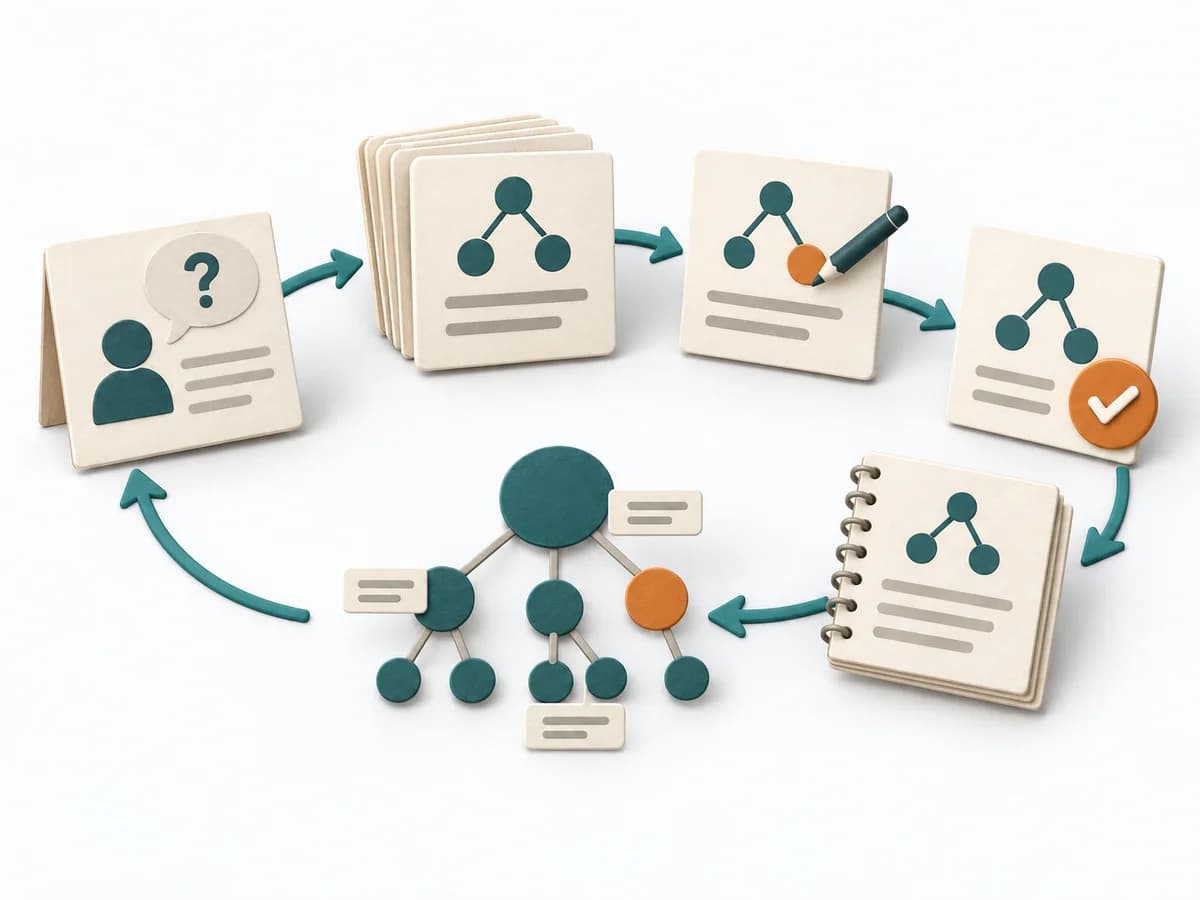
Bound the modelling problem and competency questions.
Compare patterns
Compare intent, examples, consequences, and known uses.
Specialise
Minimally import or locally specialise the pattern.
Test CQs
Run queries against positive, negative, and boundary cases.
Update after new evidence or a material context change and retain the previous version.
For recurring subproblems such as participation, situation, time interval, or n-ary relation.
ODP adoption record with traceable sources, assumptions, and domain decisions.
Owners, dates, and next review for ODP adoption record.
Fictional worked example
test a local modelling problem against an ODP's intent, CQs, axioms, and consequences as a precise working structure with a fictional example.
| Subject | Problem/CQ | Pattern | Consequence | Test |
|---|---|---|---|---|
| ODP adoption recordWorked example | Role-based participation over time. | Participation Pattern. | Participation as an instance. | Approver A-17 found; outside interval excluded. |
The example demonstrates the domain logic of Ontology Design Patterns; worksheets remain blank.
Start with the core question: Which ontology design pattern satisfies the competency questions with suitable consequences?
Ontology Design Patterns provide reusable building blocks for recurring modeling problems. The method brings structure to the search for clean concepts, relationships, and roles.
First, the problem or modeling context is described precisely. The team then selects matching patterns, adapts them, and checks whether they correctly capture the domain meaning. This produces a model that stays consistent and does not need to be reinvented with every extension.
Ontology Design Patterns help because they translate recurring modeling problems into proven solution forms. The method works strongly when a pattern serves as a thinking aid and its assumptions are deliberately checked against the own domain. Good use pays attention to semantic fit, later extensibility, and clean documentation of adaptations, so that consistency grows without smoothing away domain-specific particularities.
Prepare a small set of matching patterns and briefly state for each which problem it is meant to solve. The tipping point often lies where a pattern looks elegant but hides important roles or temporal aspects of the domain. Close with a justified selection, documented adaptations, and an example that immediately tests the new structure.
The method guide walks execution through 4 phases, timing, 4 pitfalls, and clear stop criteria.
Open method guideYour perspective
Your feedback helps shape the next improvements to methodatlas.
Plan Ontology Design Patterns around its domain steps and the concrete decision question.
To be confirmed
To be confirmed
Full workshop Time: 60–90 minutes per pattern
Complete this worksheet on paper or in your own document during the work.
| Subject | Problem · question · boundary | Name · intent · source | Axiom · commitment · query impact | Positive · negative · result |
|---|---|---|---|---|
| ODP adoption record |
Enter only real input, sources, and decisions.
Expected artifact: problem profile
problem profile · source · uncertainty · next decision
Entry:
...
Expected artifact: pattern comparison
pattern comparison · source · uncertainty · next decision
Entry:
...
Expected artifact: pattern module
pattern module · source · uncertainty · next decision
Entry:
...
Expected artifact: adoption record
adoption record · source · uncertainty · next decision
Entry:
...
...
Method guide: https://methodatlas.meierhoff-systems.de/en/methods/ontology-design-patterns/run-sheet
Fitting alternatives with decision guidance, followed by other related methods.

Instead of Ontology Design Patterns, choose Concept Mapping when you want to connect terms with labeled relationships in a subject-matter network.
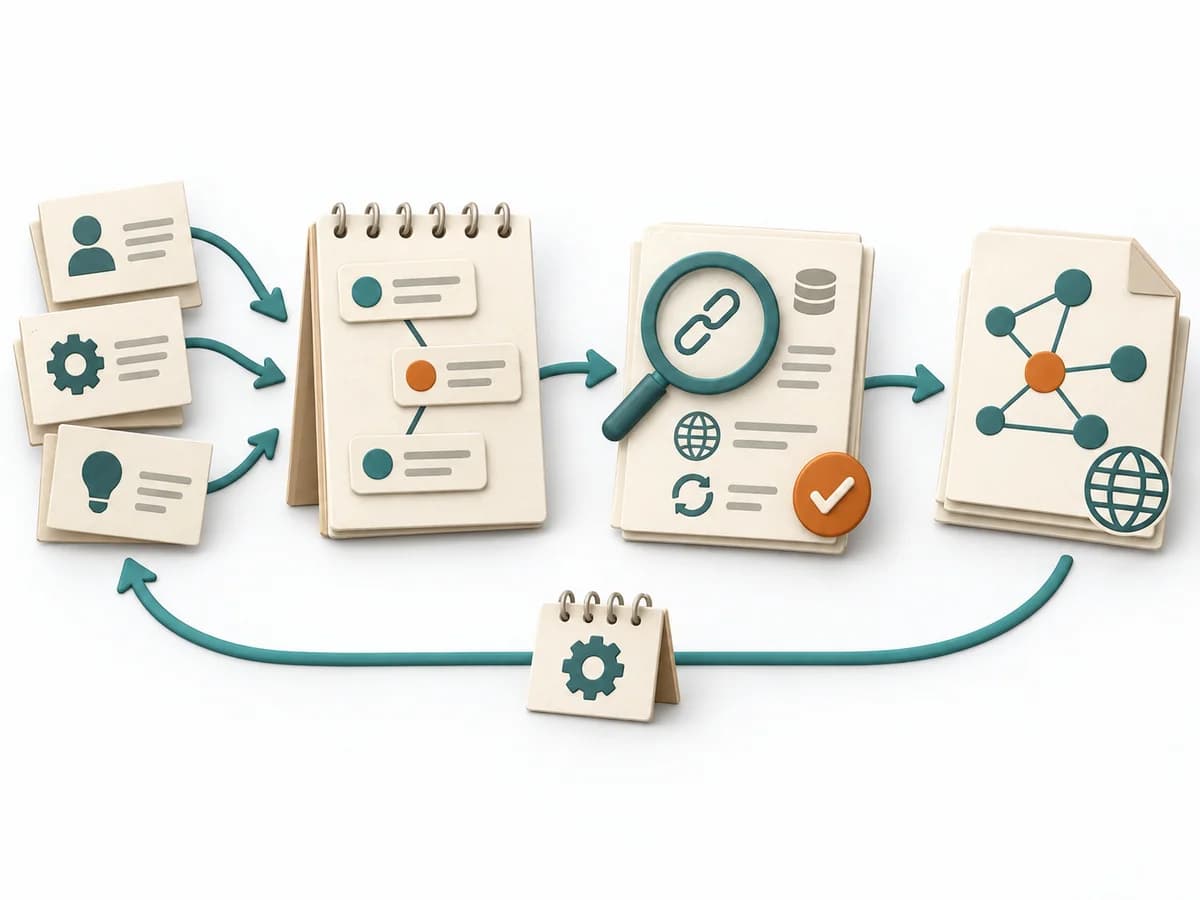
Existing vocabularies become reusable term candidates with ownership, versioning, and maintenance decisions attached.
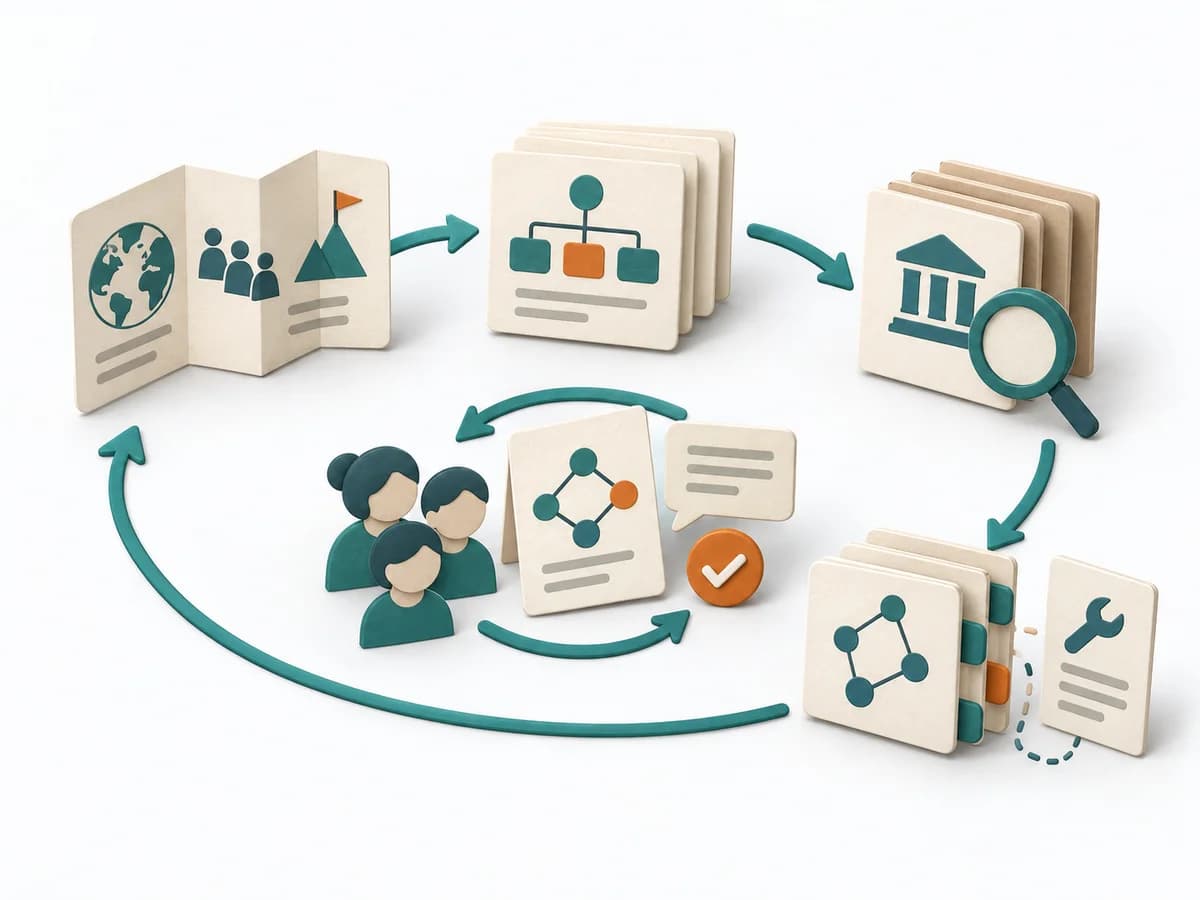
Ontology work is organized as a scenario-based process for reuse, collaboration, evaluation, and long-term maintenance.

Maps critical knowledge, knowledge holders, and gaps so handovers and transfer can be planned deliberately.

Sorts knowledge into Projects, Areas, Resources, and Archive so personal knowledge work stays easier to steer.

Forces complex content into simple language and immediately reveals which knowledge gaps still need closing.