Plan my session
Plan a concrete work block with agenda, roles, preparation, and a copyable result artifact.
Session: Concept Mapping
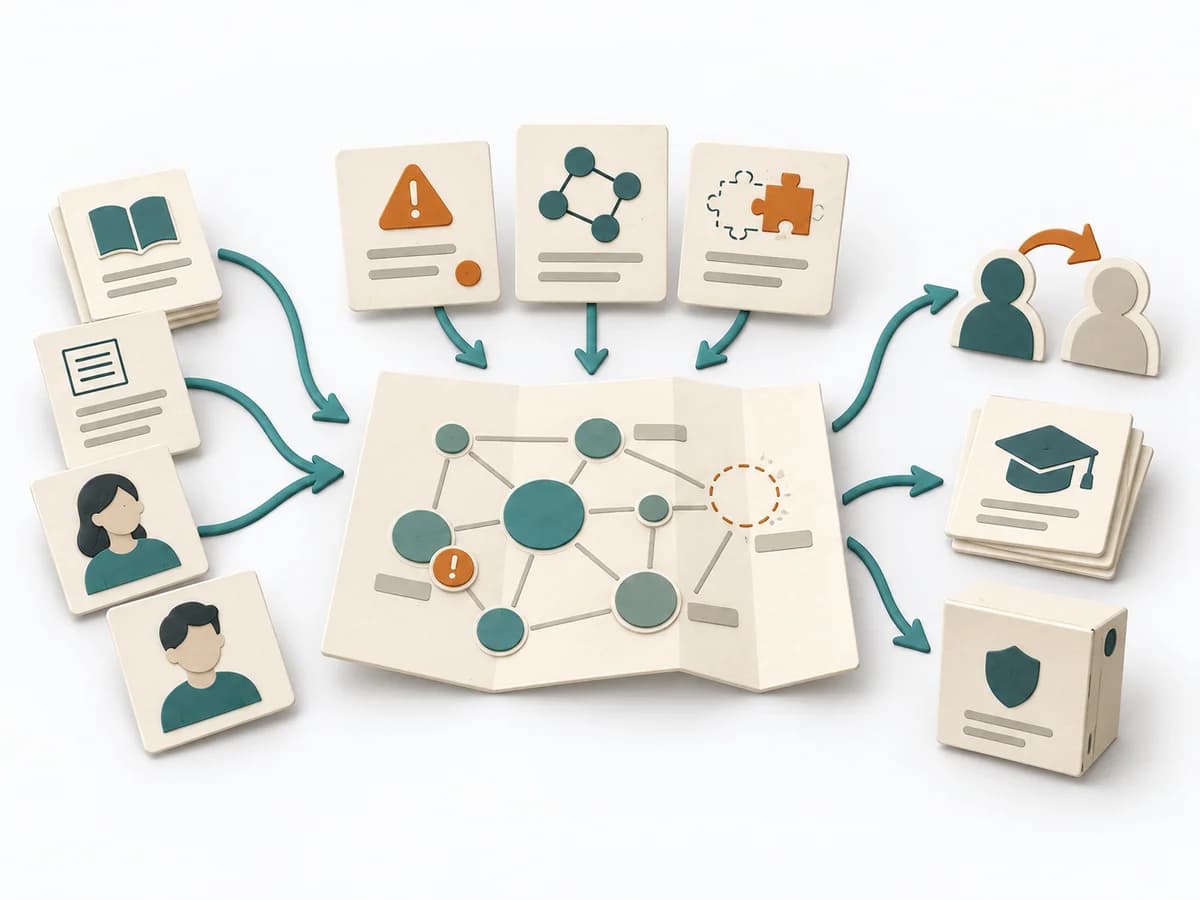
The plan translates the method into a concrete facilitated work block. Your inputs flow directly into the session brief and work artifact.
Method session with 1-8. The plan uses the existing method logic and the runsheet.
RunsheetUse the session for shared understanding. Contributions are collected visibly, assumptions are aligned, and open differences remain traceable in the artifact.
The session works directly toward Concept Map. After the session, the artifact should be shareable, reviewable, or reusable.
- 1
Phase 1: Focus question and core concept
10-15 minRead the focus question aloud. Put the core concept, the central term, in the middle of the board. If needed, use two or three central concepts when the focus question has multiple axes. Hint: If the core concept stays unclear, the focus question has multiple subquestions. Narrow it first, then map.
FacilitatorConcept Map - 2
Phase 2: Gather concepts
15-25 minBrainwriting solo for 5 min: each person writes at least 10 concepts related to the focus question. Then place them around the core concept. Consolidate duplicates. Hint: Concepts are nouns or noun phrases, not verbs or full sentences. Anyone who writes "improve" should rephrase to "improvement loop".
FacilitatorRelationship Labels - 3
Phase 3: Name relationships
30-45 minDraw connecting lines, each labeled with a verb or relationship phrase ("influences", "consists of", "causes", "is a prerequisite for"). Use arrows to show direction for each connection. Hint: Connections without labels are worthless. The label carries the actual semantics of the map.
FacilitatorKnowledge Gaps - 4
Phase 4: Check structure and gaps
15-20 minWalk through the map together. Form clusters, make the hierarchy visible (more general concepts higher up). Mark gaps or contradictions. Hint: A concept map with only a few cross-links is usually a hierarchy, not a network. Cross-links are the valuable insight.
FacilitatorConcept Map - 5
Phase 5: Follow-up questions and owners
10-15 minFormulate one follow-up question per gap or contradiction. Capture owner and deadline. Export the map and store it in the knowledge base. Hint: Gaps are often the topics where the team is learning right now. Capturing them is worthwhile even without immediate resolution.
OwnerRelationship Labels - 6
Publish artifact
10 minCheck the artifact for completeness, define location, set version or status, and name review recipients.
OwnerConcept Map
Session Brief
For invitations, boards, tickets, PR descriptions, or workshop notes.
session-brief.md
Session Brief: Concept Mapping
Goal
Artifact: Concept Map
Working Question
Which concepts belong to the focus question, how are they semantically related, and where do knowledge gaps or contradictions appear?
Context
Focus question as a single sentence; existing glossaries, models, or research notes; definition of what counts as a concept (noun or noun phrase, not a verb); target audience of the map (internal, didactic, etc.).
Setup
- Format: Method session
- Duration: 1-2 h
- Mode: Workshop or async
- Participants: One facilitator who guides the concept core and the relationships; one to eight participants with subject matter or learning background; a scribe for the gap list and follow-up questions.
- Owner: One facilitator who guides the concept core and the relationships
- Participation mode: Team round, shared work and alignment
- Outcome logic: Finish artifact
Participation Logic
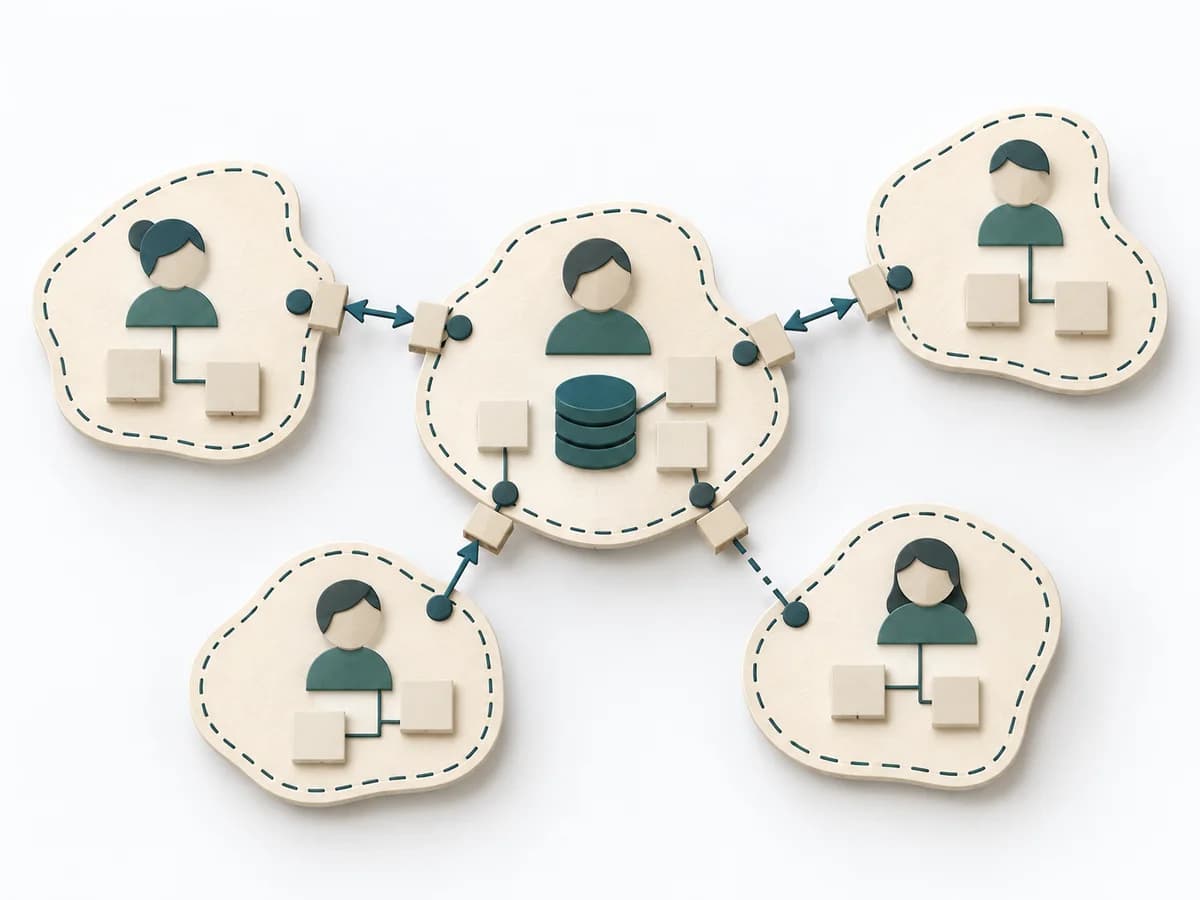
Use the session for shared understanding. Contributions are collected visibly, assumptions are aligned, and open differences remain traceable in the artifact.
Outcome Logic
The session works directly toward Concept Map. After the session, the artifact should be shareable, reviewable, or reusable.
Input
Whiteboard or Miro board with a large open area; sticky notes for concepts; markers for directional labels on connections; shared focus question at the top; timer.
Preparation
Focus question at the top of the board. Example concept and example relationship ("Concept A — influences — Concept B") visible. Rule: every connection needs a verb or relationship label.
Agenda
-
Phase 1: Focus question and core concept (10-15 min) Owner: Facilitator Action: Read the focus question aloud. Put the core concept, the central term, in the middle of the board. If needed, use two or three central concepts when the focus question has multiple axes. Hint: If the core concept stays unclear, the focus question has multiple subquestions. Narrow it first, then map. Output: Concept Map
-
Phase 2: Gather concepts (15-25 min) Owner: Facilitator Action: Brainwriting solo for 5 min: each person writes at least 10 concepts related to the focus question. Then place them around the core concept. Consolidate duplicates. Hint: Concepts are nouns or noun phrases, not verbs or full sentences. Anyone who writes "improve" should rephrase to "improvement loop". Output: Relationship Labels
-
Phase 3: Name relationships (30-45 min) Owner: Facilitator Action: Draw connecting lines, each labeled with a verb or relationship phrase ("influences", "consists of", "causes", "is a prerequisite for"). Use arrows to show direction for each connection. Hint: Connections without labels are worthless. The label carries the actual semantics of the map. Output: Knowledge Gaps
-
Phase 4: Check structure and gaps (15-20 min) Owner: Facilitator Action: Walk through the map together. Form clusters, make the hierarchy visible (more general concepts higher up). Mark gaps or contradictions. Hint: A concept map with only a few cross-links is usually a hierarchy, not a network. Cross-links are the valuable insight. Output: Concept Map
-
Phase 5: Follow-up questions and owners (10-15 min) Owner: Owner Action: Formulate one follow-up question per gap or contradiction. Capture owner and deadline. Export the map and store it in the knowledge base. Hint: Gaps are often the topics where the team is learning right now. Capturing them is worthwhile even without immediate resolution. Output: Relationship Labels
-
Publish artifact (10 min) Owner: Owner Action: Check the artifact for completeness, define location, set version or status, and name review recipients. Output: Concept Map
Closeout
- Update result artifact: Concept Map
- Define location, version, and review recipients.
- Define owner, next step, and review date.
Work artifact
Pre-filled starting point based on the matching template.
work-artifact.md
Concept Map: Concept Mapping
Working Question
Which concepts belong to the focus question, how are they semantically related, and where do knowledge gaps or contradictions appear?
Context
Focus question as a single sentence; existing glossaries, models, or research notes; definition of what counts as a concept (noun or noun phrase, not a verb); target audience of the map (internal, didactic, etc.).
Participants
- Owner: One facilitator who guides the concept core and the relationships
- Participants: One facilitator who guides the concept core and the relationships; one to eight participants with subject matter or learning background; a scribe for the gap list and follow-up questions.
Input
Whiteboard or Miro board with a large open area; sticky notes for concepts; markers for directional labels on connections; shared focus question at the top; timer.
Template
Concept Mapping Canvas
Context
What is this method used for?
Core question
Which question should be answered at the end?
Input
Which data, observations, or materials are available?
Working area
- Area 1:
- Area 2:
- Area 3:
- Relationships / patterns:
Output artifacts
- Concept Map:
- Relationship Labels:
- Knowledge Gaps:
Open questions
- ...
Next step
Owner, date, success signal.
Completion Check
- Concept Map is complete enough for review:
- Location:
- Version / status:
- Review by:
- Next step:
Next Step
- Review result
- Mark open questions
- Schedule review or decision
Concept Mapping Working Template
View templateCompact working template for Concept Mapping with context, input, output artifacts, and next step.canvas
concept-mapping-working-template.md
Compact working template for Concept Mapping with context, input, output artifacts, and next step.
Concept Mapping Canvas
Context
What is this method used for?
Core question
Which question should be answered at the end?
Input
Which data, observations, or materials are available?
Working area
- Area 1:
- Area 2:
- Area 3:
- Relationships / patterns:
Output artifacts
- Concept Map:
- Relationship Labels:
- Knowledge Gaps:
Open questions
- ...
Next step
Owner, date, success signal.
- Working question, owner, and target artifact are visible.
- The result fits Concept Map.
- Create one map per focus question with date. Version a growing map regularly, for example quarterly, and document the delta. For larger restructures, create a new version and keep the old one as a snapshot.
- Open questions are noted as follow-ups.
- The next review or decision point is scheduled.