Purpose
When a domain model and its associated contexts need to be thought through together, it creates a shared overview. It connects the business view and organizational boundary into a readable whole.
Domain Modeling Mapping tool
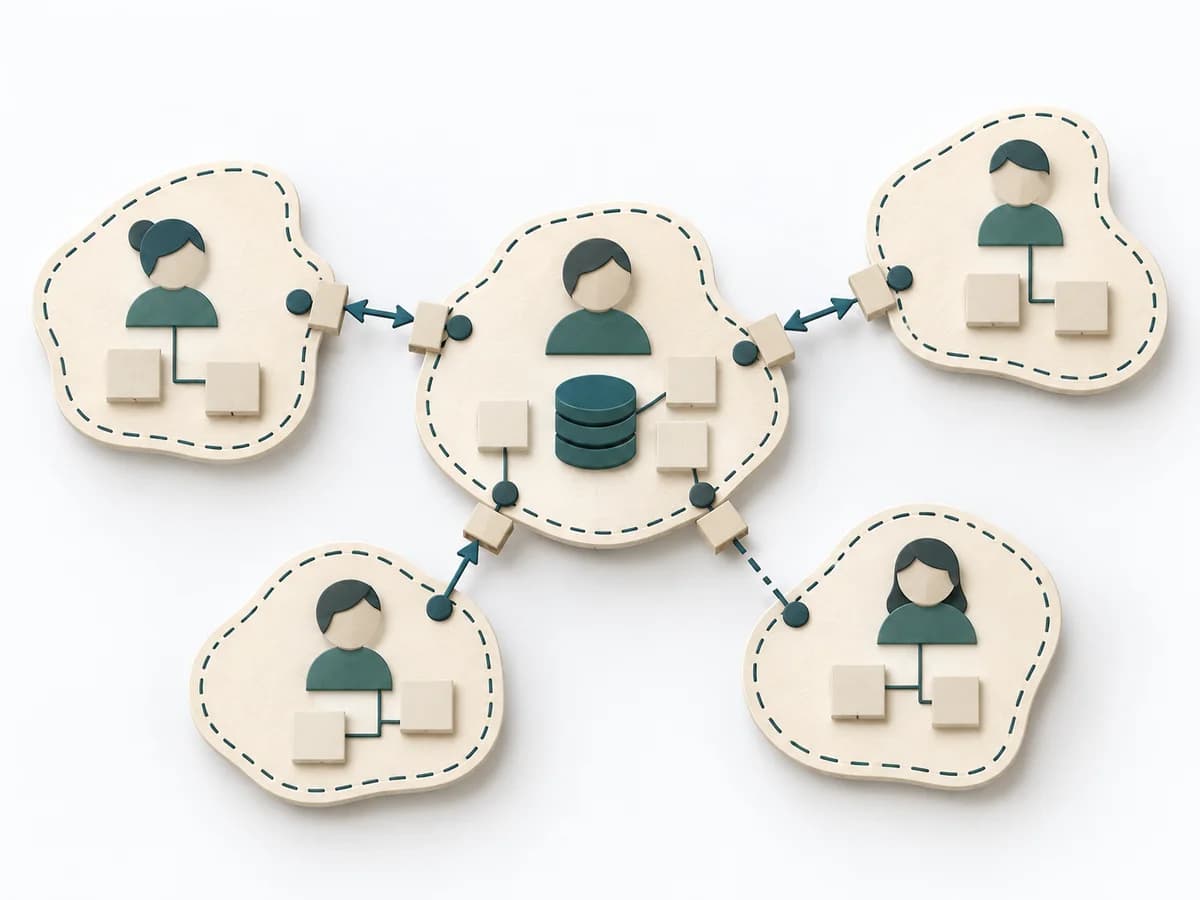
A domain context map shows where particular models apply and how their owning teams must collaborate.
A context map shows bounded contexts with their own domain language and model ownership, plus integration and team relationships. Upstream and downstream describe model dependency, not automatically the direction of a data packet.
Where do particular models apply and how must their owning teams collaborate?
Contexts
Identify areas with a consistent model using terms and rules.
Ownership
Assign each context to an owning team and collect current integrations.
Dependency
Determine upstream/downstream model dependency or a symmetric relationship for each connected pair.
Patterns
Choose and justify team and integration patterns, such as Customer/Supplier, Partnership, Conformist or Anti-Corruption Layer.
Risks
Review conflicting terms, unmaintained contracts and tight coupling with both sides.
Recheck relationships with both sides and version the map when models, teams or contracts change.
For domain-driven design when model boundaries or cross-team integrations need clarification.
The versioned context map contains boundaries, domain terms, owners, directed dependencies, relationship patterns, and open modelling questions.
The clarification record contains a specific modelling or contract question with owner and date.
Fictional example
A context map shows bounded contexts with their own domain language and model ownership, plus integration and team relationships. Upstream and downstream describe model dependency, not automatically the direction of a data packet.
Record purpose, domain terms, boundaries and owner per context.
Fictional: Catalog (Offering team) manages courses; Enrollment (Participation team) manages seat reservations; Billing (Finance team) manages receivables.
Record contexts, U/D roles, contract, patterns and change coordination.
Catalog U → Enrollment D: course ID and offering via a versioned API. Catalog offers OHS/Published Language; Enrollment translates external statuses through an ACL into its reservation model.
Describe another relationship including influence over the interface.
Enrollment U → Billing D: confirmed enrolment event. Customer/Supplier: Billing can negotiate required billing fields with the Participation team.
Which meaning or responsibility is unclear, who will clarify it and with what evidence?
On cancellation, reservation status differs from receivable status. Both teams review three cancellation cases by Friday and document event rules.
All example details are fictional and illustrate the application.
Collect a domain slice, concrete business workflows, team ownership and known interfaces. Keep current and target views separate.
When a domain model and its associated contexts need to be thought through together, it creates a shared overview. It connects the business view and organizational boundary into a readable whole.
It places domain elements and context boundaries side by side and makes their connection explicit. This makes model, collaboration, and integration points discussable together without mixing up business boundary and technical interface.
This method carries weight because it orders business spaces from the domain's point of view, creating a more robust basis for later team or system cuts. Good application looks at coherence of meaning, language boundaries, and interactions instead of just relabeling existing org charts. This produces a picture that enables strategic delimitation while also exposing where shared terms only seem to carry the same meaning.
Bring cases where similar terms trigger different consequences in different areas, because that's where the dividing lines show most clearly. It gets really productive when a term stays stable but its purpose changes. Close with a short list of named contexts and the most uncertain transitions between them.
The method guide walks execution through 5 phases, timing, 5 pitfalls, and clear stop criteria.
Open method guideYour perspective
Your feedback helps shape the next improvements to methodatlas.
Collect a domain slice, concrete business workflows, team ownership and known interfaces. Keep current and target views separate.
To be confirmed
To be confirmed
Complete cycle Time: 90–180 minutes for an initial slice; further modelling sessions as needed
Complete this worksheet on paper or in your own document during the work.
Record purpose, domain terms, boundaries and owner per context.
...
Record contexts, U/D roles, contract, patterns and change coordination.
...
Describe another relationship including influence over the interface.
...
Which meaning or responsibility is unclear, who will clarify it and with what evidence?
...
Answer the prompts with your own information. Explicitly mark unknowns and assumptions.
Expected artifact: Context inventory
Does a consistent domain language apply within each boundary?
Entry:
...
Expected artifact: Confirmed ownership
Are ownership and current-state status confirmed?
Entry:
...
Expected artifact: Labelled context relationships
Is the arrow meaning explained in a legend?
Entry:
...
Expected artifact: Justified relationship patterns
Does the pattern describe actual collaboration and translation?
Entry:
...
Expected artifact: Reviewed map and clarification tasks
Does each unresolved relationship have a clarification task?
Entry:
...
...
Method guide: https://methodatlas.meierhoff-systems.de/en/methods/domain-context-map/run-sheet
Fitting alternatives with decision guidance, followed by other related methods.

Instead of Domain Context Map, when you want to map contexts, dependencies, and integration relationships as a system map.
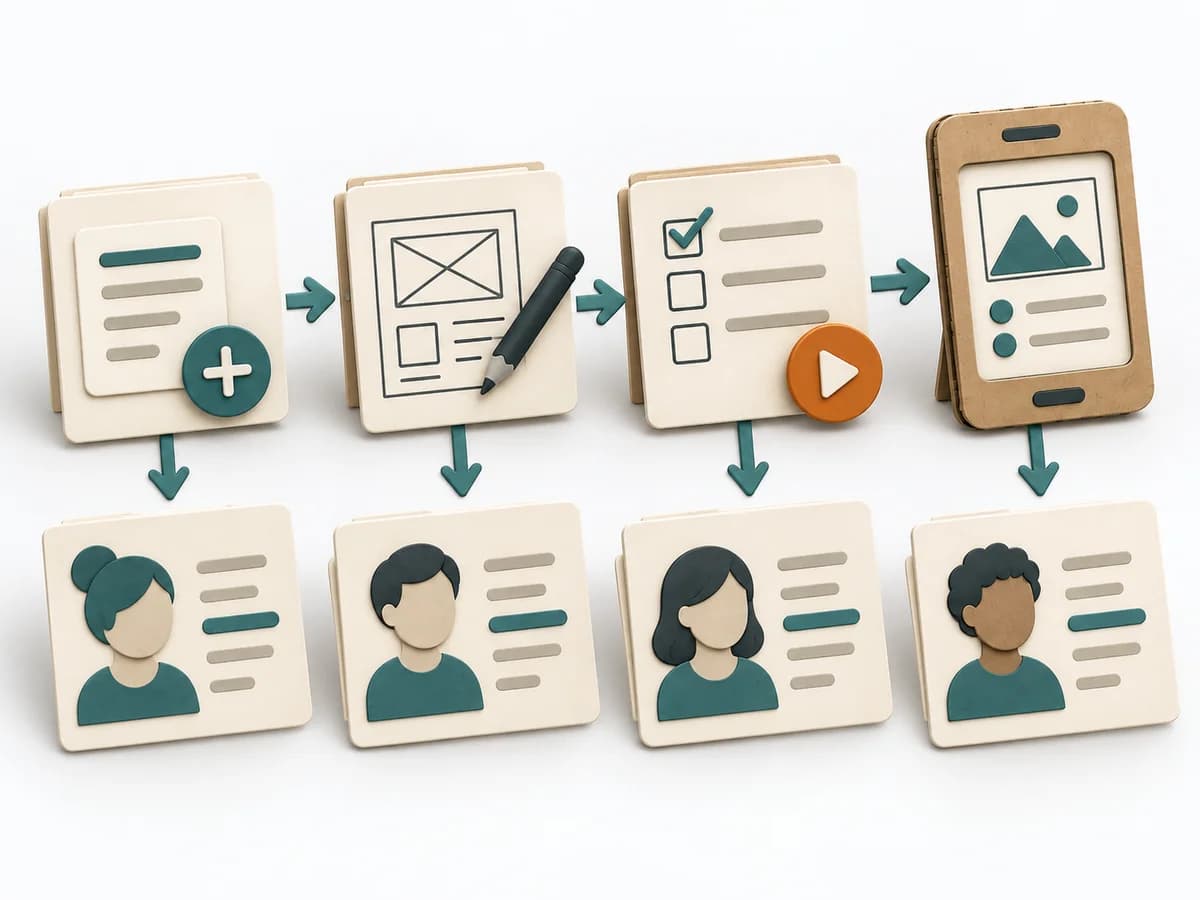
Links events, commands, and views into a flow picture that brings UI, behavior, and implementation together.

Clarifies concepts, relationships, and rules by framing the focus question, gathering concepts, and checking gaps and contradictions.

Maps critical knowledge, knowledge holders, and gaps so handovers and transfer can be planned deliberately.
Makes system, container, and building blocks legible in graduated views, easing architecture communication.
Observes real work in context and pairs it with follow-up questions to capture workflow insights precisely.
