methodatlas
Playbook

Prepare Knowledge Modeling

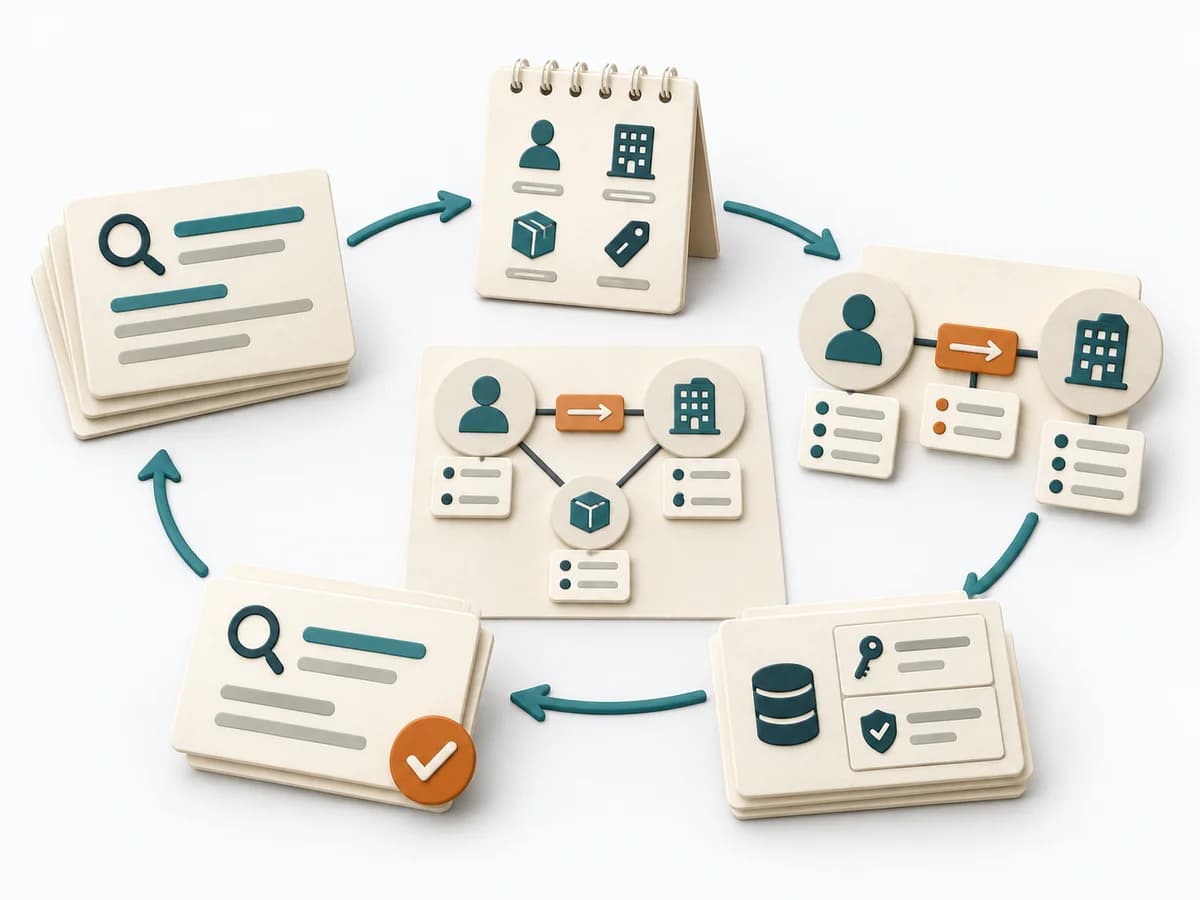
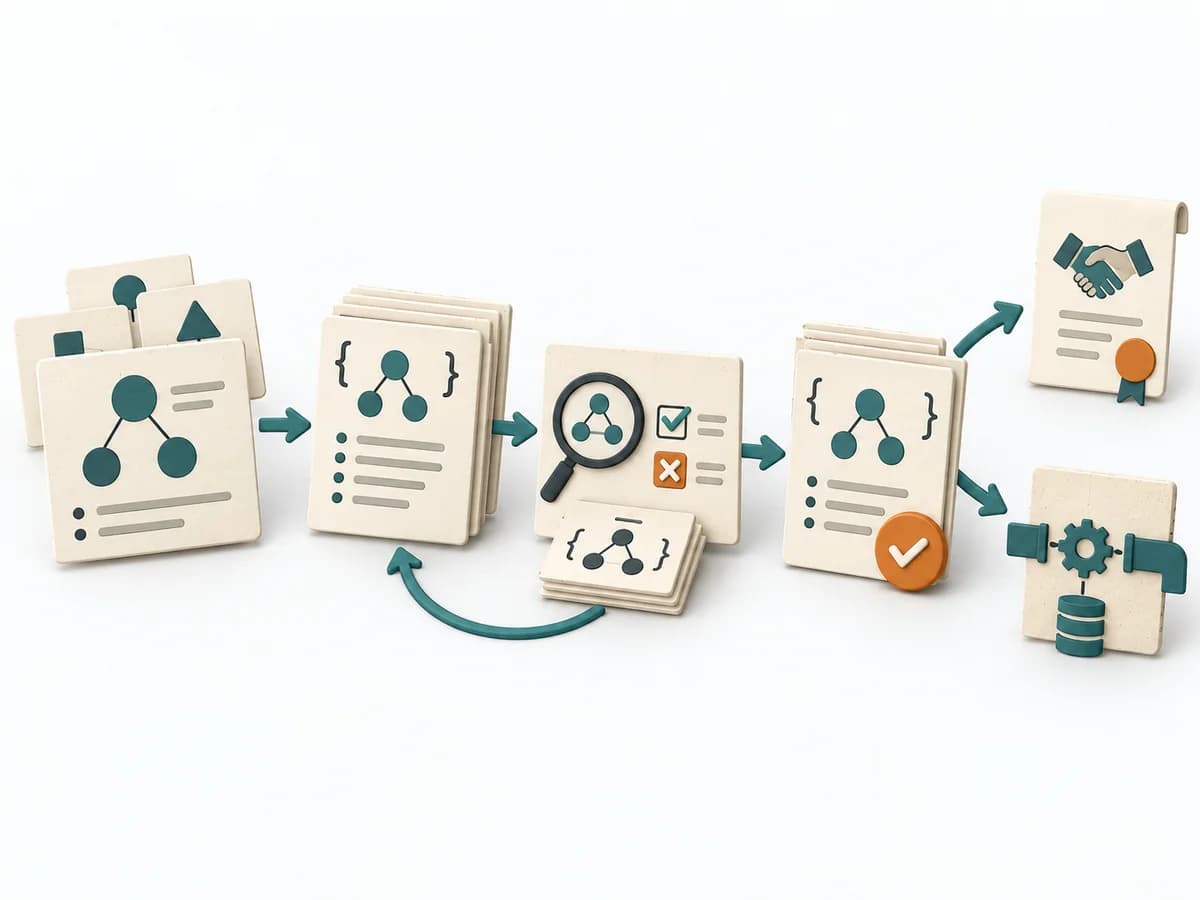
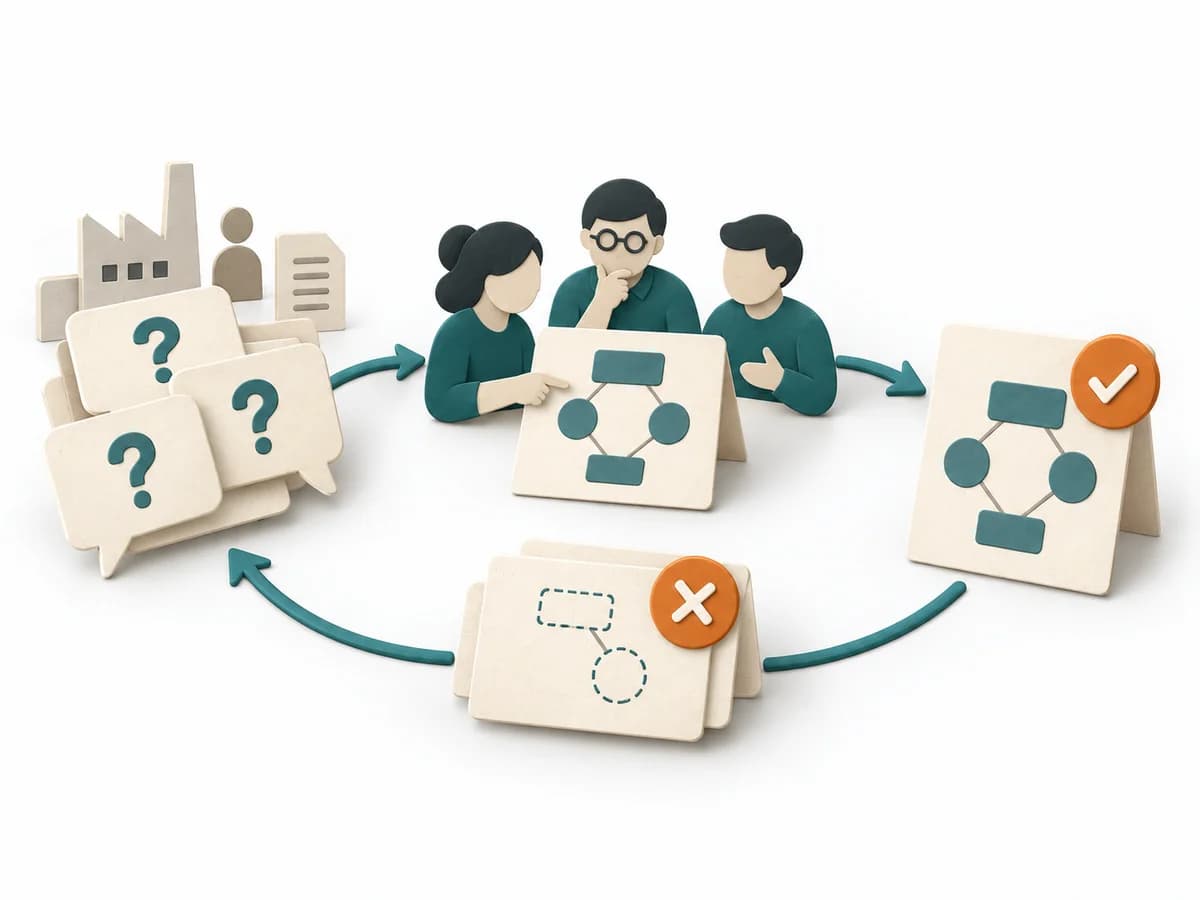
Move from a knowledge domain to questions, concept model, schema, and validation rules.

Steps4 methods
Time2-10 days
FormatHybrid
Outcome

A verifiable model slice with competency questions, concepts, schema, and example queries.

At the end you have

Competency QuestionsConcept ModelProperty-Graph-SchemaShapes and Validation Rules

Decision point

You can decide which knowledge slice is built and validated first as a knowledge graph or GraphRAG input.

Next step

Validate with sample data against shapes and test example queries across competency questions.
Ideal for

  • Knowledge graphs
  • semantic models
  • GraphRAG or ontology work

Not good for

  • unstructured ideation without domain focus
  • pure UI design
Preparation

What should be clear before you start

Roles

  • Domain experts
  • knowledge engineer or architect
  • product or use case owners

Inputs

  • core user questions or search scenarios
  • sample documents, terms, and data sources
  • known quality and governance requirements

Setup

  • Choose a clearly bounded domain slice
  • Collect sample answers or reference cases
  • Document modeling decisions directly
Flow

Method path

4 methods
  1. 1Knowledge ModelingQuestion Set

    Competency Questions

    Which domain questions must the ontology answer with defined data and inferences?

    Why this step?

    The process starts with testable questions so the model is not only formally consistent but also measurable on real use cases.

    The questions then drive concepts, relations, and example instances in the next step.

    Paper illustration of Competency Questions with its method-specific working model.
  2. 2Knowledge ModelingConcept Map

    Concept Mapping

    Which concepts and propositions answer our focus question?

    Why this step?

    Concept Mapping makes language, terms, and relationships jointly negotiable before creating a technical schema.

    Key concepts and relationships are then translated into graph structures.

    Paper illustration of a Concept Map with concepts and labelled links
  3. 3Knowledge ModelingGraph Schema

    Property Graph Schema Design

    Which graph schema answers the key queries correctly, understandably, and efficiently?

    Why this step?

    The schema translates the domain model into a concrete graph structure with nodes, edges, attributes, and access paths.

    The schema then needs rules so data quality and modeling assumptions remain verifiable.

    Paper illustration of Property Graph Schema Design with its method-specific working model.
  4. 4Knowledge ModelingShapes

    Shape-First Modeling

    Which RDF structure must hold for the use case, and how is each violation reported?

    Why this step?

    Shape-first modeling records which structure, required fields, and relationship patterns define valid data.

    With shapes, the first model slice can be tested with sample data and queries.

    Paper illustration of Shape-first Modeling with its method-specific working model.
Completion criteria
Templates

Artifacts for this playbook

Artifacts stay collapsed until you actually need them.

MarkdownShow template

Competency Questions: Worksheet

Plan Competency Questions around its domain steps and the concrete decision question.

# Competency Questions: Worksheet

## Question
To be confirmed

## Desired outcome
To be confirmed

## Scope
Full workshop
Time: 60–90 minutes initially; ongoing test maintenance

Complete this worksheet on paper or in your own document during the work.

## Preparation for this scope

### Method setup
- **Materials:** Use cases and decision questions, domain vocabulary, representative instance data, shared workspace, source links, and decision log.
- **Roles:** Domain expert · ontology engineer · data consumer
- **Advance information:** Collect Use cases and decision questions, domain vocabulary, representative instance data in advance and mark open assumptions.
- **Overall time needed:** 60–90 minutes initially; ongoing test maintenance
- **Setup:** Prepare translate a natural-language domain question into terms, formal query, test data, and expected answer visibly and calibrate assessment terms before starting.

### Prepare for the work steps

#### Elicit question: Elicit question
- Use cases and decision questions
- domain vocabulary
- representative instance data

#### Specify: Specify
- CQ backlog
- domain vocabulary
- representative instance data

#### Formalise: Formalise
- precise CQ
- domain vocabulary
- representative instance data

#### CQ tests: CQ tests
- query test
- domain vocabulary
- representative instance data


## competency question test suite

### Competency question
User · question · decision

...

### Semantics
Terms · quantifier · horizon

...

### Test case
Data · expected answer · negative case

...

### Formalisation
Query · axioms · version

...

Enter only real input, sources, and decisions.

[Grüninger and Fox: Methodology for the Design and Evaluation of Ontologies](https://www.eil.utoronto.ca/wp-content/uploads/enterprise-modelling/papers/gruninger-ijcai95.pdf)


## Elicit question: Elicit question
Expected artifact: CQ backlog

CQ backlog · source · uncertainty · next decision

Entry:

...

- [ ] Is the question relevant to a concrete user?

## Specify: Specify
Expected artifact: precise CQ

precise CQ · source · uncertainty · next decision

Entry:

...

- [ ] Can a unique example answer be given?

## Formalise: Formalise
Expected artifact: query test

query test · source · uncertainty · next decision

Entry:

...

- [ ] Does the formal query preserve the domain question?

## CQ tests: CQ tests
Expected artifact: CQ test suite

CQ test suite · source · uncertainty · next decision

Entry:

...

- [ ] Does the test fail when a core axiom is missing?

## Open questions and next steps

...

Method guide: https://methodatlas.meierhoff-systems.de/en/methods/competency-questions/run-sheet
MarkdownShow template

Property Graph Schema Design: Worksheet

Plan Property Graph Schema Design around its domain steps and the concrete decision question.

# Property Graph Schema Design: Worksheet

## Question
To be confirmed

## Desired outcome
To be confirmed

## Scope
Full workshop
Time: 2 × 90 minutes plus query testing

Complete this worksheet on paper or in your own document during the work.

## Preparation for this scope

### Method setup
- **Materials:** prioritised queries, sample data and identity rules, volume and change assumptions, shared workspace, source links, and decision log.
- **Roles:** Domain expert · graph engineer · query consumer · data steward
- **Advance information:** Collect prioritised queries, sample data and identity rules, volume and change assumptions in advance and mark open assumptions.
- **Overall time needed:** 2 × 90 minutes plus query testing
- **Setup:** Prepare query-driven modelling of nodes, relationships, properties, and constraints visibly and calibrate assessment terms before starting.

### Prepare for the work steps

#### Prioritise queries: Prioritise queries
- prioritised queries
- sample data and identity rules
- volume and change assumptions

#### Model graph: Model graph
- query catalogue
- sample data and identity rules
- volume and change assumptions

#### Define integrity: Define integrity
- graph schema
- sample data and identity rules
- volume and change assumptions

#### Test queries: Test queries
- constraint set
- sample data and identity rules
- volume and change assumptions


## property graph schema

### Query
Question · expected answer · volume

...

### Graph pattern
Nodes · relationships · direction

...

### Integrity
ID · constraint · cardinality

...

### Query plan
Index · traversal · result

...

Enter only real input, sources, and decisions.

[Neo4j Graph Data Modeling Guidelines](https://neo4j.com/docs/getting-started/data-modeling/guide-data-modeling/)


## Prioritise queries: Prioritise queries
Expected artifact: query catalogue

query catalogue · source · uncertainty · next decision

Entry:

...

- [ ] Are read and write patterns included?

## Model graph: Model graph
Expected artifact: graph schema

graph schema · source · uncertainty · next decision

Entry:

...

- [ ] Do relationships express domain verbs?

## Define integrity: Define integrity
Expected artifact: constraint set

constraint set · source · uncertainty · next decision

Entry:

...

- [ ] Do constraints prevent invalid core data?

## Test queries: Test queries
Expected artifact: validated schema

validated schema · source · uncertainty · next decision

Entry:

...

- [ ] Are result and access path correct?

## Open questions and next steps

...

Method guide: https://methodatlas.meierhoff-systems.de/en/methods/property-graph-schema-design/run-sheet