Purpose
When an insight needs to have an effect, storytelling translates dry facts into a comprehensible development. It combines context, tension, and consequence into a form that people remember and pass on more easily.
Facilitation Facilitation method
Clarifies what a particular audience should understand from a story and decide next.
A coherent story connects a person, their goal, an obstacle and a change to a message for a particular audience. Observed events remain distinguishable from invented scenes.
What should this audience understand from the story and decide next?
Message
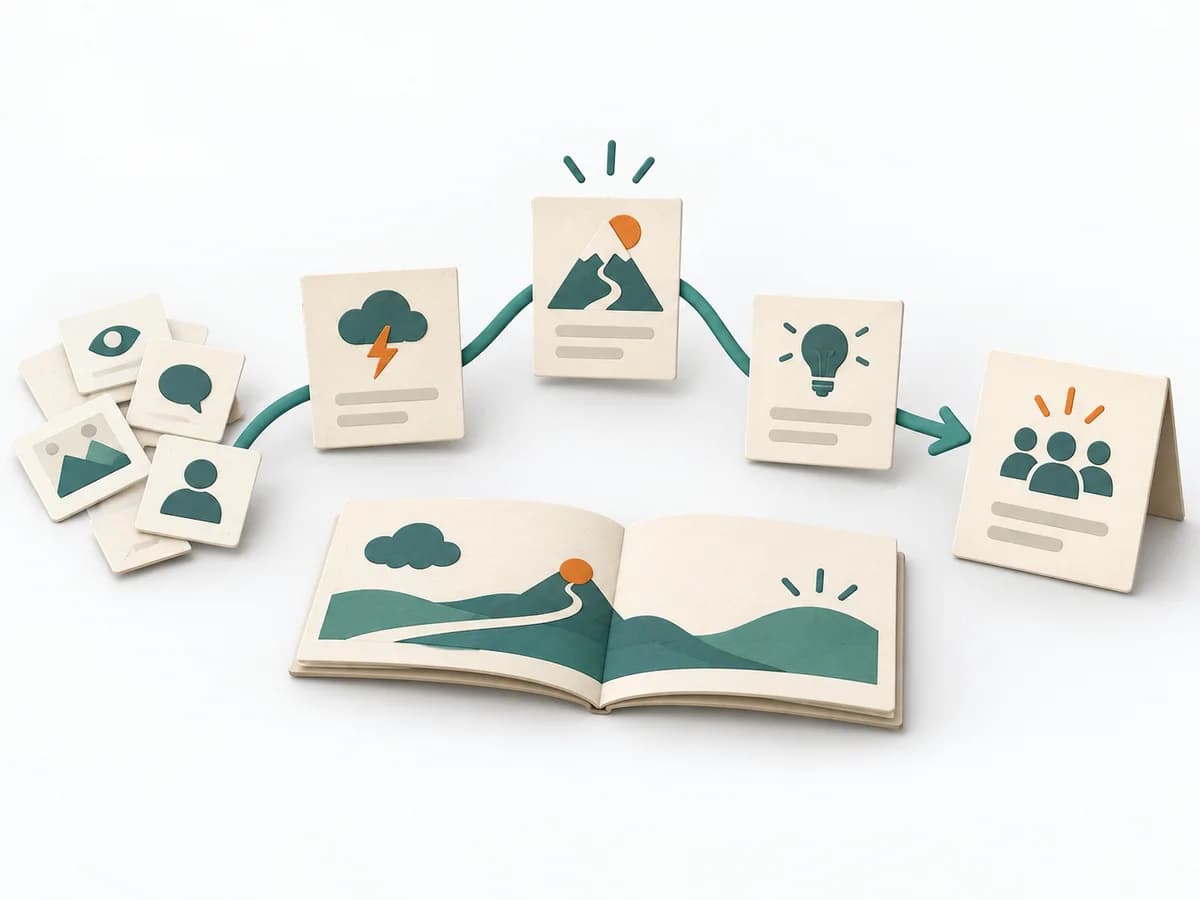
Record the audience, prior knowledge and one intended insight.
Scene
Choose a specific person, goal and situation; label the origin of each detail.
Story arc
Show what blocks the goal, what action follows and how the situation changes.
Meaning
Connect the outcome to the key message and ask a specific decision question.
Rehearsal
Tell the story aloud; ask a listener to repeat its message and decision question.
Test understanding after a rehearsal; update the scene and conclusion together when new evidence arrives.
For research readouts, change initiatives and design decisions where concrete experiences explain a message.
Narrative outline with audience, key message, situation, conflict, turning point, outcome, evidence status and decision request.
The rehearsed story version explains or shortens unclear transitions and records the checked evidence status.
Fictional example
A coherent story connects a person, their goal, an obstacle and a change to a message for a particular audience. Observed events remain distinguishable from invented scenes.
Who should make which decision afterwards?
Fictional: product leadership is asked to approve a test of the save function.
What single insight should be remembered?
Reliable saving allows interruptions without restarting.
Who is trying to achieve which goal in what situation? Record provenance.
Invented scene: Mara fills in a course application on a bus.
What interrupts progress and how is that visible?
She closes the page while changing buses; her entries disappear.
What action or insight changes the situation?
In the fictional prototype she reopens her saved draft.
What meaning follows, what decision is requested and what remains unproven?
Mara completes the application. Proposal: test resuming in a usability study; the scene establishes no success rate.
All example details are fictional and illustrate the application.
Select audience, intended decision and available observations; check permission to use personal details.
When an insight needs to have an effect, storytelling translates dry facts into a comprehensible development. It combines context, tension, and consequence into a form that people remember and pass on more easily.
A line is built from individual observations in which trigger, turning point, and meaning refer to one another. This makes content connectable for decisions, change communication, and shared learning.
Storytelling works because information is put into a meaningful sequence of starting situation, tension, and change, making it easier to understand and remember. The method gains substance when the narrative builds toward a clear core and every episode strengthens the message. This stays clean through perspective, relevance for the audience, and concrete detail, so the story gives orientation instead of merely entertaining.
First clarify what effect or insight the story should trigger before collecting individual episodes. The tipping point is often too many side threads; then a consistent return to the throughline is needed. Close with a condensed core statement and an image or sentence meant to stay in memory.
The method guide walks execution through 5 phases, timing, 5 pitfalls, and clear stop criteria.
Open method guideYour perspective
Your feedback helps shape the next improvements to methodatlas.
Select audience, intended decision and available observations; check permission to use personal details.
To be confirmed
To be confirmed
Complete cycle Time: 45–90 minutes for drafting and rehearsal
Complete this worksheet on paper or in your own document during the work.
Who should make which decision afterwards?
...
What single insight should be remembered?
...
Who is trying to achieve which goal in what situation? Record provenance.
...
What interrupts progress and how is that visible?
...
What action or insight changes the situation?
...
What meaning follows, what decision is requested and what remains unproven?
...
Answer the prompts with your own information. Explicitly mark unknowns and assumptions.
NN/g: UX Stories Communicate Designs
Expected artifact: Key message
Does the message support an audience decision?
Entry:
...
Expected artifact: Opening scene
Can observation and fiction be distinguished?
Entry:
...
Expected artifact: Story arc
Does each scene explain the change?
Entry:
...
Expected artifact: Ending
Does the request follow from the story?
Entry:
...
Expected artifact: Rehearsed version
Does the intended message land unaided?
Entry:
...
...
Method guide: https://methodatlas.meierhoff-systems.de/en/methods/storytelling/run-sheet
Fitting alternatives with decision guidance, followed by other related methods.

Instead of Storytelling, when you want to sharpen the inner logic of a message from why to what.

Makes goals, concerns, and open gaps visible so clarification steps can be planned deliberately.

Moves group input, selection, and decision toward a concrete result through "prepare the stakeholder list", "define power, legitimacy, and urgency", and "derive strategy by class".
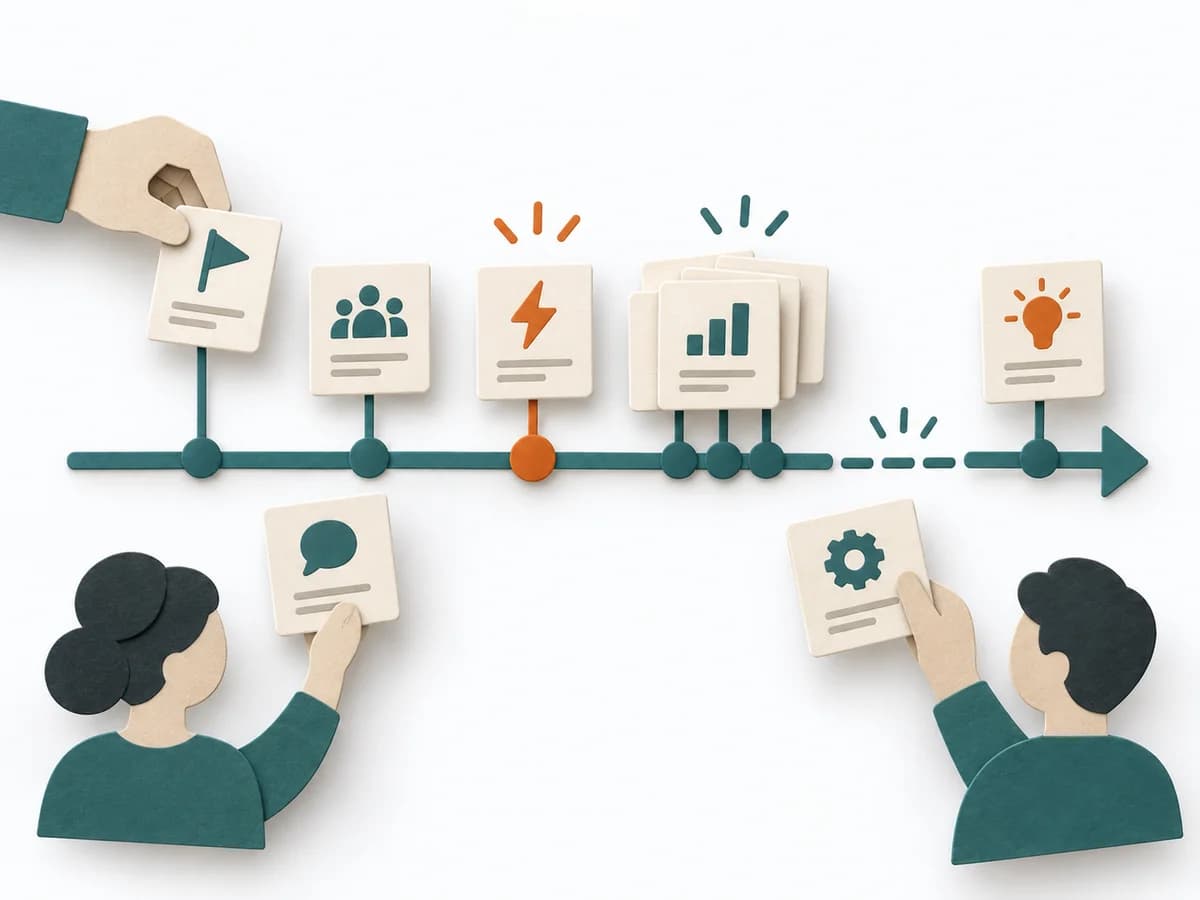
Condenses events into a chronological view of milestones, patterns, and dependencies.

Moves group input, selection, and decision toward a concrete result through "collect stakeholders individually and by group", "explain power and interest", and "derive a strategy for each quadrant".
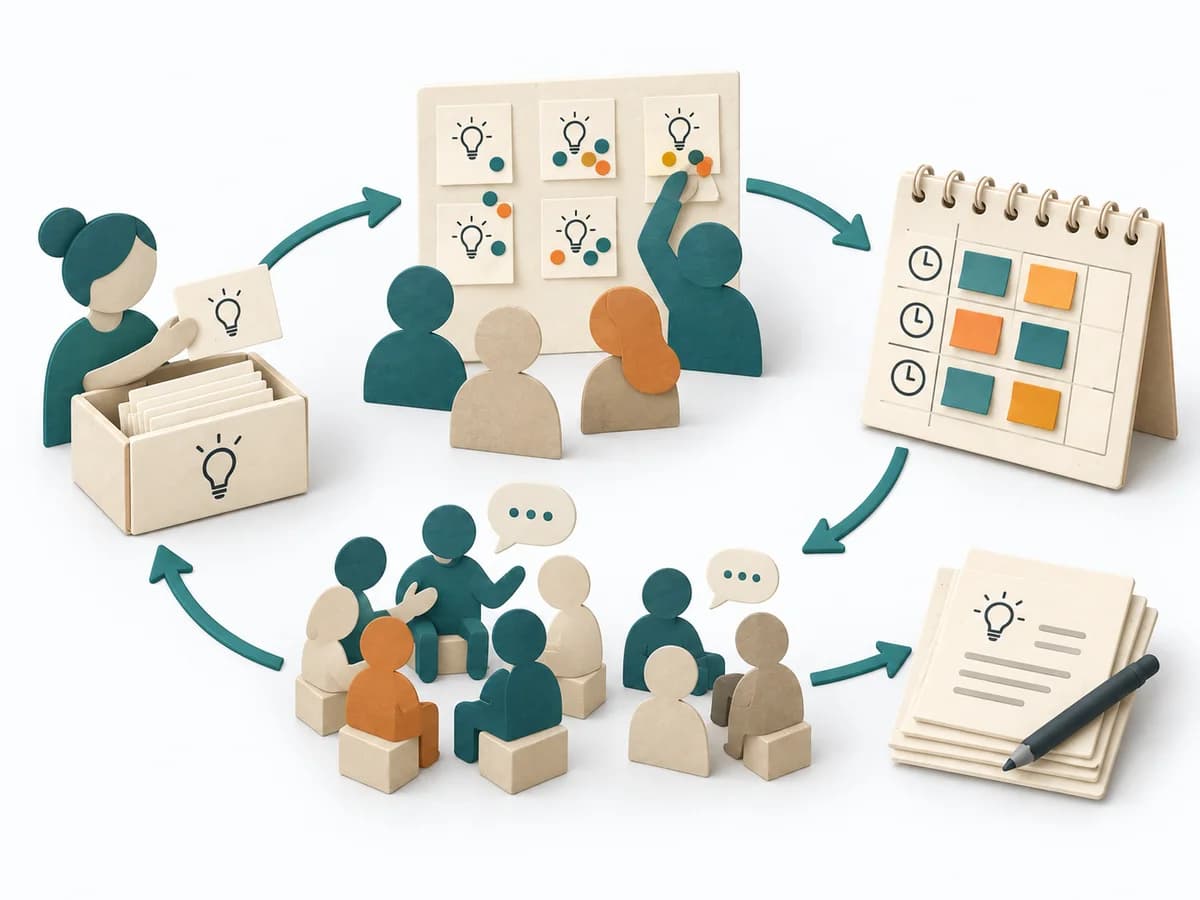
Organizes session proposals, agenda, and self-led conversations that produce documentable learnings.