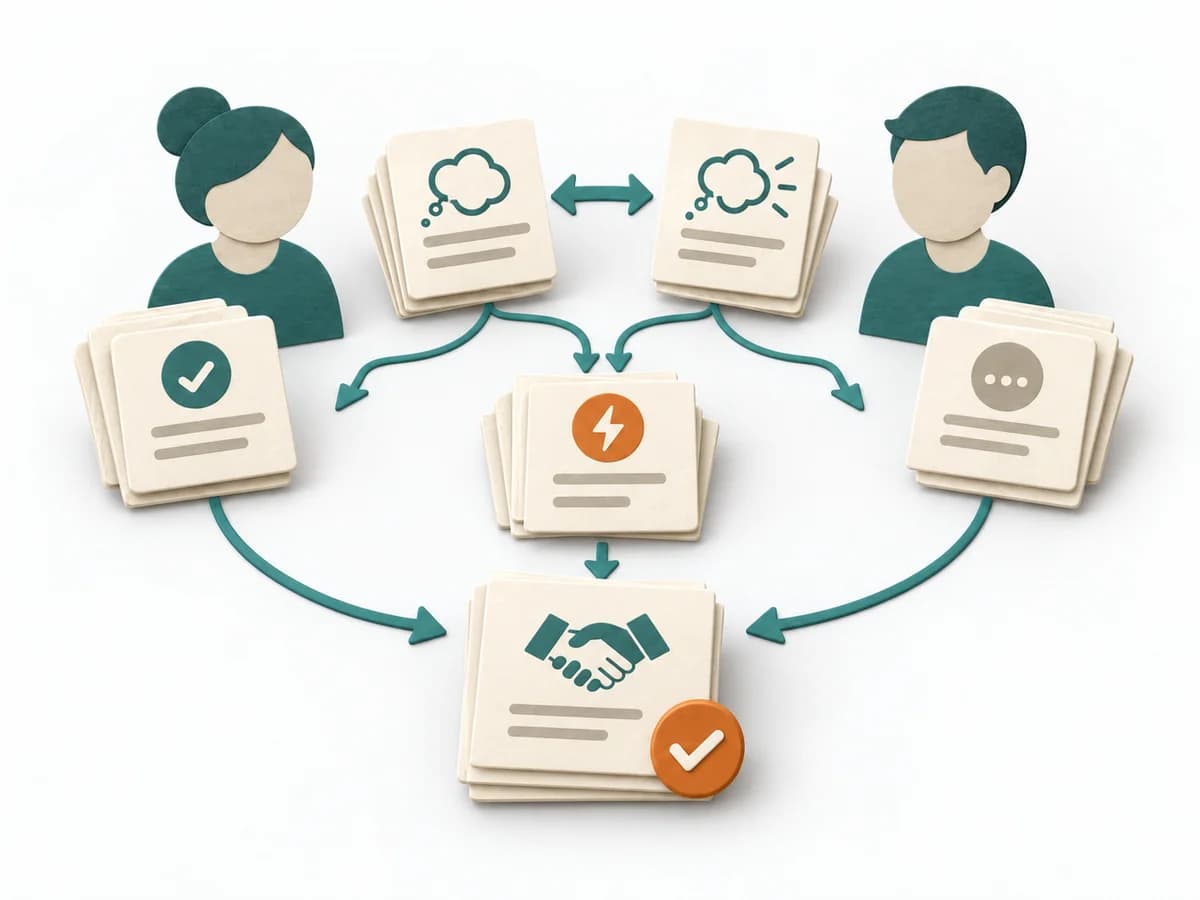
Assesses competing stakeholder claims through power, legitimacy, and urgency while making attributes and assessor perspective visible.
The Salience Model describes which claims management prioritises. Power, legitimacy, and urgency are assessed per claim and context; the resulting class is a dated perception rather than a moral ranking of people.
Core question
Which stakeholder claims possess power, legitimacy, and urgency in this decision, and what attention follows?
Stakeholder Salience Model uses three separate attributes per stakeholder claim and a derived salience class. Assessments remain justified and context-bound.
Frame claims
Frame claims
State each stakeholder and concrete claim for one bounded decision.
Assess attributes
Assess attributes
Assess power, legitimacy, and urgency for each claim using definitions and evidence.
Set attention
Set attention
Derive the salience class, add a rights check, and choose an appropriate response.
Reassess attributes when claims, power bases, or deadlines change, retaining prior classifications.
A good fit when
Useful when claims compete for limited attention. Add relationships, rights, and impact for engagement planning.
Ideal for
Public-sector projects
Cross-org initiatives
Change programs
Not good for
Small product teams without politics
Outputs
salience map
salience map with traceable sources, assumptions, and domain decisions.
Decision and review trail
Owners, dates, and next review for salience map.
salience map
Fictional worked example
three separate attributes per stakeholder claim and a derived salience class as a precise working structure with a fictional example.
salience map
Claim
Stakeholder claim
Power
Legitimacy
Urgency
Class and response
Shift-planning impact reviewDefinitive claim
Works council requests an impact review before rollout.
Co-determination rights can delay approval.
Statutory representation of affected employees.
Approval in three weeks; later review would be too late.
Definitive; immediate joint review, then reassess.
1. Stakeholder claim
Shift-planning impact review
Works council requests an impact review before rollout.
2. Power
Shift-planning impact review
Co-determination rights can delay approval.
3. Legitimacy
Shift-planning impact review
Statutory representation of affected employees.
4. Urgency
Shift-planning impact review
Approval in three weeks; later review would be too late.
5. Class and response
Shift-planning impact review
Definitive; immediate joint review, then reassess.
The example demonstrates the domain logic of Stakeholder Salience Model; worksheets remain blank.
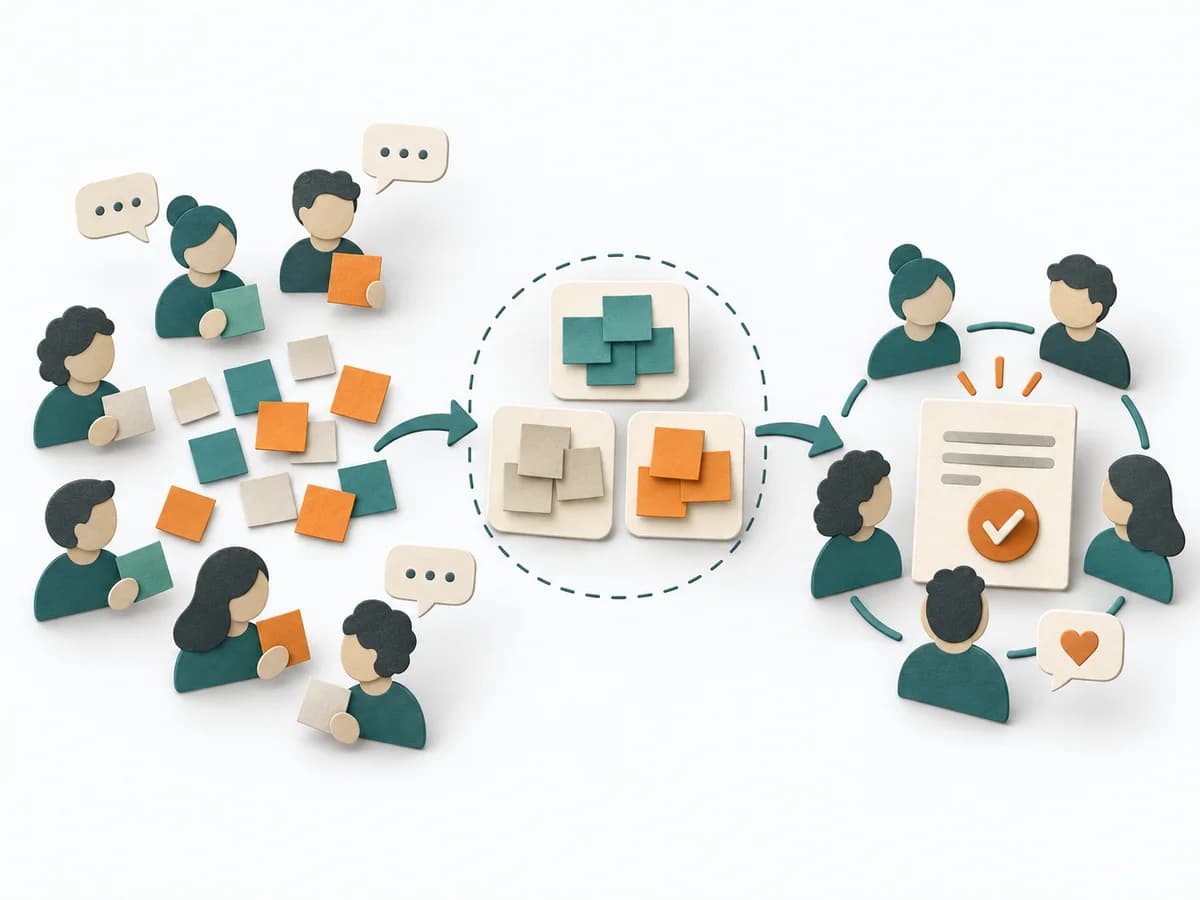
When stakeholders appear to matter very differently, the Stakeholder Salience Model rates their actual priority through power, legitimacy, and urgency. It turns individual contributions into a visible selection. The result is captured as a Salience diagram and a class-based strategy.
How it works
The participants check, for each relevant party, which of the three attributes actually apply, and weight their salience accordingly. This reads the environment not just by closeness or loudness, but by the strength of the claim within the specific initiative.
In detail
The Stakeholder Salience Model by Mitchell, Agle, and Wood uses three dimensions: power, legitimacy, and urgency. Their combinations form eight classes that deserve different levels of attention. It is often used in complex multi-stakeholder programs where power alone is too narrow a lens.
Facilitation
Define the three dimensions clearly. Discuss edge cases instead of smoothing them away. Keep the artifact confidential.
The method guide walks execution through 3 phases, timing, 3 pitfalls, and clear stop criteria.
MediumComplexity: medium. Estimates preparation, facilitation effort, and method confidence needed.WorkshopFormat: workshop. Shows whether the method works in a workshop, asynchronously, or both.60-90 minTimebox: 60-90 min. Rough time frame for a typical run.