
Purpose
When a project, incident, or change process is only remembered in fragments, Timeline brings the sequence back into a readable form. It makes turning points, precursors, and after-effects recognizable over the course of time.
Facilitation Mapping tool
Places events, turning points, and knowledge gaps in an evidence-based course.
A timeline reconstruction connects dated events, decisions and perceptions across a bounded period. It supports shared recall and learning without treating temporal proximity as causation.
Which supported events and turning points explain how the situation developed during the reviewed period?
Example and worksheet use the same method-specific structure.
Scope
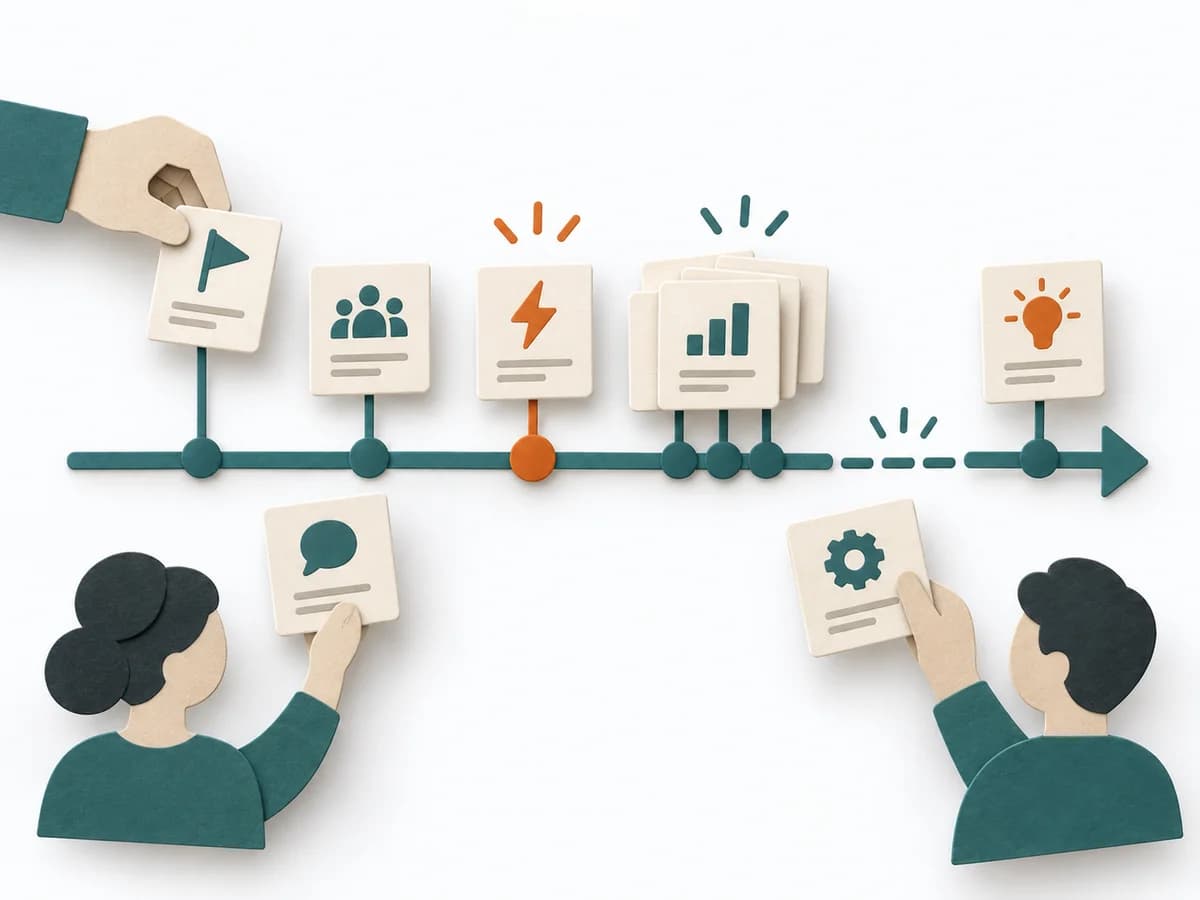
Start, end and purpose are explicit before collection begins.
Events
Facts, decisions and perceptions are captured one by one.
Sequence
Cards are sequenced and dependencies are made visible.
Learn
The group tests clusters and breaks against the evidence.
Add new evidence at the affected date; give hypotheses and actions a review date.
Useful for longer iterations, projects, changes and incidents when several viewpoints must be combined. Use a dedicated analysis afterward for deep causal work.
Dated events in separate lanes with sources and knowledge gaps.
Tested patterns, hypotheses and actions with owner and review.
Fictional example
Fictional review of a course portal launch. Temporal sequence is separated from supported dependency.
| Lane | May 6 | May 13 | May 20 |
|---|---|---|---|
| WorkWhat was delivered or changed? | Import enabled | Support note added | Import limited |
| SignalsWhat data or observations are available? | 2 test accounts, no errors | 9 drop-offs in tickets | Drop-offs fall to 2 |
| DecisionsWhich decision changed the course? | Broad rollout | Measure failure pattern | Keep limit, review June 3 |
The link between broad rollout and drop-offs is a hypothesis to test.
Set the question, start and end. Make calendars, tickets, releases, metrics and direct participants available.
When a project, incident, or change process is only remembered in fragments, Timeline brings the sequence back into a readable form. It makes turning points, precursors, and after-effects recognizable over the course of time.
Participants gather events along a shared timeline and mark breaks, clusters, and gaps in the course of events. This reveals which sections shape the view of cause, effect, and the next decisions.
Timeline works well because events, decisions, and turning points are put into a visible sequence, making patterns over time stand out. Additional precision gains value when different perspectives on the same period are placed side by side and linked to causes and consequences. Substance comes from accuracy, critical gaps, and interpretable transitions, so history becomes a basis for learning or planning.
Clarify in advance which time period and which kind of events you're capturing, so the line doesn't grow arbitrarily. It gets interesting at dense phases or quiet stretches that allow several interpretations; deeper clarification pays off there. Close with the most important turning points and a brief reading of what follows from them.
The method guide walks execution through 4 phases, timing, 4 pitfalls, and clear stop criteria.
Open method guideYour perspective
Your feedback helps shape the next improvements to methodatlas.
Chronological template for incident reconstruction with sources and uncertainty.
Incident: ... Period: ... Sources: logs, alerts, chat, tickets
| Time | Event | Source | Confidence | Note |
|---|---|---|---|---|
| HH:MM | high/medium/low |
Prepare the whole flow or one selected phase with real inputs.
To be confirmed
To be confirmed
Complete timeline Time: 30–90 minutes plus evidence gathering
Complete this worksheet on paper or in your own document during the work.
| Lane | Time 1 | Time 2 | Time 3 |
|---|---|---|---|
| Work | |||
| Signals | |||
| Decisions |
Enter your own dates, sources and decisions. Label links as supported or assumed.
Agile Retrospectives · Timeline activity
Expected artifact: Timeline boundary
Question · start · end · viewpoints
Entry:
...
Expected artifact: Event cards
Time · event · source · type · confidence
Entry:
...
Expected artifact: Evidence-based timeline
Lanes · turning points · links · gaps
Entry:
...
Expected artifact: Learning and action record
Pattern · hypothesis · gap · action · review
Entry:
...
...
Method guide: https://methodatlas.meierhoff-systems.de/en/methods/timeline/run-sheet
Fitting alternatives with decision guidance, followed by other related methods.
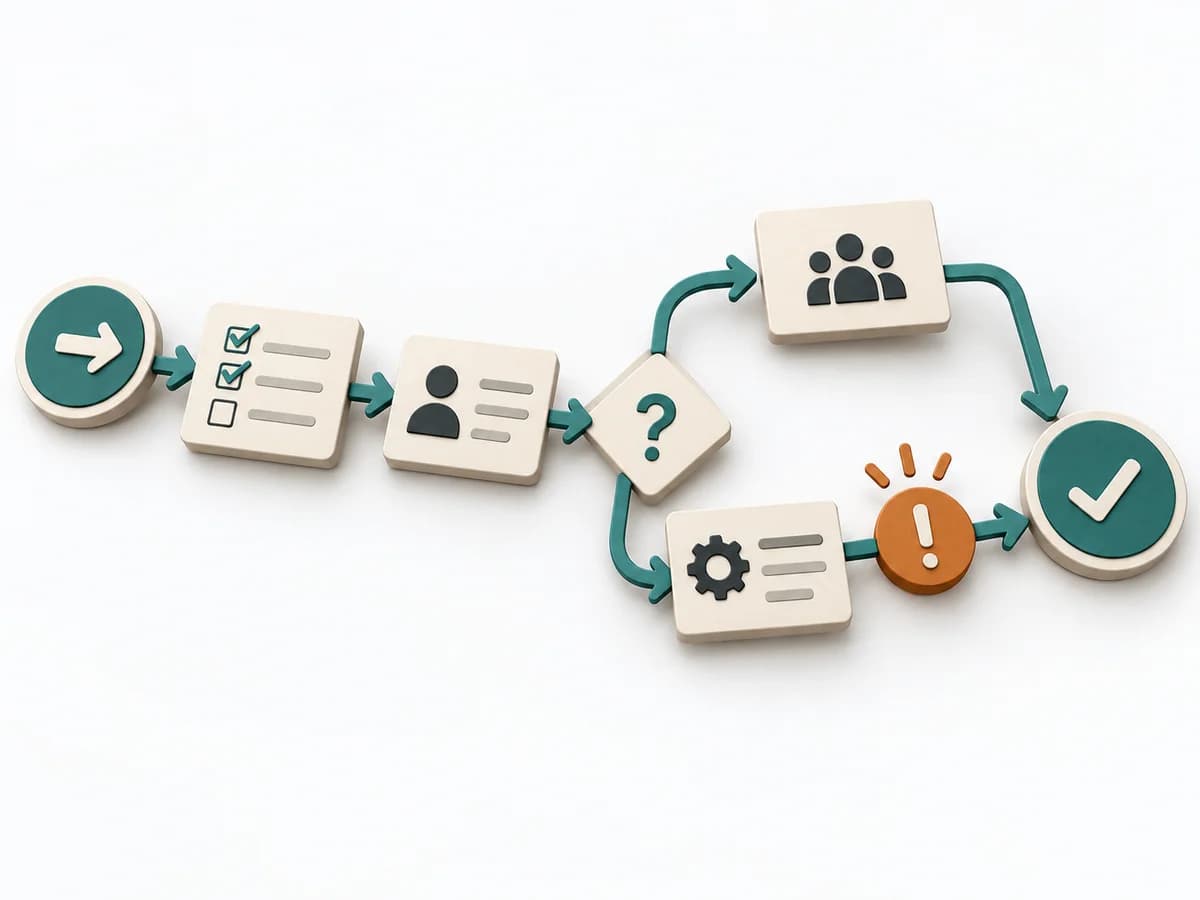
Instead of Timeline, when you want to make processes visible and verifiable step by step.

Arranges influence, interest, and relationships into a working map that makes engagement and risks transparent.
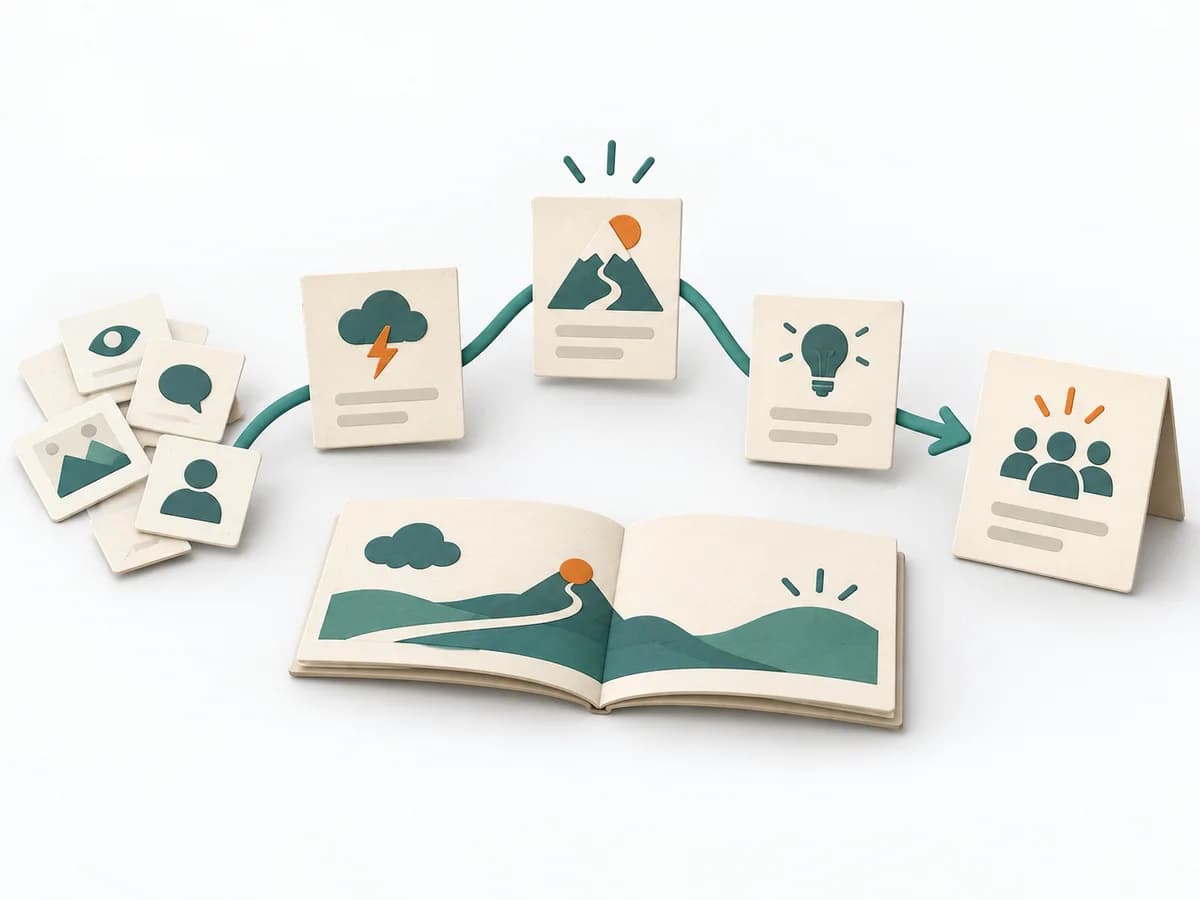
Sharpens goal, core message, and arc of tension so a narrative leads clearly to action or decision.

Moves ideas from silent reflection through pair exchange into the group and condenses patterns.
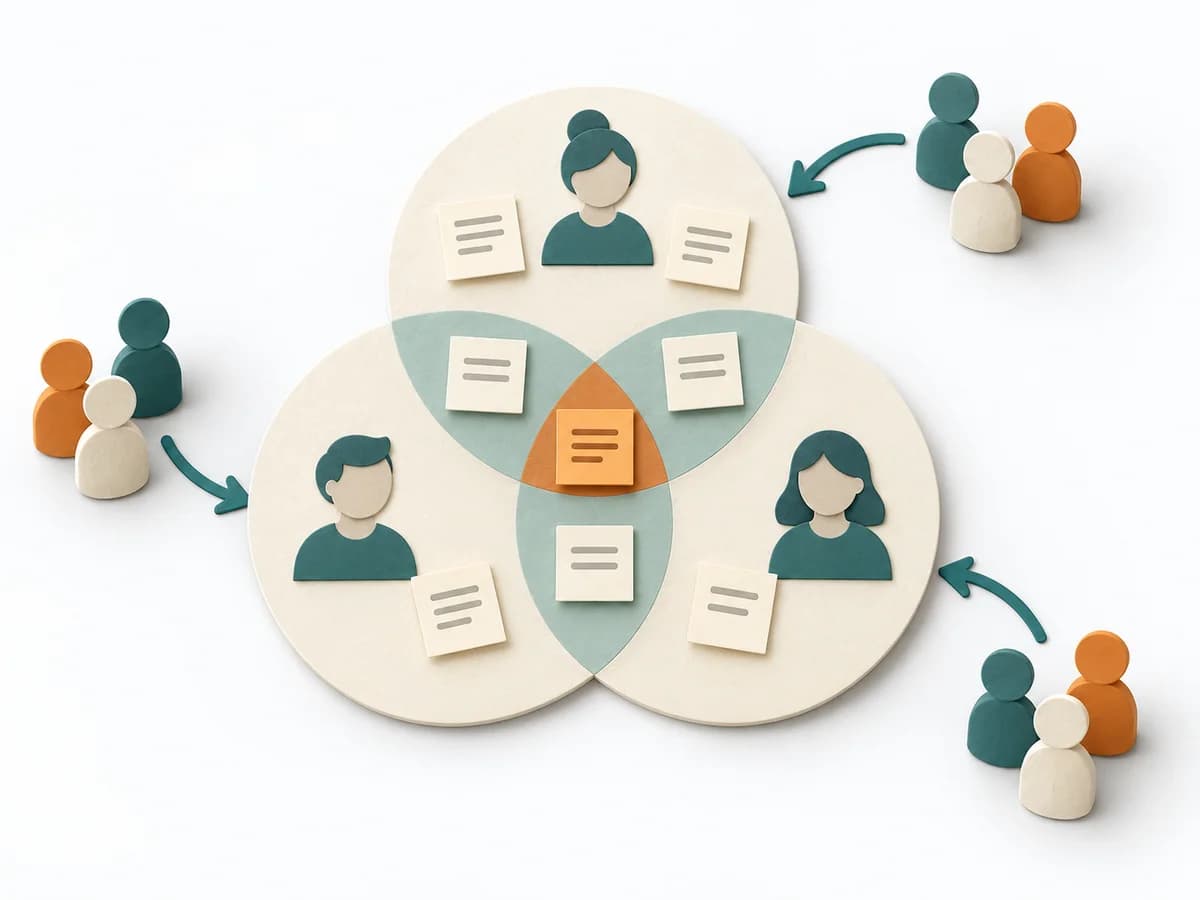
Compares three perspectives in a shared picture and makes overlaps as visible as differences.

Sorts problems, reframes the top issue, and derives experiments that quickly turn frustration into movement.
