Purpose
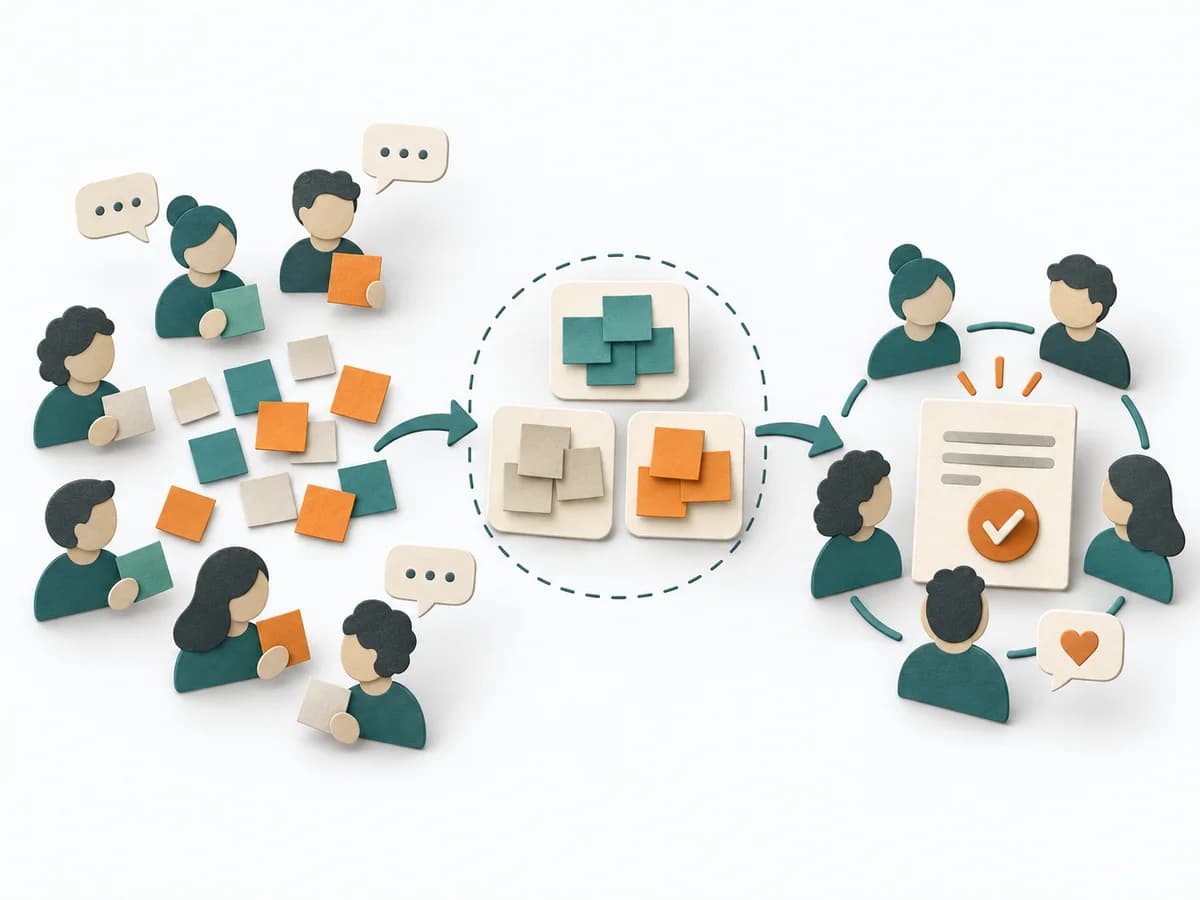
When several people work toward one goal but hold different mental maps, Alignment Mapping makes the discrepancies visible. It arranges goals, assumptions, and priorities so shared direction becomes verifiable.
Facilitation Facilitation method
Alignment Mapping makes different goals, assumptions, and priorities visible and aligns them through targeted clarification.
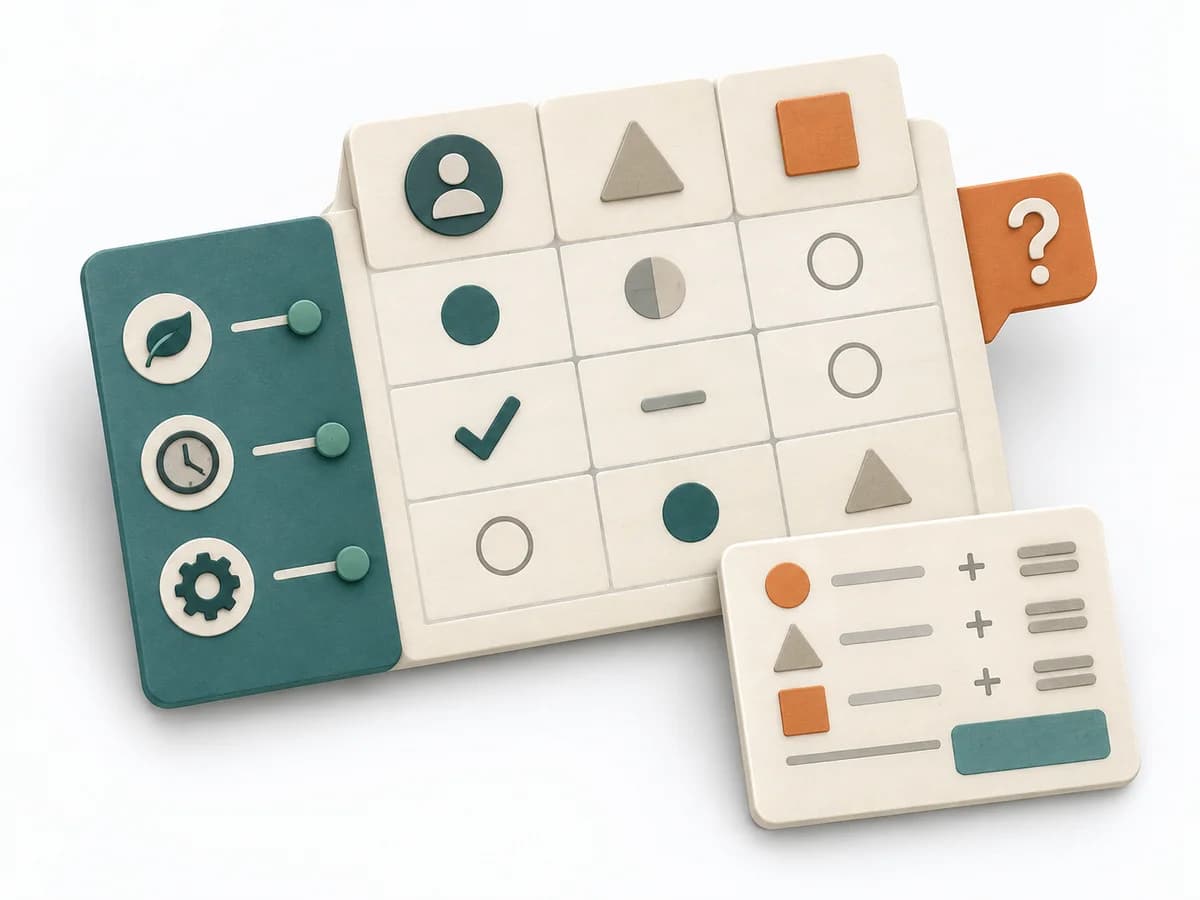
Alignment Mapping places several perspectives side by side. Agreement, open questions, and real contradictions are marked separately so verbal consensus is not mistaken for shared direction.
Which statements are shared, where do goals or assumptions diverge, and what clarification follows?
Each step produces a concrete domain result for the complete run.

Question
State one shared question about a goal or decision.
Perspectives
Participants record goal picture, priorities, and assumptions before group pressure.
Map
Sort statements into shared, open, contradictory, and dependent.
Gaps
Clarify terms and separate real goal or evidence gaps from misunderstandings.
Action
Record decision questions, owners, needed evidence, and next date.
Resolve evidence and decision questions, then update the map with confirmed common ground and remaining conflicts.
Use it for strategy work, cross-functional initiatives, and decisions with multiple goal pictures.
Alignment map with shared target, unresolved conflicts, clarified terms, evidence needs, owners, and decision date.
Fictional example
Fictional example for one concrete work case.
| Case | Perspective | Shared | Open or contradictory | Clarification step |
|---|---|---|---|---|
| Example caseWhich statements are shared, where do goals or assumptions diverge, and what clarification follows? | Support: fast first response; Product: durable root-cause removal | Stabilise critical customer outages first | Whether success means 24-hour response or 5-day root-cause analysis | Product Ops clarifies service target and problem class by Friday |
The example is fictional and must be adapted to mandate and context.
State one concrete alignment question and ask participants to record their views separately first.
When several people work toward one goal but hold different mental maps, Alignment Mapping makes the discrepancies visible. It arranges goals, assumptions, and priorities so shared direction becomes verifiable.
The group lays its view of the target picture, boundary conditions, and next steps side by side and marks where agreement, ambiguity, or contradiction lies. This produces a precise picture of which points only need explaining and which need to be actively negotiated.
Alignment Mapping works because it makes visible where groups already agree and where different pictures of goal, approach, or priority still exist. Real alignment emerges when these differences are not papered over prematurely but used as material for understanding. What matters is the need for decisions, shared language, and the depth of agreement, so alignment stays robust rather than merely verbal.
At the start, phrase the guiding question so that real coordination is needed rather than just general agreement. It becomes a stumbling point when similar words are used but different things are meant; precise spelling-out pays off there. Close with a few shared statements and a clear naming of the points that still need separate work.
The method guide walks execution through 5 phases, timing, 5 pitfalls, and clear stop criteria.
Open method guideYour perspective
Your feedback helps shape the next improvements to methodatlas.
Plan the question, inputs, complete run, and review with clear ownership.
To be confirmed
To be confirmed
Complete run Time: 60–90 minutes for one goal or decision; investigate open evidence questions afterwards.
Complete this worksheet on paper or in your own document during the work.
| Case | Perspective | Shared | Open or contradictory | Clarification step |
|---|---|---|---|---|
| Example case |
Use one specifically bounded case per row.
Reference source · original teaching example
Expected artifact: Precise alignment question
Precise alignment question
Entry:
...
Expected artifact: Unanchored perspectives
Unanchored perspectives
Entry:
...
Expected artifact: Shared alignment map
Shared alignment map
Entry:
...
Expected artifact: Named real gaps
Named real gaps
Entry:
...
Expected artifact: Clarification and decision plan
Clarification and decision plan
Entry:
...
...
Method guide: https://methodatlas.meierhoff-systems.de/en/methods/alignment-mapping/run-sheet
Fitting alternatives with decision guidance, followed by other related methods.

Instead of Alignment Mapping, choose Stakeholder Mapping when you want to actively structure a group, collect perspectives, and condense joint decisions into a shared picture with clear relationships.

Moves group input, selection, and decision toward a concrete result through "prepare the stakeholder list", "define power, legitimacy, and urgency", and "derive strategy by class".

Moves group input, selection, and decision toward a concrete result through "collect stakeholders individually and by group", "explain power and interest", and "derive a strategy for each quadrant".
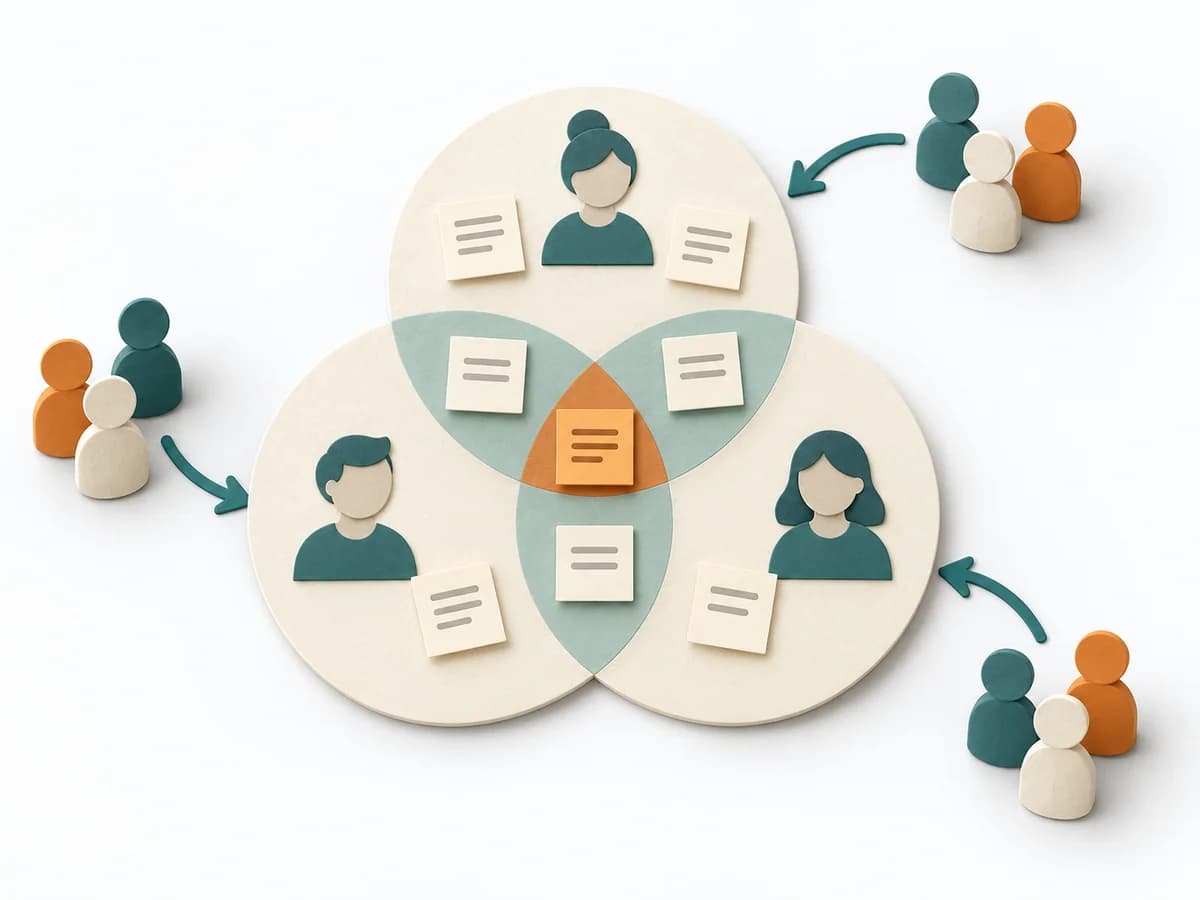
Compares three perspectives in a shared picture and makes overlaps as visible as differences.
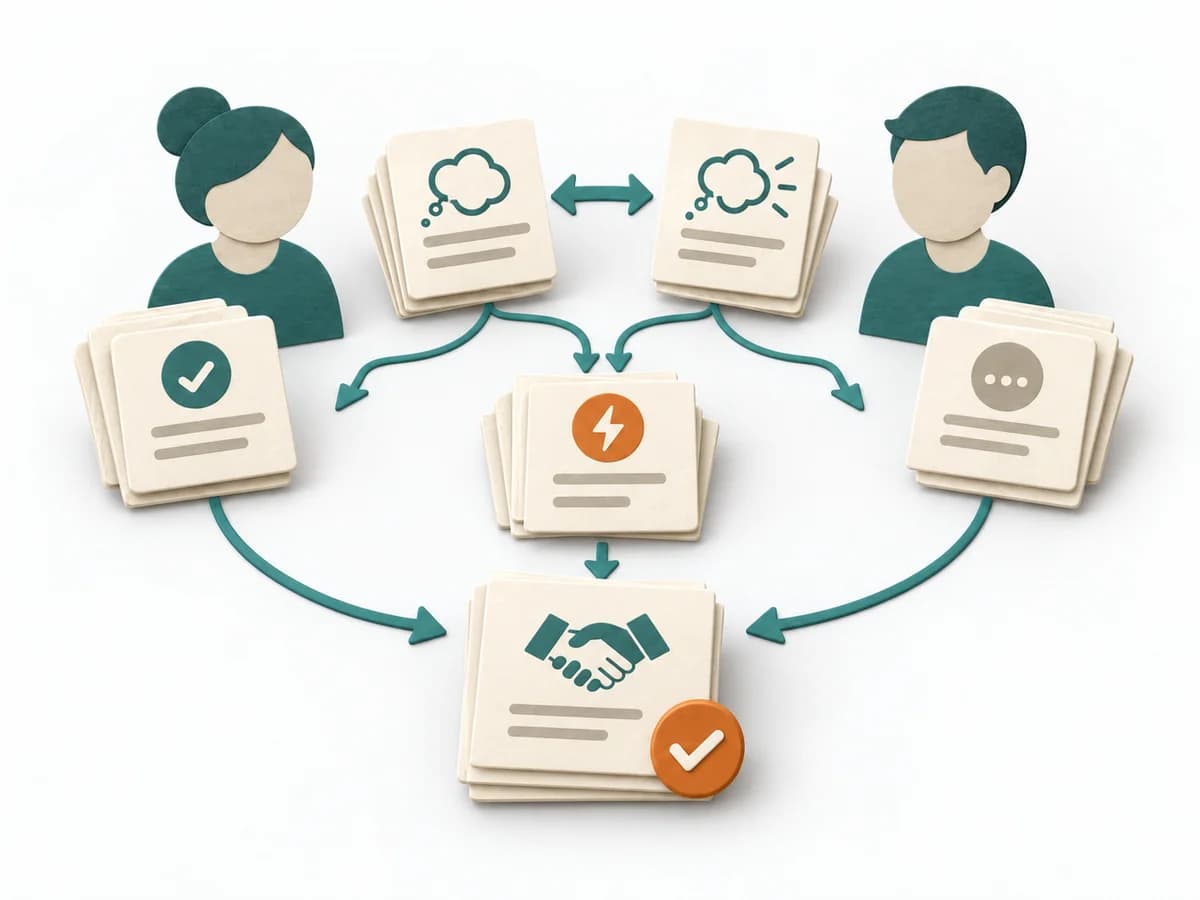
Surfaces stakeholder expectations, clusters conflicts, and turns them into concrete agreements.
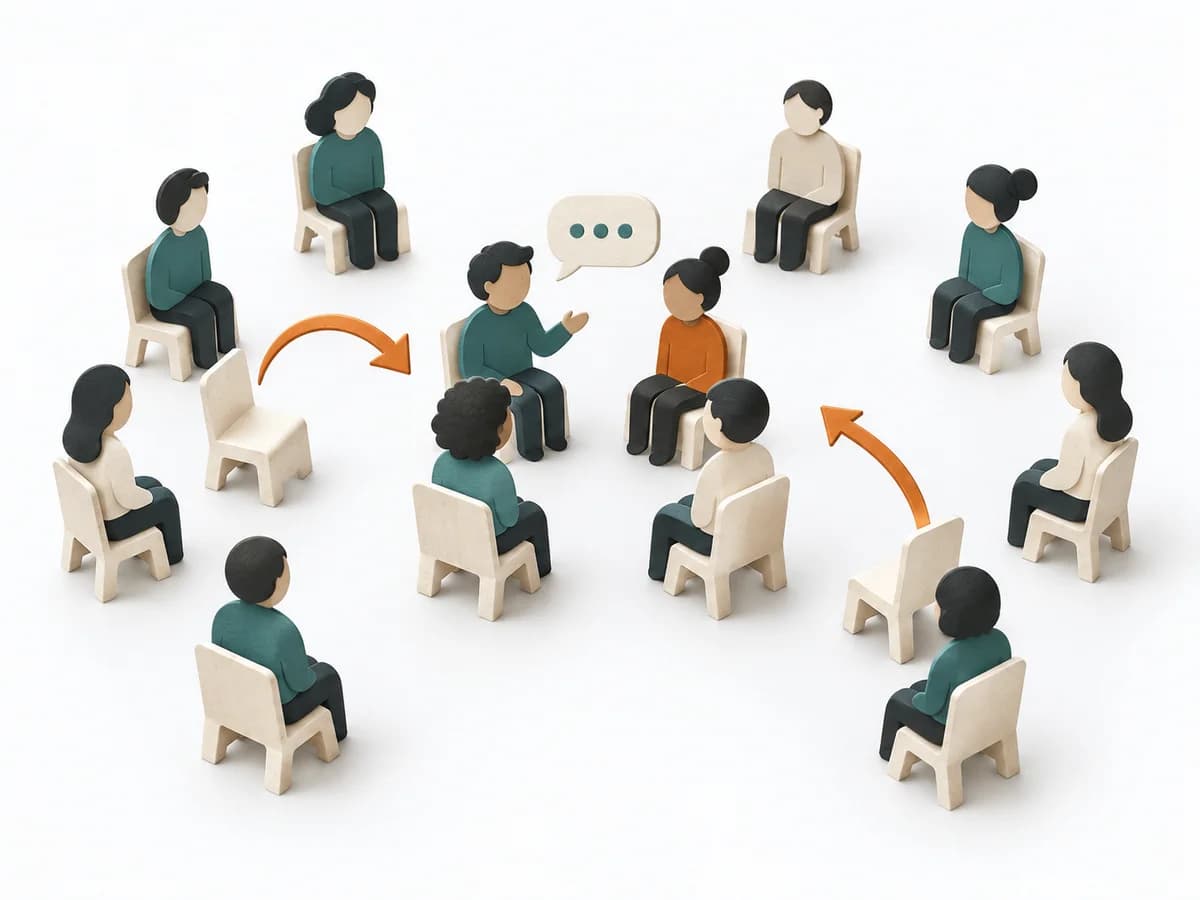
Separates an inner and outer circle so discussion, observation, and tensions become visible at the same time.