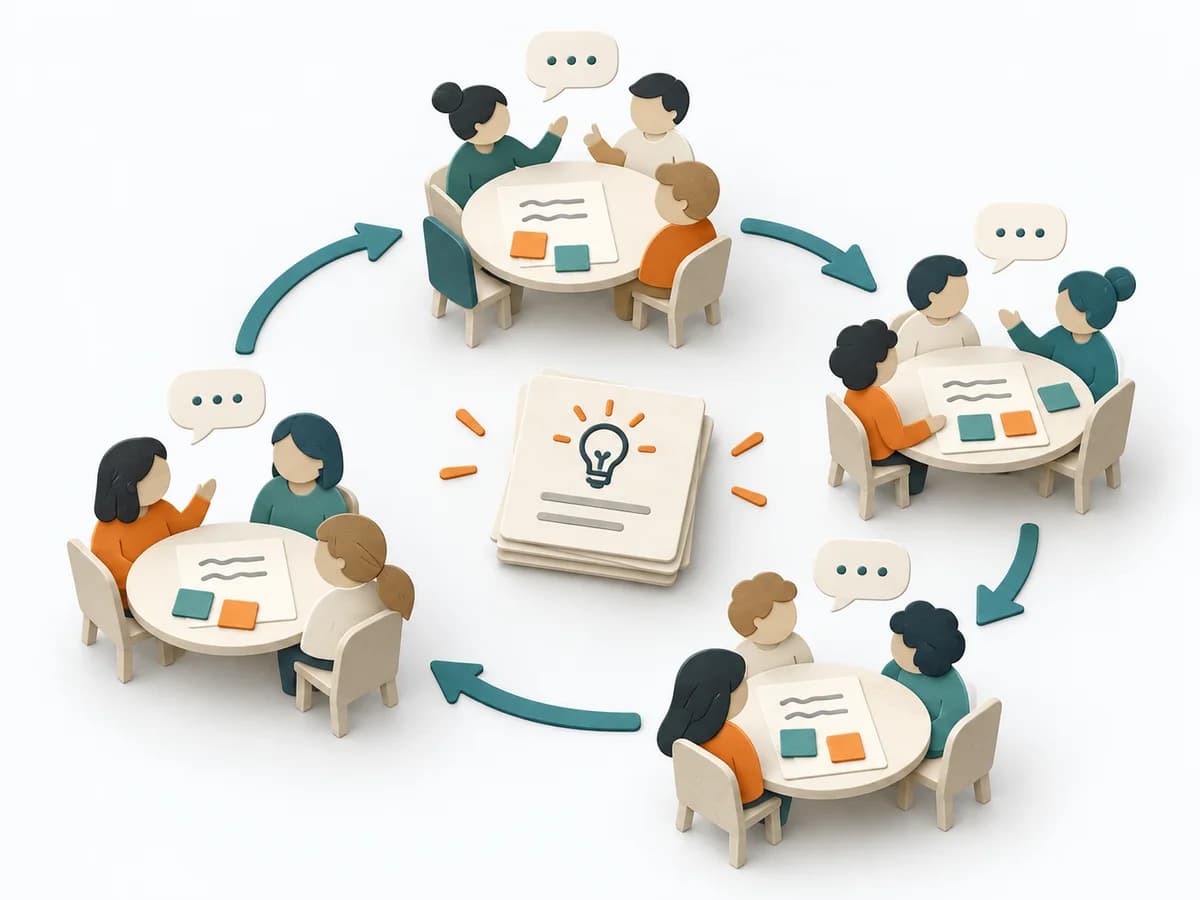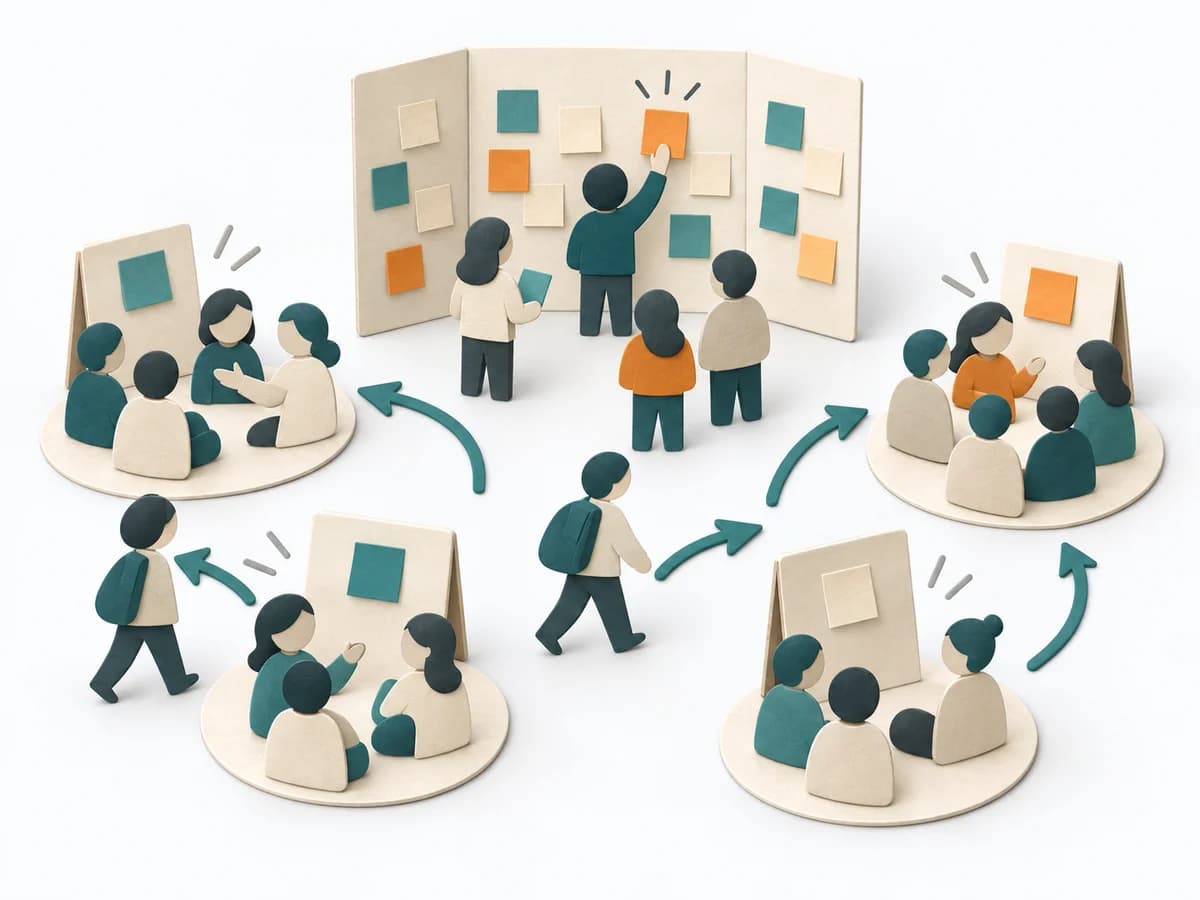
Purpose
When many people can contribute knowledge and the flow should stay open, Barcamp provides a framework for self-organized sessions. The format channels energy without defining the content too narrowly in advance.
Facilitation Facilitation method
A BarCamp lets an open program emerge from the questions, skills, and contributions of the people present.
A Barcamp is a participant-driven unconference. The program emerges at the start through short session pitches and a shared room-time grid. Hosts frame exchange, workshop or consulting sessions; participants contribute actively and may move between sessions.
Which sessions do the people present want to offer and attend today so that shared learning emerges?
Example and worksheet use the same method-specific structure.

Frame
An open theme and reliable logistics enable spontaneous program creation.
Pitches
Everyone understands the rules, people and available session ideas.
Schedule
Interest, rooms, accessibility and conflicts become a visible day plan.
Sessions
Hosts frame the exchange while participants contribute actively and move when needed.
Harvest
Distributed learning becomes findable and the community can follow through.
Program and rooms adapt during the day; feedback informs the next event day or next Barcamp.
Useful for community learning, networking and a broad theme with self-directed participants. The open program is unsuitable for mandatory training with a standardized curriculum.
Program built by those present across times and rooms.
Findable highlights, links, contacts and voluntary follow-ups.
Fictional schedule
Fictional morning schedule for an internal BarCamp. The real grid is built with the people present.
| Time slot | Studio | Library | Online |
|---|---|---|---|
| 10:00–10:45First session block | Frictionless course start · workshop | Reading support signals · exchange | Accessible video · Q&A |
| 11:00–11:45Second session block | Sketch learning paths · co-creation | Meaningful metrics · discussion | Open clinic · consulting |
Room capacity, accessibility and interest conflicts were considered in placement.
Prepare theme, participation principle, accessibility, rooms, time slots and a blank grid. Keep sessions open until planning.
When many people can contribute knowledge and the flow should stay open, Barcamp provides a framework for self-organized sessions. The format channels energy without defining the content too narrowly in advance.
Participants offer topics, condense interest in the room, and form a continuously adjusted program from it. Sessions arise from demand, so relevance settles wherever it is actually present in the room at that moment.
A Barcamp works because content arises in a decentralized way and relevance grows directly from the questions, experiences, and offers of the participants. The method produces quality when sessions are clearly announced, carried with personal responsibility, and documented openly. Good application protects openness without neglecting minimal organizational structure, so diversity doesn't tip over into confusion.
A good introduction needs a clear frame, visible ground rules, and session planning that makes spontaneous contributions easy. The decisive moment comes in the first planning round; that's where it becomes clear whether there is enough energy and trust in the room. Close with a shared harvest of learnings, contacts, and materials, so the format keeps its effect beyond the day itself.
The method guide walks execution through 5 phases, timing, 5 pitfalls, and clear stop criteria.
Open method guideYour perspective
Your feedback helps shape the next improvements to methodatlas.
Prepare the whole flow or one selected phase with real inputs.
To be confirmed
To be confirmed
Prepare and run the Barcamp Time: Half a day to two days; preparation over several weeks
Complete this worksheet on paper or in your own document during the work.
| Time slot | Room 1 | Room 2 | Room 3 / online |
|---|---|---|---|
| 10:00–10:45 | |||
| 11:00–11:45 |
Prepare rooms and times; enter sessions only from pitches by those present.
Expected artifact: BarCamp frame
Theme · rules · rooms · slots · accessibility
Entry:
...
Expected artifact: Session pool
Title · host · format · aim
Entry:
...
Expected artifact: Session grid
Time slot × room · title · host
Entry:
...
Expected artifact: Session results
Learning · questions · contacts · artifacts
Entry:
...
Expected artifact: BarCamp harvest
Highlights · links · feedback · follow-ups
Entry:
...
...
Method guide: https://methodatlas.meierhoff-systems.de/en/methods/barcamp/run-sheet
Fitting alternatives with decision guidance, followed by other related methods.
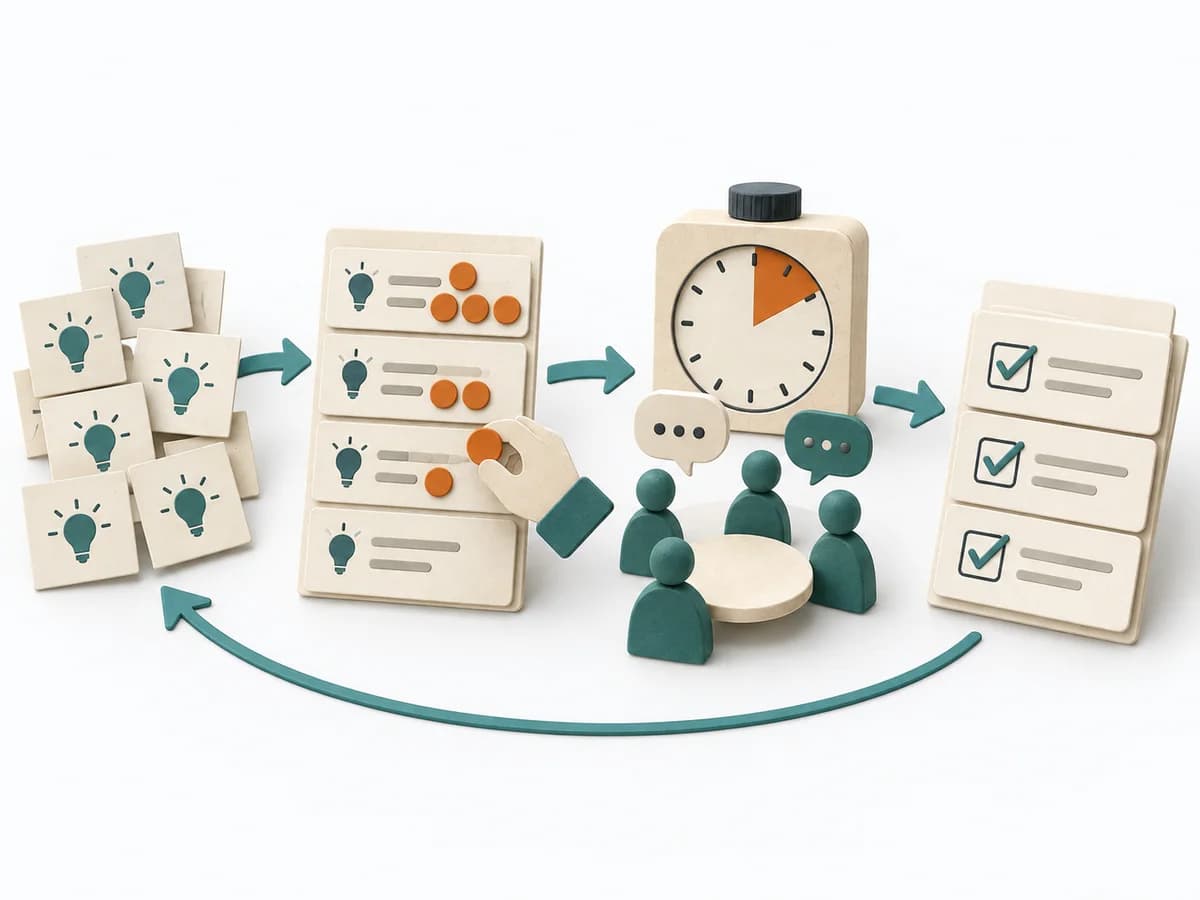
Instead of Barcamp, when you want the agenda to emerge openly from the group and prefer short topic changes.
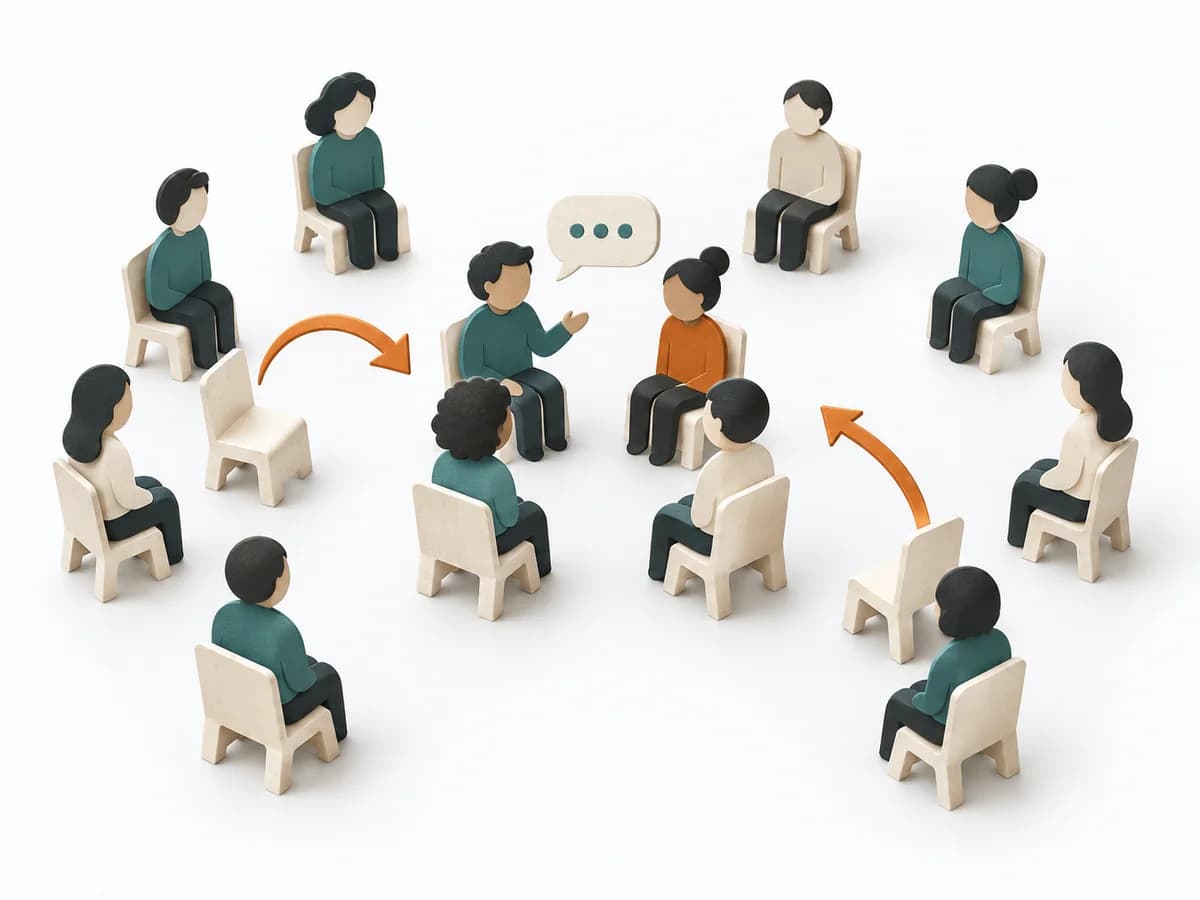
Separates an inner and outer circle so discussion, observation, and tensions become visible at the same time.

Gives one person precise peer feedback through three roles and records key next actions and observations.

Makes goals, concerns, and open gaps visible so clarification steps can be planned deliberately.

Condenses individual ideas into clusters, themes, and priorities so consensus grows out of individual contributions.

Collects ideas silently, clarifies understanding, and lets the group prioritize, so quiet voices don't get lost.