Complete firstShared work context
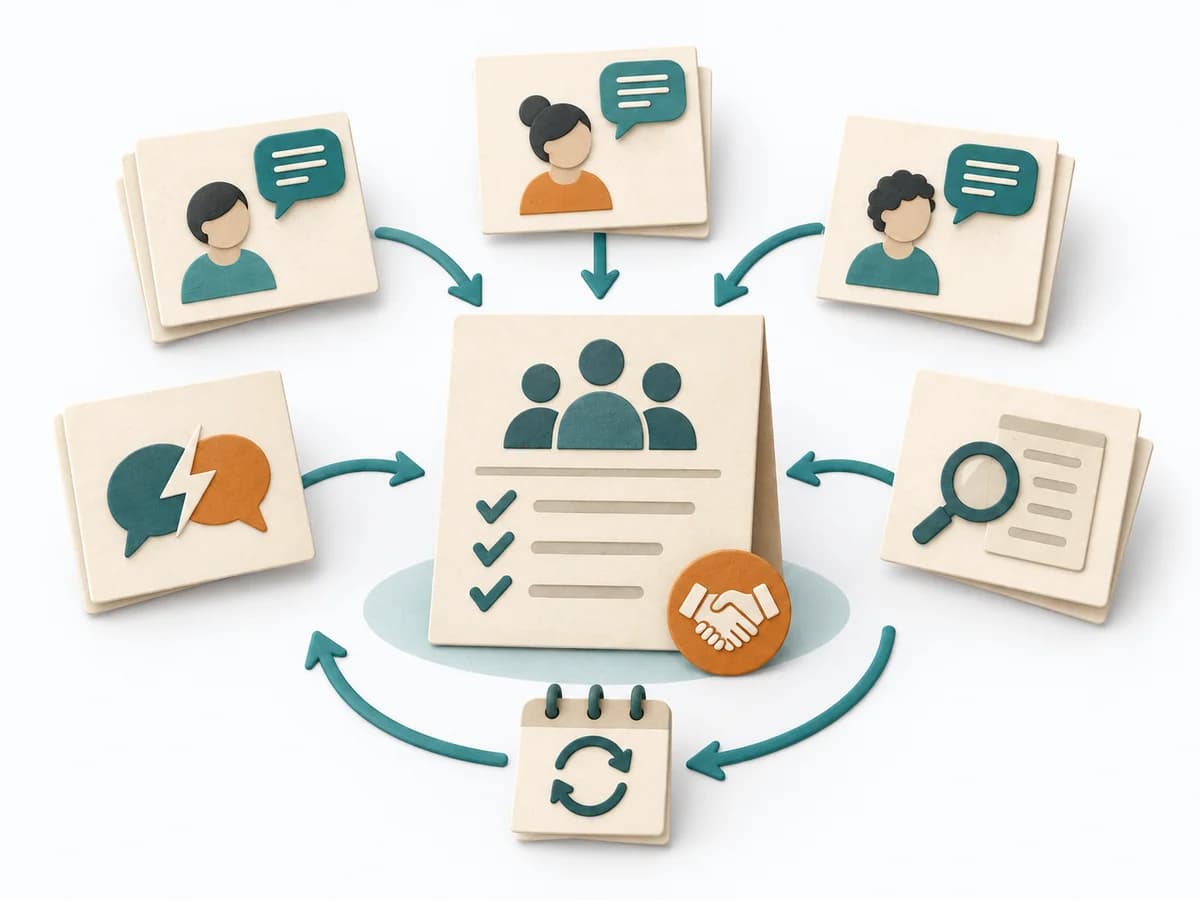
The group reviews the same sprint, period, or process.
Mixed time horizons produce unrelated feedback.
A practical method guide: clarify prerequisites and materials, understand the complete process, and look up outputs, pitfalls, and stop criteria.
What needs to be finished first
The group reviews the same sprint, period, or process.
The team can change at least some practices or involve the responsible owners.
What needs to be ready before start
Three clearly labeled columns, cards or a digital board, quiet writing time, a timer, and an action note with owner and date.
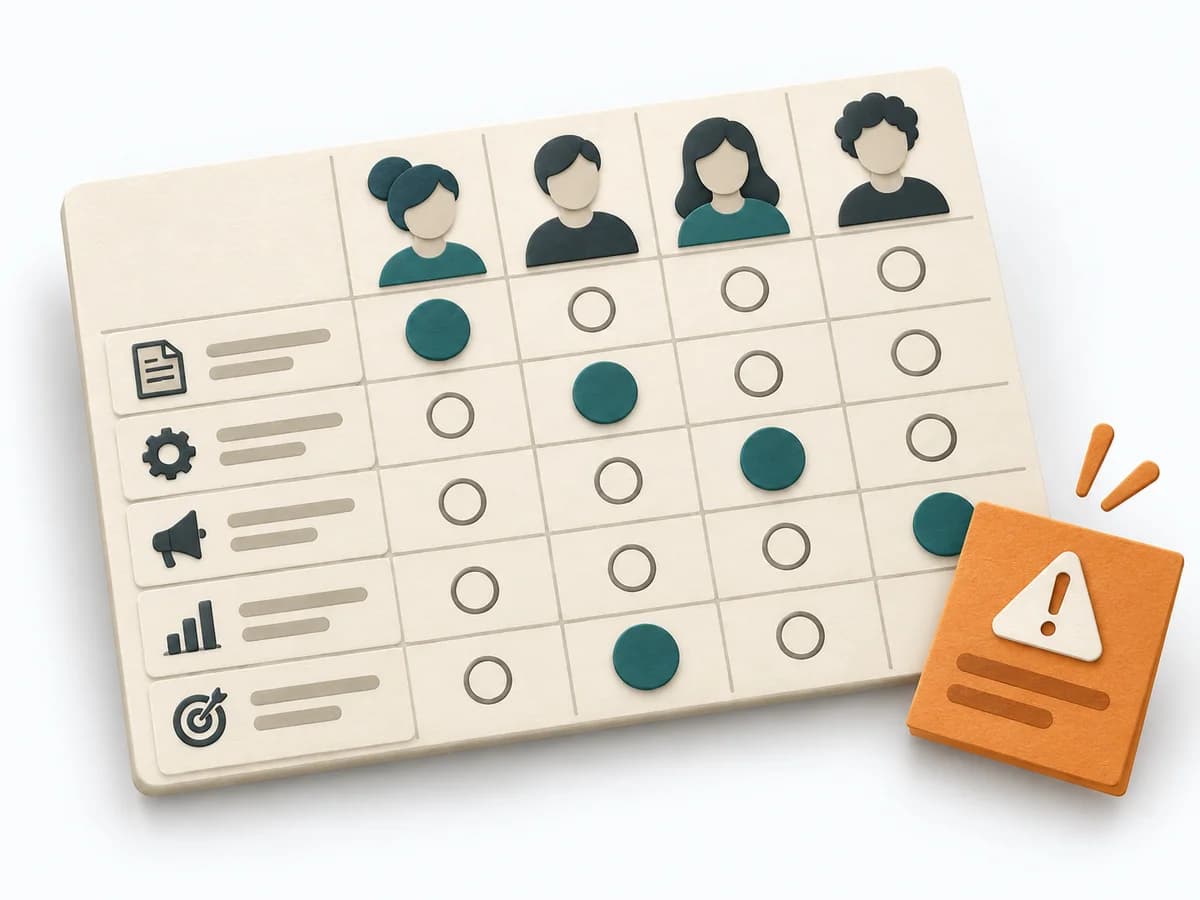
Facilitation protects participation and focus on work. Team members write and clarify contributions. A recorder tracks selected actions and follow-up.
Set the period and work context. Bring open actions from the last review and observations from the work being discussed.
30–60 minutes for a facilitated review; implementation and later effectiveness checks happen afterward.
Ask three questions: What should we start? What should we stop? What should we continue? Let contributions begin independently and quietly. Clarify whether notes describe observable practices. Group themes and discuss patterns. Turn selected points into a few actions with owners, dates, and a next check. Do not skip Continue; do not phrase Stop as a personal attack.
The one question this method answers
What should the team start, stop, or deliberately continue doing?
Phases with goal, actions, output and pitfall
Start, Stop, and Continue organise observations about new behaviour, practices to end or change, and helpful work the team wants to protect. The frame structures a review, while patterns and a few reviewable actions guide the next check.
Fictional teaching example
Fictional observations from a four-week team pilot, separate from the blank worksheet.
| Area of work | Start | Stop | Continue |
|---|---|---|---|
| Team practiceWhich concrete practice from the period should begin, stop, or deliberately continue? | Attach a short test note to each handoff. | Send review requests without context across several chat channels. | Involve Support with Engineering before substantial changes. |
Fictional contributions refer to four weeks. Selected points become small actions with an owner, date, and check at the next review.
Frame

Goal
Everyone reviews the same work context in a constructive setting.
Inputs for this step
Actions
Output
Shared retrospective frame
Without a period, feedback becomes vague or mixed.
Quality check
Criticism is attributed to individuals.
Pitfall
The period or safe conversation frame is unclear. Phrase contributions as observable work and effects.
Timing: 5–7 minutes
Collect
Goal
Different perspectives become visible before discussion starts.
Inputs for this step
Actions
Output
Unfiltered contributions
An early comment can anchor later contributions.
Quality check
The first opinion sets the group's tone.
Pitfall
Early comments anchor later contributions. Collect quietly first and read together afterward.
Timing: 5–8 minutes
Clarify
Goal
The group understands patterns rather than isolated cards.
Inputs for this step
Actions
Output
Clarified themes
Three columns alone do not explain why a pattern occurs.
Quality check
Notes are sorted without discussion.
Pitfall
Notes are sorted before their meaning is clarified. For important Stop items, ask about the situation and reason.
Timing: 8–15 minutes
Choose

Goal
The group focuses on feasible improvement.
Inputs for this step
Actions
Output
Prioritized improvements
A popular issue may be outside the team's authority.
Quality check
Every note becomes a commitment.
Pitfall
The selection exceeds the team's authority. Check capacity and decision authority together.
Timing: 5–10 minutes
Commit
Goal
Improvements are visible in the next work cycle.
Inputs for this step
Actions
Output
Action list and review date
Without checking effects, the retrospective ends without follow-through.
Quality check
Actions have no owner or are forgotten.
Pitfall
Actions lack an owner, date, or later check. Review status and effects first in the next session.
Timing: 5–10 minutes
What comes out at the end
Sketch: what the artifact looks like
Retrospective record with period, three prompt areas, clarified patterns, a few actions, owners, due dates, and review status.
Version the period, team context, participants where needed, and actions. Check prior actions in the next session and share the result with the team.
Plan a bounded team review with silent contributions, three prompts, and a few tracked actions.
To be confirmed
To be confirmed
Reflect on and adapt team practices Time: 30–60 minutes; actions are implemented and checked afterward
Complete this worksheet on paper or in your own document during the work.
| Area of work | Start: What should we begin? | Stop: What should we end or change? | Continue: What should we keep doing? |
|---|---|---|---|
| Team practice |
Blank worksheet: record period and work area, then add observable behavior or work conditions in each column. Do not carry over example text or actions.
Atlassian: Start, Stop, Continue retrospective
Expected artifact: Shared retrospective frame
Without a period, feedback becomes vague or mixed.
Entry:
...
Expected artifact: Unfiltered contributions
An early comment can anchor later contributions.
Entry:
...
Expected artifact: Clarified themes
Three columns alone do not explain why a pattern occurs.
Entry:
...
Expected artifact: Prioritized improvements
A popular issue may be outside the team's authority.
Entry:
...
Expected artifact: Action list and review date
Without checking effects, the retrospective ends without follow-through.
Entry:
...
...
Method guide: https://methodatlas.meierhoff-systems.de/en/methods/start-stop-continue/run-sheet
Concrete filled scenario, fictional example
Fictional example for orientation. Counts and timings describe this case and are not universal requirements.
Concrete filled scenario, fictional example
All contributions are invented and refer to the last four-week pilot period.
| Start | Stop | Continue |
|---|---|---|
| Attach a short test note to each handoff. | Send review requests without context across several chat channels. | Involve Support with Engineering before a substantial change. |
The team selects one Start action: Kim adds a three-line test note to the next handoff. At the next sprint review, check whether the recipient could begin without asking for clarification. The Stop observation is handled as a process pattern, not assigned to an individual. Continue keeps a useful practice visible. This fictional list says nothing about frequency beyond the example.
Recognize symptoms and steer against them
Quick overview, the full text is in the matching phase in the flow
The period or safe conversation frame is unclear.
Phrase contributions as observable work and effects.
Early comments anchor later contributions.
Collect quietly first and read together afterward.
Notes are sorted before their meaning is clarified.
For important Stop items, ask about the situation and reason.
The selection exceeds the team's authority.
Check capacity and decision authority together.
Actions lack an owner, date, or later check.
Review status and effects first in the next session.
When to pause, resolve prerequisites, or choose another approach
Go to the profile for purpose, similar methods, and sources or continue to the next method in the catalog.