methodatlas
Playbook

Turn Retrospective into Improvement

Move from team feeling to prioritized learning points, experiments, and verifiable change.

Steps4 methods
Time60-120 min
FormatWorkshop
Outcome

A focused improvement initiative with owner, hypothesis, and review date.

At the end you have

Retro BoardEmotion ClustersAction IdeasPDCA Plan

Decision point

You can decide which improvement experiment the team tests next.

Next step

Run the experiment in daily work, review impact, and adjust working agreements as needed.
Ideal for

  • Scrum and Kanban teams
  • Teams after releases or difficult phases
  • continuous improvement

Not good for

  • Performance reviews of individuals
  • acute conflict moderation without safety
Preparation

What should be clear before you start

Roles

  • Team
  • Facilitator or scrum master
  • Stakeholders for systemic blockers if needed

Inputs

  • events from last iteration
  • team mood and observations
  • open improvement or conflict topics

Setup

  • Set a safe discussion frame
  • Clarify the purpose of the retrospective
  • Reserve time for concrete actions
Flow

Method path

4 methods
  1. 1AgileRetro Board

    Sprint Retrospective

    What affected the quality and effectiveness of the last Sprint, and which change will we inspect next Sprint?

    Why this step?

    Sprint Retrospective creates a framework to systematically reflect on working style and events.

    Emotional signals are then explicitly collected and organized.

    The Scrum Team inspects people, interactions, processes, tools, and the Definition of Done, then agrees on a few testable improvements.
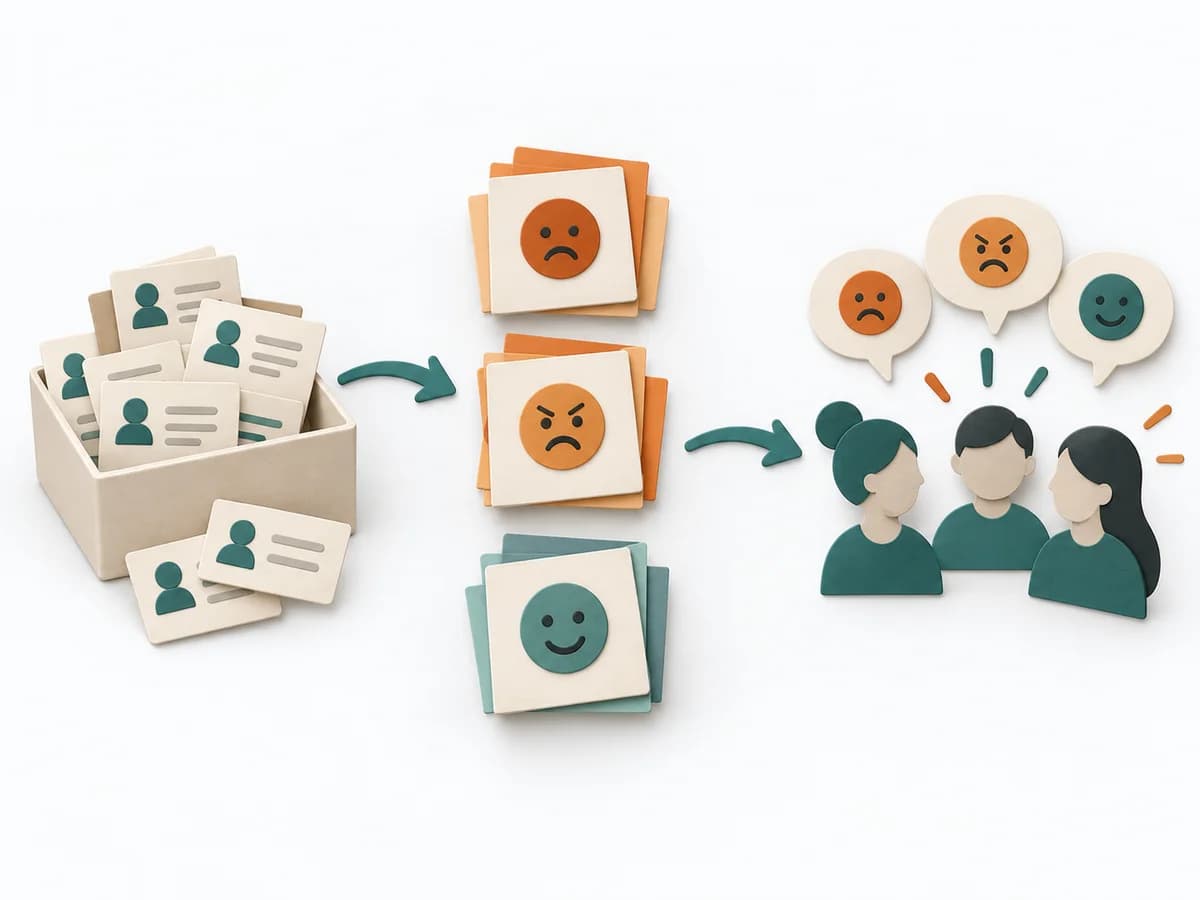
  2. 2AgileEmotion Clusters

    Mad Sad Glad

    Which experiences made us mad, sad or glad, and which working condition do we want to change?

    Why this step?

    Mad Sad Glad makes team perception and emotional patterns visible without immediate judgment.

    The patterns are then translated into concrete behavioral ideas.

    Paper illustration for Mad Sad Glad
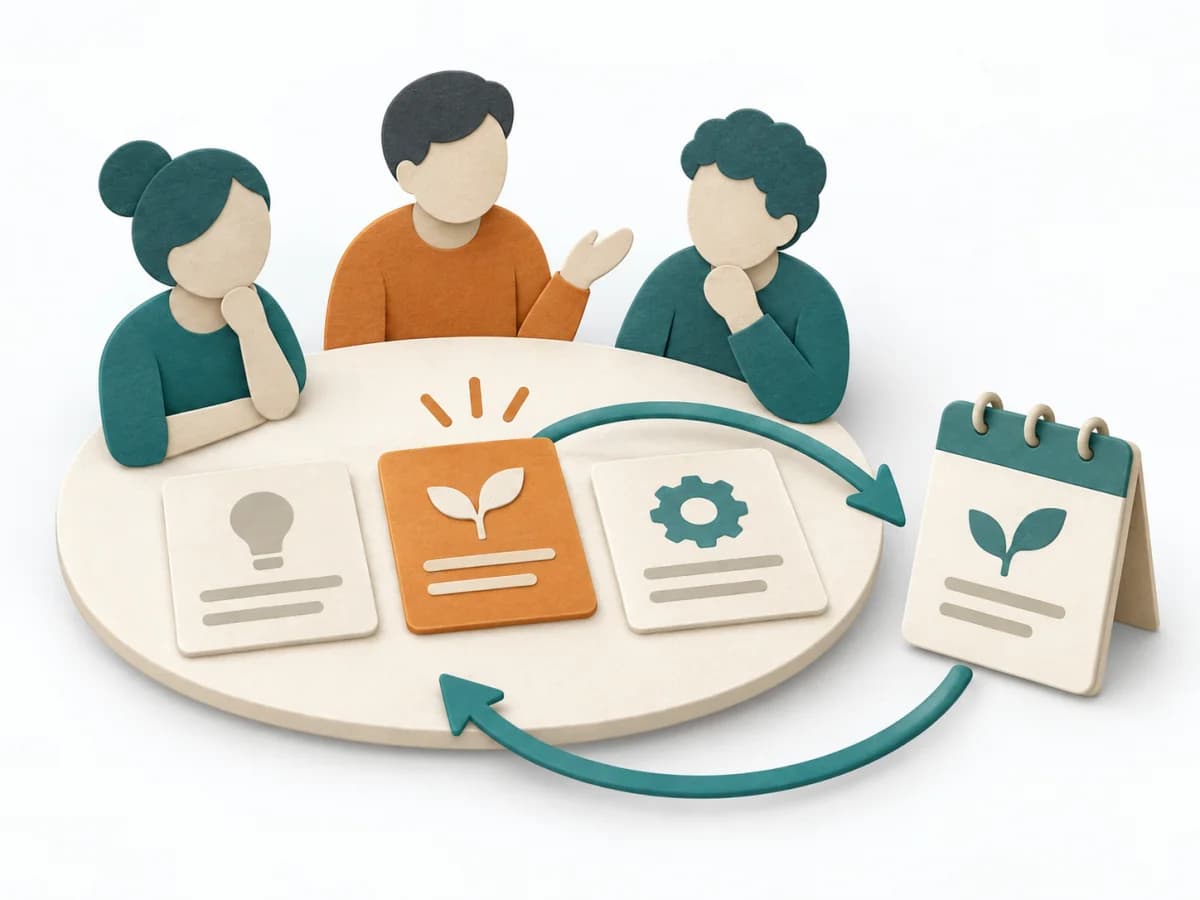
  3. 3AgileAction Ideas

    Start Stop Continue

    What should the team start, stop, or deliberately continue doing?

    Why this step?

    Start Stop Continue formulates change as observable behavior.

    The best change idea is then planned as a verifiable learning cycle.

    Paper illustration of a team retrospective with three separate Start, Stop, and Continue areas and a shared action list.
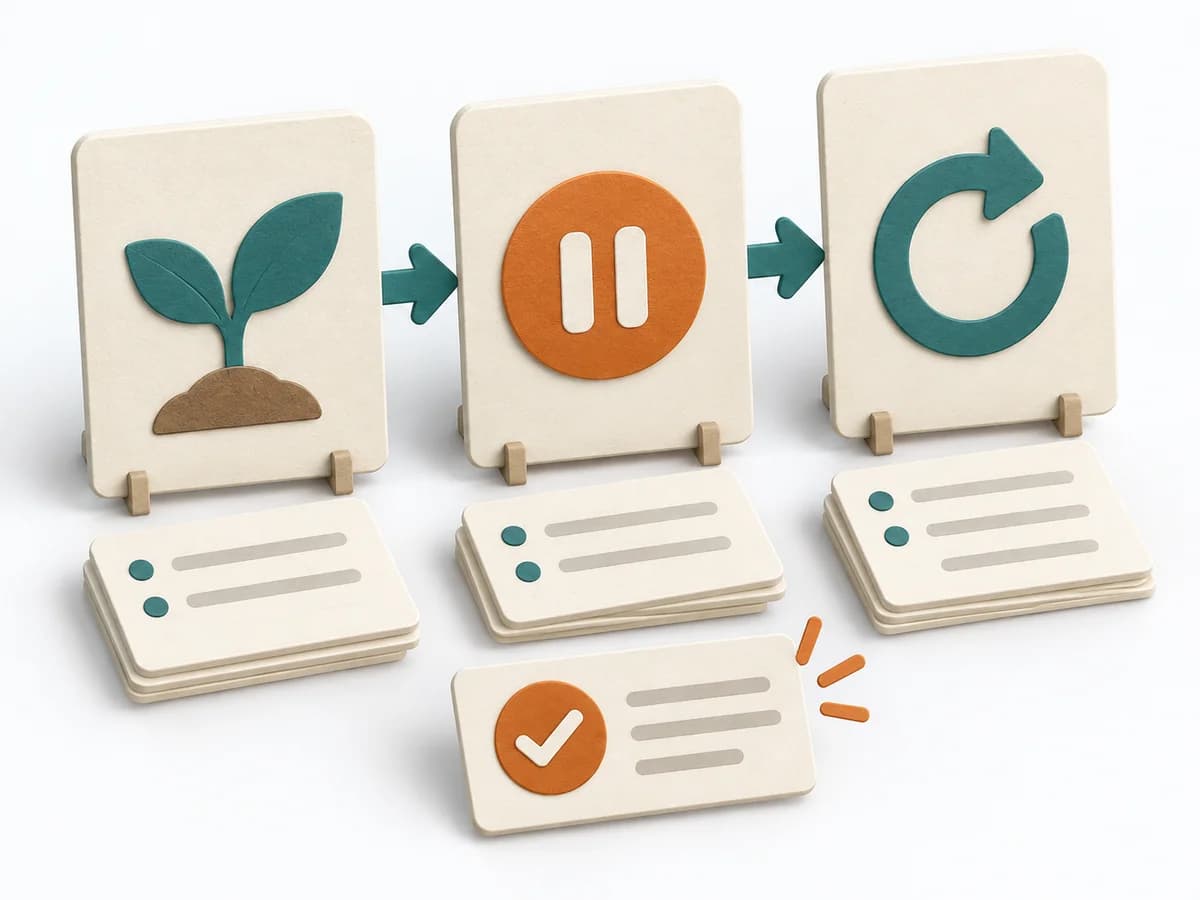
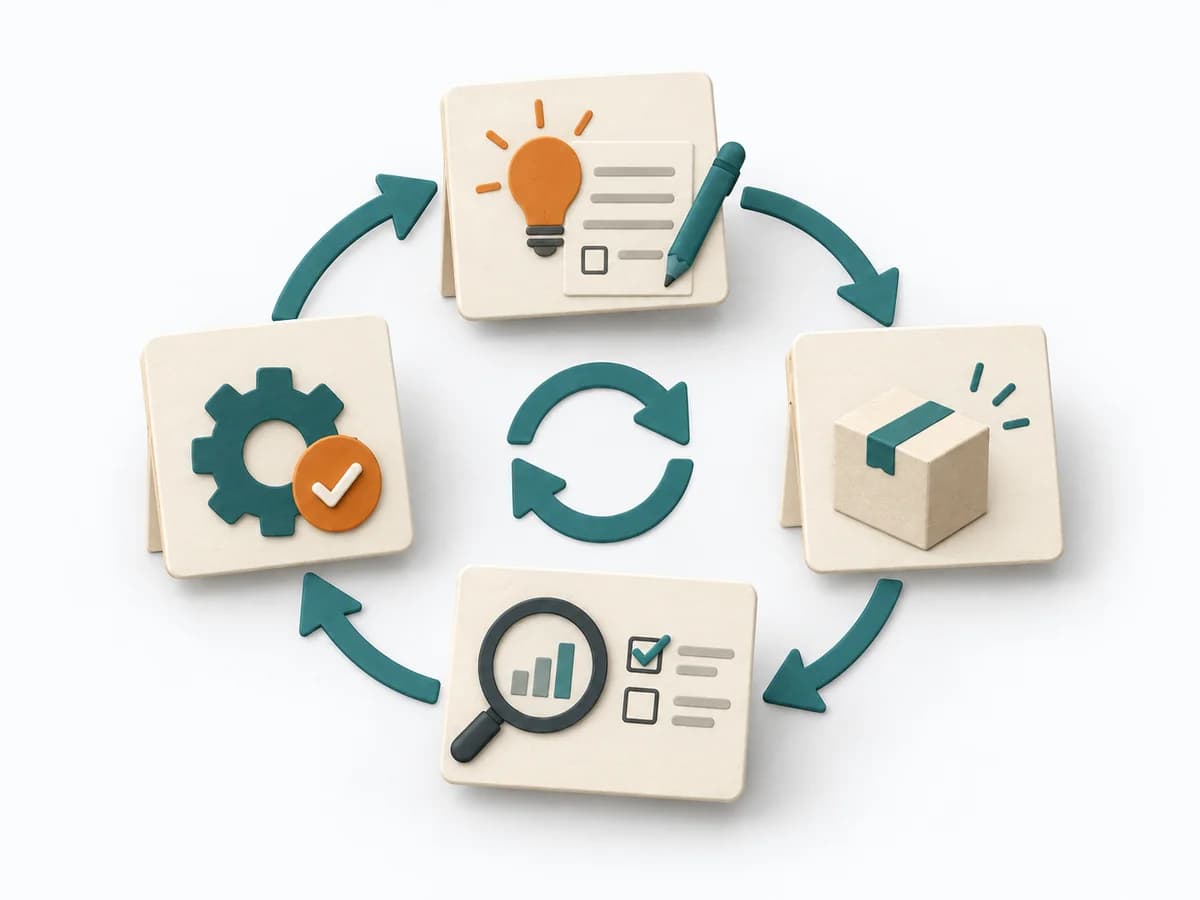
  4. 4OperationsPDCA Plan

    PDCA Cycle

    Which small change will we test, what do we predict, what occurred, and how will learning enter the next cycle?

    Why this step?

    PDCA makes improvement visible through plan, do, check, and adapt.

    The cycle sets owner, review date, and expected effect for the experiment.

    Paper illustration for PDCA Cycle.
Completion criteria
Templates

Artifacts for this playbook

Artifacts stay collapsed until you actually need them.

MarkdownShow template

Working Agreements: Worksheet

Plan the initial agreement, use, and review with clear ownership.

# Working Agreements: Worksheet

## Question
To be confirmed

## Desired outcome
To be confirmed

## Scope
Complete run
Time: 10 minutes of preparation and about 60 minutes for the first agreement; then ongoing use and regular reviews.

Complete this worksheet on paper or in your own document during the work.

## Preparation for this scope

### Method setup
- **Materials:** Shared document or board, individual work preferences, current friction examples, channel overview, and calendar.
- **Roles:** Whole team · facilitator · team lead as participant, not sole author · rotating agreement owner
- **Advance information:** Everyone notes working hours, focus time, feedback preferences, and current friction. The lead drafts at most communication and escalation questions, not finished rules.
- **Overall time needed:** 10 minutes of preparation and about 60 minutes for the first agreement; then ongoing use and regular reviews.
- **Setup:** Make existing rules visible, collect personal preferences silently first, and adopt only agreements the team can concretely try.

### Prepare for the work steps

#### Context: Bound friction
- Everyone notes working hours, focus time, feedback preferences, and current friction. The lead drafts at most communication and escalation questions, not finished rules.

#### Perspectives: Gather needs
- Bounded friction situations

#### Rules: Write observable norms
- Visible work preferences

#### Escalation: Clarify interfaces
- Observable team rules

#### Maintenance: Plan review
- Communication and escalation path


## Working agreements

### Hours and focus
When are we available, when do we protect focus, and which exceptions apply?

...

### Communication channels
Which channel serves which purpose and what response is expected?

...

### Feedback and decisions
How do we give feedback and where are decisions recorded?

...

### Blockers and escalation
When and to whom do we escalate?

...

### Review
When and through what process do rules change?

...

Collect personal preferences, then agree on a few observable rules for a trial period.

[Atlassian Working Agreements · original teaching example](https://www.atlassian.com/team-playbook/plays/working-agreements)


## Context: Bound friction
Expected artifact: Bounded friction situations

Bounded friction situations

Entry:

...

- [ ] Are friction points described as concrete situations without judging people?

## Perspectives: Gather needs
Expected artifact: Visible work preferences

Visible work preferences

Entry:

...

- [ ] Could everyone contribute work conditions and feedback preferences independently?

## Rules: Write observable norms
Expected artifact: Observable team rules

Observable team rules

Entry:

...

- [ ] Does each rule name a trigger and observable behaviour?

## Escalation: Clarify interfaces
Expected artifact: Communication and escalation path

Communication and escalation path

Entry:

...

- [ ] For urgent and non-urgent cases, are channel and escalation path clear?

## Maintenance: Plan review
Expected artifact: Reviewable agreement

Reviewable agreement

Entry:

...

- [ ] Can the team change rules that no longer work, and is the next review scheduled?

## Open questions and next steps

...

Method guide: https://methodatlas.meierhoff-systems.de/en/methods/working-agreements/run-sheet