methodatlas
Session Builder

Plan my session

Plan a concrete work block with agenda, roles, preparation, and a copyable result artifact.

Method session60-90 minWorkshopSalience-Diagramm

Session: Stakeholder Salience Model

The plan translates the method into a concrete facilitated work block. Your inputs flow directly into the session brief and work artifact.

Derived automatically

Method session with 3-6. The plan uses the existing method logic and the runsheet.

Runsheet
Participation logic
Team round, shared work and alignment

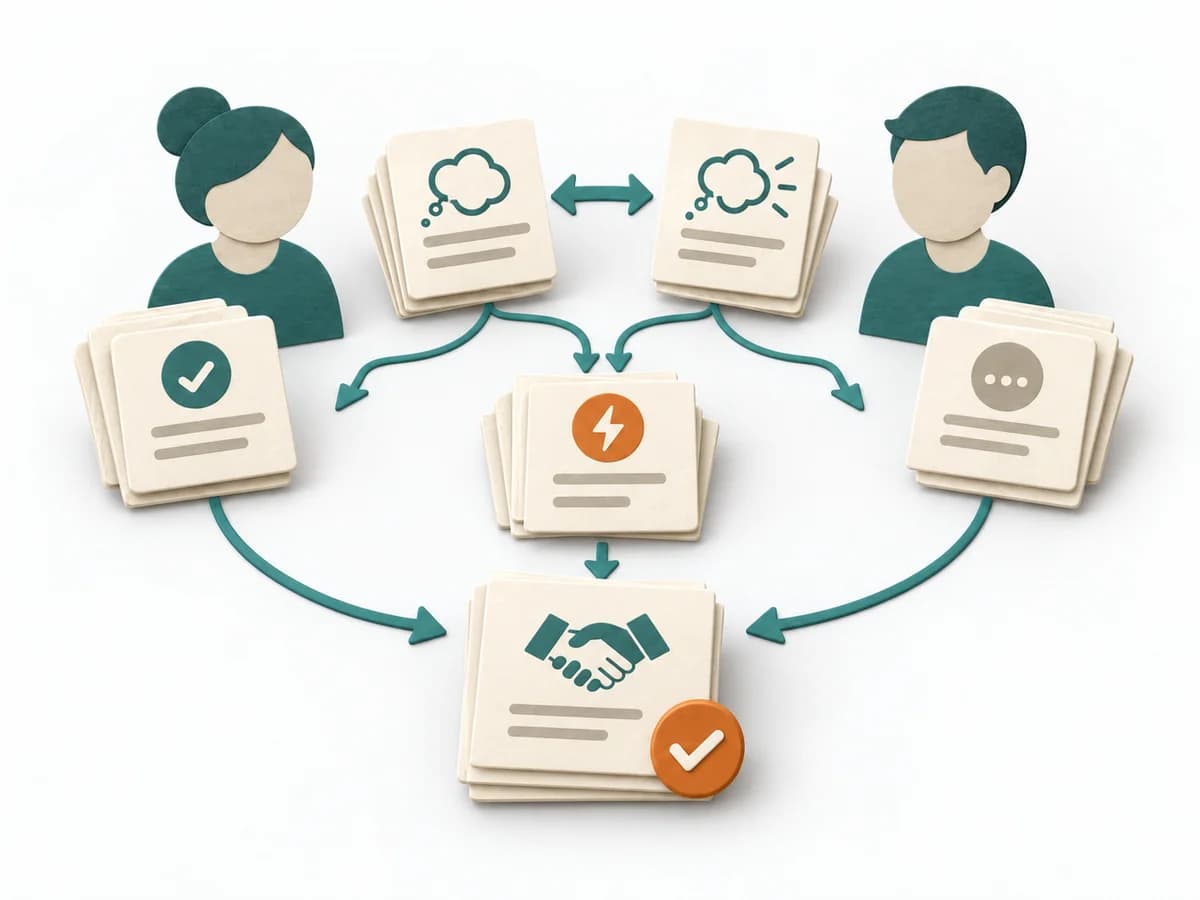
Use the session for shared understanding. Contributions are collected visibly, assumptions are aligned, and open differences remain traceable in the artifact.

Outcome logic
Finish artifact

The session works directly toward Salience-Diagramm. After the session, the artifact should be shareable, reviewable, or reusable.

  1. 1

    Phase 1: Calibrate three dimensions

    15 min

    Clarify definitions: Power (formal/informal influence), Legitimacy (recognized validity of claims), Urgency (time-critical pressure). Examples per dimension. Hint: Combination of the three dimensions creates eight classes (including stakeholders without all three = non-stakeholder). Mixing definitions creates wrong classification.

    FacilitatorSalience-Diagramm
  2. 2

    Phase 2: Classify stakeholders

    25-40 min

    Make three yes/no decisions per stakeholder: has Power? has Legitimacy? has Urgency? Position in Venn diagram follows. Hint: When discussing, note rationale. Be honest on Power/Legitimacy/Urgency: making a claim does not automatically create Legitimacy.

    FacilitatorStrategie pro Klasse
  3. 3

    Phase 3: Interpret classes

    15-20 min

    Work out meaning per class: Definitive (all three) = top priority; Dangerous (Power+Urgency, no Legitimacy) = risk stakeholder; Dependent (Legitimacy+Urgency, no Power) = needs protection. Hint: Dangerous class is especially sensitive (actors with power and pressure, but no legitimate basis). They need active conflict management, not ignoring.

    FacilitatorSalience-Diagramm
  4. 4

    Phase 4: Strategy per class

    15-20 min

    Derive strategy per class. Definitive: close involvement. Dominant (Power+Legitimacy): proactive information. Dangerous: risk mitigation. Dormant (only Power): monitor. Owner and cadence per class. Hint: Strategy without cadence decays. Concrete action and date per class. Definitive stakeholders typically need weekly cadence, others monthly or ad-hoc.

    OwnerStrategie pro Klasse
  5. 5

    Publish artifact

    10 min

    Check the artifact for completeness, define location, set version or status, and name review recipients.

    OwnerSalience-Diagramm
Usable artifact

Session Brief

For invitations, boards, tickets, PR descriptions, or workshop notes.

session-brief.md

Session Brief: Stakeholder Salience Model

Goal

Artifact: Salience-Diagramm

Working Question

Which stakeholders combine which combination of power, legitimacy and urgency, and which strategy follows for each of the eight classes?

Context

Stakeholder list; definitions per dimension (Power, Legitimacy, Urgency); known histories and alliances; current escalation topics; past conflict patterns.

Setup

  • Format: Method session
  • Duration: 60-90 min
  • Mode: Workshop
  • Participants: One facilitator with experience in stakeholder analysis; sponsor or project lead; 3-5 participants with political understanding; scribe for strategy notes.
  • Owner: One facilitator with experience in stakeholder analysis
  • Participation mode: Team round, shared work and alignment
  • Outcome logic: Finish artifact

Participation Logic

Use the session for shared understanding. Contributions are collected visibly, assumptions are aligned, and open differences remain traceable in the artifact.

Outcome Logic

The session works directly toward Salience-Diagramm. After the session, the artifact should be shareable, reviewable, or reusable.

Input

Whiteboard or Miro board with three overlapping circles (Venn diagram: Power, Legitimacy, Urgency); stakeholder cards; definitions per dimension as banner; confidential storage; pens.

Preparation

Venn diagram with three circles (Power, Legitimacy, Urgency). Mark seven intersections (Dormant, Discretionary, Demanding, Dominant, Dangerous, Dependent, Definitive). Definitions written. Announce confidentiality.

Agenda

  1. Phase 1: Calibrate three dimensions (15 min) Owner: Facilitator Action: Clarify definitions: Power (formal/informal influence), Legitimacy (recognized validity of claims), Urgency (time-critical pressure). Examples per dimension. Hint: Combination of the three dimensions creates eight classes (including stakeholders without all three = non-stakeholder). Mixing definitions creates wrong classification. Output: Salience-Diagramm

  2. Phase 2: Classify stakeholders (25-40 min) Owner: Facilitator Action: Make three yes/no decisions per stakeholder: has Power? has Legitimacy? has Urgency? Position in Venn diagram follows. Hint: When discussing, note rationale. Be honest on Power/Legitimacy/Urgency: making a claim does not automatically create Legitimacy. Output: Strategie pro Klasse

  3. Phase 3: Interpret classes (15-20 min) Owner: Facilitator Action: Work out meaning per class: Definitive (all three) = top priority; Dangerous (Power+Urgency, no Legitimacy) = risk stakeholder; Dependent (Legitimacy+Urgency, no Power) = needs protection. Hint: Dangerous class is especially sensitive (actors with power and pressure, but no legitimate basis). They need active conflict management, not ignoring. Output: Salience-Diagramm

  4. Phase 4: Strategy per class (15-20 min) Owner: Owner Action: Derive strategy per class. Definitive: close involvement. Dominant (Power+Legitimacy): proactive information. Dangerous: risk mitigation. Dormant (only Power): monitor. Owner and cadence per class. Hint: Strategy without cadence decays. Concrete action and date per class. Definitive stakeholders typically need weekly cadence, others monthly or ad-hoc. Output: Strategie pro Klasse

  5. Publish artifact (10 min) Owner: Owner Action: Check the artifact for completeness, define location, set version or status, and name review recipients. Output: Salience-Diagramm

Closeout

  • Update result artifact: Salience-Diagramm
  • Define location, version, and review recipients.
  • Define owner, next step, and review date.
Usable artifact

Work artifact

Pre-filled starting point based on the matching template.

work-artifact.md

Salience-Diagramm: Stakeholder Salience Model

Working Question

Which stakeholders combine which combination of power, legitimacy and urgency, and which strategy follows for each of the eight classes?

Context

Stakeholder list; definitions per dimension (Power, Legitimacy, Urgency); known histories and alliances; current escalation topics; past conflict patterns.

Participants

  • Owner: One facilitator with experience in stakeholder analysis
  • Participants: One facilitator with experience in stakeholder analysis; sponsor or project lead; 3-5 participants with political understanding; scribe for strategy notes.

Input

Whiteboard or Miro board with three overlapping circles (Venn diagram: Power, Legitimacy, Urgency); stakeholder cards; definitions per dimension as banner; confidential storage; pens.

Template

Stakeholder Salience Model Canvas

Context

What is this method used for?

Core question

Which question should be answered at the end?

Input

Which data, observations, or materials are available?

Working area

  • Area 1:
  • Area 2:
  • Area 3:
  • Relationships / patterns:

Output artifacts

  • Salience diagram:
  • Strategy by class:

Open questions

  • ...

Next step

Owner, date, success signal.

Completion Check

  • Salience-Diagramm is complete enough for review:
  • Location:
  • Version / status:
  • Review by:
  • Next step:

Next Step

  • Review result
  • Mark open questions
  • Schedule review or decision
Template base

Stakeholder Salience Model Working Template

View templateCompact working template for Stakeholder Salience Model with context, input, output artifacts, and next step.
canvas

stakeholder-salience-model-working-template.md

Compact working template for Stakeholder Salience Model with context, input, output artifacts, and next step.

Stakeholder Salience Model Canvas

Context

What is this method used for?

Core question

Which question should be answered at the end?

Input

Which data, observations, or materials are available?

Working area

  • Area 1:
  • Area 2:
  • Area 3:
  • Relationships / patterns:

Output artifacts

  • Salience diagram:
  • Strategy by class:

Open questions

  • ...

Next step

Owner, date, success signal.

Ready to use when
  • Working question, owner, and target artifact are visible.
  • The result fits Salience-Diagramm.
  • Re-run quarterly or on mandate change. Archive previous version with date. Class changes with rationale. Confidential. Update immediately on personnel change.
  • Open questions are noted as follow-ups.
  • The next review or decision point is scheduled.