methodatlas
Playbook

Plan Stakeholder and Change

Move from an unclear stakeholder landscape to influence strategy, communication, and adoption actions.

Steps4 methods
Time2-4 h setup, ongoing
FormatWorkshop
Outcome

A stakeholder and communication plan with priorities, risks, and next touchpoints.

At the end you have

Stakeholder MapPower Interest GridSalience MapCommunication Plan

Decision point

You can decide which stakeholders should be actively involved, informed, or closely supported.

Next step

Execute the communication plan, monitor resistance, and update stakeholder strategy regularly.

Ideal for

  • Transformations
  • cross-organizational initiatives
  • politically complex programs

Not good for

  • small team decisions
  • purely technical individual work
Preparation

What should be clear before you start

Roles

  • Change or program owner
  • product or initiative lead
  • representatives of key stakeholder groups

Inputs

  • initiative goals and change scope
  • known stakeholders and political tensions
  • communication channels and existing messages

Setup

  • Clarify sphere of influence
  • Collect stakeholder list in advance
  • Prepare communication rhythm and owners
Flow

Method path

4 methods
  1. 1FacilitationStakeholder Map

    Stakeholder Mapping

    Which actor groups are affected or influential here, what assumptions apply, and how will they participate?

    Why this step?

    Stakeholder Mapping creates an initial overview of people, groups, and relationships in the change context.

    Stakeholders are then prioritized by influence and interest.

    Stakeholder Mapping
  2. 2FacilitationPower Interest Grid

    Power Interest Grid

    Who can affect the specific outcome, who is affected by it, and what form of engagement is appropriate?

    Why this step?

    Power Interest Grid shows which stakeholders should be closely managed, informed, satisfied, or observed.

    For complex cases, prioritization is then differentiated by urgency and legitimacy.

    Paper illustration of Power-Interest Grid with a method-specific labelled workspace.
  3. 3FacilitationSalience Map

    Stakeholder Salience Model

    Which stakeholder claims possess power, legitimacy, and urgency in this decision, and what attention follows?

    Why this step?

    The Salience Model evaluates stakeholders by power, legitimacy, and urgency and sharpens influence strategy.

    Prioritized groups are then translated into messages, channels, and touchpoints.

    Paper illustration of Stakeholder Salience Model with its method-specific working model.
  4. 4DeliveryCommunication Plan

    Communication Plan

    Who needs which information when, from whom and through which feedback channel?

    Why this step?

    The Communication Plan makes messages, channels, frequency, and responsibilities binding.

    The plan is implemented, checked, and adjusted when stakeholder signals change.

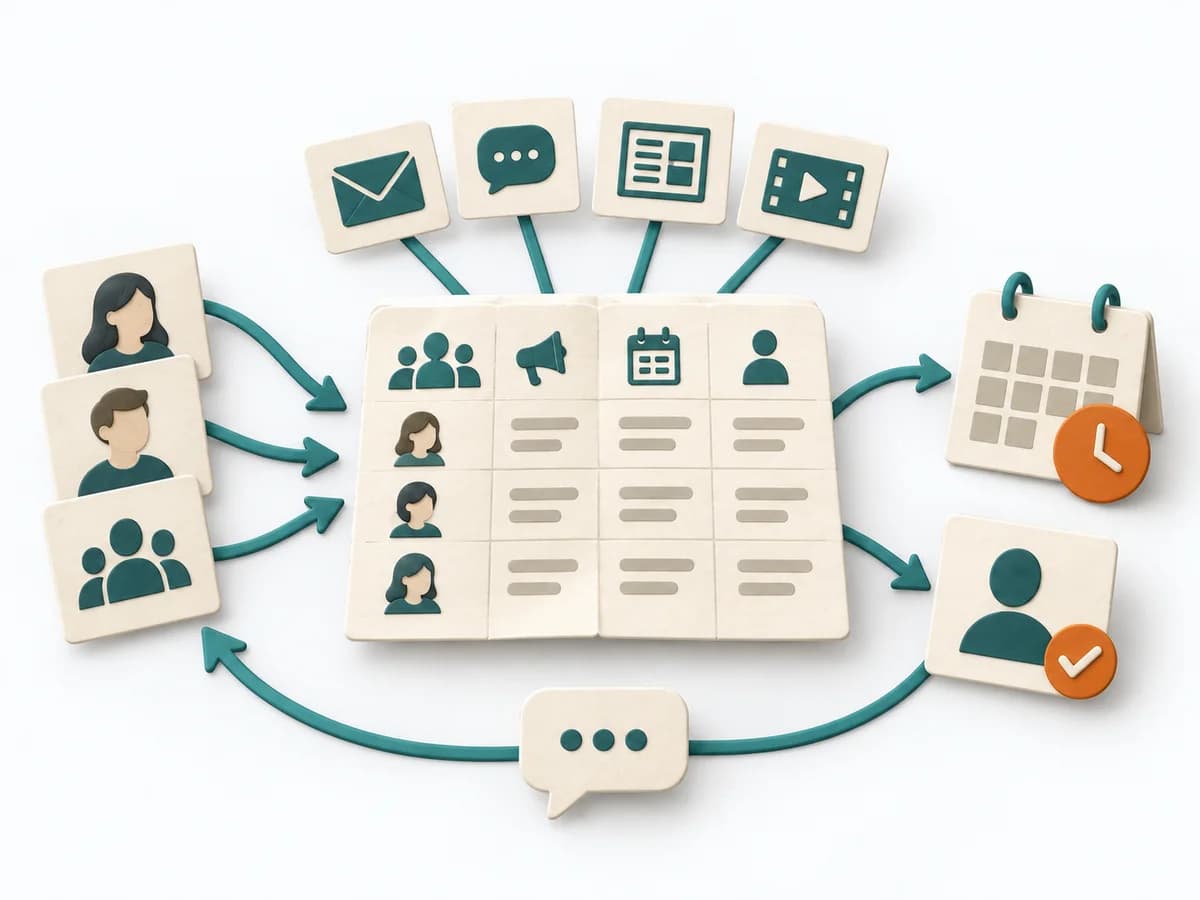
    Paper illustration for Communication Plan
Completion criteria
Templates

Artifacts for this playbook

Artifacts stay collapsed until you actually need them.

MarkdownShow template

Communication Plan: Worksheet

Bound the initiative and communication objectives; collect affected groups and existing channels.

# Communication Plan: Worksheet

## Question
To be confirmed

## Desired outcome
To be confirmed

## Scope
Complete cycle
Time: 45–90 minutes to draft; maintenance throughout the initiative

Complete this worksheet on paper or in your own document during the work.

## Preparation for this scope

### Method setup
- **Materials:** Stakeholder list, milestones, existing channels, communication matrix and feedback log.
- **Roles:** Initiative owner, recipient representatives, senders and approvers where needed.
- **Advance information:** Bound the initiative and communication objectives; collect affected groups and existing channels.
- **Overall time needed:** 45–90 minutes to draft; maintenance throughout the initiative
- **Setup:** Make the matrix accessible to senders and recipient representatives; start with one blank row per event.

### Prepare for the work steps

#### Recipients and needs: Recipients and needs
- Stakeholders
- Initiative objectives

#### Messages and channels: Messages and channels
- Needs list
- Available channels

#### Cadence and ownership: Cadence and ownership
- Message-channel mapping
- Milestones

#### Feedback and maintenance: Feedback and maintenance
- Communication matrix
- Initial feedback


## Communication Plan· worksheet

| Event | Audience | Purpose and message | Channel | Trigger or cadence | Owner and approval | Feedback and review |
| --- | --- | --- | --- | --- | --- | --- |
| 1 |   |   |   |   |   |   |
| 2 |   |   |   |   |   |   |
| 3 |   |   |   |   |   |   |

- **1:** Describe one communication event and all responsibilities.
- **2:** Describe one communication event and all responsibilities.
- **3:** Describe one communication event and all responsibilities.

Enter one communication event per row. Check access and information needs with recipients; agree a specific owner, trigger and feedback route.

[Asana: Communication Plan](https://asana.com/resources/communication-plan)


## Recipients and needs: Recipients and needs
Expected artifact: Needs list

Does every audience have a specific information purpose?

Entry:

...

- [ ] Does every audience have a specific information purpose?

## Messages and channels: Messages and channels
Expected artifact: Message-channel mapping

Does the channel reach the group clearly and on time?

Entry:

...

- [ ] Does the channel reach the group clearly and on time?

## Cadence and ownership: Cadence and ownership
Expected artifact: Scheduled communication matrix

Is it clear who acts on which trigger?

Entry:

...

- [ ] Is it clear who acts on which trigger?

## Feedback and maintenance: Feedback and maintenance
Expected artifact: Agreed feedback and review cycle

Do we check understanding beyond delivery counts?

Entry:

...

- [ ] Do we check understanding beyond delivery counts?

## Open questions and next steps

...

Method guide: https://methodatlas.meierhoff-systems.de/en/methods/communication-plan/run-sheet