Purpose
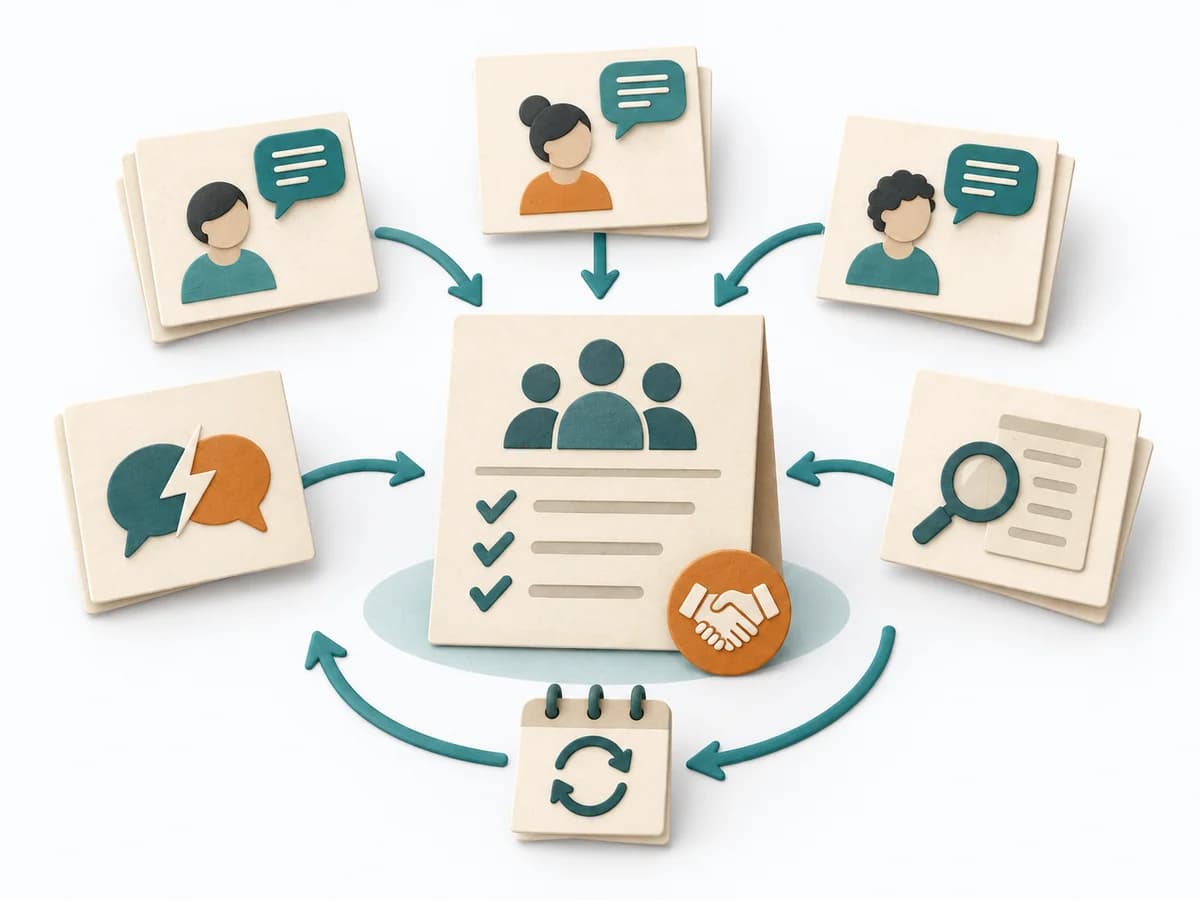
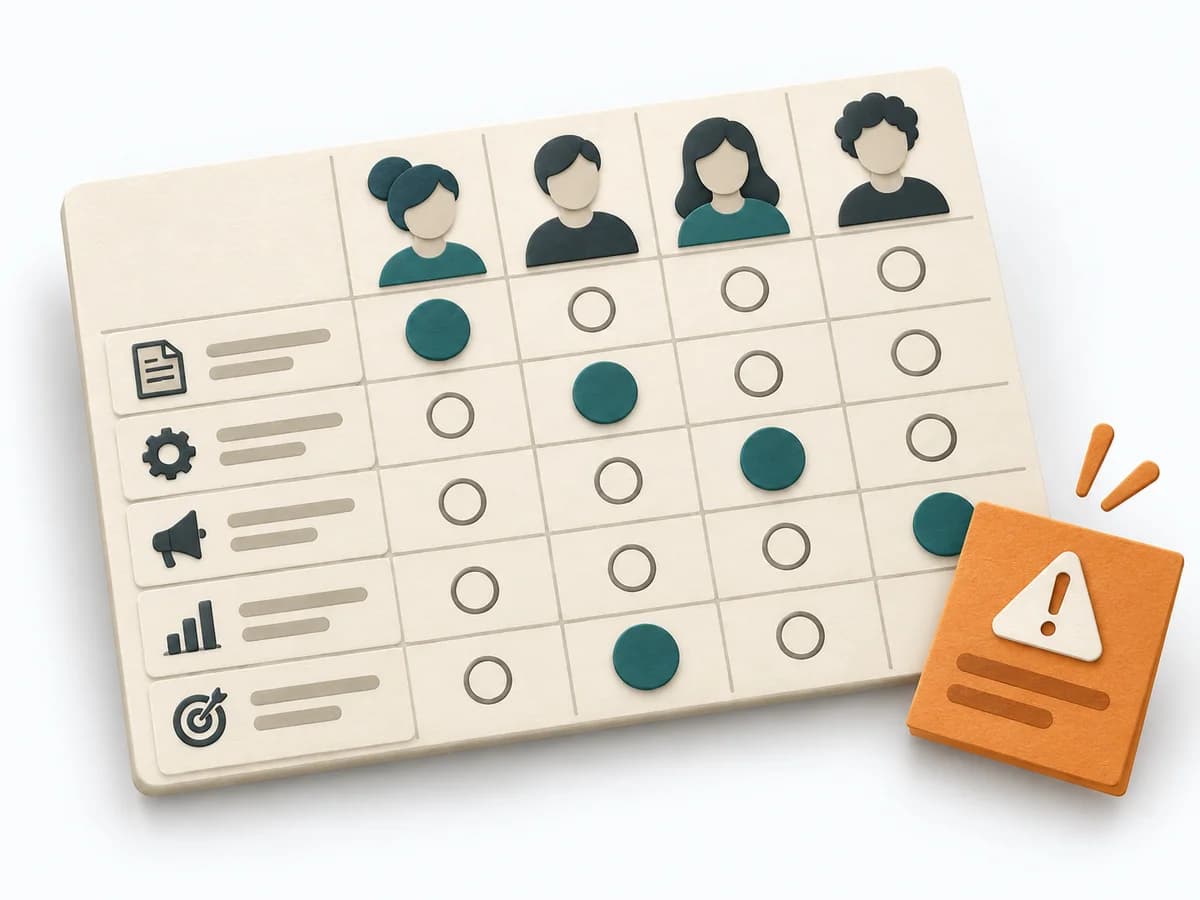
When roles, interfaces, or projects fail because of differing expectations, Expectation Mapping surfaces these differences. It shows what each side takes for granted and where the pictures diverge.
Facilitation Facilitation method
Surfaces mutual expectations about roles and collaboration and translates them into observable agreements.
Expectation Mapping separates what one person expects from others, what they commit to, and how fulfilment can be observed. It addresses differences before they become everyday disappointment.
Which expectations, commitments, and observable signals must be clarified at this interface?
Each step produces a concrete domain result for the complete run.
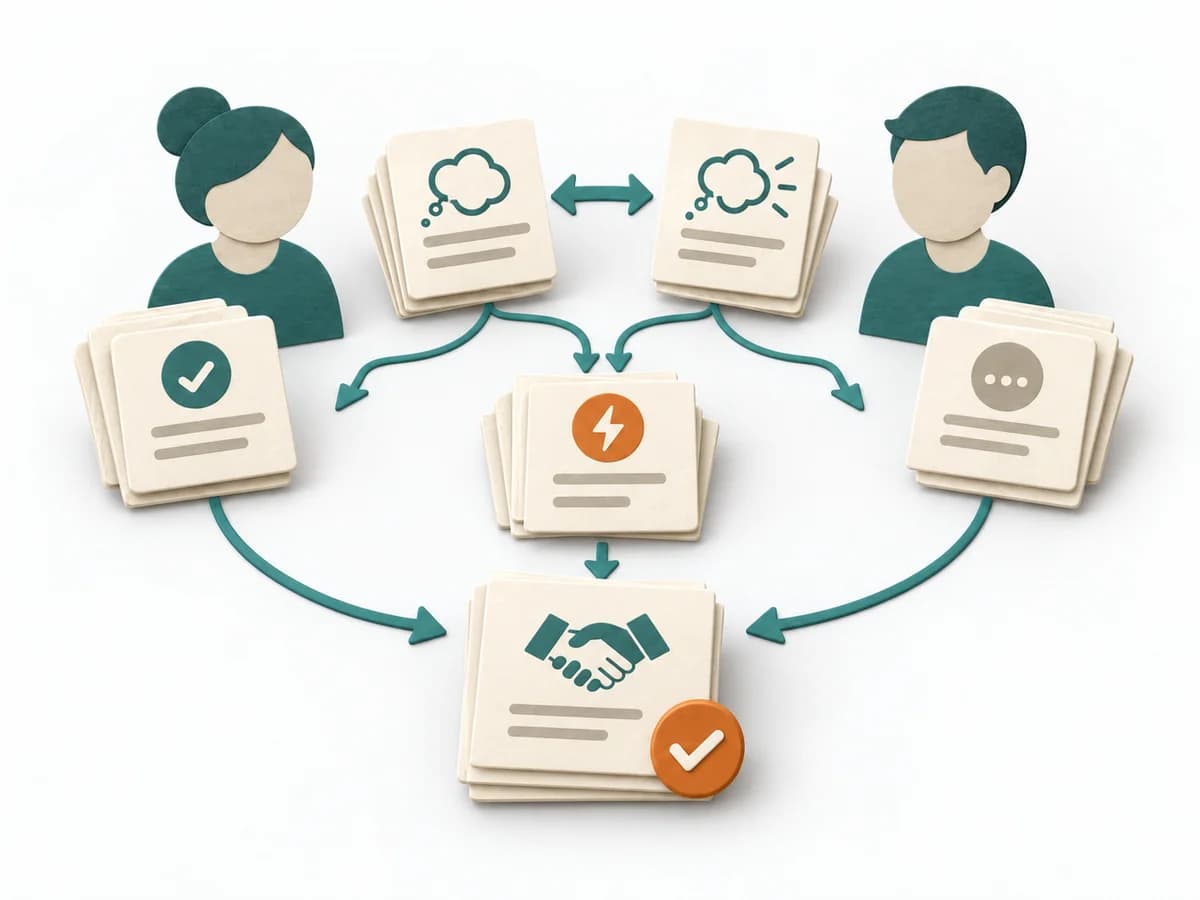
Interface
Bound the occasion, roles, and concrete handover or collaboration.
Expectations
Each person records what they expect from others and can commit to themselves.
Patterns
Place expectations, commitments, and observable signals side by side and cluster them.
Tension
Discuss differences between wish, commitment, capacity, and evidence.
Agreement
Record observable agreement, owner, example, and review date.
Test agreements against observed handoffs and renegotiate infeasible expectations at review.
Use it at project start, role changes, or interfaces with recurring misunderstandings.
Expectation matrix with mutual expectation, own commitment, observable signal, boundaries, owner, and review date.
Fictional example
Fictional example for one concrete work case.
| Case | Role and expectation | Own commitment | Observable signal | Clarification and review |
|---|---|---|---|---|
| Example caseWhich expectations, commitments, and observable signals must be clarified at this interface? | Support expects Product to classify critical feedback within 2 working days | Support provides ticket link, impact, and affected customers | Product marks decision, question, or date in the ticket | Product Ops owner; four-week review of response cases |
The example is fictional and must be adapted to mandate and context.
Name the occasion, participants, and one concrete interface.
When roles, interfaces, or projects fail because of differing expectations, Expectation Mapping surfaces these differences. It shows what each side takes for granted and where the pictures diverge.
Participants name expectations of each other and compare them directly with what the other side perceives or can deliver. This makes misunderstandings visible earlier and discussion points more concrete, before they turn into everyday frustration.
Expectation Mapping accomplishes a lot because it makes unspoken hopes, fears, and performance assumptions between participants visible. The benefit becomes tangible when expectations are sorted cleanly by role, topic, and mutual dependency. What matters is the gap between wish, commitment, and realistic capacity, so disappointments can be addressed early and collaboration made more reliable.
Start with a clear occasion, such as a project kickoff or role change, and give participants room to voice even sensitive expectations. The tipping point is where implicit assumptions suddenly turn out to differ. Close with clarified commitments, tensions that remain open, and a short agreement on how expectations will be tracked later.
The method guide walks execution through 5 phases, timing, 5 pitfalls, and clear stop criteria.
Open method guideYour perspective
Your feedback helps shape the next improvements to methodatlas.
Plan the question, inputs, complete run, and review with clear ownership.
To be confirmed
To be confirmed
Complete run Time: 60–90 minutes for one bounded interface; review after 2–4 weeks.
Complete this worksheet on paper or in your own document during the work.
| Case | Role and expectation | Own commitment | Observable signal | Clarification and review |
|---|---|---|---|---|
| Example case |
Use one specifically bounded case per row.
Reference source · original teaching example
Expected artifact: Bounded interface
Bounded interface
Entry:
...
Expected artifact: Independent expectations and commitments
Independent expectations and commitments
Entry:
...
Expected artifact: Clustered expectation gaps
Clustered expectation gaps
Entry:
...
Expected artifact: Negotiated boundaries
Negotiated boundaries
Entry:
...
Expected artifact: Testable agreements
Testable agreements
Entry:
...
...
Method guide: https://methodatlas.meierhoff-systems.de/en/methods/expectation-mapping/run-sheet
Fitting alternatives with decision guidance, followed by other related methods.

Instead of Expectation Mapping, choose Team Charter when you want to deliberately agree on collaboration, a shared target picture, and ground rules.

Makes goals, concerns, and open gaps visible so clarification steps can be planned deliberately.

Moves group input, selection, and decision toward a concrete result through "collect stakeholders individually and by group", "explain power and interest", and "derive a strategy for each quadrant".

Moves group input, selection, and decision toward a concrete result through "prepare the stakeholder list", "define power, legitimacy, and urgency", and "derive strategy by class".
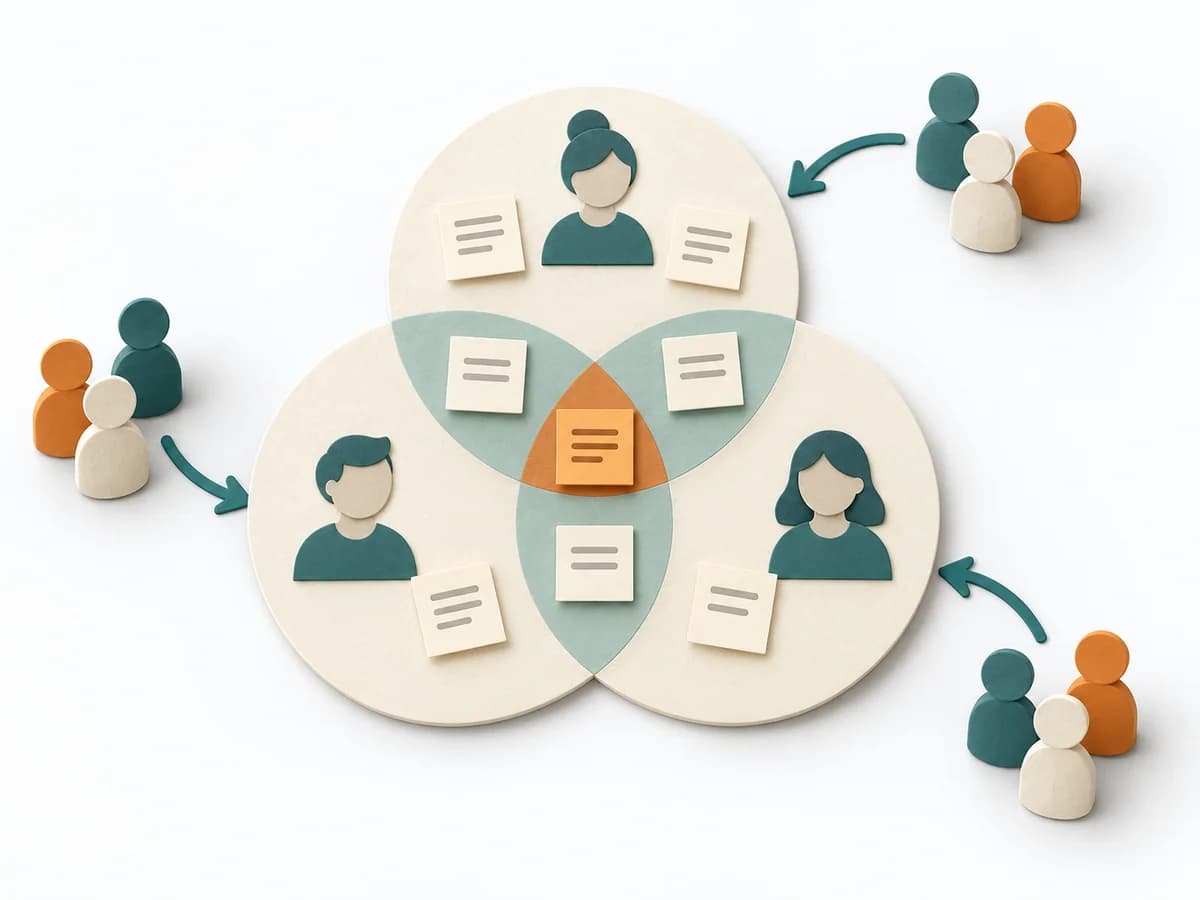
Compares three perspectives in a shared picture and makes overlaps as visible as differences.

Shows delegation levels for decision areas and creates agreements about closeness, freedom, and control.