Purpose
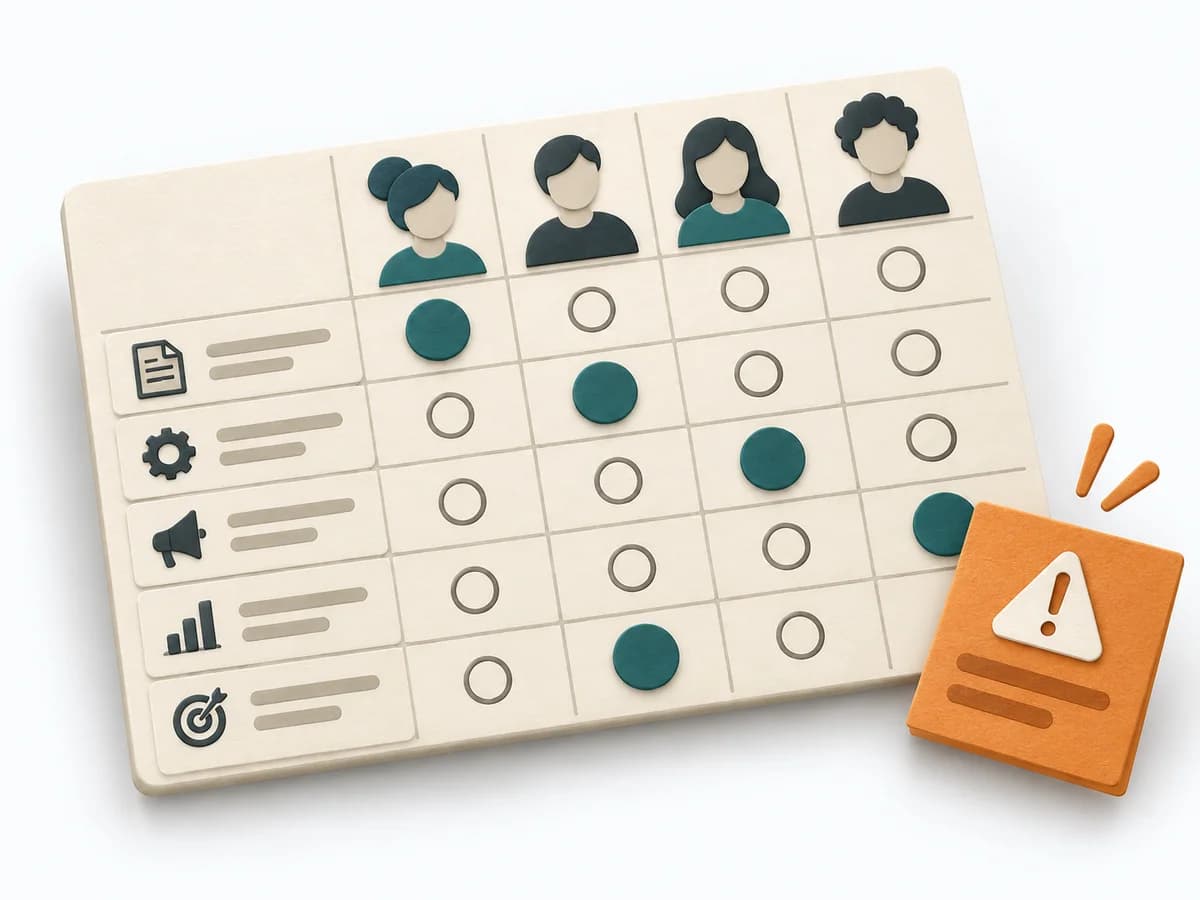
When a team is starting fresh or working past each other, Team Charter clarifies the shared working basis. It visibly sets out how collaboration, decision paths, and mutual conduct should work day to day.
Facilitation Operating practice
Records a team’s mandate, boundaries, roles, and ways of working as a checkable agreement.
A Team Charter connects purpose, customers, responsibilities, communication paths, and decision rules. It provides a shared reference for formation, handover, and conflict clarification.
What shared agreement enables this team to fulfil its mandate with clear boundaries and responsibilities?
Each step produces a concrete domain result for the complete run.

Mandate
Record purpose, expected value, and customers together.
Boundaries
Name owned outcomes, dependencies, and explicitly excluded work.
Roles
Record decision, execution, and advice roles for concrete outcomes.
Ways of working
Document communication, meetings, conflict path, and relevant agreements.
Review
Set assumptions, open points, and the next joint review.
Update the charter with team and sponsor after startup, mandate changes, and new team members.
Use it when forming a team, reorganizing, or starting work with several dependencies.
Versioned team charter with purpose, customers, success signals, scope, roles, decision paths, working rules, open points, and review date.
Fictional example
Fictional short version for a team operating a digital booking service.
Why does the team exist, whom does it help, and what value should result?
We help small workshops book maintenance appointments reliably without phone queues.
Which outcomes does the team own, and what is explicitly outside?
Owns booking flow and confirmation. Outside: workshop ERP and pricing.
Who decides, executes, or contributes to key outcomes?
Product decides priorities; Tech decides implementation; Support is consulted on confirmation-flow changes.
Which channels, rhythms, and conflict paths apply?
Blockers appear on the board daily; domain decisions go into the decision log; unresolved goal conflicts go to Product and sponsor within two working days.
What remains open, who resolves it, and when is the charter reviewed?
Open: access to ERP test data, owner Samira by 12 Oct; charter review on 30 Oct.
The example shows a useful level of detail, not a universal team design.
Bring the mandate, expected value, affected groups, and decision path.
When a team is starting fresh or working past each other, Team Charter clarifies the shared working basis. It visibly sets out how collaboration, decision paths, and mutual conduct should work day to day.
The group negotiates what reliability, communication, and conflict behavior concretely mean, instead of just stating good intentions. This creates a shared reference point against which later tensions or ambiguities can be checked.
A Team Charter helps because expectations about mandate, collaboration, roles, and success criteria are made explicit early. In practice, the format holds up when it addresses real tensions instead of just producing noncommittal feel-good statements. Day to day, observable behavior, decision paths, and practical consequences matter, so the charter provides orientation in everyday work and conflicts can be addressed earlier.
Use the charter moment early in a collaboration and put real expectations about purpose, roles, and working style on the table. The work becomes valuable as soon as unspoken assumptions about availability, decision-making, or quality become visible. Afterward, record the few agreements that should actually govern daily work.
The method guide walks execution through 5 phases, timing, 5 pitfalls, and clear stop criteria.
Open method guideYour perspective
Your feedback helps shape the next improvements to methodatlas.
Plan the question, inputs, complete run, and review with clear ownership.
To be confirmed
To be confirmed
Complete run Time: 75–120 minutes for the first version; review after 4–6 weeks and after material team changes.
Complete this worksheet on paper or in your own document during the work.
Why does the team exist, whom does it help, and what value should result?
...
Which outcomes does the team own, and what is explicitly outside?
...
Who decides, executes, or contributes to key outcomes?
...
Which channels, rhythms, and conflict paths apply?
...
What remains open, who resolves it, and when is the charter reviewed?
...
Clarify mandate and hard boundaries with the sponsor; write team agreements together.
Atlassian Team Charter · original teaching example
Expected artifact: Shared mandate
Shared mandate
Entry:
...
Expected artifact: Explicit scope
Explicit scope
Entry:
...
Expected artifact: Role and decision map
Role and decision map
Entry:
...
Expected artifact: Agreed collaboration
Agreed collaboration
Entry:
...
Expected artifact: Published charter with review
Published charter with review
Entry:
...
...
Method guide: https://methodatlas.meierhoff-systems.de/en/methods/team-charter/run-sheet
Fitting alternatives with decision guidance, followed by other related methods.
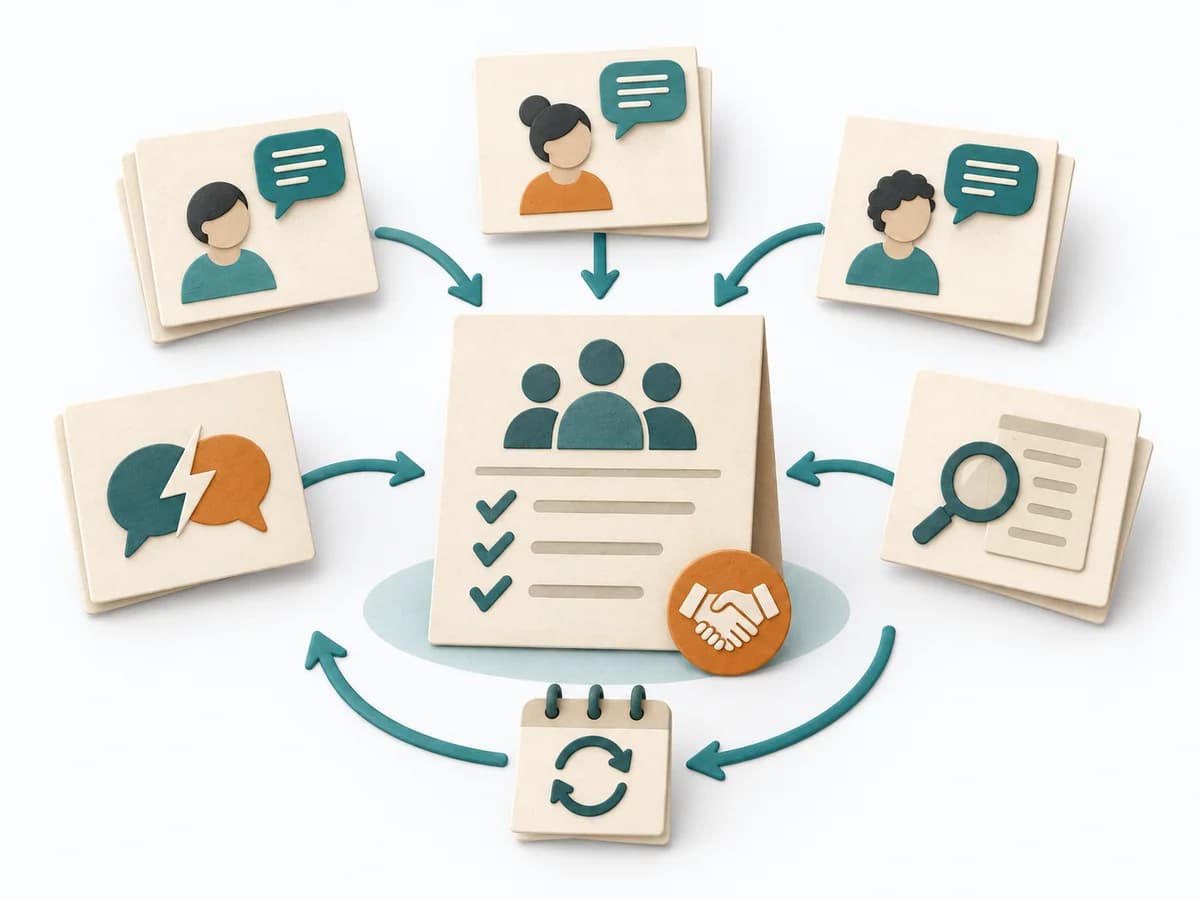
Instead of Team Charter, choose Working Agreements when you want to define everyday rules for the team concretely and bindingly and need them as a lived working basis.

Surfaces stakeholder expectations, clusters conflicts, and turns them into concrete agreements.

Shows delegation levels for decision areas and creates agreements about closeness, freedom, and control.

Makes goals, concerns, and open gaps visible so clarification steps can be planned deliberately.

Moves group input, selection, and decision toward a concrete result through "prepare the stakeholder list", "define power, legitimacy, and urgency", and "derive strategy by class".
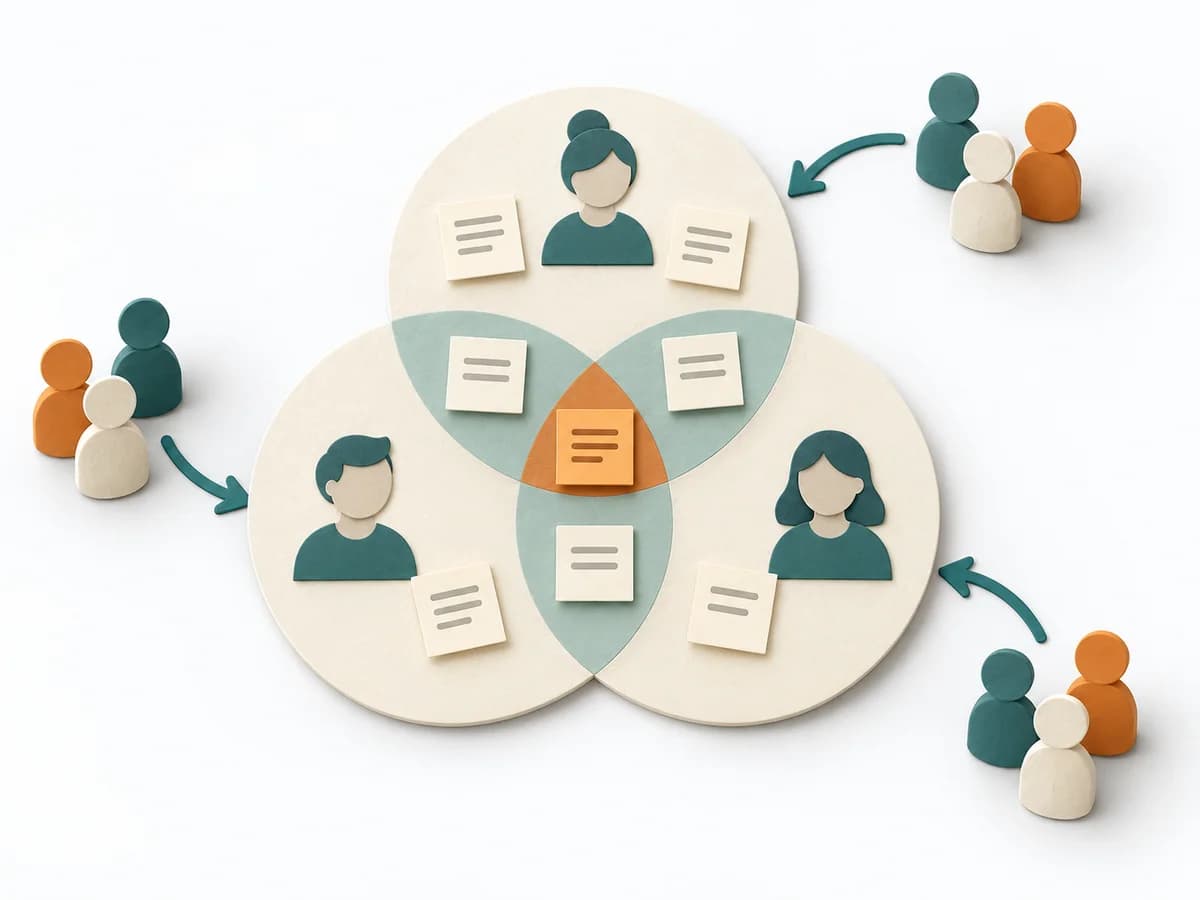
Compares three perspectives in a shared picture and makes overlaps as visible as differences.