Purpose
When a group needs a solid decision without outvoting individual factions, a Consensus Workshop creates a negotiable common ground. It makes agreement, reservations, and open tensions discussable at the same time.
Facilitation Facilitation method
Condenses individual responses through sharing, clustering, and naming into a shared picture with visible dissent.
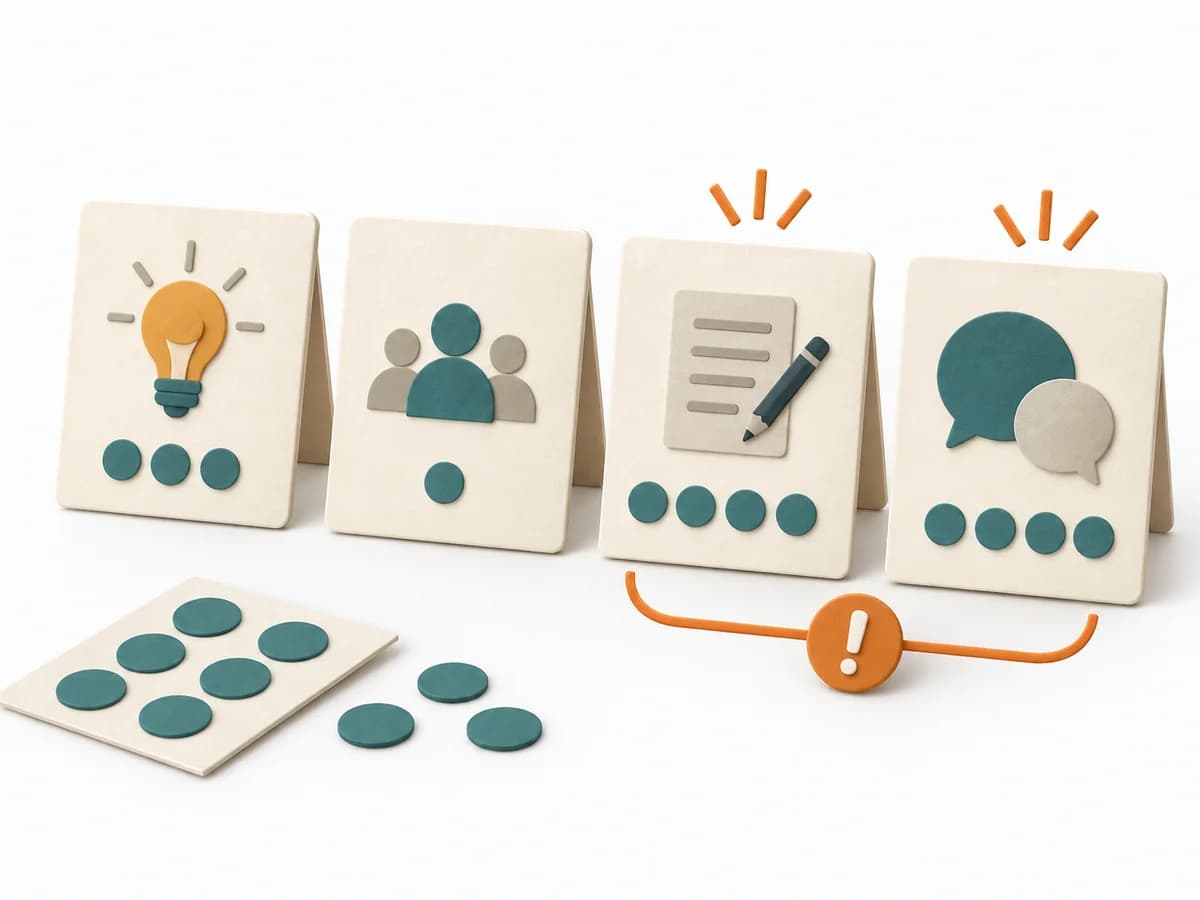
The ToP Consensus Workshop follows context, brainstorm, cluster, name, and resolve. Consensus means a workable shared interpretation; minority concerns and open tensions are not facilitated away.
What shared picture emerges from our different answers to the focus question?
Individual cards protect participation; round-robin sharing limits dominance; clusters emerge from meaning; titles state the cluster's message.

Context
Clarify purpose, open focus question, use of result, and rules.
Cards
Write concrete responses individually and select strongest cards.
Cluster
Share cards in rounds and group together by meaning.
Naming
Name each cluster with a specific message statement.
Resolve
Interpret the full picture and record consensus, dissent, and next steps.
Update with versioning when evidence or scope changes.
For groups that need to turn diverse experience around a focused question into shared themes and next steps.
Named clusters with original cards, consensus statement, dissent, and next steps.
Rationales, open assumptions, owners, and review date remain traceable.
Fictional worked example
Original cards, clusters, consensus, and dissent remain traceably distinct.
Which open question is answered and how will the result be used?
What do teams need so review decisions remain usable later?
Which concrete individual responses exist?
Owner; due date; rationale; evidence link; findability.
Which cards belong together semantically and what message does the cluster carry?
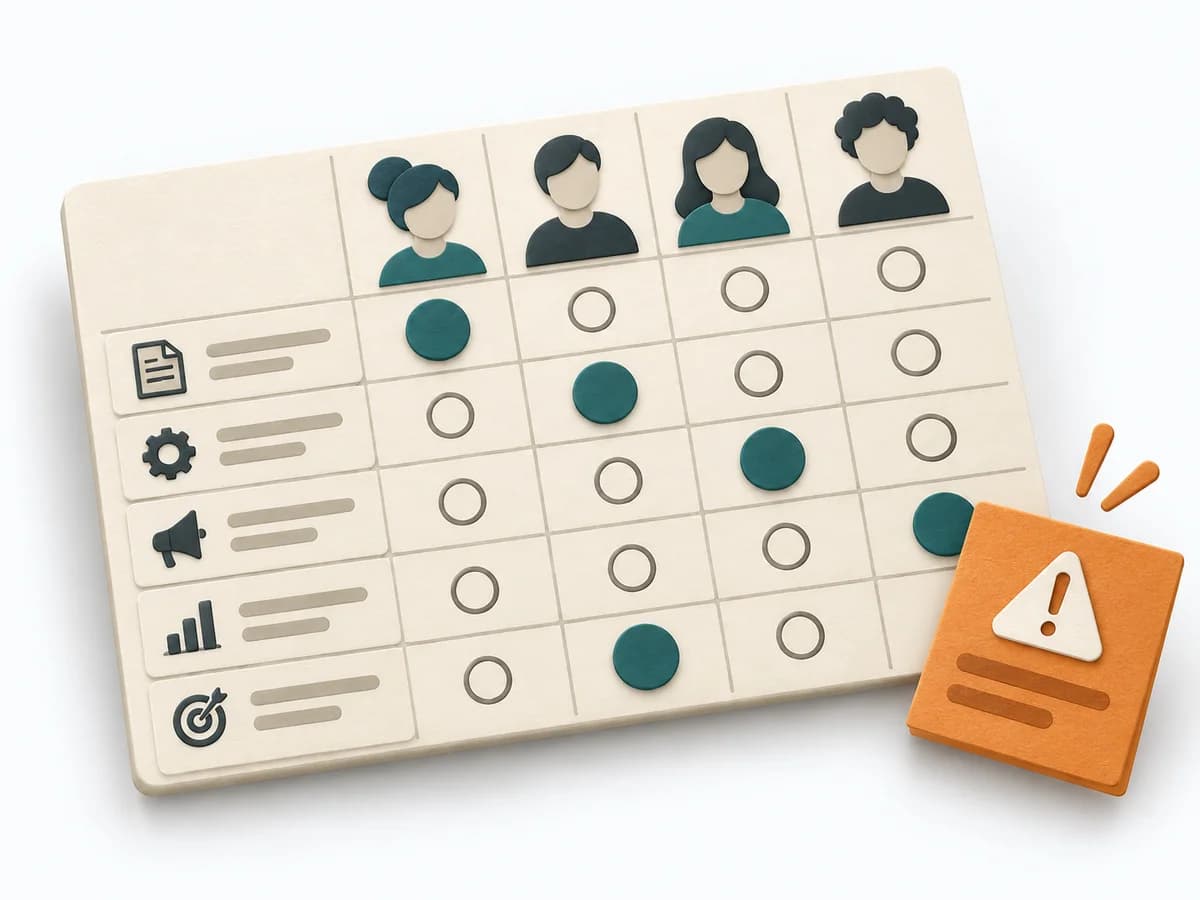
Committed responsibility: owner + due date. Traceable context: rationale + evidence.
Which shared statement can the group support?
Every decision needs a responsible person, time, and verifiable context.
Which objection remains and how will it be addressed?
Due date for principle decisions open; policy owner checks by 15 October.
Consensus is a workable common ground, not forced unanimity.
Start with the core question: What shared picture emerges from our different answers to the focus question?
When a group needs a solid decision without outvoting individual factions, a Consensus Workshop creates a negotiable common ground. It makes agreement, reservations, and open tensions discussable at the same time.
Participants bring in their positions, compare differences, and condense only what can be broadly supported. The focus is on a solution that doesn't push conflicts aside but turns them into a workable agreement.
A Consensus Workshop works because individual ideas are first allowed to diverge and are then step by step turned into shared statements. The consensus process becomes robust when contributions are visibly combined, differences are negotiated respectfully, and wording is only condensed after genuine understanding. What matters is clean clustering steps, clear language, and solid agreement, so consensus doesn't get confused with superficial harmony.
Prepare a question that requires shared orientation and ensure a flow that makes room for individual work first and then convergence. Look closely when groups prematurely pick smooth headlines and thereby lose important tensions. Close with a few jointly held statements and note openly what was deliberately left out of the consensus.
The method guide walks execution through 5 phases, timing, 5 pitfalls, and clear stop criteria.
Open method guideYour perspective
Your feedback helps shape the next improvements to methodatlas.
Plan the session around the canonical method steps and a concrete decision.
To be confirmed
To be confirmed
Full session Time: 90–150 minutes
Complete this worksheet on paper or in your own document during the work.
Which open question is answered and how will the result be used?
...
Which concrete individual responses exist?
...
Which cards belong together semantically and what message does the cluster carry?
...
Which shared statement can the group support?
...
Which objection remains and how will it be addressed?
...
Retain original cards and record objections faithfully and factually.
ICA International: Technology of Participation
Expected artifact: focus frame
focus frame with evidence, owner, and next decision.
Entry:
...
Expected artifact: response cards
response cards with evidence, owner, and next decision.
Entry:
...
Expected artifact: meaning clusters
meaning clusters with evidence, owner, and next decision.
Entry:
...
Expected artifact: cluster titles
cluster titles with evidence, owner, and next decision.
Entry:
...
Expected artifact: consensus picture
consensus picture with evidence, owner, and next decision.
Entry:
...
...
Method guide: https://methodatlas.meierhoff-systems.de/en/methods/consensus-workshop/run-sheet
Fitting alternatives with decision guidance, followed by other related methods.

Instead of Consensus Workshop, when you want to cluster raw material and don't yet need a jointly owned decision.

Collects ideas silently, clarifies understanding, and lets the group prioritize, so quiet voices don't get lost.

Moves ideas from silent reflection through pair exchange into the group and condenses patterns.

Makes goals, concerns, and open gaps visible so clarification steps can be planned deliberately.

Sorts problems, reframes the top issue, and derives experiments that quickly turn frustration into movement.
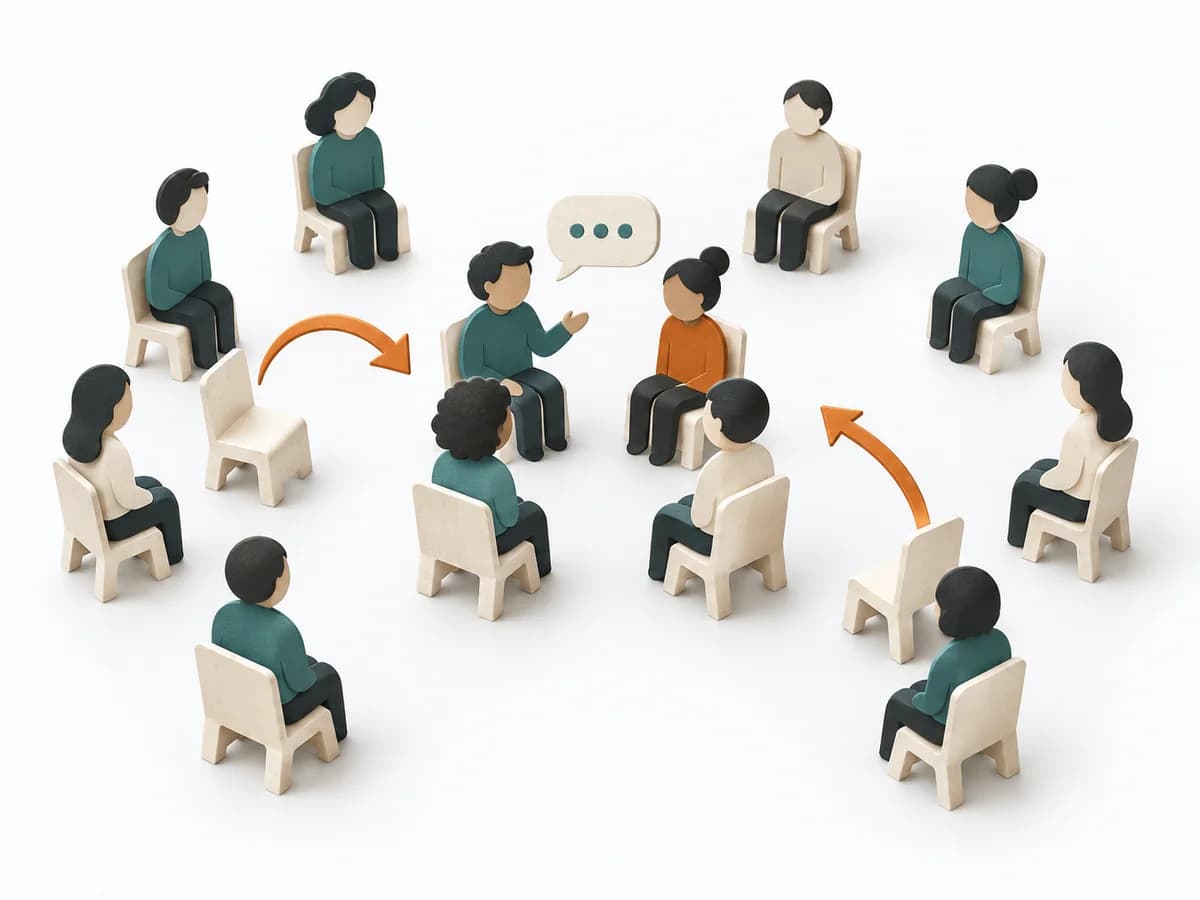
Separates an inner and outer circle so discussion, observation, and tensions become visible at the same time.