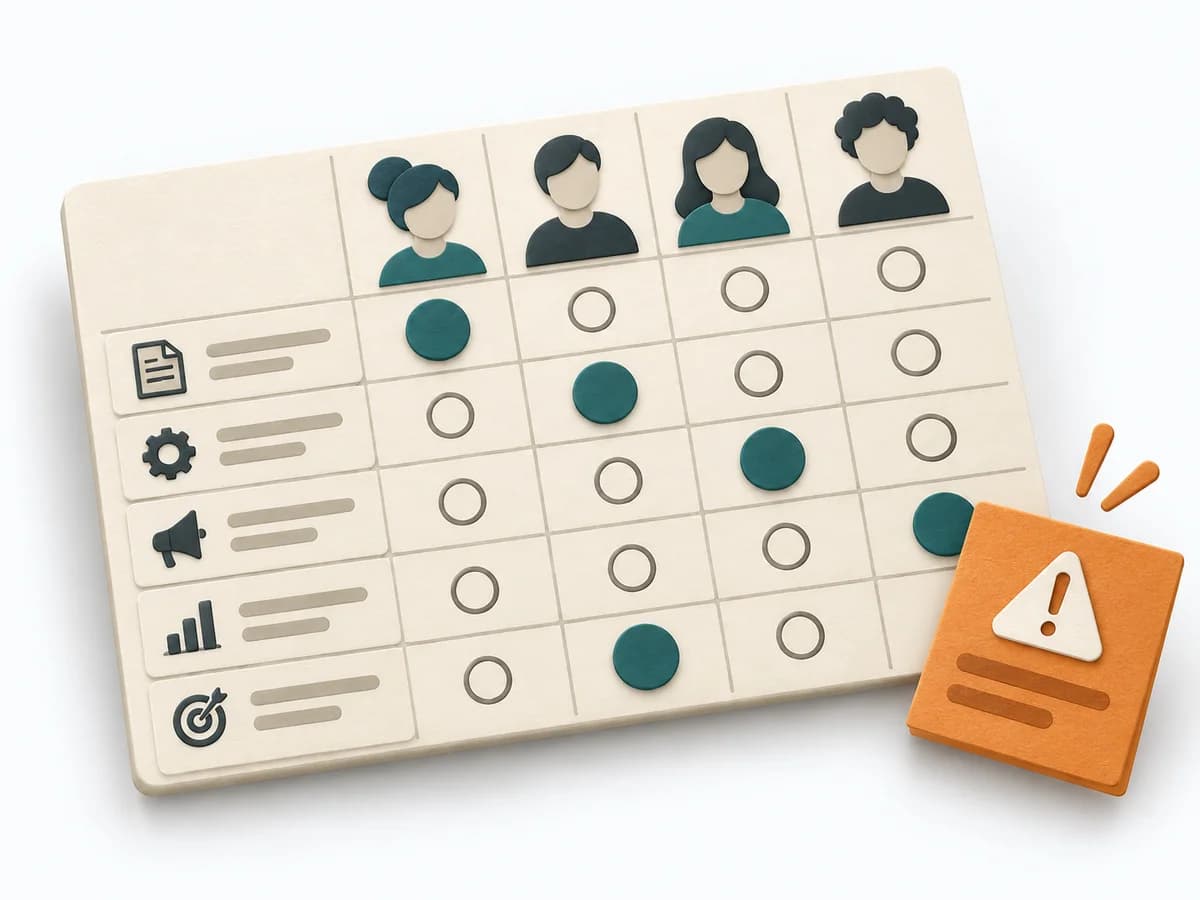
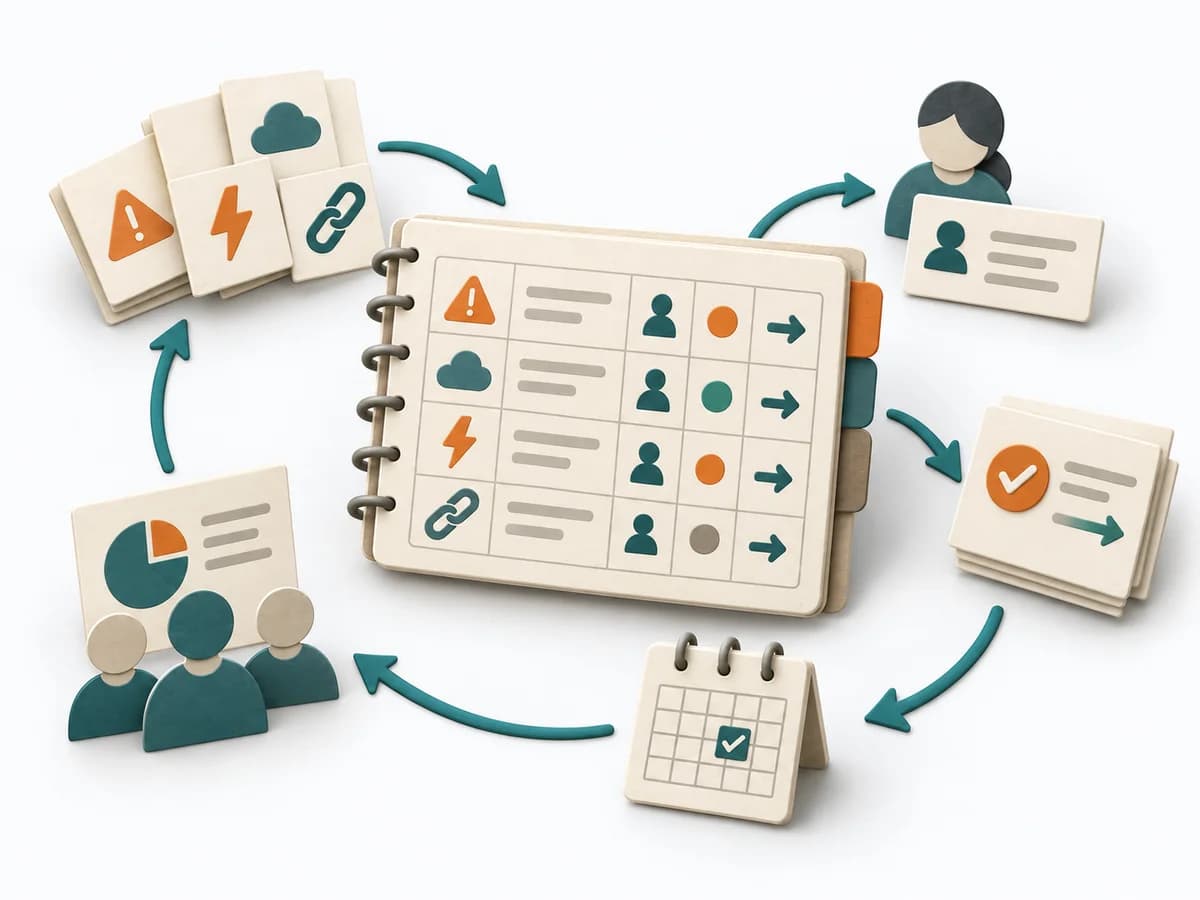
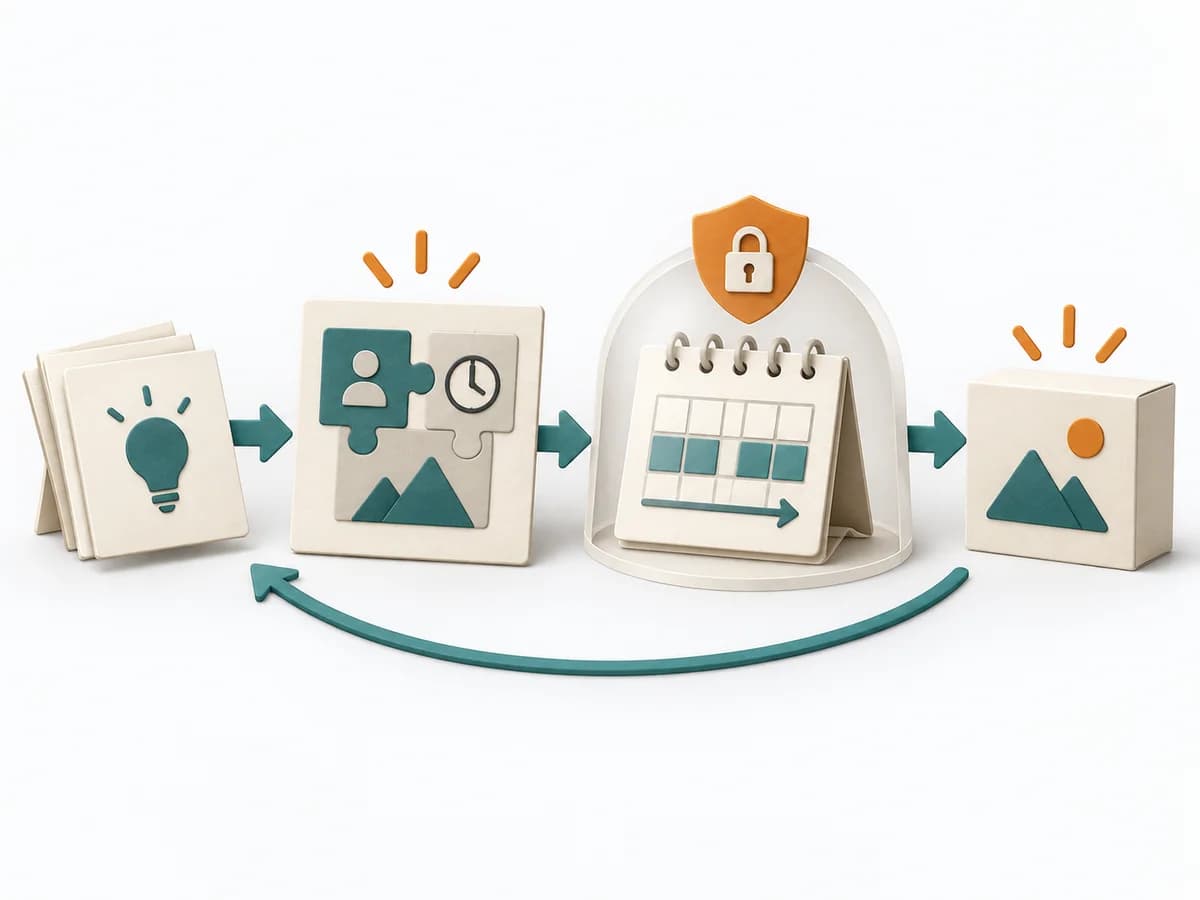
When many people need to be informed in parallel and messages would otherwise arrive unevenly or too late, a Communication Plan orders communication reliably. Channels, audiences, and cadences interlock so important information doesn't get lost.
Delivery Planning tool
Communication Plan
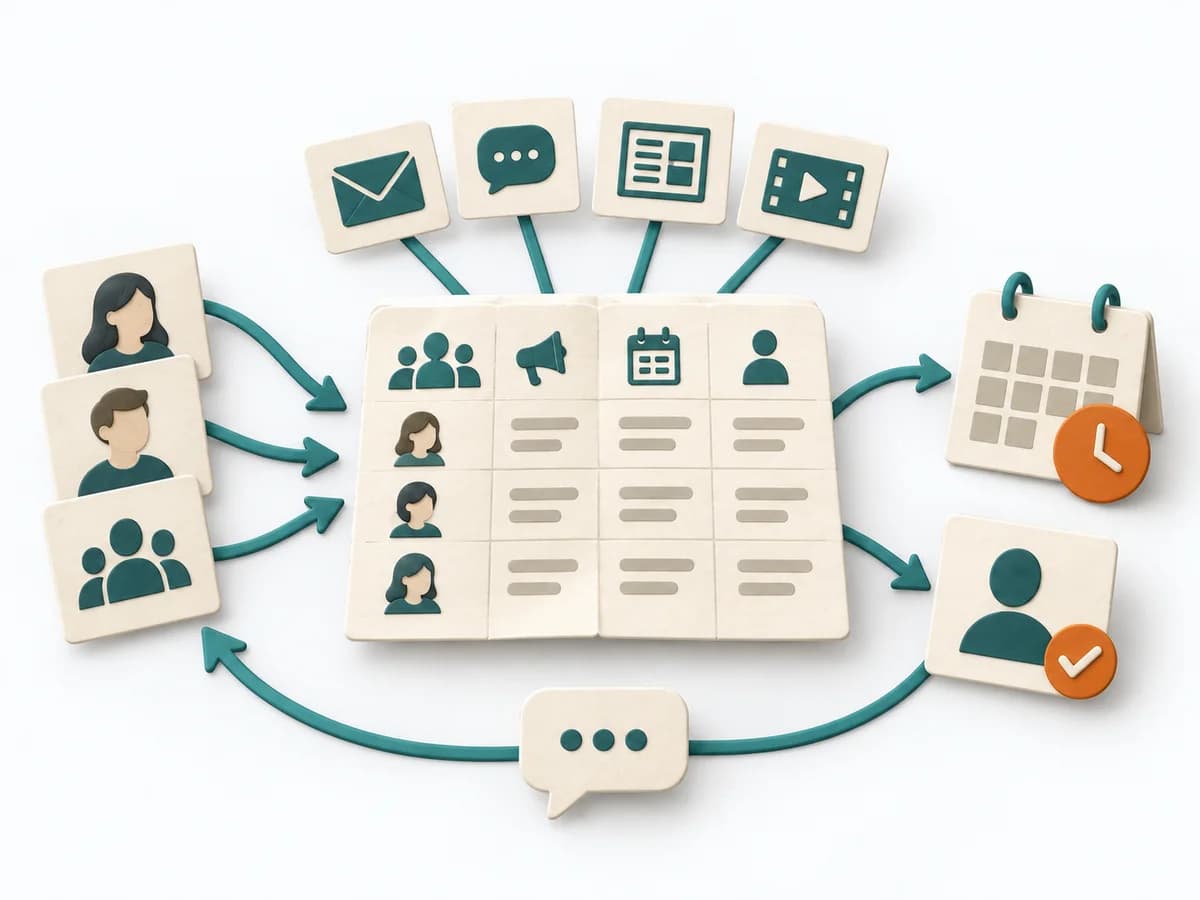
A communication plan shows who needs which information when, from whom, and through which feedback channel.
A communication plan connects information needs to message, channel, timing or trigger, ownership and feedback. Each communication event specifies how recipients can use the information.
Who needs which information when, from whom and through which feedback channel?
- Participants
- 2-6 participants
- Time
- 45–90 minutes to draft; maintenance throughout the initiative

Recipients and needs
Record which decision or action information should enable for each audience.
Messages and channels
Define a key message and suitable channel for each event; link a clear source of truth.
Cadence and ownership
Agree date or event trigger, sender, backup and required approval for each message.
Feedback and maintenance
Define a question route and comprehension signal for each row; review after first use.
Review understanding and questions after the first delivery; update the plan when stakeholders, dates or risks change.
A good fit when
For initiatives with multiple audiences, recurring updates or important handovers.
Ideal for
- Change work
- Delivery programs
- Incident readiness
Not good for
- One-off small tasks
- Unclear target audiences
Outputs

Communication matrix
Communication matrix with audience, purpose/message, channel, trigger/cadence, owner and feedback plus review date.

Agreed feedback and review cycle
The review record documents misunderstandings, missed updates, and changed information needs as input to the next version.
Communication Plan· worksheet
Fictional example
A communication plan connects information needs to message, channel, timing or trigger, ownership and feedback. Each communication event specifies how recipients can use the information.
| Event | Audience | Purpose and message | Channel | Trigger or cadence | Owner and approval | Feedback and review |
|---|---|---|---|---|---|---|
| 1Describe one communication event and all responsibilities. | Participants | Activate account before course start | Email linking to instructions | Five days before launch | Lea, copy approved by course lead | Support reply; Lea checks pending activations two days before launch |
| 2Describe one communication event and all responsibilities. | Instructors | Understand the new registration process | Short recorded demo | One week before launch | Course lead, coordination as backup | Q&A; instructors restate the process |
| 3Describe one communication event and all responsibilities. | Support team | Handle known issues and escalations | Shared FAQ and handover | Before launch; then on material change | Support lead, technical approval by product team | Review open tickets daily during launch |
1. Audience
- 1
- Participants
- 2
- Instructors
- 3
- Support team
2. Purpose and message
- 1
- Activate account before course start
- 2
- Understand the new registration process
- 3
- Handle known issues and escalations
3. Channel
- 1
- Email linking to instructions
- 2
- Short recorded demo
- 3
- Shared FAQ and handover
4. Trigger or cadence
- 1
- Five days before launch
- 2
- One week before launch
- 3
- Before launch; then on material change
5. Owner and approval
- 1
- Lea, copy approved by course lead
- 2
- Course lead, coordination as backup
- 3
- Support lead, technical approval by product team
6. Feedback and review
- 1
- Support reply; Lea checks pending activations two days before launch
- 2
- Q&A; instructors restate the process
- 3
- Review open tickets daily during launch
All example details are fictional and illustrate the application.
First step
Bound the initiative and communication objectives; collect affected groups and existing channels.
Good to do first
Deep dive
The alignment connects information needs with channel choice and clear responsibility per message. This creates a repeatable communication pattern that balances reach, frequency, and upkeep effort and absorbs changes in day-to-day project work.
A Communication Plan works because it aligns information needs, messages, channels, and responsibilities with one another. The plan has practical effect when communication is treated as a steering instrument for understanding, expectation, and timing rather than a pure distribution task. In daily practice, audience specificity, recurring occasions, and feedback paths matter, so relevant information arrives and triggers follow-up action.
At the start, decide which change or initiative should be carried communicatively and which groups are decisive for that. The critical point comes when a message is formulated the same for everyone and as a result doesn't really fit anyone. Close with a few core messages, clear owners, and an agreement on how feedback flows back into the plan.
The method guide walks execution through 4 phases, timing, 4 pitfalls, and clear stop criteria.
Open method guideYour perspective
Does this method help with your work?
Your feedback helps shape the next improvements to methodatlas.
Sources and topics
Communication Plan: WorksheetBound the initiative and communication objectives; collect affected groups and existing channels.markdown
communication-plan-working-template.md
Bound the initiative and communication objectives; collect affected groups and existing channels.
Communication Plan: Worksheet
Question
To be confirmed
Desired outcome
To be confirmed
Scope
Complete cycle Time: 45–90 minutes to draft; maintenance throughout the initiative
Complete this worksheet on paper or in your own document during the work.
Preparation for this scope
Method setup
- Materials: Stakeholder list, milestones, existing channels, communication matrix and feedback log.
- Roles: Initiative owner, recipient representatives, senders and approvers where needed.
- Advance information: Bound the initiative and communication objectives; collect affected groups and existing channels.
- Overall time needed: 45–90 minutes to draft; maintenance throughout the initiative
- Setup: Make the matrix accessible to senders and recipient representatives; start with one blank row per event.
Prepare for the work steps
Recipients and needs: Recipients and needs
- Stakeholders
- Initiative objectives
Messages and channels: Messages and channels
- Needs list
- Available channels
Cadence and ownership: Cadence and ownership
- Message-channel mapping
- Milestones
Feedback and maintenance: Feedback and maintenance
- Communication matrix
- Initial feedback
Communication Plan· worksheet
| Event | Audience | Purpose and message | Channel | Trigger or cadence | Owner and approval | Feedback and review |
|---|---|---|---|---|---|---|
| 1 | ||||||
| 2 | ||||||
| 3 |
- 1: Describe one communication event and all responsibilities.
- 2: Describe one communication event and all responsibilities.
- 3: Describe one communication event and all responsibilities.
Enter one communication event per row. Check access and information needs with recipients; agree a specific owner, trigger and feedback route.
Recipients and needs: Recipients and needs
Expected artifact: Needs list
Does every audience have a specific information purpose?
Entry:
...
- Does every audience have a specific information purpose?
Messages and channels: Messages and channels
Expected artifact: Message-channel mapping
Does the channel reach the group clearly and on time?
Entry:
...
- Does the channel reach the group clearly and on time?
Cadence and ownership: Cadence and ownership
Expected artifact: Scheduled communication matrix
Is it clear who acts on which trigger?
Entry:
...
- Is it clear who acts on which trigger?
Feedback and maintenance: Feedback and maintenance
Expected artifact: Agreed feedback and review cycle
Do we check understanding beyond delivery counts?
Entry:
...
- Do we check understanding beyond delivery counts?
Open questions and next steps
...
Method guide: https://methodatlas.meierhoff-systems.de/en/methods/communication-plan/run-sheet
Alternatives and neighbors
Fitting alternatives with decision guidance, followed by other related methods.

Instead of Communication Plan, when influence, interest, and attitude of the people involved need to be clarified first before planning channels.

Moves group input, selection, and decision toward a concrete result through "collect stakeholders individually and by group", "explain power and interest", and "derive a strategy for each quadrant".

Moves scope, sequence, and delivery flow toward a concrete result through "create a table for Risks, Assumptions, Issues, and Dependencies", "carry over initial entries from discovery and kickoff", and "archive resolved items instead of deleting them".

Structures product work around shaped pitches, bets, fixed cycles, hill charts, and scope hammering.

Moves group input, selection, and decision toward a concrete result through "prepare the stakeholder list", "define power, legitimacy, and urgency", and "derive strategy by class".

Moves scope, order, and delivery flow toward a concrete result through "adopt the initiative list", "clarify value types for each initiative, such as revenue, efficiency, or risk", and "derive a sorted sequence".
Constraints and origin
Profile
- Method form
- Planning tool
- Participants
- 2-6
- Time
- 45-90 min
- Maturity
- Canonical
- Origin
- Praxisgemeinschaft