
Purpose
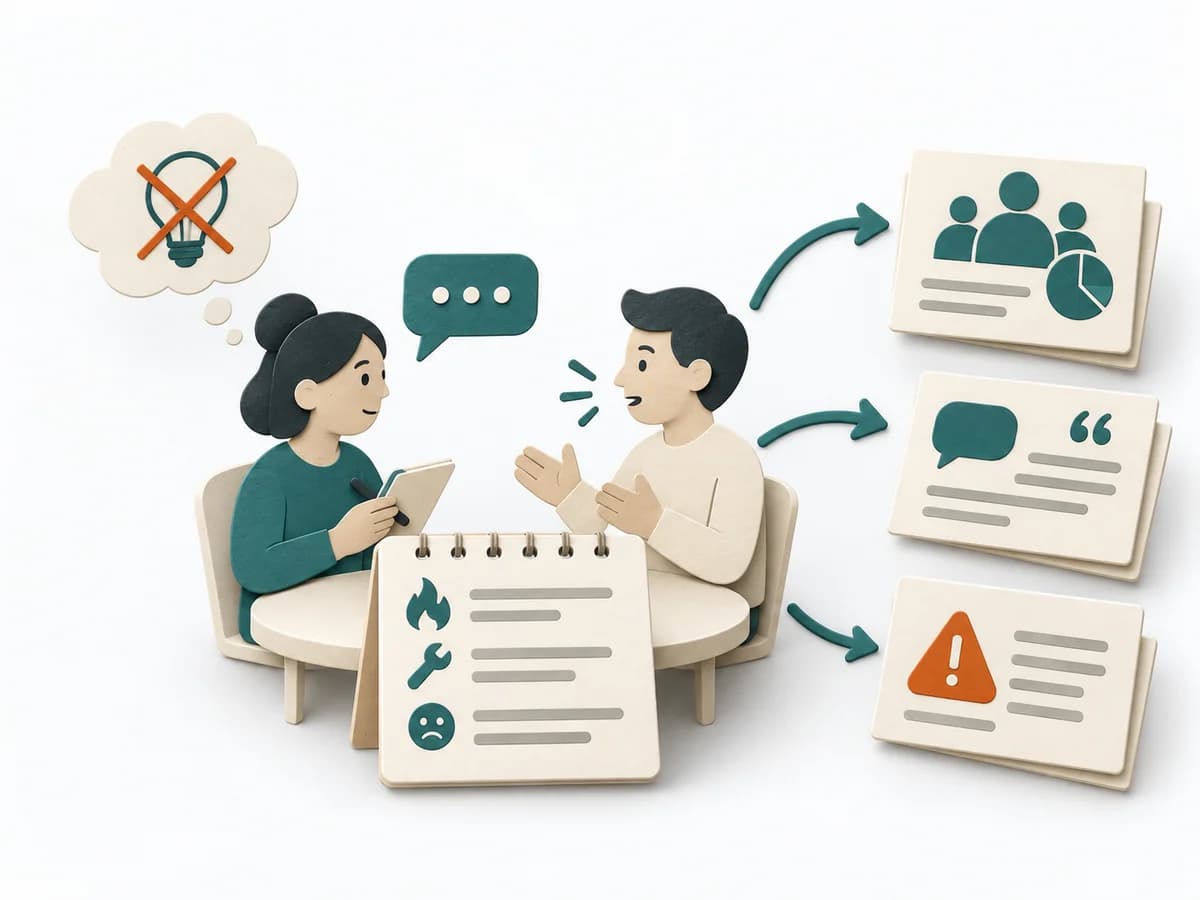
When a solution idea is already on the table, it checks how it is understood and evaluated. It looks for resonance, objections, and missing fit early in the conversation.
Product Discovery Research method
Investigates whether the person understands the approach and what evidenced progress it could enable in their actual context.
A Solution Interview uses a concrete concept to investigate whether people understand its value and how it fits their evidenced problem and current behaviour. Approval alone does not establish demand.
Does the person understand the approach, and what evidenced progress could it enable in their actual context?
Baseline
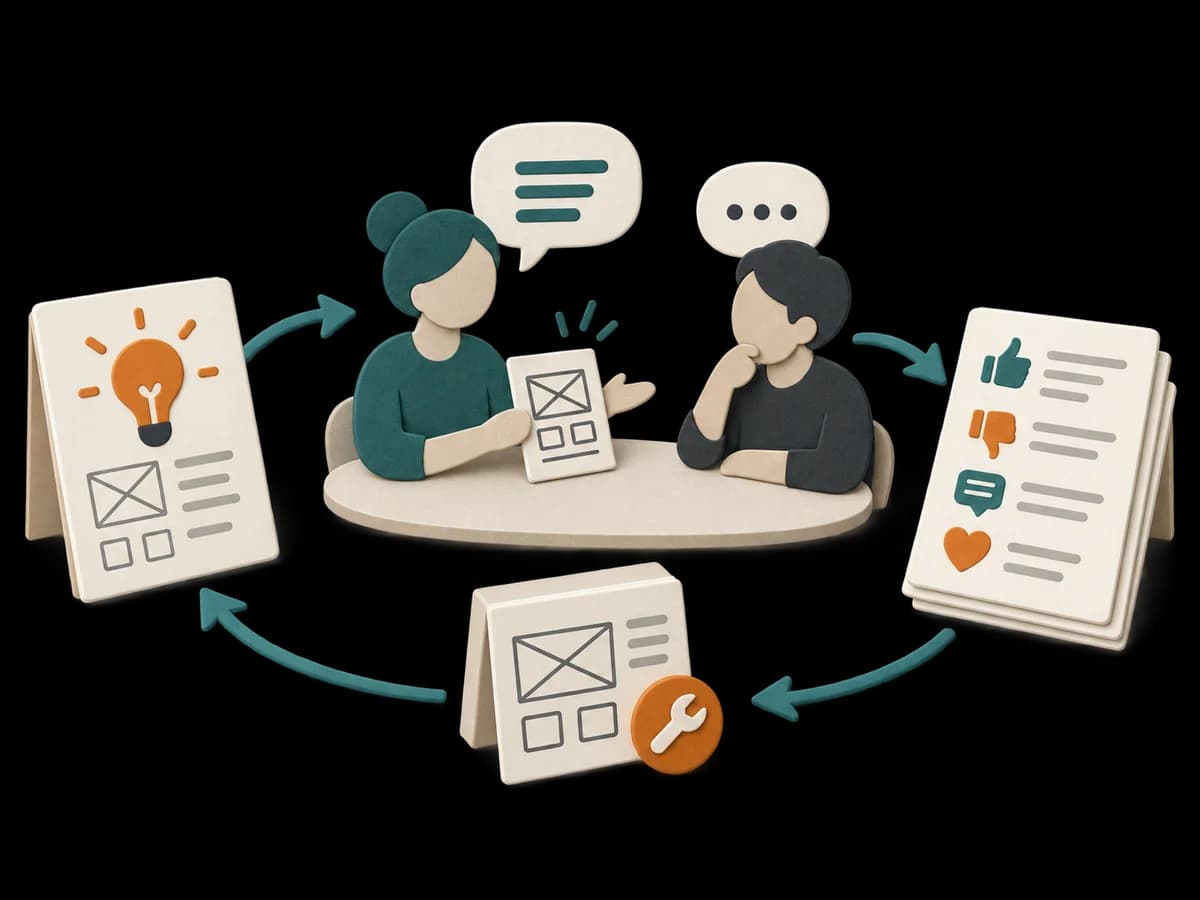
Briefly reconstruct the last problem incident and current alternative.
Understanding
Show the concept briefly and consistently; ask the person to explain value and flow in their own words.
Fit
Compare the approach with the actual incident and existing alternative.
Follow-up
Distinguish statements, observed actions and actual commitments.
Revise unclear elements; then test important behavioural assumptions through a real experiment.
After initial problem understanding and before major implementation, when testing value assumptions or objections.
Concept findings on understanding, fit, objections and verifiable follow-up.
The test decision describes a voluntary, genuinely available next step, its later verification, and the learning decision.
Fictional example
A Solution Interview uses a concrete concept to investigate whether people understand its value and how it fits their evidenced problem and current behaviour. Approval alone does not establish demand.
Which real case provides the comparison baseline?
Fictional: P04 missed a last-minute room change and currently uses email. Only after this account does the team show a clickable change alert.
Which version was shown and how? What was understood or done unaided?
Version 2 shows room, start time and acknowledgement. P04 locates the room but interprets acknowledgement as a binding course commitment. Moderator help is logged separately.
Which concrete improvement, prerequisite and switching barrier was identified?
Objection: push notifications are silenced during travel. Value therefore depends on timing and an acceptable alternative. Another app alone does not resolve the case.
Distinguish statement, observed action, fulfilled commitment and remaining uncertainty.
P04 voluntarily books an available trial session. This is an appointment, not a purchase. The team simplifies the label and tests timely notice during the pilot.
All example details are fictional and illustrate the application.
Prepare an evidenced problem and a concrete concept that can be presented neutrally.
When a solution idea is already on the table, it checks how it is understood and evaluated. It looks for resonance, objections, and missing fit early in the conversation.
It uses the idea as a conversation prompt and checks relevance, trust, and possible misunderstandings with real users. Reactions, objections, and willingness to buy or use show where the solution needs to be sharpened.
Solution Interviews help because they interpret reactions to a solution approach without claiming to already fully prove market behavior. Good application observes which parts are understood, believed, or rejected, and where connection to existing routines is missing. This gives the team clues about value propositions, objections, and misunderstandings before more expensive tests or builds follow.
Show only as much of the solution as is needed for a clear reaction, and keep the connection to the original problem present. What is most revealing is the moment when interest in a concrete next action becomes visible or a central objection recurs. Close with clearly separated signals on value, ambiguity, and rejection, plus a decision on the next test stage.
The method guide walks execution through 4 phases, timing, 4 pitfalls, and clear stop criteria.
Open method guideYour perspective
Your feedback helps shape the next improvements to methodatlas.
Prepare an evidenced problem and a concrete concept that can be presented neutrally.
To be confirmed
To be confirmed
Complete cycle Time: 30–45 minutes conversation plus 15 minutes synthesis.
Complete this worksheet on paper or in your own document during the work.
Which real case provides the comparison baseline?
...
Which version was shown and how? What was understood or done unaided?
...
Which concrete improvement, prerequisite and switching barrier was identified?
...
Distinguish statement, observed action, fulfilled commitment and remaining uncertainty.
...
Answer the prompts with your own information. Explicitly mark unknowns and assumptions.
Ash Maurya: Running Lean im Gespräch
Expected artifact: Problem anchor
Was the baseline recorded before the demo?
Entry:
...
Expected artifact: Understanding findings
What does the person understand without extra help?
Entry:
...
Expected artifact: Fit and objections
Are benefits and barriers tied to a case?
Entry:
...
Expected artifact: Test decision
Is commitment separate from fulfilment?
Entry:
...
...
Method guide: https://methodatlas.meierhoff-systems.de/en/methods/solution-interview/run-sheet
Fitting alternatives with decision guidance, followed by other related methods.

Instead of Solution Interview, choose Usability Testing when you want to check usability on concrete tasks with real users.
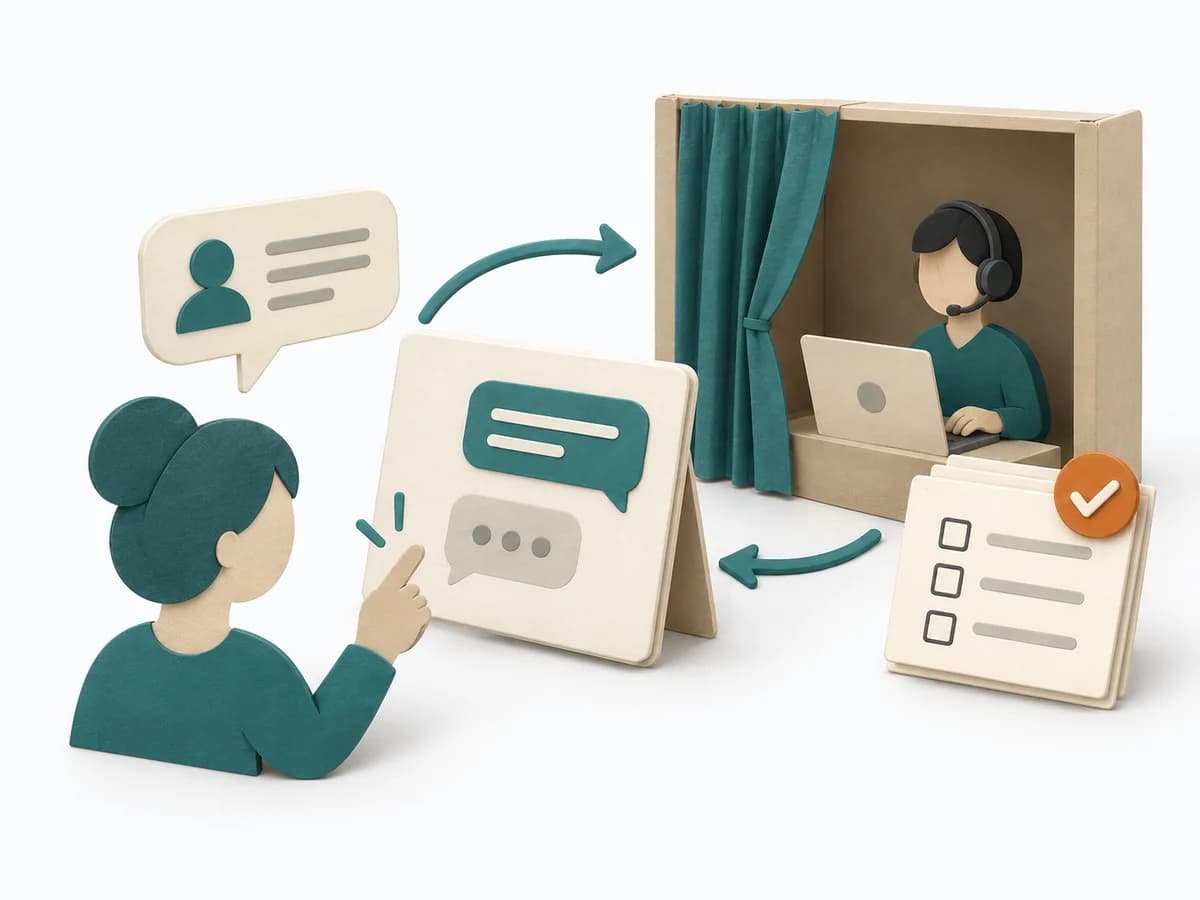
Simulates a solution manually to test value, effort, and user reaction before technical implementation.
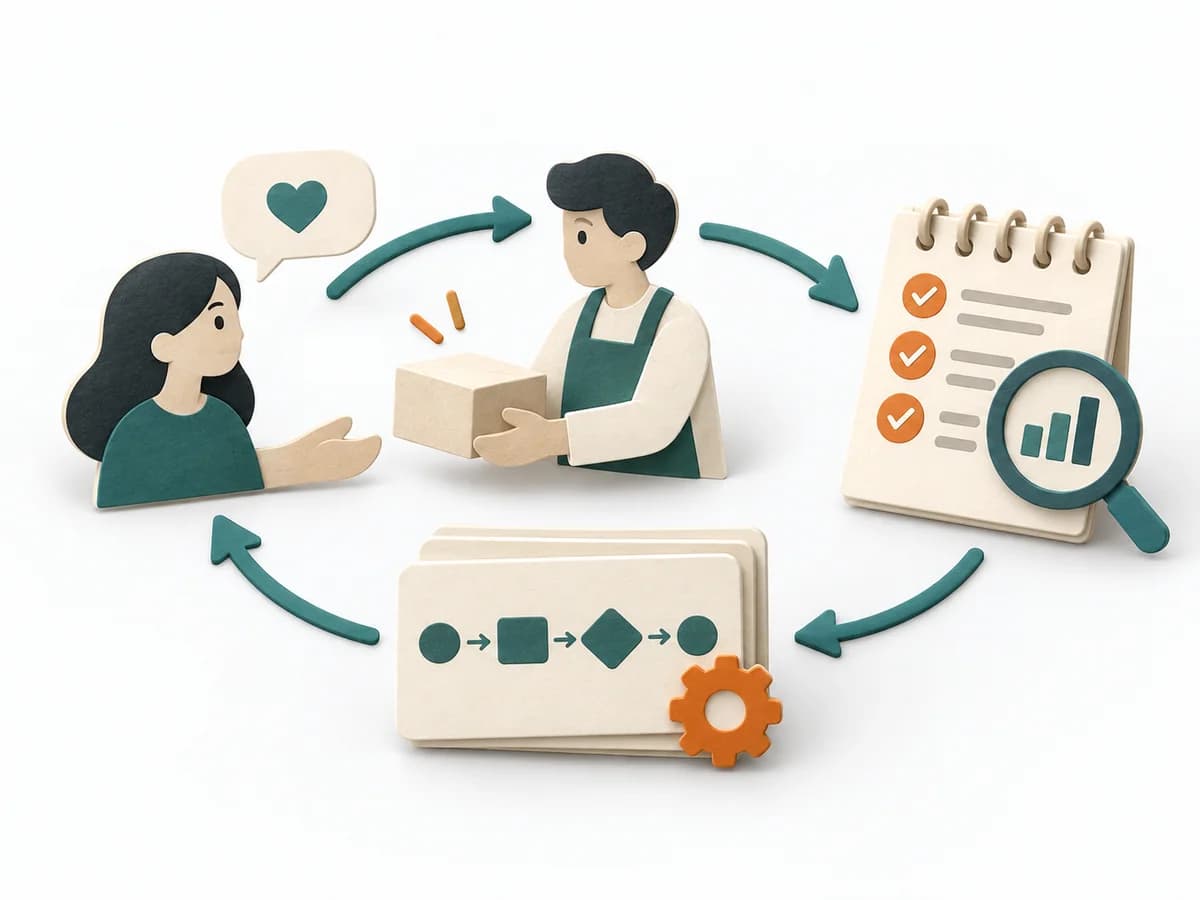
Personally guides early users through the service and shows which steps should later be automated.
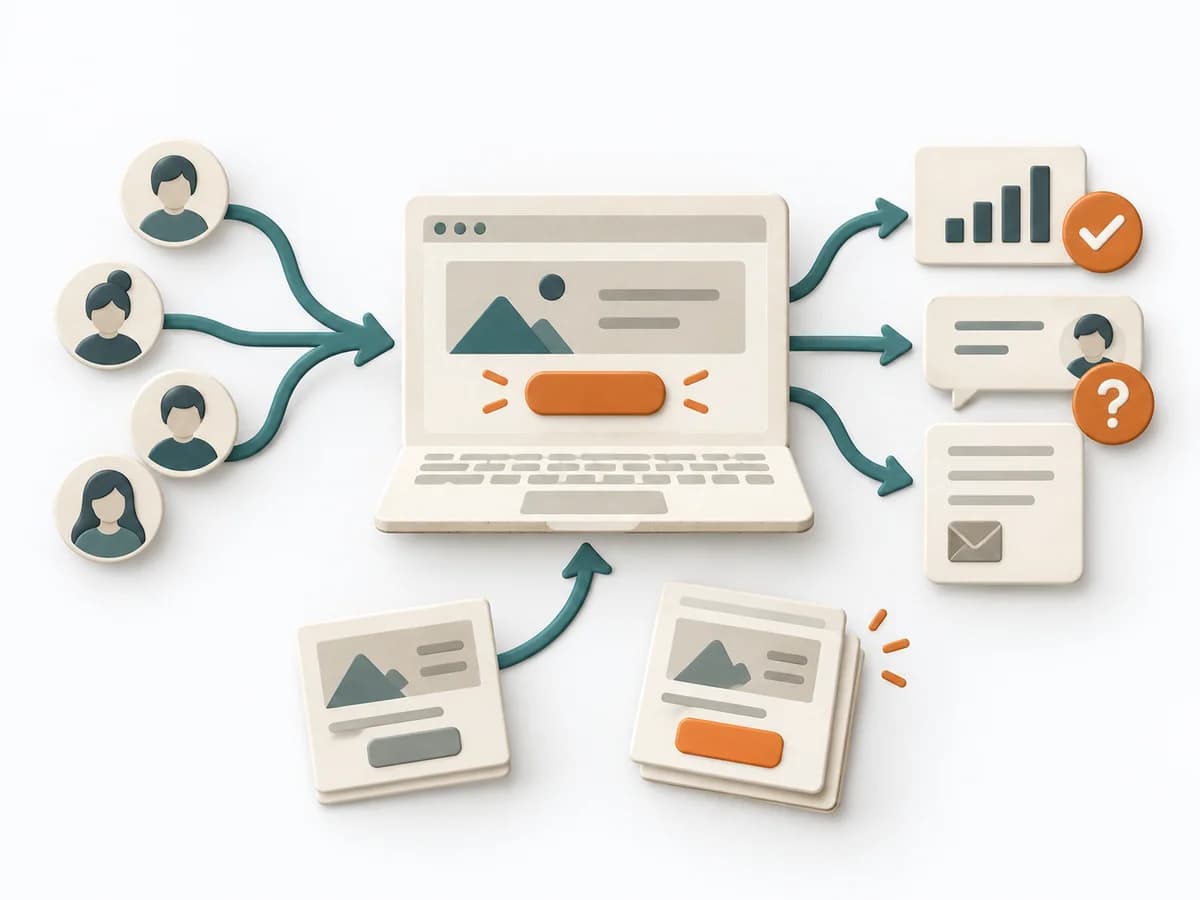
Tests value proposition and offering through a landing page, so conversion data supports early product decisions.
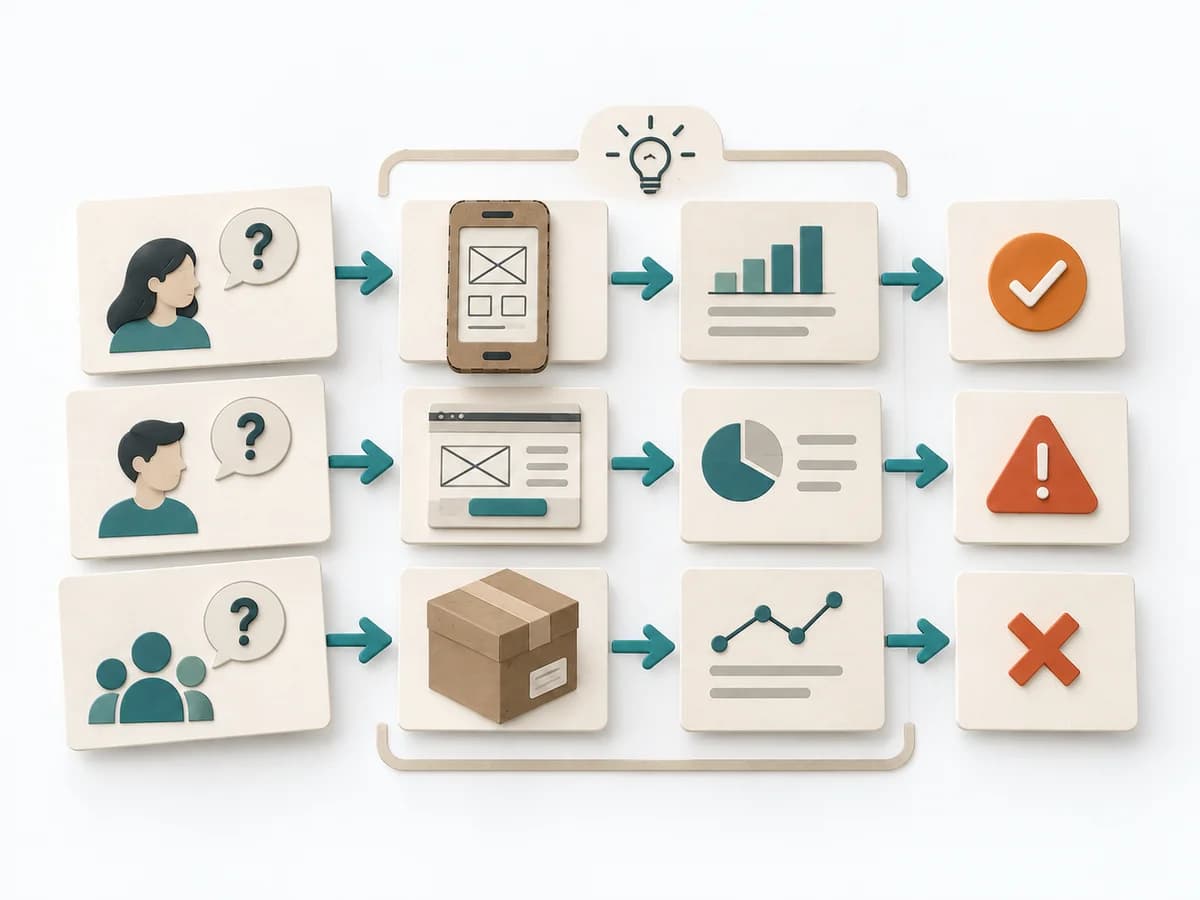
Moves customer problem, solution idea, and evidence toward a concrete result through "list assumptions", "map assumptions to dimensions", and "derive the test plan".
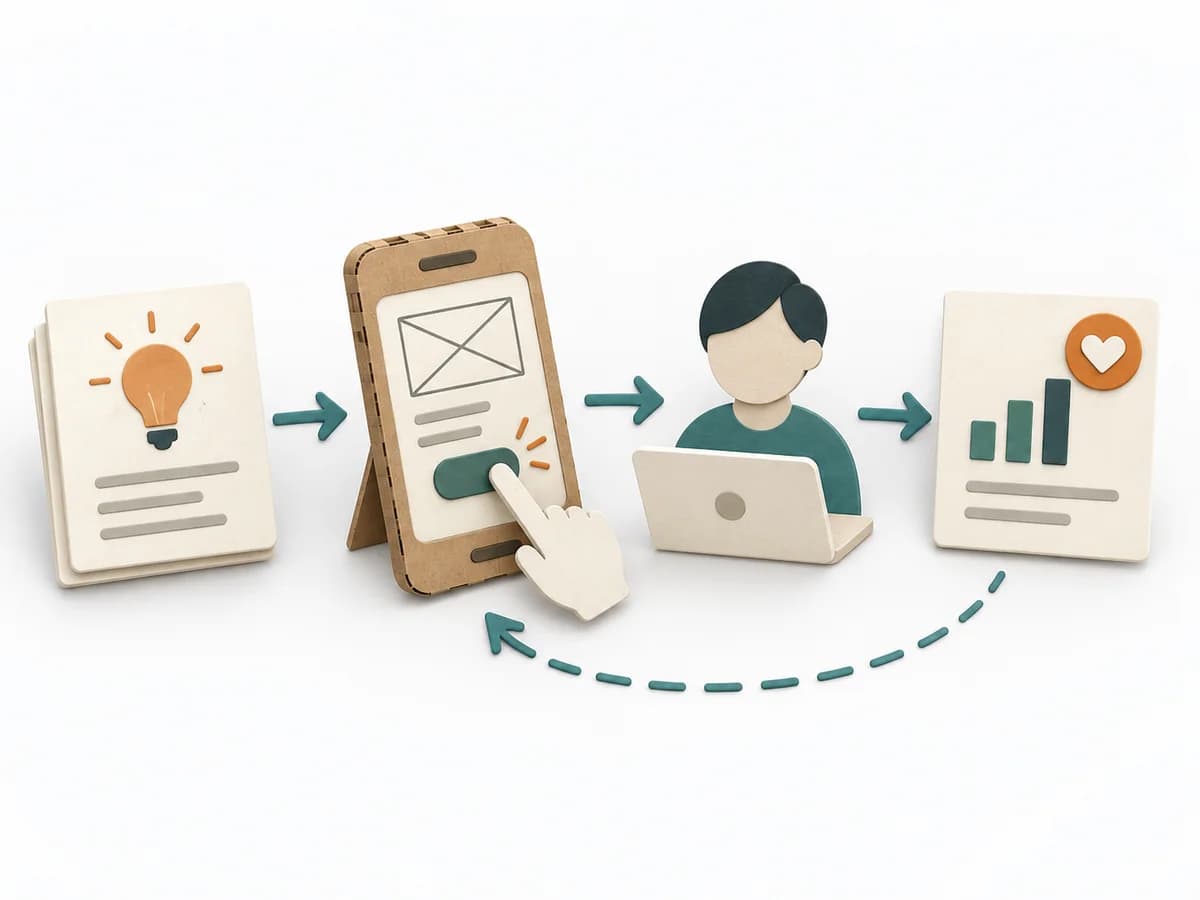
Tests a market claim with the smallest fitting precursor and makes real interest measurable.
