Purpose
When a new experience would still be too expensive to automate for real, it simulates the outcome behind the scenes. It checks user reaction and value before the technology disappears.
Product Discovery Research method
Shows how people use an interaction when missing technology is simulated under controlled conditions.
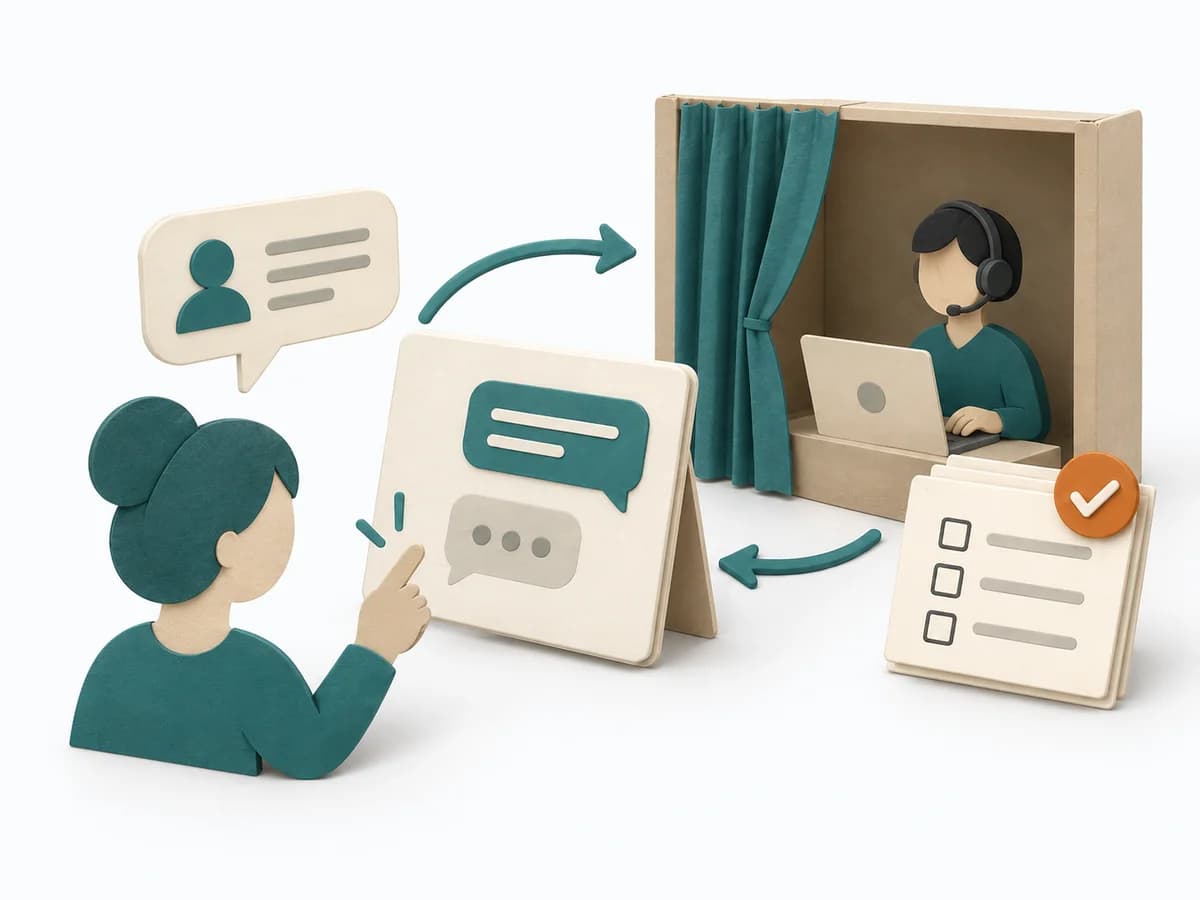
In a Wizard of Oz Test a person behind the scenes operates functions that appear automated to participants. This tests interaction and value assumptions before building the technology.
How do people use this interaction when the missing technology is simulated under controlled conditions?
Simulation
Define hypothesis, visible function and manually simulated scope.
Protocol
Prepare operator rules, boundaries, consent and debriefing.
Rehearsal
Rehearse the facade and operator workflow with normal, failure and boundary cases.
Observation
Give neutral tasks; log user action, operator action and delay separately.
Debriefing
Explain the manual simulation, collect reactions and bound the findings.
Stabilise operator rules, add new failure cases and assess technical feasibility separately.
For intelligent or adaptive interactions that are difficult to prototype and can be simulated responsibly.
Interaction findings with operator actions, latency, boundaries and debriefing.
The test findings record the agreed handling of research data and separate assessments of value, usability, and unresolved automation.
Fictional example
In a Wizard of Oz Test a person behind the scenes operates functions that appear automated to participants. This tests interaction and value assumptions before building the technology.
Which interaction and assumption are tested? What is manually simulated?
Fictional: a course assistant suggests classes matching three stated time windows. Hypothesis: people can then choose a suitable option independently. A concealed operator selects from a fixed course list; no real AI exists.
Define response rules, latency, failure cases and manual interventions.
Lea returns at most three matching offers within 20–40 seconds. No match triggers a request for another time window. Unplanned responses are logged as deviations.
What information is needed upfront, which simulation is temporarily concealed, and how is debriefing handled?
Voluntary participation in a research prototype; only fictional scheduling data, human access to inputs disclosed. The exact operator workflow is explained immediately afterwards; withdrawal and agreed deletion are available.
Record task, user action, operator action, timing, help and outcome separately.
P02 enters three times; Lea responds after 32 seconds. P02 overlooks location and chooses a time-compatible class at the wrong venue. The moderator explains only after task completion.
What was disclosed, how did the person respond and what limits remain?
P02 learns that Lea selected the options. The team adds location comparison and retests. Automated quality, scaling and operating costs are not established by this manual trial.
All example details are fictional and illustrate the application.
Define an interaction hypothesis, simulated scope and acceptable boundaries.
When a new experience would still be too expensive to automate for real, it simulates the outcome behind the scenes. It checks user reaction and value before the technology disappears.
It presents what looks like finished behavior, while the actual execution happens manually or in a simplified way. This lets product impact be tested without carrying the full technical effort.
Wizard of Oz Tests hold up because they realistically simulate the user experience while the actual performance is still delivered manually. Good application keeps the manual support invisible without making the behavior artificial or distorting the data. This shows whether a solution principle holds up in everyday use before effort flows into automation or elaborate product engineering.
Define in advance exactly which parts are simulated and which user reactions actually matter for the decision. The format shows its value where manual execution reveals early patterns that make later automation plausible or questionable. Close with a clear separation between observed user value and the internal operating effort of the test setup.
The method guide walks execution through 5 phases, timing, 5 pitfalls, and clear stop criteria.
Open method guideYour perspective
Your feedback helps shape the next improvements to methodatlas.
Define an interaction hypothesis, simulated scope and acceptable boundaries.
To be confirmed
To be confirmed
Complete cycle Time: 60–90 minutes preparation; 20–40 minutes per session plus debriefing.
Complete this worksheet on paper or in your own document during the work.
Which interaction and assumption are tested? What is manually simulated?
...
Define response rules, latency, failure cases and manual interventions.
...
What information is needed upfront, which simulation is temporarily concealed, and how is debriefing handled?
...
Record task, user action, operator action, timing, help and outcome separately.
...
What was disclosed, how did the person respond and what limits remain?
...
Answer the prompts with your own information. Explicitly mark unknowns and assumptions.
NN/g: The Wizard of Oz Method in UX
Expected artifact: Simulation contract
Is it clear which assumption the test can answer?
Entry:
...
Expected artifact: Execution protocol
Are data access, withdrawal and debriefing clear?
Entry:
...
Expected artifact: Rehearsed setup
Is operation reproducible rather than improvised?
Entry:
...
Expected artifact: Behaviour log
Is assistance visible as an intervention in the log?
Entry:
...
Expected artifact: Test findings
Have the simulation and its limits been disclosed?
Entry:
...
...
Method guide: https://methodatlas.meierhoff-systems.de/en/methods/wizard-of-oz-test/run-sheet
Fitting alternatives with decision guidance, followed by other related methods.
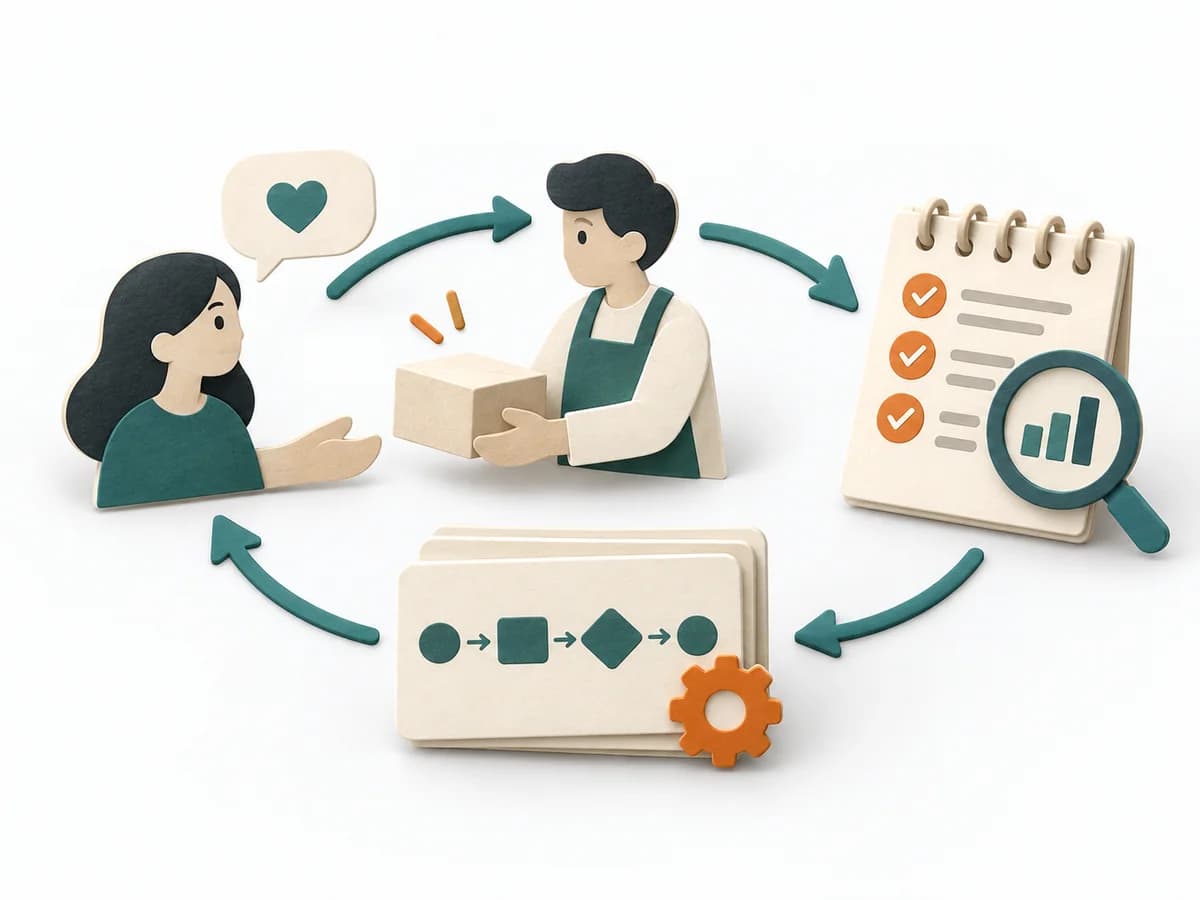
Instead of Wizard of Oz Test, choose Concierge MVP when you want to deliver the value manually and get learning signals before automating.
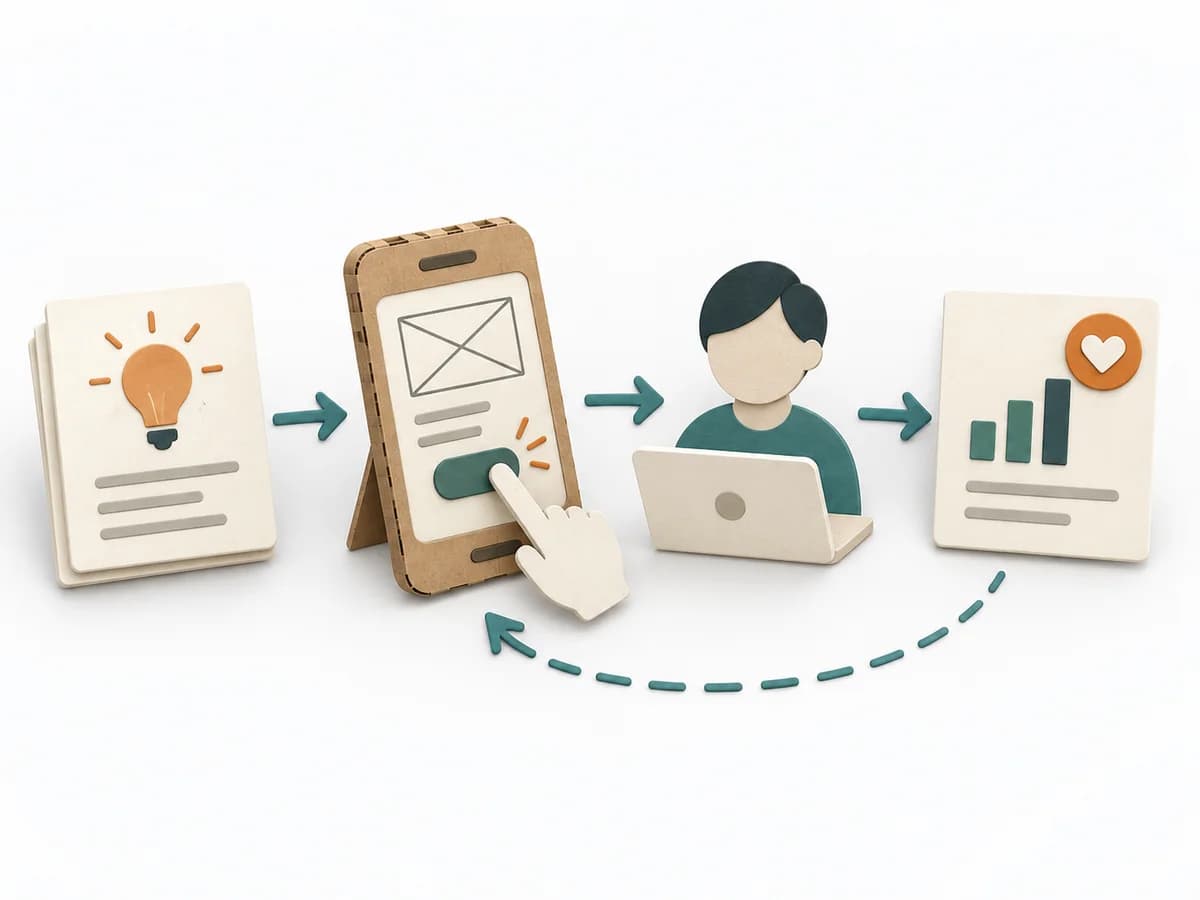
Tests a market claim with the smallest fitting precursor and makes real interest measurable.
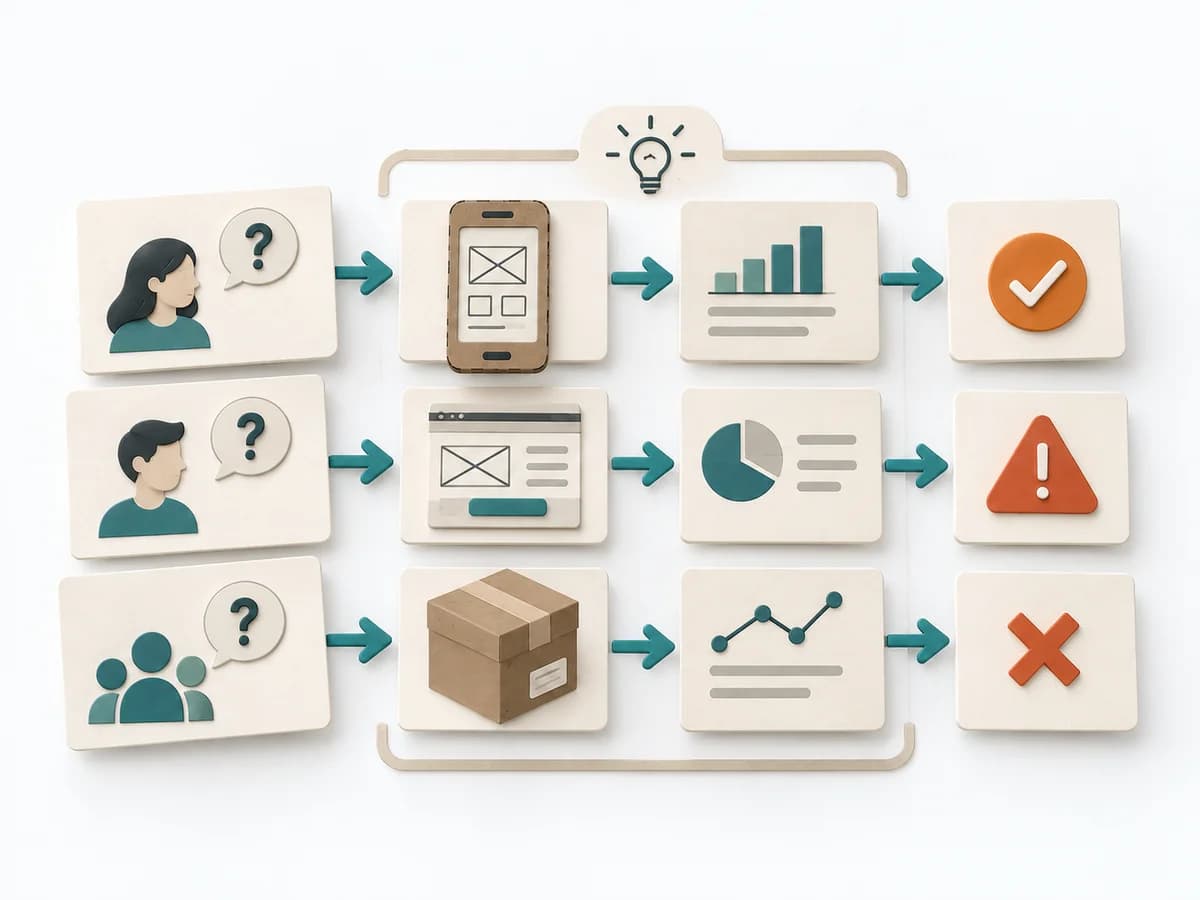
Moves customer problem, solution idea, and evidence toward a concrete result through "list assumptions", "map assumptions to dimensions", and "derive the test plan".
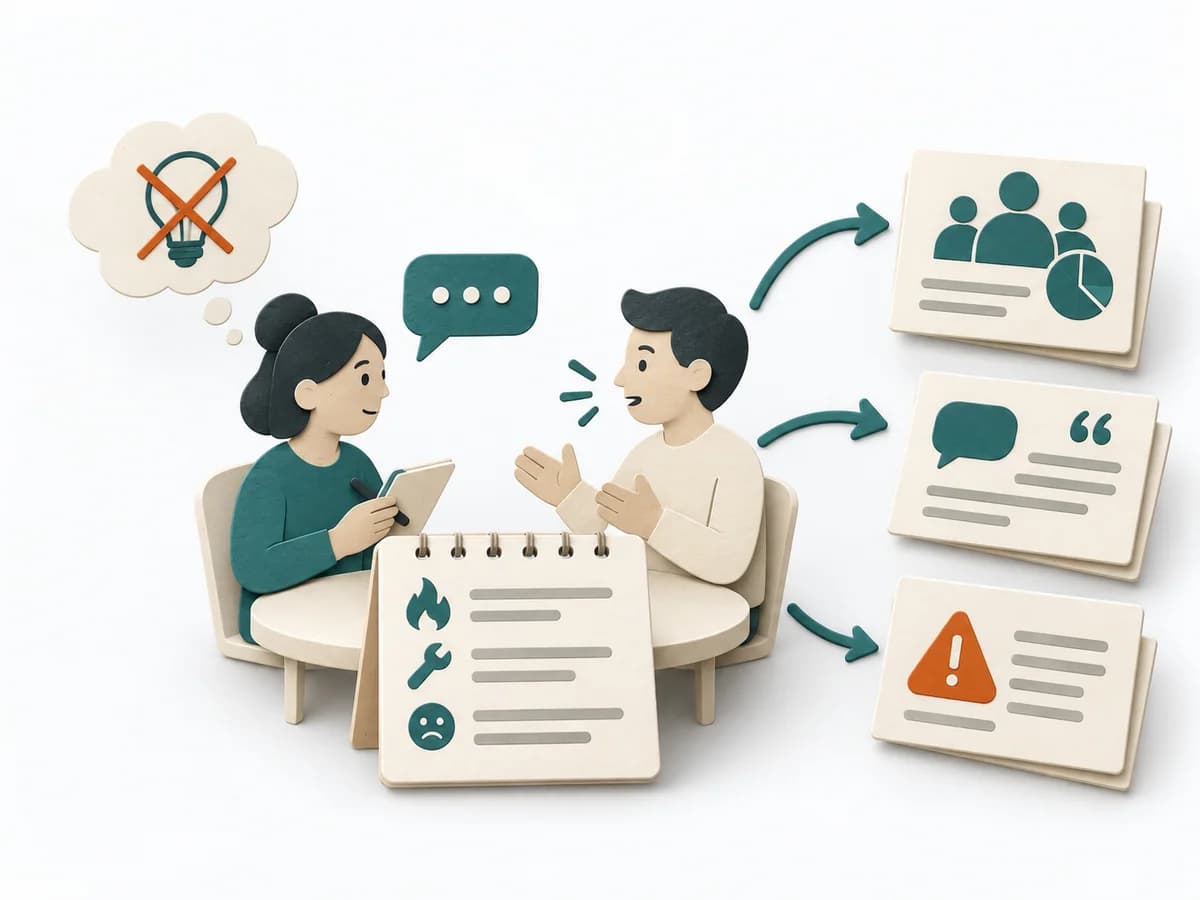
Clarifies customer problems, solution ideas, and evidence by framing problem hypotheses, recruiting the target group, and assessing problem risk.
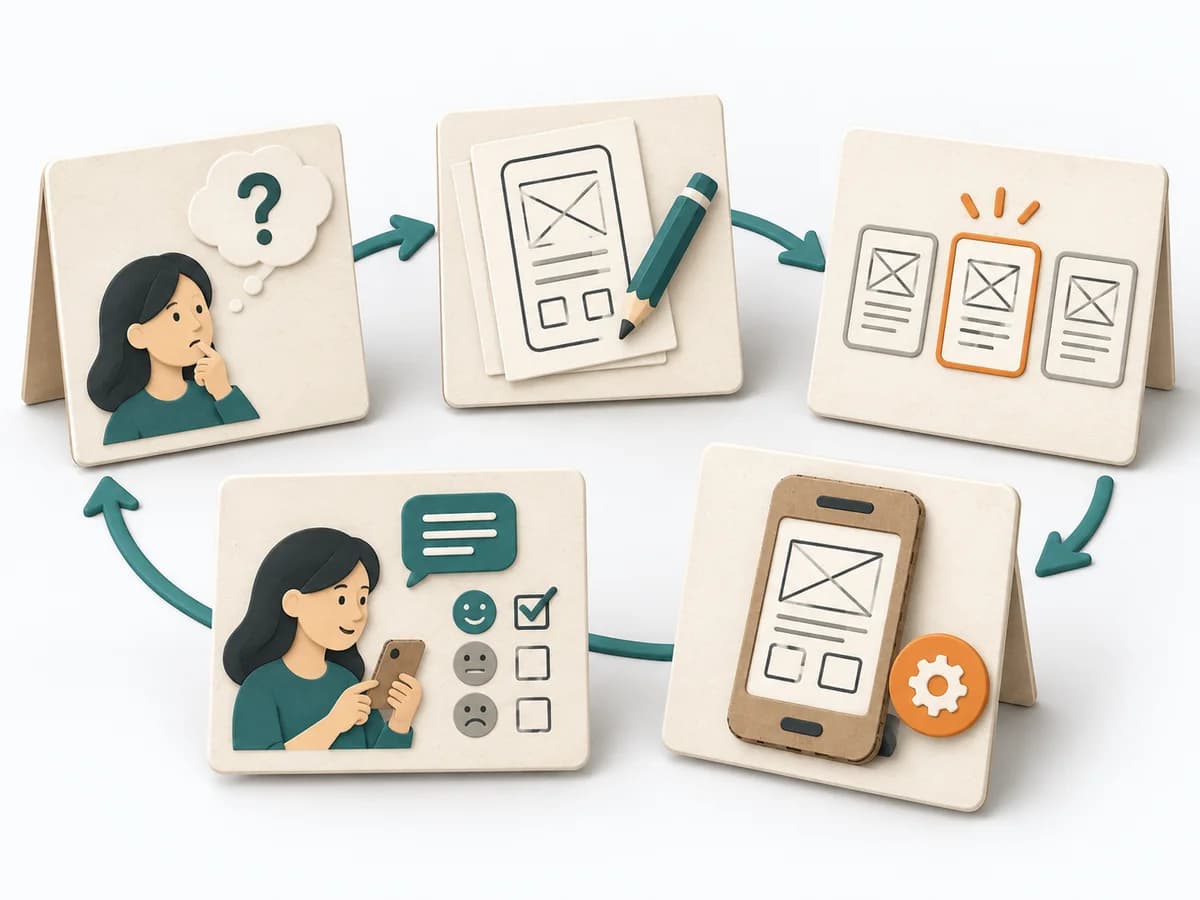
Brings problem space, prototype, and test findings together in a few days, enabling a well-founded decision.

Sorts assumptions by uncertainty and leverage so the riskiest hypotheses get tested first.