Purpose
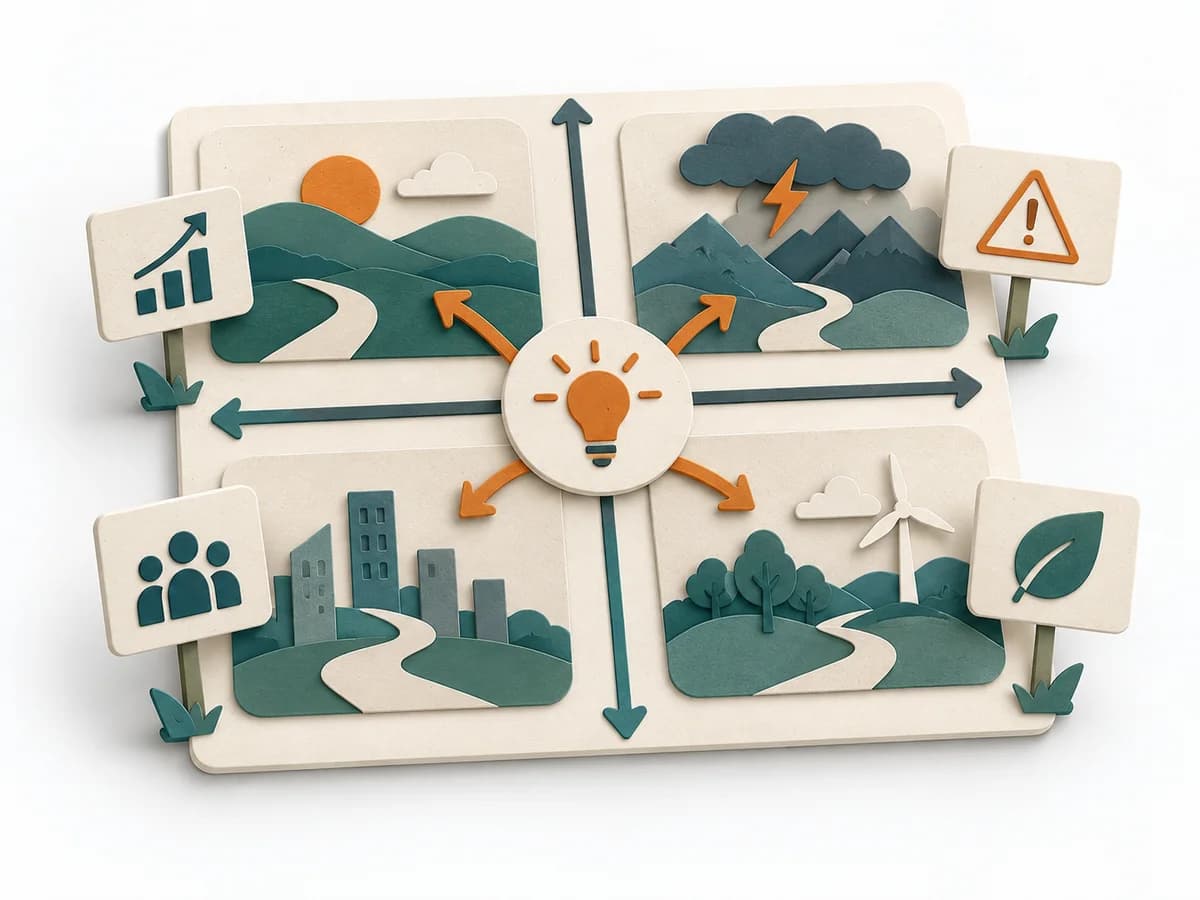
Scenario Planning opens the view to several plausible futures instead of a single forecast. The method protects strategies from depending on too narrow an expected path.
Business Strategy Planning tool
Explores plausible futures to test strategy and identify robust choices, contingent moves, and signposts. Scenarios are not predictions.
Scenario planning explores plausible futures to test strategy and identify robust choices, contingent moves, and signposts. Scenarios are not predictions.
Which choices remain useful across plausible futures, and what signals should trigger adaptation?
Which choices remain useful across plausible futures, and what signals should trigger adaptation?
Question
Name strategic decision, time horizon, scope and uncertain assumptions.
Drivers
Collect sourced forces; distinguish supported trends from consequential uncertainties.
Scenarios
Combine drivers into plausible, internally coherent contrasting narratives without unsupported probabilities.
Options
Test options across scenarios; identify robust actions, contingent moves and measurable review signals.
Update the work record when new evidence, changed constraints or the planned review changes an assumption.
Useful for long-term decisions under material uncertainty and limited control. Not a short-term forecast or substitute for current evidence.

The bounded focal question states the strategic decision, time horizon, scope, and decision-relevant uncertainties.

The driver list contains sourced forces and distinguishes supported trends from consequential uncertainties.
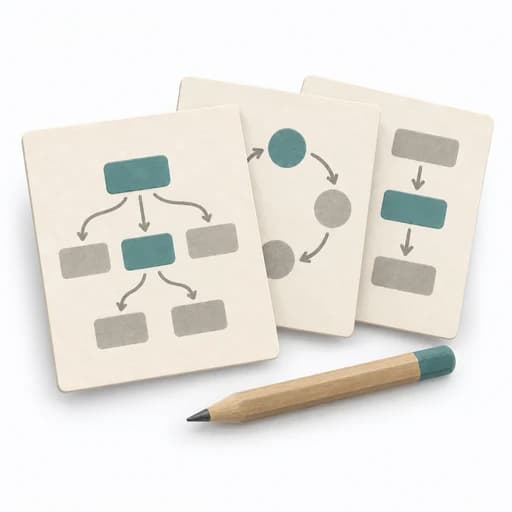
The contrasting scenarios combine drivers into plausible, internally coherent narratives without unsupported probabilities.

The strategy review identifies actions that work across scenarios and those that depend on particular developments. Signposts help detect those developments early.
Fictional example
Scenarios are plausible futures, not forecasts or probability-ranked outcomes.
Which choice and future period are being explored?
How should a city library adapt digital service over a decade?
Which sourced uncertainties could change the choice?
Connectivity access and public funding; no probabilities assigned.
What internally coherent conditions challenge the plan?
Broad connectivity and stable funding versus uneven connectivity and constrained funding.
Which action works across futures and what signal prompts review?
Maintain accessible low-bandwidth service; review official access and budget data annually.
Scenarios are plausible futures, not forecasts or probability-ranked outcomes.
Choose a focal strategic decision, horizon, scope and participants with different expertise.
Scenario Planning opens the view to several plausible futures instead of a single forecast. The method protects strategies from depending on too narrow an expected path.
The team identifies high-impact uncertainties and builds a few clearly distinguishable scenarios from them. Then implications, robust decisions, and early indicators are derived for each scenario. What remains is a strategy that stays readable even amid shifts.
Scenario Planning works because it doesn't smooth out uncertainty but translates it into several plausible futures. The method creates value when driving forces, critical uncertainties, and early indicators are carefully selected and each scenario carries its own logic. Good application tests strategic robustness across all pictures so decisions remain less bound to a single bet on the future.
Start with a clear decision subject and collect drivers broadly before condensing to the truly critical uncertainties. It gets interesting when a supposedly unlikely scenario would have significant consequences for resources or positioning; that's worth thinking through more deeply. Close with signals, observation points, and a few moves that remain sensible across several futures.
The method guide walks execution through 4 phases, timing, 4 pitfalls, and clear stop criteria.
Open method guideYour perspective
Your feedback helps shape the next improvements to methodatlas.
Plan a session or initiative to match the actual scope of work.
To be confirmed
To be confirmed
Prepare the full method Time: Several working sessions across days; research and stakeholder review are separate.
Complete this worksheet on paper or in your own document during the work.
Which choice and future period are being explored?
...
Which sourced uncertainties could change the choice?
...
What internally coherent conditions challenge the plan?
...
Which action works across futures and what signal prompts review?
...
Blank worksheet: prompts only; do not copy example data.
Expected artifact: Bounded focal question
Bounded focal question
Entry:
...
Expected artifact: Drivers and critical uncertainties
Drivers and critical uncertainties
Entry:
...
Expected artifact: Contrasting scenarios
Contrasting scenarios
Entry:
...
Expected artifact: Robust actions and signposts
Robust actions and signposts
Entry:
...
...
Method guide: https://methodatlas.meierhoff-systems.de/en/methods/scenario-planning/run-sheet
Fitting alternatives with decision guidance, followed by other related methods.

Instead of Scenario Planning, when you want to use SWOT Analysis to bundle strengths, weaknesses, opportunities, and threats into a quick situational overview.
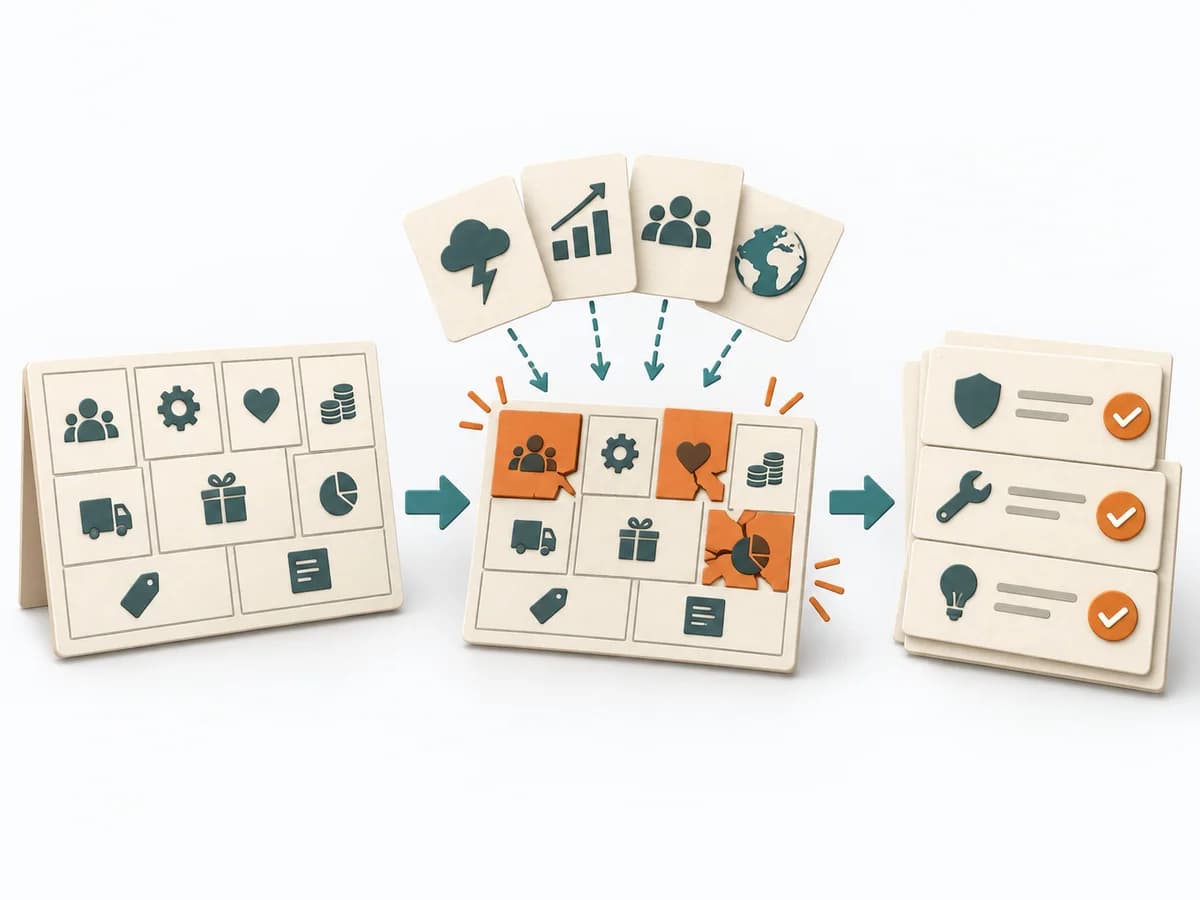
Moves the current situation, opportunities, and strategic options toward a concrete result through "place the Business Model Canvas at the center", "define two to three scenarios", and "derive actions per scenario".
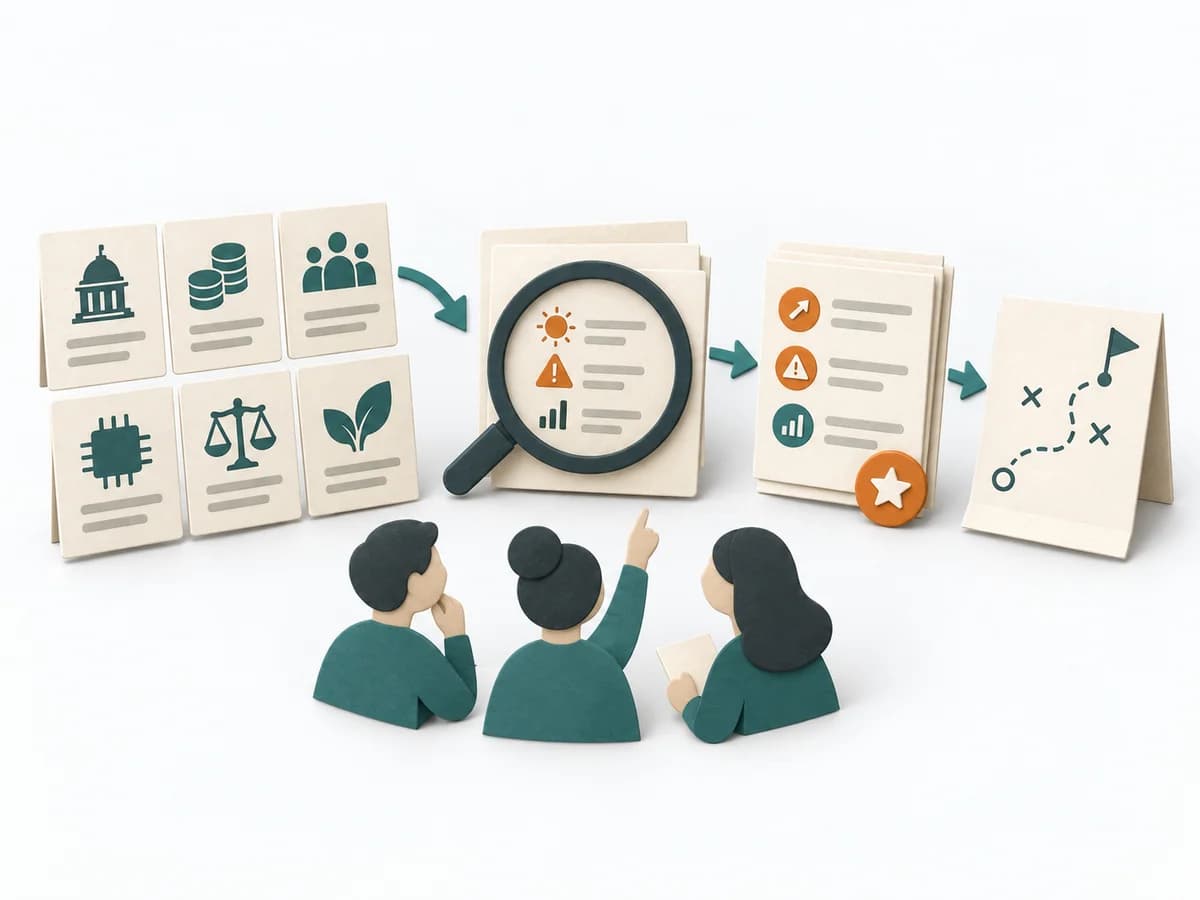
Clarifies starting point, opportunities, and strategic options by defining the scope and market, gathering factors by category, and formulating strategic questions.

Compares target and actual state, exposes gaps, and derives prioritized measures with clear risks.
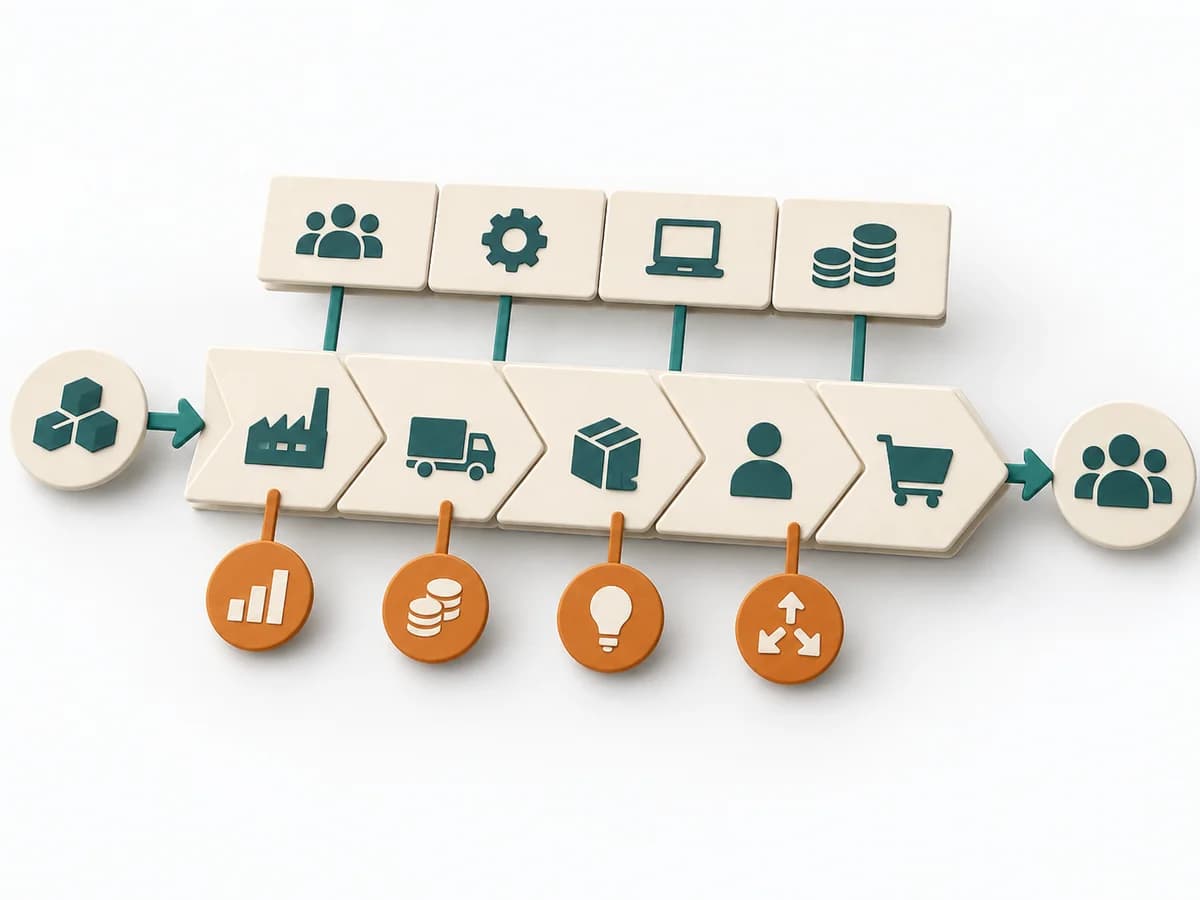
Moves the current situation, opportunities, and strategic options toward a concrete result through "explain the nine-activity template", "describe primary activities", and "derive levers and weaknesses".
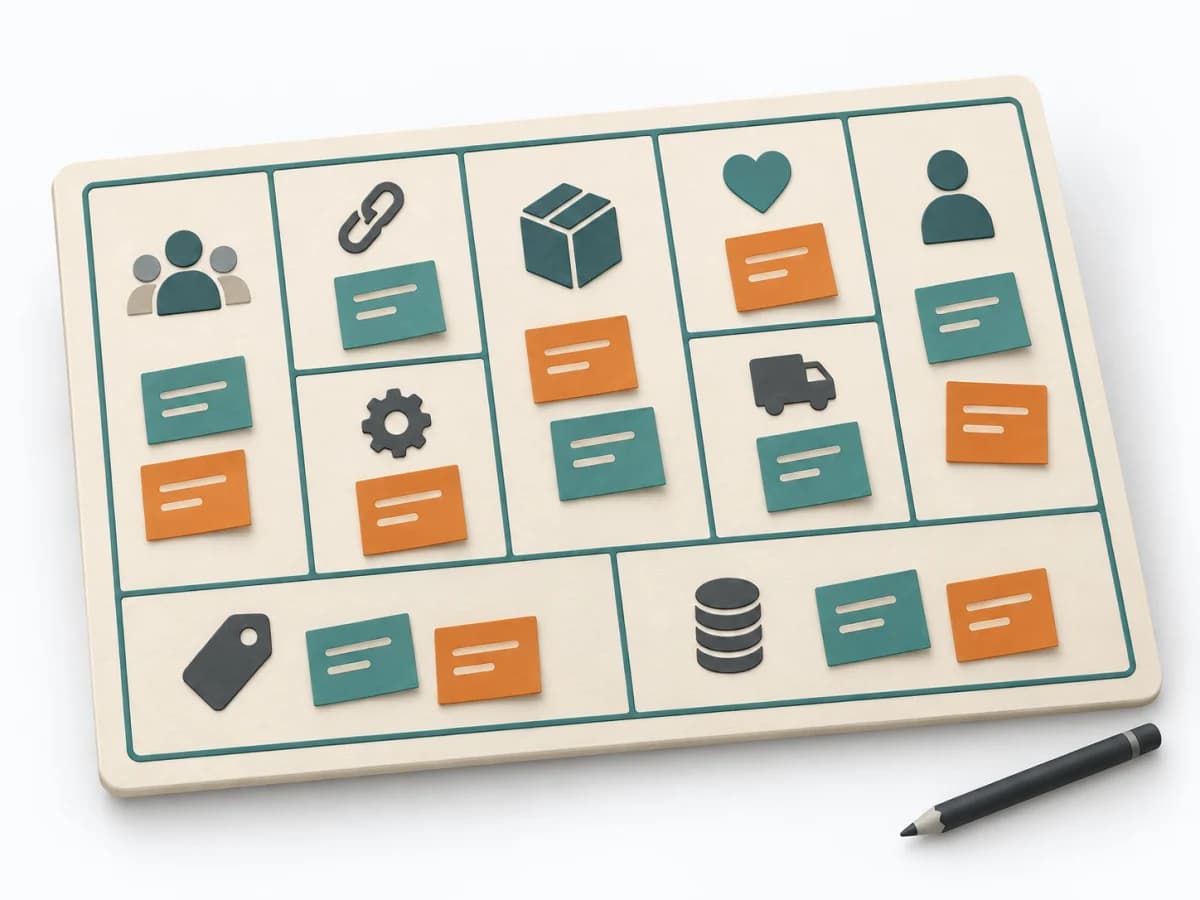
Arranges business building blocks, assumptions, and hypotheses so model variants become more clearly comparable.