Purpose
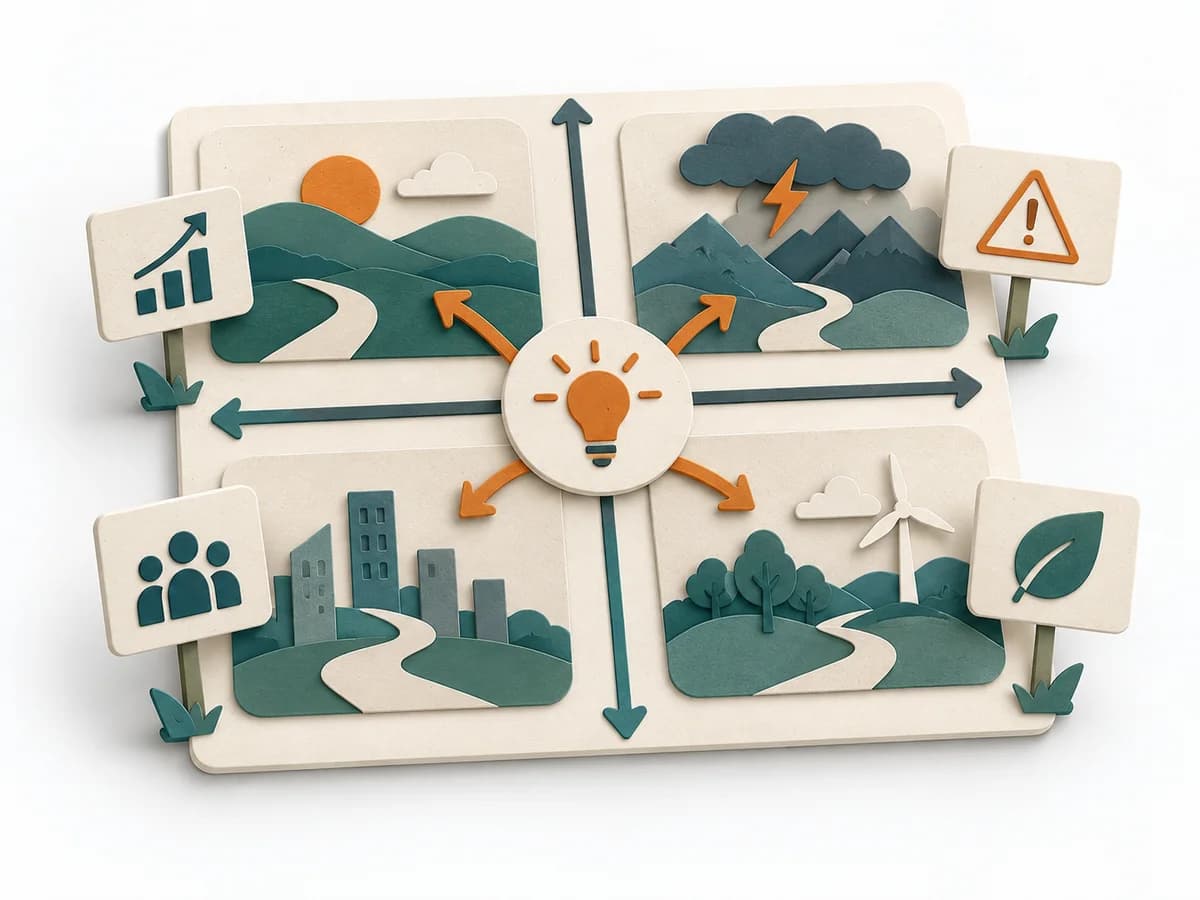
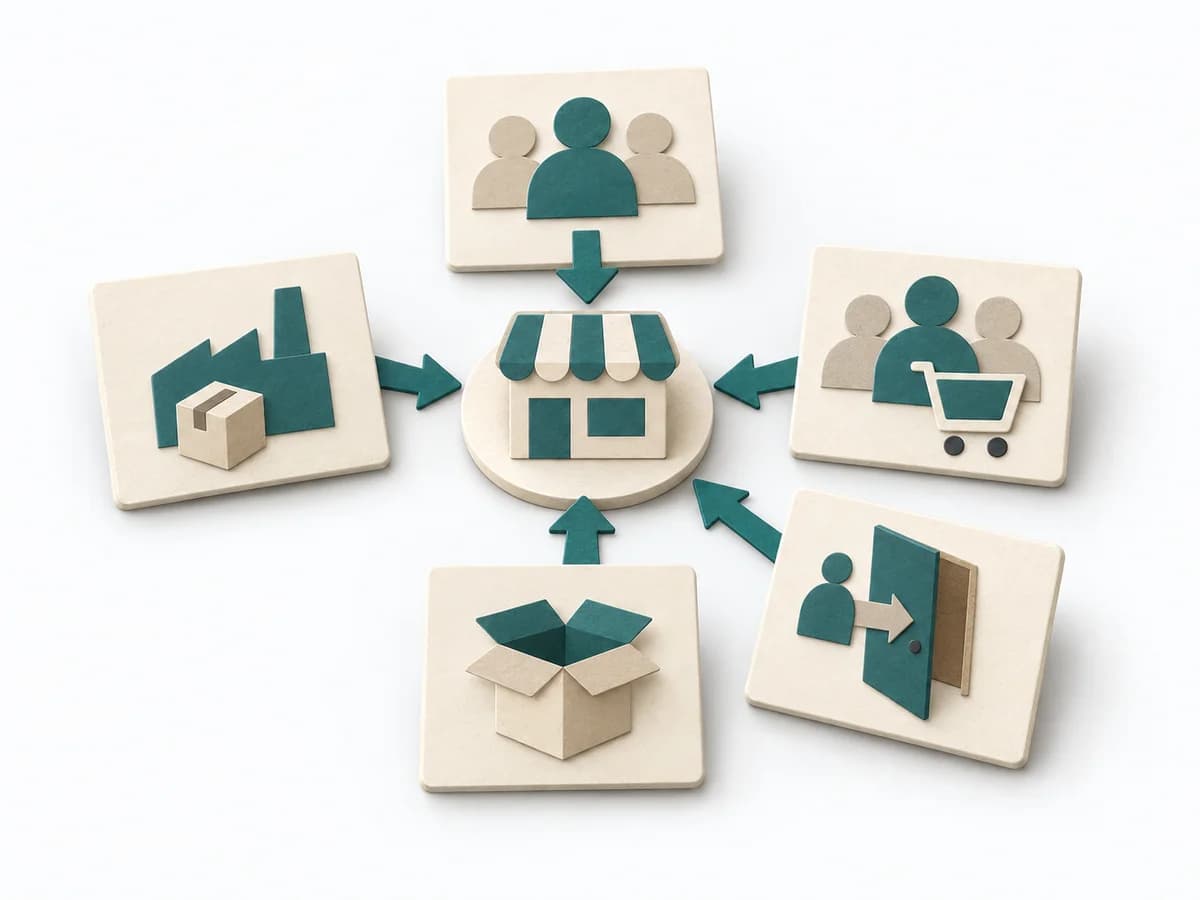
PESTLE Analysis makes political, economic, social, technological, legal, and environmental influences visible. The environment of an initiative is thereby read systematically instead of through isolated trends.
Business Strategy Decision method
Scans and prioritizes external drivers and translates them into observable strategic consequences.
PESTLE structures the macro-environment into Political, Economic, Social, Technological, Legal and Environmental factors. A useful analysis records evidence, direction, horizon, uncertainty and relevance to a specific organisation or decision.
Which external forces will change our decision space most within the chosen horizon?

Scope
Define decision, geography, industry and horizon as filters.
Scan
Collect external developments with dated evidence across all six categories.
Prioritise
Assess impact, likelihood, horizon and uncertainty.
Implications
Translate priority drivers into opportunities, threats and affected decisions.
Monitor
Set early indicators, sources, owners and cadence for critical drivers.
Refresh signals on a fixed cadence; rescore priority drivers when evidence changes and feed them into scenarios.
For strategy cycles, market entry, scenarios and major investments affected by external developments.
Evidenced and prioritised external drivers across six categories.
Strategic implications, early indicators, thresholds, owners and review cadence.
Fictional example
Six categories use the same logic for signal, impact, evidence and response.
| Test area | Political | Economic | Social | Technological | Legal | Environmental |
|---|---|---|---|---|---|---|
| DriverWhich external development matters? | Funding programmes become regional. | Training budgets face cost pressure. | Demand for part-time learning grows. | Public identity wallets enter pilots. | Evidence duties for funding increase. | Travel reduction becomes a procurement criterion. |
| EvidenceWhich dated source supports the driver? | Published funding guideline | Industry index Q2 | Employee survey | Government pilot announcement | Ministry draft 12 Sep 2026 | Tenders from three major customers |
| ImplicationWhat impact and decision follow? | Assess regional partnerships | Test modular pricing | Expand evening formats | Monitor wallet interface | Model auditable evidence | Report remote share |
The example contains selected fictional drivers. Ratings are relative judgements within the stated scope.
Define the decision, market, geography and time horizon; keep internal strengths and weaknesses outside the scan.
PESTLE Analysis makes political, economic, social, technological, legal, and environmental influences visible. The environment of an initiative is thereby read systematically instead of through isolated trends.
The team examines each area of influence for opportunities, risks, and relevant signals. The most important external factors are then condensed and made usable for planning or positioning. This produces a robust picture of the environment with clear priorities.
PESTLE Analysis helps because it systematically examines external influences through political, economic, social, technological, legal, and environmental forces. The method has strong impact when it does not just collect trends but checks relevance, direction, and the dynamics with which they will hit the business. Good application connects environmental observation with concrete strategic consequences, so the analysis does not turn into a loose wall of news.
Set a clear market, business model, or search space as the focus so the collection does not sprawl without limit. Things get interesting when a driver touches several categories or triggers indirect effects; that is exactly when deeper discussion pays off. Close with a few prioritized forces, observation signals, and a decision on where further depth is needed.
The method guide walks execution through 5 phases, timing, 5 pitfalls, and clear stop criteria.
Open method guideYour perspective
Your feedback helps shape the next improvements to methodatlas.
Define the decision, market, geography and time horizon; keep internal strengths and weaknesses outside the scan.
To be confirmed
To be confirmed
Complete workflow Time: 2–4 hours plus research and recurring updates
Complete this worksheet on paper or in your own document during the work.
| Test area | Political | Economic | Social | Technological | Legal | Environmental |
|---|---|---|---|---|---|---|
| Driver | ||||||
| Evidence | ||||||
| Implication |
Enter concrete external drivers and sources in each cell; handle internal factors separately.
Expected artifact: PESTLE brief
Decision, scope, horizon and owner
Entry:
...
Expected artifact: Evidenced driver cards
Driver, category, source, date and uncertainty
Entry:
...
Expected artifact: Prioritised PESTLE matrix
Rating, rationale and interaction
Entry:
...
Expected artifact: Implication and option list
Driver, impact chain, option and assumption
Entry:
...
Expected artifact: PESTLE monitoring plan
Signal, source, threshold, owner and review
Entry:
...
...
Method guide: https://methodatlas.meierhoff-systems.de/en/methods/pestle-analysis/run-sheet
Fitting alternatives with decision guidance, followed by other related methods.

Instead of PESTLE Analysis, when you want to use SWOT Analysis to bundle strengths, weaknesses, opportunities, and threats into a quick situational overview.
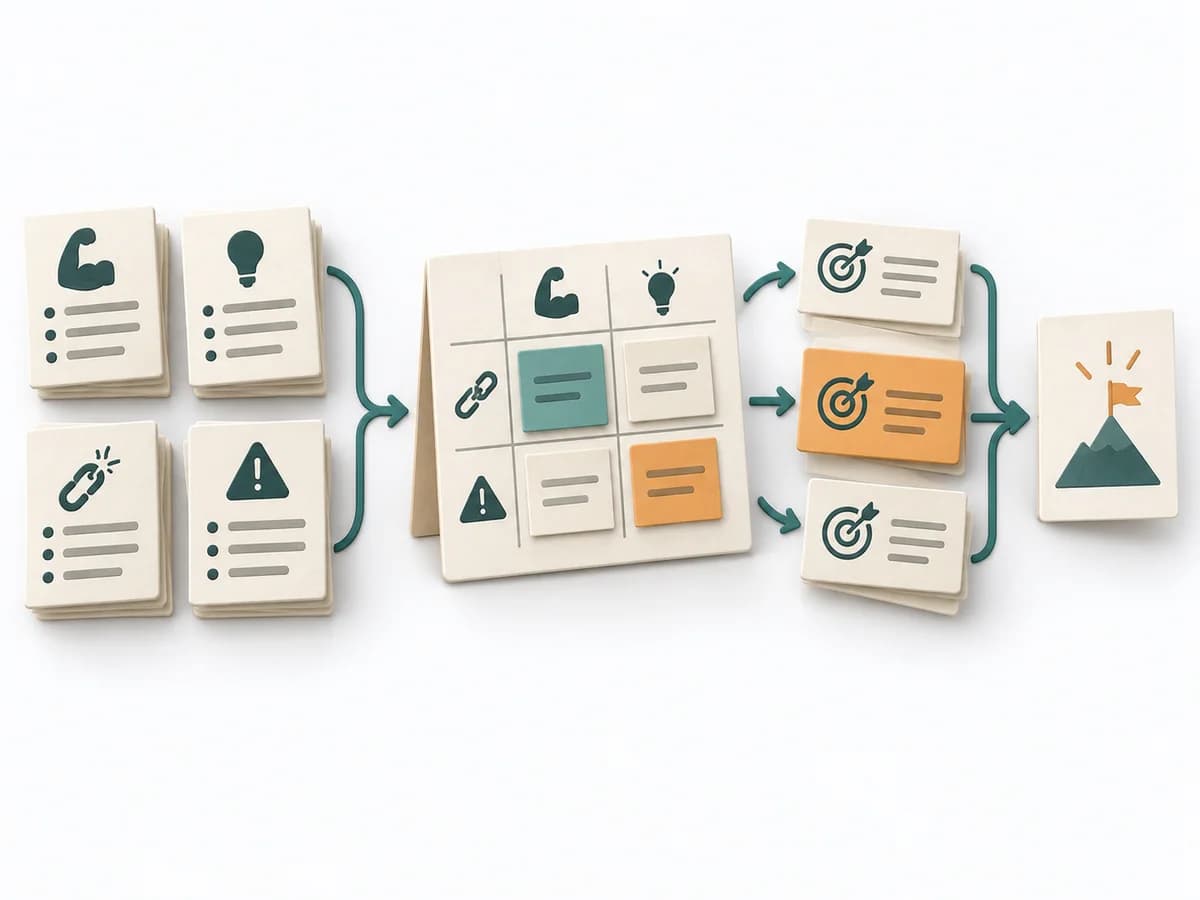
Derives concrete strategies from SWOT factors, connecting strengths, opportunities, weaknesses, and threats.
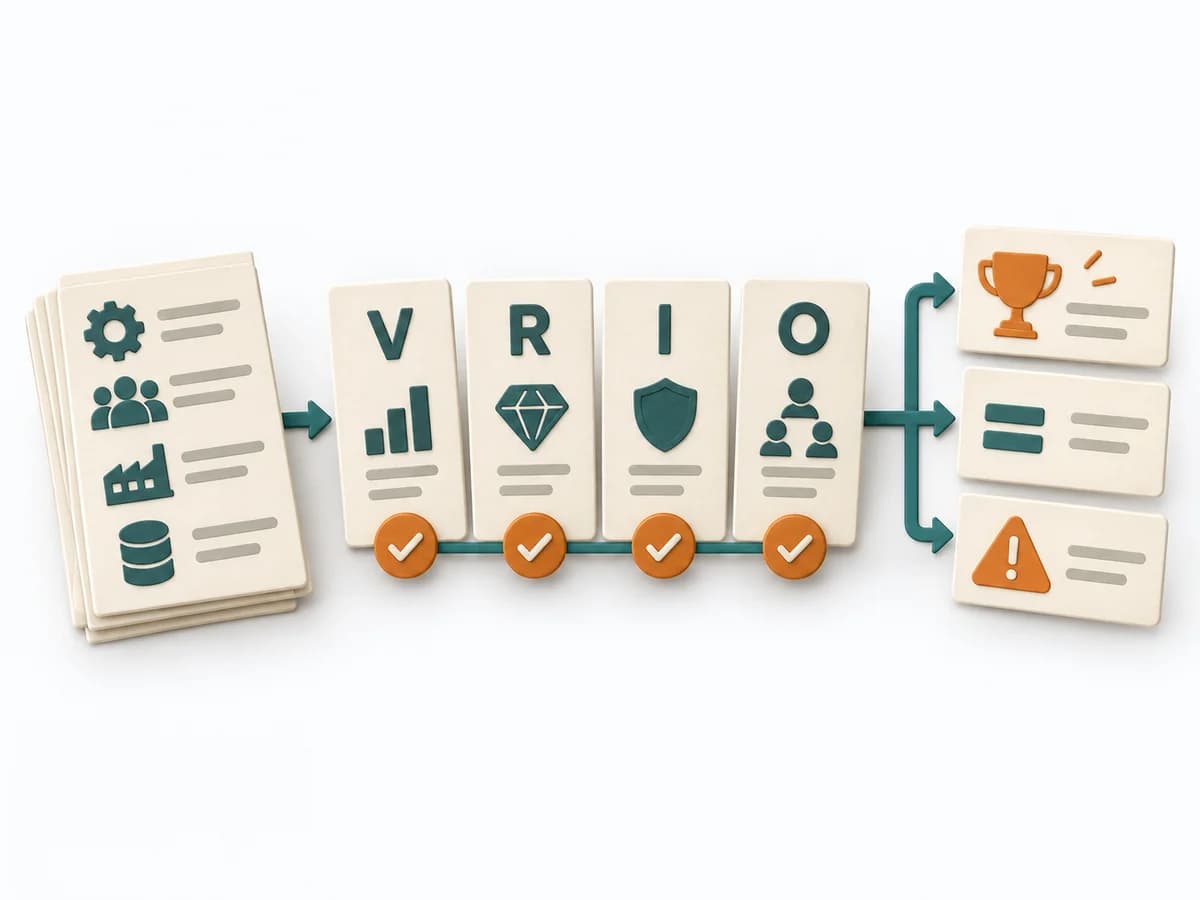
Moves the current situation, opportunities, and strategic options toward a concrete result through "collect resources and capabilities", "answer question V for each resource", and "derive strategic actions".

Compares target and actual state, exposes gaps, and derives prioritized measures with clear risks.
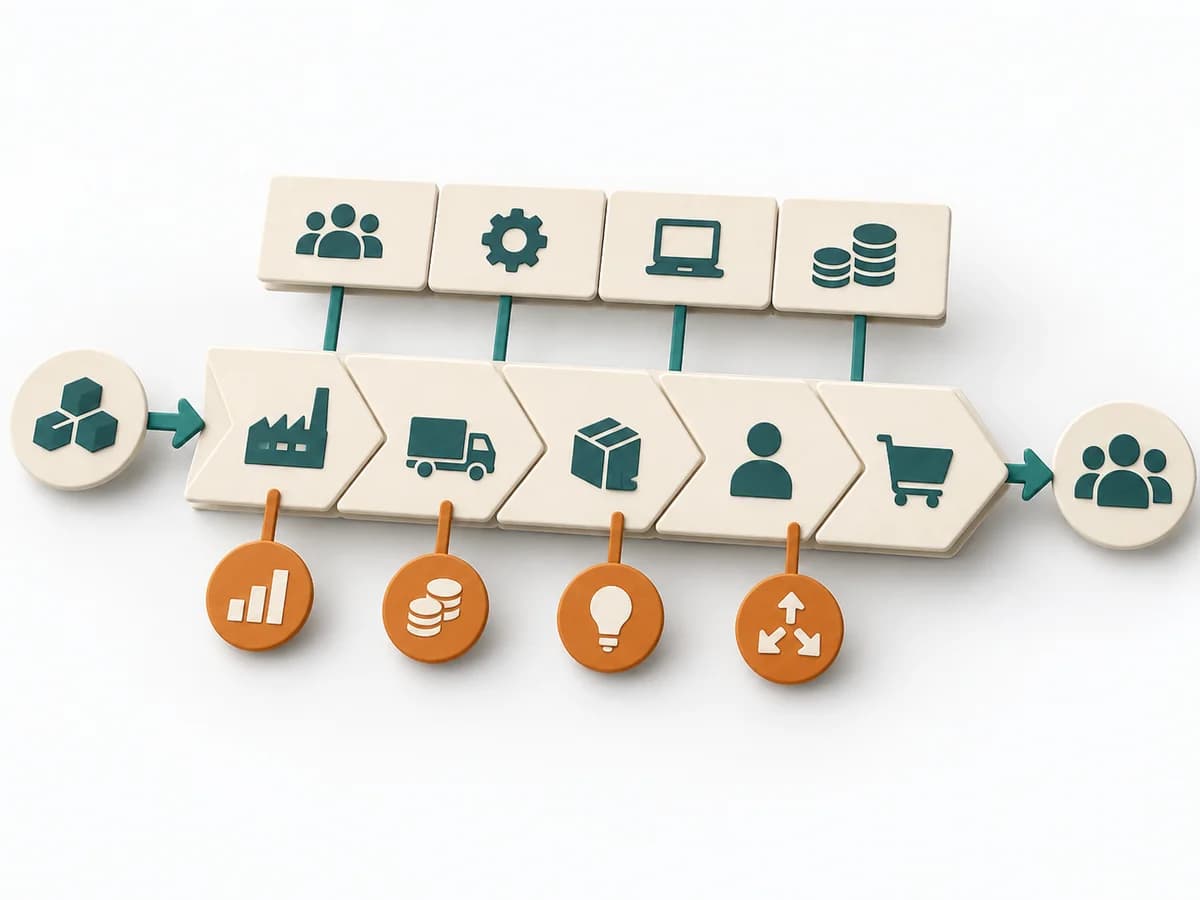
Moves the current situation, opportunities, and strategic options toward a concrete result through "explain the nine-activity template", "describe primary activities", and "derive levers and weaknesses".
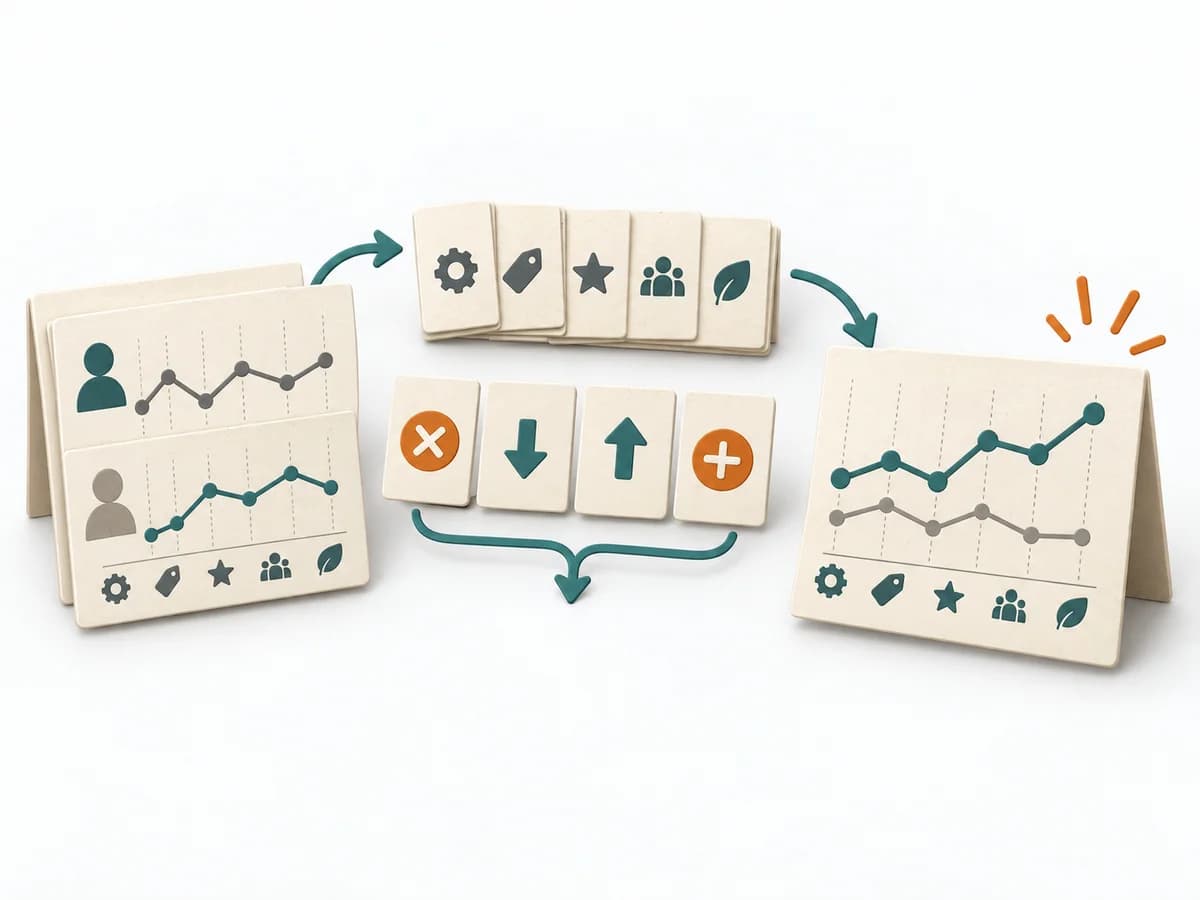
Clarifies starting point, opportunities, and strategic options by defining the competitive factors, drawing the current value curve, and testing a new value curve.