
Purpose
Wardley Mapping makes visible where an offering stands today and where it can evolve. The method connects user need, value chain, and evolution stages into a strategic basis for platform, build, or buy decisions.
Systems Thinking Mapping tool
Maps user needs, value-chain dependencies and component evolution to inform strategic choices.
Maps user needs, value-chain dependencies and component evolution to inform strategic choices.
How does user need connect to components, and how evolved are they?
The steps are a practical sequence; adapt them to the method’s purpose and available evidence.
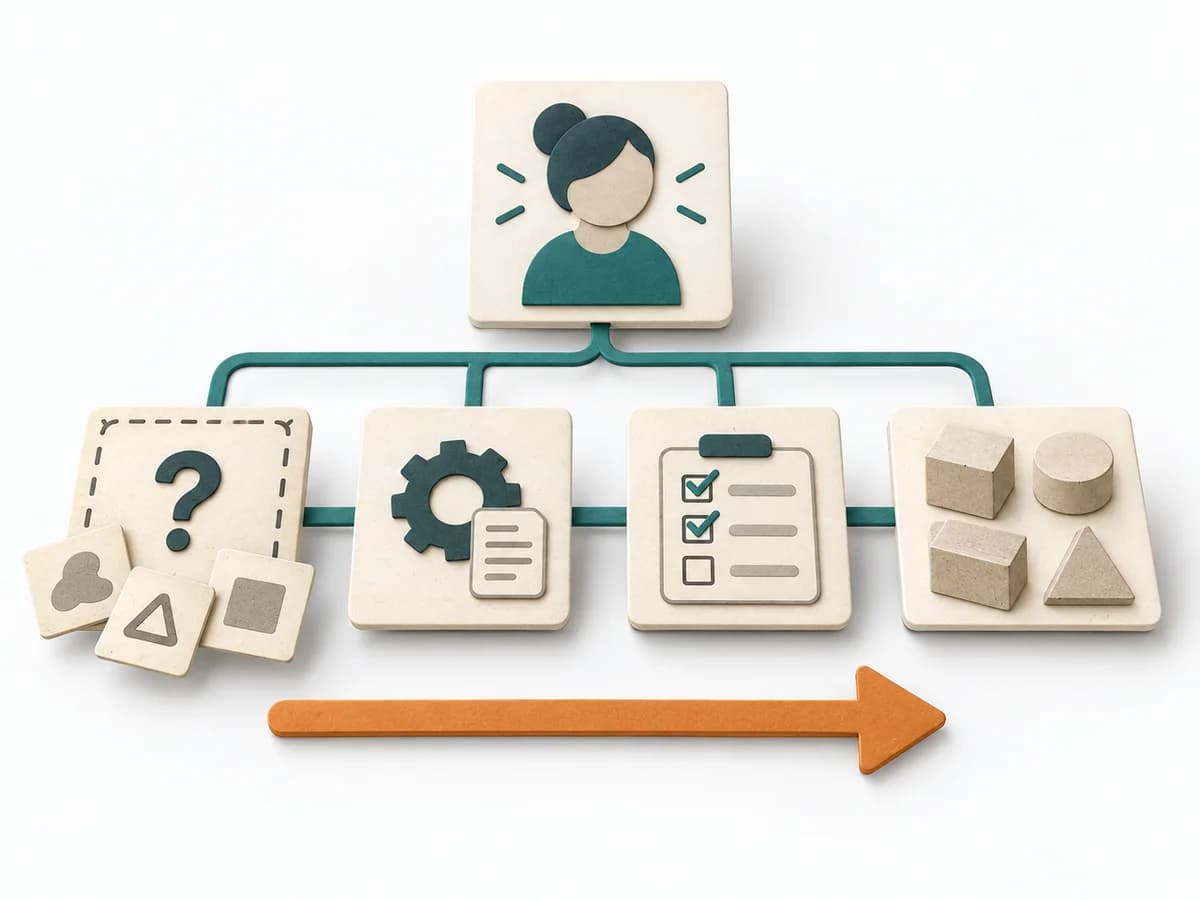
Purpose
Name who benefits, the need being met and the decision the map should support.
Chain
Trace capabilities needed to meet the user need and connect actual dependencies from top to bottom.
Evolution
Place user need on the visibility axis and capabilities from Genesis through Custom and Product to Commodity using evidence.
Plays
Assess climate and doctrine against the map; state a few plays and the signal that would disconfirm each assumption.
Revisit the model when evidence, context or outcomes change. Record what changed and why.
Use it when: Product Strategy, Platform Strategy. The group can provide the evidence and authority the method requires.
User need, dependent capabilities, evolution and next strategic plays.
The strategic options record scope, date, participants, source version, ownership, and reasons for changed assumptions.
Fictional worked example
Fictional, online appointment booking: user need “find an available follow-up” (top, visible). Dependencies: slot selection → availability → practice calendar → cloud infrastructure. Evidence-based positions: slot selection Custom, calendar integration Product, cloud infrastructure Commodity. Strategic question: does slot selection demonstrably differentiate, or should effort go into reliable calendar data?
| Scenario | User need | Component | Dependency | Evolution | Strategic play |
|---|---|---|---|---|---|
| Component 1Record an observation or example for this row. | Find follow-up | Slot selection | Practice calendar | Custom (fictional position) | Check differentiation with usage evidence |
Fictional, online appointment booking: user need “find an available follow-up” (top, visible). Dependencies: slot selection → availability → practice calendar → cloud infrastructure. Evidence-based positions: slot selection Custom, calendar integration Product, cloud infrastructure Commodity. Strategic question: does slot selection demonstrably differentiate, or should effort go into reliable calendar data?
Name who benefits, the need being met and the decision the map should support.
Wardley Mapping makes visible where an offering stands today and where it can evolve. The method connects user need, value chain, and evolution stages into a strategic basis for platform, build, or buy decisions.
First the user need is named and the value chain is sketched from top to bottom. Then components are placed by visibility and evolution, friction points are marked, and movements are discussed. The result is concrete strategic options and notes on sensible next steps.
Wardley Mapping helps because user need, value chain, and the evolution stage of a landscape become visible together, making strategic decisions less of a gut call. Good use keeps the link to the user consistently in view and places components soberly by evolution rather than by wishful status. This reveals where building in-house holds up, where standardization makes sense, and which movements in the environment shape the next decision.
Start with a clear user or need point and attach only components that are actually relevant to it. The session really pays off once a supposedly strategic in-house capability appears on the map as a mature commodity area. Close with a few marked levers, open positioning questions, and the decision on which movement to examine more closely next.
The method guide walks execution through 4 phases, timing, 4 pitfalls, and clear stop criteria.
Open method guideYour perspective
Your feedback helps shape the next improvements to methodatlas.
Prepare the decision, source evidence and next review.
To be confirmed
To be confirmed
Run the method Time: See catalog planning range; no universal duration.
Complete this worksheet on paper or in your own document during the work.
| Scenario | User need | Component | Dependency | Evolution | Next question |
|---|---|---|---|---|---|
| Component 1 |
Evolution positions are hypotheses until supported by market evidence.
Introduction · Learn Wardley Mapping
Expected artifact: Purpose statement
Purpose statement
Entry:
...
Expected artifact: Labelled value chain
Labelled value chain
Entry:
...
Expected artifact: Wardley Map with justified positions
Wardley Map with justified positions
Entry:
...
Expected artifact: Strategic options with review signal
Strategic options with review signal
Entry:
...
...
Method guide: https://methodatlas.meierhoff-systems.de/en/methods/wardley-mapping/run-sheet
Fitting alternatives with decision guidance, followed by other related methods.
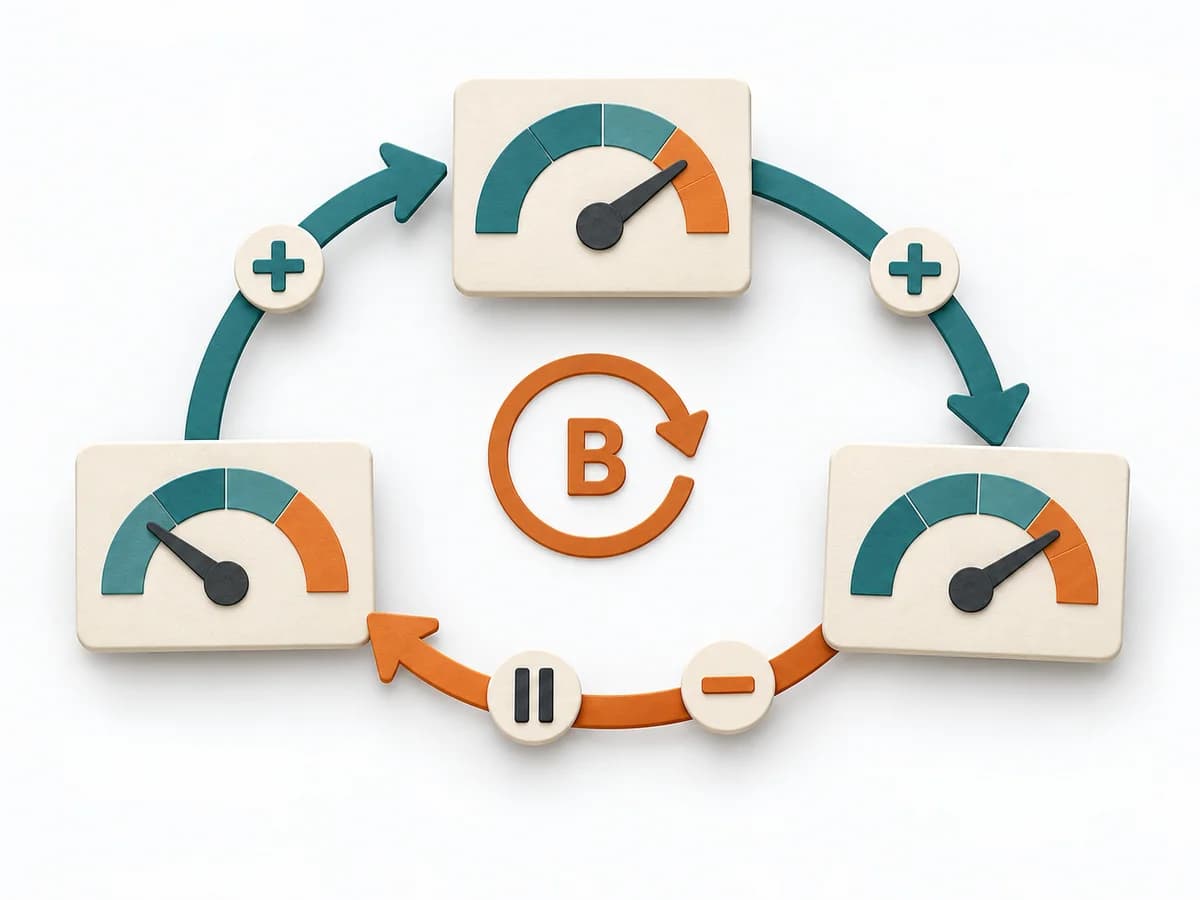
Instead of Wardley Mapping, when behavior in the system needs to be explained through feedback loops and market position is secondary.
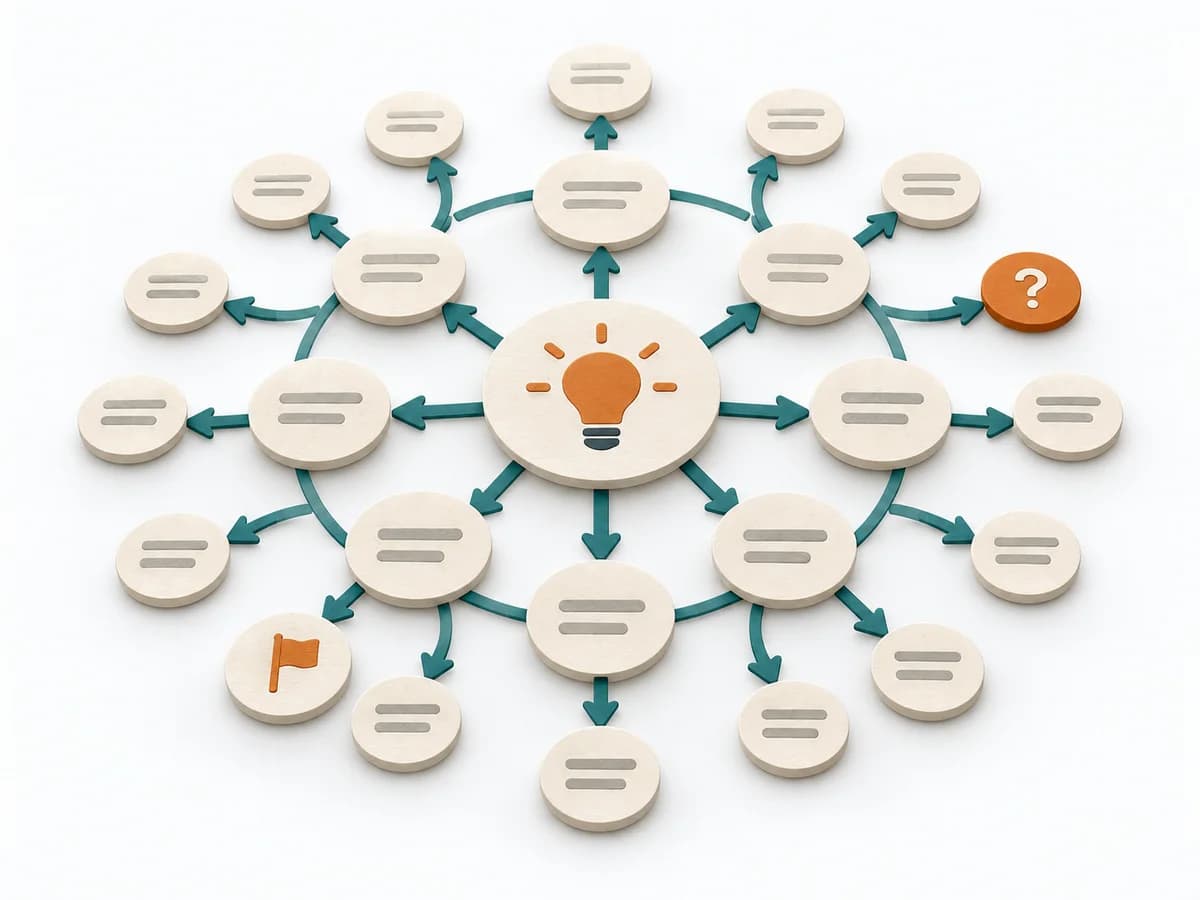
Arranges direct and indirect consequences of a change radially, so future impacts and cascades of consequences become visible.
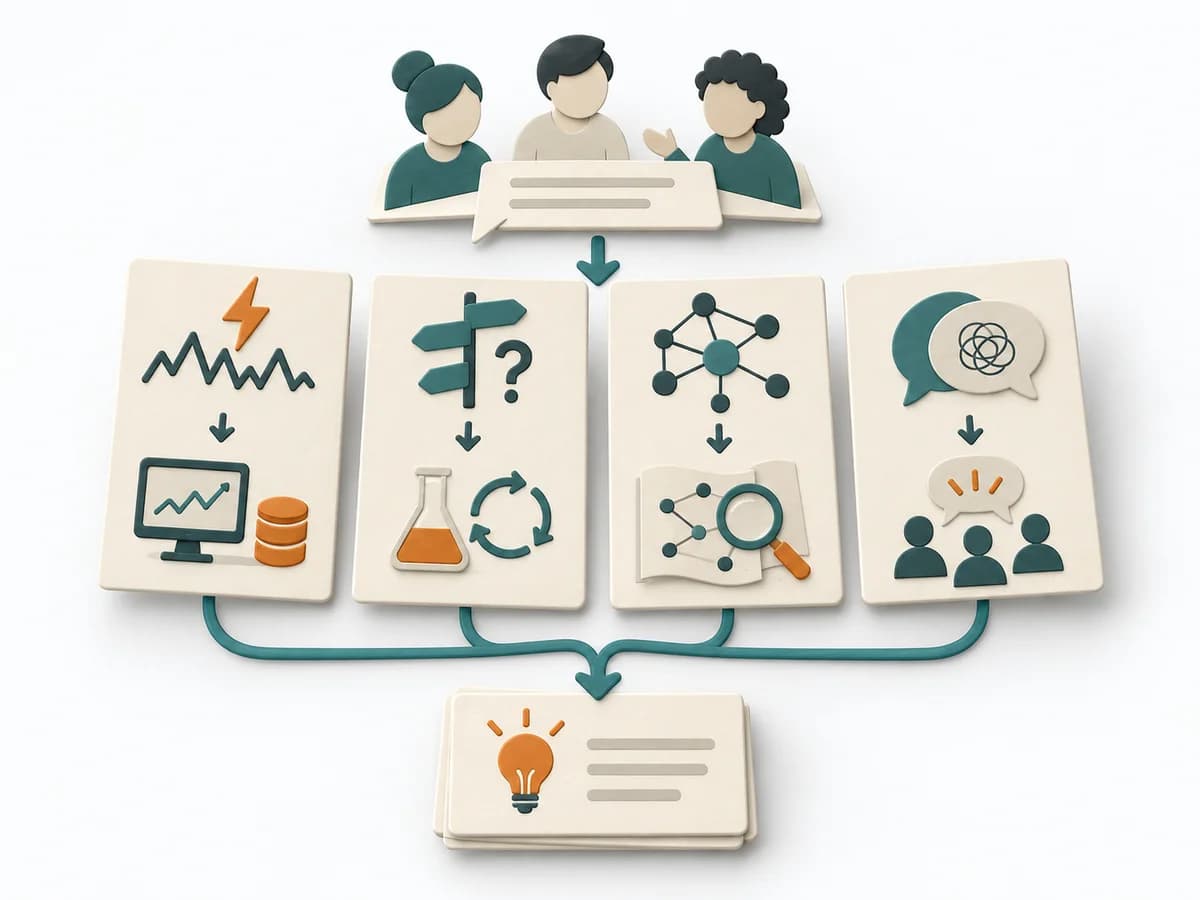
Structures a situation along Volatility, Uncertainty, Complexity, and Ambiguity to derive matching logics of action.

Moves relationships, patterns, and leverage toward a concrete result through "introduce the twelve leverage points", "collect planned actions", and "formulate a strategy across multiple levers".

Models stocks, inflows and outflows, and delays to understand dynamics, bottlenecks, and capacity.

Moves relationships, patterns, and leverage toward a concrete result through "formulate current observations", "introduce archetype cards", and "discuss leverage and derive actions".